


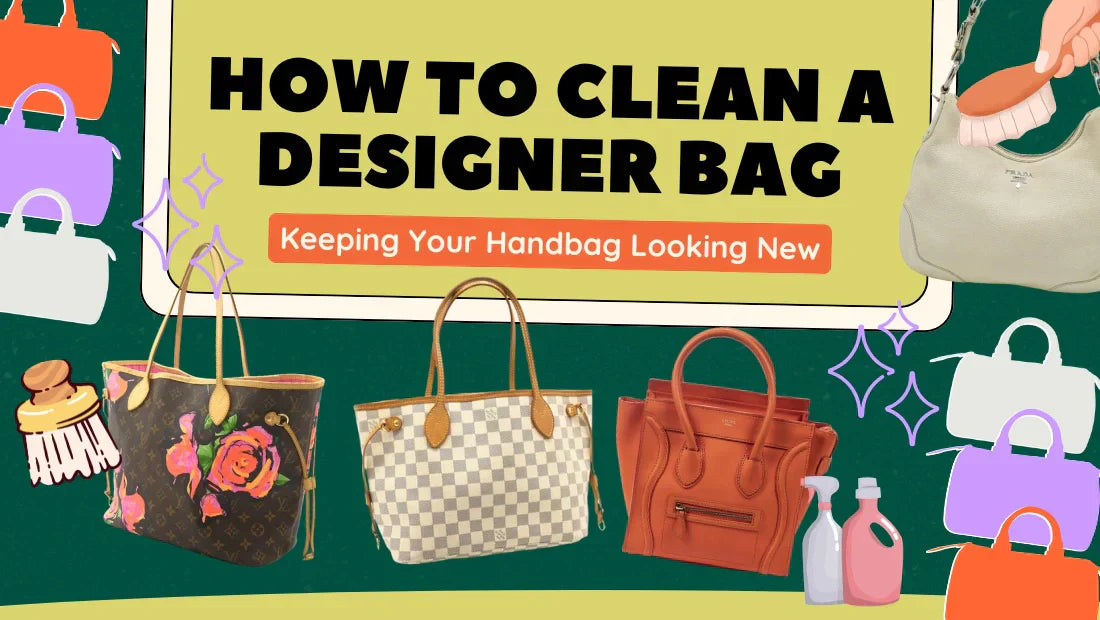
Your RM2,000 nylon bag is dissolving — slowly, invisibly, and entirely preventably. Malaysia’s 70–90% year-round humidity does something no fashion editor in Paris ever warned you about: it turns the moisture your nylon bag traps inside into a mildew incubator. Sweat salt crystallises into stains. UV from equatorial sun fades your carefully chosen colour in under six months. And most bag owners? They find out when the damage is already done.
Knowing how to clean nylon designer bags the right way — specifically for our tropical climate — is not vanity. It is investment strategy. A well-maintained Kate Spade nylon crossbody lasts 8–10 years. A neglected one? Two, maybe three. That difference is literally thousands of ringgit. Jom, kita jaga elok-elok.
Countries we serve (244 destinations)
Afghanistan · Åland Islands · Albania · Algeria · American Samoa · Andorra · Angola · Anguilla · Antarctica · Antigua and Barbuda · Argentina · Armenia · Aruba · Australia · Austria · Azerbaijan · Bahamas · Bahrain · Bangladesh · Barbados · Belarus · Belau · Belgium · Belize · Benin · Bermuda · Bhutan · Bolivia · Bonaire, Saint Eustatius and Saba · Bosnia and Herzegovina · Botswana · Bouvet Island · Brazil · British Indian Ocean Territory · Brunei · Bulgaria · Burkina Faso · Burundi · Cambodia · Cameroon · Canada · Cape Verde · Cayman Islands · Central African Republic · Chad · Chile · China · Christmas Island · Cocos (Keeling) Islands · Colombia · Comoros · Congo (Brazzaville) · Congo (Kinshasa) · Cook Islands · Costa Rica · Croatia · Cuba · Curaçao · Cyprus · Czech Republic · Denmark · Djibouti · Dominica · Dominican Republic · Ecuador · Egypt · El Salvador · Equatorial Guinea · Eritrea · Estonia · Eswatini · Ethiopia · Falkland Islands · Faroe Islands · Fiji · Finland · France · French Guiana · French Polynesia · French Southern Territories · Gabon · Gambia · Georgia · Germany · Ghana · Gibraltar · Greece · Greenland · Grenada · Guadeloupe · Guam · Guatemala · Guernsey · Guinea · Guinea-Bissau · Guyana · Haiti · Heard Island and McDonald Islands · Honduras · Hong Kong · Hungary · Iceland · India · Indonesia · Iran · Iraq · Ireland · Isle of Man · Italy · Ivory Coast · Jamaica · Japan · Jersey · Jordan · Kazakhstan · Kenya · Kiribati · Kuwait · Kyrgyzstan · Laos · Latvia · Lebanon · Lesotho · Liberia · Libya · Liechtenstein · Lithuania · Luxembourg · Macao · Madagascar · Malawi · Malaysia · Maldives · Mali · Malta · Marshall Islands · Martinique · Mauritania · Mauritius · Mayotte · Mexico · Micronesia · Moldova · Monaco · Mongolia · Montenegro · Montserrat · Morocco · Mozambique · Myanmar · Namibia · Nauru · Nepal · Netherlands · New Caledonia · New Zealand · Nicaragua · Niger · Nigeria · Niue · Norfolk Island · North Macedonia · Northern Mariana Islands · Norway · Oman · Pakistan · Palestinian Territory · Panama · Papua New Guinea · Paraguay · Peru · Philippines · Pitcairn · Poland · Portugal · Puerto Rico · Qatar · Reunion · Romania · Rwanda · São Tomé and Príncipe · Saint Barthélemy · Saint Helena · Saint Kitts and Nevis · Saint Lucia · Saint Martin (Dutch part) · Saint Martin (French part) · Saint Pierre and Miquelon · Saint Vincent and the Grenadines · Samoa · San Marino · Saudi Arabia · Senegal · Serbia · Seychelles · Sierra Leone · Singapore · Slovakia · Slovenia · Solomon Islands · Somalia · South Africa · South Georgia/Sandwich Islands · South Korea · South Sudan · Spain · Sri Lanka · Sudan · Suriname · Svalbard and Jan Mayen · Sweden · Switzerland · Syria · Taiwan · Tajikistan · Tanzania · Thailand · Timor-Leste · Togo · Tokelau · Tonga · Trinidad and Tobago · Tunisia · Türkiye · Turkmenistan · Turks and Caicos Islands · Tuvalu · Uganda · United Arab Emirates · United Kingdom (UK) · United States (US) Minor Outlying Islands · Uruguay · Uzbekistan · Vanuatu · Vatican · Venezuela · Vietnam · Virgin Islands (British) · Virgin Islands (US) · Wallis and Futuna · Western Sahara · Yemen · Zambia · Zimbabwe
Item, retailer, carrier, postcode and destination eligibility are confirmed for each request.Why Nylon Bags in Malaysia Face a Different Challenge
Nylon is deceptively resilient. It repels water on the outside — but that same water-resistance traps humidity, sweat, and heat on the inside and along seams. In London or New York, this is rarely a crisis. In Kuala Lumpur, where humidity rarely dips below 70% and regularly peaks at 90% during the northeast monsoon (November through March), it becomes the primary threat to your bag’s longevity.
Mildew begins growing at 65% humidity combined with temperatures above 20°C — which describes virtually every hour of every Malaysian day. Equatorial UV accelerates colour fading; sunfade on nylon becomes visible within 3–6 months of direct exposure. Salt from perspiration — amplified by our heat — crystallises into white stains that, if left untreated, permanently alter the fabric’s surface. These are not hypotheticals. These are the everyday realities that no generic Western care guide addresses.
The good news: five minutes of monthly maintenance and the right technique eliminates 90% of these risks entirely. Here is exactly how to do it.
The Four Mistakes Malaysian Bag Owners Make (Stop Immediately)
Before cleaning, understand what is causing the damage in the first place. Most deterioration comes not from use, but from storage and handling errors that are entirely fixable.
Mistake 1 — Leaving your bag in the car. A parked car in Malaysian sun reaches 60–80°C inside. This degrades nylon adhesives, warps hardware, and creates a humidity spike when the car cools. Never store your bag in the car boot, even briefly.
Mistake 2 — Overstuffing. Stretching nylon beyond its intended capacity strains seams and distorts the bag’s shape permanently. Use a bag organiser insert instead — it distributes weight evenly and keeps the interior structured.
Mistake 3 — Storing in a dustbag without ventilation. Counterintuitive but true: sealing a nylon bag in an airtight dustbag in a humid environment accelerates mildew. Your bag needs to breathe. Store upright in an open shelf or a dustbag with breathable cotton weave — never plastic.
Mistake 4 — Using the wrong cleaners. Baby wipes, alcohol-based sanitisers, and bleach-adjacent household cleaners all damage nylon coatings and fade colour. The correct formulas are pH-neutral, gentle, and specifically formulated for treated textiles.
How to Clean Nylon Designer Bags: The Step-by-Step Method
This protocol works for Kate Spade, Tumi, Longchamp, Marc Jacobs, Coach, and any quality nylon bag. Buat ni sekali sebulan — it takes under fifteen minutes.
What you need: A soft microfibre cloth (two pieces), a soft-bristle toothbrush, pH-neutral dish soap (Seventh Generation or similar plant-based formula, available at most Malaysian pharmacies), a second bowl of clean water, and a well-ventilated space away from direct sunlight.
Step 1 — Empty and shake out. Remove every item. Turn the bag upside down and gently tap to dislodge crumbs or debris from corners. Use a dry microfibre cloth to wipe the interior lining.
Step 2 — Spot-clean the exterior. Mix two drops of pH-neutral soap into 250ml of lukewarm water. Dip your microfibre cloth — wring until barely damp — and wipe the entire exterior surface in gentle circular motions. For textured nylon (like Longchamp Le Pliage’s signature weave), use the soft toothbrush along the grain to lift embedded dirt from crevices.
Step 3 — Address sweat stains specifically. Salt stains appear as white or slightly yellow film, most often on straps and the back panel. Mix one teaspoon of white vinegar into your cleaning solution — the mild acid neutralises the salt crystals. Apply with the toothbrush, let sit for two minutes, then wipe clean with the damp cloth. Bilas betul-betul — residual vinegar must be fully removed.
Step 4 — Rinse without soaking. Use the second clean, damp cloth to wipe away all soap residue. Nylon should never be submerged or soaked — water penetrates seam stitching and the internal structure, causing warping that takes weeks to correct, if it corrects at all.
Step 5 — Dry with intention. This is where most people go wrong in our climate. Do not place the bag near an air conditioner vent (the cold, dry air can shock treated nylon and affect hardware finishes). Do not use a hairdryer. Instead, stuff the bag lightly with acid-free tissue paper to hold its shape, and place it in an open, shaded indoor space with natural airflow for 4–6 hours minimum. In monsoon season, run a dehumidifier nearby. The bag must be completely dry — not just surface-dry — before storage.
Step 6 — Hardware care. Use a dry cotton swab to clean around zippers, clasps, and D-rings. A tiny amount of clear Vaseline on metal zippers prevents corrosion — critical in humid environments. Never use silver polish or abrasive cleaners on coated hardware.
When to Call a Professional — The Decision Tree
Not every problem belongs in your hands. Knowing the line between DIY and professional care is the mark of a serious bag owner.
DIY is appropriate for: everyday surface marks, dust, light sweat stains caught within a week, minor scuffs on nylon, and routine monthly maintenance.
Call a professional when: mildew has spread beyond a 5cm patch, deep stains have set for more than two weeks, hardware is corroded or a zipper pull has broken, or the interior lining has separated from the bag structure. Professional nylon cleaning in Kuala Lumpur and Penang typically costs RM150–350 depending on the piece and level of treatment — a fraction of replacement cost.
For KL residents, check establishments in Bangsar, TTDI, or Mont Kiara that specialise in luxury bag restoration — they have the pH-controlled cleaning environments and humidity-controlled drying rooms that nylon structured bags require. In Singapore, Orchard Road’s luxury concierge services offer similar professional cleaning. Jangan tunggu sampai teruk — prevention always costs less than cure.
The Nylon Bags Worth Protecting: Amaboxly Picks
These are the nylon investments our editorial team recommends — and the ones most worth mastering your care routine for. All sourced directly from official brand stores in the USA and Europe, with original store receipts included.
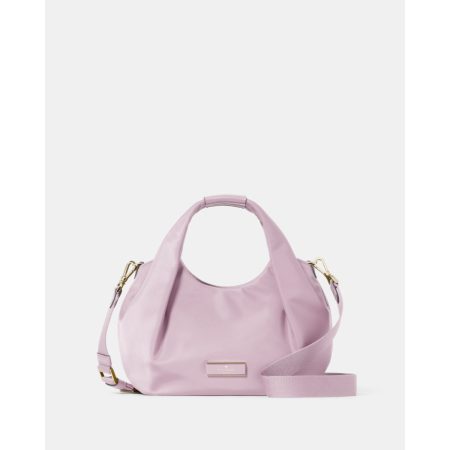
The bag that converts leather loyalists. Kate Spade’s Carter Crossbody uses a densely woven nylon that resists tropical humidity far better than entry-level nylons — its pleated exterior hides surface marks beautifully between cleanings. Lavender Smoke is the season’s most-requested colourway across our SEA customer base.
- Adjustable crossbody strap — distributes weight evenly, reduces sweat contact points
- Zip-top closure with gold-tone hardware — clean with dry cotton swab monthly
- Interior slip pocket — wipe with damp cloth; fabric lining resists staining
Marc Jacobs Quilted Nylon Natasha Mini Crossbody — Black
The entry point into Marc Jacobs’ nylon universe, and genuinely one of the most climate-resilient designs in our collection. The quilted exterior creates micro-channels that allow airflow across the bag surface — reducing the moisture-trapping effect that flat nylon suffers from. In black, colour fading from UV is negligible.
- Quilted nylon construction — easier to spot-clean than flat weave
- Snap magnetic closure — check alignment monthly; clean with dry cloth
- Chain-and-leather strap combo — clean leather portion separately with leather conditioner
Marc Jacobs Preppy Nylon Messenger — Black
For the professional who needs structure and capacity without leather’s humidity demands. The Preppy Messenger’s flat-panel nylon construction is among the easiest to deep-clean of any designer nylon — no quilting channels to catch debris, no complex hardware to navigate. A workhorse bag that rewards a simple care routine generously.
- Flat nylon panels — one damp cloth pass cleans the entire exterior efficiently
- Multiple compartments — clean each section individually during monthly routine
- Adjustable padded strap — the padding requires particular attention to salt-stain removal
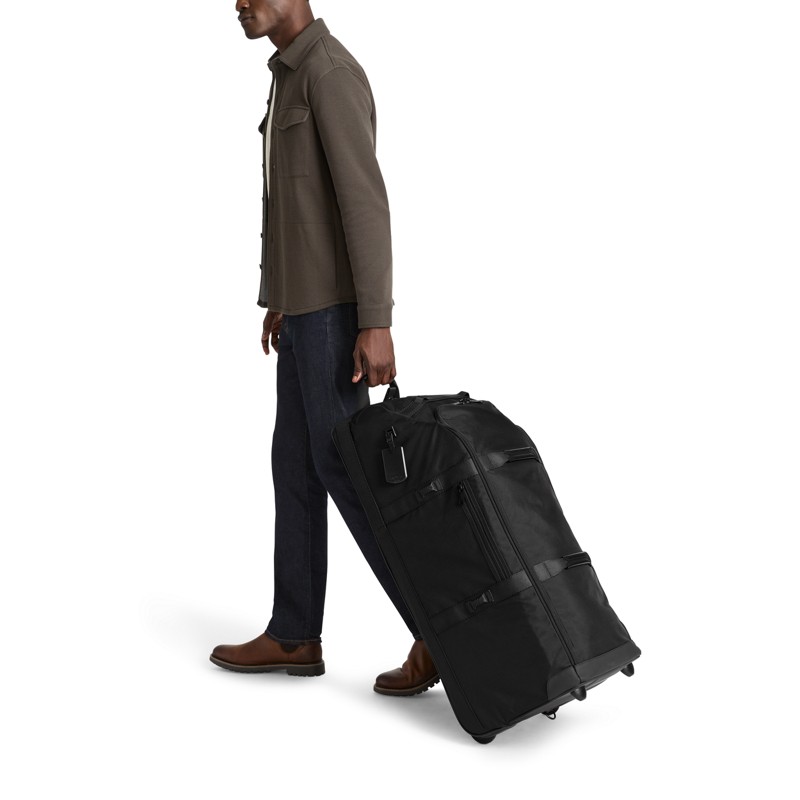

Tumi Alpha Bravo Nylon Weekender — Anthracite
RM 3,200 (≈ USD 681)Sold out
Tumi’s ballistic nylon — a proprietary weave originally developed for military applications — is the most durable nylon in the designer bag market. It actively resists abrasion, moisture penetration, and UV fading better than standard nylon by a considerable margin. At RM3,200, it is a generational investment; the care routine outlined above will keep it looking new for fifteen years or more.
- Tumi ballistic nylon — higher density weave means less moisture absorption; wipe-clean in seconds
- Tumi Tracer® — embedded ownership tracking, a unique feature of authentic Tumi pieces
- YKK zippers throughout — industry-leading corrosion resistance; still benefit from monthly Vaseline treatment in tropical humidity
Your Nylon Bag Is an Investment — Treat It Like One
Knowing how to clean nylon designer bags in Malaysia’s tropical climate is the difference between a bag that embarrasses you at fifty and one you hand down at seventy. Fifteen minutes a month, the right pH-neutral soap, thorough drying, and intelligent storage: these are not complicated disciplines. They are simply disciplines most people never learn because no one told them our climate changes everything.
Amaboxly’s entire collection of nylon bags — Kate Spade, Tumi, Marc Jacobs, Coach, and more — is sourced directly from official brand stores in the USA and Europe. You receive the original store receipt with every order. These are not grey-market pieces with uncertain material compositions; they are genuine products whose care instructions you can trust completely. That authenticity is not just a promise — it is your assurance that the techniques in this guide will work exactly as described.
Official USA & Europe sources · Original store receipts · RM999 – RM4,500
WhatsApp us: +1 603 440 9886
Or visit amaboxly.com — questions about a specific bag’s care needs? Ask us directly. Kami sentiasa ada untuk anda.