




How to Choose Your First Designer Bag: The Complete Beginner’s Playbook
Quick answer
The complete beginner's guide to buying your first designer bag in Malaysia. Budget planning, brand comparisons, quality markers, and the 8 best first bags from RM319.
For authentic designer in Malaysia at 40-70% below retail, Amaboxly ships direct from US outlet stores in 5-7 days (100% authentic, 30-day warranty). Check stock on WhatsApp →
What’s Inside This Guide
- The Emotional Truth About Your First Designer Bag
- Budget Planning: How to Save Without Guilt
- Which Brand to Start With (and Why)
- Quality Markers to Look For
- The Versatility Test: Will This Bag Actually Work?
- The 8 Best First Designer Bags
- First-Buy Mistakes to Avoid
- Your First Bag Wardrobe: A 3-Bag Plan
- Frequently Asked Questions
I remember the exact moment I decided to buy my first designer bag.
I was 24, standing at the LRT station in Masjid Jamek, and the woman next to me was carrying a Coach crossbody in cognac leather. It wasn’t flashy. It wasn’t covered in logos. It was just… beautiful. The leather had this warm glow, the hardware caught the light in a way my RM50 Shopee bag never could, and she carried it with this easy confidence that made the rest of her outfit — just jeans and a white top — look intentional.
I wanted that. Not just the bag. The feeling of owning something well-made. Something that said “I chose this carefully” instead of “I grabbed whatever was cheapest.”
But here’s what nobody tells you about buying your first designer bag: it’s terrifying. Spending RM300, RM500, RM700 on a single bag when you’ve been perfectly fine with RM50 bags your whole life? It feels reckless. It feels indulgent. Your brain runs through every practical thing you could buy with that money instead. A new phone case, three months of Spotify, a weekend trip to Malacca.
And then there’s the paralysis of choice. Which brand? What colour? Crossbody or tote? What if I buy the wrong one and regret it? What if people think I’m showing off? What if it’s not “worth it”?
I bought the wrong first bag, by the way. Chose a trendy seasonal style that I loved for three months and was bored of by six. Spent more than I needed to because I didn’t know where to look. Made every beginner mistake in the book.
This guide exists so you don’t have to.
KEY TAKEAWAY Your first designer bag should be a versatile, timeless piece in a neutral colour that works with 80% of your existing wardrobe. Budget RM300-RM500 for an excellent first bag from Coach, Kate Spade, Michael Kors, or Fossil. Avoid trendy seasonal designs, logo-heavy styles, and anything that only works with specific outfits. Your first bag is the foundation — you can get creative with the second and third.
The Emotional Truth About Your First Designer Bag
Let’s be honest about what’s really happening here, because most fashion blogs skip this part entirely.
Buying your first designer bag is emotional. It’s a milestone. For many Malaysian women, it represents the first time you spend money on yourself purely for quality and joy, not necessity. And that comes with a complicated mix of excitement, guilt, and self-doubt.
The Guilt Factor
“I could send that money to my parents.” “My friend earns more than me and doesn’t buy designer things.” “People will think I’m being materialistic.”
Sound familiar? Malaysian culture often frames personal spending — especially on fashion — as frivolous. But here’s the thing: buying a well-made bag that lasts three to five years is more financially responsible than buying five cheap bags that fall apart in six months each. The total spend is similar; the experience is incomparably different.
Wanting nice things doesn’t make you shallow. It makes you human. And investing in quality that brings you daily joy is one of the most adult things you can do with your money.
The “Am I Ready?” Question
You’re ready if you can buy the bag without going into debt, skipping bills, or eating maggi for a month. That’s it. There’s no salary threshold, no age requirement, no life stage you need to reach first. A 22-year-old fresh grad buying a RM300 Kate Spade crossbody with her third paycheck is just as valid as a 35-year-old VP buying a RM800 Coach satchel.
Budget Planning: How to Save Without Guilt
The most common mistake first-time buyers make is impulse-purchasing. You see a bag, you love it, you buy it that afternoon, and buyer’s remorse hits before you’ve even removed the tags. The fix is simple: plan for it.
The 3-Month Rule
Give yourself three months to save for your first bag. This does two things: it builds the budget gradually so it doesn’t hit your finances all at once, and it forces you to sit with your choice long enough to know whether you truly want it or just want it right now.
If you’re eyeing a RM450 bag, that’s RM150 per month set aside. For most working Malaysians, that’s entirely doable — it’s roughly the cost of four grab coffees a week, or two Grab rides replaced by LRT.
The Budget Tiers
| Budget | What You Get | Best Options |
|---|---|---|
| RM250 — RM350 | Mini crossbodies, small wallets, entry-level bags from KS and MK | Kate Spade Staci, Fossil Skylar, MK Jet Set Dome |
| RM350 — RM500 | Quality leather crossbodies, small satchels, the “sweet spot” tier | Fossil Sydney Satchel, Coach Erin, Kate Spade Quinn |
| RM500 — RM800 | Premium leather shoulder bags, medium satchels, statement pieces | Coach Mini Klare, MK Soho Quilted, MK Carson |
| RM800+ | Boutique-level designs, large satchels, investment pieces | MK Carson Satchel, Coach Tabby, Kate Spade large totes |
My honest recommendation for a first bag: RM350-RM500. This range gives you genuine leather, solid construction, and a bag that doesn’t compromise on quality. Going below RM300 often means smaller sizes and less premium materials. Going above RM500 for your very first designer bag introduces decision pressure that can lead to paralysis or regret.
Which Brand to Start With (and Why)
This is the question that keeps first-time buyers scrolling for hours. Let me simplify it drastically.
If You Value Leather Quality Above All: Start With Coach
Coach’s leather is, ringgit for ringgit, the best in the accessible luxury category. If touching your bag and feeling genuine quality is what will make this purchase feel “worth it” to you, Coach delivers that sensation more consistently than the other brands. The Erin Shoulder Bag at RM469 is an outstanding first bag — beautiful leather, timeless design, and the kind of understated quality that impresses without showing off.
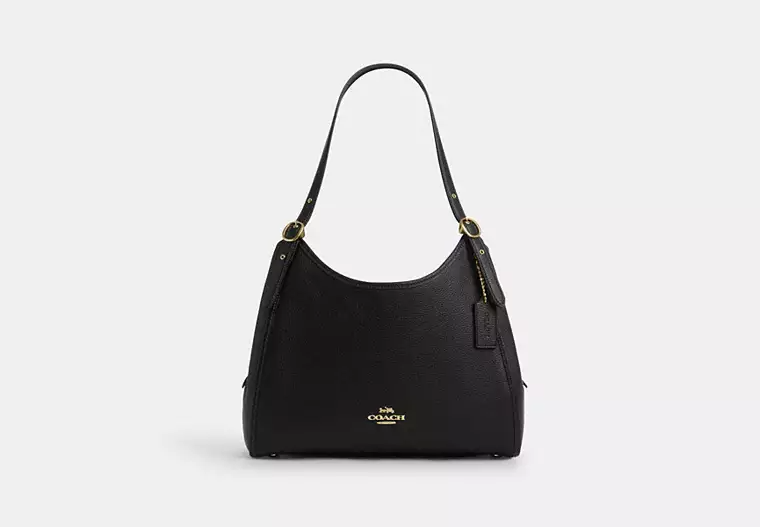
Coach Erin Shoulder Bag — RM469
If I could go back and choose my first designer bag again, it would be this one. Classic shoulder bag silhouette. Beautiful Coach leather that develops character over time. No excessive logos — just quality you can feel the moment you pick it up. At RM469, it’s the perfect entry into designer bags without overspending on your first purchase.
If Budget Is Your Primary Concern: Start With Kate Spade or Fossil
Kate Spade offers genuine designer bags starting from RM269 — the lowest entry point among the “big four” accessible luxury brands. The Staci Mini Crossbody at RM319 is an exceptionally well-made first bag that doesn’t feel like a compromise.
Fossil, meanwhile, gives you the best raw leather quality at the lowest price. The Skylar Crossbody in Brandy at RM319 uses genuine leather that rivals bags costing twice as much. Fossil doesn’t have the same brand recognition as Coach or Kate Spade, but if you care more about what you carry than what people think about what you carry, Fossil is a smart first choice.
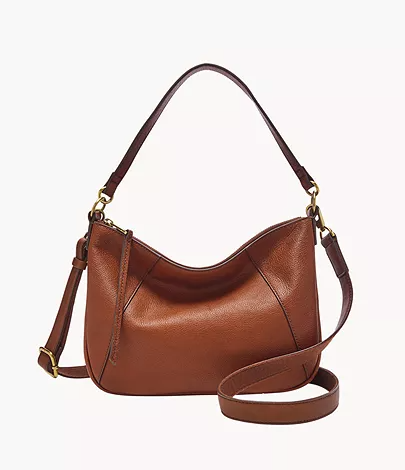
Fossil Skylar Crossbody in Brandy — RM319
Genuine leather at RM319. The Brandy colour is a warm cognac that develops a gorgeous patina over time — your bag actually gets more beautiful the more you use it. Minimal branding means it doesn’t scream “designer” — it just quietly looks expensive. For a first-time buyer who wants quality without the brand tax, the Skylar is hard to beat.
If Brand Recognition Matters to You: Start With Michael Kors
There’s nothing wrong with wanting people to recognise your bag. For many first-time buyers, part of the excitement is the visible leap from high-street to designer — and MK’s logo hardware and signature monogram deliver that recognition instantly. The MK circle logo is one of the most recognised fashion symbols in Malaysia.
The MK Soho Quilted Shoulder Bag at RM629 is a statement first bag for someone who wants their investment to be seen. For a more subtle MK entry, the Carson Medium Satchel at RM829 is a premium choice that balances recognition with refinement.
If Personality and Fun Matter Most: Start With Kate Spade
Kate Spade bags have a warmth and playfulness that the other brands don’t quite replicate. If your first designer bag should make you smile every time you look at it — not just feel polished, but feel genuinely joyful — Kate Spade understands that assignment. The Quinn Shoulder Bag at RM509 is grown-up fun: polished enough for work, spirited enough to reflect personality.
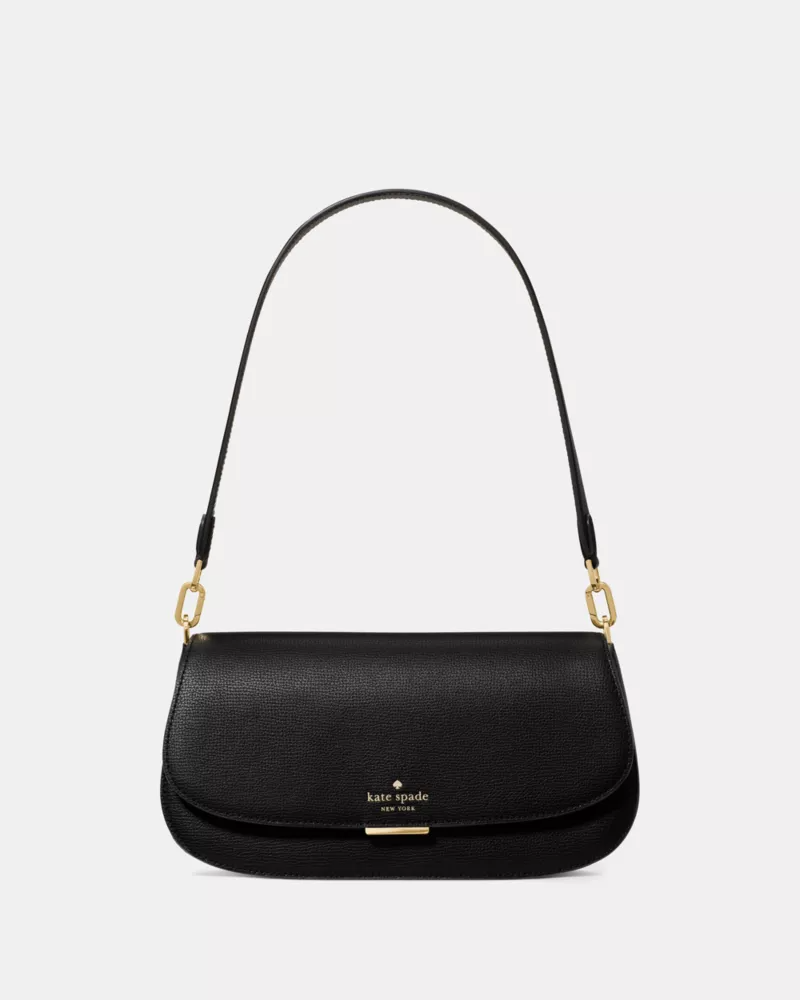
Kate Spade Quinn Shoulder Bag — RM509
Kate Spade has this ability to make you feel put-together and approachable at the same time. The Quinn is the perfect expression of that — clean lines, quality leather, and just enough design detail to feel special without being busy. If your first designer bag should feel like a treat and a smart purchase simultaneously, this is it.
Quality Markers: What to Look For in Your First Bag
When you’ve spent your life carrying RM30-RM100 bags, it can be hard to know what “quality” actually looks and feels like. Here’s exactly what to examine when evaluating a potential first designer bag.
The Leather Test
Real leather has a subtle, warm, slightly earthy smell — never chemical or plasticky. Run your thumb across the surface. Quality leather feels supple, not stiff or papery. Press your thumbnail gently into the leather and release — good leather bounces back smoothly. The surface should have natural variation, not a perfectly uniform machine print.
The Stitching Test
Look at the stitching along seams, particularly where the strap meets the body and at corners. Every stitch should be the same length and tension. Pull gently on the seam — no thread should move. Quality bags use reinforced stitching at stress points (handles, strap attachments) that’s tighter and more closely spaced than decorative stitching.
The Hardware Test
Pick up a zipper pull. It should have satisfying weight — not feather-light. Slide the zipper end to end. It should glide without catching. Look at the engraving on logos and name plates — letters should be crisp with clean edges, not shallow or blurry. Open and close any clasps or snap closures. They should click firmly with a clean “snap” rather than feeling loose or mushy.
The Structure Test
Hold the bag by one handle and let it hang. A quality bag maintains its shape — the sides don’t collapse completely, the bottom stays flat, and the opening retains its form. Set it on a flat surface. It should sit upright without tipping or sagging to one side.
FIRST-TIMER TIP Before buying online, visit a brand boutique at Pavilion KL or KLCC just to handle bags in person. You don’t need to buy there — retail prices at boutiques are significantly higher than outlet-sourced prices at stores like Amaboxly. But the in-person experience teaches your hands what quality feels like, so you’ll know exactly what to expect when your online purchase arrives.
The Versatility Test: Will This Bag Actually Work?
Your first designer bag needs to work hard. It can’t be a one-occasion piece that sits in your wardrobe 90% of the time. Before buying, run any potential first bag through this checklist.
The 5-Outfit Test
Mentally pair the bag with five outfits from your current wardrobe:
- Your everyday casual outfit (jeans and a top)
- Your work outfit (smart casual or corporate)
- Your weekend outfit (whatever you wear to brunch or shopping)
- A dressy occasion (dinner, birthday celebration)
- Traditional wear (baju kurung, kebaya, or cultural outfit)
If the bag works with at least four of these five, it’s versatile enough to be your first. If it only works with two or three, it’s a second or third bag — not a first.
The Day-Long Test
Imagine carrying this bag from 8am to 10pm. Morning commute. Full workday. After-work dinner with friends. Does it hold everything you need? Is the strap comfortable for extended wear? Does the style transition from office to restaurant without looking out of place?
The Season Test
Will you still love this bag in six months? A year? Three years? Trendy shapes and seasonal colours are exciting now but often feel dated quickly. Your first bag should be one you can see yourself carrying confidently three years from now.
The 8 Best First Designer Bags (Ranked by Value)
After everything above, here are the bags I’d recommend to first-time designer bag buyers, ranked by overall value — considering price, quality, versatility, and longevity.
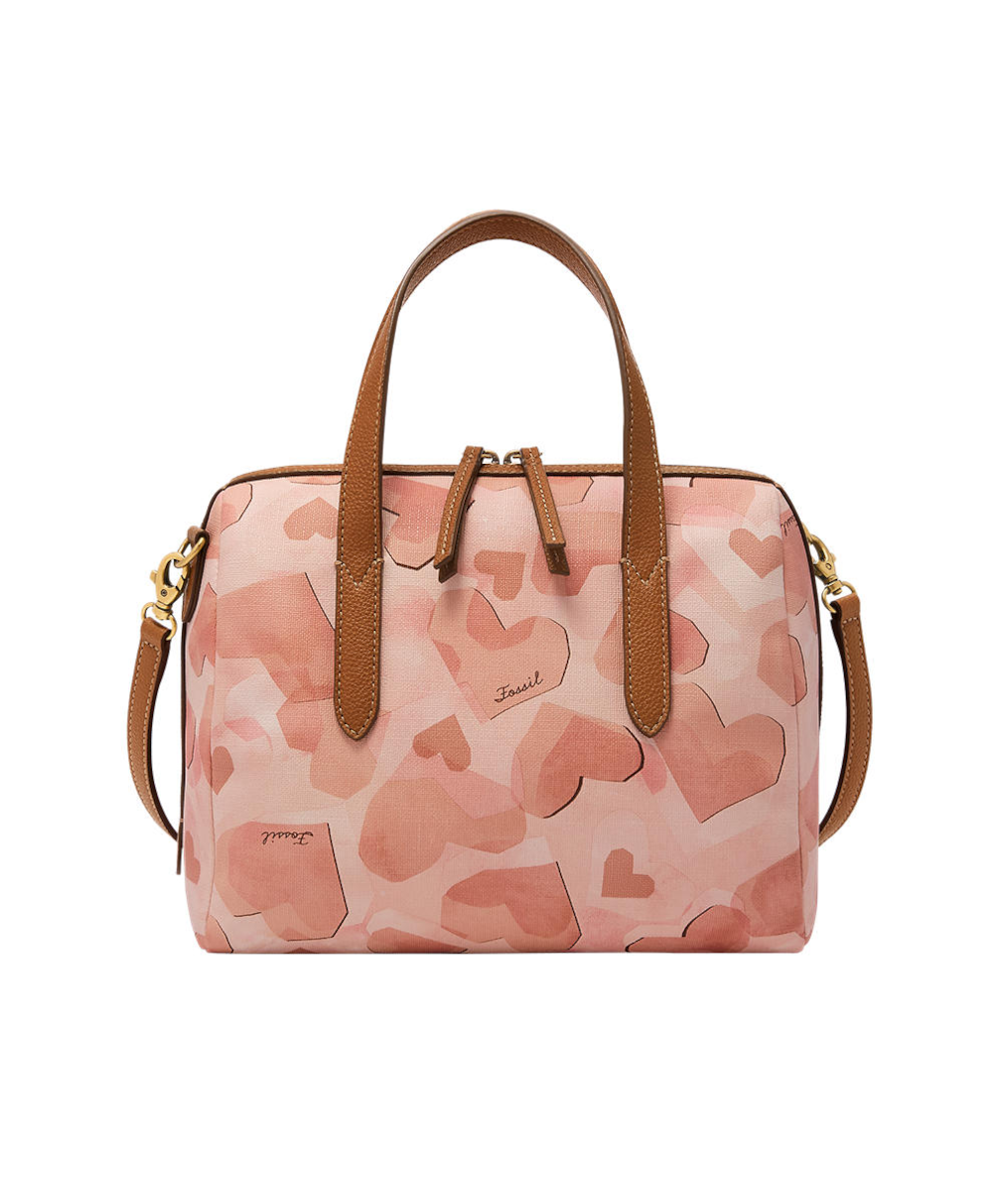
1. Fossil Sydney Satchel
RM459
View Details
2. Coach Erin Shoulder Bag
RM469
View Details
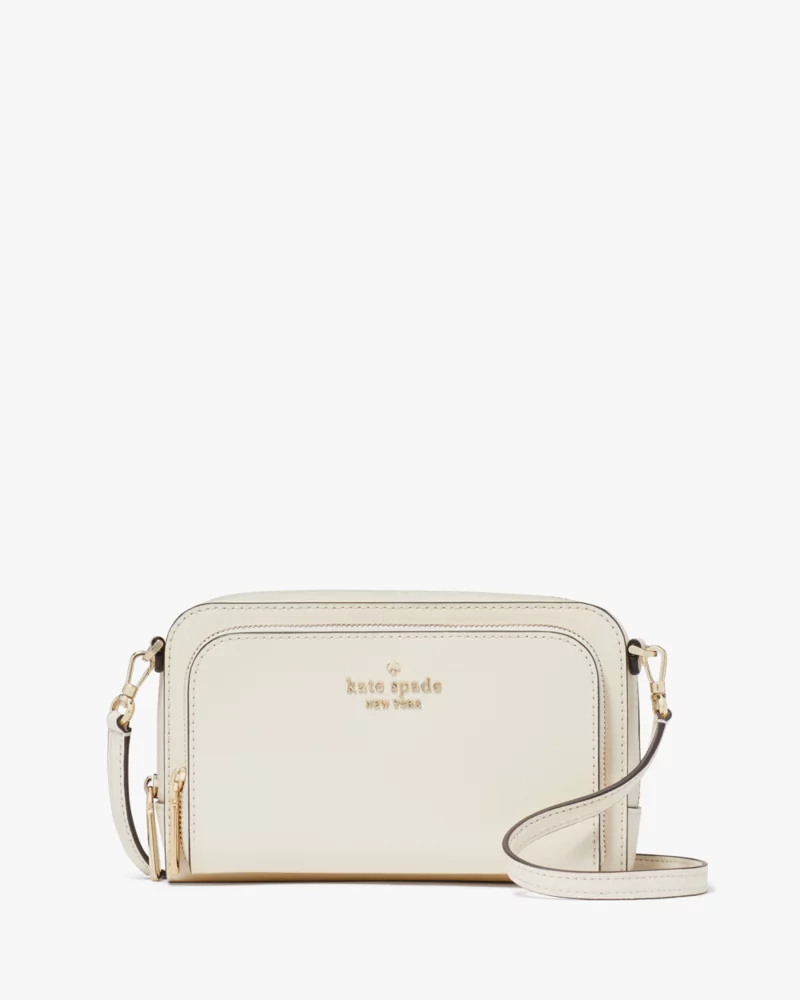
3. Kate Spade Staci Mini
RM319
View Details
4. Fossil Skylar Crossbody
RM319
View Details
5. Kate Spade Quinn Shoulder
RM509
View Details
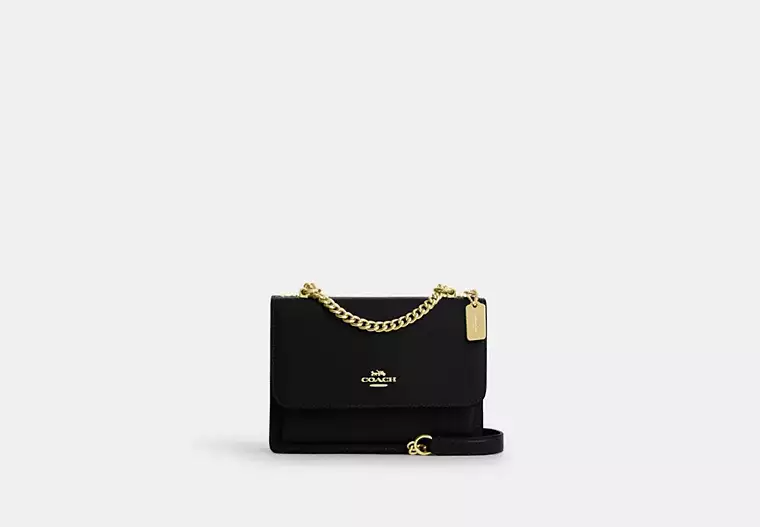
6. Coach Mini Klare
RM629
View Details
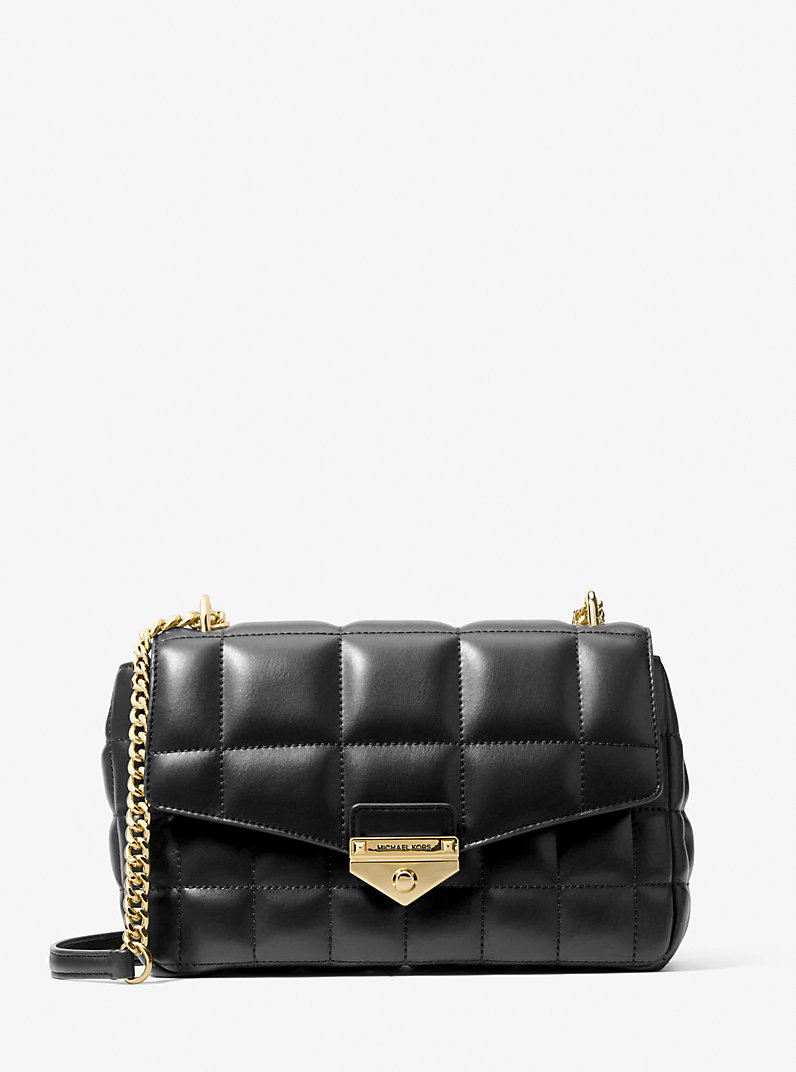
7. MK Soho Quilted Shoulder
RM629
View Details

8. Marc Jacobs Quilted Natasha
RM699
View Details
Why these eight? Each one passes the versatility test (works with 4+ outfit types), uses quality materials that handle Malaysian weather, comes in neutral colours that pair with everything, and represents excellent value at its price point. None of them are seasonal trends that will feel dated in a year.
First-Buy Mistakes to Avoid
I’ve made some of these. Friends have made all of them. Save yourself the regret.
Mistake 1: Buying the Trendiest Style
That bag every influencer on TikTok is carrying right now? It’ll feel dated within 12 months. Your first designer bag should be timeless, not trending. The styles that endure are crossbodies, shoulder bags, and classic satchels in clean silhouettes. Novelty shapes, ultra-micro bags, and heavy seasonal prints are for your third or fourth bag — when you already have a reliable everyday piece to fall back on.
Mistake 2: Choosing a Colour You “Love” Over One That Works
Hot pink is gorgeous. Emerald green is stunning. But if 70% of your wardrobe is black, navy, and earth tones, a hot pink bag will sit unused more often than not. Your first bag should be in a colour that works with what you already own. Black, cognac/tan, and navy are the safest choices. Once you have a reliable neutral, go wild with colour on bag number two or three.
Mistake 3: Buying a Bag That’s Too Small
Mini bags look incredible on Instagram. In real life, if your phone barely fits, you’ll be frustrated within a week. Your first bag should carry at minimum: phone, wallet/cardholder, keys, and one or two essentials (lip colour, tissue, hand sanitiser). If it can’t hold those without a fight, it’s too small for daily use.
Mistake 4: Spending Your Entire Budget on the Bag
Budget RM50-RM80 beyond the bag’s price for care products: a leather conditioner, protective spray, and silica gel packets. These small investments protect your big investment. The Amaboxly blog has a detailed care guide for Malaysian climate conditions — read it before your bag’s first outing.
Mistake 5: Buying From Unverified Sellers to “Save Money”
The RM180 “Coach” bag on Shopee is not Coach. The RM200 “Kate Spade” from an Instagram personal shopper with no receipts is not Kate Spade. Your first designer bag should be unquestionably authentic — from a brand boutique, an authorised department store, or a verified online retailer like Amaboxly that sources directly from US outlets. The disappointment of receiving a fake when you were expecting your first real designer bag is crushing. Don’t risk it.
Your First Bag Wardrobe: A 3-Bag Plan
One bag won’t do everything. But you don’t need twenty. Here’s the three-bag wardrobe that covers 95% of situations.
Bag 1: The Everyday Crossbody (Buy First)
This is the bag you grab without thinking. It carries your essentials, works with casual and semi-formal outfits, and handles daily wear without showing it. A leather crossbody in black or cognac.
Best picks: Fossil Skylar (RM319), Kate Spade Staci (RM319), Coach Mini Klare (RM629)
Bag 2: The Structured Work Bag (Buy Second)
Once your everyday crossbody is sorted, invest in a bag that elevates your professional wardrobe. A satchel or shoulder bag that holds A4 documents and possibly a tablet.
Best picks: Fossil Sydney Satchel (RM459), Kate Spade Quinn (RM509), MK Carson Satchel (RM829)
Bag 3: The Statement Piece (Buy Third)
Now you’ve earned the right to have fun. A quilted chain bag for dinners. A colourful crossbody for weekends. Something with personality that makes you smile.
Best picks: MK Soho Quilted (RM629), Marc Jacobs Quilted Natasha (RM699)
| Bag Role | When to Buy | Budget Range | Style | Colour |
|---|---|---|---|---|
| The Everyday | First | RM300-RM500 | Crossbody | Black or Cognac |
| The Work Bag | Second (3-6 months later) | RM450-RM830 | Satchel or Shoulder | Black or Navy |
| The Fun One | Third (when ready) | RM400-RM700 | Quilted, chain, colour | Whatever makes you happy |
Total investment for the complete three-bag wardrobe: roughly RM1,050-RM2,000 spread over 6-18 months. That covers work, weekends, evenings, travel, and everything in between. You genuinely don’t need more than this — though you’ll probably want more, and that’s okay too.
Frequently Asked Questions
What is the best first designer bag for a Malaysian woman on a budget?
The Fossil Skylar Crossbody in Brandy (RM319) is our top recommendation for budget-conscious first-time buyers. You get genuine leather, a beautiful warm colour that pairs with most Malaysian wardrobes, and a timeless crossbody silhouette that works for both casual and semi-formal occasions. The Kate Spade Staci Mini Crossbody (RM319) is equally excellent if you prefer a brand with stronger name recognition. Both deliver quality that far exceeds their price point.
Is a crossbody or a tote better as a first designer bag?
For most first-time buyers, a crossbody is the better choice. Crossbodies are more versatile (work, weekends, evenings, travel), more comfortable for daily wear, and more secure in crowded Malaysian settings like malls and public transport. Totes are better for heavy carriers who need to haul laptops and files, but they’re less practical as an everyday bag. Start with a crossbody, then add a structured tote or satchel as your second bag when your needs demand more capacity.
Should my first designer bag have visible branding or logos?
This is entirely personal preference, and there’s no wrong answer. Visible logos (like the MK monogram or Coach C pattern) give you immediate brand recognition — which feels exciting for a first purchase. Minimal branding (like the Fossil Skylar or Coach Erin) lets the leather quality speak for itself and looks more understated. Consider this: will you feel more joy from people recognising your bag’s brand, or from personally knowing you own something well-made? Neither answer is better — just different.
How do I know if a bag is worth the money?
Calculate cost-per-use. Take the bag’s price and divide it by how many times you’ll realistically carry it in a year. A RM459 bag carried 200 times costs RM2.30 per use — less than a cup of kopi. A RM150 trendy bag carried 30 times before you tire of it costs RM5 per use. Beyond maths, trust your hands: does the leather feel rich? Does the hardware have weight? Do the zippers glide? Quality materials are unmistakable once you’ve felt them. Visit a boutique to calibrate your senses, then buy at outlet-sourced prices from stores like Amaboxly.
What colour should my first designer bag be?
Black is the safest choice — it matches everything, hides wear well, and transitions seamlessly from day to night, office to weekend, Western to traditional wear. Cognac/tan is the second-best choice — it’s warmer, develops a beautiful patina over time, and pairs especially well with Malaysian skin tones and earth-tone wardrobes. Navy is an excellent third option for women who wear a lot of lighter colours. Save bold colours and prints for your second or third bag, when your neutral base is covered.
Where is the best place to buy authentic designer bags in Malaysia?
Brand boutiques (Pavilion KL, KLCC, Mid Valley) sell at full retail price — authentic but expensive. Department stores (Parkson, Isetan) carry some brands at retail pricing. Online, Amaboxly (amaboxly.com) sources directly from US outlets, offering 30-50% savings over Malaysian retail with 100% authenticity guaranteed. Avoid unverified Shopee sellers, Instagram “personal shoppers” without transparent sourcing, and night market stalls that sell replicas. Your first designer bag deserves certainty — buy from a source you can trust completely.
Will people judge me for buying a designer bag if I’m young or earn a modest salary?
Some might. Most won’t. And the ones who do are projecting their own insecurities about money. Here’s the truth: a RM300-500 bag bought with your own earnings, within your means, is a perfectly reasonable purchase at any income level. It’s not about flaunting wealth — it’s about choosing quality over quantity. You’re buying fewer, better things instead of replacing cheap things repeatedly. That’s financially responsible, not irresponsible. Carry your bag with confidence. You earned it.
Related Reading
- Coach Outlet Online Malaysia: How to Get 70% Off Authentic Designer Bags
- How to Clean a Coach Signature Canvas Bag (Without Ruining It)
- How to Spot a Fake Coach Bag: 10-Point Authentication Checklist (2026)
- How to Store Designer Bags Properly: Malaysian Climate Edition
Browse all products at Amaboxly →
Frequently Asked Questions
Where can I buy authentic designer in Malaysia?
You can buy authentic designer in Malaysia through Amaboxly, a US personal shopper that sources directly from official designer outlet stores in the USA at 40-70% off retail. Every item is 100% authentic with a 30-day warranty.
How much does designer cost through Amaboxly?
Through Amaboxly, designer prices start from RM309 for wallets and RM399 for crossbody bags — up to 76% below Malaysian retail — because items are bought direct from US outlet stores, not local boutiques.
Is Amaboxly authentic and safe to buy from?
Yes. Amaboxly sources every product directly from official Coach, Kate Spade, Michael Kors, Fossil and Tory Burch outlet stores in the USA. All items are 100% authentic and carry a 30-day warranty on manufacturing defects.
How long is shipping to Malaysia?
Amaboxly delivers within 5-7 business days to Malaysia, with free shipping for Peninsular Malaysia. International shipping to Singapore, Thailand, Indonesia and 25+ other countries is also available.
Can I pay in installments?
Yes. Amaboxly offers Buy Now Pay Later via GrabPay PayLater and SPayLater — split any purchase into 3 interest-free monthly payments at no extra cost.
