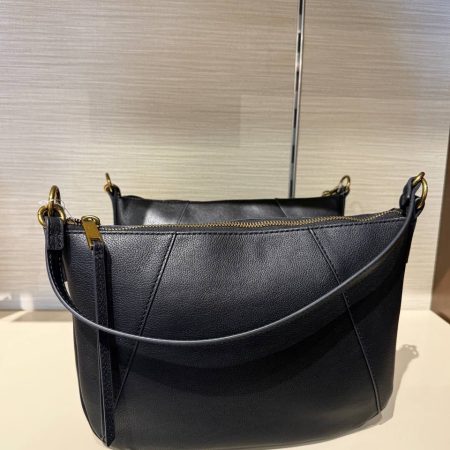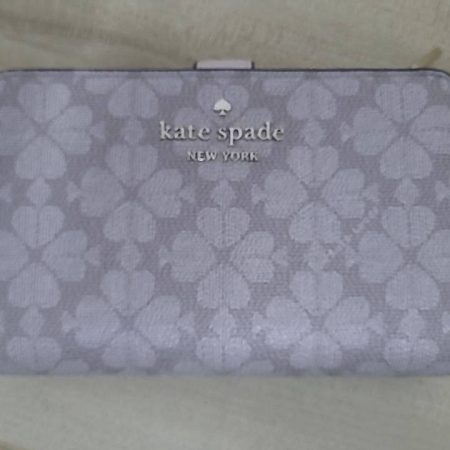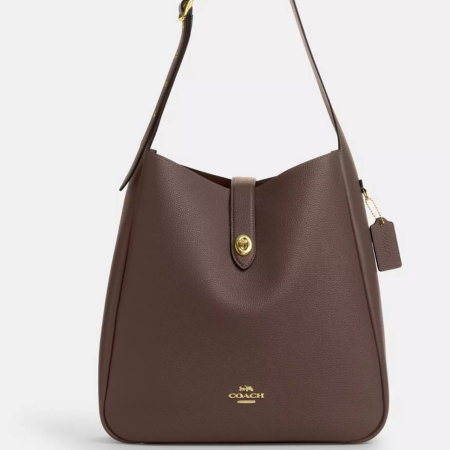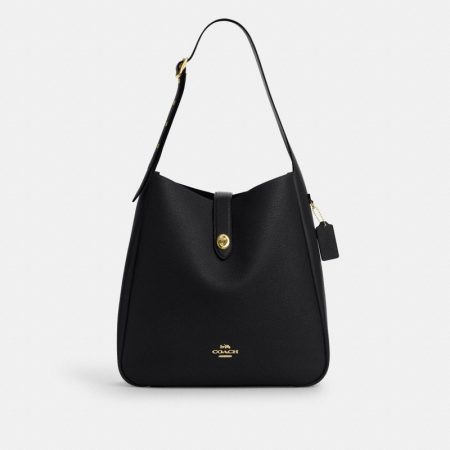



Last year, a friend showed me a “Coach” bag she’d bought from an Instagram seller for RM180. She was thrilled. But the moment I held it, I knew.
The leather was stiff with that chemical smell — like a new car air freshener, not like leather. The stitching was uneven at the corners. The zipper pull had a visible mould seam. And the interior lining was a slightly wrong shade of tan, with a Coach logo about 15% too large.
She’d been scammed. And she’s far from alone.
From Petaling Street to Shopee to Instagram “personal shoppers,” fake designer bags are everywhere in Malaysia. And they’ve gotten disturbingly good.
The Fake Bag Problem in Malaysia
Let me be blunt about the scale of this. According to Malaysian customs data, designer bags are among the top five most-seized counterfeit goods at KLIA. The fakes flowing in from China are categorised into tiers. (Looking for guaranteed authentic bags? See our curated list of the best designer bags under RM500 in Malaysia — every bag verified authentic.) — “AAA,” “mirror quality,” and “1:1” — each representing a different level of copying accuracy.
The cheapest fakes (RM30-RM80) are easy to spot. Wrong materials, sloppy stitching, misspelled brand names. These are the bags at Petaling Street night market that nobody seriously mistakes for real.
The dangerous ones are the mid-tier and high-tier fakes (RM150-RM400). These use decent leather, accurate-looking logos, and packaging that mimics the original down to the dust bag colour. In photographs, they’re nearly indistinguishable from authentic bags. Online sellers build elaborate stories — “outlet sale,” “staff purchase,” “overstock clearance” — to justify prices that are too low to be real but high enough to seem plausible.
And that’s the trap. Nobody thinks they’re buying a fake when they spend RM300 on a “Coach” bag from a seller with 4.8 stars and 2,000 reviews.
Universal Red Flags That Apply to Every Brand
Before we get into brand-specific authentication, here are the tells that work across Coach, Kate Spade, and Michael Kors. These are the first things I check with any bag.
1. The Smell Test
Genuine leather has a subtle, warm smell. It’s natural, slightly earthy, and pleasant. Fake leather smells of chemicals — that harsh, synthetic scent that hits you the moment you open the dust bag. In my experience, the smell test catches about 70% of fakes instantly. Your nose knows, even if your eyes are fooled.
2. Stitching Consistency
Real designer bags have perfectly even stitching. Every stitch is the same length, the same tension, the same distance from the edge. Check the areas where stress concentrates: strap attachments, corners, zipper ends. Fakes almost always show irregularity in these high-stress zones because they’re harder to sew precisely.
Count the stitches per inch in several places. On an authentic bag, the count will be identical everywhere. On a fake, it often varies by 1-2 stitches.
3. Hardware Weight and Finish
Hold a zipper pull between your fingers. On an authentic Coach, Kate Spade, or MK bag, it should feel heavy and solid. Fakes use lighter alloys that feel hollow. Run your thumbnail along the edge of the hardware — authentic pieces have smooth, rounded edges. Fakes often have a slight ridge or roughness from the casting mould.
4. Price Too Good to Be True
This is the simplest test. If someone’s selling a “brand new” Coach crossbody for RM150 when the real one retails for RM629, it’s fake. Period. No outlet sale, employee discount, or overstock clearance brings authentic bags down to 75% off retail. At Amaboxly, for example, a Coach Mini Klare Crossbody is RM629 — that’s already an outlet-sourced price. If you see it for RM200 elsewhere, run.
How to Authenticate Coach Bags
Coach is one of the most counterfeited brands in Southeast Asia. Here’s what to look for. (For a full breakdown of Coach quality versus other brands, see our Coach vs Kate Spade vs Michael Kors comparison.)
The Creed Patch
Every authentic Coach bag has a leather creed patch inside, usually stamped (not printed) with the Coach logo, a style number, and “Made in” location. The stamping should be clean, evenly spaced, and deeply pressed into the leather. On fakes, the stamping is often shallow, unevenly spaced, or slightly blurry at the edges.
Critically: the style number on the creed patch should match the style number on the bag’s hangtag and care card. Fakes frequently use mismatched numbers because counterfeiters reuse creed patches across different bag styles.
The Signature C Pattern
On authentic Coach signature canvas (like the Coach Stanton Crossbody or Coach Fiona Zip Tote), the interlocking C pattern is perfectly symmetrical. The Cs should be evenly spaced, and the pattern typically aligns at the centre seam of the bag. On fakes, the pattern is often slightly misaligned at seams, or the Cs are printed at inconsistent spacing.
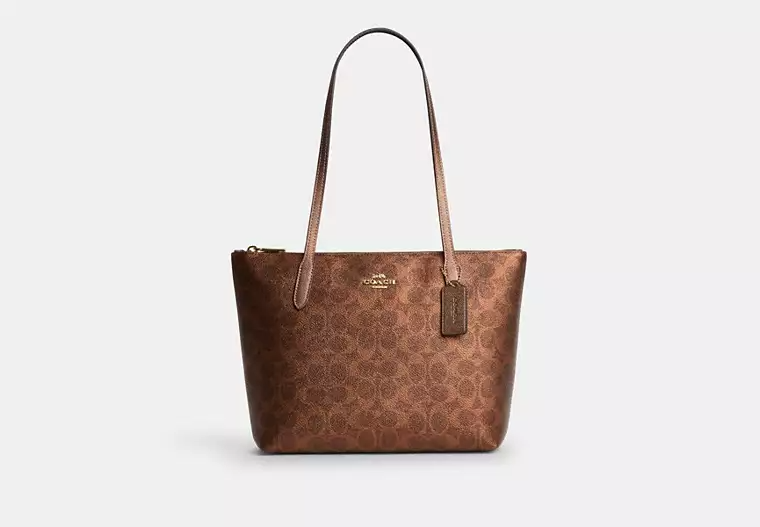
Coach Fiona Zip Tote — RM459
Look at the signature C pattern on this authentic Coach Fiona. The interlocking Cs are perfectly uniform, evenly spaced, and printed with sharp, clean edges. The metallic canvas has a consistent sheen without blotchy patches. This is what to compare against when evaluating a Coach signature bag.
Coach Zipper Quality
Authentic Coach bags use YKK zippers or Coach-branded zippers. The zipper pull should be engraved (not printed) with the Coach logo or be plain metal on some outlet styles. Fakes often have unbranded zippers or use cheaper zip mechanisms that catch and stick. Pull the zipper across the full length — it should glide smoothly without any resistance.
The Hangtag
Coach bags come with a leather hangtag attached to one of the hardware rings. The tag should be real leather (not plastic or cardboard covered in faux leather) and have clean, even edges. Authentic hangtags are cut precisely — no fraying, no rough edges. The Coach name is stamped into the leather, not printed on top of it.
How to Authenticate Kate Spade Bags
Kate Spade fakes have gotten sophisticated in the last two years. Here’s where they still fall short.
The Interior Label
Authentic Kate Spade bags have a fabric label stitched inside with the “kate spade new york” branding in lowercase letters. The font should be clean, the stitching attaching the label should be neat, and the text should be centred. On recent models (2024-2026), the label also includes a QR code or serial code. Fakes either omit this code or use a generic one that doesn’t scan to the Kate Spade website.
The Spade Logo
The Kate Spade spade symbol is one of the most telling authentication points. On authentic bags, the spade is precisely symmetrical. The curves are smooth, the point at the bottom is sharp, and the overall proportions are consistent across all hardware and labels on the bag. On fakes, the spade is often slightly asymmetrical — one curve wider than the other, or the stem slightly off-centre.
Compare the spade on the exterior hardware to the spade on the interior label. On an authentic bag, they’re identical. On many fakes, they’re subtly different because different factories produced different components.
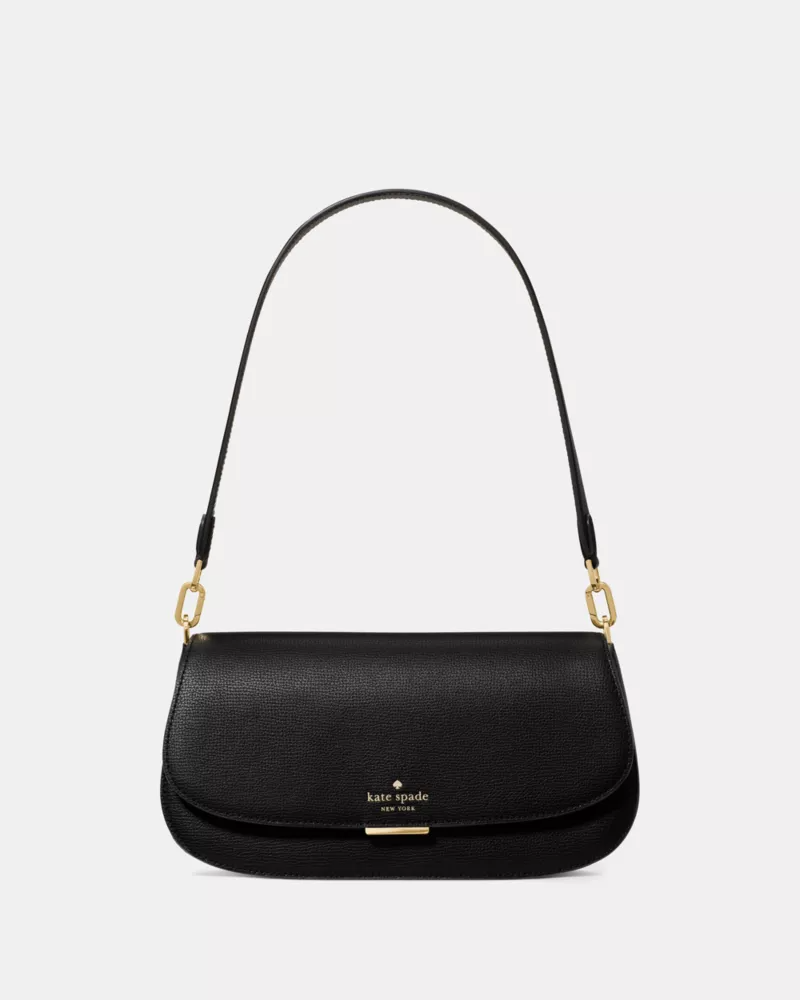
Kate Spade Quinn Shoulder Bag — RM509
Examine the hardware and stitching on this authentic Kate Spade Quinn. The spade logo on the front clasp is perfectly proportioned and symmetrical. The leather is evenly finished without discolouration or rough patches. The stitching runs in perfectly straight lines with uniform spacing. This is your reference standard.
Kate Spade Packaging
Authentic Kate Spade bags come in a branded dust bag (fabric drawstring bag), often with a care card and sometimes tissue wrapping. The dust bag should be a consistent off-white or ivory colour with the Kate Spade name printed in clean, dark text. Fakes often use dustbags that are slightly too white (bleached-looking), too thin, or have slightly blurry printing.
How to Authenticate Michael Kors Bags
Michael Kors is the most counterfeited of the three brands in Malaysia, largely because of the MK monogram’s popularity. Here’s how to separate real from fake.
The MK Logo Hardware
This is where fakes fail most often. On authentic MK bags, the circular MK logo hardware (found on clasps, zippers, and decorative elements) is crisply engraved with sharp, clean edges. The “M” and “K” letters should be clearly defined with no fuzziness. On fakes, the engraving is shallow, the letters are thicker than they should be, and there’s often a slight “fill” in the engraved areas where casting material wasn’t fully removed.
Hold the hardware up to strong light and examine it at an angle. Authentic MK hardware catches light uniformly. Fake hardware often has a slightly mottled finish — shinier in some spots, duller in others — because the plating is uneven.
The Interior Lining
Michael Kors uses a signature monogram lining inside most bags. The MK letters on the lining should be crisp, evenly spaced, and printed in a consistent colour. The lining fabric should feel smooth and tightly woven. Fakes frequently get the lining wrong — the colour is slightly off (too brown, too grey), the MK print is too large or too small, or the fabric feels coarse and loosely woven.
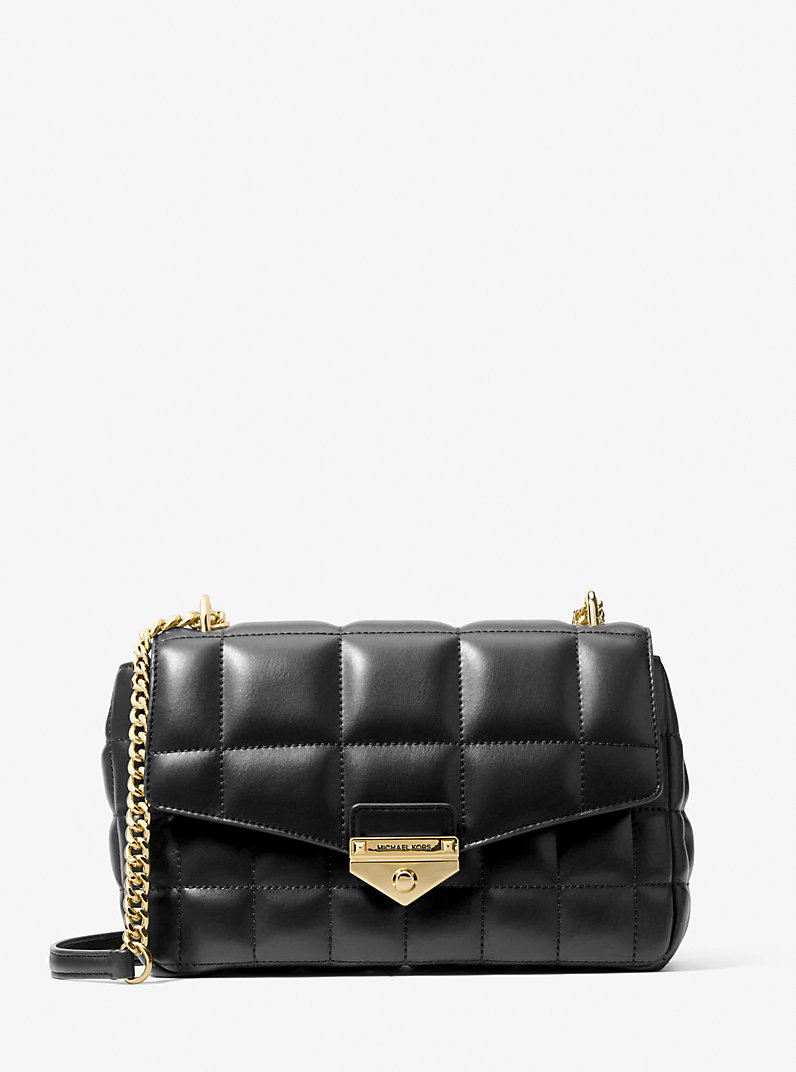
MK Soho Quilted Shoulder Bag — RM629
The quilting pattern on this authentic MK Soho is perfectly uniform — each diamond is the same size, and the stitching follows precise parallel lines. The gold chain hardware has a deep, rich finish without any tarnishing or uneven plating. On fake quilted MK bags, the quilting is often puffy and uneven, with visible stitching inconsistencies where the diamond pattern meets the edges.
MK Serial Numbers and Tags
Authentic MK bags have an interior leather tag with a serial number and style number. The style number format typically follows a pattern like “35S6G1SL3Y” — a mix of letters and numbers. Cross-reference this with the bag’s listing on the Michael Kors official website or trusted retailers. Fakes often use serial numbers that don’t correspond to any real MK product, or they reuse the same serial number across multiple bag styles.
The Saffiano Texture
Many MK bags use Saffiano-textured leather. On authentic bags, the cross-hatch pattern is fine, even, and consistent. The texture is slightly raised and has a distinct feel under your fingertips. Fake Saffiano is often too shiny, too deep, or inconsistent — some areas of the bag will have a different texture depth than others. Run your hand across the entire surface. Real Saffiano feels the same everywhere.
Where Malaysian Shoppers Encounter Fakes
Let me walk through the specific scenarios where Malaysian buyers get burned.
Shopee and Lazada
This is ground zero. Thousands of listings show “authentic” Coach, Kate Spade, and MK bags at 60-80% below retail. Many use stolen photos from legitimate sellers (including, sometimes, photos from Amaboxly). The giveaways: prices that are impossibly low, seller accounts less than 6 months old, product descriptions copied verbatim from official brand websites, and reviews that are either suspiciously positive or clearly purchased.
Some sellers are clever — they price fakes at RM300-RM400 (not suspiciously cheap) and claim to be “personal shoppers” who buy from US outlets. The photos look real because they are real photos — of authentic bags. The bag you receive is not the bag in the photos.
Instagram and WhatsApp Sellers
The “personal shopper” model has exploded on Instagram. Someone posts stories from a US outlet mall, shows themselves “shopping,” and takes orders. Some of these sellers are legitimate. Many are not. The scam works because the shopping videos build trust, but the bags shipped to customers are sourced from a completely different supply chain.
Legitimate personal shoppers can verify their purchases with receipts that include the specific bag’s style number, the outlet location, and a date that matches their travel timeline. If a seller can’t provide this, or if the receipt looks like a generic template, walk away.
Night Markets and Physical Stalls
Petaling Street, Jonker Street in Melaka, and various pasar malam stalls openly sell counterfeit bags. These are the most obvious fakes and most buyers know what they’re getting. The risk here is lower because the prices (RM30-RM100) don’t pretend to be authentic. But some stalls have started displaying “high-quality replicas” at RM200-RM400, using dust bags and gift boxes to create an illusion of authenticity.
How to Buy Safely in Malaysia
After years of seeing people get burned, here’s my practical advice for buying authentic designer bags in Malaysia.
Buy From Verified Sources
Official brand boutiques (Pavilion KL, KLCC, Mid Valley) are the safest option but also the most expensive. Authorised online retailers like Amaboxly source directly from US outlets and boutiques, offering authentic bags at significantly lower prices. The key difference between Amaboxly and a random Shopee seller — and if you’re ordering from overseas, our international shipping guide for designer bags explains exactly how the process works — is: traceable sourcing, consistent inventory, and a business reputation built over years of verified sales.
Always Check the Serial Number
Before you buy, ask for the serial number and style number. Google it. Check it against the brand’s official website or databases like Entrupy. If the seller can’t provide a serial number, or if the number doesn’t match any known product, don’t buy.
Compare Against Known Authentic Examples
This is why browsing authentic product listings matters. Study the details on verified authentic bags from established retailers. Look at stitch patterns, hardware shapes, logo proportions, and interior linings. When you’ve seen enough real bags, the fakes start to stand out immediately.
For reference, you can compare any bag against the authentic product photos on Amaboxly’s listings:
Trust Your Hands More Than Your Eyes
Photos lie. Filters, lighting, and angles can make a RM100 fake look indistinguishable from the real thing. But your hands don’t lie. The weight of the hardware. The texture of the leather. The smoothness of the zipper. If you can handle a bag before buying — even at a brand boutique just for comparison — your tactile sense will catch things your eyes miss.
| Check Point | Authentic | Fake |
|---|---|---|
| Leather Smell | Subtle, natural, warm | Chemical, sharp, synthetic |
| Stitching | Perfectly even, same count per inch everywhere | Uneven at corners and stress points |
| Hardware Weight | Heavy, solid, smooth edges | Light, hollow-feeling, rough mould lines |
| Zipper | YKK or brand-engraved, glides smoothly | Unbranded, catches or sticks |
| Interior Lining | Tightly woven, correct colour, crisp print | Loose weave, colour slightly off, blurry print |
| Logo Proportions | Consistent across all hardware and labels | Varies between exterior and interior elements |
| Serial Number | Unique, verifiable, matches style number | Generic, doesn’t verify, mismatched |
| Price | Within 20-40% of retail (outlet pricing) | 60-80% below retail or higher |
Looking for more options? Check out our guide on How to Spot a Fake Coach Bag for more inspiration.
Related reading: Michael Kors Outlet vs Mainline — another popular guide from our collection.