Menu



Journal › International Shopping
International ShoppingCompare designer-bag offers in Malaysia, the USA and Singapore using the exact reference, current quotes, payment conversion, delivery, import charges and return terms. Model names are comparison prompts, not live prices or stock offers.
Quick answer
For a Singapore buyer, compare current offers for the exact same designer bag and the complete cost in SGD: payment conversion and fees, delivery or travel, import tax still payable and possible return costs. A Malaysia-based buyer can compare complete totals in MYR. A country label or an older item price does not establish a verified saving.
This guide provides model and cost-comparison prompts, not live prices or stock offers. Confirm the seller, reference, condition, available purchase records and written terms. Amaboxly shop orders, Buy for me and customer-purchased forwarding have separate quotes and responsibilities; retailer acceptance must be checked. Use the matched-offer checklist →
Compare the same bag and the complete cost of getting it home. A Singapore, Malaysian or US sticker price is only one part of the decision. Match the reference and condition, then compare a dated final quote, payment conversion, delivery or travel, import charges and return arrangements.
This guide provides a comparison method for buyers in Singapore and Malaysia. The model names below help you request a matching offer; they are not live prices, stock confirmations or guaranteed savings. Ask the seller for the exact item and current written terms before paying.
Afghanistan · Åland Islands · Albania · Algeria · American Samoa · Andorra · Angola · Anguilla · Antarctica · Antigua and Barbuda · Argentina · Armenia · Aruba · Australia · Austria · Azerbaijan · Bahamas · Bahrain · Bangladesh · Barbados · Belarus · Belau · Belgium · Belize · Benin · Bermuda · Bhutan · Bolivia · Bonaire, Saint Eustatius and Saba · Bosnia and Herzegovina · Botswana · Bouvet Island · Brazil · British Indian Ocean Territory · Brunei · Bulgaria · Burkina Faso · Burundi · Cambodia · Cameroon · Canada · Cape Verde · Cayman Islands · Central African Republic · Chad · Chile · China · Christmas Island · Cocos (Keeling) Islands · Colombia · Comoros · Congo (Brazzaville) · Congo (Kinshasa) · Cook Islands · Costa Rica · Croatia · Cuba · Curaçao · Cyprus · Czech Republic · Denmark · Djibouti · Dominica · Dominican Republic · Ecuador · Egypt · El Salvador · Equatorial Guinea · Eritrea · Estonia · Eswatini · Ethiopia · Falkland Islands · Faroe Islands · Fiji · Finland · France · French Guiana · French Polynesia · French Southern Territories · Gabon · Gambia · Georgia · Germany · Ghana · Gibraltar · Greece · Greenland · Grenada · Guadeloupe · Guam · Guatemala · Guernsey · Guinea · Guinea-Bissau · Guyana · Haiti · Heard Island and McDonald Islands · Honduras · Hong Kong · Hungary · Iceland · India · Indonesia · Iran · Iraq · Ireland · Isle of Man · Italy · Ivory Coast · Jamaica · Japan · Jersey · Jordan · Kazakhstan · Kenya · Kiribati · Kuwait · Kyrgyzstan · Laos · Latvia · Lebanon · Lesotho · Liberia · Libya · Liechtenstein · Lithuania · Luxembourg · Macao · Madagascar · Malawi · Malaysia · Maldives · Mali · Malta · Marshall Islands · Martinique · Mauritania · Mauritius · Mayotte · Mexico · Micronesia · Moldova · Monaco · Mongolia · Montenegro · Montserrat · Morocco · Mozambique · Myanmar · Namibia · Nauru · Nepal · Netherlands · New Caledonia · New Zealand · Nicaragua · Niger · Nigeria · Niue · Norfolk Island · North Macedonia · Northern Mariana Islands · Norway · Oman · Pakistan · Palestinian Territory · Panama · Papua New Guinea · Paraguay · Peru · Philippines · Pitcairn · Poland · Portugal · Puerto Rico · Qatar · Reunion · Romania · Rwanda · São Tomé and Príncipe · Saint Barthélemy · Saint Helena · Saint Kitts and Nevis · Saint Lucia · Saint Martin (Dutch part) · Saint Martin (French part) · Saint Pierre and Miquelon · Saint Vincent and the Grenadines · Samoa · San Marino · Saudi Arabia · Senegal · Serbia · Seychelles · Sierra Leone · Singapore · Slovakia · Slovenia · Solomon Islands · Somalia · South Africa · South Georgia/Sandwich Islands · South Korea · South Sudan · Spain · Sri Lanka · Sudan · Suriname · Svalbard and Jan Mayen · Sweden · Switzerland · Syria · Taiwan · Tajikistan · Tanzania · Thailand · Timor-Leste · Togo · Tokelau · Tonga · Trinidad and Tobago · Tunisia · Türkiye · Turkmenistan · Turks and Caicos Islands · Tuvalu · Uganda · United Arab Emirates · United Kingdom (UK) · United States (US) Minor Outlying Islands · Uruguay · Uzbekistan · Vanuatu · Vatican · Venezuela · Vietnam · Virgin Islands (British) · Virgin Islands (US) · Wallis and Futuna · Western Sahara · Yemen · Zambia · Zimbabwe
Item, retailer, carrier, postcode and destination eligibility are confirmed for each request.Request current quotes from the sellers you are considering. Use SGD for a Singapore buyer or MYR for a Malaysia-based buyer. An overseas price is useful only when the offer describes the same reference, material, size, colour, condition and included items.
The following are comparison prompts for the models mentioned in this guide, not offers of available stock.
| Bag or model label | Match before comparing | Request in each written quote |
|---|---|---|
| Coach Crossbody (Pebble Leather) | Exact style reference, size, leather, colour and condition | Seller and sales channel, current item price, included items and return terms |
| Kate Spade Sam Crossbody | Exact reference, material, dimensions and strap configuration | Current photographs, accessories, final invoice and delivery terms |
| Michael Kors Jet Set Tote | Exact reference, size, material, colour and hardware | Condition, included items, delivery charges and return process |
| Fossil Rachel Satchel | Exact reference, dimensions, material and condition | Current offer, accessories, seller documents and after-sales terms |
| Coach Tabby Shoulder Bag | Exact reference, size, material, colour and strap details | Seller and sales channel, final price and cancellation or return terms |
| Tory Burch Fleming Convertible | Exact reference, size, material, hardware and condition | Current photographs, included accessories, delivery and return arrangements |
Keep the date and reference beside each quote. Use the rate and fees from your actual payment method, then add the charges for the route you will use. Without matching current offers and complete costs, this guide cannot establish a verified country or seller price winner.
Compare what each quote includes rather than assuming that every seller or country applies a fixed markup. A local invoice, an overseas retailer order and an assisted purchase can cover different services and costs.
Ask which charges are estimates and which are confirmed. Do not count the same shipping or tax amount twice, or assume that a quoted item price includes every service.
Convert the current quotes using the rate and fees you will actually be charged. A rate printed in an older article does not establish today’s payment cost, and a weaker or stronger currency alone does not prove that an overseas route is cheaper. Compare the complete totals in one currency.
A Singapore or US purchase is not automatically cheaper than a Malaysian purchase. Ask each seller for a dated quote for the same model reference, material, size, colour and condition. Include the costs of getting the bag home and the return arrangements before choosing a route.
For a Singapore buyer, compare complete costs in SGD; for a Malaysia-based buyer, use MYR. Use the payment rate and fees you will actually be charged, then include delivery or travel, handling and any import tax still payable. Do not rely on a fixed exchange rate or an old country-wide saving percentage.
For a Singapore retail purchase, use the final invoice. IRAS requires GST-registered businesses to quote GST-inclusive prices to the public. Do not add the same tax again when it is already included or collected.
Singapore citizens and permanent residents do not qualify as tourists under Singapore’s Tourist Refund Scheme. Other travellers must meet its full conditions and buy from a participating retailer. IRAS states that handling fees reduce the refund; do not subtract an assumed full refund or a fixed fee before checking the actual amount.
If you buy a bag in Malaysia or another country and bring it into Singapore, check Singapore Customs’ GST import relief and declaration rules. Newly acquired overseas goods can attract Singapore GST even when foreign tax was paid. Eligibility for traveller relief depends on the traveller and trip; keep the receipt and include any GST payable after eligible relief.
See the Singapore–Malaysia bag comparison checklist for the documents and cost items to compare. A price winner can be established only from matched, current offers and their complete costs.
A US offer is another route to compare. Obtain an itemised quote and confirm the seller accepts the delivery, payment and export arrangement before ordering. A lower item price alone does not establish a lower delivered total.
First identify who is selling the item and which service you are using. With an Amaboxly shop order you buy the listed item under its product and shop terms. Buy for me is a separately reviewed assisted-purchase request. With customer-purchased forwarding, you place and pay for the retailer order yourself. The Singapore buying and forwarding guide explains the route checks and documents to keep.
Convert each quoted charge into the comparison currency and add each cost once. Keep already-paid taxes and delivery charges separate from charges still due. Ask the seller or service provider to confirm an unclear line before accepting the quote. No example total or saving is asserted here without the matching item and route quote.
Before using an overseas buying route, confirm who sells the bag and who provides the purchase or forwarding service. For Buy for me, wait for the itemised quote and acceptance. For customer-purchased forwarding, obtain receiving approval before placing your retailer order. Assistance does not override a retailer’s payment, address or export restrictions.
For an Amaboxly shop item, check the product page and shipping policy for the stock category and estimated delivery. A retailer order, a preorder and an item already held in stock can have different timelines. Confirm the estimate for your item and destination rather than applying one delivery period to every route.
Ask what purchase records can be supplied for the exact bag, which charges the quote includes and how a return would be handled. Do not assume that every service includes an individual original retailer receipt or local brand warranty service.
Compare references within each brand instead of applying one saving percentage to the entire brand. These model and collection names are starting points for a seller enquiry, not confirmation of current availability.
For a crossbody, Tabby, Willow or Signature canvas offer, request the exact style reference, size, material, colour, hardware and condition. Record the seller and whether the offer describes an outlet, boutique or other sales channel. Compare the same item and included accessories before deciding which quote is better.
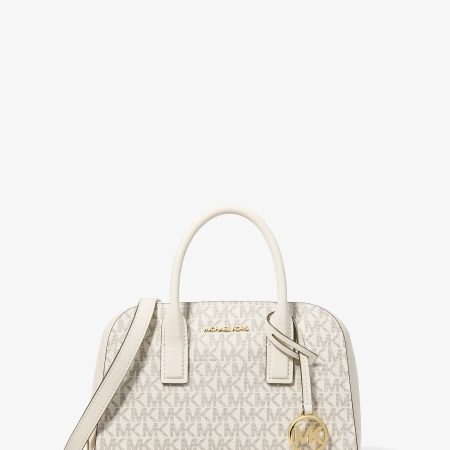
For Kate Spade Sam or a Michael Kors Jet Set offer, match the exact reference and dimensions rather than relying on the collection name. Confirm the material, straps, accessories, condition and seller documents. Request the current final price and the return process for that purchase channel.
For a Fleming, Kira or Eleanor offer, confirm the exact reference, size, material, colour, hardware and condition. Include delivery, payment fees and any import charges still payable in the comparison. A higher-priced item does not by itself establish a larger saving from any country.
For a Rachel Satchel or another Fossil offer, ask for the exact reference, current photographs, included items and final quote. Compare that complete offer with a local alternative and check the return arrangements. Do not infer a current price or stock position from an older example.
For a bag offered in Singapore, Malaysia or the USA, identify the exact seller and item before assessing the purchase. Ask for the model reference, condition, included accessories and current photographs. Check which seller is named on the invoice and which written terms apply to that transaction.
Ask what documents are available: the seller’s invoice, order confirmation, payment record and, where supplied, the original retailer receipt. Check that the item description and reference match the bag being offered. Review the item and its records together; this guide does not authenticate any particular bag or promise that every purchase includes the same documents.
Keep the listing, written seller statements, invoice, parcel photographs and unboxing evidence. If the records or item details do not agree, ask the seller to resolve the discrepancy before paying. A country label or seller category alone does not establish the identity, condition or provenance of a specific item.
For Amaboxly shop orders, read the Refund & Returns Policy and the exact product terms before ordering. For Buy for me or customer-purchased forwarding, check the retailer’s return deadline, exclusions, return address and who pays return freight. International delivery does not pause a retailer’s return period.
Confirm any manufacturer repair or warranty eligibility for the exact item, sales channel and country where you want service. Do not assume a US warranty is serviced in Singapore or Malaysia. Amaboxly can provide its own service records where available; it cannot create a retailer invoice or approve a manufacturer’s claim. Retain written confirmation of any after-sales arrangement you rely on.
Check the import rules for the country receiving the bag and the way it will arrive. A receipt, personal-use description or low item price does not by itself establish tax relief. Ask for the complete cost and supporting records before comparing a Singapore, Malaysian or US offer.
The IRAS consumer-import guide explains how transport mode and cost, insurance and freight (CIF) value affect import GST. A GST-registered overseas supplier may collect GST at purchase under the applicable low-value-goods rules. Check the invoice and the import conditions before deciding what tax remains payable; do not assume that a small parcel is automatically tax-free.
For a bag you carry into Singapore after shopping abroad, use the traveller-relief and declaration guidance in the Singapore section above. Keep a passenger purchase and a postal or courier shipment as separate route checks.
The Royal Malaysian Customs low-value-goods FAQ (PDF, 6 November 2023) distinguishes sales tax on the purchase from import-clearance requirements. Its air-courier de-minimis explanation uses cost, insurance and freight value. A low item price alone therefore does not establish a tax-free delivered purchase.
Before ordering, confirm the current treatment for the exact item and route with the seller, carrier or Royal Malaysian Customs. Ask what tax has already been collected and what evidence is needed for import clearance. This guide does not assign a tariff classification, duty band or exemption to a particular handbag.
Singapore Customs’ postal and courier guidance separates service-provider handling and administration fees from GST or duty. Compare the complete itemised totals without treating a service fee as a tax or counting a collected amount twice.
Ask which purchase and shipping records are available for your order, who prepares the declaration and which charges remain payable. Keep the retailer or seller invoice, order confirmation and accurate item details. Amaboxly’s shipping policy says destination import charges may be payable separately and that accurate item values are declared.
For Singapore forwarding, use the route guide’s invoice, customs-value and service-fee checklist. For delivery to Malaysia or another eligible destination, confirm that destination’s requirements separately. A receipt is a purchase record; do not treat it as a promise of tax relief, preferential customs treatment or a particular assessment.
Use the matched current quotes to choose a route for the particular item. The best fit depends on the complete cost, timing, seller documentation and return arrangements, not a fixed country-wide discount.
For Coach, Kate Spade, Michael Kors and Fossil items, compare the exact reference and condition. Keep a local final-price quote beside the overseas itemised quote, and include the payment, delivery and import costs that apply to you. A different size, material or condition is not an equivalent offer.
For a Tory Burch Fleming, Kira or Eleanor, a Coach Tabby or Willow, or another higher-priced item, request the same documents and complete-cost breakdown. Check whether the quoted offer includes the accessories you need and how a return would be handled. Do not turn an assumed percentage into an expected saving.
A local seller may suit you when it confirms immediate availability, convenient collection or after-sales arrangements that matter to you. Ask what services and return terms apply to the exact purchase; do not assume that every boutique or sales channel includes the same benefits.
Consider an overseas offer when its matched complete quote and practical terms meet your needs. Confirm retailer acceptance, delivery eligibility, timing and the return address before ordering. For Singapore delivery, retain the GST and traveller checks above; for Malaysia or another eligible destination, confirm that route’s import and delivery requirements separately.
Compare the exact item, dated written offers and complete costs before deciding where to buy. A country label, old exchange rate or earlier percentage-saving claim does not establish the amount you will pay now.
Send the seller or service provider the model reference, colour, condition and destination postcode. Ask what the quote includes, which charges may still be due, what purchase documents are available and how a return would work.
For an Amaboxly shop offer, confirm the seller, product category, item details and available purchase documents on the product page and in the written reply. A Buy for me request or customer-purchased forwarding shipment has separate responsibilities and retailer terms.
Before choosing a Singapore, Malaysia or US offer, keep its current complete quote beside the matching item records and return arrangements. Ask about any document or after-sales condition that matters to you before paying; do not rely on a blanket sourcing-country or receipt promise from an older example.
Browse the current product pages at amaboxly.com or WhatsApp +16034409886 with the exact model, condition and destination postcode. Request an itemised quote, the available purchase records, estimated timing and return terms. Confirm which charges are included and which destination charges may still be due.
Confirm the available payment method, fees and final quoted total before paying.
Compare current written quotes for the exact same reference, material, size, colour and condition. For a Singapore buyer, compare complete costs in SGD, including payment fees, delivery or travel, any import tax still payable and possible return costs. For a Malaysia-based buyer, use MYR. A country label or a lower item price alone does not establish a verified saving.
No. The model names and comparison prompts help you request a matching offer. They do not confirm current prices, availability or savings. Ask each seller for a dated written quote for the exact item and its purchase terms.
A shop order is a listed Amaboxly item under its product and shop terms. Buy for me is a separately reviewed assisted-purchase request for an eligible retailer item. With customer-purchased forwarding, you place and pay for the retailer order yourself after receiving approval. Each route needs its own quote, eligibility check and terms; assistance does not bypass retailer restrictions.
Confirm the destination and transport route, item price, payment conversion, freight, insurance, handling and service charges. Keep tax already collected separate from any import charges still payable. Check the official destination rules and the quote rather than assuming that a small parcel or personal-use description creates tax relief.
Confirm the exact seller, model reference, condition and included items. Ask which invoice, order confirmation, payment record or original retailer receipt is available, and check that the details match the bag being offered. Keep the listing, written seller statements, parcel photographs and unboxing evidence. This guide does not authenticate a particular bag or promise identical documents for every purchase.
For a shop order, read the exact product terms and Amaboxly’s published returns policy. For Buy for me or customer-purchased forwarding, check the retailer deadline, exclusions, return address and who pays return freight. Confirm any manufacturer repair or warranty eligibility for the exact item, channel and country; do not assume an overseas purchase includes local warranty service.
Before ordering a bag from a US retailer, check the exact style, seller terms, return route and complete delivered cost. Amaboxly can review your item and destination before you buy.
New Hampshire has no general state sales tax. Destination import charges are separate, and your item and shipping route need confirmation. Israel and Russia are excluded.

THE AMABOXLY EDIT
New arrivals, restocks and selected finds from Amaboxly.
THE AMABOXLY EDIT
New arrivals, restocks and selected finds will reach your inbox.