




On this page13 sections
- Overview
- Getting there from KL: flights, terminals and fares
- KKIA airport to the city: pink bus, Grab or taxi
- Where to stay in Kota Kinabalu
- Things to do in and around KK
- What to eat in Kota Kinabalu
- Halal food, mosques and prayer spaces
- Getting around KK: pink bus, Grab and car hire
- Sample 4-day Kota Kinabalu itinerary
- Money, SIM and practical tips for Sabah
- Kundasang and climbing Mount Kinabalu
- Before you go
- FAQ
Kota Kinabalu, just KK to most people, is the easiest slice of Borneo for Peninsular Malaysians: about two and a half hours from KLIA, no passport, no money changer and the same phone plan. The city is small, a waterfront grid where island boats leave in the morning and seafood grills light up at dusk. The bigger draw is around it: five marine park islands a short boat ride offshore, the cool air of Kundasang and Malaysia's tallest mountain. Below: the immigration check that surprises first-timers, KLIA terminals, our fare scan, the pink bus from the airport, halal food, mosques and costs in ringgit.
Getting there from KL: flights, terminals and fares
You have to fly. No road, railway or passenger ferry links the Peninsula with Sabah, so ETS trains and express buses are out. Flights from KLIA are scheduled at about two and a half hours gate to gate.
At the time of writing, three airlines fly non-stop from KLIA to Kota Kinabalu International Airport (BKI):
- AirAsia: from KLIA Terminal 2, with around ten departures on a typical day.
- Malaysia Airlines: from KLIA Terminal 1, with flights spread through the day and KK as one of its secondary hubs.
- Batik Air: from KLIA Terminal 1, about three times a day.
Closer to Petaling Jaya, Shah Alam or Subang Jaya? Batik Air also flies to KK daily from Subang's Skypark terminal, which saves the drive to Sepang. Firefly started KLIA to KK jet flights in August 2025, but we found no Firefly-operated flights on the route in late September 2026, so check who actually flies any Firefly fare you see.
Amaboxly's KL fare scan, at the time of writing, shows one-way seats starting near RM 221 on a direct AirAsia flight. The 20 fares we checked had a median of about RM 287 and topped out around RM 367. Chinese New Year, Kaamatan and school holidays push prices up.
KKIA airport to the city: pink bus, Grab or taxi
KKIA sits about 8 km southwest of downtown, and all scheduled flights use Terminal 1 (Terminal 2 closed to scheduled passenger flights in December 2015). Even on a flight from the Peninsula you clear an immigration counter in the arrival hall, as explained in the visa note.
- BAS.MY pink bus: route S07 links KKIA with KK Sentral, the city's main bus hub, and buses on the main routes come roughly every 15 to 20 minutes from early morning into the late evening. Distance-based fares start under RM 1. Pay by tapping a contactless Visa or Mastercard or by scanning DuitNow QR.
- Grab: usually RM 20 to RM 30 to the city centre, 15 to 25 minutes outside rush hour.
- Airport taxi: pay at the coupon counter in the arrivals hall, around RM 30 to RM 35 to town, with roughly 50 percent extra from midnight to 6am.
- Car hire: small cars from roughly RM 80 to RM 140 a day, sensible if Kundasang is on the plan.
All prices are indicative and were current at the time of writing.
Where to stay in Kota Kinabalu
KK is compact, so choose a base by what you will do most.
- City centre and Waterfront: Gaya Street, the boardwalk, the weekend night market and the South Jetty for island boats are all on foot. Best for first-timers without a car and island days, with guesthouses through to big business hotels.
- Tanjung Aru and Sutera Harbour: south of downtown near the airport, by the sunset beach and the large resorts. Suits families, honeymooners and short stopovers.
- Sembulan and Imago: the coastal strip around Imago KK Times Square, not far from the Sabah State Mosque and on the S08 pink bus. Good if you like a mall downstairs.
- Kundasang: two hours inland, but many Malaysians add a night or two for cold mornings, mountain views and an early start at Kinabalu Park.
Book well ahead for the Kaamatan holidays at the end of May and for December. If the mountain is your main reason for coming, give Kundasang two nights rather than a long day trip.
Things to do in and around KK
- Tunku Abdul Rahman Park: Manukan, Sapi, Mamutik, Sulug and Gaya lie about 3 km offshore, a 10 to 20 minute boat ride. While the Jesselton Point terminal is being upgraded, boats leave from the South Jetty at KK Port, near Jesselton Quay. Standard returns cost about RM 48 for one island or RM 58 for two, plus an RM 8 park fee for Malaysian adults.
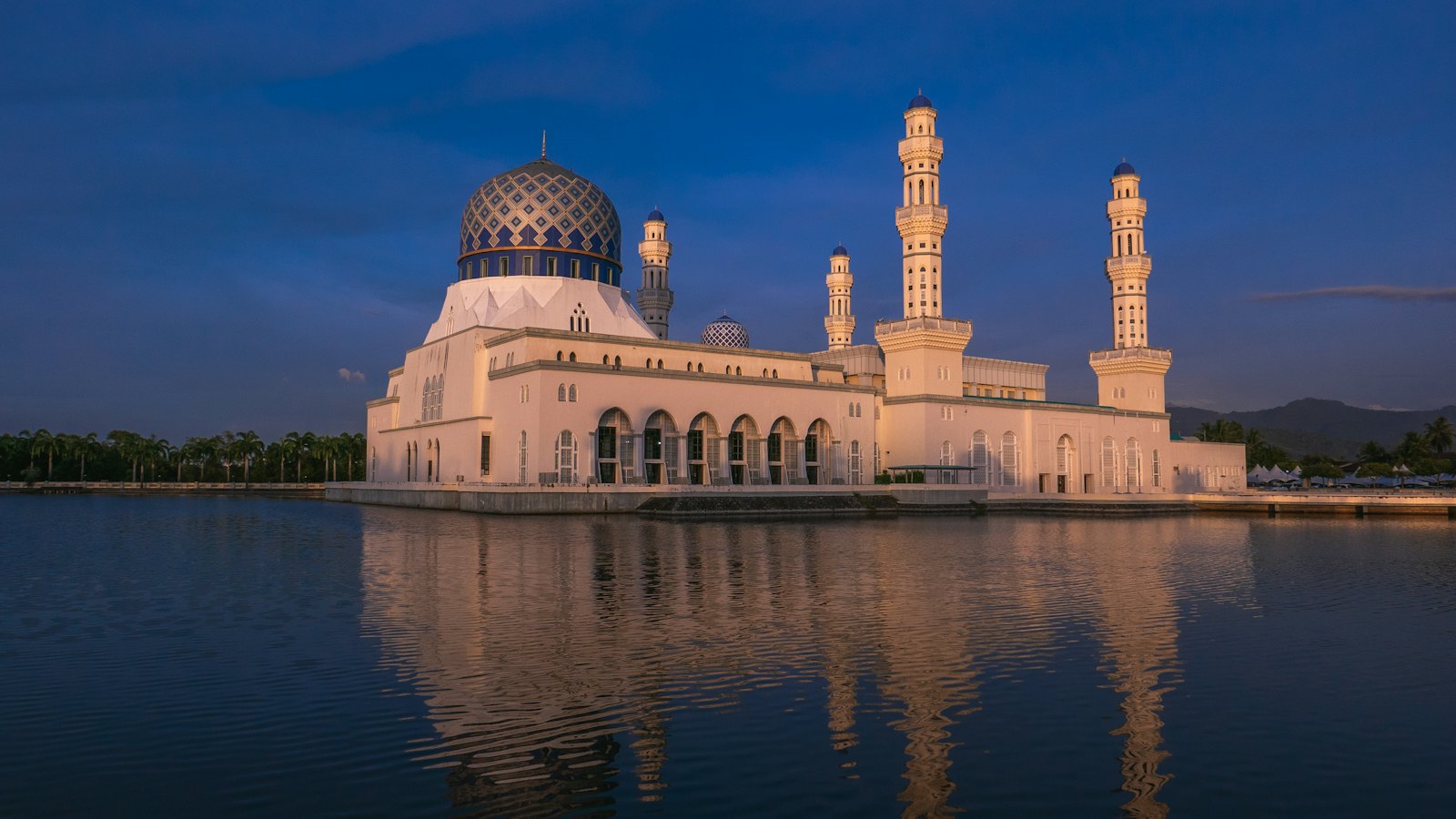
- Kota Kinabalu City Mosque: the white mosque on Likas Bay, nicknamed the floating mosque because a lagoon wraps around it. Visitors should dress modestly.
- Gaya Street Sunday Market: fruit, kuih, plants, crafts and souvenirs from about 6am to 1pm, best before the midday heat.
- Signal Hill Observatory Platform: a free lookout over downtown and out to the islands.
- Tanjung Aru Beach: the classic free sunset spot, about 10 km from the city centre and close to the airport.
- Sabah Museum: the state's history and communities, RM 2 for Malaysians.
- Mari Mari Cultural Village: guided tours of traditional houses, a dance show and a Sabahan buffet, just outside the city.
- Klias wetlands: a river cruise for proboscis monkeys and, after dark, fireflies. It is two hours or more from KK, so most people book a tour that returns at night.
- Kinabalu Park and Kundasang: see the final section.
What to eat in Kota Kinabalu
Kadazan-Dusun, Bajau, Brunei Malay, Hakka, Hainanese and Filipino cooks all shape the KK table. Several favourites come from Chinese coffee shops, so check the halal notes below before ordering.
- Hinava: raw fish cured in lime juice with chilli, shallot and ginger, the signature Kadazan-Dusun dish. Pair it with tuhau, a pungent pickled wild ginger relish.
- Grilled seafood: from late afternoon the waterfront night market beside the Filipino Market grills fish, squid, prawns and chicken wings. Restaurants sell seafood by weight, so ask the price per kilo first.
- Sabah curry laksa: coconut and lemongrass, nothing like Penang's sour assam laksa, and a classic Gaya Street breakfast.
- Ngiu chap: beef noodle soup with slices, balls and tripe.
- Tuaran mee: springy hand-made egg noodles fried dry, normally topped with char siu.
- Api-Api Night Food Market: on Friday and Saturday evenings Gaya Street closes to traffic and fills with street food stalls.
- Sabah tea and Tenom coffee: grown in the state and easy to pack home as gifts.
Sunday is the best food day: laksa at a Gaya Street coffee shop, then a slow graze through the market outside.
Halal food, mosques and prayer spaces
Islam is Sabah's largest religion and halal food is easy to find, but KK is more mixed than most Peninsular cities, so learn three labels.
- Certified halal: look for the Malaysian halal logo. Malay and Indian Muslim restaurants are the simplest choices; in mall food courts and hotels, check each outlet for the logo.
- Pork-free: fairly common. Some Chinese-run coffee shops and beef noodle shops do not serve pork, but they are not certified, so meat sources and kitchens are unverified and it is your call.
- Non-halal: pork noodles, bak kut teh, smoked wild boar at some Kadazan-Dusun and Chinese restaurants, Tuaran mee with char siu, and anywhere serving lihing or tapai rice wine.
The Sabah State Mosque at Sembulan is the state mosque and a good pick for Friday prayers, and the City Mosque at Likas Bay holds up to 12,000 worshippers. KKIA has prayer rooms, and larger malls normally have a surau too, as elsewhere in Malaysia; ask at the information counter. Because the sun rises and sets about an hour earlier than in KL, Subuh and Maghrib come earlier on the clock; use the Kota Kinabalu zone in JAKIM's e-Solat or your usual app.
Getting around KK: pink bus, Grab and car hire
Downtown is walkable, but heat, afternoon storms and spread-out sights mean most visitors add some wheels.
- BAS.MY pink bus: eight routes (S01 to S08) run through KK Sentral to the airport, Imago, Sutera Harbour, Kepayan and the suburbs, roughly every 15 to 20 minutes on most routes. Fares start under RM 1, and Malaysians can buy a 30-day unlimited pass with their MyKad for RM 30 at the time of writing. Tap a contactless bank card or scan DuitNow QR to pay.
- Grab: works across the city and is what most visitors use, around RM 8 to RM 20 for short trips. It is not much use for journeys between towns.
- Taxis: at the airport and big hotels; use the coupon counter or agree the fare first, as many do not use the meter.
- Car hire: roughly RM 80 to RM 140 a day for a small car. The Kundasang road climbs to about 1,900 metres, so set off early.
- Buses to Kundasang and Ranau: from the Inanam (North) terminal, mostly in the morning, taking two to two and a half hours for around RM 20 to RM 25.
Sample 4-day Kota Kinabalu itinerary
One island day and one highland night:
- Day 1: Land at KKIA, clear the immigration counter and check in. Walk the Waterfront, watch sunset from Signal Hill or Tanjung Aru, then choose your fish at the Filipino Market grills.
- Day 2: Early boat from the South Jetty to Manukan and Sapi for snorkelling and beach time, back before the last 4pm boat. Visit the City Mosque as its lights come on, then dinner at a halal seafood restaurant.
- Day 3: Drive or join a tour to Kinabalu Park, about two hours away. Walk the botanical garden trail, then carry on to Kundasang for Desa Dairy Farm and the war memorial gardens. Overnight in Kundasang.
- Day 4: Wake early for clear summit views, buy highland vegetables at the Kundasang market, then head back to KK for the Sabah Museum or Sabah tea shopping before your flight.
Only a weekend? Drop Kundasang, keep the islands and add the Friday or Saturday night market. If you are in town on a Sunday, begin at the Gaya Street market.
Money, SIM and practical tips for Sabah
- Money: still ringgit, and your cards, e-wallets and DuitNow QR work normally in the city. Keep some cash for night market stalls, Sunday market vendors and small rural shops.
- Park fees: carry a bank card or e-wallet as well as cash. Some Sabah Parks counters have gone cashless, while the mountain guide and the Timpohon van are paid in cash.
- MyKad pricing: Malaysians pay far less than foreigners at Sabah Parks gates (RM 10 against RM 50 at Kinabalu Park), so carry the physical card.
- Keep your pass slip: the immigration slip from arrival stays with your MyKad until you fly home.
- SIM and data: no roaming or new SIM needed, though signal can weaken on the Kundasang road and out at sea.
- Plugs and time: the same Type G sockets and Malaysian time as home.
- Tipping: not expected; some restaurants add service tax and a 10 percent service charge.
- Safety and scams: KK is generally relaxed. Buy island transfers at the official South Jetty terminal or online rather than from street touts, confirm seafood prices by weight, and use Grab, the pink bus or coupon taxis rather than unmarked cars.
- Sun: pack reef-friendly sunscreen for island days.
Kundasang and climbing Mount Kinabalu
Kundasang sits at about 1,900 metres on the shoulder of Mount Kinabalu, roughly two hours by road from KK, and its evenings are far cooler than the coast.
- Kinabalu Park HQ: a UNESCO World Heritage Site about 92 km from the city, open 8am to 5pm. Malaysian adults pay RM 10 and ages 13 to 17 pay RM 5; children 12 and under, seniors from 60 and OKU enter free. The botanical garden is RM 4 extra, last entry 3pm.
- Poring Hot Springs: hot baths in the park's lowland section. Sabah Parks lists the canopy walkway as temporarily closed at the time of writing.
- Desa Dairy Farm: cows grazing below the mountain, around RM 10 for Malaysian adults, with tickets sold online.
- Kundasang War Memorial: gardens honouring the prisoners of war who died on the Sandakan death marches.
To climb, book a two-day package on the Sabah Parks portal early, as hostel places are capped daily. At the time of writing a Malaysian adult pays about RM 508 at Lemaing Hostel (Malaysians only) or RM 722 at Panalaban Hostel, covering a night on the mountain, meals, permit and insurance. Add the RM 10 park fee, RM 350 cash for a compulsory guide shared by up to five climbers, and RM 15 to RM 35 in cash for the return van to Timpohon Gate.
Before you go
- Best time to go
- March to September is the most reliable time for Kota Kinabalu, with calmer seas for island trips and lighter winds. February and March are usually the driest months. Rain builds towards October, normally the wettest month, and the northeast monsoon from November to March brings stronger winds and choppier seas, which can cut boat trips short. KK is warm all year, but Kundasang nights call for a jacket. Kaamatan, the harvest festival, brings Sabah public holidays on 30 and 31 May; in 2026 it fell inside the mid-year school break, so fares and rooms climb. The 2026 year-end school break (4 or 5 December to 31 December, depending on the state) and Chinese New Year are the other crowded spells, so midweek dates outside them are cheapest.
- Visa for Malaysians
- As of September 2026, Peninsular Malaysians need no passport or visa for Kota Kinabalu, but Sabah runs its own immigration check, so you show your MyKad on arrival and receive a free visit pass of up to three months. At the KKIA arrival hall, officers issue a free single-journey document with a Social Visit Pass, stamped on a slip that stays with your IC. Under-12s show a birth certificate, and a Malaysian passport also works. Keep the slip until you leave, as an expired pass means extra paperwork before you can fly out. Stays over three months, for example for study or a long posting, need a Restricted Travel Document (RM 5, valid five years), and working in Sabah has separate pass rules. Confirm the latest rules on the Immigration Department's official site, imi.gov.my, before you fly.
- Honest budget guide
- Allow about RM 150 to RM 380 a day per person on the ground in Kota Kinabalu, flights excluded. Flights: at the time of writing Amaboxly's fare scan shows one-way KL seats from around RM 221 (AirAsia, direct), with RM 287 the median, so two one-way fares in that range add up to roughly RM 450 to RM 730 return. Guesthouse doubles start around RM 60 to RM 120 a night and mid-range city or seafront hotels about RM 150 to RM 350. Eating out costs RM 40 to RM 90 daily, more with seafood sold by the kilo, and Grab or buses add RM 20 to RM 60. A two-island day is about RM 66 per Malaysian adult with the park fee. Four days and three nights for one person sharing a mid-range room, with one island day, totals roughly RM 1,000 to RM 1,900 with flights. All figures are indicative.
Frequently asked questions
Do Malaysians need a passport to go to Kota Kinabalu?
No. Peninsular Malaysians enter Sabah with a MyKad, and children under 12 with a birth certificate. You still pass an immigration counter at KKIA and receive a free Social Visit Pass of up to three months. Keep that slip with your IC until you fly home, and check imi.gov.my for changes.
Is there a direct flight from KL to Kota Kinabalu?
Yes, many every day. AirAsia flies from KLIA Terminal 2, Malaysia Airlines and Batik Air from Terminal 1, and Batik Air also flies from Subang. The trip takes about two and a half hours. At the time of writing our fare scan had one-way seats from about RM 221 with AirAsia.
Is Kota Kinabalu Muslim-friendly?
Yes. Islam is Sabah's largest religion, halal restaurants are easy to find, and the City Mosque and State Mosque are both in town, with prayer rooms at KKIA and the big malls. Watch the gap between certified halal and the many pork-free Chinese coffee shops, which are not certified. Prayer times fall about an hour earlier than in KL.
How many days in Kota Kinabalu is enough?
Three days covers the city, the markets and one island day. Four or five days lets you add a night in Kundasang for Kinabalu Park and Desa Dairy Farm, a favourite with Malaysian families. Climbing Mount Kinabalu needs at least two more days, plus time to recover.
What is the best month to visit Kota Kinabalu?
March to September usually brings the calmest seas and clearest mountain views, and February and March are often the driest. October tends to be the wettest month, and the northeast monsoon can make boat rides rough into the new year. For lower fares, avoid Kaamatan in late May, December school holidays and Chinese New Year.
What does a 4-day Kota Kinabalu trip cost?
Roughly RM 1,000 to RM 1,900 per person for four days and three nights, covering a return flight from KL, half a mid-range room, meals, Grab and one island day. Backpackers can spend less, and a Mount Kinabalu climb adds from about RM 600 each. These are indicative figures.
Can I use Grab in Kota Kinabalu?
Yes. Grab covers the city including KKIA, where a ride into town is usually RM 20 to RM 30, and short hops cost about RM 8 to RM 20. It is not much use between towns, so for Kundasang use a rental car, a tour or the bus from Inanam terminal.
How do I get to the islands from Kota Kinabalu?
While the Jesselton Point terminal is being upgraded, island boats leave from the South Jetty at KK Port, near Jesselton Quay. Boats run from 8am, with the last return at 4pm, and standard returns cost about RM 48 for one island or RM 58 for two. Malaysian adults also pay an RM 8 Sabah Parks fee at a separate counter.
Jom pergi
Ready to go Kota Kinabalu? Compare available flights and hotels for your dates. Check baggage, cancellation terms and the final total on the booking provider before paying.






