




On this page13 sections
- Overview
- Getting there from KL: direct flights from KLIA
- Chiang Mai Airport to the city
- Where to stay in Chiang Mai
- Things to do in Chiang Mai
- What to eat in Chiang Mai
- Halal food and prayer spaces
- Getting around Chiang Mai
- Sample itinerary: four days in Chiang Mai
- Money, SIM and practical tips
- Day trips: Doi Inthanon and Chiang Rai
- Before you go
- FAQ
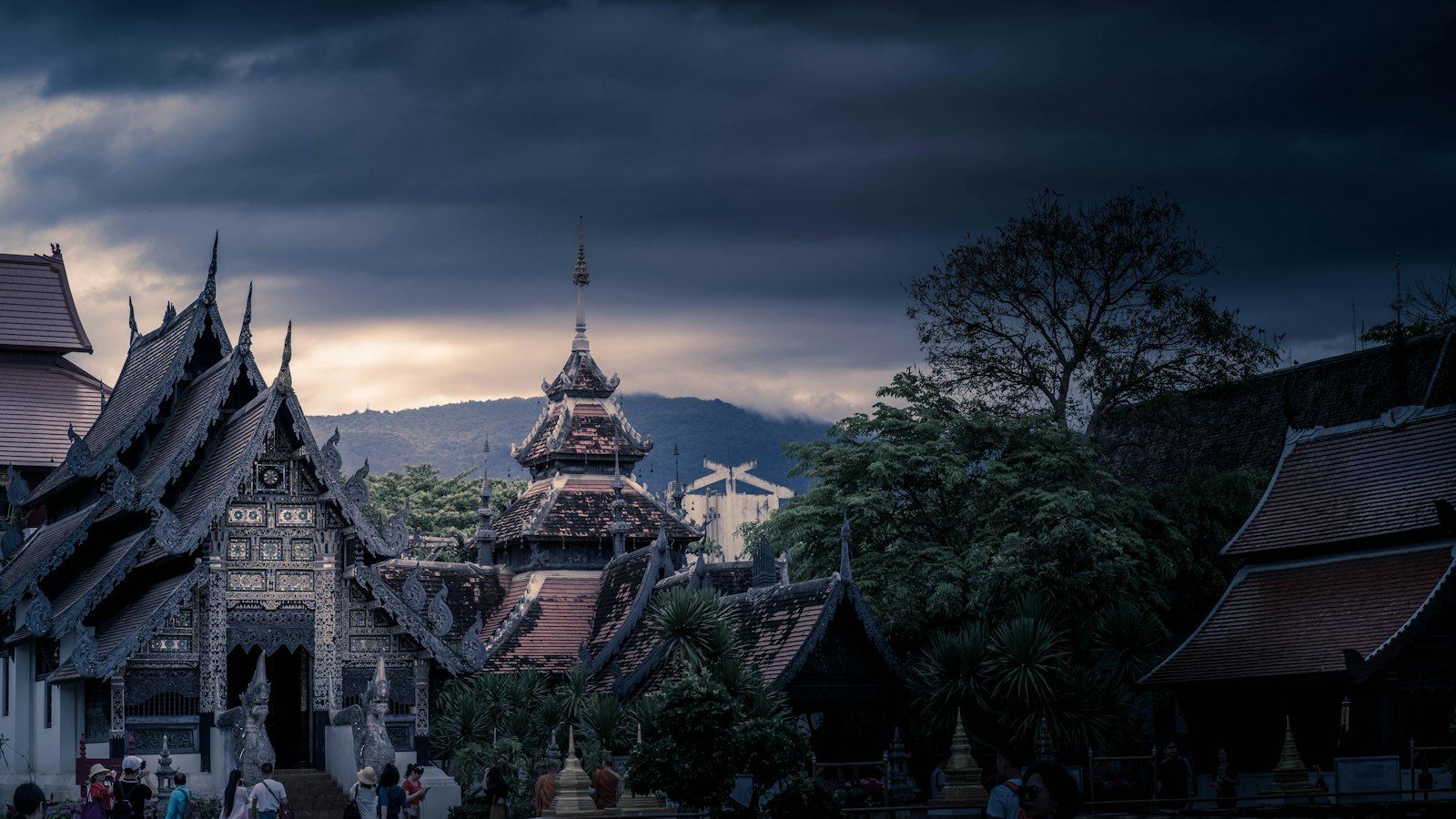
Chiang Mai, the old capital of the Lanna kingdom, has more than 30 temples inside its moated old city and forested mountains rising straight behind it. From November the nights turn genuinely cool, which is exactly what many Malaysians come for. Getting there is simple: direct flights from KLIA take under three hours, no visa is needed, and rooms are generally cheap even by Thai standards. The city also has a Muslim community old enough to have shaped its famous curry noodles. Here is what to know about flights, the airport ride, halal food, neighbourhoods and costs in ringgit.
Getting there from KL: direct flights from KLIA
Two airlines fly non-stop from Kuala Lumpur to Chiang Mai at the time of writing, with about two departures a day between them. AirAsia departs from KLIA Terminal 2, while Malaysia Airlines, which revived the route in August 2024 after dropping it in 2001, leaves from KLIA Terminal 1. The flight takes a little under three hours, and Thailand sits one hour behind Malaysia, so a morning departure lands before lunch.
When our KL fare scan last ran on 21 September 2026, its cheapest results were all AirAsia direct flights. One-way fares started near RM 286, a price that turned up on many dates from February to August 2027. Late 2026 dates were higher: roughly RM 391 for 10 November and RM 620 to RM 767 in December, when Malaysian schools break up. One-stop options only make sense for a stopover, with Scoot via Singapore from about RM 544 and THAI via Bangkok from about RM 832.
Check which KLIA terminal your booking shows, and treat these fares as a snapshot, since they change daily.
Chiang Mai Airport to the city
Chiang Mai International Airport (CNX) lies roughly 3 km southwest of the centre, so most rides take 10 to 15 minutes. Conversions below use about 8.2 baht per ringgit and are indicative.
- Airport taxi: a flat 150 baht (around RM 18) per car, up to five people, to any address in the city.
- Grab and Bolt: Grab operates here but adds an airport premium, usually 150 to 180 baht (RM 18 to RM 22). Bolt often quotes under 100 baht (RM 12).
- Shared minibus: 50 baht (about RM 6) a head to city hotels, departing when a few passengers have gathered; the counter is near international arrivals. It stopped running for the whole of June 2026, so keep a plan B.
- RTC city bus: air-conditioned lines that start and end at the airport, 20 baht (about RM 2.50) in cash. Check it is running when you land.
Change only a little money at the arrivals counters, since changers in town pay more, and ask your hotel about a cheap or free pickup, which many offer.
Where to stay in Chiang Mai
The square moat around the Old City, roughly 6.5 km in circumference, is how everyone finds their way, and the four useful bases sit around it.
- Old City: temples on every other corner and the Sunday Walking Street outside your door. The northeast quarter is thick with guesthouses, cafes and massage shops; the western half is quieter and more local. Ideal for a first visit.
- Night Bazaar and Chang Klan Road: between the moat and the Ping River, with plenty of hotels. Ban Haw Mosque and a lane of Muslim food stalls are here, which makes it the handiest base for halal meals.
- Nimman: the Nimmanhaemin Road area northwest of the moat, by Chiang Mai University, full of cafes and malls. Good for younger travellers and the quickest start for Doi Suthep.
- Riverside: hotels along the Ping, calmer than the bazaar yet within walking distance of it, for a slower stay.
In the cool season you may barely need air-conditioning at night, but from March to May insist on a room that stays cool.
Things to do in Chiang Mai
Temples, mountain views and night markets fill most trips.
- Wat Phrathat Doi Suthep: the gilded chedi about 1,073 m up the mountain west of town. Climb the 200-plus steps of the naga stairway or ride the small cable car. Shared red trucks leave from the 7-Eleven at Chang Phuak Gate once about five passengers are aboard, for 80 baht or less a head.
- Wat Chedi Luang: a colossal chedi toppled by an earthquake in 1545 and partly rebuilt, in the heart of the Old City (50 baht for foreigners).
- Wat Phra Singh: known for the Lanna murals inside its Wihan Lai Kham.
- Sunday Walking Street: Ratchadamnoen Road, from Tha Phae Gate westwards, fills with crafts and snacks from late afternoon until around 22:00. No smoking or alcohol.
- Saturday Walking Street: a smaller sibling on Wualai Road, the old silversmith quarter near Chiang Mai Gate.
- Night Bazaar: every night along Chang Klan Road, including the Anusarn and Kalare markets.
- Warorot Market (Kad Luang): the riverside locals' market, open about 06:00 to 17:00, for dried fruit, tea and spices to carry home.
- Elephant sanctuaries: mostly north near Mae Rim or west near Samoeng. Read reviews and pick a park that does not offer rides.
What to eat in Chiang Mai
Northern Thai cooking is herb-heavy and some signature dishes use pork, so Muslim travellers should read the halal section first.
- Khao soi: egg noodles in coconut curry broth, crowned with crispy noodles and served with pickled mustard greens and lime. It usually comes with chicken or beef, a link to the Yunnanese Muslim traders credited with bringing it to the region.
- Sai ua: a northern pork sausage heavy with lemongrass, galangal and kaffir lime.
- Gaeng hang lay: a Lanna curry, normally pork.
- Khantoke dinner: many small bowls shared around a low table, often with a dance show. Khan means small bowl and tok means low table.
For cheap meals, try the evening stalls by the Chiang Mai Gate market, the Kalare food centre inside the Night Bazaar, or the snack sellers along the weekend walking streets. Expect roughly 80 to 120 baht (RM 10 to RM 15) for a main dish in a casual restaurant, and less at the stalls. Vegetarians should note that fish and oyster sauce go into most dishes.
Halal food and prayer spaces
Chiang Mai is Buddhist, but Muslims have traded here for centuries, and today's community includes Yunnanese Chinese Muslims (the Chin Haw) and families of Bengali, Pathan and Malay descent. The city had 16 mosques in 2011.
- Certified: Thailand's Central Islamic Council (CICOT) issues the country's halal certification, and JAKIM includes CICOT on its list of recognised foreign certifiers.
- Muslim-run: many khao soi shops and roti stalls belong to Muslim families but hold no certificate. Look for a halal sign and ask the owner.
- Pork-free: not the same thing as halal, so ask.
The easiest cluster to find is Charoen Prathet Soi 1, home to Ban Haw Mosque (Hedayatul Islam), a few minutes' walk from the Night Bazaar. Chin Haw settlers founded the mosque in the 19th century, and the lane has daytime Muslim food stalls and a shop named Khao Soi Islam. Just north of the moat, Masjid Nurul stands on Chang Phuak Road with a halal eatery close by, and Attaqwa (San Pa Koi) Mosque, east of the river, houses the city's first Islamic school.
We could not confirm a prayer room at Chiang Mai airport, so pray at KLIA before boarding or ask the information counter when you land. Muslim Pro covers prayer times, and a Google Maps search for halal near the bazaar turns up several more.
Getting around Chiang Mai
With no metro, you will mix shared trucks, ride-hailing and walking. Each side of the Old City is only about 1.6 km, easy on foot or by bicycle.
- Red songthaews (rot daeng): covered pickup trucks with two benches that cruise the main roads. Wave one down, say where you are going and pay around 30 baht (RM 3.70) a person within town. Agree the price first for longer trips, and expect 40 baht or more in peak season.
- Grab: usually cheaper than a tuk-tuk even after haggling, at about 60 to 80 baht (RM 7 to RM 10) for most short hops. Bolt and Maxim often undercut it by 10 to 20 percent. Prices spike at Songkran and New Year.
- RTC city bus: a few air-conditioned routes at 20 baht a ride, plus day passes.
- Tuk-tuks: a novelty rather than a bargain, seldom below 100 baht. Fix the fare before climbing in.
- Scooters: cheap to hire, but you need a valid motorcycle licence, so bring an International Driving Permit to be safe. Police run frequent checkpoints, and riders fined over their licence usually pay about 500 baht on the spot. Do not hand over your passport as a deposit.
Sample itinerary: four days in Chiang Mai
This four-day plan assumes a morning flight in and an afternoon flight home. If your dates include a weekend, shuffle the days so you catch a walking street.
- Day 1: Check in near the Night Bazaar or in the Old City and have a late lunch of khao soi on Charoen Prathet Soi 1. Visit Wat Chedi Luang and Wat Phra Singh as the heat eases, then wander the Night Bazaar.
- Day 2: Ride a red truck from Chang Phuak Gate to Wat Phrathat Doi Suthep early, then see the Bhubing Palace gardens nearby if they are open, with shoulders covered and legs covered to the ankle. Spend the afternoon among Nimman's cafes and malls.
- Day 3: Go to Doi Inthanon for the summit, the twin royal chedis and the waterfalls, or pick an ethical elephant sanctuary if the children prefer. End with a khantoke dinner.
- Day 4: Shop Warorot Market for dried fruit, tea and snacks, have a relaxed lunch and head to the airport, only 15 minutes away.
A fifth day makes room for Chiang Rai's White Temple, covered below.
Money, SIM and practical tips
The currency is the Thai baht. In late September 2026 one ringgit was worth about 8.2 baht, which makes 100 baht roughly RM 12.
- Paying: malls, hotels and larger restaurants take cards, while songthaews, market stalls and small shops want cash. Town money changers give better rates than the airport.
- DuitNow QR: PayNet's cross-border QR service covers Thailand, so supported Malaysian bank and e-wallet apps (PayNet's participant list includes Maybank, CIMB, RHB and Touch 'n Go eWallet) can scan Thai PromptPay codes. Check yours supports Thailand before relying on it.
- SIM: buy a Thai tourist SIM on arrival, a travel eSIM before flying, or a roaming add-on from your Malaysian telco.
- Power: outlets generally fit plug Types A, B, C and O at 230 V, so bring an adapter for Malaysian square-pin plugs.
- Tipping: optional; leaving small change is a kind gesture.
- Temples: cover shoulders and knees, and remove shoes wherever locals do.
- Safety: serious crime is rare, but motorbike bag snatchers exist, so hold bags away from the traffic. If a tuk-tuk driver says a temple is shut and offers a cheap tour, walk away; it ends at a gem shop.
- Tourist police: dial 1155.
Day trips: Doi Inthanon and Chiang Rai
Many Malaysians come north for the chill, and Doi Inthanon supplies it. Thailand's highest mountain (2,565 m) sits in a national park about 60 km from the city, and its summit averages around 6 degrees Celsius in January, occasionally dipping below zero, so bring a warm jacket. Two royal chedis stand near the top, and the road up passes waterfalls such as Wachirathan. Most people go by tour van or hired car.
Chiang Rai, about 200 km to the north-east and roughly three and a half hours by bus, makes a long day trip, mainly for Wat Rong Khun, the White Temple, a glittering white-and-mirror artwork by the Chiang Rai artist Chalermchai Kositpipat, open to visitors since 1997, with an entrance fee for foreigners (reported at 200 baht in 2026).
Nearer town, Bua Tong, the Sticky Waterfall about 60 km north, has limestone cascades you can climb without slipping. Skies are clearest from November to January, before the smoke season.
Before you go
- Best time to go
- The best time to visit Chiang Mai is November to February, when days are dry and sunny and the nights feel cool. It is also peak season: Yi Peng and Loy Krathong, the lantern and floating-candle festival, is expected around the full moon of 24 November 2026, with celebrations here spread over several nights, so riverside rooms go early. Malaysia's year-end school break (starting 4 December in Kedah, Kelantan and Terengganu and 5 December elsewhere) lifts December fares, and a February weekend brings the Flower Festival (13 to 15 February in 2026). From late February to about April, farm burning can smother the north in haze and April highs average around 37 degrees Celsius, though mid-April's Songkran water fights are great fun. May to October is the wet season, heaviest in August and September, with lower room rates and green hills.
- Visa for Malaysians
- A Malaysian passport gets you into Thailand, Chiang Mai included, visa-free for up to 30 days per visit, the rule in force as of September 2026. It dates from 15 September 2026, when Thailand replaced its 60-day exemption, so any article promising 60 days is outdated. Every foreign visitor must also file the online Thailand Digital Arrival Card (TDAC) within the three days before landing. It is not a visa, and the Immigration Bureau's own site, tdac.immigration.go.th, charges nothing, so skip paid lookalikes. It is safest to travel on a passport with at least six months left on it, and officers may ask about your onward ticket, accommodation and funds. If you need longer, you can apply at an immigration office in Thailand to extend your stay by up to 30 days, for a fee. Double-check the current rules on the Royal Thai Embassy in Kuala Lumpur's website shortly before departure.
- Honest budget guide
- Allow about RM 150 to RM 350 per person a day in Chiang Mai before flights, as beds and meals are cheap. Our fare scan's cheapest direct one-way seat was around RM 286 on AirAsia at the time of writing, so a return starts from about RM 570 and can pass RM 1,200 on December dates. Plain guesthouse rooms start from a few hundred baht, a comfortable private room is often 700 to 1,000 baht (RM 85 to RM 120) a night, and mid-range hotels run roughly 1,000 to 3,000 baht (RM 120 to RM 370). Meals add RM 40 to RM 90 a day and getting around RM 15 to RM 40, with day trips extra. For four days and three nights with two sharing a room, expect around RM 1,200 to RM 2,400 per head including flights. Every figure here is indicative.
Frequently asked questions
Do Malaysians need a visa for Chiang Mai?
No visa is needed. Under the rules in force as of September 2026, a Malaysian passport allows stays in Thailand of up to 30 days each visit, down from 60 days before 15 September 2026. You must still file the free online Thailand Digital Arrival Card shortly before landing. Confirm on the Thai embassy's website before travelling.
Is there a direct flight from KL to Chiang Mai?
Yes, two airlines fly it non-stop: AirAsia from KLIA Terminal 2 and Malaysia Airlines from KLIA Terminal 1. The flight is just under three hours. Our KL fare scan, run on 21 September 2026, found one-way AirAsia fares from about RM 286, with December dates far higher. Double-check the terminal printed on your ticket.
Is Chiang Mai Muslim-friendly?
Yes, more than most visitors expect. Ban Haw Mosque stands near the Night Bazaar on Charoen Prathet Soi 1, a lane with Muslim food stalls and khao soi shops. The city's famous khao soi is traditionally chicken or beef. Elsewhere pork is common, so look for halal certification from CICOT, which JAKIM recognises, or ask before ordering.
How many days in Chiang Mai is enough?
Four days lets you see the Old City temples, Doi Suthep, a night market or two and one full-day trip to Doi Inthanon or an elephant sanctuary. Stay five or six days to add Chiang Rai's White Temple, a cooking class or lazy mornings in Nimman. With the airport 15 minutes away, little time is lost.
What is the best month to visit Chiang Mai?
November to February, when it is dry by day and cool at night. November is the most memorable month thanks to the Yi Peng lantern festival (expected around 24 November 2026), though also the busiest. December is chilly on the mountains and expensive during Malaysian school holidays. Skip March and April if smoke bothers you, as the burning season haze can be thick.
What does a five-day trip to Chiang Mai cost?
Roughly RM 1,300 to RM 2,750 per person with two sharing a room, return flight included. That is RM 150 to RM 350 a day for rooms, food, transport and entry fees, plus about RM 570 to RM 1,000 for a return ticket outside December, going by our fare scan at the time of writing. Guesthouses and street food keep it low; tours and shopping push it up. All indicative.
Can I use Grab in Chiang Mai?
Yes, Grab runs across Chiang Mai and usually beats tuk-tuk prices, with most short rides about 60 to 80 baht (RM 7 to RM 10). Airport pickups cost more, around 150 to 180 baht. Bolt and Maxim also operate and are often slightly cheaper. Keep small notes for red songthaews, which charge about 30 baht a person in town.
Can I pay with DuitNow QR in Chiang Mai?
In many places, yes. PayNet's cross-border QR service lets supported Malaysian banking apps and e-wallets scan Thai PromptPay codes: you key in the amount in baht and the app pays from your Malaysian account. Check that your app supports Thailand before leaving. Bring cash too, since songthaew drivers and plenty of market stalls do not accept QR.
Jom pergi
Ready to go Chiang Mai? Compare available flights and hotels for your dates. Check baggage, cancellation terms and the final total on the booking provider before paying.






