




On this page13 sections
- Overview
- Flying from KL: non-stop options, terminals and fares
- Melbourne Airport to the city
- Where to stay in Melbourne
- Things to do in Melbourne
- What to eat in Melbourne
- Halal food and prayer spaces
- Getting around Melbourne
- Sample itinerary: 4 days in Melbourne
- Money, SIM and practical tips
- Snow, coast and road trips from Melbourne
- Before you go
- FAQ
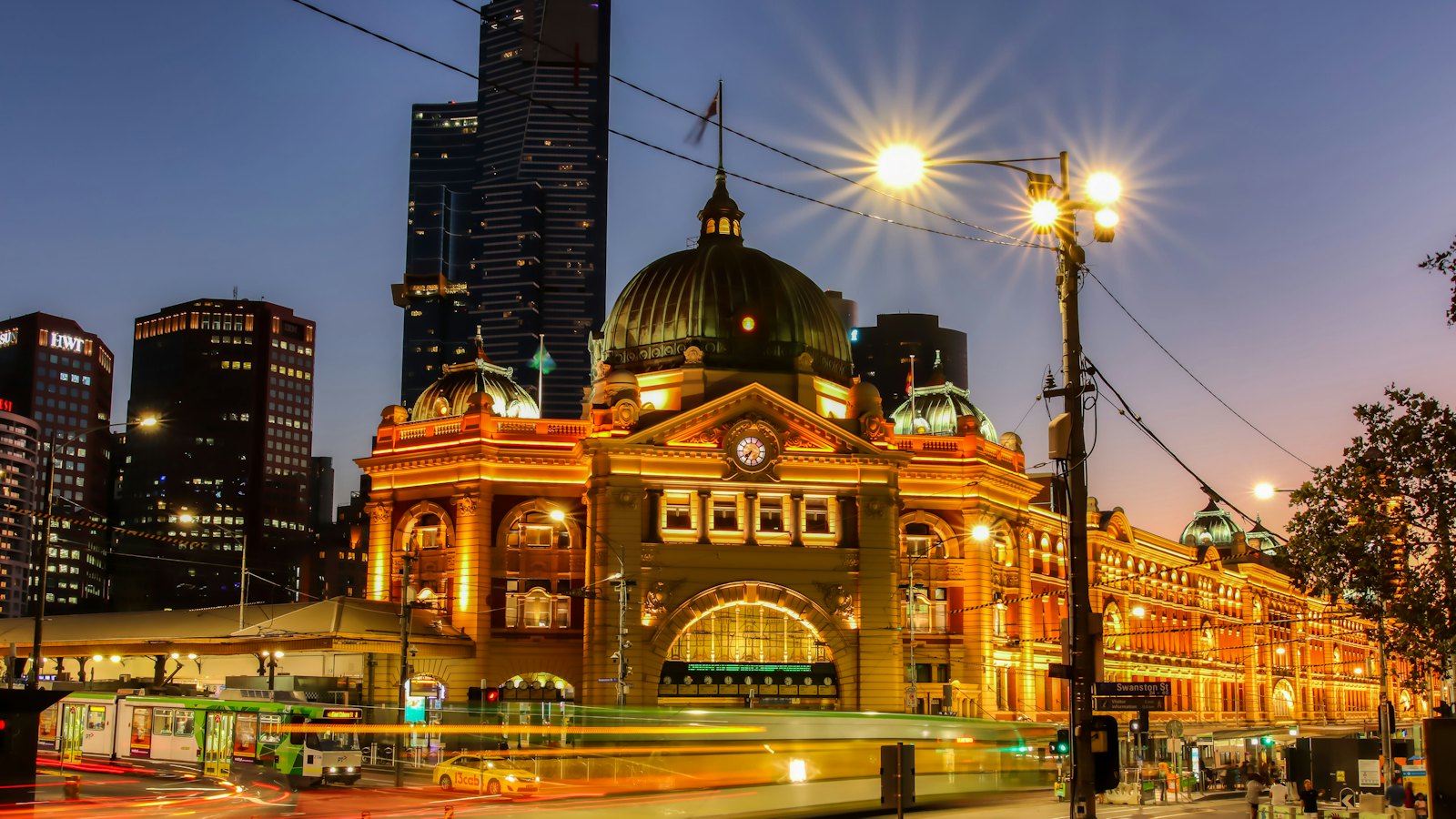
Plenty of Malaysians already know Melbourne through a cousin, a classmate or their own student years at Monash, RMIT or the University of Melbourne. It is a city of long café breakfasts, street art down narrow lanes, trams that cost nothing inside the grid and serious sport, from the Australian Open to the Grand Prix. Beyond the suburbs wait little penguins on Phillip Island, the sea stacks of the Great Ocean Road and, in winter, snow at Mt Buller. Below, KLIA travellers will find the ETA rules, the current non-stop flights, the ride in from Tullamarine, ringgit costs, halal food and mosques, and a four-day plan.
Flying from KL: non-stop options, terminals and fares
As of late September 2026, two airlines link KLIA and Melbourne non-stop. Malaysia Airlines operates three daily services from KLIA Terminal 1: one leaves in the morning and lands that evening, and two leave at night and land early the next morning. AirAsia X departs from KLIA Terminal 2 several days a week. Both arrive at Melbourne's international Terminal 2. Southbound flying time is roughly 7.5 to 8 hours; the return takes 8.5 to 9.
Melbourne runs two hours ahead of Malaysia, or three hours ahead while Victoria observes daylight saving, from 4 October 2026 until 4 April 2027.
At the time of writing, Amaboxly's KL fare scan (data from 20 September 2026) shows one-way tickets from around RM 837 for December travel, with the middle of the range at RM 875. AirAsia X non-stops started near RM 875 on mid-2027 dates, Scoot via Singapore near RM 866 and Vietjet via Ho Chi Minh City near RM 899. That lowest fare was listed under Batik Air as a non-stop, but we found no Batik Air flights between KLIA and Melbourne in the week we checked (the scan also showed Batik Air trips via Bali from about RM 1,044), so confirm the routing before paying. Malaysia Airlines was not among the cheapest results. Fares are indicative.
Melbourne Airport to the city
Tullamarine Airport (MEL) lies about 22 km north-west of the centre, and the rail link now being built is not due to open until 2033. Figures are indicative, at about RM 2.87 per Australian dollar.
- SkyBus Melbourne City Express: the red buses run to Southern Cross Station from 4am to 1am, every 10 minutes at peak times and every 15 minutes otherwise, and the average ride is about 30 minutes. Adults pay AUD 25.90 one way (around RM 74) or AUD 43.40 return (around RM 125). Buy online, in the SkyBus app, at the e-kiosks beside the kerbside stops, or with cash at the baggage storage counters in the Terminal 2 arrivals hall.
- Taxi: ranks stand at Terminals 1, 2 and 4, and the CBD is about half an hour away. Meters are state-capped (from 1 July 2026, AUD 5.40 flag fall plus AUD 2.10 per km by day, a little more at night), so the meter alone passes AUD 50 before tolls, the airport rank fee and any card surcharge; budget roughly AUD 60 to AUD 90 (RM 170 to RM 260). Ignore anyone offering rides away from the ranks.
- Uber and DiDi: Uber picks up at the kerb outside Terminal 2; DiDi and other apps use Lane 3 of the forecourt. Each trip carries an AUD 4.82 airport access fee.
- Public bus: PTV runs timetabled routes from the Terminal 4 Ground Transport Hub, the cheapest option but slow with suitcases.
Where to stay in Melbourne
Central Melbourne is compact, so choosing a base is mostly about how often you want to ride a tram.
- CBD: the grid from Flinders Street up to Queen Victoria Market. Trams here are free, SkyBus terminates at Southern Cross, and apartment hotels with kitchens let families cook their own halal meals. Ideal for a first or short visit.
- Southbank and Docklands: high-rises along the Yarra River and the harbour, beside the arts precinct and the South Wharf outlets. Good for river views and flat walks into town.
- Carlton, Brunswick and Coburg: the inner north, near the University of Melbourne, with Lygon Street's cafés and, further up, Sydney Road's Lebanese eateries, kebab shops and Middle Eastern bakeries. Tram 19 runs along Sydney Road to the city, making this the natural choice for Muslim travellers who want halal dinners nearby.
- St Kilda: a seaside suburb about 6 km from the CBD, with a beach, a pier and plenty of backpacker hostels, roughly 25 minutes away by tram. Suits young travellers and sunset walkers.
Weekends and big events such as the Australian Open push rates up.
Things to do in Melbourne
- Laneways: coffee on Degraves Street, the Block Arcade's mosaic floors and the ever-repainted walls of Hosier Lane.
- State Library Victoria: the domed La Trobe Reading Room is free to visit, and the Level 6 gallery looks straight down into it.
- Queen Victoria Market: produce, souvenirs and hot food; at the time of writing it shuts on Mondays and Wednesdays, though Wednesday evenings bring seasonal night markets (winter's ended on 9 September 2026, and a Christmas edition is announced).
- Royal Botanic Gardens and the Shrine of Remembrance: free neighbours off St Kilda Road; the Shrine's balcony looks back towards the city.
- National Gallery of Victoria: the collection is free (some exhibitions charge); look up at the Great Hall's stained-glass ceiling, said to be the world's largest.
- Bayside: St Kilda's foreshore and Luna Park, then the painted bathing boxes on Brighton's Dendy Street Beach.
- Phillip Island Penguin Parade: little penguins come ashore at sunset, roughly two hours' drive south-east (90 minutes to the island, then 20 more). General viewing is AUD 34 for adults (about RM 98) and AUD 17 for children.
- Sport: AFL at the MCG from March to September, and the Australian Open at Melbourne Park every January.
- Dandenong Ranges: fern gullies and the Puffing Billy steam train, a half-day east of the city; train tickets must be bought in advance.
What to eat in Melbourne
Waves of migrants shaped how Melbourne eats, so Italian, Greek, Vietnamese, Lebanese and Chinese food sit alongside Aussie staples. Much of the famous café and bakery fare is not halal; the halal notes below show where Muslim diners can eat freely.
- Coffee and brunch: a flat white with smashed avocado on toast; many cafés close by mid-afternoon.
- Meat pies and sausage rolls: bakery classics, usually beef or pork inside.
- Dim sims: Melbourne's own chunky dumpling of minced meat (often pork) and cabbage, sold at fish-and-chip shops; the big round kind is named after South Melbourne Market.
- Halal snack pack: chips buried under doner meat, cheese and three sauces, found at kebab shops across town.
- Middle Eastern bakeries: fresh flatbreads along Sydney Road, plus borek pastries at Queen Victoria Market.
- Vietnamese: pho and banh mi on Victoria Street in Richmond and in Footscray.
- Chinatown: Little Bourke Street has been cooking since the gold rush; never assume a dish is pork-free.
- Sweets: lamingtons and pavlova, plus Tim Tams to take home.
Malaysian restaurants are easy to find, some Muslim-owned, some not. A casual meal runs about AUD 25 (RM 72); a mid-range dinner for two, around AUD 120 (RM 345).
Halal food and prayer spaces
Muslim visitors usually find Melbourne straightforward: the Islamic Council of Victoria (ICV) speaks for over 270,000 Muslims in the state, and halal meals are never far away.
- Certification: Australia has no single national body like JAKIM; many private certifiers operate, so look for a current certificate on display. Many Muslim-run places have none, and a "no pork" sign guarantees neither halal meat nor an alcohol-free kitchen.
- Where to eat: Sydney Road through Brunswick and Coburg is the key strip, with Lebanese and Afghan kitchens, kebab shops and Middle Eastern bakeries. Dandenong in the south-east has a big Afghan community and an Afghan Bazaar on Thomas Street, and Broadmeadows and Meadow Heights in the north have large Lebanese and Turkish communities. In the CBD, some kebab shops and Malaysian, Indonesian and Arab restaurants are halal; always ask.
- ICV City Mosque: 66-68 Jeffcott Street, West Melbourne, walkable from the CBD, open for all five daily prayers with four Jumu'ah sessions each Friday.
- Albanian Mosque: Carlton North, Melbourne's oldest.
- Preston Mosque: north of the centre in Preston.
- Islamic Museum of Australia: Thornbury, open Monday to Saturday, 10am to 4pm, with a café.
- Airport: two multi-faith prayer rooms open 24 hours, on the ground floor between Terminals 2 and 3 and in Terminal 2 past security, opposite Cafe Sol.
Zabihah lists halal eateries and mosques; Muslim Pro handles prayer times.
Getting around Melbourne
- Tap and go: since late July 2026, a Visa or Mastercard bank card, phone or smartwatch works on myki readers across the train, tram and bus network. A physical myki (AUD 6 for adults) is still accepted.
- Half-price fares: from 1 June until the end of 2026 Victoria has halved fares, so unlimited travel for a day costs AUD 5.70 (about RM 16) rather than AUD 11.40, and a two-hour metro fare is AUD 2.85. For 2027 trips, check whether the cut was extended.
- Free Tram Zone: rides that start and end in the CBD and Docklands cost nothing, and City Circle route 35 loops past many sights.
- Apps: there is no Grab in Australia, so use Uber or DiDi, and the PTV app for live tram and train times.
- Taxis: metered at capped state rates, dearer overnight and late on Friday and Saturday nights.
- Driving: traffic keeps left as in Malaysia, so a hire car suits the Great Ocean Road or Phillip Island. Read VicRoads' guidance on overseas licences first.
Sample itinerary: 4 days in Melbourne
Four days is enough for the city, the bay and one long excursion; add extra days for the coast or the snow.
- Day 1: Land on an overnight flight, leave your bags and ride SkyBus to Southern Cross. Stroll Degraves Street, Hosier Lane and Federation Square, then sit under the State Library's dome. If it is Friday, attend Jumu'ah at the ICV City Mosque.
- Day 2: Queen Victoria Market first (confirm it is open), then the Botanic Gardens, the Shrine of Remembrance and the NGV along St Kilda Road, ending on the Southbank promenade.
- Day 3: Phillip Island by hire car or coach tour, with beaches and lookouts by day and the Penguin Parade at sunset. You will be back late.
- Day 4: A halal lunch on Sydney Road, the Islamic Museum of Australia in Thornbury (closed Sundays), then the tram to St Kilda for dusk on the foreshore before a late-night flight home.
Money, SIM and practical tips
- Currency: the Australian dollar (AUD), trading near RM 2.87 when we checked in late September 2026, so AUD 10 is about RM 29.
- Paying: card or phone taps work almost everywhere; keep some cash for markets.
- DuitNow QR: Australia is not on PayNet's cross-border list (Singapore, Indonesia, Thailand and Cambodia are), so rely on a card or a multi-currency travel card.
- Data: buy an eSIM at home, or a Telstra, Optus or Vodafone prepaid SIM on arrival (keep your passport handy in case ID is asked for at activation). Airport Wi-Fi is free in Terminals 2, 3 and 4.
- Power: 230V sockets take Type I plugs with slanted pins, so pack a travel adapter.
- Tips: rounding up is a kindness, not a rule.
- GST refund: spending AUD 300 or more (GST included) with one business within 60 days of leaving qualifies for the Tourist Refund Scheme at the airport; bring the original paper invoices and be ready to carry the goods on board.
- Weather: Melburnians talk of four seasons in one day, so carry a jacket even in summer.
- Safety: the city is generally safe. Use official taxi ranks, and get your ETA through the government's own app, never agent sites that add fees.
- Biosecurity: declare every food item on your Incoming Passenger Card; officers decide what stays.
Snow, coast and road trips from Melbourne
Victoria's scenery is a good reason to stretch a Melbourne break into a week.
- Mt Buller: a major ski resort about three hours away by road, and an easy first taste of snow, whether that means sledding, a beginner lesson or a snowball fight. The 2026 season lasted 93 days and closed on 14 September, so the heart of winter, July and August, gives the best odds. The resort requires wheel chains throughout the winter season, so rent them with the car or book a coach day trip.
- Great Ocean Road: the drive west to the Twelve Apostles is a lot for one day. A night in Lorne or Apollo Bay slows it down and puts you at the Apostles for late-afternoon light.
- Phillip Island: give it a whole day for the coast and beaches, not just the evening penguins.
Match these to Malaysian school breaks with care. Mt Buller's 93-day 2026 season points to a mid-June opening, after the late May to early June school holidays, while the December break falls in summer, better suited to beaches than slopes.
Before you go
- Best time to go
- For mild weather and thinner crowds, go in March to April or October to November, when Melbourne's average highs sit around 20 to 25°C. Summer (December to February) brings average highs of about 24 to 27°C with the odd heatwave, and it clashes with Christmas and Malaysia's year-end school break (from 4 or 5 December 2026), so fares climb; momondo ranks February the dearest month for rooms. Winter (June to August) brings average lows near 7°C, the cheapest hotel month (June) and snow at Mt Buller. Watch for event spikes: the Melbourne Cup on 3 November 2026, the Australian Open every January and the Formula 1 Australian Grand Prix at Albert Park on 4 April 2027. Whatever the month, pack layers.
- Visa for Malaysians
- As of September 2026, Malaysians must hold an Electronic Travel Authority (the Australian ETA, subclass 601) before they fly, applied for in the Australian ETA app, whose only cost is an AUD 20 service charge (roughly RM 57). Most applicants get a result almost immediately, yet Home Affairs says not to make travel arrangements until yours is granted. One ETA covers 12 months, or until the passport expires if sooner, with multiple entries and up to three months per stay for tourism, family or business visits, never paid work. Each traveller, children included, applies separately while outside Australia, and a new passport cancels the ETA, so apply on the passport you will travel with. Expect to fill in an Incoming Passenger Card, handed out on the plane or at the airport, with its food declaration. Check the current rules on immi.homeaffairs.gov.au before flying.
- Honest budget guide
- Allow roughly RM 250 to RM 900 a day each in Melbourne, excluding flights, from hostel dorm to shared mid-range room. Flights: our KL fare scan's lowest one-way ticket was about RM 837 at the time of writing (AirAsia X non-stops from about RM 875), meaning a return pieced together from two one-ways costs around RM 1,700 to RM 1,800. Well-rated hostel beds cost around AUD 30 to AUD 50 (RM 85 to RM 145), and average hotel rates ran from about AUD 206 a night in June to AUD 326 in February (RM 590 to RM 935). Meals add RM 150 to RM 300 a day, and transport about RM 16 a day at 2026's half-price fares plus RM 74 per SkyBus trip. Five days in Melbourne (four nights, mid-range, two to a room) total about RM 4,300 to RM 5,500 a head with airfare. Treat all numbers as indicative.
Frequently asked questions
Do Malaysians need a visa to visit Melbourne?
You need an electronic permit rather than a visa sticker, called the Australian ETA (subclass 601). Use the official Australian ETA app before flying; the service fee is AUD 20, the ETA lasts 12 months or until your passport expires, and each visit can run up to three months. Children need their own application.
Is there a direct flight from KL to Melbourne?
Yes, two airlines fly it non-stop. Malaysia Airlines has three daily departures from KLIA Terminal 1, and AirAsia X goes several days a week from KLIA Terminal 2, with about 7.5 to 8 hours in the air. At the time of writing our fare scan showed one-way fares from about RM 837 (a Batik Air listing worth double-checking) and AirAsia X non-stops from about RM 875.
Is Melbourne Muslim-friendly?
Largely, yes. Sydney Road in Brunswick and Coburg, the northern suburbs and Dandenong have many halal eateries, and kebab shops are everywhere. The ICV City Mosque in West Melbourne holds all five prayers plus four Friday sessions, and the airport has two 24-hour prayer rooms. Pork-free kitchens are not automatically halal, so ask to see a certificate.
How many days in Melbourne is enough?
Four days handles the city, the bay and a penguin evening on Phillip Island. The Great Ocean Road deserves one or two more, and a winter snow trip to Mt Buller another couple, so a week is comfortable if you want it all.
What is the best month to visit Melbourne?
March, April, October and November offer mild days of roughly 20 to 25°C. December to February is warm but crowded and expensive, especially in Malaysia's year-end school holidays. June to August is cold yet cheaper, and brings snow at Mt Buller, around three hours' drive away.
What does a 5-day Melbourne trip cost from Malaysia?
Roughly RM 4,300 to RM 5,500 per person covers return flights, four nights in a shared mid-range hotel, food and transport. Hostels cut that; February and big events raise it. Figures are indicative.
Can I use Grab in Melbourne?
Grab does not operate anywhere in Australia. Install Uber or DiDi before departure; both serve Melbourne Airport, where every ride adds an AUD 4.82 access fee. Around the centre, trams often beat cars, and they are free within the CBD's Free Tram Zone.
How do I get from Melbourne Airport to the city?
Take the SkyBus Melbourne City Express to Southern Cross Station: it runs 4am to 1am, every 10 to 15 minutes, takes about 30 minutes on average and costs AUD 25.90 one way (about RM 74). A taxi takes around 30 minutes and roughly AUD 60 to AUD 90 with tolls and fees, while Uber picks up outside Terminal 2 and DiDi uses Lane 3 of the forecourt.
Jom pergi
Ready to go Melbourne? Compare available flights and hotels for your dates. Check baggage, cancellation terms and the final total on the booking provider before paying.






