




On this page12 sections
- Overview
- Flights between Kuala Lumpur and Adelaide
- Reaching central Adelaide from the airport
- Where to stay in Adelaide
- Essential sights and rewarding excursions
- Local food and dining districts
- Halal meals and places for prayer
- Transport within the metropolitan area
- Four-day Adelaide itinerary
- Money and practical travel tips
- Before you go
- FAQ
Adelaide offers Malaysian visitors an appealing mix of manageable city sightseeing and easy regional escapes. Its orderly centre is wrapped in parklands, while beaches, wildlife reserves and celebrated South Australian vineyards lie within day-trip distance. Direct Malaysia Airlines services from KLIA make the journey convenient, and Adelaide Airport is just west of town. Compared with Australia's larger capitals, the atmosphere feels calmer without sacrificing museums, restaurants or cultural events. Here you will find updated fare examples, transfer choices, recommended areas to stay, Muslim travel guidance, transport advice and a realistic four-day itinerary, with estimated expenses shown in both Australian dollars and Malaysian ringgit.
Flights between Kuala Lumpur and Adelaide
Malaysia Airlines operates nonstop services between Kuala Lumpur International Airport and Adelaide. Flying time is normally close to seven hours, with wind conditions affecting the published duration. Departures use KLIA Terminal 1, an important detail for anyone accustomed to budget-airline flights from Terminal 2. Allow ample time for bag drop, immigration and security, especially during Malaysian school breaks.
Amaboxly's latest search found RM 2,155 as the lowest one-way price for travel on 24 February 2027. That itinerary combines Malaysia Airlines with Qantas and includes one connection. Across the results checked, the middle fare was RM 2,335 each way. A nonstop seat on Malaysia Airlines may be dearer, but its shorter and simpler journey can justify the difference.
One-stop options often transfer in Perth, Melbourne, Brisbane or Sydney. The least expensive Perth connection in the scan was approximately RM 2,291, while travel through Melbourne began near RM 2,489. When the first Australian airport is not Adelaide, leave sufficient connection time for immigration, baggage collection, customs and any terminal change.
Reaching central Adelaide from the airport
The terminal stands roughly 6 kilometres west of central Adelaide, so arriving travellers face a short transfer rather than a long suburban journey. For advance estimates, converting AUD 1 to about RM 2.85 is reasonable, although the actual card or cash rate will fluctuate.
- Public bus: Adelaide Metro routes serve the airport and central districts. Depending on congestion and the number of stops, reaching the CBD usually requires 25 to 40 minutes. Adult travel during the more expensive period is approximately AUD 4 to AUD 5, equivalent to about RM 11 to RM 14. Off-peak pricing is lower. Confirm whether you need a ticket, metroCARD or an accepted contactless method before boarding.
- Taxi: Cars wait at the signed rank beyond the terminal doors. A central-city trip generally costs AUD 25 to AUD 35, or approximately RM 71 to RM 100, before any relevant airport fee. Driving time is commonly 15 to 25 minutes.
- Rideshare: Follow terminal signs to the allocated pickup point for Uber or another operating provider. Demand can move a CBD quote between roughly AUD 25 and AUD 40, equal to RM 71 to RM 114.
- Rental vehicle or booked transfer: These are useful for bigger parties and immediate regional travel. Visitors staying only in town rarely need a car because parking adds expense.
Where to stay in Adelaide
A geometric street plan and surrounding green belt make Adelaide's centre simple to navigate. Choosing a central room saves time and transport money, while nearby suburban bases provide either coastal scenery or a more residential setting.
- CBD: The strongest option for a first trip, a brief visit or an itinerary without car hire. Museums, Rundle Mall, trams, dining and Adelaide Central Market are gathered within a compact area. Stay toward the west for Chinatown and the market, or near North Terrace for cultural institutions and university buildings.
- North Adelaide: Heritage architecture, leafy roads and local cafes give this district a quieter character across the River Torrens. Adelaide Oval is nearby, and the city remains reachable on foot or by a short bus journey.
- Glenelg: This beachside base provides jetty strolls, evening sunsets and a resort-like mood. A tram runs into town, though the commute is longer and some regional tours collect only from central hotels.
- Norwood: Cafes, retail streets and neighbourhood life make this eastern inner suburb attractive for extended visits. It is particularly practical with a vehicle, provided you read local parking restrictions.
Room rates climb for festivals, school breaks and major matches. Secure accommodation early when travelling for a fixed event.
Essential sights and rewarding excursions
Many of Adelaide's central highlights charge little or nothing, making the city well suited to leisurely days on foot. Reserve another day for the hills, coast, wildlife or vineyards outside the metropolitan core.
- Adelaide Central Market: Visit in the morning for busy aisles filled with produce, bread, cheese and meals from numerous cultures.
- North Terrace: Follow this landmark avenue past civic architecture, the South Australian Museum and the Art Gallery of South Australia.
- Adelaide Botanic Garden: Rest beneath mature trees while exploring plant collections beside the eastern CBD.
- River Torrens: Walk through Elder Park and along the river, with convenient paths leading toward North Adelaide.
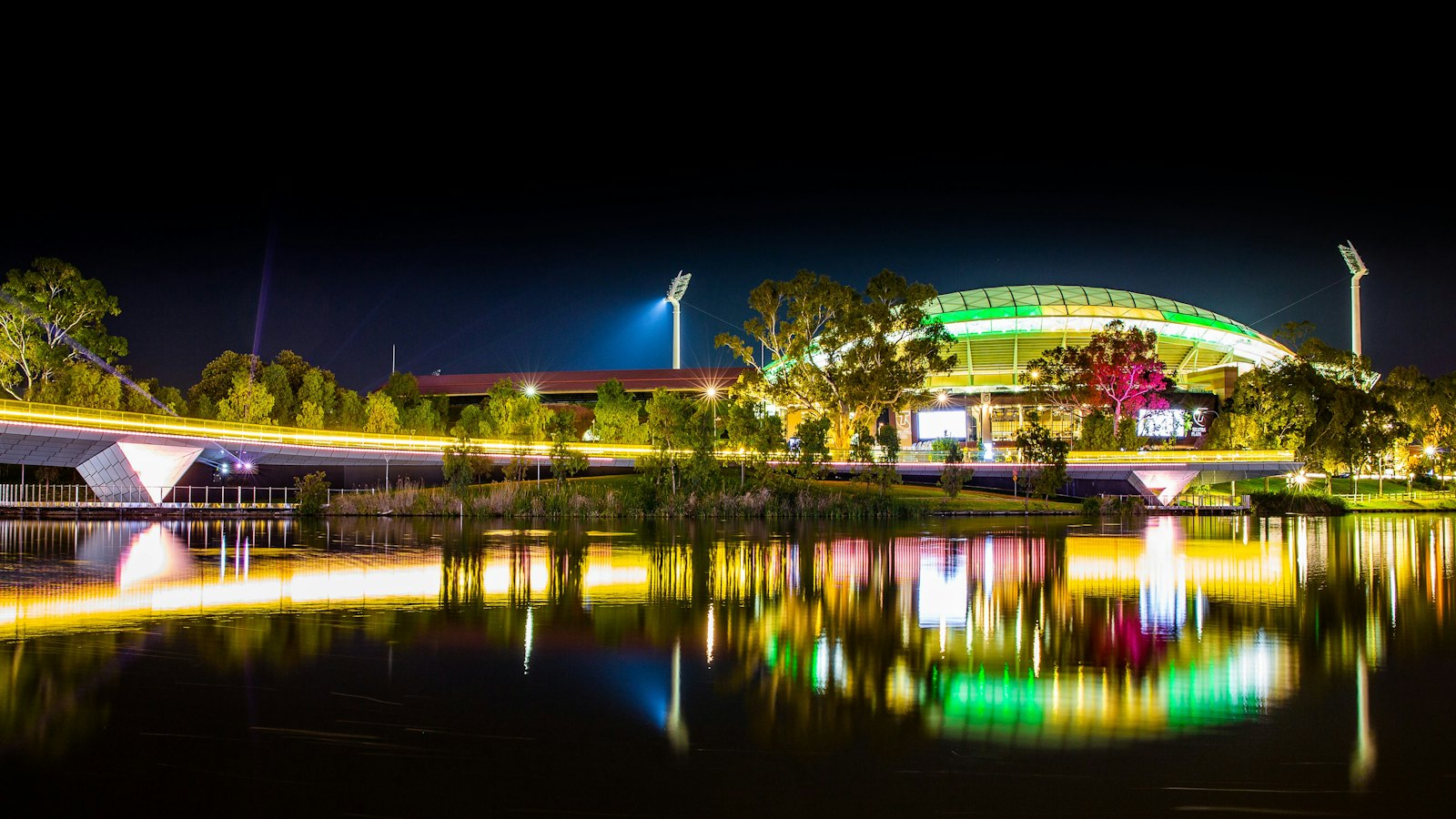
- Adelaide Oval: View the famous sports ground from the riverbank or book an available guided tour.
- Glenelg Beach: Take the tram for swimming in suitable conditions, a walk along the jetty and a coastal sunset.
- Himeji Garden: Pause in this small Japanese-inspired garden below the city centre.
- Mount Lofty Summit: Enjoy a broad view over Adelaide and the shoreline, often as part of an Adelaide Hills outing.
- Cleland Wildlife Park: Encounter Australian animals within a natural bush environment beyond town.
- Barossa Valley or McLaren Vale: Join an organised tasting excursion so nobody in your party must drive afterward.
Local food and dining districts
South Australia's table is shaped by seafood, regional farms, skilled bakers and the vineyards surrounding Adelaide. Begin at Adelaide Central Market, where fruit, coffee, baked goods, cheese and quick lunches share one covered space. Nearby Chinatown adds Malaysian, Chinese, Vietnamese, Korean and other Asian cooking for travellers craving recognisable flavours.
South Australian oysters, prawns and freshly cooked fish are worth seeking out. King George whiting is among the state's prized catches, while lamb frequently appears in modern Australian restaurants. Bakeries are another local strength. One unusual speciality is the pie floater, traditionally a meat pie placed in pea soup. Muslim diners should establish the meat source and other ingredients before trying it.
Gouger Street and surrounding lanes are convenient for informal meals. The East End around Rundle Street has cafes and dinner venues, while Glenelg's Jetty Road combines food stops with a seaside outing. Vineyard restaurants in McLaren Vale, the Barossa and Adelaide Hills highlight South Australian produce; reserve ahead and discuss dietary needs before visiting.
A simple meal commonly falls between AUD 15 and AUD 25, approximately RM 43 to RM 71. A main course at a moderately priced restaurant is more likely to be AUD 30 to AUD 55, or about RM 86 to RM 157.
Halal meals and places for prayer
Muslim visitors can travel comfortably in Adelaide with some forward planning, although suitable restaurants are clustered in particular districts. The CBD offers the easiest access, especially near Chinatown, Adelaide Central Market and the western part of the centre. Indian, Pakistani, Afghan, Middle Eastern and Southeast Asian businesses provide useful choices there.
Certification and kitchen practice still require confirmation. A venue described as Muslim-owned is not necessarily certified, while the words pork-free do not address meat suppliers, alcohol, cooking stock or shared oil. Vegetarian and seafood dishes can present similar concerns, so ask specific questions when required.
Adelaide City Mosque is the most prominent prayer facility close to town. Additional mosques and Islamic organisations serve outer neighbourhoods, generally requiring a bus, car or rideshare journey. The airport provides space for prayer or quiet reflection, but passengers should ask staff for its present location because terminal arrangements can move.
Online listings from Google Maps, Zabihah and HalalTrip are useful starting points rather than final proof. Recheck the details directly with each venue. Pack a small prayer mat and save prayer times before entering the hills or vineyard districts, where formal facilities and halal menus are much less common.
Transport within the metropolitan area
Flat terrain and a logical grid make the heart of Adelaide comfortable to cover on foot. For longer journeys, Adelaide Metro coordinates the city's train, tram and bus network. Stored credit on a metroCARD is convenient, and certain services accept supported bank cards or mobile wallets. Verify the latest conditions before assuming an overseas card will work, and validate your fare as instructed.
Depending on the period and ticket used, an ordinary adult journey is approximately AUD 2.50 to AUD 5, equal to around RM 7 to RM 14. Tram rides cost nothing inside the marked central zone. City Connector buses also provide free circulation through the CBD and North Adelaide. Once a service leaves the free boundary, passengers need a valid paid fare. The tram to Glenelg is valuable for visitors, but the complimentary section covers only its central-city portion.
Grab is unavailable in Adelaide. Uber and other rideshare operators active in Australia fill a similar role, with conventional taxis bookable or found at established ranks. Bicycles and shared mobility devices can suit short distances if riders obey helmet, parking and footpath regulations.
City sightseeing, Glenelg and organised regional tours do not require car hire. Rent one for independent coastal, Barossa or Adelaide Hills exploration. Keep left, avoid driving after tastings and remain alert for animals on country roads around sunrise and sunset.
Four-day Adelaide itinerary
- Day 1: Check into a CBD hotel and begin with Adelaide Central Market and neighbouring Chinatown. Continue through Victoria Square toward Rundle Mall, the East End and North Terrace. This flexible route accommodates tiredness after an overnight or early arrival from Kuala Lumpur.
- Day 2: Spend the morning between the South Australian Museum and Art Gallery of South Australia. Continue into Adelaide Botanic Garden, then follow the River Torrens toward Adelaide Oval during the cooler late afternoon. Choose dinner around the centre or market district.
- Day 3: Book a day in the Adelaide Hills, visiting Mount Lofty and, if wildlife matters to you, Cleland Wildlife Park. Alternatively, devote the day to either McLaren Vale or the Barossa Valley. Request an appropriate meal while reserving and take emergency snacks if halal availability is uncertain.
- Day 4: Use the tram for a relaxed Glenelg visit covering the shore, jetty and promenade. Return early enough for last purchases or another market stop before heading to the airport.
An extra day creates room for the Fleurieu Peninsula at a gentler pace. Kangaroo Island should not be compressed into this schedule, since the necessary transfers consume too much of a single day. Give the island additional time on a longer South Australian holiday.
Money and practical travel tips
Australian dollars are used throughout Adelaide. An estimate of AUD 1 to RM 2.85 is suitable for building a budget, but bank conversion margins and foreign-card fees affect the final charge. Electronic payments and mobile wallets are widespread, even at many smaller shops. Carry modest emergency cash and remember that DuitNow QR is not generally accepted. A merchant may impose a card surcharge if it is disclosed.
A local prepaid SIM or travel eSIM helps with directions, live transport information and rideshare requests. Compare network reach, not just the data quota, when regional driving is planned. Free Wi-Fi exists in selected public areas but is not dependable enough to serve as the only connection.
Power outlets accept Type I plugs. Malaysian Type G plugs therefore require an adaptor. Australia's 230-volt supply works with most current chargers once their input label has been checked. Gratuities are optional and no fixed tipping percentage is expected.
Normal urban awareness is appropriate. Secure valuables, avoid isolated parkland routes alone at night and conceal baggage in parked vehicles. On patrolled beaches, enter the water between the safety flags. Use sunscreen, water and protective clothing because ultraviolet exposure remains significant in cooler weather. Australian biosecurity controls are strict, so declare food and every plant or animal item rather than making your own judgement at the border.
Before you go
- Best time to go
- Autumn and spring offer Adelaide's easiest sightseeing weather. March through May and September through November generally bring mild conditions for city walks, coastal visits and vineyard excursions. December to February is summer, when occasional extreme heat makes early starts, drinking water and strong sun protection important. The June to August winter is cooler and rainier, but rooms may cost less away from major events. Adelaide's festival programme makes March particularly busy and can raise accommodation prices. Malaysian school breaks and December travel also affect flight demand. Reserve well ahead for festivals, important sporting fixtures and popular vineyard weekends. Even during pleasant spring or autumn days, carry a light outer layer for a cooler evening.
- Visa for Malaysians
- Malaysian travellers must obtain the correct Australian travel authority before departure. As of September 2026, a Malaysian passport holder needs an approved Electronic Travel Authority, subclass 601. Applications are made outside Australia with the official Australian ETA app, and the service charge is AUD 20, approximately RM 57. Activate NFC and location access so the app can read the passport chip and complete the selfie step. Adults and children require individual applications. The authority normally supports repeated entry for 12 months, or until passport expiry, and permits visits of up to three months for tourism, family trips or business meetings, but not paid employment. Processing is often quick, though extra evidence may be requested and approval within 72 hours is not assured. Wait for confirmation before committing to travel. A replacement passport needs another ETA. Complete the arrival card, declare food and verify updates at immi.homeaffairs.gov.au.
- Honest budget guide
- A comfortable Adelaide allowance is about RM 450 to RM 800 per traveller each day before international airfare. Basic rooms often fall near RM 250 to RM 400 nightly, while a mid-range stay can reach RM 450 to RM 750, with festival periods costing more. Daily food spending of RM 100 to RM 220 is realistic. Reserve approximately RM 25 to RM 70 for local travel unless frequent rideshares are planned. Amaboxly's scan identified RM 2,155 as the lowest one-way Kuala Lumpur fare, using Malaysia Airlines and Qantas with a connection. The median single fare was RM 2,335. For one traveller, four nights may produce an overall cost near RM 4,000 to RM 6,800 once return flights, shared lodging, meals, city transport and several paid experiences are included. A private room, rental car or vineyard tour will increase that estimate. Treat every amount as indicative.
Frequently asked questions
Do Malaysians need a visa for Adelaide?
Yes. As of September 2026, Malaysian citizens travelling on a Malaysian passport require an approved Electronic Travel Authority, subclass 601. Submit the application outside Australia through the official Australian ETA app and pay its AUD 20 service charge. Every child needs a separate approval. The ETA can permit several visits, each lasting no longer than three months, but it does not authorise paid employment. Reconfirm the conditions with Australia's Department of Home Affairs.
Is there a direct flight from Kuala Lumpur to Adelaide?
Yes. Malaysia Airlines links KLIA Terminal 1 and Adelaide without a stop, normally taking close to seven hours. Other tickets connect through cities such as Perth or Melbourne. The fare search used for this guide found a one-stop minimum of RM 2,155 and a median single-journey price of RM 2,335. Before booking, compare the full duration, checked-baggage entitlement and inconvenience of changing aircraft rather than judging the headline fare alone.
Is Adelaide Muslim-friendly?
Adelaide has established mosques and a useful range of halal or Muslim-run restaurants. Choices are easiest to find around the CBD, Chinatown, Adelaide Central Market and western central streets. Adelaide City Mosque is a convenient prayer reference near town. Options decline outside the metropolitan area, particularly around vineyards, so arrange suitable food before a tour and pack backup snacks. Ask whether a business is certified, Muslim-owned or only describes its menu as pork-free.
How many days are enough for Adelaide?
Four days provides a balanced first introduction. Two days can cover central markets, galleries, museums, gardens and the river, leaving one day for the Adelaide Hills or a vineyard district and another for Glenelg. A fifth day allows more relaxed exploration or an outing on the Fleurieu Peninsula. Kangaroo Island warrants additional time because its ferry or flight logistics make a compressed visit tiring and inefficient.
What is the best month to visit Adelaide?
April and October are dependable choices for moderate temperatures and outdoor activities. March delivers Adelaide's major arts events and a particularly lively atmosphere, although popular rooms become scarce and expensive. Summer is attractive for the coast but can include fiercely hot days. Winter brings cooler, wetter weather and sometimes lower lodging costs. Conditions change from year to year, so consult the short-range forecast shortly before packing.
How much money should I budget for five days in Adelaide?
Plan approximately RM 4,500 to RM 7,600 per person for five days, assuming return airfare, four nights in shared accommodation, meals, metropolitan travel and a few admissions or one regional excursion. Paying alone for a room, renting a vehicle or joining premium vineyard trips pushes the figure upward. Although cards are accepted almost everywhere, include possible overseas transaction charges and retailer surcharges. The range is a planning estimate, not a guaranteed total.
Can I use Grab in Adelaide?
No. Grab has no Adelaide service. Uber or another rideshare company operating locally is the nearest equivalent, and standard taxis remain available by booking or from ranks. For everyday movement, Adelaide Metro buses, trains and trams will generally cost less. Much of the centre can be walked, and the clearly designated free tram area reduces transport spending during CBD sightseeing.
Do I need a car in Adelaide?
A vehicle is unnecessary for an itinerary centred on the CBD and Glenelg. Walking and public transport handle those areas, while organised tours visit the leading vineyard districts. Hiring a car adds flexibility for the Adelaide Hills, Fleurieu Peninsula and other regional stops. Drivers keep left in Australia and must account for paid parking, alcohol restrictions and wildlife on rural roads. For tastings, a guided excursion is often the more practical choice.
Jom pergi
Ready to go Adelaide? Compare available flights and hotels for your dates. Check baggage, cancellation terms and the final total on the booking provider before paying.






