




On this page13 sections
- Overview
- Getting there from KL: flights and KLIA terminals
- Sydney Airport to the city: train, bus, taxi or Uber
- Where to stay in Sydney
- Things to do in Sydney
- What to eat in Sydney
- Halal food and prayer spaces in Sydney
- Getting around Sydney
- Sample itinerary: 4 days in Sydney
- Money, SIM and practical tips
- Day trips: the Blue Mountains and koalas
- Before you go
- FAQ
Sydney is where many Malaysians meet Australia for the first time: a harbour city of ferries, sandstone headlands and surf beaches, with enough Asian and halal food in Haymarket and Lakemba to ease any homesickness. The seasons run opposite to ours, so a December trip means summer sun and a July trip means jacket weather. This guide covers what KLIA travellers actually need: which airlines fly non-stop right now (the line-up changes in late October 2026), the Electronic Travel Authority you apply for through an app, the real cost of the airport train, where to find halal food and prayer space, and a realistic budget in ringgit.
Getting there from KL: flights and KLIA terminals
Non-stop flights to Sydney take roughly eight hours, and three Malaysian airlines fly the route at the time of writing, though that is about to change.
- Malaysia Airlines: departs KLIA Terminal 1 and has the most frequencies, with up to three flights a day in late September 2026.
- Batik Air Malaysia: also uses KLIA Terminal 1, and sells non-stop flights as well as a one-stop routing through Bali.
- AirAsia X: flies from KLIA Terminal 2, but its four-weekly Sydney service ends with the last flights on 25 October 2026. It keeps Melbourne and Perth.
Our KL fare scan, updated 20 September 2026, showed one-stop fares from about RM 884 one-way at the time of writing, on Scoot and Vietjet connections through Singapore or Ho Chi Minh City, with many dates priced near RM 893. Batik Air via Bali started near RM 1,032, while non-stop seats in the scan cost noticeably more than the cheapest one-stop options. Prices move every day.
Sydney is two hours ahead of Malaysia, or three during NSW daylight saving (4 October 2026 to 4 April 2027).
Sydney Airport to the city: train, bus, taxi or Uber
International flights land at Terminal 1. Prices are indicative, at roughly RM 2.87 to AUD 1.
- Airport train: the T8 line leaves from the station under Terminal 1 (turn right out of arrivals). It takes about 12 minutes to Central, 21 to Circular Quay and 25 to Town Hall, roughly every 10 minutes from about 5am to midnight. An airport station access fee is built into the fare, so an adult trip to a city station costs AUD 21.64 off-peak (about RM 62) or AUD 22.94 at peak by contactless or Opal card, and AUD 24.20 on a paper single ticket.
- Bus 420 plus train: route 420 runs from the International Terminal to Mascot Station, where an ordinary train continues to the city without the airport fee. Far cheaper, but slower.
- Taxi: under a fixed-fare trial that began in November 2025, AUD 60 (about RM 172) including tolls covers trips from the airport ranks to the designated CBD area, or AUD 80 for a maxi taxi carrying five or more.
- Uber: UberX pick-ups at Terminal 1 are from Rank C, outside Arrivals Hall B, using a PIN.
- DART Express Shuttle: a bookable shuttle to central hotels.
Inside the fixed-fare zone, a taxi for two adults and two children costs less than four train tickets, which come to about AUD 80 off-peak.
Where to stay in Sydney
Sydney sprawls, so pick a base on a train or ferry line.
- Circular Quay and The Rocks: a short walk to the Opera House, the Harbour Bridge and the ferry wharves. Ideal for a short first visit, but the priciest rooms in town.
- Haymarket, Central and Darling Harbour: good-value hotels and serviced apartments, Chinatown and Thai Town food on the doorstep and a direct airport train to Central. The best all-round pick for most Malaysian families.
- Bondi and Coogee: beach mornings with the coastal walk outside. There is no train station, so allow extra time on the bus into town.
- Parramatta: often called Sydney's second CBD, about 24 km west of the city, with rooms that are often cheaper. Blue Mountains trains stop here, Featherdale is out this way and Auburn's halal restaurants are a few stops away. Good for longer stays or visiting relatives.
Serviced apartments with a kitchen suit Muslim families: one run to a halal butcher covers breakfasts and packed lunches for days and softens Sydney's restaurant prices.
Things to do in Sydney
The harbour ties the city together, and many of the best sights are free.
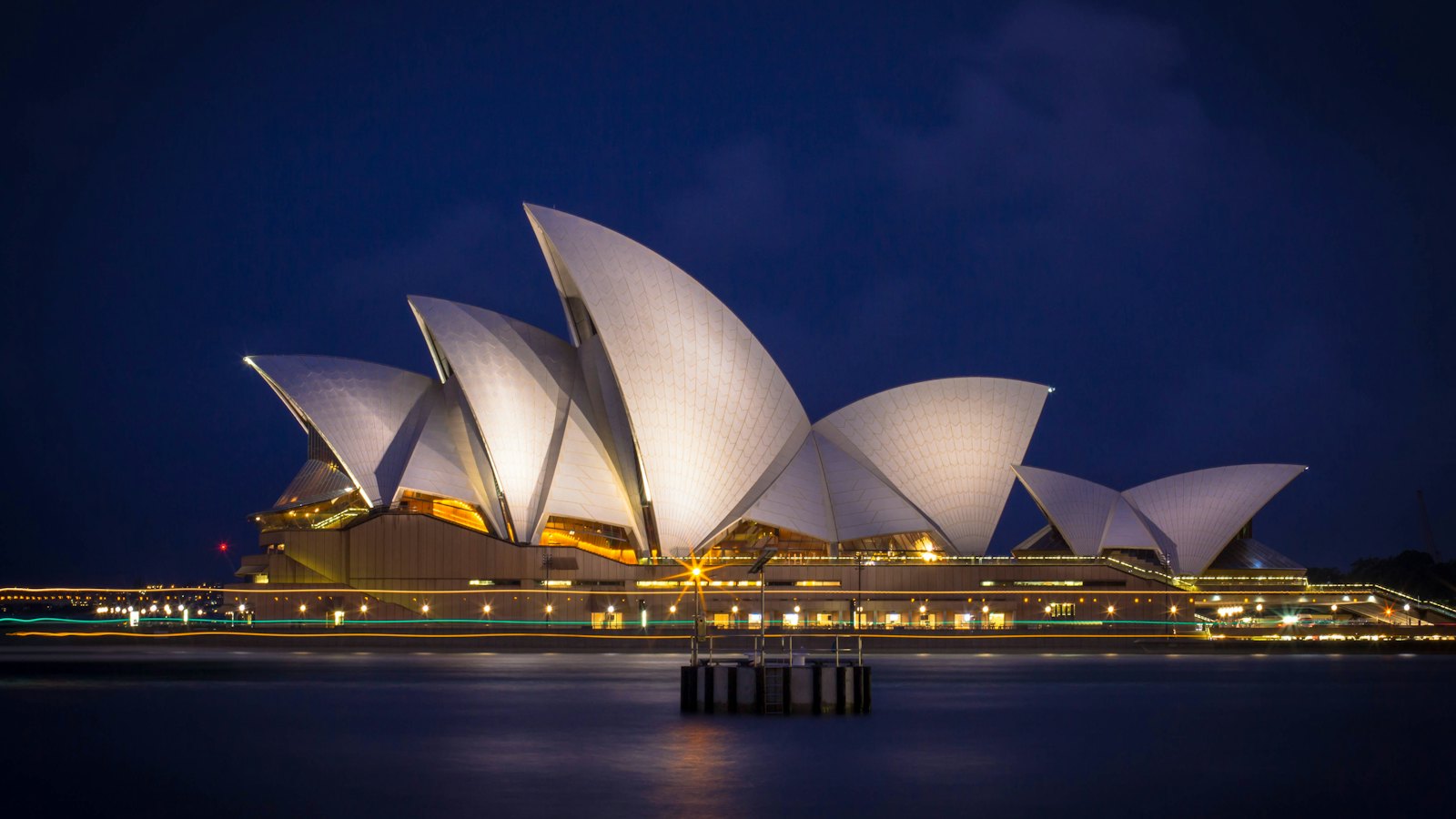
- Sydney Opera House: walk around the sails from Circular Quay or book a guided tour inside. In recent winters the free Badu Gili projection has lit the sails with work by Indigenous artists, so check the Opera House program.
- Harbour Bridge on foot: the pedestrian path is free, with views back to the Opera House.
- Bondi to Coogee Coastal Walk: 6 km of clifftop path past Tamarama, Bronte and Clovelly, two to three hours one way, with humpback whales offshore in winter.
- Manly ferry: a normal Opal fare buys a harbour cruise out to Manly's beach and the Corso.
- Taronga Zoo: a short ferry hop from Circular Quay.
- Royal Botanic Garden: free gardens curving around the harbour, with Mrs Macquarie's Chair framing the bridge and the Opera House in one photo.
- The Rocks and Darling Harbour: sandstone lanes, museums and waterfront dining.
- Queen Victoria Building and Paddy's Markets: a grand shopping arcade, then the Haymarket stalls (open Wednesday to Sunday) for cheap souvenirs. Any supermarket sells Tim Tams.
- Featherdale Sydney Wildlife Park: hand-feed kangaroos and pat a koala in western Sydney.
What to eat in Sydney
Sydney eats like the migrant city it is, and some of its best meals come from Lebanese, Vietnamese, Thai and Malaysian kitchens. Muslim readers should read the next section before ordering meat.
- Seafood: Sydney rock oysters, barramundi and prawns at the new Sydney Fish Market in Glebe, opened in January 2026, or fish and chips on the sand at Manly.
- Meat pies and sausage rolls: the classic bakery snack, usually made with beef or pork and rarely halal.
- Brunch: smashed avocado on sourdough with a flat white, often AUD 20 to AUD 30 (RM 57 to RM 86) per person.
- Lamb: grilled chops and Lebanese mixed plates are a highlight in the western suburbs.
- Sweets: lamingtons, pavlova and packets of Tim Tams for the office back home.
- Lebanese: charcoal chicken with garlic sauce, manoushe flatbreads and knafeh in Lakemba, Punchbowl and Bankstown.
- Malaysian: when you miss home, Malaysian-run eateries around the city serve roti canai, nasi lemak and laksa. Halal status varies, so ask.
A casual meal costs roughly AUD 18 to AUD 30 (RM 52 to RM 86). Tap water is safe and free.
Halal food and prayer spaces in Sydney
Sydney is one of the easier Western cities for Muslim travellers, but halal food clusters in certain suburbs.
- Lakemba: shops and eateries on and around Haldon Street have catered to Arab and Muslim families for decades, with Lebanese, Syrian, Pakistani and Afghan cooking plus halal grocers. The Lakemba Mosque (Imam Ali bin Abi Taleb Mosque) on Wangee Road is Australia's largest mosque.
- Auburn: Turkish and Middle Eastern restaurants and shops, plus the Ottoman-style Auburn Gallipoli Mosque, where around 2,000 people attend Friday prayers.
- Punchbowl and Bankstown: Punchbowl is known for Lebanese restaurants and sweet shops, and neighbouring Bankstown has plenty more places to eat.
- City centre: kebab shops, Middle Eastern grills and some Asian restaurants serve halal meat, but status varies by outlet. Look for a certificate and ask whether all the meat is halal, as some of these places also serve alcohol.
Australia has many halal certifiers rather than one national authority, so a certificate from a recognised Islamic organisation means more than a handwritten sign. Do not lean on "no pork, no lard" wording the way you might at home: ask about the meat itself.
Sydney Airport has a prayer room on Level 3 of Terminal 1, before security. Nearer the centre there are smaller mosques in inner suburbs such as Redfern and Zetland, and a prayer app will point you to the closest one. Muslim Pro handles prayer times and qibla, and Zabihah helps find halal restaurants.
Getting around Sydney
Trains, the driverless Metro, buses, ferries and light rail share one system, Opal. You do not need a card: tap on and off with a contactless Visa, Mastercard or Amex, or a phone wallet, and you pay adult Opal fares. Use the same card or phone every time so the caps count.
- Fare caps: adult travel tops out at AUD 19.30 a day from Monday to Thursday (about RM 55), AUD 9.65 on Fridays, weekends and public holidays, and AUD 50 a week. The airport station fee sits outside these caps.
- Opal cards: free to get from the ticket windows at the airport stations or from convenience stores and newsagents, if you would rather not tap your own card.
- Ferries: the most scenic transport in the city, on the same fares, with Circular Quay as the hub.
- Ride-hailing: Grab does not operate in Australia. Uber is the main app, and DiDi also runs in Sydney.
- Taxis: metered and far pricier than in KL.
Malaysian banks may add a foreign transaction fee to every tap, so a multi-currency travel card can work out cheaper.
Sample itinerary: 4 days in Sydney
Four days covers the harbour, the beaches and one trip out of town. Save beach plans for the sunniest day.
- Day 1: Train in from the airport and drop your bags. Walk from Circular Quay past the Opera House, through the Royal Botanic Garden to Mrs Macquarie's Chair, then cross the Harbour Bridge on foot near sunset and eat in The Rocks.
- Day 2: Morning ferry to Taronga Zoo, back to Circular Quay, then the Manly ferry for the Corso, the beach and the waterside path to Shelly Beach. Dinner in Haymarket.
- Day 3: Blue Mountains by train from Central for the Three Sisters and a bush walk, or Featherdale and Parramatta if your group prefers animals to hiking.
- Day 4: The Bondi to Coogee walk while it is cool, then the Queen Victoria Building and Paddy's Markets (Wednesday to Sunday). If it is a Friday, swap the shopping for Friday prayers at Lakemba Mosque or the Auburn Gallipoli Mosque and an early halal dinner before your flight.
Money, SIM and practical tips
- Currency: Australian dollar. AUD 1 was worth about RM 2.87 in late September 2026.
- Cards over cash: cards and phone wallets work almost everywhere, and some cafes are cashless. Expect occasional card surcharges.
- DuitNow: PayNet's cross-border QR works in Singapore, Indonesia, Thailand and Cambodia at the time of writing, not Australia, so do not plan on paying by scanning with your Malaysian banking or e-wallet app.
- Mobile data: install a tourist eSIM at home, or pick up a prepaid SIM after landing.
- Plugs: 230V with angled flat pins (type I), so Malaysian three-pin plugs need a converter.
- Tipping: optional, and nobody will chase you for it.
- Food from home: declare all food on the Incoming Passenger Card handed out on board. The Australian Border Force says homemade food generally cannot come in, so leave your family's rendang and serunding at home, and fresh fruit is not allowed either.
- Tax refund: spend at least AUD 300 with one business within 60 days of leaving and claim back GST under the Tourist Refund Scheme at the airport, at least 30 minutes before departure.
- Safety: swim between the red and yellow flags and wear strong sunscreen. Emergency number: 000.
Day trips: the Blue Mountains and koalas
Beyond the harbour, most Malaysians want a mountain lookout and a close encounter with Australian animals. Both are easy without a car.
The Blue Mountains, part of the Greater Blue Mountains World Heritage Area west of the city, are known for the Three Sisters rock formation at Echo Point in Katoomba, eucalyptus valleys and waterfalls. Blue Mountains Line trains leave Central regularly, also stopping at Strathfield and Parramatta. Express services reach Katoomba in about 90 minutes and all-stops trains take up to two hours, payable by Opal or contactless card, so the ride is cheap, especially under the Friday to Sunday cap. It is noticeably colder up there, so bring a jacket even in spring.
Featherdale Sydney Wildlife Park in Doonside, west of Parramatta, lets you hand-feed kangaroos and wallabies in walk-through habitats and pat a koala. It pairs well with a night or two in Parramatta.
Go on a weekday if you can, as the famous lookouts get crowded at weekends.
Before you go
- Best time to go
- March to May and September to November are the best months for Sydney, with mild days of about 19 to 25°C and lower prices than in summer. The seasons are reversed. Summer (December to February) brings afternoon highs of about 25 to 26°C, occasional heatwaves, beach days and the New Year's Eve fireworks. Malaysia's long school break (5 to 31 December 2026 in most states) lands in Australia's own summer holidays, so flights and hotels peak. Winter (June to August) brings afternoon highs of about 16 to 18°C and nights near 8°C, so pack a real jacket. It is also whale season, and Vivid Sydney lights up the harbour from 28 May to 19 June 2027. February to June is the wettest stretch. During Ramadan, Lakemba Nights fills Haldon Street from Thursday to Sunday between 11 February and 7 March 2027.
- Visa for Malaysians
- Malaysian passport holders need an Electronic Travel Authority (ETA, subclass 601) to visit Australia as of September 2026, applied for only through the official Australian ETA app. There is no visa charge, just an AUD 20 service fee in the app (about RM 57). You need a phone with a camera, NFC and location services to scan your passport chip and take a live photo, and you must be outside Australia when applying. Most results arrive immediately, but Home Affairs advises against booking travel until the ETA is granted. It allows multiple visits over 12 months (or until your passport expires, if sooner) of up to three months each, for tourism, family or business meetings but not work. Every family member, children included, needs a separate application, and the ETA ends if your passport expires or you get a new one, so renew an ageing passport first. Everyone also fills in an Incoming Passenger Card on arrival. Confirm the rules on immi.homeaffairs.gov.au before you fly.
- Honest budget guide
- Each day in Sydney costs roughly RM 450 to RM 900 per head once you land, excluding flights and assuming a shared room. Flights: at the time of writing our KL fare scan's cheapest one-way seats were near RM 884 with one stop, so a return starts around RM 1,800, and non-stop or school-holiday dates cost more. A budget hotel room costs around AUD 150 to AUD 220 a night (RM 430 to RM 630) and a comfortable mid-range hotel AUD 250 to AUD 400 (RM 720 to RM 1,150). Food runs about RM 170 to RM 285 a day mixing cafes, food courts and one proper dinner. Opal caps keep transport to about RM 55 a day at most, plus around RM 62 each way for the airport train. Over five days and four nights, a mid-range traveller spends around RM 5,000 to RM 7,000 including airfare. All numbers here are indicative.
Frequently asked questions
Do Malaysians need a visa to visit Sydney?
Yes, in the form of an Electronic Travel Authority (ETA, subclass 601), applied for through the official Australian ETA app for an AUD 20 service fee (about RM 57). Most applications get a result immediately, but do not book travel until it is granted. It covers multiple entries over 12 months, with stays of up to three months each. Every traveller, children included, needs their own ETA.
Is there a direct flight from KL to Sydney?
Yes. Non-stop flights of about eight hours leave KLIA Terminal 1 with Malaysia Airlines and Batik Air Malaysia. AirAsia X also flies non-stop from KLIA Terminal 2, but only until 25 October 2026. At the time of writing our fare scan showed one-stop fares from about RM 884 one-way via Singapore or Ho Chi Minh City, while non-stop seats cost noticeably more.
Is Sydney Muslim-friendly?
Yes, with a little planning. Sydney has a large Muslim community and whole neighbourhoods of halal food, especially Lakemba and Auburn. In the city centre halal options are scattered, so check certificates and ask about the meat. Sydney Airport has a prayer room on Level 3 of Terminal 1, and Lakemba Nights draws huge crowds during Ramadan.
How many days in Sydney is enough?
Four days covers the harbour, a ferry to Manly, the Bondi to Coogee walk and a day trip to the Blue Mountains or Featherdale. With five or six days you can add Taronga Zoo, a lazy beach day and an evening in Lakemba. With more time, Melbourne or the Gold Coast is a short domestic flight away.
What is the best month to visit Sydney?
March to May and September to November bring mild days of roughly 19 to 25°C and fewer crowds. December and January are hot beach months with New Year's Eve fireworks but peak prices, especially over Malaysian school holidays. Late May to June suits Vivid Sydney (28 May to 19 June 2027) and whale watching, with a warm jacket.
What does a 5-day Sydney trip cost?
Set aside roughly RM 5,000 to RM 7,000 each for a five-day, mid-range holiday with four hotel nights, flights included and sharing a room. Hostel stays and some home cooking cut that sharply. Rooms and restaurant meals cost far more than in KL, while Opal caps keep transport cheap. Figures are indicative.
Can I use Grab in Sydney?
No, Grab does not operate in Australia. Uber is the most widely used app and DiDi also operates in Sydney. Taxis are metered, and a trial fixed fare of AUD 60 (about RM 172) applies from the airport ranks to the CBD. For most trips, public transport paid with a contactless card is cheaper.
How do I get from Sydney Airport to the city?
The airport train from beneath Terminal 1 reaches Central in about 12 minutes and Circular Quay in about 21. By contactless card, an adult trip to a city station costs AUD 21.64 off-peak (about RM 62), including the airport station fee. The route 420 bus to Mascot plus an ordinary train is cheaper. A taxi to the CBD is a fixed AUD 60.
Jom pergi
Ready to go Sydney? Compare available flights and hotels for your dates. Check baggage, cancellation terms and the final total on the booking provider before paying.






