




On this page12 sections
- Overview
- Flight options from Kuala Lumpur
- Reaching central Florence from the airport
- Choosing an area to stay
- Major sights and museum planning
- What to eat in Florence
- Muslim-friendly meals and prayer planning
- Getting around on foot and public transport
- Four-day Florence itinerary
- Money, connectivity and practical tips
- Before you go
- FAQ
Florence places world-famous Renaissance art, monumental churches and lively Tuscan dining within a remarkably walkable centre. Malaysian visitors can comfortably include it in a three or four-day Italian journey linking Rome, Milan or the surrounding countryside. Reaching the city from KLIA requires a connection, usually through Europe or the Middle East. After arrival, walking will cover many important attractions. This guide explains likely airfares, transfers from Florence and Pisa airports, suitable neighbourhoods, advance museum bookings, Muslim-friendly food, prayer planning and everyday costs in ringgit. It also highlights practical ways to manage crowds, transport tickets and common tourist-area problems.
Flight options from Kuala Lumpur
No airline operates a nonstop Kuala Lumpur to Florence service as of September 2026. Travellers normally change aircraft at least once in a large European or Middle Eastern aviation hub. Certain schedules require a second connection because the last flight into Florence is a short regional sector. Depending on the routing and layover length, the complete journey usually takes approximately 16 to 23 hours.
Most full-service departures towards Europe or the Middle East use KLIA Terminal 1. Terminal 2 primarily handles budget airlines. Anyone building an itinerary from separate bookings should verify the terminal for every flight and leave ample time between them. A terminal change or self-transfer may involve Malaysian immigration, collecting luggage and checking in again.
No confirmed promotional fare currently exists for this route. A reasonable planning range is RM2,200 to RM4,000 for economy travel in one direction. Return tickets often fall between RM3,500 and RM6,000. June, July, Malaysian school breaks and the year-end season commonly produce higher prices. Search Pisa, Bologna, Rome and Milan as alternatives, then compare the additional railway fare and travelling hours before booking.
Reaching central Florence from the airport
Florence Airport, also called Peretola and identified by the code FLR, lies approximately 6 km from the old centre. A rough conversion of €1 to RM5 is useful for estimates, but the actual exchange rate should be checked near departure.
- Tram: T2 provides the most convenient public connection for many arrivals. The ride towards Firenze Santa Maria Novella railway station takes about 20 to 25 minutes and costs roughly €1.50 to €2.50, or about RM8 to RM12. Purchase an accepted ticket and complete any required validation.
- Taxi: Traffic determines whether the central trip takes 15 minutes or closer to 30. Fixed-area pricing, luggage fees and other supplements can bring the amount to approximately €25 to €35, or RM125 to RM175. Join the authorised rank outside the terminal.
- Private car: Advance reservations commonly begin near €45 to €70, equal to about RM225 to RM350. Families, late-night passengers and groups carrying several suitcases may find this worthwhile.
- Hire car: Choose one when continuing through Tuscany, not merely for central sightseeing. Restricted driving zones, costly garages and narrow streets make a car troublesome in Florence.
From Pisa Airport, the onward coach or rail journey generally requires 70 to 100 minutes, plus waiting time.
Choosing an area to stay
Distances are short in Florence, yet the right neighbourhood can save energy and provide quieter nights.
- Duomo and central historic streets: This is a strong choice for a brief first visit because museums, shops and the cathedral are nearby. Expect premium room prices and possible evening noise.
- Santa Maria Novella: Staying near the station is helpful with luggage, early trains or repeated day trips. Accommodation east of the tracks and closer to the centre generally has a more attractive setting than blocks behind the station.
- Santa Croce: Restaurants, nightlife and major landmarks are readily accessible on foot. Light sleepers should request an inward-facing room or one removed from bar-filled lanes.
- Oltrarno and Santo Spirito: These districts south of the Arno appeal to couples, returning visitors and anyone seeking workshops or neighbourhood restaurants. Central attractions remain reachable, although wheeling heavy baggage across the bridges is inconvenient.
Simple private rooms frequently range from €70 to €120 nightly, approximately RM350 to RM600. A comfortable middle-category option often costs €130 to €230, or RM650 to RM1,150. Summer demand and major exhibitions may raise these figures sharply.
Major sights and museum planning
Popular Florentine museums frequently develop long lines and some timed sessions sell out. Reserving priority attractions through their official channels will protect limited sightseeing time.
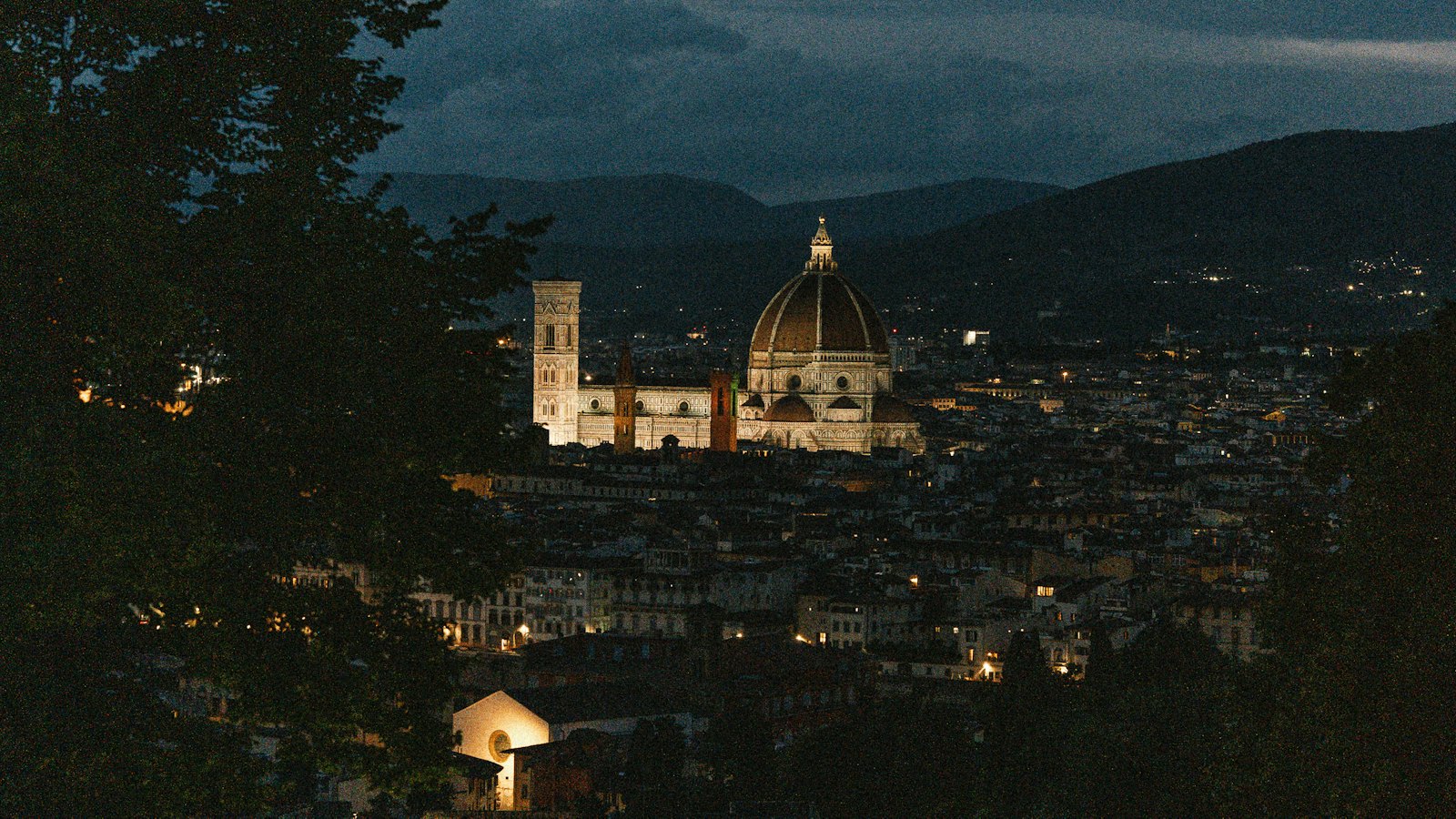
- Cathedral complex: Examine the patterned marble of Santa Maria del Fiore, the Baptistery and Giotto's Campanile around Piazza del Duomo.
- Brunelleschi's cupola: Secure a scheduled entry before attempting its steep, narrow and enclosed staircase.
- Uffizi: Set aside two hours or longer for paintings by Botticelli, Leonardo da Vinci and numerous Renaissance masters.
- Accademia: Its principal draw is Michelangelo's David. An early or late reserved slot can reduce the busiest crowd pressure.
- Ponte Vecchio: Walk across this medieval landmark, then photograph its complete profile from another bridge.
- Palazzo Vecchio: The ceremonial interiors and civic collections explain much of the city's political past.
- Santa Croce: This large basilica is connected with the memorials and tombs of notable Italians.
- Boboli Gardens: Combine the landscaped grounds with Pitti Palace and carry drinking water during hot weather.
- Piazzale Michelangelo: Reach the elevated terrace by foot or bus for an expansive skyline, particularly towards sunset.
For the dome, Accademia and Uffizi, official timed admission is preferable because commercial resellers may attach significant markups.
What to eat in Florence
Tuscan cooking often relies on good seasonal produce, beans, bread and olive oil rather than complicated sauces. Meat appears frequently in traditional Florentine recipes, so Muslims should ask how each dish and stock was prepared.
Ribollita is a substantial mixture of vegetables, beans and bread. Some kitchens add pork or meat broth, making an ingredient check necessary. Pappa al pomodoro uses tomatoes, bread, garlic and olive oil and is commonly a simpler vegetarian possibility. In warmer months, panzanella combines bread with fresh tomato. Other regional tastes include schiacciata flatbread, white beans dressed with olive oil, handmade pasta with tomato or mushroom sauce and crunchy cantucci biscuits. Florence is also known for bistecca alla fiorentina, a very thick steak that is unsuitable unless halal sourcing is explicitly verified.
Mercato Centrale and its surrounding streets provide produce and fast meals, though visitor-focused counters can charge more. Sant'Ambrogio and Santo Spirito are useful areas for a neighbourhood-style dinner. When choosing gelato, look for subdued natural colours and covered metal tubs. Huge, brightly decorated mounds are often aimed more at passing tourists than careful production.
Muslim-friendly meals and prayer planning
A Muslim traveller can navigate Florence with preparation, although its halal selection is smaller than the range available in Milan or Rome. The easiest places to search are near Santa Maria Novella, around San Lorenzo and along roads north of the historical core. Middle Eastern, South Asian and North African restaurants, together with Muslim-run kebab outlets, are commonly found there. Confirm the meat source and ask whether preparation surfaces are shared with alcohol, pork or other non-halal ingredients.
Vegetarian, seafood, vegan, no-lard and pork-free descriptions are not halal guarantees. Broth might contain meat, cheese can be produced with animal rennet and sweets sometimes include alcohol. After discussing preparation, marinara pizza, unadorned seafood and vegan plates can provide practical alternatives.
Dedicated prayer facilities are limited, and opening arrangements or addresses may change. Review current entries in Zabihah, Muslim Pro and recent mapping results, then verify access locally. Museums and retail buildings should not be expected to provide musollas. At FLR, ask airport personnel about any quiet or multifaith room. Carrying a small prayer mat and using a Qibla application will make planning easier, especially inside old buildings where orientation is difficult.
Getting around on foot and public transport
For exploring Florence's centre, walking is usually faster and more rewarding than using a vehicle. Santa Maria Novella station, the cathedral, the Uffizi and Ponte Vecchio occupy a compact zone. The stone surfaces can be hard and irregular, so supportive footwear matters.
Trams and municipal buses become useful for the airport and districts outside the centre. A basic fare is roughly €1.50 to €2.50, approximately RM8 to RM12, and remains usable for a defined time with transfers permitted according to its conditions. Obtain tickets from approved machines, participating retailers or supported mobile platforms. Validate them whenever the system requires it. Inspections occur, and an invalid or missing ticket can result in a penalty.
There is no citywide reloadable visitor card that functions like the Oyster system in London. Contactless bank-card payment exists on portions of the network, but visitors should retain an alternative in case a Malaysian-issued card does not process.
Grab has no service in Florence. Official taxis operate from marked ranks and local reservation channels, while street hailing is not always practical. Many rides within central areas cost around €12 to €25, equivalent to RM60 to RM125. Driving is generally frustrating because parking is scarce and expensive, streets are often one-way and restricted traffic zones are closely controlled.
Four-day Florence itinerary
- First day: After checking in, follow a walking route from the Duomo through Piazza della Signoria to the Arno. Cross Ponte Vecchio for dinner in Oltrarno. If weather and energy allow, end at Piazzale Michelangelo.
- Second day: Use a reserved morning admission for the Uffizi. Continue after lunch with Palazzo Vecchio, the open-air sculpture displays at Piazza della Signoria and Santa Croce. Keep space for gelato and a relaxed walk instead of forcing in another major gallery.
- Third day: Begin at the Accademia to see David. Later, return to the cathedral complex for a previously booked cupola or bell-tower ascent. Explore San Lorenzo and Mercato Centrale before spending the evening around Santo Spirito.
- Fourth day: Take one regional excursion. Pisa provides its famous leaning tower and cathedral precinct, while Lucca has walkable walls and a quieter character. Siena is rewarding for medieval streets and civic history. Travellers avoiding a rental car may prefer an organised countryside tour.
On a three-day visit, omit the excursion. At least two complete days should remain for Florence itself, particularly when the Uffizi, Accademia and cathedral complex are priorities.
Money, connectivity and practical tips
The local currency is the euro. Using €1 as approximately RM5 makes quick mental budgeting easier, although travellers should consult the current rate. Established restaurants, museums and hotels generally take cards. Keep a modest cash reserve for markets, small transactions or a malfunctioning payment terminal. Malaysia's DuitNow QR is not an ordinary payment option in Italy.
An unlocked mobile phone can usually be connected most conveniently through an eSIM. Physical SIM packages are sold around the airport, station and official operator outlets, and passport registration may be required. Italian electricity runs at 230V through Type C, F and L sockets. A plug adapter is necessary for Malaysian three-pin devices.
Restaurant gratuities are restrained rather than compulsory. When service is good, rounding the total or adding several euros is adequate. A cover fee shown on the bill does not count as a gratuity.
Most visits are comfortable, but thieves target busy trams, the railway station and crowded landmarks. Secure valuables and avoid leaving a phone along a café table edge. Decline unrequested assistance at ticket machines. Motorists must not enter a limited traffic zone until their hotel explains how the registration number will be authorised. In summer, bring water and take care on uneven paving.
Before you go
- Best time to go
- Spring and early autumn usually provide Florence's most comfortable conditions. April, May, the latter part of September and October generally offer pleasant temperatures for long walks without the strongest summer heat. Rain remains possible in spring, while autumn nights may feel cool, so include layers and a small umbrella. June through August brings higher prices, dense crowds and tiring afternoons in exposed piazzas. Winter is cooler, wetter and darker, but rooms can offer better value outside Christmas and New Year. Easter, important exhibitions and fashion or commercial events may reduce accommodation availability. June and December school holidays in Malaysia coincide with popular European travel periods. Reserve lodging and headline museums well ahead, begin visits near opening time and schedule outdoor viewpoints later in the day.
- Visa for Malaysians
- As of September 2026, a Malaysian passport permits a short Italian visit without obtaining a visa first. The maximum stay is 90 days across any moving 180-day window, with time in every Schengen country counted together. The document should be less than 10 years old on entry, have two empty pages and remain valid for three months beyond the planned Schengen departure. The Entry/Exit System captures a facial image and fingerprints at the initial Schengen border, though deployment at Italian airports is still being completed. ETIAS has not begun and cannot presently be purchased. Its announced launch fee is €20, so avoid sellers offering applications now. Bring lodging information, proof of sufficient money and an onward or return booking. Recheck esteri.it and travel-europe.europa.eu before travelling.
- Honest budget guide
- A practical daily allowance is RM500 to RM900 per traveller, before international airfare. That range supports a sensible budget or middle-category Florence visit. Economy tickets from Kuala Lumpur are commonly estimated at RM2,200 to RM4,000 one-way because a connection is necessary, while a round trip may cost RM3,500 to RM6,000. Basic private accommodation is often RM350 to RM600 per night, compared with roughly RM650 to RM1,150 for a comfortable mid-range room. Set aside RM120 to RM250 each day for meals and RM20 to RM70 for local travel, then add reserved museum or tour charges. Five days commonly total RM6,500 to RM10,500 for one person, including return airfare, shared mid-range lodging, food, urban transport and leading attractions. Summer, special events and school holiday dates can increase every estimate.
Frequently asked questions
Do Malaysians need a visa for Florence?
As of September 2026, Malaysians do not need a visa for a short Italian holiday and can visit for up to 90 days during any moving 180-day span across the entire Schengen Area. Check that the passport satisfies the issue-date and post-trip validity conditions, then verify updates through Italy's foreign ministry and the European Union travel website.
Is there a direct flight from Kuala Lumpur to Florence?
There is no scheduled nonstop link between KLIA and Florence as of September 2026. Most passengers transfer through a European or Middle Eastern hub, and the overall journey often lasts 16 to 23 hours. Flights to Pisa, Bologna, Rome or Milan can be compared, provided the extra train expense and transfer duration are included.
How many days are enough for Florence?
Three complete days provide enough time for the main galleries, the cathedral quarter, Oltrarno and central streets at a comfortable pace. Add a fourth day for Pisa, Siena, Lucca or rural Tuscany. With just two days, pre-book the Uffizi and Accademia and remain within Florence instead of adding an excursion.
Is Florence Muslim-friendly?
Muslim visitors can manage Florence successfully, although halal dining and prayer infrastructure are not extensive. Search near Santa Maria Novella, San Lorenzo and the northern side of the centre for Muslim-run restaurants. Confirm prayer-space access shortly before visiting. Properly checked seafood, vegan meals and simple tomato dishes offer useful backup choices.
What is the best month to visit Florence?
May and October usually combine agreeable walking temperatures with less severe heat, although crowds are still possible. April and late September are similarly attractive. July and August tend to be hotter, busier and costlier. Anyone travelling during Malaysian school breaks, particularly in June or December, should secure rooms and museum reservations early.
How much money do I need for five days in Florence?
Allow approximately RM6,500 to RM10,500 for one traveller. This estimate covers return economy flights from Kuala Lumpur, a share of mid-range lodging, meals, city transport and major admission charges. Hostel accommodation and self-catered food can lower the amount. Private rooms, frequent taxis, organised tours or peak summer dates will raise it.
Can I use Grab in Florence?
Grab is unavailable in Florence. Walking serves most central journeys, with trams and buses useful for longer distances. Licensed cabs can be found at official stands or ordered through local booking providers, though even brief trips are relatively expensive. Many central rides fall between €12 and €25 once distance, traffic and supplements are considered.
Should I stay in Florence or Pisa?
Choose Florence when museums, Renaissance buildings and atmospheric evening walks are the trip's priorities. Pisa is more convenient for an early departure from its airport or a short stay focused on the leaning tower. Since frequent rail services make Pisa practical as an excursion, first-time visitors generally benefit from sleeping in Florence.
Jom pergi
Ready to go Florence? Compare available flights and hotels for your dates. Check baggage, cancellation terms and the final total on the booking provider before paying.






