




On this page13 sections
- Overview
- Getting there from KL: flights and routings
- El Prat airport to the city
- Where to stay in Barcelona
- Things to do in Barcelona
- What to eat in Barcelona
- Halal food and prayer spaces
- Getting around Barcelona
- Sample itinerary: 4 days in Barcelona
- Money, SIM and practical tips
- Shopping in Barcelona: flagships, outlets and tax refunds
- Before you go
- FAQ
Barcelona is Catalonia's seaside capital, where Gaudí's buildings rise between medieval lanes, broad 19th-century avenues and a beach you can reach by metro. Malaysians come for the Sagrada Família, FC Barcelona, Catalan food and serious shopping, often adding Madrid, Paris or Montserrat to the trip. This guide covers the essentials from KLIA: one-stop routings (nothing flies non-stop), Schengen entry and the new biometric border check, the cheapest rides from El Prat, halal meals and Friday prayers, and realistic ringgit costs, all checked in September 2026.
Getting there from KL: flights and routings
Nothing flies non-stop from KLIA to El Prat as of late September 2026, so every booking includes a change of plane. The usual choices are the Gulf carriers (Etihad through Abu Dhabi, Qatar Airways through Doha, Emirates through Dubai) or Turkish Airlines through Istanbul, all checking in at KLIA Terminal 1. Terminal 2, AirAsia's base, only matters if you combine separate tickets, a gamble on long-haul trips because a missed onward flight becomes your loss.
Allow 17 to 20 hours door to door. Etihad's Abu Dhabi to Barcelona sector alone takes a little over seven hours. Barcelona runs six hours behind Malaysia in summer and seven hours behind once European clocks change in late October.
Amaboxly's KL fare scan, refreshed on 20 September 2026, put the lowest one-way fare at roughly RM 1,219 on Etihad via Abu Dhabi, with a median close to RM 1,630. Connections through Doha began near RM 1,744, through Istanbul near RM 1,991 and through Dubai near RM 2,087. No direct fares appeared. Prices shift daily. On a longer Europe trip, an open-jaw ticket (in to Barcelona, home from Madrid or Paris) avoids backtracking.
El Prat airport to the city
Josep Tarradellas Barcelona-El Prat (BCN) has two terminals, T1 and T2, linked by a free 24-hour shuttle bus; your ticket shows which one you use. Prices are indicative, at about RM 4.65 per euro.
- Aerobús: easiest with luggage. Line A1 serves T1 and A2 serves T2, calling at Plaça Espanya, Gran Via (Comte Borrell) and Plaça Universitat before Plaça Catalunya. It runs round the clock, takes roughly 35 minutes in normal traffic and costs €7.75 one-way or €13.30 return (RM 36 and RM 62).
- R2 Nord train: from T2 only, about every 30 minutes, reaching Sants or Passeig de Gràcia in 20 to 30 minutes. A single costs only a few euros (under RM 25), or use one T-casual journey. From T1, ride the shuttle to T2 first.
- Metro L9 Sud: serves both terminals but needs the €5.90 Airport ticket (RM 27), since the T-casual is refused at these two stations; the Hola Barcelona card works. Slower, usually with a change.
- Taxi: only black-and-yellow cabs from the marked ranks are official. The meter applies, with a €21 minimum (about RM 98) for any airport pickup, and the centre typically comes to roughly €30 to €40 (RM 140 to RM 185).
Uber, Cabify, Bolt and FreeNow also pick up at El Prat, useful for pre-dawn flights.
Where to stay in Barcelona
Barcelona is compact, so the neighbourhood matters more than the hotel. Factor in the nightly tourist tax (see the money section).
- Eixample: the grid around Passeig de Gràcia and Plaça Catalunya, with Casa Batlló, La Pedrera and the big shops. Central, on both the Aerobús and R2 Nord routes, and easy for families, though seldom cheap.
- Gothic Quarter and El Born: medieval alleys, the cathedral, tapas bars and museums on your doorstep. Charming for couples, but rooms are small, nights are loud and pickpockets work the crowds.
- El Raval: beside La Rambla, with several mosques and many of the city's halal eateries. Convenient and often cheaper; some streets feel edgy after midnight, so choose a hotel with strong recent reviews on a main road.
- Gràcia: a former village of little squares and independent shops, uphill towards Park Güell. Quieter and more local.
- Sants and Plaça Espanya: practical rather than pretty, with Madrid trains at Sants and an Aerobús stop at Plaça Espanya. Good for big suitcases.
Book early for July, August and big trade fairs such as Mobile World Congress, when rates jump.
Things to do in Barcelona
Gaudí shapes most first visits, and his timed tickets can sell out days ahead, so book online before flying.
- Sagrada Família: the central Tower of Jesus Christ was blessed by Pope Leo XIV on 10 June 2026, the centenary of Gaudí's death. Official tickets cost €26 (about RM 121) with the audio guide app, or €36 including a tower. Modest dress is expected.
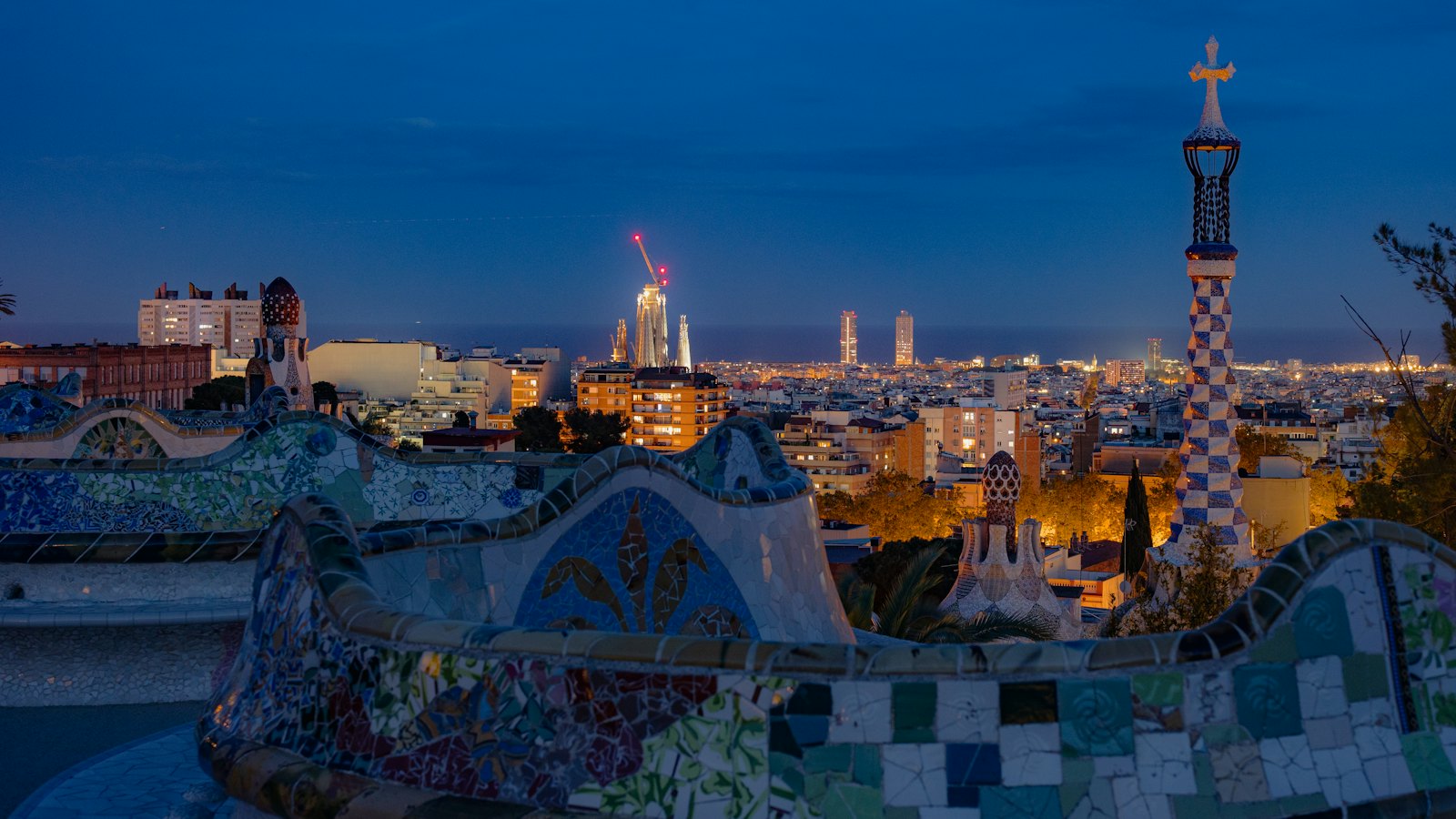
- Park Güell: the mosaic terrace, serpentine bench and storybook gatehouses need a timed ticket at €18 (about RM 84).
- Casa Batlló and La Pedrera: two Gaudí buildings on Passeig de Gràcia, each with a striking rooftop.
- Gothic Quarter and El Born: the cathedral, Plaça Reial, Roman remains and the Picasso Museum, best on foot.
- La Boqueria: fruit cups, juices and seafood counters off La Rambla. Arrive before the tour groups.
- Montjuïc: castle, gardens, the 1992 Olympic park and the MNAC art museum, reached by funicular or cable car.
- Barceloneta: the city beach and seafront promenade.
- Spotify Camp Nou: FC Barcelona's stadium reopened for matches at reduced capacity in late 2025 while rebuilding continues in stages, so check the club's website for what the museum and tour cover on your dates.
- Tibidabo: the hill behind town, with a church, an old funfair and the widest city views.
What to eat in Barcelona
Catalan food leans on seafood, olive oil, rice and slow-cooked sauces, and locals eat late: lunch near 2 pm, dinner after 8.30 pm. Plenty of classics contain pork or wine, so Muslim travellers will want the halal notes below.
- Paella and arròs negre: seafood rice pans, the black one tinted with squid ink. Barceloneta is the traditional place, and many kitchens cook paella only for two or more.
- Fideuà: paella's Catalan cousin, made with short thin noodles.
- Pa amb tomàquet: toast rubbed with ripe tomato, olive oil and salt.
- Patatas bravas and tortilla de patatas: fried potatoes in spicy sauce, and a thick potato omelette. Ask about the sauce and frying fat.
- Crema catalana: chilled custard under crackly caramelised sugar.
- Churros with hot chocolate: a morning or teatime treat in the Gothic Quarter's old cafés.
- Calçots: grilled spring onions with romesco sauce, eaten at winter and early spring gatherings called calçotadas.
For value, order the menú del día, a weekday set lunch with two courses, dessert and a drink for roughly €13 to €20 (RM 60 to RM 95). La Boqueria and Santa Caterina markets suit a quick fruit or seafood stop.
Halal food and prayer spaces
Large Pakistani, Bangladeshi and Moroccan communities make Barcelona one of Spain's easier cities for Muslim travellers, though formal certification is rare.
- Certified: Spain's main certifier is Instituto Halal, which Malaysia's embassy in Madrid describes as recognised by JAKIM. It mostly certifies food producers, so certificates on restaurant doors are uncommon.
- Muslim-owned: the source of most halal meals. El Raval, behind La Rambla, is full of Pakistani, Bangladeshi and Moroccan eateries, grill houses and halal butchers, with Lebanese and Turkish restaurants scattered through Eixample and the old town. Ask about the meat and whether alcohol is served.
- Pork-free is not halal: a tapas bar without jamón may still cook with wine or non-halal meat. Watch for lard (manteca de cerdo) in pastries and chorizo in rice.
Several mosques and prayer halls in El Raval hold Friday prayers. The Tariq Bin Ziyad Mosque, a short walk from Liceu metro (L3), is the one most Muslim visitor guides point to; halls fill fast, so come early. At El Prat, Aena lists a multi-denominational chapel on Floor 1 of Terminal 1, open 6 am to 10.30 pm. Hotel breakfasts usually include pork, so read labels. HalalTrip, Zabihah and Muslim Pro help with restaurants, prayer times and qibla.
Getting around Barcelona
Metro, buses, trams, FGC and Rodalies trains share one fare system, and almost every sight is in Zone 1. The old town is best on foot. Fares below apply from 15 January 2026.
- Single ticket: €2.90 (about RM 13.50), metro and TMB buses.
- T-casual: 10 Zone 1 journeys for €13 (about RM 60), roughly €1.30 each, with connections inside the time limit counted as one trip. One person only, loaded on a T-mobilitat card or phone, and not valid at the airport metro stations.
- T-dia: 24 hours of unlimited Zone 1 travel for €12 (about RM 56).
- Hola Barcelona Travel Card: unlimited rides for one to five days, from €12.50 for 24 hours, including the airport metro and Montjuïc funicular.
- Ride-hailing: Grab does not operate in Spain. FreeNow books licensed taxis; Uber, Cabify and Bolt supply private-hire cars, with patchier cover in the suburbs.
- Taxis: metered and free to flag down when the green roof light is on. Most accept cards, but check first.
FGC trains from Plaça Espanya head to Montserrat, and high-speed trains from Sants reach Madrid in about two and a half hours.
Sample itinerary: 4 days in Barcelona
Four days covers Gaudí, the old town and one excursion. Lock in Sagrada Família and Park Güell times first.
- Day 1: Land, drop bags and stroll the Gothic Quarter and El Born, from the cathedral to Plaça Reial and the Picasso Museum lanes. Watch sunset on the Barceloneta promenade and eat early.
- Day 2: Sagrada Família on an early timed slot, before the crowds build, then walk to Passeig de Gràcia for Casa Batlló or La Pedrera and some shopping. Dinner in El Raval, where halal places cluster.
- Day 3: Park Güell in the morning, then drift down through Gràcia's squares. Spend the afternoon on Montjuïc, or at the Camp Nou museum if you support Barça.
- Day 4: Montserrat, around an hour and a half each way by FGC train from Plaça Espanya plus the rack railway, or an outlet day at La Roca Village. On a Friday, plan around prayers at one of El Raval's mosques.
A fifth day suits Tibidabo, a beach afternoon or an early breakfast at La Boqueria.
Money, SIM and practical tips
- Currency: euro. The European Central Bank's reference rate on 28 September 2026 was about RM 4.65 per euro, making €10 roughly RM 46.
- Paying: cards work nearly everywhere, usually by tap, but keep some cash for small bars and market stalls. If a terminal offers to bill you in ringgit, choose euros, as the merchant's rate is usually worse.
- Malaysian e-wallets: PayNet's DuitNow cross-border QR currently works only in Singapore, Indonesia, Thailand and Cambodia, not Spain, so bring a multi-currency debit card.
- Data: buy a Europe-wide eSIM before departure.
- Power: 230V, European round-pin sockets (types C and F); pack an adapter for Malaysian three-pin chargers.
- Tourist tax: from 1 April 2026, each guest pays per night €7 in most hotels under four stars, €8.40 at 4-star, €9.50 in holiday flats and €12 at 5-star (about RM 33 to RM 56), collected by the property.
- Tipping: optional; round up, or leave 5 to 10 percent for good service.
- Safety: violent crime is low, but pickpockets are notorious on La Rambla, the metro, the beach and around the Sagrada Família. Keep phones off café tables and walk away from anyone pointing out a stain or pushing a petition.
- Emergencies: dial 112. Malaysia's embassy in Spain is in Madrid.
Shopping in Barcelona: flagships, outlets and tax refunds
Shopping fills plenty of Malaysian itineraries here.
- Passeig de Gràcia: the grand avenue of luxury houses and flagships between Gaudí's buildings, with Rambla de Catalunya alongside for smaller boutiques. Spanish labels are the draw, from Loewe leather to Zara and Mango, which started in Barcelona.
- La Roca Village: an outlet village about 40 minutes out. The official Shopping Express coach leaves Estació del Nord through the day, €25 return online (about RM 116).
- Gifts: olive oil, turrón (almond nougat), saffron and espadrilles travel well. Check sweets for gelatine and alcohol.
Tax refunds: Spain's standard VAT is 21 percent, and non-EU residents can claim part back through DIVA. Request a tax-free form at the till and show your passport. At El Prat, scan the form at a DIVA kiosk before bag drop, and keep purchases unused in case customs wants to inspect them. Refund operators take a fee, so you receive less than the full 21 percent. On the metro, hold new shopping bags close.
Before you go
- Best time to go
- May, June, September and early October suit Barcelona best, with warm days, long evenings and thinner crowds than midsummer. July and August reach highs of about 28 to 29°C with sticky humidity, packed beaches and peak hotel prices. October is usually the wettest month, though showers rarely last all day, and winter is mild at around 15°C with cheaper rooms outside Christmas. Plan around the festivals: Sant Jordi on 23 April (books and roses), Sant Joan's bonfires and fireworks on the night of 23 June, the decorated streets of Festa Major de Gràcia in mid-August and La Mercè around 24 September. Malaysia's year-end school break (early December to 31 December 2026) lifts fares from KL, so book that window early.
- Visa for Malaysians
- Malaysian passport holders can enter Spain without a visa as of September 2026, staying up to 90 days in every rolling 180-day window across the Schengen Area, with no ETIAS approval needed yet. The Spanish Embassy in Kuala Lumpur wants passports issued no more than 10 years ago and still valid three months after your planned last day in the Schengen zone. Officers may ask for a return ticket, hotel bookings and proof of funds; Spain's interior ministry currently sets €121.10 per person per day, minimum €1,098.90. The EU Entry/Exit System has been fully operational since 10 April 2026 and Spain applies it in full, so fingerprints and a facial image replace the passport stamp at first entry; allow extra time at El Prat. ETIAS (€20) still has no launch date. Airlines can be strict on expiry, so renew if under six months remain. Check exteriores.gob.es and travel-europe.europa.eu before you fly.
- Honest budget guide
- Budget roughly RM 450 to RM 900 per traveller for each day in Barcelona, flights excluded, with accommodation making most of the difference. Flights: our KL scan's lowest one-way fare stood at about RM 1,219 (Etihad through Abu Dhabi) at the time of writing, with the median nearer RM 1,630, so two one-ways cost about RM 2,450 to RM 3,300. A basic hotel or guesthouse room is around €80 to €120 (RM 370 to RM 560) a night, a good 3-star or 4-star €130 to €220 (RM 600 to RM 1,020), plus tourist tax. Food runs RM 150 to RM 300 daily and local transport RM 30 to RM 60. A comfortable five-day, four-night trip sharing a room lands around RM 5,500 to RM 7,000 per head with flights. These numbers are indicative.
Frequently asked questions
Do Malaysians need a visa to visit Barcelona?
No. As of September 2026 Malaysians need no visa for Spain for stays of 90 days within any 180, and ETIAS has not launched. Your passport needs three months' validity beyond your Schengen exit and an issue date within 10 years. Fingerprints and a photo are taken at first entry; confirm the rules on exteriores.gob.es.
Is there a direct flight from KL to Barcelona?
Not at the time of writing. Most Malaysians connect once via Abu Dhabi, Doha, Dubai or Istanbul, leaving from KLIA Terminal 1, for 17 to 20 hours in total. In our fare scan, Etihad had the lowest one-way fare, about RM 1,219, and Doha connections started near RM 1,744.
Is Barcelona Muslim-friendly?
Fairly, by European standards. El Raval has many Muslim-owned Pakistani, Bangladeshi and Moroccan restaurants plus several mosques for Friday prayers, including the Tariq Bin Ziyad Mosque near Liceu. El Prat's Terminal 1 has a multi-denominational chapel. Certified restaurants are rare, so ask about the meat and alcohol; pork-free does not mean halal.
How many days in Barcelona is enough?
Three or four days covers the Sagrada Família, Park Güell, the old town, Passeig de Gràcia, Montjuïc and the beach. Add a fifth for Montserrat or La Roca Village. Madrid is about two and a half hours away by high-speed train, so a one-week Spain trip is easy.
What is the best month to visit Barcelona?
May, June, September and early October give warm weather without the crowds and prices of July and August. Sant Jordi falls on 23 April and La Mercè around 24 September. Winter is mild and cheaper, while October tends to be the wettest month, so pack an umbrella for autumn trips.
What does a five-day Barcelona trip cost from Malaysia?
Allow about RM 5,500 to RM 7,000 per person for a mid-range trip with flights, a shared room, casual meals and public transport. On the ground, RM 450 to RM 900 a day is typical, plus tourist tax of €7 to €12 per guest per night. Booking Gaudí tickets online and eating the menú del día help.
Can I use Grab in Barcelona?
No, Grab does not operate in Spain. Use FreeNow for official black-and-yellow taxis, or Uber, Cabify and Bolt for private-hire cars, all available at El Prat. For sightseeing the metro is cheaper: a T-casual gives 10 Zone 1 rides for €13 (about RM 60).
How do I get from Barcelona airport to the city centre?
Take the 24-hour Aerobús from either terminal to Plaça Catalunya: about 35 minutes and €7.75 one-way (about RM 36). The R2 Nord train from Terminal 2 costs a few euros and reaches Passeig de Gràcia in under half an hour. Metro L9 Sud needs a €5.90 Airport ticket; a taxi typically comes to roughly €30 to €40.
Jom pergi
Ready to go Barcelona? Compare available flights and hotels for your dates. Check baggage, cancellation terms and the final total on the booking provider before paying.






