




On this page13 sections
- Overview
- Getting there from KL: flights and stopovers
- Vienna Airport to the city during the rail works
- Where to stay in Vienna
- Things to do in Vienna
- What to eat in Vienna
- Halal food, mosques and prayer rooms
- Getting around Vienna
- Sample itinerary: 4 days in Vienna
- Money, SIM and practical tips
- Day trips: Salzburg, Hallstatt and Bratislava
- Before you go
- FAQ
Vienna is the old Habsburg capital on the Danube: gilded palaces, grand coffee houses, concert halls and tap water piped in from the Alps. Malaysians mostly come for Schönbrunn and the imperial sights, for Christmas markets that line up neatly with our year-end school holidays, and for side trips to Salzburg, Hallstatt or Bratislava. This guide gives KLIA flyers the current picture: connection options with current ringgit fares, visa-free Schengen entry and the new biometric border checks, reaching the centre while Vienna's central S-Bahn line is closed until the end of October 2027, halal food and mosques, and realistic costs.
Getting there from KL: flights and stopovers
Nothing flies KLIA to Vienna non-stop at the time of writing, and neither Malaysia Airlines nor AirAsia flies there, so plan on one connection. Vienna runs six hours behind Malaysia until the clocks change on 25 October, and seven hours behind in winter.
- Via Singapore: Scoot flies non-stop from Changi to Vienna, roughly 13 hours on that leg. Its KL flights use KLIA Terminal 2, and meals and bags cost extra.
- Via the Gulf: Qatar Airways (Doha), Etihad (Abu Dhabi), Emirates (Dubai) and Air Arabia (Sharjah) all serve Vienna and check in at KLIA Terminal 1.
- Via Istanbul: Turkish Airlines, also from Terminal 1.
- Via East Asia: EVA Air and Austrian Airlines fly to Vienna from Bangkok, and China Airlines from Taipei.
At the time of writing, Amaboxly's KL fare scan (last refreshed 20 September 2026) put the cheapest one-way ticket at about RM 1,082, on Scoot via Singapore for 10 October, with a median near RM 1,322. Air Arabia via Sharjah began near RM 1,306, Etihad via Abu Dhabi near RM 1,440 and Qatar Airways via Doha near RM 1,614. Fares shift daily.
Vienna Airport to the city during the rail works
Vienna International Airport (VIE) is in Schwechat, south-east of the centre. From 7 September 2026 until the end of October 2027, the central S-Bahn line between Praterstern and the Hauptbahnhof is shut for works, so no trains reach Wien Mitte. Prices are indicative, at about RM 4.65 to the euro.
- CAT by bus: the City Airport Train now runs premium coaches non-stop to Wien Mitte/Landstrasse (U3, U4) in about 21 minutes, every 12 minutes from 7 am to 7 pm and every 15 minutes otherwise. €14.90 (about RM 69) single, 20 percent off online, under-15s free.
- Railjet, Intercity and REX 7: Railjets run twice hourly to Wien Hauptbahnhof (U1) in about 15 minutes, REX 7 in about 20, for €5.50 (about RM 26): €2.30 to the city boundary plus a €3.20 Vienna ticket. With a Vienna City Card or multi-day pass, add only the €2.30 part.
- S7: now ends at St. Marx, outside the centre, where you switch to tram 18 or 71.
- Vienna Airport Bus: five lines, including Schwedenplatz (about 20 minutes) and Westbahnhof via the Hauptbahnhof (about 40 minutes). €11 (about RM 51) one way, cash only if you pay the driver.
- Taxi: Taxi 31300 quotes a fixed €37 (about RM 172) booked in its app, and Taxi 40100 €42 (about RM 195), each for up to four people. Uber and Bolt also operate, at prices that vary. Use the official taxi stand and ignore touts in the arrivals hall.
Where to stay in Vienna
Vienna's 23 districts are numbered, and most visitors sleep inside or just beyond the Ringstrasse, the boulevard circling the old town. While the rail works last, a base near Wien Mitte or the Hauptbahnhof makes the airport run far simpler.
- Innere Stadt (1st district): the historic core, with St. Stephen's, the Hofburg and the State Opera all walkable. Best for a first or short visit, but the dearest rooms in town.
- Landstrasse (3rd): the streets around Wien Mitte, where the CAT coaches stop, with the U3 and U4 into the centre and the Belvedere close by. Sensible for families hauling big suitcases.
- Mariahilf and Neubau (6th and 7th): Mariahilfer Strasse for high-street shopping, plus the Naschmarkt, the MuseumsQuartier and plenty of cafes. Suits couples and shoppers.
- Hauptbahnhof and Favoriten (10th): newer chain hotels and hostels, direct trains to the airport and Salzburg, and Turkish-run eateries around Favoritenstrasse. Less pretty, but handy for day trips and halal meals.
December, when the Christmas markets meet our school holidays, fills up early.
Things to do in Vienna
Most imperial sights sit a few U-Bahn stops apart.
- Schönbrunn Palace: the Habsburg summer residence. At the time of writing the Palace Ticket with audio guide is €42 (about RM 195) for roughly 75 minutes inside; afterwards, climb through the park to the Gloriette terrace for the view.
- Hofburg and the Sisi Museum: the winter palace and the story of Empress Elisabeth, also home to the Spanish Riding School's white Lipizzaners.
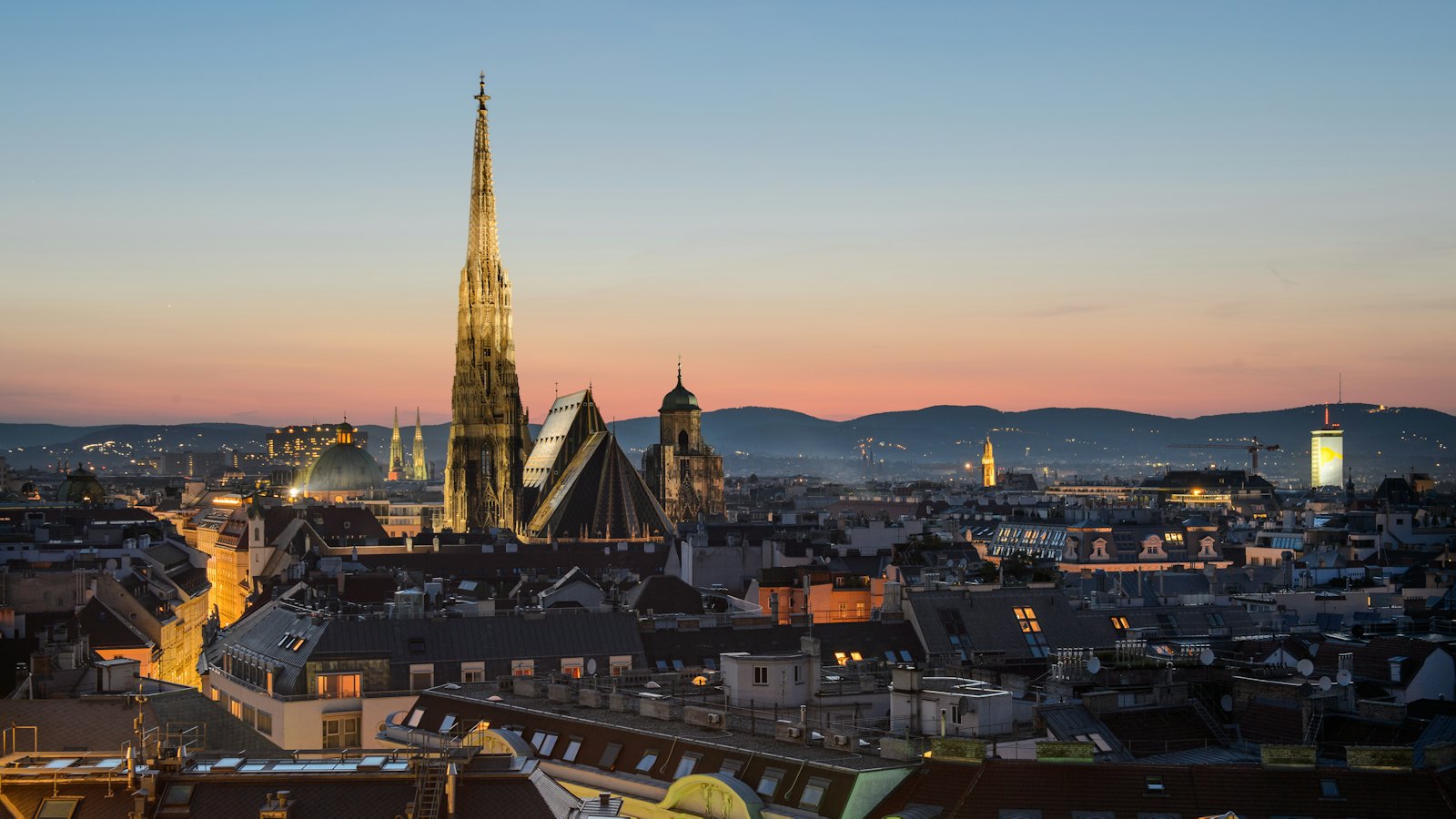
- St. Stephen's Cathedral: the Gothic landmark at the city's heart, followed by a stroll along the Graben and Kohlmarkt.
- Upper Belvedere: a Baroque palace holding a major Klimt collection, including The Kiss.
- Prater and the Giant Ferris Wheel: the old funfair in Leopoldstadt, best at sunset.
- Naschmarkt: about 130 stalls between Karlsplatz and Kettenbrückengasse, food stands open until 11 pm Monday to Saturday and a flea market on Saturday mornings. The market itself closes on Sundays, when only its restaurants open.
- Music: an opera or concert night, or the Vienna Boys' Choir at the 9.15 am Sunday Mass in the Hofburg Chapel (check the Hofmusikkapelle programme for dates).
- Christmas markets: in 2026 Schönbrunn opens on 6 November, Rathausplatz on 13 November, Freyung on 14 November, and Maria-Theresien-Platz and the Belvedere on 20 November.
What to eat in Vienna
Vienna likes to point out that its cooking is the only cuisine named after a city, and it leans on veal, beef, pork and pastry. Several classics involve pork or wine, so Muslim readers should also check the halal section.
- Wiener Schnitzel: a thin breaded cutlet. By Austrian law anything sold as Wiener Schnitzel must be veal, while the cheaper pork version is labelled "vom Schwein" or "Wiener Art", so read menus closely.
- Tafelspitz: boiled beef served with its broth, a dish the Viennese treat almost as ritual.
- Sachertorte, Apfelstrudel and Kaiserschmarrn: dense chocolate cake with apricot jam, apple strudel, and a torn, sugared pancake with fruit compote.
- Coffee houses: order a Melange, the local milky coffee, add a slice of cake and linger; nobody hurries you.
- Würstelstand: late-night sausage stands. The popular Käsekrainer is pork.
- Markets: the Naschmarkt for Middle Eastern, Asian and Viennese snacks, and the Brunnenmarkt in Ottakring, the city's largest street market with over 170 stalls.
To eat cheaply, lean on bakeries, supermarket deli counters and kebab stands, or a coffee house lunch.
Halal food, mosques and prayer rooms
Muslims are about 8 percent of Austria's population, and Vienna's Turkish, Balkan, Arab and South Asian communities make halal food easy enough to find. Formal certificates are uncommon in restaurants, though: most halal places are Muslim-owned and self-declared, and some may serve alcohol. If unsure, ask about the meat.
- Where to eat: Favoriten (10th district) around Favoritenstrasse and the Viktor-Adler-Markt, the Brunnenmarkt area in Ottakring (16th), and Middle Eastern stalls at the Naschmarkt. Not every kebab shop is halal. Zabihah lists dozens of halal restaurants and prayer spaces in central Vienna, most commonly Turkish, with Indian, Persian and Middle Eastern choices too.
- Mosques: the Vienna Islamic Centre in Floridsdorf (21st district), opened in 1979, is Austria's largest mosque, near Neue Donau station on the U6 (bus 20B also stops there). Photos and filming need permission. The Islamic Religious Community in Austria (IGGÖ) lists other mosques online.
- Airport: the multi-faith prayer room on Level 2 of Terminal 3 is open to everyone around the clock, no boarding pass needed; further rooms are airside in Terminal 3, the Plaza and Terminal 1.
Muslim Pro handles prayer times and qibla; with December sunsets close to 4 pm, Zuhr, Asr and Maghrib fall close together.
Getting around Vienna
The U-Bahn, trams and buses share one ticket within the city's core zone. Buy from station machines, tobacconists or the WienMobil app.
- Single ticket: €3.20 (about RM 15) for one journey in one direction, changes included, valid 80 minutes from validation, or €3.40 bought on a tram.
- 24-hour ticket: €10.20 (about RM 47).
- 7-day ticket: €25.20 (about RM 117) digital or €28.90 on paper, running seven consecutive days from validation.
- Vienna City Card: from €19 for 24 hours, with transport and museum discounts; the airport transfer version starts at €41.
Stamp paper tickets in the blue machines before riding. Under-sixes travel free, and under-15s ride free on Sundays, public holidays and during Vienna's school holidays.
Grab does not operate in Austria. Uber and Bolt both work in Vienna, and licensed taxis come from ranks or the Taxi 40100 and Taxi 31300 apps. A genuine Vienna taxi carries a W plate ending in TX, ATX, BTX, CTX or DTX, and must take cards. In the compact old town, walking is often quickest.
Sample itinerary: 4 days in Vienna
Four days covers the city with room for one excursion. Keep Sunday for sights, since most shops close.
- Day 1: Old town on foot: St. Stephen's, the Graben and Kohlmarkt, then the Hofburg and the Sisi Museum. Sachertorte in a coffee house, and dinner around the Naschmarkt.
- Day 2: Schönbrunn early before the tour groups, including the Gloriette. Upper Belvedere for Klimt in the afternoon, then the Prater and the Giant Ferris Wheel at dusk.
- Day 3: Day trip: the train to Salzburg, the Twin City Liner down the Danube to Bratislava (about 75 minutes, in season), or a long outing to Hallstatt (see the day trips section).
- Day 4: On a Friday, join Friday prayers at the Vienna Islamic Centre (U6 to Neue Donau). Then the Kunsthistorisches Museum for Habsburg art, last shopping on Mariahilfer Strasse, and the CAT coach from Wien Mitte or a Railjet from the Hauptbahnhof to the airport.
A fifth day could add Budapest, about 2 hours 40 minutes away by train.
Money, SIM and practical tips
- Currency: Austria uses the euro, which traded at about RM 4.65 on 28 September 2026 (ECB reference rate), so €10 is roughly RM 46.
- Cards and cash: cards work almost everywhere and ATMs are plentiful, but carry a few euros for stalls and skip high-fee exchange booths.
- Tipping: 5 to 10 percent in restaurants and taxis, unless service already appears on the bill.
- Plugs: 230 volts with round two-pin sockets (Type C and F); Malaysian three-pin plugs need an adapter.
- SIM: a Europe-wide eSIM bought before departure also covers side trips to Slovakia, Hungary or Germany.
- Sundays: most shops close, except at big railway stations, the airport and museum shops, so shop on Saturday.
- Tax-free: non-EU visitors can reclaim VAT on purchases of at least €75.01 in one shop, up to 15 percent after fees. Take the form from the store and validate it at the airport's digital export counters when leaving the EU.
- Safety: generally safe, but mind pickpockets in crowds and on busy trams, and buy concert tickets from official box offices, not street sellers.
- Water: Alpine tap water is safe to drink.
Day trips: Salzburg, Hallstatt and Bratislava
Plenty of Malaysians pair Vienna with the lakes and mountains further west. Long-distance trains leave from the Hauptbahnhof, and private WestBahn services from the Westbahnhof.
- Salzburg: Mozart's birthplace and the Sound of Music city, roughly two and a half hours by Railjet on the western line. Worth a night rather than a rushed return.
- Hallstatt: the lakeside village that fills so many Instagram feeds. Take a train towards Salzburg, change at Attnang-Puchheim for the Bad Ischl and Obertraun line, and alight at Hallstatt station, where a ferry timed to the trains crosses the lake in about 10 minutes (it runs all year, but bad weather can cancel sailings). From Vienna that is a very long day, so consider staying nearby. The village struggles with overtourism and residents live in those postcard houses, so keep noise and drones down.
- Bratislava: the Slovak capital is just under an hour by train, with departures at least hourly, or 75 minutes along the Danube on the Twin City Liner, which sails from late March to early November plus Advent weekends until 20 December in 2026.
Slovakia and Hungary belong to Schengen too, so no extra visa is needed, but those days still count towards your 90.
Before you go
- Best time to go
- May, June, September and October are the most comfortable months for Vienna, while mid-November to December is the busiest and most atmospheric time, with Christmas markets in the main squares. July highs average near 27°C, and most summers bring several days above 30°C. January averages about 4°C by day and hovers around freezing at night, snow is possible, and December sunsets come around 4 pm. There is no rainy season, just summer thunderstorms. The main markets open between 6 and 20 November 2026 and run until about Christmas (Schönbrunn's until 6 January 2027), and Malaysia's year-end school break begins on 5 December 2026 (Kedah, Kelantan and Terengganu break up on 4 December), so families should book flights and rooms early. The mid-year break, late May to early June, brings mild weather.
- Visa for Malaysians
- As of September 2026, a Malaysian passport gets you into Austria without a visa for stays totalling up to 90 days in any 180-day window, an allowance shared by all Schengen countries. Your passport must have been issued within the last 10 years and stay valid at least three months after you leave. On your first crossing, the EU's Entry/Exit System (EES) registers you with fingerprints and a facial image in place of passport stamps, so allow extra time. ETIAS, an online authorisation costing EUR 20 and valid up to three years, is not running yet and has no confirmed start date; the EU says it will announce the date several months ahead, so use only the official website or app once it opens. Confirm the current rules at bmeia.gv.at (Austria's foreign ministry) and travel-europe.europa.eu before booking.
- Honest budget guide
- Allow roughly RM 350 to RM 850 per person a day in Vienna, excluding flights, depending on hostel or mid-range comfort. Flights: one-way tickets in our scan start near RM 1,082 at the time of writing, with a median near RM 1,320, so a return runs roughly RM 2,200 to RM 2,700. Stay: hostel dorm beds from roughly RM 50 to RM 110, while Booking.com averages a 3-star room near RM 490 and a 4-star near RM 690 a night. Food: RM 120 to RM 250 daily, less if you live on bakeries and kebabs. Transport: about RM 47 for 24 hours or RM 117 for seven days. Five days with return airfare and half of a mid-range double room totals about RM 4,500 to RM 6,000 per person, or from RM 3,500 on a hostel budget. All figures are indicative.
Frequently asked questions
Do Malaysians need a visa for Vienna?
No visa is needed as of September 2026: stays of up to 90 days within 180 are allowed, counted across the Schengen area. You will be fingerprinted and photographed under the new Entry/Exit System the first time you arrive. ETIAS, a EUR 20 online authorisation, is not running yet and has no confirmed start date. Check bmeia.gv.at before flying.
Is there a direct flight from KL to Vienna?
Not at the time of writing. Connect in Singapore with Scoot (from KLIA Terminal 2), in a Gulf hub with Qatar Airways, Etihad, Emirates or Air Arabia, or in Istanbul with Turkish Airlines (all from KLIA Terminal 1). The cheapest one-way fare in our September 2026 scan was about RM 1,082, via Singapore.
Is Vienna Muslim-friendly?
Fairly. Halal restaurants are common, especially Turkish, Arab and South Asian places in Favoriten, Ottakring and around the old town, though most are self-declared rather than certified. The Vienna Islamic Centre by Neue Donau station is Austria's largest mosque, and Terminal 3 at the airport has a 24-hour multi-faith prayer room. Watch for pork and wine in Viennese classics.
How many days in Vienna is enough?
Three full days covers the palaces, museums, old town and a concert. Four lets you add Bratislava, Salzburg or Hallstatt, and five or more suits pairing Vienna with Budapest or the Austrian lakes. Most shops shut on Sundays, so plan shopping for another day.
What is the best month to visit Vienna?
May, June, September and October bring mild weather for sightseeing. December is a Malaysian favourite for the Christmas markets, but it is cold, dark by about 4 pm and busy during our school holidays, so book early. July and August are warm and lively, with occasional heatwaves.
What does a 5-day Vienna trip cost from Malaysia?
Roughly RM 4,500 to RM 6,000 per person, including return airfare and a twin-share mid-range room, or from about RM 3,500 using hostels and simple meals. On the ground, expect RM 350 to RM 850 a day. Figures are indicative.
Can I use Grab in Vienna?
No, Grab does not operate in Austria. Uber and Bolt both work in Vienna, as do the Taxi 40100 and Taxi 31300 apps. Licensed taxis have plates ending in TX, ATX, BTX, CTX or DTX and must accept cards. The U-Bahn and trams are usually faster and much cheaper.
How do I get from Vienna Airport to the city during the S-Bahn closure?
Until the end of October 2027, take the CAT coach to Wien Mitte (about 21 minutes, €14.90), a Railjet or REX 7 to the Hauptbahnhof (15 to 20 minutes, €5.50), or a Vienna Airport Bus to Schwedenplatz, Karlsplatz, Praterstern or Westbahnhof (€11). The S7 stops at St. Marx for now.
Jom pergi
Ready to go Vienna? Compare available flights and hotels for your dates. Check baggage, cancellation terms and the final total on the booking provider before paying.






