




On this page12 sections
- Overview
- Getting There: Kuala Lumpur to Interlaken
- Continuing from Zurich Airport by Train or Road
- Where to Stay in Interlaken
- Things to Do: Mountains, Lakes and Valleys
- Local Food and Affordable Meals
- Halal Dining and Prayer Planning
- Getting Around Interlaken and the Jungfrau Region
- Four-Day Interlaken Itinerary
- Money, Connectivity, Safety and Packing
- Before you go
- FAQ
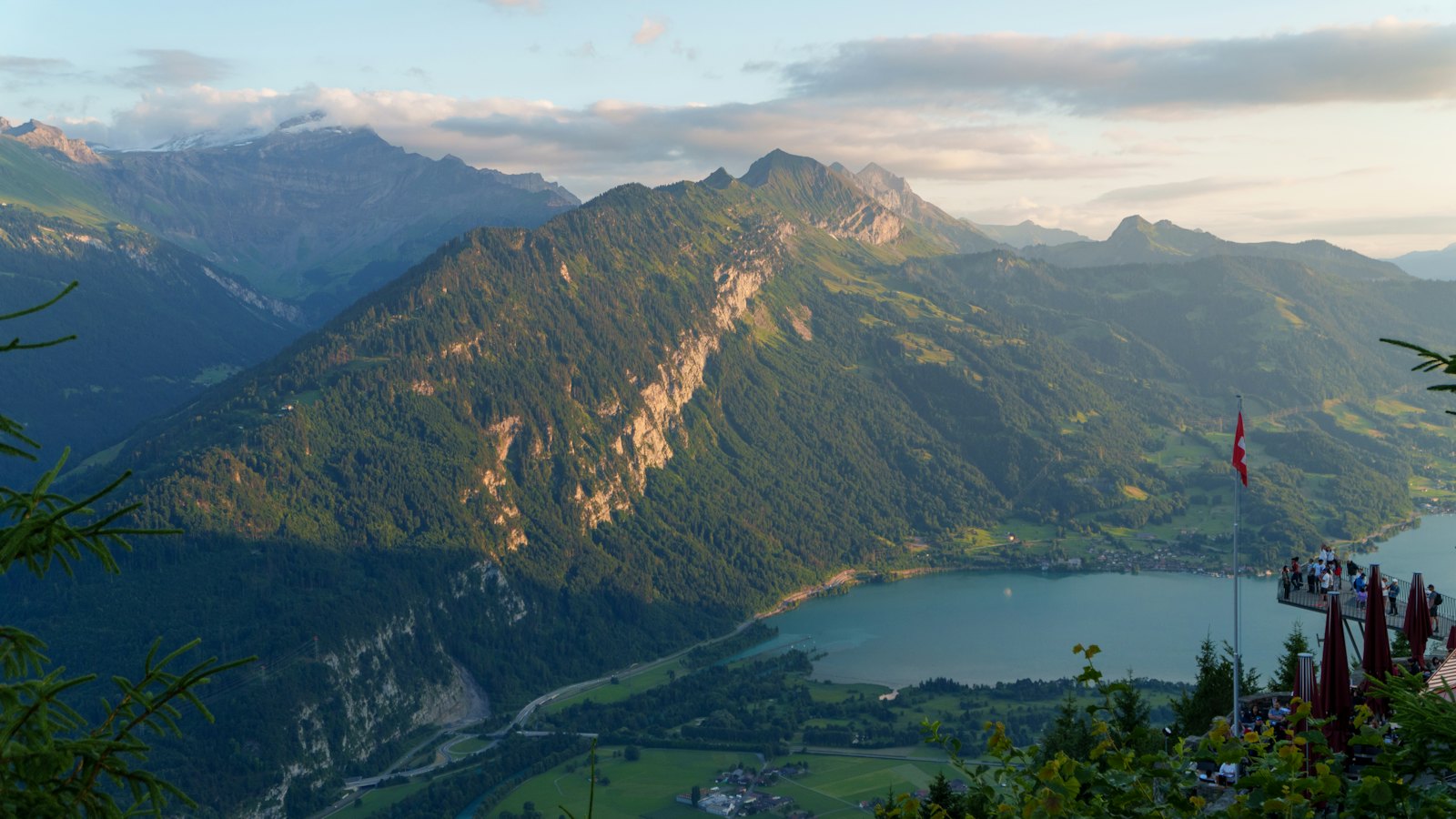
Interlaken is a convenient base for exploring turquoise lakes, waterfall valleys and the mountains of the Bernese Oberland. Travellers from Malaysia normally reach it by flying to Zurich with one connection and continuing by rail. Although the town is easy to navigate, Swiss transport choices, fast-changing mountain conditions and high prices reward advance planning. This guide explains the journey from KLIA, realistic costs in ringgit, suitable neighbourhoods, halal dining precautions, prayer options and a flexible four-day schedule. It also suggests lower-altitude alternatives for days when clouds make an expensive summit excursion poor value.
Getting There: Kuala Lumpur to Interlaken
Because Interlaken does not have a passenger airport, the usual route begins with a flight from Kuala Lumpur International Airport to Zurich Airport, followed by a Swiss train. As of September 2026, published schedules do not show a nonstop passenger flight between KLIA and Zurich, so most trips need one stop.
Emirates commonly connects in Dubai, Etihad in Abu Dhabi, Oman Air in Muscat, Qatar Airways in Doha and Turkish Airlines in Istanbul. Timetables vary by travel date. A practical air journey generally lasts about 15 to 20 hours, before allowing another two to three hours for immigration, baggage collection and the onward railway trip.
Amaboxly's fare check found a one-way Oman Air itinerary through Muscat from RM 1,263 for 24 January 2027. The observed median was RM 1,401. Other low examples were RM 1,327 through Istanbul, RM 1,375 through Abu Dhabi, RM 1,572 through Doha and RM 1,644 through Dubai. Treat these figures as a dated snapshot because availability, luggage inclusion and exchange rates can alter the final price.
These full-service international flights generally depart from KLIA Terminal 1. Verify the terminal on the confirmed ticket, and leave ample connection time when separate bookings are involved.
Continuing from Zurich Airport by Train or Road
Rail is normally the simplest way to complete the journey. Zurich Airport's railway station is directly below the terminal complex, which means travellers can continue without first going into Zurich city. Typical services take approximately 2 hours 10 minutes to 2 hours 40 minutes. Many require a change in Bern, while certain departures involve a second connection.
- Standard rail fare: A flexible second-class ticket commonly costs about CHF 75 to CHF 85, equal to roughly RM 400 to RM 450. Restricted Saver fares may be cheaper when purchased ahead.
- Travel pass: The Swiss Travel Pass, Swiss Half Fare Card and Saver Day Pass can improve value on a wider Swiss itinerary. Calculate all planned journeys before choosing one.
- Chauffeured transfer: A reserved vehicle usually needs around two hours when roads are clear. Prices of about CHF 400 to CHF 550, or RM 2,120 to RM 2,920, make this most practical for a group sharing the charge.
- Hire car: Driving also takes close to two hours, but parking, petrol and winter equipment can increase the cost. Cars using Swiss motorways need the required vignette.
Ringgit conversions in this guide use an approximate rate of CHF 1 to RM 5.30. Check current rates before paying.
Where to Stay in Interlaken
The Aare River runs through Interlaken, and the resort has railway stations at its eastern and western ends. Select an area based on your intended day trips, evening preferences and luggage needs.
- Interlaken Ost: Choose this side for convenient departures towards Lauterbrunnen, Grindelwald and other Jungfrau region destinations. It works especially well for first visits and early starts, although the surroundings become subdued at night.
- Höheweg and central Interlaken: This district places shops, restaurants and Höhematte within walking distance. Both main stations can be reached on foot if your luggage is manageable.
- Interlaken West: Supermarkets, casual restaurants and trains towards Bern are convenient here. The neighbourhood also provides straightforward access to Lake Thun and feels less dominated by excursion traffic.
- Matten bei Interlaken: Apartments and family accommodation can offer better space in this quieter community south of the centre. Confirm the nearest bus stop before booking.
Dormitory beds frequently begin at CHF 45 to CHF 70 per guest, approximately RM 240 to RM 370. Basic private rooms often range from CHF 110 to CHF 180, or RM 580 to RM 950. Comfortable mid-range doubles can reach CHF 180 to CHF 280, about RM 950 to RM 1,480. Reserve early for summer and year-end holidays.
Things to Do: Mountains, Lakes and Valleys
Interlaken's main strength is its position rather than a long list of urban sights. Keep expensive mountain plans movable until the short-range forecast and live operating notices are favourable.
- Cross Höhematte to see paragliders landing beneath the Alpine skyline. This central green space supplies an excellent free view.
- Take the Harder Kulm funicular for a panorama over the town and both lakes. Go only when visibility justifies the fare.
- Cruise Lake Thun and combine the sailing with a lakeside stop or time in Thun's historic centre.
- Explore Lake Brienz by seasonal boat, or include the waterfront and Giessbach Falls in the same outing.
- Travel to Lauterbrunnen for its steep-sided valley and waterfalls. Staubbach Falls is close to the village itself.
- Continue to Wengen or Mürren for traffic-free village scenery without purchasing the region's costliest summit ticket.
- Spend a day around Grindelwald, selecting walks, gondolas or snow activities appropriate to current conditions.
- Visit Jungfraujoch when the forecast is clear. The railway excursion commands a high price and occupies most of a day.
- Book paragliding, canyoning or rafting only through a reputable operator and ensure your insurance covers the activity.
Always review weather, closures and the last return connection before committing to a mountain ticket.
Local Food and Affordable Meals
Restaurant meals in Switzerland can quickly stretch a Malaysian travel budget. Interlaken's supermarkets, bakeries and informal lunch counters make it possible to taste regional food while limiting the number of costly sit-down dinners.
Rösti consists of grated potato cooked until crisp and may be served alone or with additional ingredients. Fondue is melted cheese shared with bread, while raclette features warmed cheese alongside potatoes, onions and pickles. Älplermagronen is a rich combination of pasta, potato, cheese and cream, sometimes accompanied by apple sauce. Birchermüesli is a convenient breakfast, and bakery sandwiches travel well on excursions.
Do not assume a meat-free Swiss speciality automatically satisfies halal requirements. Fondue frequently contains white wine. Bacon, pork-based stock, alcohol and animal rennet can also appear in otherwise simple dishes. Ask about the broth, sauce and cooking method before ordering. Plain rösti, vegetable pasta, salads and mushroom dishes can be useful alternatives when their ingredients and preparation are acceptable to you.
Purchase water, breakfast items and picnic supplies in town before travelling uphill, where food normally costs more. Interlaken West has convenient grocery options. Observe any rules against outside food inside restaurants, cable-car facilities or ticketed attractions, and take all rubbish away.
Halal Dining and Prayer Planning
Muslim travellers can manage comfortably with preparation, although Interlaken offers fewer verified halal choices than a major Malaysian city. Some Turkish, Middle Eastern and South Asian restaurants state that they serve halal meat. Confirm the current supplier, ask whether every meat item is halal and check if pork or alcohol is prepared in the same kitchen. A claim of serving no pork is not equivalent to halal certification.
Restaurant information on Zabihah or HalalTrip can provide leads, but contact the business or inspect recent customer reports because menus and ownership can change. Seafood and vegetarian dishes are practical alternatives after checking sauces and shared cooking surfaces. Supermarkets may carry packaged goods with a recognised halal symbol. On German labels, Schwein indicates pork and Alkohol indicates alcohol.
Public prayer rooms are uncommon in central Interlaken. Carry a small prayer mat and ask your hotel whether it can provide a clean, private place. Returning to a mosque in another city for every prayer would consume too much of the day. Zurich Airport has multifaith prayer facilities that can be used before a departing flight or onward train. Seasonal daylight variation significantly affects prayer times, so save an offline timetable and qibla tool on your phone.
Getting Around Interlaken and the Jungfrau Region
Most of central Interlaken can be covered on foot. Trains, local buses, boats, funiculars and cable cars connect the town with nearly all popular valleys and mountain settlements. Interlaken Ost handles most services into the Jungfrau region, while Interlaken West is useful for central shops, Bern-bound trains and Lake Thun departures.
Switzerland has no nationwide stored-value system that works exactly like Touch 'n Go. Purchase the appropriate ticket from an official machine, staffed counter or the SBB Mobile application. Read its conditions carefully because some tickets permit flexible travel within a stated period, while discounted products can be linked to a particular service.
Hotels and apartments may provide a local guest card covering specified buses or offering selected discounts. Ask for it during check-in. If your holiday includes multiple long journeys, compare point-to-point tickets with the Swiss Travel Pass, Swiss Half Fare Card and Saver Day Pass. Mountain lines have different coverage rules, and some passes grant a reduction instead of full inclusion. Families should also examine available child travel benefits.
Grab is unavailable in Switzerland. Local taxis operate but are costly, and a short ride can reach CHF 20 to CHF 35, about RM 105 to RM 185. Staying close to a station usually eliminates that expense. Renting a car is unnecessary unless you have remote lodging or several rural destinations.
Four-Day Interlaken Itinerary
- Day 1: Arrive by rail from Zurich and settle into accommodation near Interlaken Ost or the town centre. Walk along Höheweg, cross Höhematte and follow part of the Aare River before dinner. Keeping this afternoon light provides protection against delayed flights, immigration queues or missed trains.
- Day 2: Assign the clearest available day to Jungfraujoch and allow most of the day for the return journey. If clouds cover the high peaks, substitute Grindelwald, Wengen or a valley-level walk. Moving the summit excursion to another date avoids paying a premium for limited scenery.
- Day 3: Ride the train to Lauterbrunnen, view Staubbach Falls and then continue to either Wengen or Mürren. Concentrating on one upper village produces a calmer outing than attempting both. Bring lunch to reduce costs, and check the final downhill connections.
- Day 4: Select a Lake Thun or Lake Brienz cruise according to that day's seasonal schedule. Harder Kulm is another option when the funicular is running and the sky is open. Afterwards, collect your bags and proceed to Zurich, Bern or your next Swiss destination.
Three complete sightseeing days can cover the main highlights, but four nights provide valuable flexibility when mountain weather turns poor. Never place a lengthy summit trip on the day of an international flight.
Money, Connectivity, Safety and Packing
The local currency is the Swiss franc. For preliminary calculations, CHF 1 may be treated as approximately RM 5.30, though the rate charged by a bank or card can differ. Electronic and contactless payments are common. Keeping CHF 50 to CHF 100 in cash is still helpful for lockers, small vendors or a failed terminal. DuitNow QR is not a standard Swiss payment option.
Purchasing an eSIM before leaving Malaysia is often the easiest approach to mobile data. Check the data limit, network coverage and whether hotspot use is allowed. Wi-Fi is available at numerous hotels and transport locations, but it should not be your only way to display tickets. Save offline maps, railway details, reservations and insurance documents in advance.
Swiss electricity is supplied at 230V through Type J outlets. A Malaysian Type G plug requires an adaptor. Restaurant service is already incorporated into prices, so tipping is voluntary. Rounding the bill or leaving a modest amount for attentive service is sufficient.
Crime levels are generally low, but keep bags close at stations and aboard crowded trains. Weather, altitude and disrupted mountain transport are more likely concerns. Pack footwear with reliable grip plus a waterproof, warm outer layer, including in summer. Respect trail closures and descend if altitude symptoms become serious. Confirm that your travel insurance includes any hiking or adventure sport you plan to undertake.
Before you go
- Best time to go
- Late spring and early autumn usually provide the most balanced conditions. May, June and September often combine green landscapes, usable walking weather and lighter crowds than the busiest summer weeks. July and August offer long daylight hours and the widest selection of operating mountain activities, but rooms cost more and popular transport can become crowded. April and November are less dependable because boats, cable cars and visitor facilities may close temporarily for seasonal servicing. From December through March, the area works well for snowy views and reaching nearby winter resorts, although Interlaken is primarily a transport base rather than a ski village. Malaysian school breaks, especially those around June and December, can raise flight and accommodation demand. Alpine conditions can change during any month, so leave your clearest day available for Jungfraujoch or another elevated viewpoint.
- Visa for Malaysians
- Malaysians qualify for short visa-free visits to Switzerland. As of September 2026, a Malaysian passport holder may stay for a maximum of 90 days across any moving 180-day window within the Schengen Area. Time already spent in another Schengen member state uses part of the same allowance, and this visitor permission does not allow paid employment. The passport's issue date must be less than a decade before entry, and its expiry must fall at least three months after the intended exit from Schengen. Switzerland is gradually implementing the Entry/Exit System, which records a facial image and generally fingerprints travellers aged 12 or older at the border. ETIAS has not started operating; its announced fee is EUR 20 when introduced. Recheck the rules through the Swiss State Secretariat for Migration at sem.admin.ch shortly before travel.
- Honest budget guide
- A practical daily allowance is RM 550 to RM 1,050 per traveller. This range excludes overseas flights, Jungfraujoch and premium adventure activities. Amaboxly's dated search showed Kuala Lumpur to Zurich one-way tickets beginning at RM 1,263 through Muscat, with RM 1,401 as the median observed fare. Expect about RM 240 to RM 370 for a hostel bed, RM 580 to RM 950 for a basic private room and RM 950 to RM 1,480 per night for a mid-range room. Set aside roughly RM 140 to RM 260 each day for meals and RM 55 to RM 160 for ordinary transport before adding mountain railways. For two people sharing mid-range lodging, five days may total around RM 8,500 to RM 13,000, including return air tickets, routine travel and food. These estimates will move with demand and currency rates.
Frequently asked questions
Do Malaysian citizens need a visa for Switzerland?
As of September 2026, for an ordinary short holiday, Malaysian passport holders do not require a visa. The limit is 90 days altogether during a moving 180-day Schengen window. Check that the document was issued less than 10 years before arrival and expires at least three months after your planned Schengen departure. Review sem.admin.ch again before flying because entry systems and authorisation requirements can change.
Can I fly directly from Kuala Lumpur to Interlaken?
No, because Interlaken has no commercial passenger airport. As of September 2026, schedules also show no nonstop airline service from KLIA to Zurich, so most trips need one stop. Travellers normally connect once in cities such as Muscat, Istanbul, Doha, Abu Dhabi or Dubai. From Zurich Airport, the railway journey to Interlaken generally requires one change and lasts about 2 hours 10 minutes to 2 hours 40 minutes.
How long should I stay in Interlaken?
Allow at least three complete sightseeing days for a major mountain outing, Lauterbrunnen and either a lake cruise or a lower viewpoint. Four nights are more comfortable because cloud can hide the high peaks without warning. That additional time lets you exchange the order of day trips and wait for better visibility before purchasing an expensive Jungfraujoch ticket.
Is Interlaken suitable for Muslim travellers?
Yes, with some advance preparation. Several Turkish, Middle Eastern or South Asian establishments may sell halal food, but status, suppliers and shared-kitchen practices must be checked directly. Seafood, vegetarian meals and clearly marked supermarket products provide backups. Dedicated prayer facilities are limited in the resort centre, so carry a prayer mat and request a private space from your accommodation.
Which month is best for an Interlaken holiday?
June is appealing for lengthy daylight, green valleys and a broad choice of excursions. September can provide a quieter combination of comfortable weather and reduced peak-season traffic. July and August have extensive operating schedules but also stronger demand and higher room rates. Clear Alpine views are never guaranteed, regardless of month, so avoid fixing every weather-sensitive activity before arrival.
What should two people budget for five days?
Two travellers sharing a mid-range room should consider a total of approximately RM 8,500 to RM 13,000. That estimate includes return flights from Kuala Lumpur, meals and normal public transport, but leaves out Jungfraujoch, paragliding and similarly expensive extras. Hostel accommodation, supermarket breakfasts and picnic lunches can reduce the total, while summer dates or late reservations may push it higher.
Is Grab available in Interlaken?
Grab does not provide service in Switzerland. Fortunately, central Interlaken is small enough for most visitors to explore on foot, and trains or buses reach the nearby valleys and villages. Conventional taxis are available, but even a brief journey may cost around CHF 20 to CHF 35. Booking accommodation near either main railway station reduces the likelihood of needing one.
Is a Swiss Travel Pass worth buying?
Its value depends on every journey in your Swiss itinerary, not only the airport transfer. The pass can simplify a trip involving several intercity trains, boats and urban services. However, many high mountain routes are discounted rather than completely included. Compare its total price with Saver tickets, a Saver Day Pass and the Swiss Half Fare Card using the exact excursions and travel dates you intend to take.
Jom pergi
Ready to go Interlaken? Compare available flights and hotels for your dates. Check baggage, cancellation terms and the final total on the booking provider before paying.






