




On this page12 sections
Lucerne combines a walkable medieval centre, a clear blue lake and mountain excursions that begin almost at the station door. It suits Malaysians who want classic Swiss scenery without changing hotels every night, although Switzerland's prices require careful planning. There is no airport in Lucerne, so the practical route is to fly from KLIA to Zurich, usually with one stop, then continue by train for about an hour. This guide explains that journey, where to stay, what to eat, Muslim-friendly planning, local transport and realistic costs in ringgit. Three full days work well, while a fourth gives you room for Mount Pilatus, Mount Rigi or a slower lake cruise.
Getting There from Kuala Lumpur
Lucerne has no commercial airport. Fly from Kuala Lumpur International Airport to Zurich Airport (ZRH), then continue by train. As of September 2026, no airline flies nonstop from KLIA to Zurich, so plan for at least one connection. Common one-stop routings use Muscat, Istanbul, Abu Dhabi, Doha or Dubai. Total travel time is commonly around 15 to 20 hours, depending on the connection.
At the time of writing, the Amaboxly fare scan shows one-way KL to Zurich fares from RM 1,263 on Oman Air via Muscat for travel on 24 January 2027. The median one-way fare found is RM 1,401. Other airlines appearing in the scan include Emirates, Etihad, Qatar Airways and Turkish Airlines, all involving a stop. Treat these as live snapshots rather than fixed prices, and compare baggage allowances before choosing the lowest fare.
Check which KLIA terminal your flight uses when you book, since this can vary by airline and schedule. Arrive about three hours before departure. Once at Zurich Airport, trains make Lucerne straightforward to reach without a domestic flight or a separate airport transfer.
Zurich Airport to Lucerne
Zurich Airport has a railway station beneath the terminal complex. Lucerne is about an hour to 75 minutes away, depending on whether the service is direct or requires a change at Zurich Main Station. Indicative conversions here use CHF 1 at roughly RM 5.3.
- Train: This is the best option for most travellers. Expect roughly CHF 30 to CHF 35 (RM 160 to RM 185) one-way in second class without a discount pass. Direct trains are simplest with luggage, while connecting services are also easy because Swiss stations have clear signs. Buy through the SBB app, ticket machines or staffed counters before boarding.
- Private transfer: A pre-booked car generally takes about an hour when traffic is flowing. Expect approximately CHF 250 to CHF 350 (RM 1,325 to RM 1,855) for the vehicle, making it sensible mainly for a family or group with several bags.
- Rental car: Driving takes around an hour, but city parking is costly and Lucerne itself is easy without a car. A motorway vignette is normally already attached to Swiss rental vehicles.
There is no practical airport bus that beats the train. If you arrive late, check the final rail connection in advance rather than assuming trains run throughout the night.
Where to stay in Lucerne
Lucerne is compact, but the right base can save money or make early mountain departures much easier.
- Old Town: Best for first-time visitors who want Chapel Bridge, the riverfront and historic lanes outside their door. It is atmospheric and highly walkable, but rooms can be expensive and evening street noise varies by location.
- Around Lucerne station: The most convenient choice for short stays, heavy luggage and day trips. Trains, buses and lake boats meet here, while Old Town is just across the river. The area feels more functional than romantic, but the transport access is excellent.
- Bruch and Neustadt: These neighbourhoods south and west of the centre suit travellers who prefer local cafes, supermarkets and a less tour-heavy atmosphere. They remain within walking distance or a short bus ride of the main sights.
- Tribschen and the lakeside: A quieter option for families, runners and travellers who value lake access. Check the distance from the station before booking, particularly if you plan several early excursions.
Budget beds often start around CHF 45 to CHF 75 (RM 240 to RM 400), while a private mid-range room commonly costs CHF 140 to CHF 240 (RM 740 to RM 1,270). Summer weekends and December dates can cost more.
Things to do in Lucerne
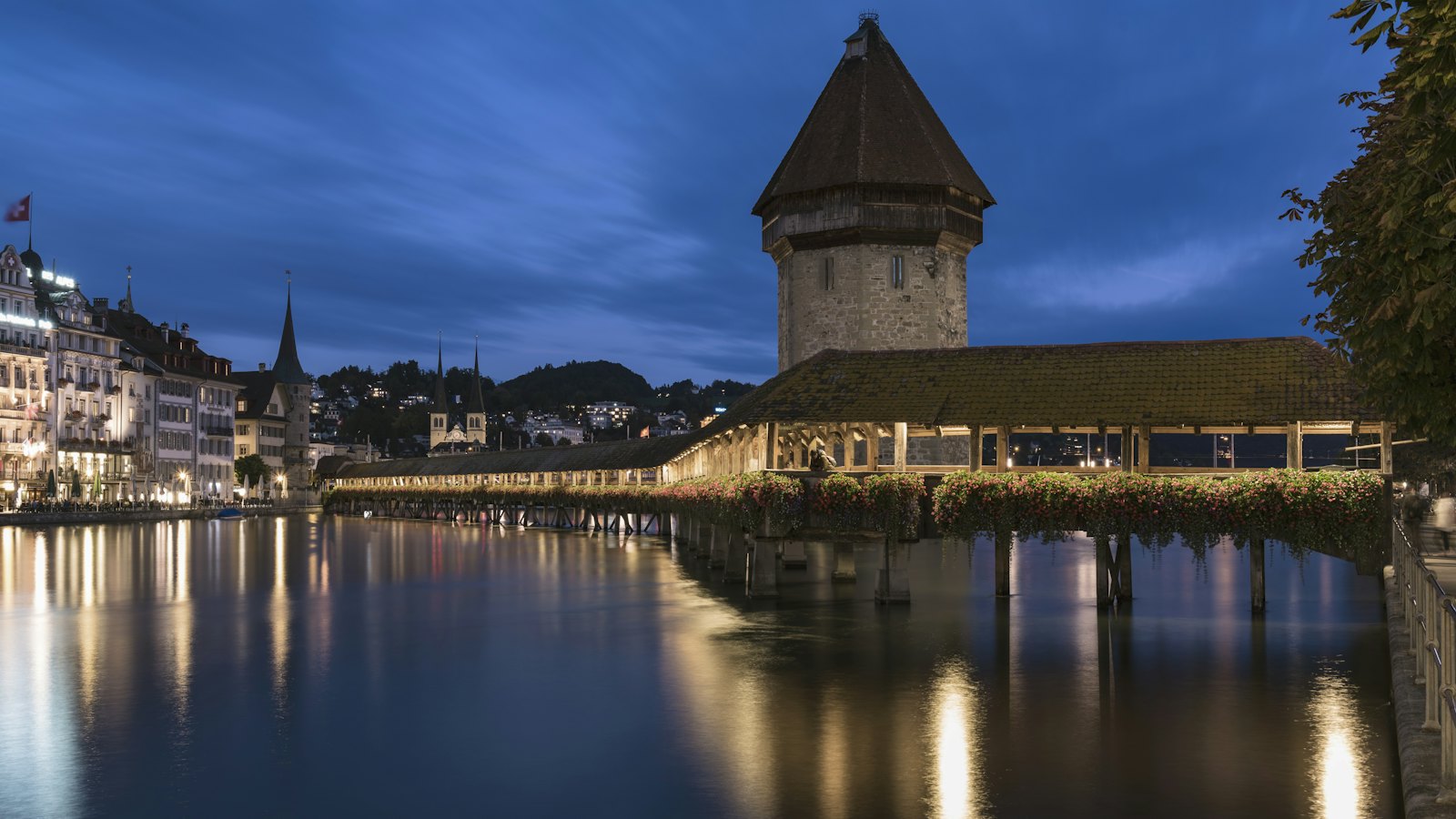
- Cross Chapel Bridge: Walk Lucerne's famous covered wooden bridge and look up at its painted triangular panels. The adjoining Water Tower is one of the city's defining landmarks.
- Explore Old Town: Wander around Weinmarkt and Kornmarkt for frescoed facades, fountains and narrow lanes. Early morning is pleasantly quiet.
- See the Lion Monument: The carved lion commemorates Swiss Guards killed during the French Revolution. The surrounding park is small, so combine it with Old Town.
- Walk the Musegg Wall: Parts of the medieval fortification and selected towers are seasonally accessible. Even without climbing, the wall gives the northern edge of town a distinct character.
- Cruise Lake Lucerne: Short return sailings provide excellent views without consuming a whole day. Longer services connect with mountain railways and lakeside villages.
- Visit the Swiss Museum of Transport: Its trains, aircraft, cars and interactive displays make it particularly good for families or a rainy day.
- Ascend Mount Pilatus: Combine boat, cogwheel railway, cableway and bus when the seasonal routes are operating. Check mountain weather before paying.
- Spend a day on Mount Rigi: Reach the area by boat and mountain railway for easier walks and broad lake views. It is a gentler alternative to higher alpine excursions.
- Follow the lakeside promenade: Walk east from the centre past parks and grand waterfront buildings, with places to pause for a picnic.
What to eat in Lucerne
Central Swiss cooking is filling, dairy-rich and particularly satisfying in cold weather. Lucerne's signature dish is Luzerner Chugelipastete, a puff-pastry case filled with a creamy veal and mushroom mixture. Traditional versions may contain meat products or cooking alcohol, so Muslim diners should ask before ordering.
Rosti, a crisp potato cake, is widely available but may be fried with bacon or animal fat. Raclette and cheese fondue look straightforward, yet fondue often contains white wine and some cheeses use animal rennet. Alplermagronen combines pasta, potato, cream, cheese and apple sauce; request it without bacon. Birchermuesli, bread, pastries and seasonal soups offer simpler breakfasts and lunches.
Old Town has the largest concentration of Swiss restaurants, while Neustadt is useful for casual international food and supermarkets. Weekly produce markets around the river, when operating, are good for fruit, bread and cheese. For an affordable meal, buy picnic supplies and eat beside the lake where permitted. Bakery lunches may cost about CHF 8 to CHF 15 (RM 42 to RM 80), while a sit-down main commonly runs CHF 22 to CHF 40 (RM 117 to RM 212). Tap water is safe to drink unless a fountain is specifically marked otherwise.
Halal food and prayer spaces
Lucerne is manageable for Muslim visitors, but its halal choice is limited compared with Kuala Lumpur, London or Zurich. Do not assume that a kebab shop is halal merely because it serves Middle Eastern food. Ask whether all meat is halal, whether pork is handled in the same kitchen and whether sauces contain alcohol. Certified halal options are uncommon, while Muslim-owned restaurants may provide clearer information when asked directly.
International eateries around the station and in Neustadt are the most useful places to begin looking. Indian, Turkish, Middle Eastern and vegetarian meals can be practical, but verify each outlet's current status. Seafood, vegan dishes, supermarket salads, bread and fruit are reliable fallbacks. Swiss cheese fondue commonly includes wine, and rosti or pasta dishes may contain bacon even when it is not prominent on an English menu.
Dedicated public prayer rooms are not widespread in central Lucerne. Local mosques and Islamic centres in the wider city area may accommodate visitors, but confirm access and prayer times before travelling across town. Zurich Airport has interfaith prayer facilities, and its information staff can direct you. For current food listings, Malaysians commonly check Zabihah or HalalTrip, then confirm directly because listings can become outdated. Carry a compact prayer mat and use a qibla app.
Getting around Lucerne
Central Lucerne is best explored on foot. Chapel Bridge, Old Town, the station, boat piers and Lion Monument sit within a relatively compact area, although cobblestones can be awkward with large suitcases or lightweight strollers.
Buses and local trains cover the wider city. A short adult journey is roughly CHF 3 to CHF 5 (RM 16 to RM 27), depending on zones and ticket type. Buy the correct ticket before travel through the SBB app, a machine or an authorised sales point. There is no separate stored-value card comparable to Touch 'n Go. Some overnight guests receive a Lucerne Visitor Card from participating accommodation, which can include local public transport within the designated city zone. Ask your accommodation exactly what is covered.
Lake boats are both transport and sightseeing, but long cruises can cost considerably more than a city bus. Swiss Travel Pass and regional pass coverage varies by service, so verify inclusions before buying.
Grab does not operate in Switzerland. Conventional taxis are reliable but expensive, with short city rides often reaching CHF 20 to CHF 35 (RM 106 to RM 186). Ride-booking services may be available, but public transport is usually cheaper. If driving, expect narrow central streets, restricted areas and costly parking.
A 4-day Lucerne itinerary
- Day 1: Arrive from Zurich, leave your bags and walk across Chapel Bridge into Old Town. Continue to the Lion Monument, then follow the lakeside promenade before dinner near the station or in Neustadt.
- Day 2: Make Mount Pilatus your main excursion if the summit forecast is clear. Depending on the season, combine the boat, cogwheel railway, cableway and bus for a varied circuit. Return to Lucerne for an easy evening along the Reuss River.
- Day 3: Take a Lake Lucerne boat toward the Mount Rigi area, continue by mountain railway and choose a walk suitable for the weather. Bring water and a packed lunch to control costs. If clouds cover the peaks, switch this day with an indoor activity.
- Day 4: Visit the Swiss Museum of Transport, then browse Old Town or walk part of the Musegg Wall before taking the train back to Zurich.
With only three days, choose either Pilatus or Rigi rather than rushing through both. Families may prefer a full museum morning and a short lake cruise. Always check mountain transport operations and weather on the day, since conditions by the lake can differ sharply from those at the summit.
Money, SIM and practical tips
Switzerland uses the Swiss franc (CHF). For quick planning, CHF 1 is roughly RM 5.3, but exchange rates change, so check before departure. Cards and contactless payments are accepted widely, although carrying CHF 50 to CHF 100 helps with small purchases, lockers or unexpected card problems. DuitNow QR does not function as a general Swiss payment method.
An eSIM is convenient if your phone supports it. Compare regional Europe packages with Swiss-specific plans because Switzerland is sometimes excluded from EU roaming bundles. Airport SIMs are convenient but may cost more. Free Wi-Fi is common at accommodation, stations and many public venues.
Swiss sockets are Type J and use 230V. Malaysia's Type G plug does not fit, so bring an adaptor with narrow round pins suitable for Switzerland. Tipping is modest because service is included; rounding up or leaving around 5 to 10 percent for good table service is sufficient.
Lucerne is generally safe, but watch bags around stations, crowded bridges and trains. Be cautious of distraction theft, unofficial accommodation messages and payment links sent outside your booking platform. Weather changes quickly in the mountains, so carry layers and do not rely on the temperature beside the lake. Shops often close earlier than Malaysians expect, particularly on Sundays.
Before you go
- Best time to go
- May to June and September are the best all-round months for Lucerne, with comfortable sightseeing weather and fewer peak-season visitors. July and August bring warm lake days, long daylight and the highest accommodation demand, particularly during European and Malaysian school holidays. Spring weather can switch quickly between sunshine and rain, while some high mountain paths or transport links may remain closed. October is cooler and quieter, with shorter days. From December to February, Lucerne has festive streets and convenient access to winter scenery, but snow is not guaranteed in the city itself. Mountain conditions are much colder than lakeside temperatures in every season. Book early for summer weekends, Christmas and Malaysian school holiday periods.
- Visa for Malaysians
- Malaysian passport holders can visit Switzerland visa-free as of September 2026 for up to 90 days within any rolling 180-day period in the Schengen Area. Time spent in other Schengen countries counts toward the same allowance, and paid work is not permitted. Your passport must have been issued within the previous 10 years and remain valid for at least three months beyond your planned Schengen departure. On arrival, the EU Entry/Exit System registers non-EU travellers using a facial image and, from age 12, fingerprints, although Switzerland is still phasing in full checks. Registration happens on site and has no application fee. ETIAS is not operating yet; the planned online authorisation will cost EUR 20 when introduced. Confirm the latest requirements on sem.admin.ch before you fly.
- Honest budget guide
- Budget around RM 600 to RM 1,000 per person per day in Lucerne, excluding international flights and major mountain excursions. At the time of writing, one-way KL to Zurich fares start from RM 1,263, with a median of RM 1,401, before the onward train. A budget bed can cost RM 240 to RM 400 nightly, while a mid-range private room is commonly RM 740 to RM 1,270. Allow RM 160 to RM 300 daily for food and RM 30 to RM 80 for ordinary local transport. Pilatus, Rigi and longer cruises add substantially. A typical four-night trip for two, including return flights, a mid-range room, food, local travel and one mountain day, may total roughly RM 9,000 to RM 14,000. All figures are indicative.
Frequently asked questions
Do Malaysians need a visa for Lucerne?
No. Malaysian passport holders can visit Switzerland visa-free as of September 2026 for up to 90 days within any rolling 180 days across the Schengen Area. The passport must be less than 10 years old and valid for at least three months beyond the planned Schengen exit. Paid work is not allowed. Confirm current requirements on sem.admin.ch before departure.
Is there a direct flight from Kuala Lumpur to Lucerne?
Lucerne has no airport, and as of September 2026 no airline flies nonstop from KLIA to the usual gateway, Zurich. Most travellers make one connection, then take a train from Zurich Airport to Lucerne in about an hour to 75 minutes. Common connecting points include Muscat, Istanbul, Abu Dhabi, Doha and Dubai.
How many days are enough for Lucerne?
Three full days are enough for Old Town, a lake experience and one mountain excursion. Four days feel more comfortable and allow both Pilatus and Rigi, or a museum day if mountain weather turns poor. If Lucerne forms part of a longer Swiss rail trip, two nights still provide time for the centre and one well-planned day trip.
What is the best month to visit Lucerne?
June and September offer a strong balance of comfortable weather, long enough days and fewer crowds than the July and August peak. May can also be pleasant, though high-altitude routes may have lingering snow or seasonal closures. December suits festive city walks, but travellers seeking snow should head into the mountains rather than expect it beside the lake.
Is Lucerne Muslim-friendly?
Lucerne is workable for Muslim visitors, although verified halal restaurants and central prayer facilities are limited. Look around the station and Neustadt for international food, confirm halal status directly and ask about alcohol, pork and shared kitchens. Seafood, vegetarian meals and supermarket supplies are useful fallbacks. Carrying a travel prayer mat makes daily planning easier.
Can I use Grab in Lucerne?
No, Grab does not operate in Switzerland. Lucerne's centre is easy to cover on foot, while buses and local trains handle longer journeys. Taxis and some app-booked rides are available but costly. A short taxi trip can reach around CHF 20 to CHF 35, so public transport is usually the practical choice.
How much money do I need for four days in Lucerne?
Allow roughly RM 2,400 to RM 4,000 per person for four days on the ground, excluding accommodation, international flights and expensive mountain trips. With a mid-range room, return travel from Malaysia and one major excursion, two travellers may spend around RM 9,000 to RM 14,000 in total. Booking rooms early and using supermarket lunches can reduce the bill.
Should I visit Mount Pilatus or Mount Rigi?
Choose Pilatus for a more dramatic summit outing and a varied journey involving mountain transport. Choose Rigi for gentler walks, broad lake views and an easy combination with a boat ride. Either can fill most of a day. If the summit forecast is poor, postpone the mountain and explore Lucerne's museums, Old Town and waterfront instead.
Jom pergi
Ready to go Lucerne? Compare available flights and hotels for your dates. Check baggage, cancellation terms and the final total on the booking provider before paying.






