




On this page13 sections
- Overview
- Getting there from KL: one-stop flights only
- Malpensa Airport to the city
- Where to stay in Milan
- Things to do in Milan
- What to eat in Milan
- Halal food and prayer spaces
- Getting around Milan
- Sample 4-day Milan itinerary
- Money, SIM and practical tips
- Designer shopping and tax-free refunds
- Before you go
- FAQ
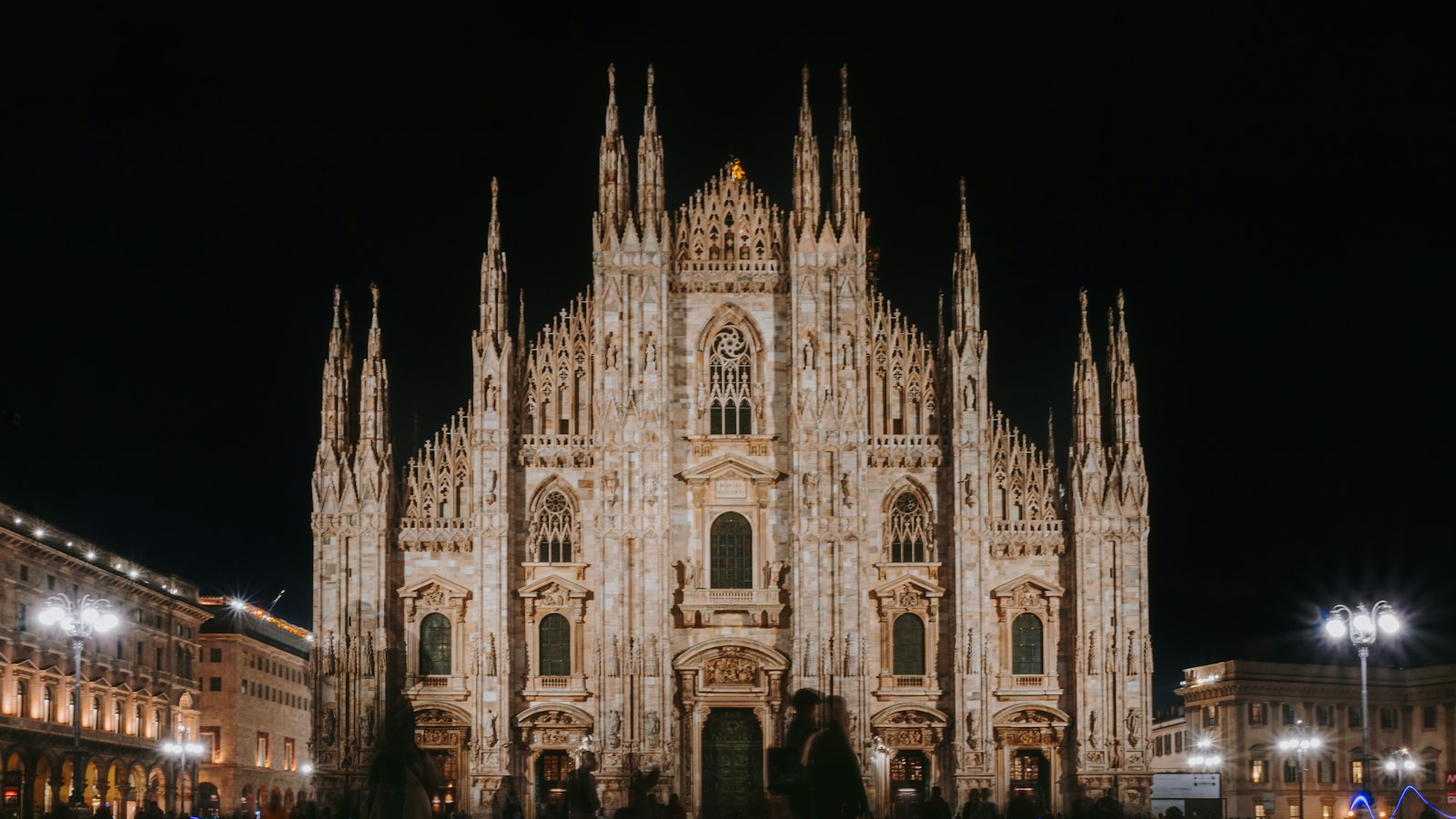
Milan is Italy's business and fashion capital, a working city where a marble cathedral, Leonardo's Last Supper and some of Europe's best-known shopping streets sit a few metro stops apart. Malaysians mostly come for three things: designer shopping with a VAT refund on the way home, a day beside Lake Como, and a first taste of Europe that runs on trains rather than tour buses. This guide walks KLIA flyers through the connecting flights and what our fare scan shows, Schengen entry and the new EU biometric checks, the Malpensa Express into town, halal food and Friday prayers, a four-day plan, and honest costs in RM.
Getting there from KL: one-stop flights only
Milan has no non-stop link with KLIA at the time of writing (September 2026), so plan on one change of plane. The smoothest routings go through the Gulf: Oman Air via Muscat, Etihad via Abu Dhabi, Qatar Airways via Doha and Emirates via Dubai all fly into Milan Malpensa. Singapore Airlines via Changi and Thai Airways via Bangkok also land there. All of these depart from KLIA Terminal 1, not the low-cost Terminal 2.
Gate to gate, expect 15 to 18 hours including the layover. Italy runs six hours behind Malaysia in European summer and seven hours behind in winter.
The cheapest seat in our KL fare scan (data from 20 September 2026) was a one-way Oman Air ticket through Muscat at about RM 1,354, and a connection through Abu Dhabi came in at about RM 1,379. The median sat close to RM 1,500. Connections through Doha began near RM 1,550, through Istanbul near RM 1,700 and through Dubai near RM 1,800. Fares shift daily and jump during Milan's fashion and design weeks.
Malpensa Airport to the city
Malpensa (MXP) sits well outside town, so settle your transfer before landing. A free shuttle bus links Terminals 1 and 2. Prices are indicative, at roughly RM 4.65 to the euro (the ECB rate in late September 2026).
- Malpensa Express train: the reliable choice. A single to any Milan station is €15 (about RM 70), an online return €25, children aged 4 to 13 pay €7.50, and a two-adult, two-child family ticket is €36. Two trains an hour run to Milano Cadorna in about 37 minutes, close to Castello Sforzesco and Brera. Two more an hour run to Milano Centrale in about 51 minutes, calling at Porta Garibaldi. From the airport, trains run from about 5.30 am until shortly after midnight, and the late ones go to Cadorna, so check the timetable if you land late.
- Airport coaches: Terravision, Autostradale, Air Pullman and Caronte between them depart for Milano Centrale about every 20 minutes from both terminals (Level -1 at Terminal 1). Autostradale was selling online seats for €4.99 (about RM 23) when we checked, and the drive takes about an hour, up to 70 minutes in traffic.
- Taxi: a fixed €114 (about RM 530) to any address in Milan. Sensible only for a family with heavy bags; use the official rank.
Where to stay in Milan
Milan is compact and the metro is good, so pick a base by budget and mood.
- Centrale and Porta Venezia: the practical pick for first-timers and Muslim travellers. Airport trains and coaches arrive here, metro lines M2 and M3 meet at Centrale, and the kebab grills and Middle Eastern restaurants of Corso Buenos Aires are a short walk. Around the station, choose a hotel on a busy, well-lit main road and keep an eye on your bags late at night.
- Duomo and Brera: the historic core, walkable to the cathedral, La Scala and Brera's lanes, with the highest room rates.
- Navigli and Porta Genova: canals, vintage shops and lively evenings, good for couples and younger travellers. Light sleepers may prefer a room away from the canal-side bars.
- Porta Garibaldi and Isola: the glassy Porta Nuova district with newer hotels, and Malpensa Express trains to Centrale stop at Garibaldi. Comfortable for families.
Hotels also collect the city tourist tax: since 1 April 2026 it is €7 per adult per night at three-star hotels, €10 at four-star, €12 at five-star and €9.50 at B&Bs and short-term rentals, with under-18s exempt. Book early for fashion and design weeks.
Things to do in Milan
- Duomo rooftop: walk among the marble spires of the Gothic cathedral. A combined cathedral, rooftop and museum ticket is €26 with the lift or €22 on foot (about RM 120 and RM 100).
- The Last Supper: Leonardo da Vinci's mural at Santa Maria delle Grazie is shown in timed 15-minute slots from Tuesday to Sunday. Official tickets cost €15 on the Cenacolo Vinciano site, are released a few months at a time and vanish fast.
- Galleria Vittorio Emanuele II: the glass-domed arcade between the Duomo square and La Scala.
- Castello Sforzesco: a red-brick fortress holding several museums, with the lawns of Parco Sempione behind it.
- Brera: gallery-lined streets and the Pinacoteca di Brera, one of Italy's key painting collections.
- Navigli: the canal quarter at sunset, when the aperitivo crowd arrives.
- Quadrilatero della Moda: window-shop Via Montenapoleone and Via della Spiga.
- San Siro: a stadium and museum tour of the ground shared by AC Milan and Inter.
- Porta Nuova: the towers around Piazza Gae Aulenti and the tree-covered Bosco Verticale.
What to eat in Milan
Milanese cooking is rich northern comfort food built on butter, rice and slow braising. The classic is risotto alla milanese, coloured gold with saffron. Cotoletta alla milanese is a breaded veal cutlet fried in butter, and ossobuco is braised veal shank, often served with the saffron rice. Before Christmas, shops fill with panettone, a tall sweet bread that travels well as a gift.
Pizza by the slice, focaccia and panini make a quick lunch, a cappuccino drunk standing at the bar costs roughly €2, and a simple sit-down meal starts from around €20 (about RM 95), as an indicative guide. From about 6 pm bars serve aperitivo, a drink that comes with snacks; ask for an analcolico (alcohol-free) cocktail or a juice.
Muslim travellers should note that traditional saffron risotto is made with beef marrow and usually a splash of white wine, and the veal in cotoletta and ossobuco is not halal unless the kitchen says so. Seafood risotto, vegetable pasta, a margherita pizza and gelato are safer orders at ordinary trattorias.
Halal food and prayer spaces
Milan's sizeable Muslim community, with roots in North Africa, the Middle East and South Asia, keeps halal food within easy reach once you know where to look. Few places show a formal halal certificate; most are Muslim-run and describe themselves as halal, and you will rarely see the "no pork no lard" signs familiar from home, so ask about the meat if certification matters to you.
- Where to eat: the thickest cluster is around Porta Venezia, Corso Buenos Aires and the streets by Milano Centrale, with Turkish grills, Lebanese and other Middle Eastern, Persian, Pakistani and Afghan kitchens, plus halal burger and fried chicken shops. Via Padova, further north-east, is another multi-ethnic street, and a handful of halal places sit in the side streets around the Duomo.
- Mosques: the Islamic Cultural Institute on Viale Jenner, in the north of the city, is one of Milan's best-known mosques; confirm Friday prayer times locally before you go. In Segrate, just east of the city, a purpose-built mosque with a dome and minaret was completed in 1988.
- Airport: Malpensa lists a Catholic chapel and, in Terminal 1 after passport control, a changing room for Mecca-bound pilgrims near Gates 26 to 34, but no Muslim prayer room, so pray at the hotel first.
- Apps: Zabihah lists halal restaurants, and Muslim Pro covers prayer times and qibla. Recent Google Maps reviews help confirm a place is still halal.
Getting around Milan
ATM runs the metro (M1 to M5), trams and buses on one fare system. Prices are indicative.
- Tickets: an urban ticket is €2.20 (about RM 10) and is valid for 90 minutes on the metro, trams and buses. A 24-hour ticket is €7.60 and a three-day ticket €15.50 (about RM 72).
- Contactless: easiest for visitors. Tap a bank card or phone at the metro gates in and out, or on the reader when boarding a tram or bus. The system charges the cheapest fare and caps the day at €7.60 from your fourth trip. One card per traveller.
- Ride-hailing: Grab does not operate in Italy. Uber works in Milan but has no budget UberX: it offers chauffeur-driven cars (Comfort, Electric, Black) and ordinary city taxis booked through itTaxi. You can also book a licensed white taxi on the itTaxi or MiT (Milano in Taxi) apps, phone 02 7777, or use a taxi rank.
- Leaving town: high-speed trains to Venice, Florence and Rome depart from Milano Centrale, and Trenord regional trains reach Como San Giovanni in about 40 minutes for around €5.40 (about RM 25).
Sample 4-day Milan itinerary
A first-visit plan for spring or autumn, staying near Centrale or Porta Venezia. Book your Last Supper slot before flying and shape Day 2 around it.
- Day 1: Land at Malpensa and ride the Malpensa Express into town. After check-in, stroll the Galleria and climb the Duomo rooftop in late-afternoon light. Dinner at a halal grill near Porta Venezia.
- Day 2: The Last Supper, then on foot to Castello Sforzesco and Parco Sempione. Afternoon in Brera and the Pinacoteca, and an alcohol-free aperitivo beside the Navigli canals at dusk.
- Day 3: Lake Como. Catch an early Trenord train from Centrale to Como San Giovanni, walk the lakefront, take a ferry if the sky is clear, and return for dinner.
- Day 4: Shopping. Browse Via Montenapoleone and Corso Buenos Aires, or take the shuttle to Serravalle Designer Outlet. On a Friday, Muslim travellers can plan the morning around Friday prayers first. Reach Malpensa early enough for tax-free validation.
A fifth day could add San Siro and Porta Nuova, or a fast train to Venice.
Money, SIM and practical tips
- Currency: the euro, which cost about RM 4.65 when this guide was written. Cards and phone wallets work almost everywhere; keep a little cash for small cafes. When a card machine asks whether to pay in ringgit or euro, pick euro.
- Tipping: not expected. Restaurants often add a small per-person cover charge (coperto) shown on the menu; rounding up is plenty.
- Data: an EU eSIM bought before departure usually beats Malaysian roaming packages. A physical Italian SIM requires your passport.
- Plugs: type C, F and L sockets at 230 volts. Malaysian three-pin (type G) plugs need an adapter.
- Safety: Milan is generally safe, but pickpockets target the metro, trams and crowds at Centrale and the Duomo. In Piazza del Duomo, hustlers push "free" string bracelets or pigeon feed on visitors and then demand cash; decline and walk on.
- Mondays: the Last Supper and several major museums close, so save Monday for shopping or the lake.
- Border queues: most arrivals now give fingerprints and a photo under the EU's new Entry/Exit System, so allow extra time at passport control.
Designer shopping and tax-free refunds
For plenty of Malaysians, shopping is the real reason to pick Milan. The Quadrilatero della Moda (Via Montenapoleone, Via della Spiga, Via Sant'Andrea and Via Manzoni) holds the flagship stores of the big Italian and French houses, while Corso Buenos Aires and Corso Vittorio Emanuele cover high-street brands.
- Outlet: Serravalle Designer Outlet, run by McArthurGlen, sits between Milan and Genoa. Its shuttle from Milano Centrale costs €25 return for adults (about RM 116) and €10 for children aged 4 to 12.
- VAT refund: residents of non-EU countries can reclaim Italy's 22 percent VAT when they spend at least €70.01 in one store. Show your passport at the till and ask for a tax-free invoice. After the refund operator's fee, you receive less than the full 22 percent.
- Validation: get your invoices validated by customs at Malpensa, since Gulf hubs and Istanbul lie outside the EU. Arrive early and keep purchases handy in case an officer asks to see them.
Before you go
- Best time to go
- Milan is at its most pleasant in spring (April to June) and early autumn (September and October), when the weather is mild and the events calendar is full. Spring and autumn days usually range from about 10 to 20 degrees Celsius, though April and May bring frequent rain. Summer is hot and humid, with peaks above 35 degrees, and many locals leave around mid-August. Winter is cold, grey and sometimes foggy, yet December brings Christmas lights and the Oh Bej Oh Bej fair around Castello Sforzesco near 7 December. Hotel prices soar during design week (Salone del Mobile, 13 to 18 April 2027) and the fashion weeks of late February and late September. Malaysia's end-of-year school break (from 5 December for most states) falls in the cold season, so pack a warm coat.
- Visa for Malaysians
- As of September 2026, Malaysians can visit Italy without a visa for 90 days in every rolling 180-day window, counted across all Schengen countries together. Italy's Ministry of Foreign Affairs (esteri.it) names Malaysia on its visa-exempt list and wants a passport issued in the last 10 years, still valid three months after you leave the Schengen Area, with two blank pages. ETIAS, the planned EU travel authorisation, is not operating yet; its official site says it will cost €20 once launched, so ignore agents selling it now. The Entry/Exit System has replaced passport stamps with fingerprints and a facial photo, though Italy is still rolling it out at some airports. Officers may ask for a hotel booking, return ticket and proof of funds. Re-check esteri.it and the EU portal travel-europe.europa.eu a week or two before you fly.
- Honest budget guide
- Expect to spend roughly RM 500 to RM 1,000 per person per day in Milan, excluding flights, when two people share a room. Flights: Amaboxly's KL fare scan shows, at the time of writing, a lowest one-way price near RM 1,354 (Oman Air, one stop in Muscat) and a median near RM 1,500, so two one-way tickets add up to roughly RM 2,700 to RM 3,000. Budget hotels charge about €80 to €120 a night (roughly RM 370 to 560) and mid-range hotels €150 to €220 (roughly RM 700 to 1,020), plus €7 to €10 tourist tax per adult nightly. Food costs €35 to €60 a day (RM 160 to RM 280), and a three-day transit pass is €15.50 (about RM 72). Five days and four nights in a shared mid-range room comes to between RM 5,500 and RM 7,500 each, flights included. All numbers are indicative.
Frequently asked questions
Do Malaysians need a visa to visit Milan?
No. Under the rules in force in September 2026, Malaysian passport holders enter Italy visa-free for 90 days in any 180, shared across all Schengen countries. The passport must be under 10 years old and valid three months past your departure from Europe. ETIAS is not running yet, but the new Entry/Exit System will take your fingerprints and photo. Check esteri.it before travelling.
Is there a direct flight from KL to Milan?
Not at the time of writing. Every KLIA to Milan itinerary has at least one stop, usually Muscat, Abu Dhabi, Doha, Dubai or Istanbul, with Singapore and Bangkok as alternatives. Our September 2026 fare scan showed one-way tickets from about RM 1,354 with Oman Air via Muscat. Budget 15 to 18 hours of total travel.
How do I get from Malpensa Airport to Milan city centre?
Take the Malpensa Express train: €15 one way (about RM 70), roughly 37 minutes to Cadorna or 51 minutes to Centrale, with two departures an hour on each line. Coaches to Centrale are cheaper, from about €5 online, but take around an hour, up to 70 minutes. Taxis charge a fixed €114 (about RM 530) to any address in the city.
Is Milan Muslim-friendly?
Fairly. Halal food is easy to find around Porta Venezia, Corso Buenos Aires and Milano Centrale, mostly in Muslim-run Turkish, Middle Eastern and South Asian restaurants that describe themselves as halal rather than showing a certificate. The Islamic Cultural Institute on Viale Jenner is one of the city's best-known mosques, and Segrate has a landmark mosque. Malpensa lists no Muslim prayer room, so plan prayers around your hotel.
Can I use Grab or Uber in Milan?
Grab is not available anywhere in Italy. Uber works in Milan, but there is no budget UberX: the app offers chauffeur-driven cars and ordinary city taxis through itTaxi. For everyday rides, book a licensed taxi through the itTaxi or MiT apps, or ride the metro, which accepts contactless bank cards at the gates.
How many days in Milan is enough?
Three full days cover the Duomo, the Last Supper, Brera, the Navigli canals and an afternoon of shopping. Add a fourth for Lake Como or the Serravalle outlet, and a fifth for a train trip to Venice or Verona.
What is the best month to visit Milan?
May, June, September and early October combine mild temperatures with long days. April is pleasant too, but design week makes it crowded and costly. High summer is sticky and hot, while December is cold yet festive, with Christmas lights, the Oh Bej Oh Bej fair and panettone stacked in shop windows.
What does a 5-day Milan trip cost from Malaysia?
Allow somewhere between RM 5,500 and RM 7,500 each for a five-day, four-night trip, covering return flights and half of a mid-range double room. Day to day, spending on the ground averages RM 500 to RM 1,000 each. Shopping comes on top, though spending of at least €70.01 in one store qualifies for a VAT refund. Figures are indicative.
Jom pergi
Ready to go Milan? Compare available flights and hotels for your dates. Check baggage, cancellation terms and the final total on the booking provider before paying.






