




On this page12 sections
- Overview
- Flights from Kuala Lumpur to Qingdao
- Reaching the city from Jiaodong Airport
- Where to stay in Qingdao
- Essential sights and coastal experiences
- Seafood and local Shandong cooking
- Halal meals and prayer arrangements
- Getting around Qingdao
- Four days in Qingdao
- Payments, connectivity and practical preparation
- Before you go
- FAQ
Qingdao brings together Yellow Sea beaches, wooded headlands, historic European-influenced streets and one of China's best-known seafood cultures. The city is quieter than many major Chinese destinations but still offers enough markets, museums, coastal walks and mountain scenery for a varied four-day holiday. Malaysian visitors can benefit from visa-free entry and, when scheduled, a direct Qingdao Airlines service from KLIA. The practical details require some preparation because the airport is distant, mobile payments dominate and familiar international apps may not work normally. This guide explains the flight choices, transfers, accommodation areas, halal options, transport, costs and essential digital setup for a smooth first visit.
Flights from Kuala Lumpur to Qingdao
Qingdao Airlines is listed as operating a nonstop connection between Kuala Lumpur International Airport and Qingdao as of September 2026. Flying time is approximately six hours, although winds and operational routing can affect the schedule. Confirm the departure terminal through your booking before departure because airport arrangements occasionally change.
Travellers needing different dates can compare connecting itineraries through Shenzhen, Guangzhou, Singapore and other regional hubs. In Amaboxly's fare check dated 21 September 2026, the lowest observed one-way ticket was RM 568 on Shenzhen Airlines, with one connection and travel on 24 October 2026. The median one-way price was RM 689, and the results included Hainan Airlines, Scoot and Shenzhen Airlines. Sample connecting fares began near RM 538 through Shenzhen, RM 629 through Guangzhou and RM 679 through Singapore.
These figures record fares available during the search rather than prices guaranteed for later bookings. Examine the full journey duration, checked-baggage allowance, connection requirements and any airport change before selecting a cheap ticket. A slightly higher fare can be worthwhile if it avoids a long overnight transit.
Reaching the city from Jiaodong Airport
Qingdao Jiaodong International Airport, coded TAO, is far from the main waterfront districts. Most visitors should reserve at least an hour for the journey into town. For quick estimates, 10 yuan is approximately RM 6, although exchange rates move.
- Metro: Take Line 8 from the airport to Qingdao North Railway Station, then transfer toward Shinan and the coastal centre. Reaching May Fourth Square normally requires about 70 to 100 minutes, depending on waiting time and the connection. A typical fare is 7 to 10 yuan, or roughly RM 4 to RM 6.
- Airport coach: Scheduled coaches run to important stations and urban districts. Services and intervals may be revised, so ask the airport counter which route reaches your accommodation. Budget approximately 20 to 40 yuan, or RM 12 to RM 24, and 60 to 100 minutes in ordinary traffic.
- Taxi or DiDi: A legitimate metered cab or app-arranged car to the central coast usually takes 50 to 80 minutes. A realistic estimate is 180 to 260 yuan, about RM 108 to RM 156, including potential tolls.
- Reserved transfer: Pre-booked vehicles are convenient for groups, children, substantial luggage or very late landings. They generally cost more than taxis, so verify the operator, luggage capacity and meeting instructions before paying.
Where to stay in Qingdao
Qingdao follows a long stretch of coastline, and a well-chosen base can prevent unnecessary daily commuting.
- May Fourth Square, Shinan: This is a convenient first-visit location with modern malls, seafront paths and strong metro access. It works especially well for families, couples and travellers who value a central, orderly neighbourhood.
- Zhongshan Road and the old town: Book here for sloping lanes, stone churches, local markets and easy walks to Zhanqiao Pier. The area offers more historic atmosphere, although older properties and uneven pavements may be less comfortable for some guests.
- Badaguan and the eastern beaches: Landscaped streets, heritage villas and nearby shores create a peaceful setting for photographers and relaxed mornings. Restaurants and late-evening transport can be limited on quieter roads.
- Laoshan District: This district is better for hiking, coastal landscapes and a slower trip. Its distance from central landmarks makes it inconvenient for a brief first stay but appealing on a return visit focused on nature.
Before paying for an independent guesthouse or small hotel, confirm that it accepts international travellers and can register foreign passports.
Essential sights and coastal experiences
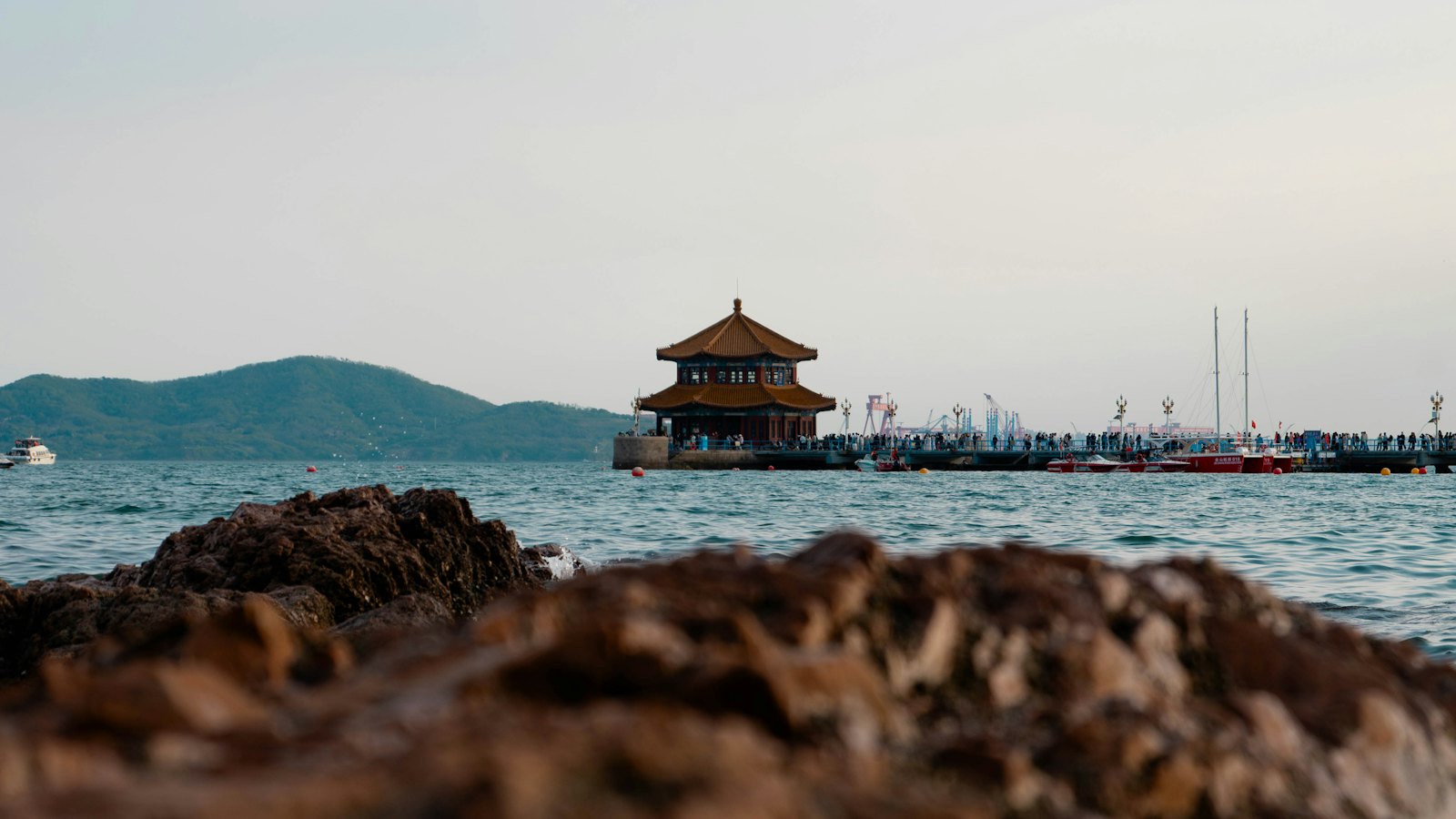
- Begin at Zhanqiao Pier: This recognisable waterfront structure provides open views across the bay and a simple introduction to historic Qingdao.
- Roam the old quarter: The streets near Zhongshan Road contain European-influenced buildings, courtyards, shops and plenty of everyday neighbourhood detail.
- See St Michael's Cathedral: The twin-towered church is a prominent old-town landmark, whether you enter or appreciate it from the surrounding square.
- Wander through Badaguan: Tree-shaded avenues, early twentieth-century houses and short approaches to the sea make this district rewarding in every season.
- Visit May Fourth Square: Arrive during late afternoon to see the red Wind of May sculpture, then remain for the lights along the waterfront.
- Walk to the Olympic Sailing Centre: The marina, broad paths and sunset views combine naturally with a May Fourth Square outing.
- Discover the city's brewing story: Qingdao's established brewery museum presents the industrial and social history behind its famous beer. The exhibits remain worthwhile for visitors who do not drink alcohol.
- Pause at an urban beach: Conditions for swimming vary, but the sand and promenades are enjoyable for observing local life.
- Devote a day to Laoshan: Its trails, granite formations and sea panoramas justify an early start because transport and walking occupy much of the day.
Seafood and local Shandong cooking
Qingdao's food reflects both its northern Chinese setting and its position beside the Yellow Sea. Common seafood choices include chilli-fried clams, grilled squid, prawns, scallops and fish steamed with ginger and spring onion. Many vendors charge according to weight. Ask staff to show the final amount before the kitchen begins, and establish whether cleaning or cooking carries an additional fee. Neighbourhood restaurants and active markets often offer a more grounded experience than stalls immediately beside famous attractions.
Beyond seafood, explore jiaozi dumplings, substantial wheat noodles, crisp pan-cooked breads and slowly braised dishes flavoured with garlic or dark vinegar. Draught beer has deep local associations and is sometimes carried home from neighbourhood sellers in simple bags or containers.
Muslim visitors should not treat a seafood menu as automatic evidence of halal preparation. Kitchens can use cooking wine, animal stock or equipment shared with pork dishes. At breakfast, savoury pancakes, boiled eggs and steamed buns are convenient after checking every filling. A Chinese-language card explaining religious needs or allergies is helpful because translated menus are not consistently available.
Halal meals and prayer arrangements
Muslim travellers can find suitable food in Qingdao, although the choices are dispersed across the city rather than grouped within a large visitor district. Enter “清真” in a Chinese mapping app to search for halal businesses, then look for the same characters on the restaurant frontage. Lanzhou beef noodle outlets and northwestern Chinese establishments are useful possibilities. Confirm that the specific branch follows Muslim preparation practices because a familiar restaurant name alone is not conclusive.
Qingdao Mosque is the city's main established mosque and a sensible place to seek current information about prayer access and nearby food. Arrange the day's route around prayer times, since shopping centres and attractions should not be expected to provide surau facilities. Airport personnel may be able to identify a quiet or multipurpose space at Jiaodong Airport, but travellers should not depend on finding a dedicated Muslim room. Bring a small prayer mat and retain an offline qibla tool.
Larger supermarkets may stock packaged products bearing halal identification. Vegetarian and seafood meals can broaden the options, yet a request excluding pork and lard does not cover alcohol, meat broth or shared cookware. Translation functions in Alipay or WeChat, together with an offline Chinese language pack, can help communicate the full requirement.
Getting around Qingdao
The metro is the most practical network for longer trips among the old town, central Shinan, Qingdao North Railway Station, the coast and the airport. Prices depend on distance, with many city journeys costing about 2 to 8 yuan, approximately RM 1.20 to RM 4.80. Station machines sell individual tickets or tokens. Visitors who successfully activate a supported transport code inside a Chinese payment app can also scan at the gates. Qingdao Tong, the local transit card, is useful for frequent rides but may offer little advantage during a short holiday.
Public buses commonly charge roughly 1 to 2 yuan and reach districts beyond the rail system. However, route selection is harder without Chinese-language assistance. Metro stations provide clearer signage and announcements for international visitors. Install Amap or Baidu Maps before travelling because overseas mapping services can have incomplete information or positioning issues in mainland China.
Grab is unavailable in mainland China. For ride-hailing, use DiDi through its own application or the mini program within Alipay. Complete account and payment setup before the first journey. Official taxis use meters; present the address in Chinese and decline approaches from unofficial drivers near transport terminals. A ride within central areas commonly costs 15 to 50 yuan, or about RM 9 to RM 30, depending on congestion and distance.
Four days in Qingdao
- Day 1: Check into a Shinan hotel and recover from the lengthy airport transfer. Later, follow the waterfront from May Fourth Square toward the Olympic Sailing Centre. Use the evening to confirm that Alipay, WeChat, DiDi and the selected map application work correctly.
- Day 2: Reach Zhanqiao Pier before the busiest hours, then walk through the Zhongshan Road quarter and view St Michael's Cathedral. Continue with the brewing museum or nearby markets. For dinner, try local seafood after agreeing on the weight, price unit and cooking cost.
- Day 3: Explore the shaded avenues and villas of Badaguan before heading to the shore. Warm weather may suit extra beach time, while cool conditions favour architecture and longer coastal walks. Return toward May Fourth Square in the evening to see the illuminated skyline.
- Day 4: Leave early for Laoshan and choose a trail appropriate for the weather and your fitness. Pack drinking water and keep ample time for transfers in both directions. When heavy rain, strong wind or poor visibility rules out the mountain, substitute indoor museums, shopping and a slower exploration of old-town restaurants.
This sequence limits unnecessary crossings of the city while balancing heritage, modern waterfront scenery and nature.
Payments, connectivity and practical preparation
China's currency is the renminbi, with prices normally expressed in yuan or RMB. Using 1 yuan to about RM 0.60 is adequate for initial planning, but consult the current exchange rate before departure. Alipay and WeChat Pay handle much of everyday spending. Install both early, complete identity checks and attach an international card before flying. Retain a second bank card and a modest cash reserve in case an app, card issuer or verification process fails. DuitNow QR is not broadly usable in Qingdao.
For a short visit, an international eSIM or Malaysian roaming package is generally the easiest data solution. Some roaming connections retain access to overseas services that can be restricted on a local mainland connection. Download Chinese maps, translation data, reservations and the hotel's written address before arrival.
Electrical supply is 220V, and sockets may accept Type A, C or I plugs. Malaysian travellers should carry a universal adapter. Tipping is not a normal expectation. Qingdao is generally approachable, but secure valuables in busy places and refuse unlicensed transport. When ordering seafood, confirm the measured weight, quoted unit and cooking charge. Keep your passport accessible because hotels, railway services and certain attractions require formal identification.
Before you go
- Best time to go
- May to June and September to October usually provide Qingdao's most agreeable conditions. Spring weather can still be breezy and cool, while July and August are hotter, humid and crowded around the beaches. Summer accommodation demand rises further during the city's major beer celebrations, making advance reservations sensible. Winter brings dry cold and fewer visitors, but strong sea winds can make the waterfront feel harsher than the recorded temperature. Malaysian school breaks, particularly in June and December, may increase airfare even when local demand is moderate. Check the Chinese public-holiday calendar before choosing dates because nationwide holidays place substantial pressure on hotels, trains and attractions. Build alternatives into any beach-focused plan in case rain, low temperatures or rough coastal weather limits time by the water.
- Visa for Malaysians
- Malaysian citizens currently qualify for short visa-free visits to mainland China. As of September 2026, an ordinary Malaysian passport permits stays of no more than 30 days on each entry. Under the bilateral arrangement that began on 17 July 2025, qualifying travel can include tourism, family visits, business and exchanges. Across a rolling 180-day window, visa-exempt stays must not exceed 90 days in total. Employment, formal study, journalistic activity or a visit longer than 30 days requires the correct visa. Most international arrivals must also submit an arrival card. Since 20 November 2025, submission has been available through the National Immigration Administration website, the NIA 12367 application, compatible Alipay or WeChat mini programs, or a paper form at immigration. No visa charge applies to eligible entry. Travel with at least six months remaining on the passport, and reconfirm the rules with the Chinese Embassy in Malaysia or the National Immigration Administration.
- Honest budget guide
- Plan on approximately RM 220 to RM 420 per traveller for each day in Qingdao, before airfare. Amaboxly's 21 September 2026 search recorded Kuala Lumpur one-way tickets starting at RM 568 on Shenzhen Airlines with one connection, and a median of RM 689. Nonstop departures can carry different prices. Simple private accommodation commonly falls near RM 100 to RM 180 nightly, while comfortable mid-range rooms are approximately RM 220 to RM 380. Set aside RM 60 to RM 130 per person each day for meals and RM 15 to RM 50 for urban transport. Airport car journeys, a Laoshan outing or premium seafood will increase the amount. Including return flights and a shared room, a typical four-day holiday may cost roughly RM 1,900 to RM 3,300 per person. Season, hotel quality and dining preferences can move the final figure outside this range.
Frequently asked questions
Do Malaysians need a visa for Qingdao?
As of September 2026, Malaysian holders of ordinary passports can enter mainland China without a visa for visits of up to 30 days. Their cumulative visa-free presence cannot exceed 90 days during a rolling 180-day window. An arrival card is normally required. Keep six months of passport validity and verify the policy again before travelling.
Is there a direct flight from Kuala Lumpur to Qingdao?
Qingdao Airlines is listed with a nonstop KLIA to Qingdao route as of September 2026, with an approximate flying time of six hours. The service may not operate every day, so search using your exact dates. Connecting options through Shenzhen, Guangzhou, Singapore and other hubs can offer greater flexibility or a lower fare.
How many days are enough for Qingdao?
Four days allows a balanced introduction covering the historic centre, Zhanqiao Pier, Badaguan, May Fourth Square, the Olympic Sailing Centre and a Laoshan excursion. Three days can work if you omit the mountain or keep a faster pace. Choose five days for leisurely beach visits, additional museums or protection against unfavourable weather.
Is Qingdao Muslim-friendly?
Qingdao has a mosque and a selection of halal restaurants, but facilities are less concentrated than in Chinese cities with prominent Muslim districts. Search maps for “清真” and verify the individual restaurant's practices. Seafood and meat-free meals still require questions about cooking alcohol, pork-derived broth and utensils shared with unsuitable dishes.
What is the best month to visit Qingdao?
May, June, September and the beginning of October commonly combine pleasant temperatures with good conditions for walking outdoors. July and August are appropriate for beach activities but bring greater humidity, heat and visitor numbers. Winter can reduce accommodation costs and crowds, although cold coastal winds make extended time beside the sea less comfortable.
How much money should I budget for four days in Qingdao?
A reasonable estimate is RM 1,900 to RM 3,300 per person, including return airfare, a shared hotel room, food and city transport. Metro travel, modest accommodation and ordinary neighbourhood meals help control expenses. Private airport transport, seafood sold by weight, single-room occupancy and a Laoshan trip can push spending toward or above the upper figure.
Can I use Grab in Qingdao?
Grab does not provide rides in mainland China. DiDi is the usual app-based alternative and is available through its standalone app and an Alipay mini program. Register a payment method and finish verification in advance. Metered taxis are another option, provided you use the official queue and show the driver a Chinese version of your destination.
Can Malaysians use cash and cards in Qingdao?
Cash is valid currency, although residents and merchants usually favour mobile payments. Configure Alipay and WeChat Pay with an eligible international card before departure, then carry some yuan and another bank card as backups. Malaysian DuitNow QR is not commonly supported, and small businesses may be unable to process an overseas physical card.
Jom pergi
Ready to go Qingdao? Compare available flights and hotels for your dates. Check baggage, cancellation terms and the final total on the booking provider before paying.






