




On this page12 sections
Suzhou is a city best explored without haste. Centuries-old gardens turn stone, water, plants and pavilions into carefully composed scenes, while canals wind past former merchant neighbourhoods. Since Suzhou lacks an international airport, Malaysian visitors normally fly nonstop from KLIA to Shanghai Pudong and continue by high-speed train. Allow three or four days for the old city, waterside lanes, regional noodles and modern Suzhou, with an additional night for a water town. This guide explains that transfer, accommodation choices, Muslim travel needs, digital payments and realistic costs in Malaysian ringgit.
Getting There from Kuala Lumpur to Suzhou
Suzhou does not have an international airport. The usual journey begins with a flight from Kuala Lumpur International Airport to Shanghai Pudong International Airport, identified by the code PVG, followed by ground transport and a train. In September 2026, nonstop KUL to PVG flights are offered by AirAsia X, Batik Air Malaysia, Juneyao Air, Malaysia Airlines, Shanghai Airlines and Spring Airlines. The flight takes several hours, and winds and daily routing affect the exact duration.
Amaboxly's fare check found a RM480 one-way Spring ticket for 10 January 2027 as the lowest nonstop option available when researched. The median one-way result was RM545. Treat these as initial search fares because luggage, food, seats and payment fees may increase the final amount. Vietjet appeared among the one-stop alternatives, but a connection is rarely worthwhile unless it produces a meaningful saving.
Confirm your KLIA terminal from the reservation or boarding pass. Terminal assignments vary by airline and can change, so price or airline type is not a reliable guide.
After arriving at PVG, travel across Shanghai to a railway station serving Suzhou. Immigration, luggage collection and the cross-city journey can consume several hours, so avoid booking a tightly timed train.
Airport Transfer from Shanghai Pudong to Suzhou
Pudong Airport is on Shanghai's eastern side. Most convenient fast trains for Suzhou depart from Shanghai Hongqiao Railway Station, although Shanghai Railway Station also has useful services. For simple estimates, calculate 10 yuan as approximately RM6 and remember that currency values fluctuate.
- Metro plus train: ride Shanghai Metro Line 2 towards Hongqiao Railway Station, making any change required by the day's service pattern. Reaching Hongqiao generally takes 90 to 120 minutes and costs about 8 to 10 yuan, or RM5 to RM6. A fast train continues to Suzhou or Suzhou North in roughly 25 to 40 minutes for about 30 to 50 yuan, or RM18 to RM30.
- Maglev connection: travel rapidly to Longyang Road, then continue by metro or taxi. The complete trip to Hongqiao can require 75 to 110 minutes. Budget around 55 to 70 yuan, or RM33 to RM42, before adding the Suzhou rail ticket.
- Intercity coach: airport buses with direct or connecting service may be available. Traffic can extend the ride beyond three hours. Fares are approximately 90 to 130 yuan, or RM54 to RM78, so verify departures on the airport board.
- Car transfer: a taxi or reserved vehicle generally needs two and a half to four hours. Allow 600 to 900 yuan, or RM360 to RM540, excluding possible toll and waiting fees.
Select the station carefully. Suzhou Railway Station provides easier old-city access, while Suzhou North sits farther from the historic core.
Choosing an Area to Stay
Suzhou combines a historic canal centre with expansive contemporary districts. A well-positioned hotel can save more time than a cheaper property far from the attractions.
- Guanqian Street and the historic centre: a strong first-visit base with shopping, meals and straightforward transport to gardens and old lanes. It remains lively after dark, so light sleepers should request a room away from the street.
- Pingjiang Road: ideal for canal scenery, early photography and traditional alleys immediately outside the hotel. Some lanes exclude cars, and wheeling large cases across stone surfaces may be inconvenient.
- Shantang Street and Suzhou Railway Station: useful for brief visits, onward trains and evening walks beside the water. The main tourist section becomes busy, but quieter canal stretches lie nearby.
- Jinji Lake and Suzhou Industrial Park: suited to business travellers, families, modern shopping centres and newer hotels. The principal classical gardens are farther away, although metro connections make them accessible.
Check the nearest station exit before paying because entrances can be separated by wide roads or long blocks. Also ask whether the accommodation can register international guests. Established hotels usually can, but certain small properties may face registration restrictions. Store the hotel's address and Chinese name offline so a taxi driver can identify it.
Essential Suzhou Sights
Many leading attractions can be grouped into efficient days, yet the gardens feel calmer and more legible before large tour parties arrive.
- Humble Administrator's Garden: wander through Suzhou's largest renowned classical garden, where ponds, buildings and layered sightlines unfold in stages.
- Lingering Garden: examine ornamental rocks, covered corridors and enclosed courtyards arranged with exceptional precision.
- Suzhou Museum: view regional collections inside a contemporary building inspired by the forms and contrasts of traditional gardens. Reservations may be required.
- Pingjiang Road: follow the waterside route, then explore adjoining lanes for glimpses of a more residential city.
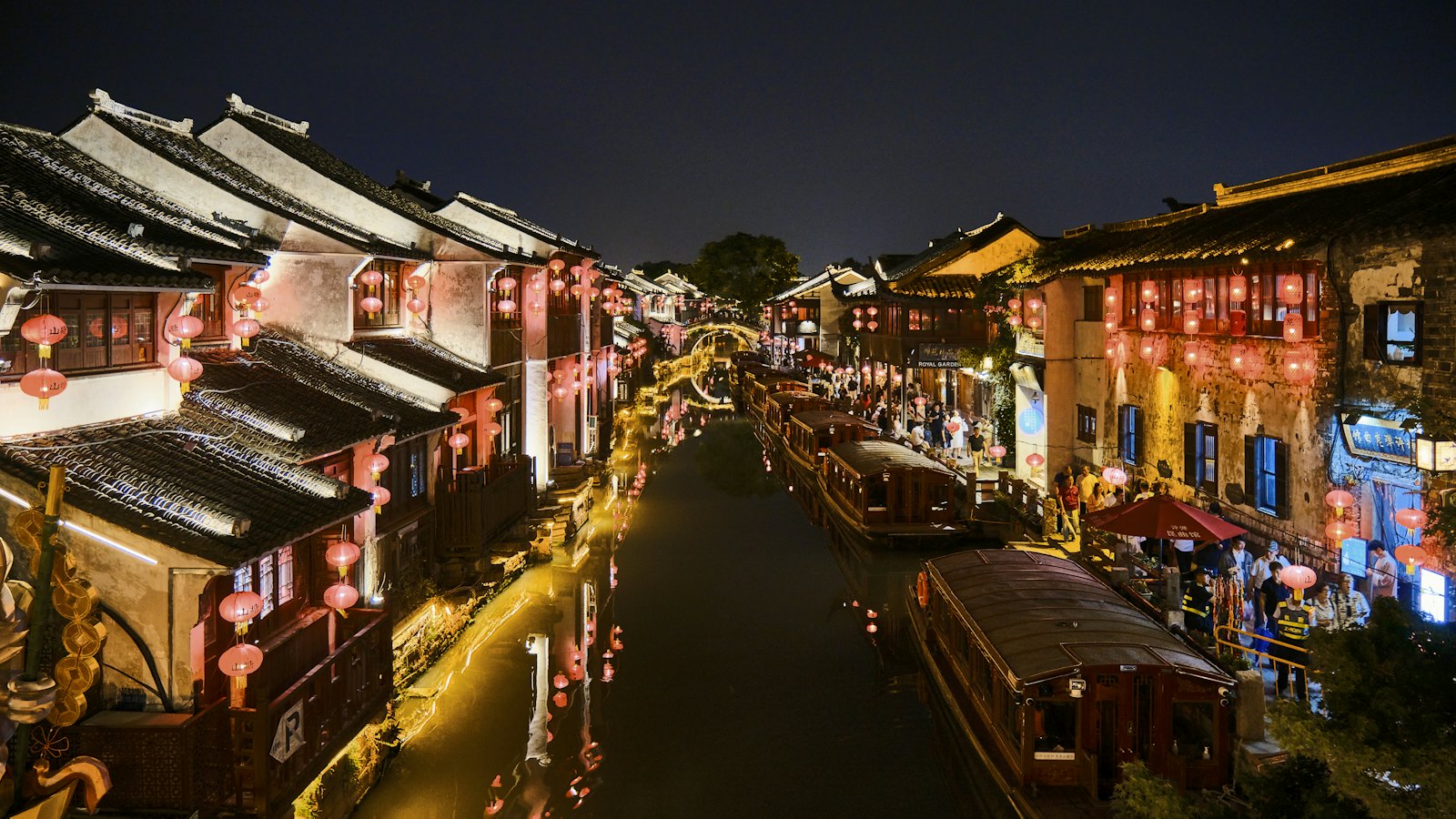
- Shantang Street: arrive late in the afternoon to see bridges and white walls change as evening lights appear.
- Tiger Hill: pass historic monuments and landscaped grounds on the climb towards the leaning Yunyan Pagoda, one of Suzhou's enduring symbols.
- Pan Gate: discover a former defensive complex incorporating both a land entrance and a water entrance within the old wall system.
- Master of the Nets Garden: see how windows, water and compact courtyards create an impression of surprising depth.
- Jinji Lake: walk its broad promenades after sunset for a view of present-day Suzhou.
Rain makes stone paving around canals and gardens slick, so footwear with dependable traction is useful.
What to Eat in Suzhou
Suzhou belongs to the Jiangnan culinary tradition, which favours refined seasoning, river and lake produce, and sauces that can taste distinctly sweet to Malaysian palates. Individual servings may seem modest, making several shared dishes a practical order.
Suzhou soup noodles are an accessible introduction. Diners choose a pale or darker broth and purchase toppings separately. Pork and eel are frequent additions, and Muslim visitors must also establish what was used to prepare the soup itself. Another signature is squirrel-shaped mandarin fish, scored before frying and finished with a glossy sweet-and-sour topping. Braised fish, freshwater prawns, hairy crab in season, red-bean pastries and sticky-rice snacks are also associated with the region.
Guanqian Street provides convenient snack counters and popular dining rooms. Around Pingjiang Road, tea shops and traditional confectioners sit alongside restaurants aimed at visitors. For less expensive noodle breakfasts, explore ordinary neighbourhood streets beyond the headline sights. When food is sold by weight, indicate your choice and establish the amount and price first.
A plate of vegetables is not automatically vegetarian. Kitchens may add lard, meat stock, oyster sauce or minced pork. Ingredient translations are helpful, but uncomplicated dishes offer greater certainty when restrictions are important.
Halal Meals and Places to Pray
Muslim visitors can travel comfortably in Suzhou with preparation, although suitable restaurants are distributed around the city rather than gathered beside every landmark. Search for qingzhen and the Chinese characters 清真. Lanzhou beef noodle outlets and Muslim restaurants serving northwestern Chinese cuisine are often useful, but travellers should verify each business and its practices.
Taipingfang Mosque is Suzhou's principal historic mosque and a helpful contact point for worship and the Muslim community. Ask locally about entry and prayer arrangements, particularly between congregational services. Dedicated surau facilities are uncommon. Some large shopping centres may have a family room or another quiet area, so carrying a small prayer mat and qibla application is sensible. At Shanghai Pudong Airport, request current directions from an information counter because available rooms can change.
Halal, Muslim-owned and simply avoiding pork or lard are separate standards. Seafood and vegetarian kitchens might still use cooking alcohol, animal broth or communal utensils. Bring a Chinese dietary card specifying restrictions on pork, lard, meat that is not halal, and cooking wine. Amap and Baidu Maps can find nearby qingzhen businesses, while Zabihah and Muslim community comments provide additional leads. Save Chinese addresses because English listings are incomplete.
Transport within Suzhou
For most visitors, the metro supplies the main transport network between railway stations, the perimeter of the old city, shopping areas and Jinji Lake. Depending on distance, a ride normally costs 2 to 8 yuan, approximately RM1.20 to RM4.80. Machines may include an English interface. Mobile payment is convenient after successful setup, but a physical single-journey ticket provides a useful fallback when an overseas card or application fails.
Public buses cover districts beyond the rail network. Typical fares are 1 or 2 yuan, although first-time users may find them challenging because stop displays are often primarily Chinese. Follow the vehicle on a map to avoid missing your stop. The central garden quarter is pleasant on foot, but apparently close landmarks can still involve lengthy walks.
Grab is unavailable in mainland China. Instead, request a DiDi vehicle directly or through Alipay's ride service. Properly configured accounts may accept supported cards issued abroad. A short ride around central Suzhou often costs 15 to 35 yuan, or RM9 to RM21, with rain and peak demand raising prices. Registered taxis run on meters, and a written Chinese destination reduces misunderstandings.
Transit cards and mobile travel codes differ across cities and services. On a short holiday, separate tickets or an Alipay metro code are usually easier than obtaining a dedicated card. Ignore unlicensed drivers who approach arriving passengers inside stations.
Suggested Four-Day Suzhou Itinerary
- Day 1: Travel from Shanghai, settle into accommodation near the historic centre and visit Pingjiang Road as the daytime excursion groups disperse. Explore smaller alleys, eat an early bowl of Suzhou noodles and finish with an easy waterside stroll after the long transfer from PVG.
- Day 2: Enter the Humble Administrator's Garden close to opening, then continue to Suzhou Museum and the adjacent heritage area. If you still have energy, visit the Master of the Nets Garden later. Pauses between gardens help prevent their subtle details from blending together.
- Day 3: Spend the morning at Tiger Hill before moving to the Lingering Garden. Reach Shantang Street towards late afternoon, continue beyond the congested entrance for quieter scenery, and remain for dinner and illuminated canal views.
- Day 4: Pick Pan Gate for fortifications, history and landscaped grounds, or select Jinji Lake for contemporary architecture and spacious promenades. Retrieve your bags before taking the train back to Shanghai for a flight or a longer city stay.
Travellers with only three complete days can omit Pan Gate or Jinji Lake and still experience the principal highlights. Stay one more night if adding a water-town outing, particularly with children, elderly relatives or companions who prefer frequent breaks.
Money and Practical Tips
China's currency is the yuan, formally the renminbi and shown as CNY or RMB. For preliminary budgeting, use about RM0.60 for one yuan, or approximately 1.7 yuan for RM1, then obtain a fresh exchange rate before departure.
WeChat Pay and Alipay are used for most everyday transactions. Visitors from Malaysia can generally attach eligible international cards, but registration should be completed before flying and a second payment option kept ready. DuitNow QR is not a broadly accepted Chinese payment method. Retain a modest amount of cash for small sellers, faulty machines or application interruptions. Travellers whose banks frequently decline foreign purchases should notify them beforehand.
International roaming or an eSIM offers immediate connectivity. Certain overseas roaming routes may reach websites restricted on domestic networks, although reliable access cannot be promised. Before leaving Malaysia, download offline hotel information, rail details, maps and Chinese translation files. Amap and Baidu Maps normally provide more dependable local navigation than Google Maps.
Electrical supply is 220V, and Type A, C and I sockets are commonly encountered, so pack a universal adapter. Tips are not generally expected. Suzhou usually feels comfortable for tourists, but remain alert to crowded-lane pickpockets, suspicious tea invitations and unauthorized taxis. Hotels, intercity rail services and certain attractions may require your passport.
Before you go
- Best time to go
- Spring and mid-autumn provide Suzhou's most agreeable conditions. Plan for March through May or October into early November if comfortable garden walks are the priority. New growth and flowers brighten spring, although rainfall and visitor numbers increase. Summers are wet, humid and hot enough to make extended outdoor sightseeing tiring. From December through February, fewer people visit and the gardens appear more austere, but cold, damp conditions and indoor heating can reduce comfort. If possible, stay away during China's largest public holiday surges, especially the National Day period at the beginning of October. Hotels and rail seats then face intense demand. Malaysian school breaks may also make Kuala Lumpur air tickets more expensive. Reserve central lodging and trains early whenever either country's holiday dates affect your trip.
- Visa for Malaysians
- Malaysians currently receive short visa-free entry to mainland China. As of September 2026, a Malaysian passport permits a stay of no more than 30 days on each entry, subject to an overall ceiling of 90 visa-free days during any 180-day span. Eligible purposes include tourism, family visits, business and exchanges. Employment, education, journalism or a visit exceeding 30 days needs the relevant visa. Foreign arrivals normally submit an arrival card. Complete it beforehand on the National Immigration Administration website, inside its NIA 12367 application, through compatible mini applications on Alipay or WeChat, or use the paper form available at immigration. No entry fee applies under the waiver. Airlines often require six months of passport validity. Recheck requirements at my.china-embassy.gov.cn or nia.gov.cn before departure.
- Honest budget guide
- A practical daily allowance is RM220 to RM450 per traveller. This estimate excludes international airfare and substantial shopping. Amaboxly's research recorded a RM480 nonstop one-way Spring fare from KUL to Shanghai Pudong, while the median was RM545 before paid extras. Basic private rooms often run from RM100 to RM180 nightly; comfortable mid-range choices are closer to RM220 to RM400. Set aside about RM50 to RM110 per person for daily meals and RM15 to RM45 for city transport, then add admission charges and optional taxis. For four days and three nights, approximately RM1,800 to RM3,200 each can cover return flights, a shared room, food, attractions and local travel. These planning figures are not fixed and commonly increase around Chinese public holidays.
Frequently asked questions
Do Malaysians need a visa for Suzhou?
As of September 2026, Malaysians may enter mainland China without a visa for visits lasting up to 30 days, provided their total visa-free presence remains within 90 days per 180-day period. An arrival card is normally required. Employment, study, journalism and longer visits need an appropriate visa. Verify the rule before travelling through the Chinese Embassy in Malaysia or the National Immigration Administration.
Is there a direct flight from Kuala Lumpur to Suzhou?
No, because Suzhou lacks an international airport. Take a nonstop KLIA flight to Shanghai Pudong on AirAsia X, Batik Air Malaysia, Juneyao Air, Malaysia Airlines, Shanghai Airlines or Spring Airlines. From Shanghai, transfer to a high-speed railway service. A journey between Hongqiao and Suzhou generally lasts about 25 to 40 minutes.
How do I get from Shanghai Pudong Airport to Suzhou?
Most visitors ride Line 2 of the Shanghai Metro from Pudong Airport towards Hongqiao Railway Station, then board a fast train for Suzhou. After airport formalities, allow approximately three to four hours for the entire process and include spare time for queues and navigation. Intercity buses and private cars are also possible, although congestion makes road timings less dependable.
How many days are enough for Suzhou?
Three complete sightseeing days can include the principal gardens, Pingjiang Road, Shantang Street and Tiger Hill. A fourth day allows a gentler schedule plus Pan Gate or Jinji Lake. Reserve a fifth if a nearby water town is important, especially for families, older companions or anybody who benefits from slower mornings and regular rests.
Is Suzhou Muslim-friendly?
Suzhou has halal eateries and mosques, but they are not as conspicuous as comparable facilities in Malaysia. Look up qingzhen or 清真, including Lanzhou noodle outlets and northwestern Muslim restaurants. Taipingfang Mosque is an important local landmark. Pack a prayer mat and Chinese dietary card, and ask specifically about stock, cooking alcohol and shared equipment rather than trusting a no-pork description.
What is the best month to visit Suzhou?
April and the latter part of October usually combine appealing gardens with moderate temperatures, though neither period guarantees dry weather or empty attractions. More generally, choose March through May or October into early November. Try to avoid the early-October National Day surge. Summer brings heat and high humidity, whereas winter has lighter crowds but can feel chilly and damp.
Can I use Grab in Suzhou?
Grab has no mainland China service. Book through DiDi or open the ride-request feature within Alipay. Configure the account and attach an accepted card before leaving Malaysia, then retain your hotel's address in Chinese. Metered official taxis offer another option. Decline solicitations from unauthorized drivers waiting within railway stations or airport arrival zones.
How much money do I need for four days in Suzhou?
Plan on approximately RM1,800 to RM3,200 per traveller for four days and three nights. That range can include Kuala Lumpur return flights, twin-share lodging, ordinary meals, attractions and transport within the city. For expenses after arrival, RM220 to RM450 a day is a comfortable guide. Upscale rooms, private airport vehicles, extra garden entries and Chinese holiday dates will increase the total.
Jom pergi
Ready to go Suzhou? Compare available flights and hotels for your dates. Check baggage, cancellation terms and the final total on the booking provider before paying.






