




On this page13 sections
- Overview
- Getting there from KL: flights and terminals
- Kansai Airport to the city
- Where to stay in Osaka
- Things to do in Osaka
- What to eat in Osaka
- Halal food and prayer spaces
- Getting around Osaka
- Sample itinerary: 4 days in Osaka
- Money, SIM and practical tips
- Shopping and Japan's new tax refund rules
- Before you go
- FAQ
Osaka calls itself Japan's kitchen, and it earns the name: takoyaki counters on every corner, okonomiyaki sizzling on table griddles and a covered market you can snack your way through. It is also one of the easiest first trips to Japan for Malaysians. Three airlines fly nonstop from KLIA to Kansai International Airport, the city is compact and cheap to get around, and Kyoto and Nara sit under an hour away by train. This guide covers what KL travellers need: the visa-free rules, the ride in from KIX priced in yen and ringgit, halal meals and prayer rooms, a four-day plan, and what changes for tax-free shopping from November 2026.
Getting there from KL: flights and terminals
Three airlines currently link KLIA and Kansai International Airport (KIX) without a stop: AirAsia X, Malaysia Airlines and Batik Air, the newest of the three since December 2025. At the time of writing, schedule data shows about 18 departures a week between them. Heading north takes roughly 6 hours 10 minutes to 6 hours 30 minutes, the return is closer to seven hours, and Osaka runs one hour ahead of KL.
- AirAsia X: departs from KLIA Terminal 2.
- Malaysia Airlines: departs from KLIA Terminal 1.
- Batik Air: departs from KLIA Terminal 1.
All three use KIX Terminal 1, the building joined to the airport railway station.
When Amaboxly last ran its KL fare scan (28 September 2026), every one of the lowest one-way prices involved a change of plane: about RM 650 on Vietjet, connecting in Ho Chi Minh City or Hanoi, about RM 759 on Scoot through Singapore and about RM 864 on Cebu Pacific through Manila, with the middle of the range near RM 742. The cheapest travel date sat in late January 2027. Weigh that saving against a nonstop sale fare, especially with small children.
Kansai Airport to the city
KIX is built on an artificial island in Osaka Bay, about 38 km from Osaka Station. Its railway station adjoins Terminal 1, and a free shuttle links Terminal 2 in seven to nine minutes. Prices are indicative, at about 38.4 yen to RM 1.
- Nankai Airport Express to Namba: about 45 minutes, 970 yen (RM 25), unreserved. Best value for Minami.
- Nankai Rapi:t to Namba: all-reserved, about 35 minutes. Nankai's online digital ticket is 1,410 yen (about RM 37); counter tickets cost slightly more.
- JR Haruka: roughly 30 minutes to Tennoji, 45 to Osaka Station, 50 to Shin-Osaka. JR West's HARUKA One-way Ticket for foreign passport holders costs 1,300 yen to Tennoji and 1,800 yen (RM 47) to Osaka or Shin-Osaka, but it is not sold in Japan: book it online or through a travel agent before you fly.
- JR Kansai Airport Rapid: slower commuter trains, around 70 minutes and 1,180 yen (RM 31) to Osaka Station.
- Limousine bus: 1,800 yen (RM 47) to Osaka Station or Universal Studios Japan, 60 to 70 minutes; 1,400 yen (RM 36) to OCAT in Namba, about 50 minutes.
- Taxi: about 50 to 60 minutes and roughly 23,000 to 25,500 yen (RM 600 to RM 660) to central Osaka including tolls, 20% more from 10pm to 5am. Uber, DiDi and GO share a ride-app pickup point at Terminal 1.
Trains do not run through the night, so on a late arrival check the last departures on the JR West or Nankai timetable before choosing a taxi.
Where to stay in Osaka
Osaka has two hubs, Minami around Namba and Kita around Umeda, eight minutes apart on the Midosuji subway line.
- Namba and Shinsaibashi (Minami): the first-timer favourite, by Dotonbori, Kuromon Market and the Shinsaibashi-suji arcade. Nankai trains come straight from KIX, Namba City has a prayer space and many of the city's halal restaurants are nearby. Busy streets stay loud late.
- Umeda and Osaka Station (Kita): department stores, Osaka Station City, Haruka and airport bus links, and a prayer space at JR Osaka Station. Suits shoppers and Kyoto or Kobe day-trippers.
- Tennoji: a more local feel, a Haruka stop, Abeno Harukas above the station and Shinsekai within walking distance. Calmer for families with older parents.
- Bay Area and Universal City: park-side hotels suit families doing Universal Studios Japan over two days, with Kaiyukan close by, though the centre is further.
Heavy shinkansen users can stay at Shin-Osaka, one stop north of Osaka Station.
Things to do in Osaka
Most sights are a short subway ride apart.
- Dotonbori after dark: neon, the Glico runner and canal-side snack counters.
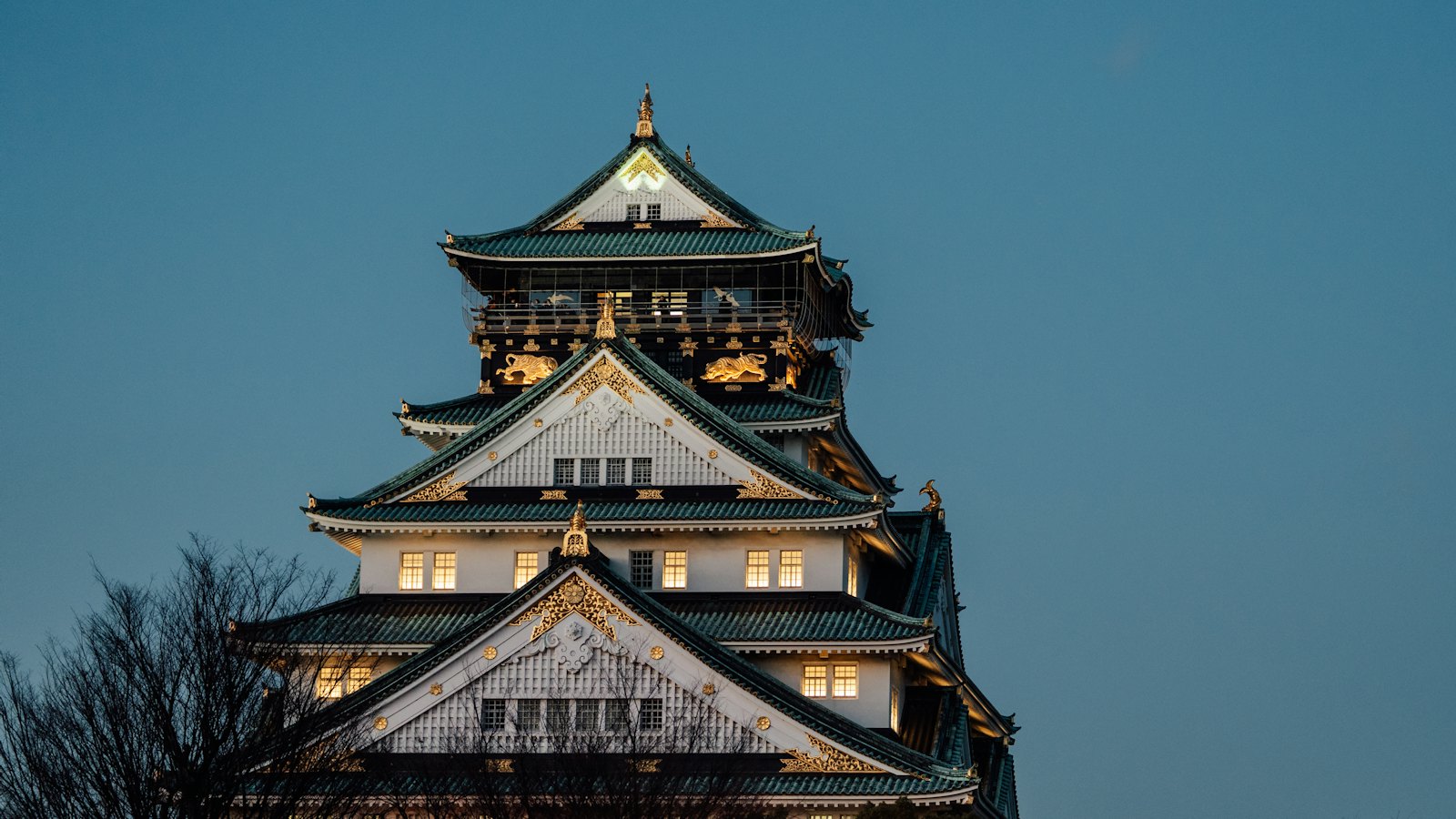
- Osaka Castle: 1,200 yen (about RM 31) for the main keep and stone wall museum. The park is free, and the separate Nishinomaru Garden (300 yen, 350 yen in blossom season) is a favourite sakura spot.
- Universal Studios Japan: adult day tickets cost roughly 8,400 to 9,400 yen by date and are no longer sold at the gate, so buy online. Super Nintendo World limits entry on busy days: an Express Pass guarantees it, otherwise try for a timed entry ticket in the official app.
- Kuromon Market: about 150 covered shops near Nipponbashi Station, with grilled seafood, fruit and tasting portions. Eat at the stall.
- Shinsekai and Tsutenkaku: retro lanes around a 103 m tower, lit up at night by kushikatsu shops.
- City views: Harukas 300 at Abeno Harukas is Osaka's highest observation deck.
- Kaiyukan: a giant aquarium whose main tank holds a whale shark, beside Tempozan Marketplace.
- Minoo Park: a forest valley 25 minutes from Umeda by Hankyu, with a waterfall walk and autumn colour that usually peaks in late November.
- Nara and Kyoto: each under an hour away. The Kintetsu Rail Pass (1,900 yen a day, foreign tourists only) covers Kintetsu trains linking Osaka, Nara and Kyoto.
What to eat in Osaka
Locals call their food culture kuidaore, loosely "eat until you drop", and the famous dishes are cheap. Muslim readers should check the halal section first, since pork, mirin and sake appear in many standard recipes.
- Takoyaki: octopus-filled batter balls under sauce, mayonnaise, seaweed flakes and bonito, sold across Dotonbori.
- Okonomiyaki: a cabbage and batter pancake from the griddle, often cooked at your table, around 1,000 to 2,000 yen (RM 26 to RM 52).
- Kushikatsu: deep-fried skewers, at their best in Shinsekai. Dip only once in the shared sauce.
- Kitsune udon: thick noodles in broth topped with sweet fried tofu.
- Kaitenzushi: conveyor-belt sushi, typically 100 to 500 yen a plate.
- Teppanyaki and wagyu: the treat meal, from roughly 5,000 yen a head.
Graze in Dotonbori and Kuromon, dress up a little in Kitashinchi near Osaka Station, or take the kids to the restaurant floors of Osaka Station City. Ramen, udon or curry rice usually costs 500 to 1,500 yen (RM 13 to RM 39).
Halal food and prayer spaces
Halal eating in Osaka takes planning, but Namba helps. Expect three kinds of place: restaurants certified by a halal body, Muslim-owned kitchens that vouch for their own food, and "Muslim-friendly" spots that drop pork but may still pour alcohol or use non-halal meat. Ask every time, as ordinary Japanese seasonings often contain mirin or sake.
Halal Gourmet Japan is the most useful directory; its Osaka overview was last reviewed in August 2026. Around Dotonbori and Namba it highlights Indian, Turkish and Indonesian kitchens, and its Osaka listings also include halal ramen, a ramen shop using halal wagyu, and discount stores in Namba and Umeda that stock certified halal souvenirs. Its Halal Lens ingredient scan, which reads a photographed product label, helps in convenience stores.
- Osaka Masjid: in Owada, Nishiyodogawa ward, north-west of Umeda.
- Masjid Istiqlal Osaka: in Nishinari ward, south of Namba.
- Osaka Ibaraki Masjid: in Ibaraki, a city north of Osaka.
Prayer spaces are listed at KIX Terminal 1 (third-floor public area, plus the international departure gate area), JR Osaka Station, Namba City, Tempozan Marketplace (third floor; get the door code from information), LaLaport EXPOCITY and Rinku Premium Outlets. Muslim Pro covers prayer times and qibla.
Getting around Osaka
Osaka Metro's eight lines handle the centre, led by the Midosuji Line: Umeda to Namba is about eight minutes for 240 yen (around RM 6). JR and private railways cover the rest.
- Bank cards: Osaka Metro gates take contactless Visa, Mastercard, JCB, American Express and UnionPay with no sign-up, and city buses followed in November 2025. Make sure your Malaysian card allows contactless and overseas payments.
- ICOCA: the rechargeable IC card of the region, sold at JR machines, good on most trains and buses and in convenience stores. Suica also works.
- Day passes: the Enjoy Eco Card covers subways and city buses for 820 yen on weekdays or 620 yen at weekends and holidays. The Osaka Amazing Pass (3,500 yen for one day, 5,000 yen for two) bundles free entry to selected sights.
- Taxi apps: in Japan they summon licensed taxis, and Grab does not operate here. GO, the most widely used, accepts international cards, and Uber also books taxis in Osaka.
- Taxis: metered and spotless, but costly.
Trains wind down around midnight, so eat late near your hotel.
Sample itinerary: 4 days in Osaka
Assumes a morning landing and a Namba hotel; shuffle days around weather and your USJ date.
- Day 1: Nankai train to Namba, check in, stroll Shinsaibashi-suji, then Dotonbori at night with dinner at a halal restaurant nearby.
- Day 2: Osaka Castle and Nishinomaru Garden, then Umeda's department stores and Osaka Station City, using the station's prayer space, and a Kita lookout at dusk.
- Day 3: Universal Studios Japan from opening time, or Kaiyukan and Tempozan for a gentler family day.
- Day 4: Nara's deer park and temples, or Kyoto, then a final dinner around Kuromon or Shinsekai.
A fifth day fits Kyoto properly, or a stop at Rinku Premium Outlets, one station from KIX, on the way home.
Money, SIM and practical tips
- Currency: the yen. On 28 September 2026, RM 1 bought about 38.4 yen; think RM 26 for every 1,000 yen.
- Payments: cards are fine in hotels, department stores and chain restaurants, but keep yen for tiny eateries, shrine offerings and lockers. Foreign cards fail at many Japanese ATMs, so ask your bank beforehand.
- E-wallets: Japan is not among PayNet's DuitNow cross-border QR partners (currently Singapore, Indonesia, Thailand and Cambodia). Touch 'n Go eWallet has worked in Japan through Alipay+ since 2022, so look for the Alipay+ sign, but keep a card and cash as backup.
- SIM and eSIM: set up a Japan eSIM before flying, or buy a SIM or pocket Wi-Fi when you land.
- Plugs: type A flat two-pin sockets at 100 volts. Pack an adapter for Malaysian three-pin plugs. Most phone and laptop chargers are rated 100 to 240 volts, but check the label on hair dryers and other appliances.
- Tipping: not part of the culture.
- Safety: very safe, but watch bags in the Dotonbori crush and wave off nightlife touts selling bars or drinks.
- Insurance: typhoons in August and September can ground flights.
- Etiquette: queue neatly, talk softly on trains, and avoid eating while you walk.
Shopping and Japan's new tax refund rules
Japan's tax-free system changes on 1 November 2026. Until then, tax-free shops deduct the consumption tax (10%, or 8% on food) at the till, or refund it on the spot, when you show your passport. From 1 November you pay full price and reclaim the tax as you leave Japan.
- Minimum: still 5,000 yen before tax, same shop, same day.
- At KIX: before check-in, process the refund at a customs terminal in the departure lobby or through Visit Japan Web. A green result lets you check in; a red one means an inspection, so keep the goods easy to show.
- Keep it all: one missing item voids the refund for its whole receipt.
- Stamp: tax-free shoppers are advised to get a passport entry stamp, so if you use the automated gates on arrival, ask for one straight afterwards.
Shinsaibashi-suji's covered arcade does fashion and cosmetics, the Umeda department stores carry the luxury labels, and Rinku Premium Outlets sits at Rinku Town, the next station from KIX on both the JR and Nankai lines. Nankai's Rinku Premium Outlets digital ticket pairs a discounted return ride with a 1,000-yen shopping voucher, and the mall has a prayer space. Compare designer bag prices with Malaysian stores first, as the yen moves.
Before you go
- Best time to go
- Late March to early April and October to November are Osaka's best windows, with mild weather, spring blossoms and autumn leaves, though hotel rates climb in both. The rainy season normally runs from early June to around 19 July, and July and August are hot and humid. Tenjin Matsuri fills the Okawa River with boats and fireworks on 24 and 25 July, and typhoons peak in August and September. December to February is cold, mostly dry and quieter; the cheapest date in our fare scan fell in late January 2027. Avoid Golden Week (late April to early May) and the New Year break (about 29 December to 4 January), when some sights close. Malaysian schools break up on 4 or 5 December 2026 (depending on the state group) until 31 December, so book early if you are travelling with school-age children then.
- Visa for Malaysians
- As of September 2026, Malaysians holding a chip-equipped e-passport (the type Malaysia issues today) can enter Japan visa-free for tourism and stay up to 90 days. Japan's Ministry of Foreign Affairs has tied this exemption to ICAO-compliant e-passports since July 2013 and advises anyone without one to obtain a visa first. There is no fee and no advance registration. Your passport must stay valid for the whole trip (six months is a sensible buffer), and officers may ask for your return ticket and hotel booking. Immigration and customs forms can be done on arrival, or beforehand on Visit Japan Web, which gives you a QR code to show at immigration and customs. Japan plans an online pre-travel authorisation called JESTA for visa-exempt visitors, but it had not started as of September 2026. Before booking, double-check the visa exemption page of Japan's foreign ministry at mofa.go.jp, since rules can change.
- Honest budget guide
- Day to day, one person spends roughly RM 180 to RM 500 in Osaka before airfare, and the room decides most of that. Flights: Amaboxly's KL scan, at the time of writing, turned up one-way seats from about RM 650 (Vietjet, one stop), so a connecting return costs roughly double that; nonstop prices hinge on sales. Dorm beds run about RM 52 to RM 130 (2,000 to 5,000 yen) and business hotels about RM 180 to RM 520 per room (7,000 to 20,000 yen) a night, more in blossom season. Meals cost around RM 80 to RM 160 a day, with local transport RM 15 to RM 30 on a day pass. Universal Studios Japan adds about 8,400 yen (RM 220). A five-day, four-night trip, mid-range and sharing a room, totals roughly RM 3,000 to RM 4,500 each including flights. All figures are indicative.
Frequently asked questions
Do Malaysians need a visa for Osaka?
No, not for tourism. As of September 2026, Malaysians with a chip-equipped e-passport can spend up to 90 days in Japan visa-free, with nothing to pay or register in advance. Filling in the immigration and customs forms on Visit Japan Web before landing gives you QR codes for KIX. Check Japan's foreign ministry website before travelling in case anything changes.
Is there a direct flight from KL to Osaka?
Yes, three airlines fly it nonstop. Malaysia Airlines and Batik Air depart KLIA Terminal 1 and AirAsia X uses Terminal 2, all landing at Kansai International after roughly six and a half hours, around 18 times a week in total. The lowest one-way fares in our scan, from about RM 650, were one-stop options such as Vietjet through Vietnam, so compare both.
Is Osaka Muslim-friendly?
More than many Malaysians expect, though it still takes planning. Namba and Dotonbori are the easiest place to start, with Indian, Turkish and Indonesian kitchens listed on Halal Gourmet Japan, which also maps halal ramen and halal wagyu elsewhere in the city. Prayer spaces exist at KIX Terminal 1, JR Osaka Station, Namba City and several malls, plus mosques such as Osaka Masjid and Masjid Istiqlal Osaka. Treat "Muslim-friendly" as a reason to ask, not a guarantee.
How many days in Osaka is enough?
Three full days covers Dotonbori, Osaka Castle, Kuromon Market, Shinsekai and Universal Studios Japan. Add a fourth for Nara or Kyoto, which is why four or five nights suits most first visits. For a longer Kansai trip, keep one Osaka hotel and do day trips instead of repacking every night.
What is the best month to visit Osaka?
April and November are the favourites. Early April usually brings cherry blossoms to Osaka Castle and the Okawa River, and the second half of November brings autumn colour to places like Minoo Park. Both are busy and pricier. For cheaper fares and thinner crowds, try January or February, which are cold but mostly dry.
What does a 5-day Osaka trip cost from Malaysia?
Including flights, a mid-range 5D4N trip costs each traveller roughly RM 3,000 to RM 4,500, assuming a shared room, casual meals and a transport day pass. Hostel travellers can spend less. Universal Studios Japan, from about 8,400 yen (RM 220), and shopping are the usual budget breakers. These figures are indicative and shift with the yen.
Can I use Grab in Osaka?
No. Grab does not operate in Japan, and ride apps here book licensed taxis. Install GO, which calls itself Japan's most widely used taxi app and accepts international cards, or use Uber, which also books taxis in Osaka. For most trips the subway is faster and far cheaper: Umeda to Namba costs 240 yen.
How do I get from KIX to Namba cheaply?
The Nankai Airport Express: about 45 minutes for 970 yen (around RM 25). For a reserved seat and a slightly quicker ride, the Nankai Rapi:t takes about 35 minutes and costs 1,410 yen on Nankai's online digital ticket. The limousine bus to OCAT in Namba is 1,400 yen, while a taxi, at roughly 23,000 yen or more including tolls, only makes sense for a group with heavy bags.
Jom pergi
Ready to go Osaka? Compare available flights and hotels for your dates. Check baggage, cancellation terms and the final total on the booking provider before paying.






