




On this page13 sections
- Overview
- Getting there from KL: flights and connections
- Jeju Airport to your hotel
- Where to stay on Jeju
- Things to do on Jeju
- What to eat on Jeju
- Halal food and prayer spaces on Jeju
- Getting around Jeju: buses, taxis and apps
- Driving on Jeju: renting a car
- Sample itinerary: 4 days on Jeju
- Money, SIM and practical tips
- Before you go
- FAQ
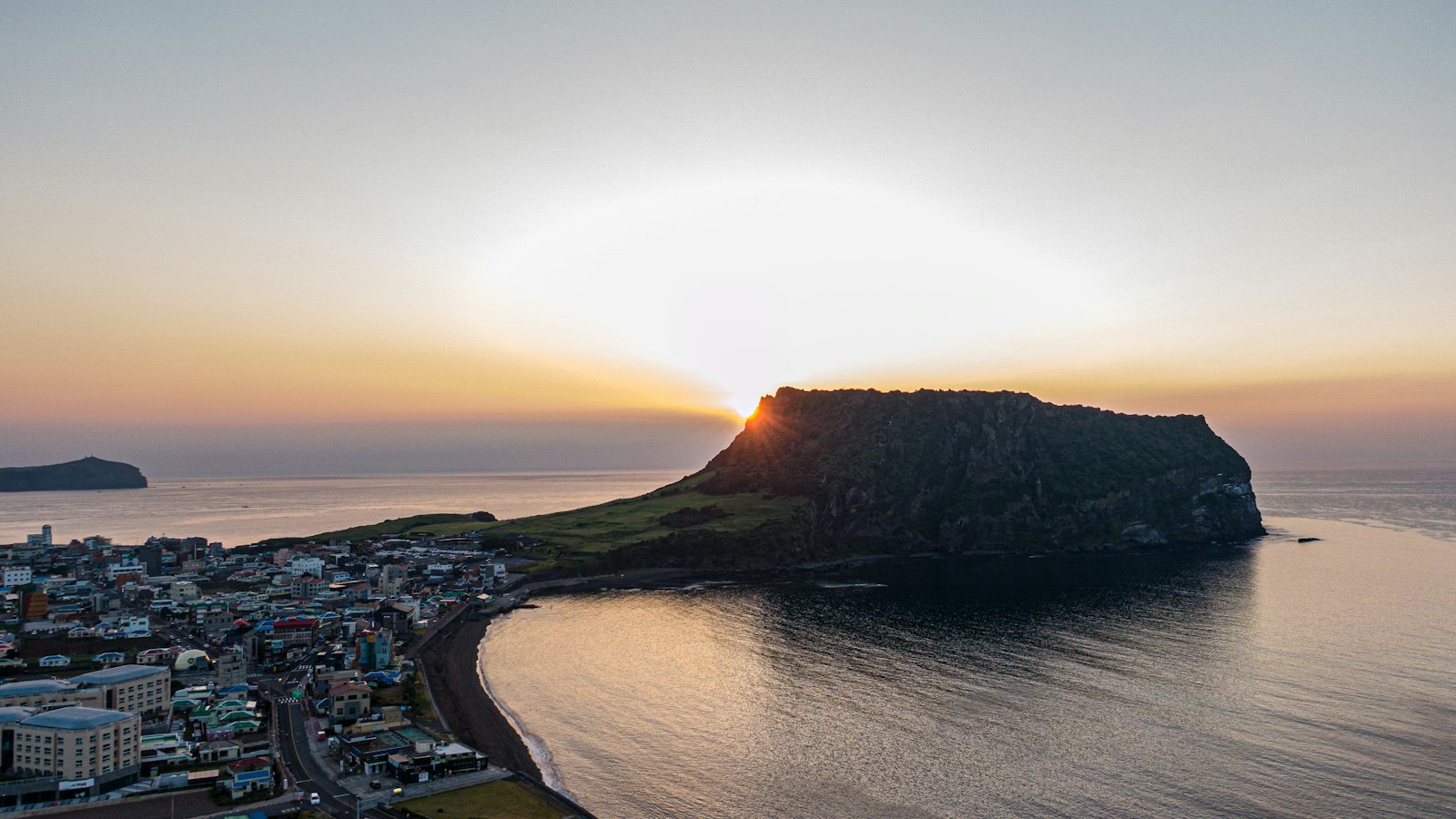
Jeju is South Korea's largest island, a volcanic oval with Hallasan, the country's highest peak, at its heart and a coast of black lava rock, pale beaches and tangerine orchards. Malaysians come for spring blossoms, winter snow on the mountain, drama-worthy scenery and a gentler pace than Seoul. This guide covers the best connections from KLIA, the K-ETA rule that applies here too, the ride from the airport, whether to hire a car, where to find halal meals and prayer space, and what the trip costs in ringgit.
Getting there from KL: flights and connections
Nobody flies non-stop from Kuala Lumpur to Jeju at the time of writing (late September 2026), so plan on one change. KL to Seoul is roughly six and a half hours non-stop, and Korea is an hour ahead of Malaysia.
- Via Seoul: Malaysia Airlines and Korean Air fly to Incheon from KLIA Terminal 1, and AirAsia X from Terminal 2 (AirAsia takes over that daily flight from 25 October 2026). Most Seoul to Jeju flights leave from Gimpo, Seoul's domestic airport, reached on the all-stop AREX train. The hop takes about an hour on what is often called the world's busiest air route. Allow three hours or more between flights.
- Via Singapore: Scoot flies from Changi to Jeju, and our fare scan found Scoot fares from KL with the change at Changi.
- Via China: Shenzhen Airlines and China Southern (via Guangzhou, a Jeju service listed to restart on 19 December 2026) appear in our results.
- Via Busan: Malaysia Airlines plans four weekly non-stop flights to Busan from 2 December 2026, with short onward hops to Jeju.
At the time of writing, Amaboxly's own scan of KL fares (refreshed on 21 September 2026) found the cheapest one-way seat at about RM 669 with Scoot via Singapore and a middle price of roughly RM 1,150. China Southern via Guangzhou began near RM 1,265 and Shenzhen Airlines near RM 1,289. Confirm your KLIA terminal on the e-ticket.
Jeju Airport to your hotel
Jeju International Airport is on the northern edge of Jeju City, minutes from the Shin-Jeju hotels; the southern resorts are about an hour away. Costs are approximate, at about 333 won per ringgit.
- Airport Limousine 600: leaves from outside Gate 5 every 18 to 27 minutes from 6 am. The provincial government lists the last regular departure at 9.50 pm, plus late buses at 10.20 pm and 10.50 pm that go as far as Jungmun. It serves Shin-Jeju and the Jungmun hotels before ending at the Seogwipo KAL Hotel, taking about 52 minutes to Jungmun and 98 minutes to the end. Tickets to Jungmun and Seogwipo cost 4,500 to 5,500 won (RM 14 to RM 17).
- Island buses: regular and express routes stop outside arrivals, the cheapest way into Jeju City and along the coast. Check route numbers on Naver Map or KakaoMap.
- Taxi: the meter starts at 4,300 won (see Getting around). Working from the official tariff, Shin-Jeju or the old town should come to under 10,000 won (RM 30) and Jungmun or Seogwipo roughly 40,000 won or more (RM 120 plus).
- Rental car: cross the road from Gates 3 and 5 to the covered walkway and the rental car shuttle stop (see the driving section).
Where to stay on Jeju
The island measures about 73 km from east to west, so many visitors split their nights between a northern and a southern base.
- Shin-Jeju and old Jeju City: Nohyeong-dong and Yeon-dong, beside the airport, have big hotels, shopping streets, late dining and several of Jeju's halal and Muslim-friendly restaurants. The older centre around Dongmun Market is cheaper and walkable. Ideal for first and last nights and for travellers using buses.
- Jungmun: the south-coast resort zone of large hotels above sandy coves and cliff paths. Families and honeymooners like it for the pools, and Limousine 600 stops at the hotels.
- Seogwipo town: a harbour town with two waterfalls on foot, Olle Market for dinner and more guesthouses and mid-range rooms than Jungmun. Suits walkers on the southern Olle routes.
- East coast, Hamdeok to Seongsan: small hotels, pensions and beach cafes near Seongsan Ilchulbong and the Udo ferry. Easiest with a car.
The west around Aewol and Hyeopjae is lovely at sunset but, like the east, needs a car.
Things to do on Jeju
- Seongsan Ilchulbong: a crater-topped tuff cone rising from the sea at the eastern tip, part of the UNESCO-listed Jeju Volcanic Island and Lava Tubes. Climb it at dawn, as its nickname, Sunrise Peak, suggests.
- Udo: a ferry of about 15 minutes from Seongsan port to a small island of beaches, cliffs and sea caves. Bring your passport for the ferry ticket, leave the car on the Jeju side and hire a bicycle or e-bike, then try the local peanut ice cream.
- Hallasan: South Korea's highest mountain at 1,947 m. Only the Seongpanak and Gwaneumsa trails reach the summit crater lake, and both need a booking on the official Hallasan reservation site. The shorter Eorimok and Yeongsil trails stop well short of the summit, around Witse Oreum.
- Jeju Olle Trail: 27 routes (including sub-routes) and 437 km of waymarked walks, mostly coastal. One stretch near Seogwipo makes a good half day.
- Seogwipo waterfalls: Jeongbang drops almost onto the shore; Cheonjiyeon lies in a wooded gorge near the harbour.
- Jusangjeolli, Jungmun: sea cliffs of hexagonal basalt columns.
- Haenyeo: women free divers whose culture UNESCO listed as intangible heritage in 2016; some coastal villages sell their catch.
- The west: Hyeopjae beach, the Aewol cafe coast and the tea fields by the Osulloc Tea Museum.
- Dongmun Market: Jeju City's old market, with food stalls into the evening.
What to eat on Jeju
Island cooking is built on seafood, citrus and, awkwardly for Muslim visitors, pork. See the halal section before ordering meat.
- Jeonbok-juk: abalone rice porridge, often tinted green by the innards, a classic breakfast. Ask whether meat stock is used.
- Galchi: hairtail fish, grilled whole or braised with radish in a spicy red sauce, a speciality of coastal restaurants.
- Okdom: tilefish, usually grilled whole.
- Haemul ttukbaegi: seafood stew in an earthenware pot with clams, prawns, crab and abalone.
- Straight from the haenyeo: sea urchin, conch and abalone, raw or grilled at seaside shacks.
- Bingtteok: thin buckwheat crepes rolled around seasoned radish, a market snack.
- Hallabong and gamgyul: Jeju's knobbly tangerines and small mandarins, fresh, juiced or in sweets.
The island's signature meat is black pork (heuk dwaeji), grilled at barbecue houses and used in the broth of gogi-guksu noodles and momguk soup, so Muslim diners should avoid these. Dongmun Market in Jeju City and Olle Market in Seogwipo are good for seafood snacks and fruit, and cafes in Aewol and on the east coast compete on tangerine drinks.
Halal food and prayer spaces on Jeju
Halal eating on Jeju needs more planning than in Seoul. Certified restaurants are few, mostly in Jeju City, and they change often, so check recent reviews before crossing the island for dinner.
Korean tourism bodies use a four-step grading for Muslim diners:
- Certified: checked by an approved body, usually the Korea Muslim Federation (KMF), whose certification JAKIM accepts.
- Self-certified: the Muslim owner's own guarantee.
- Muslim friendly: some halal dishes, though the restaurant may serve alcohol.
- Pork free: pork is off the menu, yet the meat served is not halal.
Muslim-run and halal-certified places are mostly Indian and Yemeni restaurants in Jeju City, in Shin-Jeju and the older centre, and a number of Korean seafood restaurants around the island describe themselves as self-certified or Muslim friendly. Elsewhere, lean on grilled fish, abalone porridge and seafood stew, checking each time for meat stock and cooking wine.
Muslim travel guides list the Jeju Islamic Center in Jeju City as the island's only mosque. Some large hotels keep prayer rooms, so ask when booking. The same guides mention a prayer space at the airport; ask at the information desk. Incheon, if you connect there, has 24-hour prayer rooms, including one airside in Terminal 1. Muslim Pro covers prayer times and qibla.
Getting around Jeju: buses, taxis and apps
Jeju has no rail or metro, so it comes down to buses, taxis or a hire car.
- Buses: routes reach every coastal town. Fares are low, a few ringgit a ride, with the red express buses costing more. Tap T-money (about 3,000 won for the card at convenience stores), Zero Pay QR or, since August 2025, a contactless Visa or other EMV card. Rural buses can run an hour apart, and Google Maps has long had gaps in Korea, so plan with Naver Map or KakaoMap.
- Taxis: metered, starting at 4,300 won for 2 km, with a 20 per cent surcharge from 11 pm to 4 am and a higher rate beyond 20 km.
- Ride-hailing: Grab has no service in Korea. Koreans rely on Kakao T; for foreigners, its maker Kakao Mobility offers k.ride, which accepts overseas cards and Alipay+ wallets (Touch 'n Go eWallet and Boost among them) and takes pickup bookings at Jeju Airport.
- Taxi day tours: a car and driver for the day cost from about 170,000 won (around RM 510) as of mid-2024, and more with an English-speaking driver. Split four ways, that is fair value for a family.
- City tour bus: a hop-on, hop-off day pass around Jeju City costs 12,000 won for adults (about RM 36), and the bus does not take cash.
Driving on Jeju: renting a car
Many Malaysians hire a car here, since the sights are scattered and country buses are slow. Traffic is light outside Jeju City.
- Documents: your Malaysian licence, an International Driving Permit from JPJ and your passport. Malaysia and South Korea are both parties to the 1949 Geneva road traffic convention the permit follows.
- Keep right: Korea drives on the right in left-hand-drive cars, the reverse of home. Practise in the rental lot and take turns slowly.
- Pickup: firms run shuttles to their depots from a stop across the road from Gates 3 and 5.
- Navigation: if the sat-nav is Korean-only, use Naver Map or KakaoMap on your phone.
- Speed cameras: common, and fines follow you via the rental firm.
- Udo: visitors' hire cars have long been restricted on the island, so plan to park near the ferry pier.
- Snow: roads over Hallasan can close or require chains after heavy snowfall.
Take full insurance and photograph the car first.
Sample itinerary: 4 days on Jeju
Four days covers the east, the south and a slice of the west. Book any Hallasan hike ahead and swap days around the weather.
- Day 1: Arrive, collect a car or bus into Shin-Jeju, stroll to Yongduam, the dragon-head lava rock by the sea near the airport, and graze at the Dongmun Market evening stalls.
- Day 2: Drive east in the dark to climb Seongsan Ilchulbong for sunrise, take the ferry to Udo and cycle it, then return along the haenyeo villages to Hamdeok beach.
- Day 3: Hike Hallasan from Seongpanak if you hold a booking (a full day), or walk the shorter Eorimok trail and continue south to Seogwipo for Jeongbang and Cheonjiyeon falls. Either way, end with dinner at Olle Market in Seogwipo.
- Day 4: Visit the Jusangjeolli basalt cliffs, then drive west past the Osulloc tea fields to Hyeopjae beach and end with a tangerine drink in Aewol, which is on the way to the airport.
A fifth day fits an Olle Trail walk or a Jungmun beach day.
Money, SIM and practical tips
- Currency: Korean won. At the 28 September 2026 rate, RM 1 was worth around 333 won, so a 10,000 won note is about RM 30.
- Paying: most hotels, restaurants, shops and taxis take Visa and Mastercard. Carry some cash for market stalls, small eateries and topping up T-money.
- E-wallets: PayNet lists DuitNow cross-border QR for Singapore, Indonesia, Thailand and Cambodia, not Korea. Touch 'n Go eWallet pays at Alipay+ merchants and inside k.ride.
- Data: set up a Korean eSIM before leaving KL; maps and translation apps will run all day.
- Power: 220V, European round-pin sockets (types C and F). Bring an adaptor for Malaysian square-pin plugs.
- Tipping: not expected.
- Weather: wind, fog and late-summer typhoons can ground flights and stop ferries, so keep a buffer day before flying home.
- Scams: fake K-ETA websites charging extra. The embassy says no third-party site is authorised, so use k-eta.go.kr only.
- Safety: crime against visitors is rare; wet coastal rocks are a bigger hazard.
- Emergency numbers: 112 police, 119 ambulance and fire, 1330 multilingual tourist line.
Before you go
- Best time to go
- April to early June and October to November are the best times for Jeju, with mild days and far less rain than midsummer. Cherry blossoms line Jeonnong-ro in Jeju City and Noksan-ro, where they rise above yellow canola, from late March to early April. July and August are hot and humid, with average highs near 30 degrees Celsius, and August and September are the wettest months, when typhoons can halt flights and ferries. Autumn brings silver grass to the oreum (small volcanic hills), and tangerines ripen into winter, when Jeju City's January highs sit around 9 degrees while Hallasan turns white. Chuseok and Seollal crowd domestic flights. Malaysia's year-end school holidays start on 4 December in Group A states and 5 December elsewhere, both ending 31 December 2026, which lifts December fares.
- Visa for Malaysians
- Malaysian passport holders can enter Jeju visa-free for up to 90 days as of September 2026, but travellers between 18 and 64 years old must hold an approved K-ETA before boarding, even on flights landing straight in Jeju. The Korean Embassy in Malaysia notes that Jeju's visa-free scheme serves nationalities that usually need a visa, while K-ETA-eligible nationals such as Malaysians still require a K-ETA. Apply on k-eta.go.kr only: the fee is 10,000 won, results normally come within 72 hours, approval lasts three years (a new passport needs a fresh one), and the embassy advises a month's lead time. Under-18s and those 65 or older skip K-ETA but need an arrival card, which can be filed free online as an e-Arrival Card within three days before departure. Korea asks only that your passport covers your stay, but the embassy tells Malaysians to hold over six months' validity. Recheck k-eta.go.kr before departure.
- Honest budget guide
- Expect roughly RM 250 to RM 550 per person a day on the ground in Jeju, excluding flights, with car hire or taxis the main variable. Flights: at the time of writing our KL fare scan shows one-way tickets from about RM 669 (Scoot via Singapore), so a return typically costs RM 1,350 to RM 2,300. A guesthouse room is roughly 50,000 to 90,000 won a night (RM 150 to RM 270) and a mid-range hotel 100,000 to 180,000 won (RM 300 to RM 540). Food runs RM 80 to RM 160 a day; buses cost a few ringgit a ride, a full-day taxi from about 170,000 won (RM 510). A mid-range 5-day, 4-night trip with a shared room totals about RM 3,000 to RM 4,500 a head with flights. All numbers are indicative.
Frequently asked questions
Do Malaysians need a visa or K-ETA for Jeju?
No visa is required for stays up to 90 days, but as of September 2026 Malaysian adults from 18 to 64 need an approved K-ETA, even when landing in Jeju directly from Singapore or China. The application on k-eta.go.kr is 10,000 won and approval lasts three years. Check the official site before you travel.
Is there a direct flight from KL to Jeju?
Not at the time of writing. Many Malaysians fly non-stop to Seoul and connect from Gimpo, or take Scoot via Singapore, which our fare scan shows from about RM 669 one-way. Chinese airlines connect through Shenzhen or Guangzhou, and Malaysia Airlines plans Busan flights from 2 December 2026, with short hops on to Jeju.
Is Jeju Muslim-friendly?
Yes, with some planning. Jeju City has a mosque at the Jeju Islamic Center and a small group of Indian and Yemeni restaurants, some certified and others self-certified or Muslim friendly. Elsewhere, several seafood restaurants call themselves self-certified, and seafood dishes are the practical choice, but ask about meat stock. Black pork dominates many menus, so read them closely.
How many days in Jeju is enough?
Four days is a comfortable minimum: the east for Seongsan Ilchulbong and Udo, the south for Seogwipo's waterfalls and Jungmun, and the west for beaches and tea fields. Add a day for a Hallasan summit hike. Paired with Seoul, three island days can work if you drive.
What is the best month to visit Jeju?
April is a popular choice, with cherry blossoms and canola from late March and mild weather. May, October and early November are also pleasant and drier. August and September carry the most typhoon risk, while January and February suit anyone who wants to see snow on Hallasan.
What does a 5-day Jeju trip cost from KL?
A mid-range 5-day, 4-night trip, sharing a room and including flights, adds up to about RM 3,000 to RM 4,500 a head. Daily ground costs are about RM 250 to RM 550, depending mostly on car hire or taxis. One-way fares in our scan start near RM 669. Treat these numbers as indicative.
Can I use Grab in Jeju?
No, Grab does not run in South Korea. Install k.ride, Kakao Mobility's app for foreign visitors, which takes overseas cards and Alipay+ wallets such as Touch 'n Go eWallet. Metered taxis wait at the airport and in both cities, and a taxi with driver can be hired by the day.
Can Malaysians drive in Jeju?
Yes. Bring your Malaysian licence, an International Driving Permit from JPJ and your passport. Hiring a car is popular because rural buses are slow. Korea drives on the right, speed cameras are common and visitors' hire cars have long been restricted on Udo. Rental shuttles leave from a stop across the road from Gates 3 and 5 at the airport.
Jom pergi
Ready to go Jeju Island? Compare available flights and hotels for your dates. Check baggage, cancellation terms and the final total on the booking provider before paying.






