




On this page13 sections
- Overview
- Getting there from KL: direct flights and fares
- Bao'an Airport to the city
- Where to stay in Shenzhen
- Things to do in Shenzhen
- What to eat in Shenzhen
- Halal food and prayer spaces
- Getting around: metro, DiDi and taxis
- Sample itinerary: 4 days in Shenzhen
- Money, SIM and practical tips
- Adding Hong Kong or Guangzhou to your trip
- Before you go
- FAQ
In 1980 Shenzhen was a border market town of about 30,000 people; today it is one of China's wealthiest cities, and Malaysians come for gadget hunting in Huaqiangbei, made-to-measure clothes in Luohu, theme parks for the kids and long dim sum brunches. Four airlines fly non-stop from KLIA in about four hours with no time difference, and a mutual visa waiver in force since July 2025 lets Malaysians stay up to 30 days without a visa. Below: the arrival card, the ride from Bao'an Airport, halal food near the Meilin Road mosque, paying without cash, and the cost in ringgit.
Getting there from KL: direct flights and fares
Reaching Shenzhen from KL is refreshingly simple. At the time of writing (late September 2026) four airlines run non-stop:
- AirAsia: up to three departures a day (early morning, afternoon and late evening) from KLIA Terminal 2.
- Malaysia Airlines: one Boeing 737-8 service daily from KLIA Terminal 1, a route it added in mid-2026.
- China Southern Airlines: three flights daily (A321neo and A320neo, one of them overnight) from Terminal 1.
- Shenzhen Airlines: two to three flights a day, including a small-hours departure, also from Terminal 1.
Recent flights took roughly 3 hours 45 minutes to 4 hours 20 minutes gate to gate, and both cities run on UTC+8, so your body clock stays put. Terminal 1 and Terminal 2 are different buildings, so confirm yours before leaving home.
Amaboxly's fare scan from KL, refreshed on 21 September 2026, puts AirAsia's non-stop one-way fares from near RM 371, typically hovering around RM 400 and peaking at roughly RM 640 to RM 680 on dates such as 10 October and 24 December. The best one-stop fare it logged was Shandong Airlines through Jinan at about RM 552, so connecting rarely makes sense. Prices move daily.
Bao'an Airport to the city
Bao'an International Airport (SZX) lies on Shenzhen's western fringe, and every onward option starts at the Ground Transportation Center beside arrivals. Prices are indicative, at about 1.64 yuan to RM 1.
- Metro Line 11: Airport station connects straight into the transport centre. Trains reach Futian in 30 to 45 minutes for under 10 yuan (below RM 6), from early morning until about midnight. Business-class carriages cost triple, roughly 21 yuan (RM 13) to Futian, and have luggage racks.
- Airport express buses: the A routes serve Futian Port, Shenzhen North Station, Shenzhen Bay Port and Longgang for 20 to 40 yuan (RM 12 to RM 24), and night routes cover the hours after the trains stop.
- Taxi: about 100 yuan (RM 60) to central Futian, 130 to 150 yuan (RM 80 to RM 90) to Luohu, and 70 to 80 yuan (about RM 45) to Window of the World.
- DiDi: cars collect riders from numbered bays in a signed pick-up area; fares are broadly similar to a taxi, traffic depending.
- Ferry: a free shuttle bus links the airport with Fuyong Pier for boats to Macau, Zhuhai and Hong Kong's airport (the SkyPier service is for flight transfers only).
With kids and suitcases after dark, a car earns its fare.
Where to stay in Shenzhen
The city is long and wide, so base yourself near the metro lines you will actually ride.
- Futian: the modern centre around the CBD, COCO Park and Futian Station, which has high-speed trains to Hong Kong and Guangzhou. The best all-rounder for a first visit, and the Shenzhen Mosque is in this district.
- Luohu: the older commercial core beside the Luohu border crossing, with Dongmen's snack lanes and Luohu Commercial City. Rooms tend to be cheaper and buildings older. Good for shoppers and anyone arriving from Hong Kong by MTR.
- Nanshan: Shenzhen Bay, Shekou and the theme parks near Window of the World. Families like the seafront, and Metro Line 11 makes the airport run easy.
- Bao'an: beside the airport. Only sensible for a midnight arrival, a dawn flight or business nearby.
Licensed hotels in China have had to accept foreign guests since 2024, yet a few budget places still refuse, so book one that mentions foreign passport check-in.
Things to do in Shenzhen
Shenzhen is less about ancient sights than about how a young megacity shops and plays.
- Huaqiangbei: the electronics quarter. Begin at the SEG Electronics Market tower; finished gadgets are upstairs, component traders downstairs.
- DJI and tech flagships: Shenzhen is home ground for DJI and other Chinese tech brands, with the latest drones and action cameras on show. Shenzhen Bay MixC offers calm, fixed-price browsing.
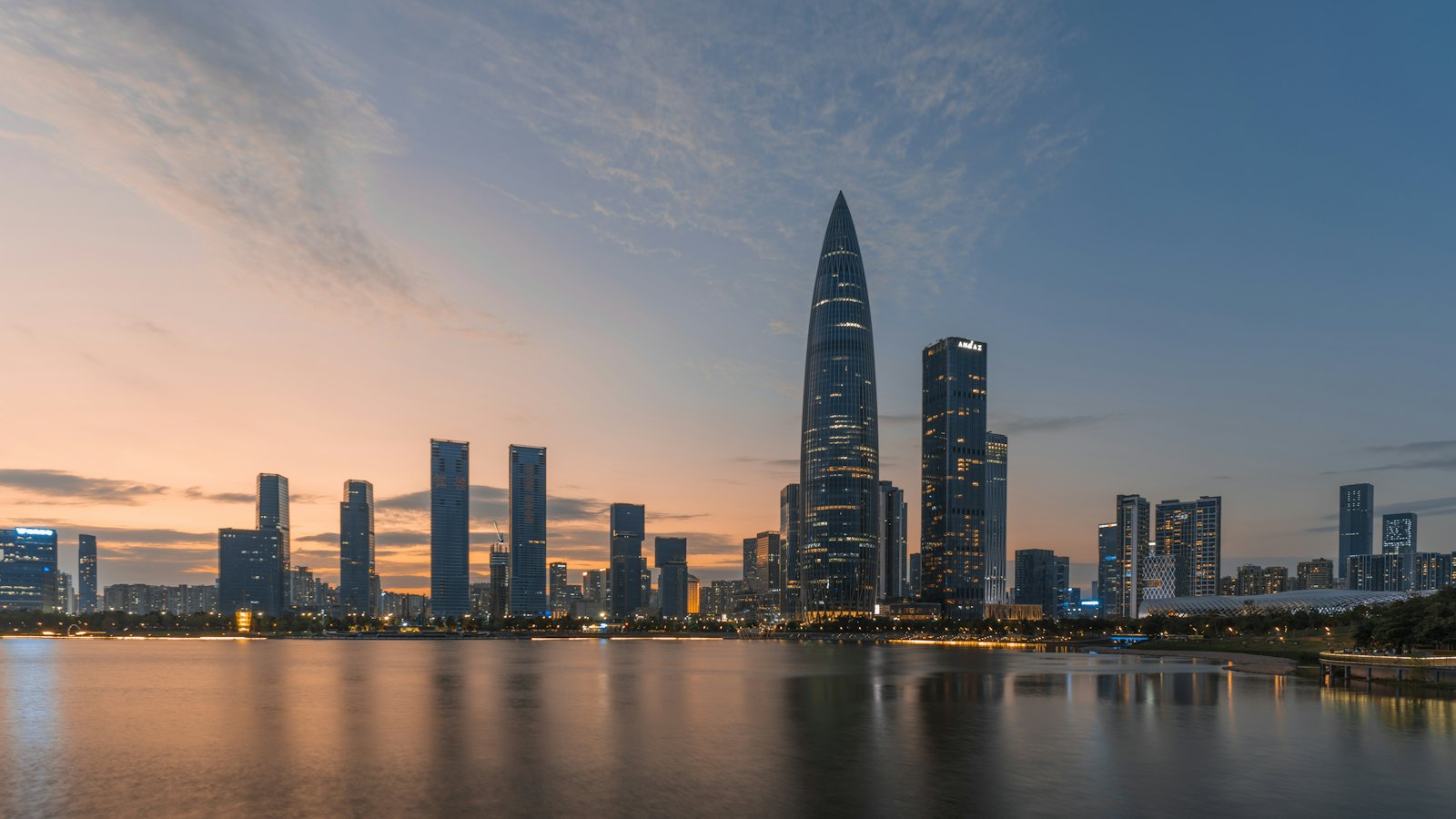
- Free Sky: the observation deck on floor 116 of Ping An Finance Centre, the city's tallest tower.
- Lianhuashan Park: an easy walk up to a Deng Xiaoping statue and a free skyline view over Futian, best at dusk.
- Window of the World and Splendid China Folk Culture Villages: neighbouring parks of miniature world landmarks and ethnic villages. Children adore them.
- Happy Valley: a bigger ride park close by, including the Playa Maya water park. Avoid weekends and Chinese holidays.
- Dafen Oil Painting Village: studios where artists copy famous canvases and paint to order.
- Shenzhen Bay Park and the mangroves: seafront cycling with Hong Kong across the water, plus migrating birds in the cooler months, especially January to March.
- Eastern beaches: Dameisha is the best known and easiest to reach, though often crowded; Xichong on the Dapeng Peninsula is further out but quieter and cleaner.
What to eat in Shenzhen
Shenzhen was built by migrants, so its tables cover all of China, with Cantonese, Chaoshan, Hakka, Hunan and Sichuan cooking the most common. Muslim readers should jump to the halal section, as most dishes here are not halal.
- Dim sum: har gow, siu mai and cheung fun over tea, ideal for a lazy brunch.
- Coconut chicken hot pot: chicken poached in coconut water, the meal most tied to modern Shenzhen and kind to anyone avoiding chilli.
- Chaoshan beef hot pot: paper-thin fresh beef swished in clear broth and dipped in shacha sauce, each cut given its own short cooking time.
- Shajing oysters: from Bao'an's old oyster-farming area, served grilled or cooked.
- Guangming pigeon: roast pigeon with crackly skin.
- Dongmen snacks: skewers, bubble tea and Cantonese street bites, liveliest after dark.
Costs swing widely. A simple noodle or rice shop is the cheapest way to eat, while a sit-down meal at a mid-range restaurant typically runs about 100 to 200 yuan (RM 60 to RM 120) a head. Eat near your sightseeing, since cross-city detours cost time.
Halal food and prayer spaces
Halal food needs some hunting in this largely Han Chinese city, but it exists. The sign to look for is 清真 (qingzhen, meaning halal). Most are small noodle and kebab shops run by Hui or Uyghur Muslims, many from China's northwest, selling hand-pulled beef noodles (lamian), lamb skewers and naan. Their status rests on the owners and local Islamic bodies, not a certificate Malaysians would know, so judge for yourself.
- Shenzhen Mosque: the largest in the city, at 7 Meilin Road in Futian. Rebuilt on its original site from 2014, with a main prayer hall for thousands, it is home to the Shenzhen Muslim Association and sits a short walk east of Shangmeilin Station (Lines 4 and 9). It is the natural choice for Jumaat; confirm prayer times locally.
- Huaqiangbei: a lane behind the main electronics street is known for Muslim food, with Uyghur naan bakeries nearby.
- Luohu and Shekou: guidebooks list a Turkish halal restaurant in Luohu, and Shekou has the widest spread of international dining. Check recent reviews first.
Elsewhere, stocks and cooking fat may involve pork or lard, and pork free is not halal. We could not confirm a prayer room at Bao'an Airport, so plan prayers around your hotel. Load Muslim Pro for prayer times and qibla before flying, and type 清真 into Amap or Dianping to find nearby halal kitchens.
Getting around: metro, DiDi and taxis
The metro is the simplest way across Shenzhen's long distances: 17 lines, bilingual signs and station announcements in Mandarin, Cantonese and English. A ride costs 2 to 15 yuan (roughly RM 1.20 to RM 9) according to distance, and food and drinks are banned on board.
- Tickets: on 30 June 2026 every line began a trial letting riders tap foreign-issued Visa, Mastercard, American Express or JCB contactless cards at gates marked with those logos. Metro QR codes in Alipay or WeChat Pay also work, as does a Shenzhen Tong card from a service counter (refundable 20 yuan deposit).
- Car apps: Grab is absent from mainland China, so put DiDi on your phone; its English version quotes the price upfront, bills a linked overseas card and also opens from within Alipay. Allow 20 to 40 yuan for a hop around the centre and 50 to 100 yuan between districts.
- Taxis: flag fall is 10 yuan for the first 2 km, or 13 yuan overnight. Show drivers your destination written in Chinese.
- Plan by district: Futian to Dafen or the beaches can take an hour.
Sample itinerary: 4 days in Shenzhen
- Day 1: Land at Bao'an and take Line 11 to a Futian hotel. Catch the skyline at sunset from Lianhuashan Park or Free Sky, then dinner and a first browse at COCO Park.
- Day 2: Luohu. Order any tailoring at Luohu Commercial City early, giving the tailor time before a fitting, then graze through Dongmen as the evening lights come on.
- Day 3: Nanshan. Window of the World or Splendid China in the morning, Happy Valley if the kids still have energy, then sunset along Shenzhen Bay Park and dinner in Shekou.
- Day 4: Huaqiangbei's gadget towers, lunch in the Muslim food lane, and prayers at the Shenzhen Mosque, a short ride north (time it for Jumaat on a Friday). Pick up your tailoring and head for the airport at least three hours before departure, since Luohu is at the far end of the city.
A fifth day suits Dafen Oil Painting Village plus Dameisha beach, or a high-speed rail day trip to Hong Kong or Guangzhou.
Money, SIM and practical tips
- Currency: the yuan, also called renminbi. In late September 2026 RM 1 fetched about 1.64 yuan, which puts 100 yuan close to RM 61.
- Paying by phone: China runs on QR codes, so load your Visa or Mastercard into Alipay or WeChat Pay before leaving KL; either covers shops, taxis, DiDi and metro gates. Touch 'n Go eWallet scans at Alipay+ merchants, though some users report slow payments, and DuitNow QR does not cover China at the time of writing.
- Cards and cash: big malls, chain hotels and major attractions usually take overseas Visa and Mastercard, but small shops and stalls rarely do. Keep 200 to 300 yuan in notes for stalls.
- Staying online: mainland networks block Google, WhatsApp, Instagram and Facebook. A Malaysian roaming plan or a travel eSIM that routes data abroad usually sidesteps this; download offline maps and a translation pack as well.
- Power: 220V sockets take two-pin and slanted three-pin plugs, and most will not take our square-pin ones, so bring an adapter.
- Tipping: not expected.
- Safety: serious crime is uncommon. Mind pickpockets in crowds and wave off Luohu touts selling fake watches and shoes.
- Drinking water: buy bottled or boil it.
Adding Hong Kong or Guangzhou to your trip
Shenzhen shares a border with Hong Kong, which lets Malaysian passport holders stay 90 days without a visa. Every return to Shenzhen counts as a fresh mainland entry with a new 30-day allowance, while still adding to the 90-in-180 total.
- High-speed rail: trains from Futian or Shenzhen North reach Hong Kong West Kowloon in about 15 to 20 minutes of travel, plus time for the joint immigration checks inside West Kowloon station.
- On foot: Metro Line 1 ends at Luohu, and Lines 4 and 10 reach Futian Checkpoint. You walk through both immigration halls and carry on by MTR East Rail. Cheaper but slower; Luohu opens 06:30 to midnight, while MTR trains at the Futian crossing stop earlier in the evening.
- West side: Shenzhen Bay Port and the Shekou ferries suit anyone staying in Nanshan.
Flying into Shenzhen and home from Hong Kong, or the reverse, avoids doubling back.
Guangzhou, Guangdong's capital, is 30 to 60 minutes from Futian or Shenzhen North by high-speed train, close enough for a day trip. Muslim visitors often make time for its historic Huaisheng Mosque.
Before you go
- Best time to go
- Go between October and December, when Shenzhen is dry and less humid, with daytime highs of roughly 21 to 29°C and the typhoon season winding down. January to March is cooler, with highs around 20 to 23°C, but fog and grey skies are common. Rain builds from April, and June to September brings heat, heavy humidity and typhoons. Skip the National Day Golden Week, which starts on 1 October, when domestic crowds pack theme parks, beaches and border crossings, and Chinese New Year (6 February 2027), when room rates can double and many small shops close for days. KL fares also climb over Malaysia's end-of-year school break, which starts on 5 December 2026 for most states; the dearest date in our scan was Christmas Eve, at about RM 680 one-way.
- Visa for Malaysians
- Shenzhen needs no visa for Malaysians as of September 2026: ordinary passport holders may stay up to 30 days on each entry, thanks to the bilateral visa-waiver deal that took effect on 17 July 2025. Stays add up and must not pass 90 days in any rolling 180. Holidays, visiting relatives, business trips and medical visits qualify; jobs, studies and journalism do not. Your passport should remain valid for at least six months, and proof of your hotel and flight home helps. The one form to handle is China's arrival card, filed before departure through s.nia.gov.cn or the NIA 12367 app, or on paper in the immigration hall. Staying with friends rather than in a hotel means registering with the local police within 24 hours. Hong Kong and Macau run separate entry systems. Before you go, check my.china-embassy.gov.cn (Chinese Embassy in Malaysia) for changes.
- Honest budget guide
- Allow roughly RM 150 to RM 480 per person per day in Shenzhen, not counting flights, with your hotel making most of the difference. Flights: at the time of writing our scan has AirAsia non-stop from about RM 371 one-way, commonly near RM 400, so a return usually costs RM 750 to RM 900. Rooms: discounted doubles at simpler hotels begin around 170 to 260 yuan (RM 105 to RM 160), and a good four-star costs about US$100 to US$140 (RM 410 to RM 570) a night. Meals add RM 50 to RM 150 a day, and the metro plus the occasional DiDi RM 15 to RM 50. A mid-range 4-day, 3-night trip for two sharing a room works out at about RM 2,000 to RM 2,900 each with flights, excluding shopping. Every figure is indicative.
Frequently asked questions
Do Malaysians need a visa for Shenzhen?
No. Malaysian ordinary passports get visa-free entry to mainland China, Shenzhen included, for up to 30 days a visit as of September 2026, with no more than 90 days in any 180. Carry a passport valid for six more months and fill in China's arrival card, ideally online at s.nia.gov.cn before you fly. Jobs and studies still need a proper visa.
Is there a direct flight from KL to Shenzhen?
Yes, several, all non-stop. AirAsia uses KLIA Terminal 2, while Malaysia Airlines, China Southern and Shenzhen Airlines depart from Terminal 1. Expect about four hours in the air and no clock change. At the time of writing our fare scan lists AirAsia one-way fares from around RM 371, with most dates near RM 400.
Is Shenzhen Muslim-friendly?
Workable, with some planning. The Shenzhen Mosque on Meilin Road in Futian is the largest in the city, with a prayer hall for thousands and the obvious venue for Jumaat, and noodle and kebab shops marked 清真 (qingzhen) appear across town, including a lane behind Huaqiangbei. Ordinary restaurants often cook with pork or lard. We found no confirmed airport prayer room, so pack a prayer mat and use Muslim Pro for qibla.
How many days in Shenzhen is enough?
Three or four days covers Huaqiangbei and the Futian skyline, the Nanshan theme parks and Shenzhen Bay, and Luohu for tailoring and Dongmen snacks. A fifth day fits Dafen or a beach. Adding Hong Kong or Guangzhou by high-speed train? Plan about a week.
What is the best month to visit Shenzhen?
November is hard to beat: dry, sunny and comfortably warm, with the early October Golden Week crowds long gone. October and December also work well, though December clashes with Malaysian school holidays and pricier KL fares. From June to September expect heat, downpours and possible typhoons, so build in spare time.
What budget do I need for a 4-day Shenzhen trip?
Sharing a room in a good hotel, plan on roughly RM 2,000 to RM 2,900 per person, covering an AirAsia return, three nights, meals and local transport. Backpackers can spend much less. Gadgets and tailoring are the big variables, so give shopping its own separate limit.
Can I use Grab in Shenzhen?
No. Grab has no service in mainland China, so download DiDi, which has an English version, shows the fare before you confirm and charges a linked Visa or Mastercard. It also opens inside Alipay. Street taxis start at 10 yuan, and marked metro gates now accept taps from overseas Visa and Mastercard cards on a trial basis.
Can I visit Hong Kong and Shenzhen in one trip?
Easily. High-speed trains connect Futian and Shenzhen North with Hong Kong West Kowloon in roughly 15 to 20 minutes, or you can cross on foot at Luohu or Futian Checkpoint and continue by MTR. Hong Kong is visa-free for Malaysians for 90 days. Each return to Shenzhen is a new mainland entry that counts towards the 90-in-180 cap.
Jom pergi
Ready to go Shenzhen? Compare available flights and hotels for your dates. Check baggage, cancellation terms and the final total on the booking provider before paying.






