




On this page12 sections
Hiroshima deserves time beyond a brief visit to its wartime memorials. Peace Memorial Park remains central to understanding the city, but travellers will also find layered local cuisine, convenient streetcars, castle grounds and the island of Miyajima nearby. Malaysians currently need a connecting flight from Kuala Lumpur because no direct KLIA service is listed as of September 2026. This guide covers flight options, airport transfers, accommodation areas, halal considerations, daily expenses and a balanced four-day route through Hiroshima's solemn history and energetic modern life.
Getting There
No non-stop flight between KLIA and Hiroshima Airport is listed as of September 2026. Journeys normally include at least one connection, often in Hanoi, Taipei, Hong Kong, Tokyo or Seoul. A well-timed itinerary may take about 9 to 15 hours, while a lengthy transit can make the journey considerably longer.
Amaboxly's Kuala Lumpur fare check found a one-way Vietjet ticket costing RM 802 via Hanoi for travel on 24 April 2027. The scan's median one-way price was RM 1,484. Connecting options through Taipei began near RM 1,660, while the sampled Hong Kong, Tokyo and Seoul routes cost more. Vietjet and China Airlines appeared in the results, but neither appearance indicates a direct service.
Review the operating carrier, baggage rules and connection details for every leg before purchasing. An itinerary involving separate tickets offers less protection if the first flight is delayed. Some Tokyo connections also require changing airports. Use the terminal shown on your reservation because the first operating airline determines whether departure is from KLIA Terminal 1 or Terminal 2.
Airport Transfers into Hiroshima
Hiroshima Airport lies roughly 50 kilometres east of the city centre. The following ringgit estimates use a planning rate of about RM 2.80 per 100 yen, so confirm the current exchange rate before travelling.
- Hiroshima Station limousine bus: Usually the easiest transfer, taking about 45 to 55 minutes and costing roughly 1,300 to 1,600 yen, or about RM 36 to RM 45. Road congestion may lengthen the ride.
- Hiroshima Bus Center limousine bus: Convenient for Hondori, Otemachi and Peace Memorial Park. Expect roughly 50 to 60 minutes and a similar fare range.
- Shiraichi connection: Ride an airport bus to Shiraichi Station and continue by JR train. The combined journey takes around 60 to 75 minutes and costs roughly 1,000 to 1,400 yen, or about RM 28 to RM 39.
- Taxi: Reaching central Hiroshima generally takes 45 to 60 minutes. A fare of 15,000 to 20,000 yen, about RM 420 to RM 560, is possible depending on traffic and destination.
- Rental car: Consider one for rural Hiroshima Prefecture, not routine city sightseeing. Malaysian drivers must obtain the appropriate international driving permit before departure.
Airport buses stop running at night. Check the final scheduled service if your flight lands late.
Where to Stay
Hiroshima's main visitor districts are well connected, although the best choice depends on your sightseeing and luggage plans.
- Hiroshima Station: A strong base for first visits, families and anyone making JR excursions. Airport coaches terminate here, and trains towards Miyajimaguchi are close at hand. The redeveloped station district offers plenty of shops and restaurants.
- Otemachi and Peace Memorial Park: Choose this area for quick access to the museum, Atomic Bomb Dome and riverside paths. Central attractions are walkable, and streetcars provide an easy link to the station.
- Hondori and Hatchobori: These lively neighbourhoods work well for dining, shopping and evenings out. Hondori's roofed arcade is particularly useful during rain. Request a room away from busy nightlife streets if noise is a concern.
- Yokogawa: This more residential district has both JR and tram services, local restaurants and sometimes better room value than the busiest central areas.
Simple accommodation often costs RM 150 to RM 250 nightly. A comfortable mid-range room is commonly RM 300 to RM 550. Rates may climb on weekends and during cherry-blossom season.
Essential Sights and Experiences
- Hiroshima Peace Memorial Museum: Its exhibits explain the atomic bombing through personal possessions, testimony and historical material. The visit can be emotionally exhausting, so avoid rushing directly to another demanding attraction.
- Peace Memorial Park: Follow the paths between the Cenotaph, Children's Peace Monument and numerous smaller memorials across the river delta.
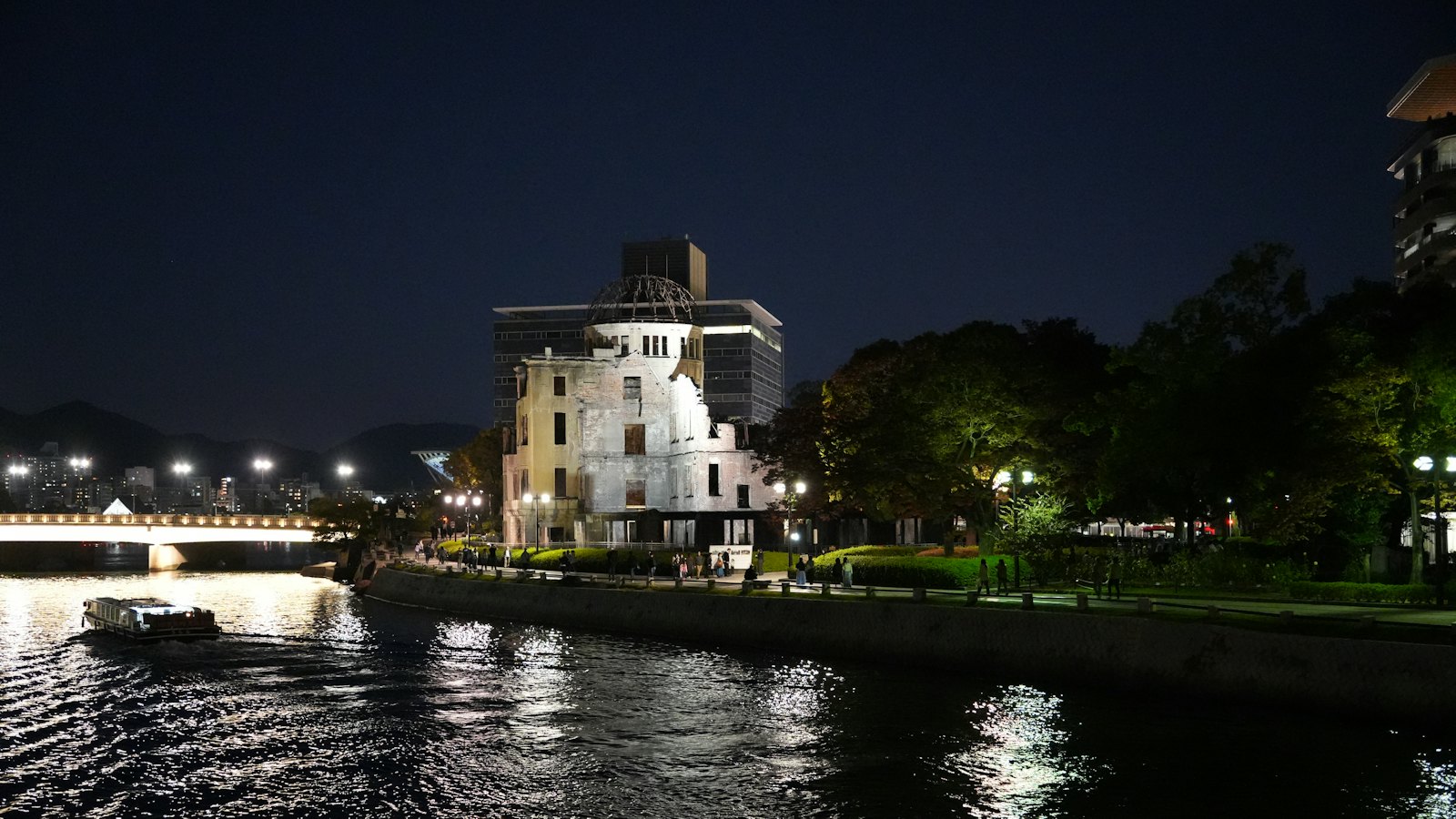
- Atomic Bomb Dome: View this preserved ruin from both banks of the Motoyasu River. The atmosphere changes after dusk as the surrounding streets grow quieter.
- Hiroshima Castle: Walk around the moat and reconstructed castle area for a broader account of Hiroshima before 1945.
- Shukkeien Garden: Ponds, bridges and miniature landscapes make this compact garden rewarding during spring flowers and autumn foliage.
- Miyajima: Travel by train and ferry for Itsukushima Shrine, the great torii, historic lanes and Mount Misen. Protect food and loose paper from the island's roaming deer.
- Orizuru Tower: The upper level overlooks the dome, city centre and surrounding waterways.
- Mazda Museum: Factory-related experiences may require advance reservations and can change, so verify availability before planning your day.
Keep conversations subdued and photography respectful around memorials.
Local Food to Try
Hiroshima-style okonomiyaki is assembled in distinct layers of batter, cabbage, noodles, egg and selected toppings. Okonomimura and Hiroshima Station contain clusters of specialist counters, while independent neighbourhood shops offer a quieter experience. Muslim visitors should ask about sauces, meat, cooking surfaces and seasonings because ordering only seafood does not necessarily make the dish halal.
Anago meshi combines grilled conger eel with rice and is strongly associated with the Hiroshima and Miyajima area. Hiroshima oysters are another speciality, served grilled, fried or in hotpot. They are most closely associated with the cooler season, although cooked oyster dishes remain available at other times.
On Miyajima, look for momiji manju, small maple-shaped cakes with fillings such as sweet red bean, custard or chocolate. Travellers with dietary restrictions should check for gelatine, emulsifiers and flavouring agents.
Hiroshima Station, Hondori and central covered arcades provide convenient casual meals. Department-store food halls are useful for fruit, rice dishes and packaged snacks, though most ingredient labels are Japanese. Meat-free noodles can still contain fish-based broth, so translation tools are valuable when asking questions.
Halal Meals and Prayer Planning
Hiroshima can accommodate Muslim visitors with preparation, but it has fewer verified halal choices than Tokyo or Osaka. Labels such as seafood, vegetarian or no pork do not address shared grills, animal-derived broth, mirin or sake. Ask specifically whether meat is certified, alcohol enters the recipe and utensils are shared.
Restaurant status and certification may change. Review recent information on services such as Halal Navi, Google Maps and HappyCow, then contact the restaurant on the day you plan to visit. Indian, Turkish and Middle Eastern menus may offer possibilities, but the cuisine or owner's background alone is not proof of halal handling. Plain rice, fruit and packaged products with understandable ingredient lists provide useful backup options.
The Hiroshima Islamic Cultural Center is in Higashihiroshima, outside the main tourist centre, so visiting requires extra travel time. Dedicated prayer facilities are uncommon in central shopping areas. At Hiroshima Airport, ask the information counter about any current prayer room or private space. Carrying a small prayer mat and qibla application will make daily arrangements easier. Staff at major attractions may help identify a quiet place when approached politely.
Transport Around the City
Streetcars provide the most practical network for sightseeing. Services link Hiroshima Station with Hatchobori, Peace Memorial Park, Yokogawa and the route towards the Miyajima ferry. A typical central trip costs around 200 to 250 yen, approximately RM 5.60 to RM 7, while the longer ride to Miyajimaguchi costs more. Payment is possible with cash or a supported Japanese transit IC card. When using cash, obtain coins from the change machine before leaving instead of presenting a large note to the driver.
JR is quicker between Hiroshima Station and Miyajimaguchi, whereas the streetcar gives passengers a slower view of ordinary neighbourhoods. Ferries complete the crossing from Miyajimaguchi to Miyajima in about 10 minutes. Pass coverage differs between JR trains, ferry operators, trams and private transport, so read the exact conditions.
Walking works well within central Hiroshima, and buses fill gaps in the tram system. Short taxi journeys commonly cost about 1,000 to 2,500 yen, or RM 28 to RM 70. Grab should not be treated as a reliable daily option. Find taxis at ranks, request one through your hotel or use an established Japanese booking application.
Four-Day Hiroshima Itinerary
- Day 1: Travel from the airport by limousine bus, leave your luggage and take an easy walk through Hondori or beside the river. Finish with an early okonomiyaki meal rather than visiting the museum while tired.
- Day 2: Enter the Peace Memorial Museum after breakfast, then continue through the Cenotaph, Children's Peace Monument and Atomic Bomb Dome. Add Orizuru Tower or the covered arcades, but retain free time to absorb the memorial experience.
- Day 3: Go to Miyajimaguchi by JR or streetcar and board the ferry to Miyajima. Visit Itsukushima Shrine and the old shopping lanes. Continue towards Mount Misen if weather, daylight and fitness permit, then return to Hiroshima for dinner.
- Day 4: Explore Shukkeien Garden and the Hiroshima Castle grounds. Browse station shops for regional gifts before taking the airport coach. A late flight may leave time for another museum or an unhurried river walk.
Three complete sightseeing days cover the headline attractions. Four nights create a more comfortable rhythm. Travellers with an additional day can consider Onomichi, Iwakuni or less visited parts of Hiroshima Prefecture.
Money, Connectivity and Practical Advice
Japan's currency is the yen. For initial estimates, 1,000 yen is approximately RM 28, but use the prevailing rate when calculating your actual budget. Hotels, large shops and many restaurants accept cards. Carry cash for small food counters, older machines, temples and rural businesses. DuitNow QR is not a general Japanese payment method, and 100-yen coins are handy for lockers, vending machines and transport.
Purchasing an eSIM before departure is normally the simplest way to obtain mobile data. Tourist SIM cards and pocket Wi-Fi are alternatives, especially when several family members will share a connection. Japanese sockets use two-flat-pin Type A plugs and 100-volt power. Malaysian plugs need an adaptor, and electrical devices should be marked as compatible with 100 volts.
Tips are neither required nor expected. Hiroshima is broadly safe, although ordinary care remains sensible on crowded vehicles and nightlife streets. Missed final buses, misplaced belongings and severe weather are more realistic concerns than organised tourist fraud.
Summer brings substantial heat and humidity. Typhoons can interrupt rail and air services from late summer into early autumn. Insurance should cover treatment, delays and missed onward travel, particularly for separate flight tickets.
Before you go
- Best time to go
- Spring and autumn offer the most comfortable conditions. From March to May, Hiroshima usually has pleasant walking weather, with stronger demand around the late March and early April blossom period. October and November bring cooler air and autumn colour, especially on Miyajima. June is rainy, while July through September is hot, humid and vulnerable to typhoon disruption. Central Hiroshima winters are cool but generally less crowded outside New Year. Japanese holidays and Malaysian school breaks can raise room and transport demand. The Peace Memorial Ceremony takes place on 6 August, creating a solemn atmosphere as well as intense pressure on accommodation.
- Visa for Malaysians
- Most Malaysian holidaymakers can enter Japan without obtaining a visa first. As of September 2026, the exemption applies to Malaysian nationals holding chip-equipped passports that meet ICAO standards, for temporary stays of no more than 90 days. Permitted purposes include holidays, visiting relatives and brief commercial activities, but employment for pay is excluded. Anyone without an eligible electronic passport should arrange a visa before departure. The passport must cover the full visit, and arriving passengers generally provide fingerprints and a photograph. Visit Japan Web is optional and can produce QR codes for immigration and customs procedures. JESTA has not started, and its introduction is anticipated by fiscal 2028. Recheck the position with Japan's Ministry of Foreign Affairs or its embassy in Malaysia.
- Honest budget guide
- Plan on RM 250 to RM 500 per traveller for each day in Hiroshima, before airfares and substantial shopping. Basic rooms are often RM 150 to RM 250 per night, with comfortable mid-range choices near RM 300 to RM 550. Set aside about RM 80 to RM 180 daily for meals and RM 20 to RM 60 for city transport. Airport transfers, admission charges and a Miyajima outing require additional funds. Amaboxly's sampled fares showed a RM 802 one-way Vietjet journey from Kuala Lumpur through Hanoi, against a median one-way price of RM 1,484. Including connecting return flights, shared lodging and normal sightseeing, four days may cost approximately RM 2,600 to RM 4,800 per person. Blossom dates, holidays and weekends can increase these estimates.
Frequently asked questions
Do Malaysians need a visa for Hiroshima?
As of September 2026, Malaysians with chip-equipped passports meeting ICAO specifications may make temporary visits to Japan for up to 90 days without a visa. Paid employment is not permitted under this arrangement. Visit Japan Web remains optional, and JESTA is not operating yet. Verify the rules with Japan's Ministry of Foreign Affairs before leaving.
Is there a direct flight from Kuala Lumpur to Hiroshima?
No non-stop KLIA to Hiroshima service is listed as of September 2026. Travellers must make at least one connection, with Hanoi, Taipei, Hong Kong, Tokyo and Seoul among the possible hubs. Amaboxly's fare sample found a one-way Vietjet route through Hanoi from RM 802, but prices and schedules can change.
How many days are enough for Hiroshima?
Allow three complete days for Peace Memorial Park, the central districts and a Miyajima excursion. A four-day visit gives you more room for Hiroshima Castle, Shukkeien Garden and an appropriately unhurried memorial experience. With five days, you could add Onomichi, Iwakuni or another destination in the surrounding region.
Is Hiroshima Muslim-friendly?
A Muslim traveller can visit Hiroshima comfortably with advance research, although verified halal restaurants and public prayer rooms are relatively scarce. Ask about alcohol, stock, meat certification and shared cookware, even when a dish is described as vegetarian or pork-free. A portable prayer mat, ingredient translation tool and occasional self-catered meal are helpful.
What is the best month to visit Hiroshima?
November combines moderate temperatures with autumn foliage on Miyajima. April has mild conditions and blossoms but also higher prices and larger crowds. May and October are appealing alternatives if your dates avoid major domestic holidays. Travellers who struggle with heat should skip midsummer, while anyone visiting later in summer should monitor typhoon forecasts.
How much money do I need for four days in Hiroshima?
An indicative total is RM 2,600 to RM 4,800 per person for four days, including connecting return flights, shared accommodation, meals, urban transport and ordinary attractions. Simple lodging and careful food choices can reduce the amount. A private room, extensive shopping or distant excursions will increase it, particularly during popular seasonal dates.
Can I use Grab in Hiroshima?
Do not depend on Grab as your routine ride service in Hiroshima. Taxis wait at the airport, stations and prominent visitor locations, and hotel staff can arrange a vehicle. Certain domestic taxi applications may work if your phone and payment method are supported. Streetcars, JR services, buses and walking remain more economical for most trips.
Should I stay near Hiroshima Station or Peace Memorial Park?
Hiroshima Station is preferable for straightforward airport transfers, heavy luggage and JR journeys to Miyajima. Otemachi or the Peace Memorial Park area places important historical sites and riverside walks close to your room. For a greater concentration of shops, restaurants and evening activity, consider Hondori or Hatchobori. Streetcars connect all these districts.
Jom pergi
Ready to go Hiroshima? Compare available flights and hotels for your dates. Check baggage, cancellation terms and the final total on the booking provider before paying.






