




On this page12 sections
- Overview
- Getting There from Kuala Lumpur
- Airport Transfer and Local Connections
- Choosing the Right Place to Stay
- Things to Do in Zhangjiajie
- Food and Western Hunan Flavours
- Halal Meals and Prayer Planning
- Transport Around the City and Parks
- A Manageable Four-Day Itinerary
- Money, Connectivity and Practical Tips
- Before you go
- FAQ
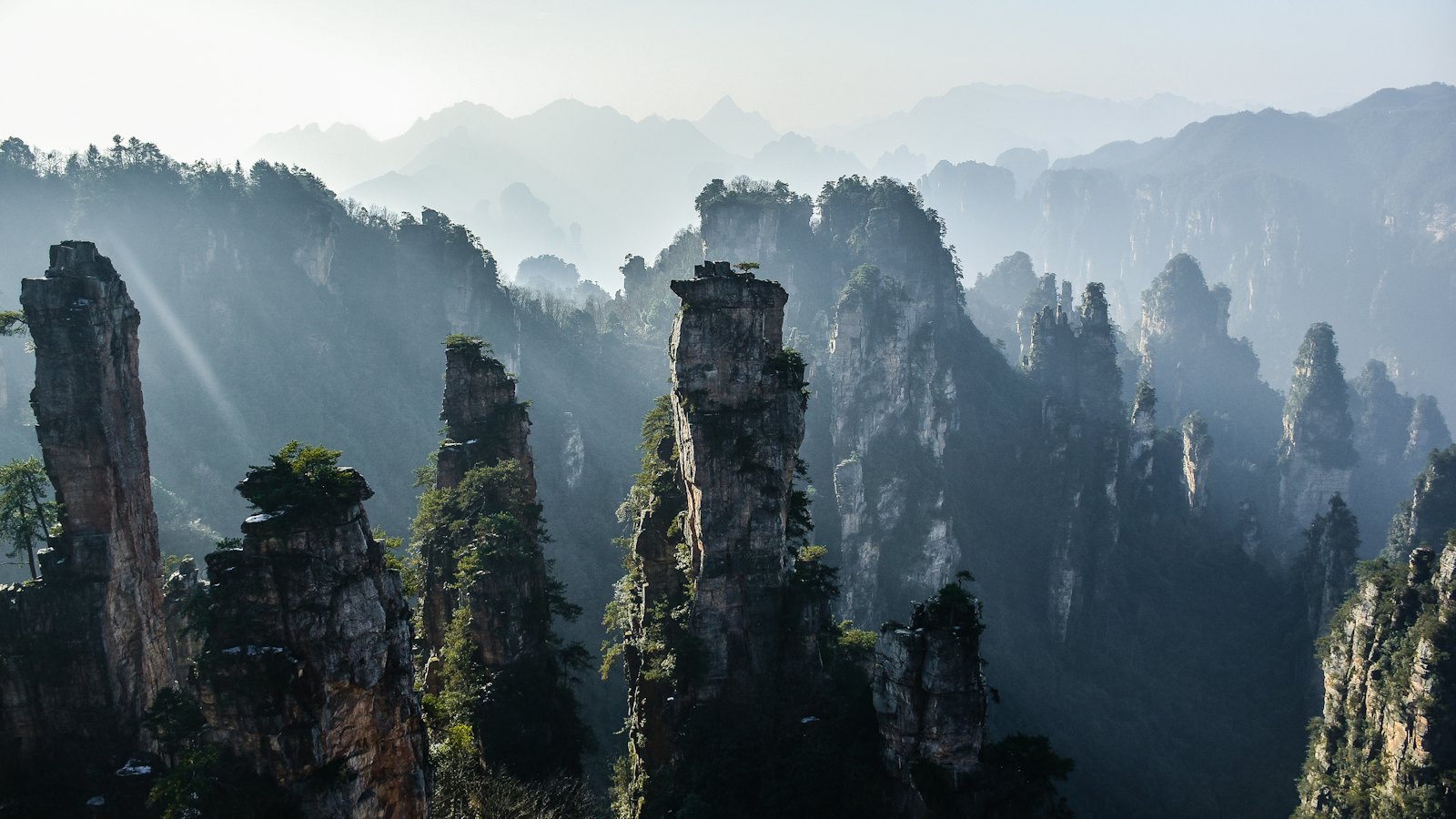
Zhangjiajie transforms a mountain holiday into a dramatic vertical landscape of narrow sandstone towers, wooded ravines and paths suspended above cloud. Its attractions are divided between central Zhangjiajie, Tianmen Mountain and the Wulingyuan scenic zone, making your choice of accommodation important. Travellers from Malaysia will usually connect through another Chinese airport or fly to Changsha and continue by high-speed train. This guide covers both routes, local transport, accommodation, essential sights, food, Muslim travel needs, costs and a manageable four-day schedule.
Getting There from Kuala Lumpur
As of September 2026, no airline is listed with nonstop service between KLIA and Zhangjiajie Hehua International Airport, whose code is DYG. An air journey therefore needs at least one connection through a larger Chinese city. Depending on the timetable and layover, the complete trip may take about 7 to 12 hours or longer.
Another option is flying to Changsha Huanghua International Airport, travelling across Changsha to its South railway station and boarding a high-speed train for Zhangjiajie West. No airline is listed with nonstop service between KLIA and Changsha either, so this route also needs at least one connection. The train portion commonly takes two to three hours. Build a generous transfer margin because the airport and railway terminal are in different locations.
Check the terminal stated on your reservation rather than relying on a general rule. Full-service international departures commonly use KLIA Terminal 1, while certain budget carriers leave from Terminal 2.
Amaboxly does not yet have a cached fare scan for this route. Connecting flight prices and the Changsha flight and rail combination both vary by date and carrier, so check current listings directly when you are ready to book.
Airport Transfer and Local Connections
DYG airport sits near central Zhangjiajie, which is also known as Yongding. Wulingyuan and its national park entrances are approximately 30 to 40 kilometres away. For quick estimates, CNY1 is about RM0.60.
- Airport to central Zhangjiajie: a car normally takes 15 to 25 minutes and costs about CNY20 to CNY40.
- Airport to Wulingyuan: expect 45 to 70 minutes and CNY120 to CNY200 by taxi or app-booked car. Ask whether tolls are included.
- Airport buses: fares may be CNY2 to CNY5, although departures can be inconvenient after a late flight.
- Zhangjiajie West to the centre: allow 20 to 35 minutes by car and approximately CNY25 to CNY50.
- Zhangjiajie West to Wulingyuan: a car generally takes 35 to 55 minutes and costs CNY80 to CNY140. Tourist or public buses often charge CNY10 to CNY20 but can involve a wait or transfer.
Show drivers your hotel's Chinese name, full address and map location.
Choosing the Right Place to Stay
The main attractions are far enough apart that an unsuitable base can add hours of driving. Match your accommodation to the places you most want to see.
- Wulingyuan gives the easiest access to the national park, Yuanjiajie, Tianzi Mountain, Baofeng Lake and Yellow Dragon Cave. Spend at least two nights here when the sandstone formations are your priority.
- Central Zhangjiajie or Yongding suits Tianmen Mountain, DYG airport, local shopping and early access to the city cableway.
- The Zhangjiajie West area works for a late rail arrival or early departure. It is convenient but less scenic, so one transit night is usually enough.
- Lodgings near a forest park gate can help hikers start early. Confirm the exact entrance because different gates connect with different internal routes.
Basic rooms may cost RM90 to RM160 nightly, while comfortable mid-range choices are commonly RM200 to RM400. Small properties may lack lifts, reliable heating or English-speaking employees, so check facilities before paying.
Things to Do in Zhangjiajie
Queues, travel distances and shifting visibility make one packed sightseeing day unrealistic. Keep your highest-priority mountain visit flexible when possible.
- Zhangjiajie National Forest Park contains the region's signature pillars, wooded valleys and elevated lookouts.
- Yuanjiajie has famous stone columns and busy cliff platforms, so an early arrival helps.
- Tianzi Mountain provides wide ridge panoramas that become especially striking when clouds move between the summits.
- Golden Whip Stream offers an easier riverside forest walk. Keep food hidden from macaques.
- Bailong Elevator carries visitors between the valley and upper routes in a glass-sided outdoor lift, although waits may be lengthy.
- Tianmen Mountain combines a cableway or winding road with cliff paths, glass walkways and Tianmen Cave.
- The Grand Canyon Glass Bridge pairs a constructed crossing with canyon views and timed admission.
- Baofeng Lake offers a relatively gentle boat excursion beneath green cliffs.
- Yellow Dragon Cave is a useful wet-weather alternative with extensive limestone chambers.
Each major scenic complex normally has its own admission charge. Lifts, cableways, trains and some shuttles may cost extra.
Food and Western Hunan Flavours
Western Hunan food is known for assertive salt, chilli, pickled ingredients and smoked meat. Saying “shao la” requests less chilli, though the finished dish may still be hot.
Sanxia guo is a local dry-pot speciality made with several chosen ingredients, vegetables and strong seasoning. Many versions include pork or lard, so Muslims should verify every component. Other regional foods include preserved vegetables, mountain greens, tofu, rice noodles, smoked meats and glutinous rice snacks. Sour pickles frequently offset the chilli.
Both central Zhangjiajie and Wulingyuan have informal restaurants with illustrated menus or ingredients displayed near the entrance. Wulingyuan generally provides more visitor-oriented choices, while streets farther from the park gates can be cheaper. Noodles or a simple rice plate may cost CNY12 to CNY30. A multi-dish shared meal can be about CNY50 to CNY120 per diner.
Photographs simplify ordering, but automated translations sometimes label meat and fat incorrectly. If required, ask whether vegetables contain meat broth, oyster sauce or lard.
Halal Meals and Prayer Planning
A Muslim traveller can manage Zhangjiajie with advance preparation, but dedicated facilities are scarce. Food described only as pork-free is not necessarily halal because utensils may be shared, alcohol can be added to sauces and lard may be used for cooking.
Restaurant signs displaying “清真”, pronounced qingzhen, indicate halal food. Muslim-operated Lanzhou beef noodle shops are often a practical choice, but anyone requiring certification should ask the restaurant directly. Searching “清真餐厅” in map or dining apps can reveal nearby options; examine recent customer photographs as well as translated labels. Rice, fruit, sealed groceries and carefully checked vegetarian dishes provide backups. Packaged meals or snacks from Malaysia are helpful during long park outings.
Prayer rooms should not be expected at DYG, railway terminals, malls or mountain sites. Bring a small prayer mat and request permission to use a quiet, clean space. Download prayer times and calibrate a qibla app before entering areas with weak reception. Follow your own religious guidance concerning combined prayers while travelling.
Transport Around the City and Parks
Buses cover the principal districts, but mountain gates, advance reservations and language differences reward careful route preparation. Grab is unavailable in mainland China. Visitors can instead request a car through DiDi or a ride service embedded in Alipay. Link an accepted international bank card beforehand and save every destination in Chinese.
Ordinary city bus fares are usually CNY2 to CNY5. Coaches and visitor buses between central Zhangjiajie, Zhangjiajie West and Wulingyuan commonly cost CNY10 to CNY25. Confirm the day's final return service before entering a remote attraction because schedules can change.
For short city journeys, metered taxis are convenient. Ask for the meter or choose an app that shows an estimated price. A Chinese address or map pin prevents confusion when the driver does not recognise an English name.
Within Wulingyuan, park buses connect important route junctions and are generally associated with scenic admission. Cable cars, elevators and sightseeing trains may need additional tickets. Considerable walking remains unavoidable, so wear shoes with good traction. Travellers with reduced mobility should investigate stairs and transfer points before choosing a circuit.
A Manageable Four-Day Itinerary
- Day 1: Reach DYG or arrive by rail from Changsha, then check into Wulingyuan. Buy water and snacks before taking a relaxed town walk. Choose Baofeng Lake only if sufficient time and energy remain.
- Day 2: Enter Zhangjiajie National Forest Park early. Pair Yuanjiajie with a selection of upper viewpoints, using internal buses and either Bailong Elevator or a cableway to limit repeated climbing.
- Day 3: Divide the day between Golden Whip Stream and Tianzi Mountain, changing the sequence for weather and crowds. Yellow Dragon Cave is a useful substitute during dense cloud. Move to central Zhangjiajie that evening.
- Day 4: Allow most of the day for Tianmen Mountain, including the cableway, cliff paths, glass walkway and Tianmen Cave area. Book an evening departure only when the timetable leaves a substantial margin.
For a three-day visit, remove Baofeng Lake and Yellow Dragon Cave. A fifth day makes room for the Grand Canyon Glass Bridge, unhurried photography or a weather-related change.
Money, Connectivity and Practical Tips
Chinese currency is the yuan or renminbi, abbreviated CNY or RMB. CNY1 can be treated as roughly RM0.60 for planning, although your bank's actual conversion will differ. Digital payment is widespread. Configure Alipay or WeChat Pay with a supported foreign card before departure, but retain some cash in case verification, data or card processing fails. DuitNow QR is not a broadly accepted Chinese payment option.
Arrange mainland-compatible roaming or install an eSIM in advance. Access to some overseas online services may be restricted through ordinary Chinese connections. Store maps, translations, tickets, hotel details and reservation records offline. Amap provides useful domestic navigation, though its English interface can be limited.
Power is supplied at 220V, with Type A, C and I sockets commonly encountered. Carry a universal adapter. Tipping is generally unnecessary, and tap water should be boiled or replaced with bottled water.
Rain makes stone steps slick, cliff paths become crowded and macaques may grab exposed food. Use official ticket sellers, reject informal promises of bypassing queues and carry a light rain jacket.
Before you go
- Best time to go
- April to May and September to October are usually the most comfortable periods. Spring rain and mist can produce beautiful layers around the pillars, but dense cloud may erase the view. Summer brings humidity, heat, thunderstorms and heavier school-holiday crowds. Winter receives fewer visitors and occasional snow, although ice, wind or maintenance may close exposed routes and transport. If possible, avoid the national holiday surges in early May and early October, when trains, rooms and attractions sell quickly. Malaysian school breaks can also increase demand for reasonably priced flights. Reserve early for those dates, pack rain protection in every season and leave one day adjustable in case visibility deteriorates.
- Visa for Malaysians
- Malaysians currently receive short visa-free entry for eligible mainland China visits. As of September 2026, a Malaysian passport permits stays of up to 30 days per entry for tourism, business, family visits and exchanges. The bilateral arrangement began on 17 July 2025 and limits visa-free presence to 90 days within any 180-day span. Employment, study, journalism and longer visits need the relevant visa. Most overseas arrivals must submit an arrival card. Since 20 November 2025, travellers have been able to complete it beforehand on the National Immigration Administration website, through the NIA 12367 application, or using compatible mini apps in Alipay and WeChat. Paper forms remain available at immigration and there is no entry fee. Carry a passport valid for at least six months and verify requirements with Chinese authorities before departure.
- Honest budget guide
- Plan on RM250 to RM500 per person daily after flights and major attraction admission. Amaboxly does not yet have a cached fare scan for this route, so budget flight costs separately once you have checked current connecting fares from Kuala Lumpur or the Changsha flight and rail combination. Expect RM90 to RM160 nightly for a basic room or RM200 to RM400 for comfortable mid-range lodging. Food can total RM45 to RM100 each day, while routine local travel may add RM15 to RM80 depending on taxi use. Park tickets, cable cars, elevators and the glass bridge can increase the final amount by several hundred ringgit. A four-day journey's ground costs, excluding return flights, may total roughly RM800 to RM2,800 per person for accommodation, food, local travel and principal sights. These are planning estimates rather than live prices, and flight costs should be added on top once known.
Frequently asked questions
Do Malaysians need a visa for Zhangjiajie?
As of September 2026, Malaysians may enter mainland China visa-free for an eligible visit of up to 30 days, within the overall 90-days-in-180 limit. The exemption includes tourism but excludes work, study and journalism. Submit the required arrival card, bring a passport with at least six months remaining and recheck official Chinese guidance before travelling.
Is there a direct flight from Kuala Lumpur to Zhangjiajie?
No nonstop KLIA to DYG service is listed as of September 2026. Flying itineraries consequently require a connection at another Chinese airport. No nonstop KLIA to Changsha service is listed either. Alternatively, take a connecting flight to Changsha, cross the city to Changsha South and continue to Zhangjiajie West by high-speed train. That rail segment usually lasts about two to three hours.
How many days are enough for Zhangjiajie?
Four days gives a first-time visitor a practical pace. Allocate two days to separate areas of the national park and one to Tianmen Mountain, leaving the remaining time for transfers or a gentler attraction. Three days requires skipping the canyon and caves. Five days provides valuable flexibility when cloud obscures the high viewpoints.
What is the best month to visit Zhangjiajie?
April, May, September and October generally combine pleasant walking temperatures with attractive scenery. September often feels comfortable, while spring mist can frame the pillars beautifully when visibility remains adequate. Avoid the busiest national holiday dates in early May and October. Summers are hotter and busier, while winter ice may disrupt exposed routes.
Is Zhangjiajie Muslim-friendly?
The city is workable for Muslim visitors who prepare, although halal dining and prayer rooms are limited. Look for “清真”, confirm ingredients with staff and remember that pork-free does not automatically mean halal. Muslim-run noodle restaurants, sealed foods and properly checked vegetarian meals are useful. Carry snacks and a compact prayer mat into the parks.
Can I use Grab in Zhangjiajie?
Grab does not provide service in mainland China. DiDi and ride-booking features within Chinese payment applications are the usual alternatives. Configure your card, account and phone number before the first journey, and retain destinations in Chinese. Standard taxis and public buses also serve the airport, railway station, urban centre and Wulingyuan.
How much money should I budget for four days?
Amaboxly does not yet have a cached fare scan for this route, so add current connecting airfare on top of ground costs. Ground costs alone, including shared accommodation, meals, local journeys and several leading attractions, typically run roughly RM800 to RM2,800 per person over four days. National park admission, cableways and elevators are among the larger single costs. Keep a reserve for taxis when weather, luggage or early departures make bus travel unsuitable.
Should I stay in Zhangjiajie city or Wulingyuan?
Choose Wulingyuan for shorter journeys to the national park, Yuanjiajie and Tianzi Mountain. Central Zhangjiajie is more convenient for Tianmen Mountain, DYG and the city cableway. On a four-day trip, spend two or three nights in Wulingyuan and the final night centrally. A late rail arrival may justify one night near Zhangjiajie West.
Jom pergi
Ready to go Zhangjiajie? Compare available flights and hotels for your dates. Check baggage, cancellation terms and the final total on the booking provider before paying.






