




On this page12 sections
- Overview
- Flights from Kuala Lumpur to Wuhan
- Reaching Wuhan from Tianhe Airport
- Choosing an area to stay
- Wuhan sights worth prioritising
- What to eat: Wuhan breakfasts and local dishes
- Halal meals and places to pray
- Transport within the city
- Four-day Wuhan itinerary
- Money and practical travel tips
- Before you go
- FAQ
Wuhan brings together the former cities of Hankou, Hanyang and Wuchang beside the Yangtze and Han rivers. Its scale can surprise first-time visitors, yet a thoughtful itinerary reveals an engaging mix of lakeside paths, monumental history, museums and excellent breakfasts. Highlights include Yellow Crane Tower, East Lake, the Hubei Provincial Museum and a steaming bowl of hot dry noodles. Direct services from Kuala Lumpur and visa-free entry make the journey relatively straightforward for Malaysians. This guide covers flights, airport transfers, suitable neighbourhoods, halal dining, transport and realistic costs. Set aside three days for the essentials or four for a more comfortable pace.
Flights from Kuala Lumpur to Wuhan
As of September 2026, AirAsia and China Eastern Airlines provide non-stop services between Kuala Lumpur International Airport and Wuhan. Flying time is usually close to five hours, although weather, winds and the assigned route may affect the duration. AirAsia normally operates from KLIA Terminal 2, while China Eastern commonly uses Terminal 1. Verify the terminal on the newest itinerary or airline application before travelling to the airport.
During Amaboxly's latest KL fare check, a direct AirAsia seat for 10 November 2026 was available from RM486 one way. The median one-way result was RM560. Neither figure is a permanent fare, and extras such as checked baggage, food or seat selection can substantially change the amount paid.
Connecting choices may route through Jinan, Haikou, Guangzhou, Shenzhen or Bangkok. Consider one only if it delivers a worthwhile saving or a much better departure time. Once a long transit is included, the journey can occupy most of the day. Compare prices after adding luggage rather than looking only at the initial headline amount. Malaysia and Wuhan share the same time, eliminating any need to reset your watch after arrival.
Reaching Wuhan from Tianhe Airport
Wuhan Tianhe International Airport lies to the north of the principal urban areas. For quick mental calculations, treat CNY10 as approximately RM6, while remembering that currency rates fluctuate.
- Metro: Airport trains on Line 2 travel into Hankou before crossing towards central Wuchang. Most useful downtown journeys require about 45 to 70 minutes, including any interchange. Fares commonly fall between CNY5 and CNY8, equal to roughly RM3 to RM5. It is economical and predictable, although lengthy station passages are inconvenient with heavy luggage.
- Airport coach: Bus links operate to selected transport centres around Wuhan. Routes and frequencies are subject to revision, so ask the arrivals desk which service matches your destination. A ride may take 50 to 90 minutes and cost approximately CNY20 to CNY40, or RM12 to RM24.
- Taxi: Join the regulated queue outside arrivals and request a metered trip. Central Hankou or Wuchang is generally 40 to 70 minutes away. Budget CNY100 to CNY160, about RM60 to RM96, plus any toll or night surcharge.
- Ride-hailing: DiDi works through its own application and Alipay. Pricing often resembles a taxi fare, while the screen supplies the licence number and assigned collection area.
Late-night passengers should store the hotel's Chinese name, telephone number and full address before departing Kuala Lumpur.
Choosing an area to stay
Because Wuhan stretches across both the Yangtze and Han rivers, location has a major effect on daily travel time. A well-connected room is often worth more than a cheaper property far from the sights.
- Central Hankou and Jianghan Road: This is a strong first-visit base for dining, retail, metro links and the architecture of the former foreign concessions. The Hankou waterfront is nearby, and cross-river attractions remain accessible.
- Wuchang near Yellow Crane Tower: Stay here for convenient access to the tower, Hubu Alley, the Yangtze River Bridge and Wuchang Railway Station. Crowds gather around the famous landmarks, but the district is efficient for a brief trip.
- East Lake and the provincial museum: This greener setting offers museums, university neighbourhoods and quieter nights. Families and returning visitors may appreciate the slower atmosphere, though evening journeys to Hankou require additional time.
- Hanyang: The area provides a less hectic base near Guiyuan Temple and the meeting of the rivers. Before confirming a room, measure the actual walk to the nearest metro entrance.
Accommodation providers in China must register overseas visitors. Larger hotels and many mid-priced properties routinely accept foreign passports, but some small operators cannot. Ask the booking platform to confirm that a Malaysian passport can be registered before making a non-refundable payment.
Wuhan sights worth prioritising
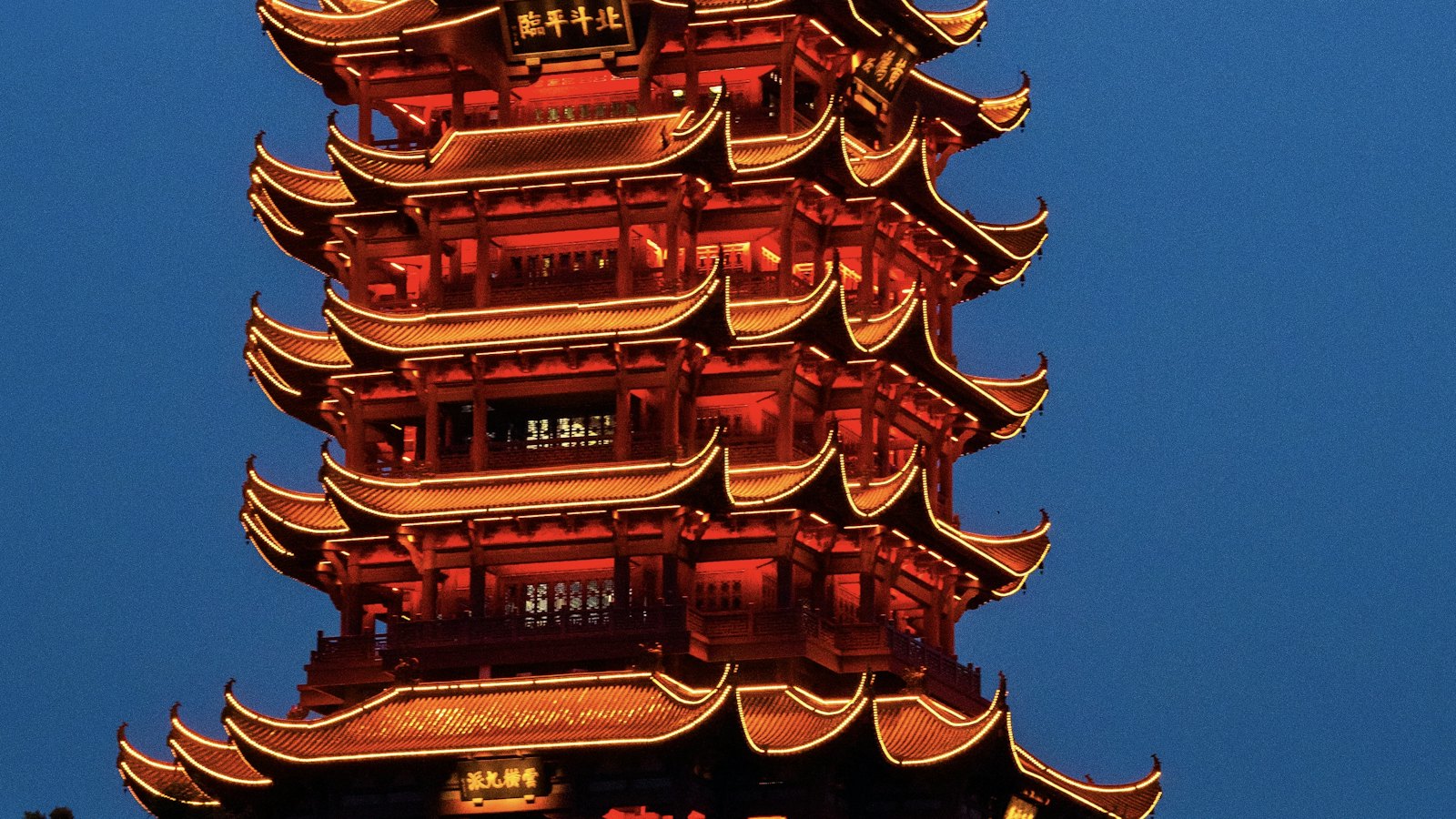
- Yellow Crane Tower: The city's signature monument overlooks the Yangtze, Wuchang and the great river bridge. Today's building is reconstructed, while the hilltop location retains deep connections with Chinese poetry and history.
- East Lake: Its extensive greenways suit walking and cycling. Pick a particular shoreline zone because completing the entire lake is unrealistic during an ordinary sightseeing day.
- Hubei Provincial Museum: The collections illuminate the ancient Chu world. The bronze chime bells excavated from the tomb of Marquis Yi of Zeng are the star exhibits. Check whether advance reservations are currently compulsory.
- Yangtze River Bridge: Use the pedestrian level for close views of passing trains, shipping and the skyline. A clear morning usually provides the sharpest visibility.
- Hankou waterfront: Walk beside imposing early twentieth-century buildings while ferries move between Wuhan's historic districts.
- Jianghan Road: The pedestrian avenue and its side streets combine shops, food counters and restored commercial facades.
- Guiyuan Temple: This established Hanyang Buddhist temple contains peaceful courts, worship halls and numerous arhat statues.
- Hubu Alley: The food lane offers a convenient survey of local snacks, but inspect several vendors before choosing.
- Wuhan ferry: An inexpensive crossing supplies excellent river perspectives, particularly near sunset. Bad weather or difficult river conditions may interrupt operations.
What to eat: Wuhan breakfasts and local dishes
Morning food is a defining part of Wuhan life. Re gan mian, known in English as hot dry noodles, combines firm noodles with sesame paste, soy seasoning, vinegar, chilli and preserved vegetables. Some cooks add lard or use meat-based stock, so Muslim diners should confirm the ingredients even when no visible meat appears.
Another Wuhan staple is doupi. Cooks layer bean curd skin and egg with sticky rice and savoury fillings, then fry the parcel and divide it into squares. Pork frequently appears in traditional versions. Mianwo is a crisp ring made from a seasoned rice batter. Tangbao, or soup-filled dumplings, ordinarily contain pork unless a halal vendor explicitly prepares them. Lotus root soup reflects Hubei's abundant waterways, but its familiar recipe is simmered with pork ribs.
For an everyday breakfast experience, investigate residential streets in Hankou or Wuchang rather than limiting the search to visitor-oriented markets. Hubu Alley places many recognisable snacks together, while streets branching from Jianghan Road remain active later in the day. Freshwater fish and lotus root feature widely in regional cooking. Ask whether fish has been seasoned with cooking wine or handled using shared equipment. Travellers with strict requirements should show staff a Chinese message mentioning pork, animal fat, alcohol and cross-contact.
Halal meals and places to pray
Wuhan's long-established Muslim population supports mosques and halal restaurants, although these businesses are dispersed across the metropolis. Look for 清真, read as qingzhen, on restaurant signs. Lanzhou-style beef noodle restaurants can be convenient, but anyone who requires verified halal management should still ask about ownership, ingredients and preparation. Saying that a meal contains no pork does not establish whether the kitchen uses lard, alcohol or common utensils.
Qiyimen Mosque in Wuchang and older mosques on the Hankou side can serve as practical anchors for prayer and nearby Muslim-operated food. Visitors should wear modest clothing, request permission before photography and avoid disrupting congregational worship. Access policies are not always identical from one day to another.
Dedicated prayer rooms should not be expected in every shopping centre or attraction. Build prayer stops around a mosque or your hotel, or politely ask a venue desk whether a private, clean space is available. Facilities at the airport may also change, making an inquiry at the terminal desk more reliable than an old online listing.
In Amap or Baidu Maps, enter 清真寺 to locate mosques and 清真餐厅 to find Muslim restaurants. Recent diner photographs on Dianping can help identify current businesses. Vegetarian and seafood restaurants are useful only when their sauces, alcohol use and shared cooking equipment meet your own requirements.
Transport within the city
The metro handles most visitor journeys across Wuhan, connecting Tianhe Airport, the main railway terminals and major sightseeing districts. An ordinary urban trip costs about CNY2 to CNY8, approximately RM1.20 to RM5. Platforms and concourses can be enormous, particularly at transfer stations, so journeys often take longer than a simple route diagram implies. Bags pass through routine security checks at station entrances.
Single-trip tokens or cards are available from station machines. Some international visitors can also activate transport payment features in Alipay, but card support and account setup are not completely consistent. Keep the ticket machines as a dependable alternative. Public buses usually charge around CNY2 to CNY3, or roughly RM1.20 to RM1.80, though understanding routes is difficult without reading Chinese.
Grab has no mainland Chinese service. For app-based cars, use DiDi directly or open it inside Alipay. Paste the destination in Chinese, compare the displayed number plate with the arriving vehicle and stand at the marked collection point. A short ride in a central district often comes to CNY15 to CNY35, around RM9 to RM21. Longer cross-river journeys vary according to congestion and distance.
Conventional metered taxis are helpful after extensive walking. Show the driver a written Chinese destination because spoken English is uncommon. Ferries remain useful on certain river routes, though timetables can shift. Amap and Apple Maps generally provide better mainland navigation than Google Maps, which may display incomplete or displaced information.
Four-day Wuhan itinerary
- Day 1: Begin in Hankou with Jianghan Road and the neighbouring historic business streets. Continue towards the waterfront and, if boats are operating, cross the river around sunset. Choose dinner in a lively residential area where menus and preparation are easy to assess.
- Day 2: Head to Wuchang for Yellow Crane Tower and viewpoints around the Yangtze River Bridge. Sample appropriate food near Hubu Alley after checking fillings carefully, since pork is common in Wuhan snacks. End with a riverside stroll instead of squeezing in another attraction across town.
- Day 3: Give the Hubei Provincial Museum at least two or three hours, then devote the remainder of the day to East Lake. Select one section of shoreline for walking or cycling. A metro and taxi combination can reduce unnecessary doubling back across this vast area.
- Day 4: Explore Hanyang and Guiyuan Temple before spending time near the rivers' confluence. Muslim visitors can instead organise the schedule around prayers at Qiyimen Mosque and lunch at a halal noodle restaurant. Start the airport journey with ample spare time because rain, commuter traffic and Wuhan's considerable size can lengthen transfers.
Three complete days are sufficient for the principal landmarks. Adding a fourth day makes the museum and East Lake experience much less hurried.
Money and practical travel tips
China's currency is the yuan or renminbi, shown as CNY or RMB. CNY10 is about RM6 for rough budgeting, but consult a current exchange rate before the trip. Everyday payments are heavily digital. Register an international card with Alipay or WeChat Pay before flying and finish any requested identity verification. Also bring a physical payment card and a modest amount of cash for backup. DuitNow QR is not generally accepted around Wuhan.
If the handset is compatible, arrange an eSIM in advance. Otherwise, choose a travel SIM whose description specifically includes mainland China. Malaysian roaming sometimes makes familiar overseas platforms easier to reach, whereas Chinese local connections can restrict WhatsApp, Google and other services. Save offline copies of reservations, translations and destination addresses.
Electrical supply is 220V. Outlet shapes may differ from those commonly used in Malaysia, despite some hotels installing universal sockets. Pack a universal travel adapter. Restaurant, hotel and taxi staff do not normally expect tips.
Standard large-city awareness is appropriate in Wuhan. Keep valuables secure in busy stations, accept only official airport taxis or the DiDi vehicle shown in the application, and decline unsolicited drivers. Be cautious when strangers invite visitors to tea or shopping venues where unexpectedly large bills may follow. Summers are oppressively humid and hot, while winter can feel raw and damp indoors. Carry your passport because accommodation registration, rail travel and certain attractions require identification.
Before you go
- Best time to go
- Spring and autumn offer Wuhan's most agreeable conditions. March and April bring blossoms to East Lake, together with showers and abrupt temperature changes, so light layers are valuable. October through early November is usually comfortable for walking, except during the crowded National Day holiday at the beginning of October. July and August combine severe heat with heavy humidity, making exposed bridges and promenades tiring. Winter temperatures are not always extreme, but damp air and lightly heated interiors can feel surprisingly cold. Lunar New Year disrupts transport and opening schedules. Flights from Kuala Lumpur may also become dearer during Malaysian school breaks, particularly when those dates overlap with a major Chinese holiday.
- Visa for Malaysians
- Short visits currently need no visa. As of September 2026, a Malaysian passport permits stays in mainland China of no more than 30 days per entry, with an overall ceiling of 90 visa-free days during a rolling 180-day window. Eligible purposes include tourism, business, family visits and exchanges. Employment, academic study, reporting work or a stay exceeding 30 days needs the relevant visa. Travellers generally submit an arrival card online through official NIA channels, supported Alipay or WeChat services, or at immigration. Although entry carries no visa fee, airlines often seek six months of remaining passport validity. Recheck the arrangement with China's embassy in Malaysia or the National Immigration Administration before departure.
- Honest budget guide
- A moderate daily allowance is RM180 to RM350. This excludes air tickets and substantial shopping but covers typical accommodation, meals, urban travel and admission charges. Basic rooms are often RM80 to RM160 nightly, while comfortable mid-range options commonly fall between RM180 and RM350. Allow RM45 to RM100 each day for food and RM15 to RM50 for metro journeys plus occasional DiDi rides. Amaboxly observed a RM486 direct AirAsia fare for one-way travel, while the scan's one-way median was RM560. Combining flights with three or four hotel nights and four days of local expenses produces a likely total of RM1,700 to RM3,000 per traveller. Sharing rooms and cars reduces costs, whereas solo travel pushes the figure upward.
Frequently asked questions
Do Malaysians need a visa for Wuhan?
As of September 2026, a Malaysian passport allows visa-free entry to mainland China for a visit lasting up to 30 days. Across any rolling 180 days, the combined allowance is 90 days. Tourism, business, exchanges and family visits qualify, but employment, study and journalism require visas. Submit the arrival card and verify the policy through official Chinese authorities before travelling.
Is there a direct flight from Kuala Lumpur to Wuhan?
Yes. As of September 2026, both AirAsia and China Eastern Airlines connect KLIA with Wuhan without a stop, usually in about five hours. AirAsia typically leaves from Terminal 2, while China Eastern usually operates at Terminal 1. Check the latest booking for confirmation. Amaboxly observed direct AirAsia availability from RM486 one way during its fare scan.
How many days are enough for Wuhan?
Three full sightseeing days can cover Yellow Crane Tower, Hankou's waterfront, the Hubei Provincial Museum and a selected part of East Lake. Four days provide a noticeably easier schedule. Wuhan occupies a broad area on several riverbanks, so transfers consume time. The additional day creates room for Guiyuan Temple, cycling or a less rushed exploration of Wuchang.
Is Wuhan Muslim-friendly?
Muslim travellers can manage Wuhan with some advance planning. Halal restaurants and mosques exist, but they are spread around the city instead of forming one obvious visitor district. Search for 清真 and investigate places near Qiyimen Mosque. Confirm whether meals use lard, alcohol or shared cookware. Since prayer facilities are uncommon at many attractions, organise the day around mosques or accommodation.
What is the best month to visit Wuhan?
October usually delivers comfortable weather for exploring East Lake and the river districts. Avoid the National Day rush near the month's beginning, when hotels, trains and attractions become exceptionally busy. March and April provide attractive spring landscapes but can be wet. July and August are extremely hot and humid, while the damp character of winter may feel colder than the temperature suggests.
How much money is needed for four days in Wuhan?
Allow approximately RM1,700 to RM3,000 per person for flights, three or four nights of accommodation, meals, transport and several ticketed attractions. Shared budget lodging and frequent metro use support the lower estimate. A comfortable hotel, additional DiDi journeys and more paid activities move spending towards the upper figure. Purchases and premium dining should be budgeted separately.
Can I use Grab in Wuhan?
Grab is unavailable in mainland China. DiDi provides the comparable ride-hailing service through a dedicated application or an Alipay mini program. Arrange payment access before the trip and retain destinations in Chinese. When the car arrives, match its registration with the screen. Airports, stations and large shopping complexes often require passengers to meet drivers at a specific pickup zone.
Can I use WhatsApp and Google Maps in Wuhan?
WhatsApp, Google services and other foreign platforms may not function normally through a mainland Chinese internet connection. Certain Malaysian roaming packages or travel eSIMs can offer easier access, though results vary. Store reservations, translations and addresses offline before departure. Amap is particularly useful for local navigation, while Apple Maps also performs well. Baidu Maps is detailed but mainly designed for Chinese readers.
Jom pergi
Ready to go Wuhan? Compare available flights and hotels for your dates. Check baggage, cancellation terms and the final total on the booking provider before paying.






