




On this page13 sections
- Overview
- Flying from Kuala Lumpur
- Travelling from the airport to Kumamoto
- Where to stay in Kumamoto
- Things to do in Kumamoto
- Kumamoto dishes worth knowing
- Halal food and prayer planning
- Getting around the city
- Suggested four-day itinerary
- Planning a day at Mount Aso
- Money, internet and daily essentials
- Before you go
- FAQ
Kumamoto combines a commanding restored castle with sheltered shopping arcades, landscaped gardens and convenient access to the volcanic country around Mount Aso. Its calmer pace makes an appealing alternative to Japan's larger cities for Malaysian visitors. This guide explains flight connections from KLIA, airport transfers, suitable neighbourhoods, local transport, Muslim travel considerations and realistic costs. Three days cover the main attractions within the city. Plan four days if Mount Aso is a priority, because rural timetables, changing weather and volcanic safety measures can influence the excursion.
Flying from Kuala Lumpur
No carrier listed a direct KLIA to Kumamoto flight in September 2026, so every available itinerary required a transfer. Taipei, Tokyo and Seoul were among the practical connecting airports, followed by another flight to Aso Kumamoto Airport, identified by the code KMJ. Most workable journeys take roughly 8 to 14 hours from departure to arrival. An overnight stop or an inconvenient layover can make the trip substantially longer.
Amaboxly checked a limited fare sample on 21 September 2026. Its cheapest and median one-way result was RM 1,660 on China Airlines, travelling through Taipei on 10 October 2026. Tokyo connections started at RM 3,472, while options through Seoul appeared from RM 3,844. These results provide a pricing reference only. Availability can disappear quickly, and checked luggage may cost extra.
Confirm the departure terminal at KLIA after choosing a flight because terminal use differs between airlines and routes. For separate-ticket connections, leave enough time to clear immigration when required, collect bags and complete a new check-in.
Travelling from the airport to Kumamoto
Aso Kumamoto Airport stands to the east of central Kumamoto. The transfer choices are moderately priced when calculated at about RM 28 for each ¥1,000, although actual exchange rates, journey durations and operator fares may change.
- Limousine bus: This convenient option avoids transfers when carrying luggage. Buses serve important city stops such as Kumamoto Station and the main bus terminal area. Depending on traffic and the selected stop, allow 50 to 70 minutes. A typical fare is about ¥1,000 to ¥1,200, approximately RM 28 to RM 34.
- Airport Liner and JR train: Take the connecting vehicle to Higo-Ozu Station, then board a train towards Kumamoto. Travel normally approaches one hour before any additional waiting. Budget roughly ¥500 to ¥800, or RM 14 to RM 22, for the rail segment, and check the current liner arrangements upon arrival.
- Taxi: The drive into central neighbourhoods often takes 35 to 50 minutes. Estimate ¥7,000 to ¥10,000, equal to about RM 196 to RM 280, before traffic delays or late-hour additions.
Select your stop according to the hotel's location. Kumamoto Station is a major interchange, but many downtown properties are closer to other stops.
Where to stay in Kumamoto
Because Kumamoto is compact, the surrounding neighbourhood often matters more than selecting a familiar national hotel chain.
- Castle and Sakura-no-baba: Stay here for walkable access to the castle grounds, museums and historical attractions. Evenings tend to be quiet, while restaurants and public transport remain within reach.
- Shimotori and Kamitori: These roofed shopping streets offer the most convenient mix of shops, informal restaurants, nightlife and tram connections. Light sleepers should request a room facing away from busy pedestrian lanes.
- Kumamoto Station: This location suits visitors arriving by shinkansen or continuing around Kyushu by train. The redeveloped station contains useful shops and dining, although the castle area requires a tram or taxi ride.
- Suizenji: Families, returning visitors and travellers who prefer residential surroundings may appreciate this neighbourhood. Suizenji Jojuen is nearby, but evening entertainment is limited compared with downtown.
Basic business hotels frequently cost RM 180 to RM 300 for one night. Mid-range accommodation generally falls between RM 320 and RM 600. Rates can climb during Japanese public holidays and popular weekends, making an early refundable reservation useful.
Things to do in Kumamoto
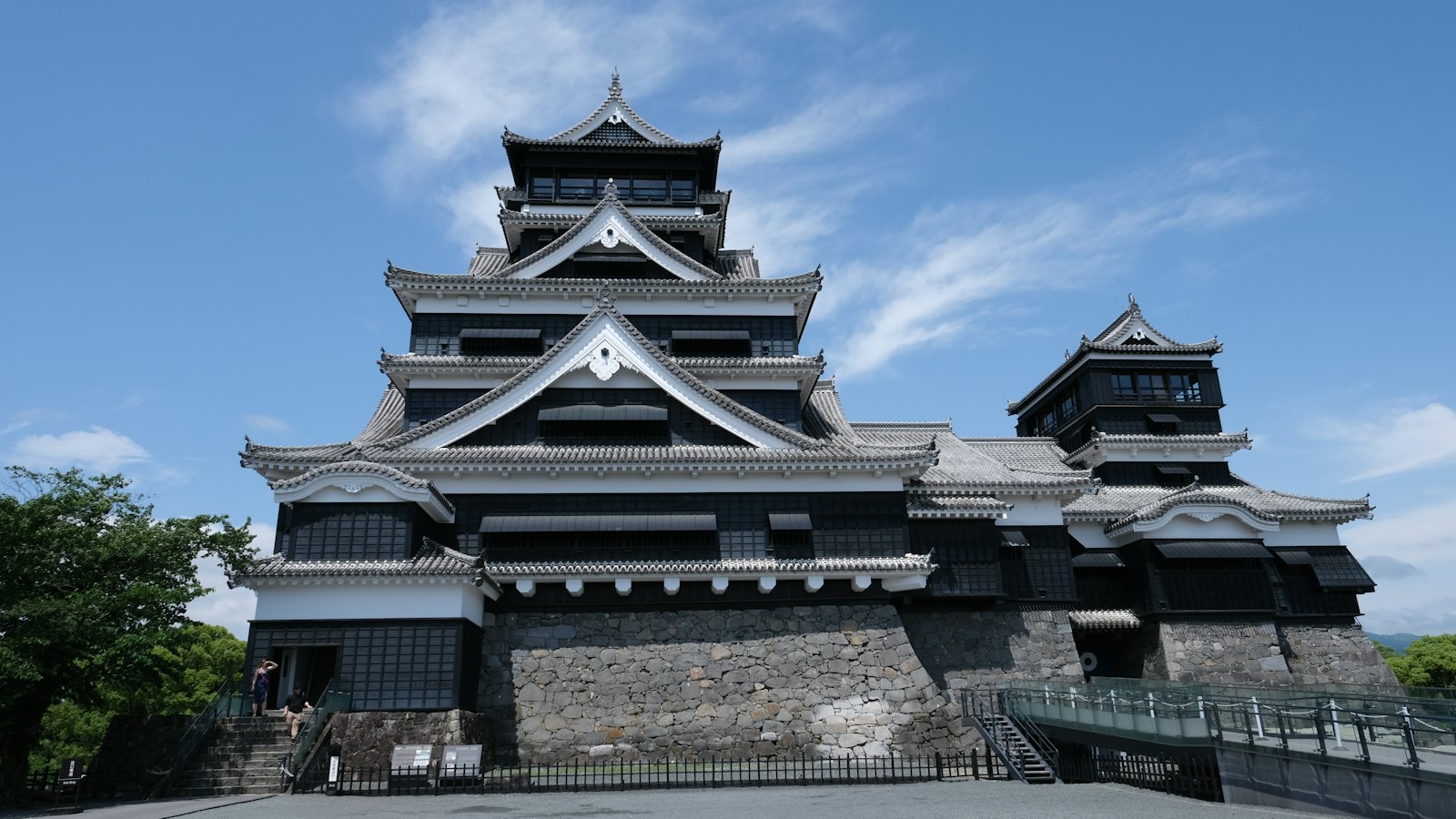
- Kumamoto Castle: See the imposing black keep, defensive stone walls and visible restoration zones left by the 2016 earthquakes. Continuing repairs can alter entry routes and the areas open to visitors.
- Suizenji Jojuen: Circle a spring-fed pond among clipped greenery and miniature landscapes in this carefully composed traditional garden. The grounds are usually quietest during the morning.
- Sakura-no-baba Josaien: Sample regional specialities, shop for locally produced gifts and visit historical displays in the complex below the castle.
- Kumamoto City Museum: Discover the area's archaeology, natural environment and growth as a castle town.
- Contemporary Art Museum Kumamoto: Add this central museum to the schedule during rain, strong summer sun or humid weather.
- Shimotori and Kamitori: Wander through long covered arcades filled with cafés, clothing stores, pharmacies and practical everyday retailers.
- Lake Ezu: Enjoy a walk or bicycle ride beside clear spring water and broad green spaces southeast of the centre.
- Honmyoji: Climb through a peaceful temple complex connected with Kato Kiyomasa, the feudal ruler associated with Kumamoto Castle.
- Mount Aso: Reserve a complete day for open grasslands, observation points and volcanic scenery. Crater access varies with visibility, transport and safety controls.
Kumamoto dishes worth knowing
Kumamoto ramen is the city's signature everyday meal. Its pork-bone broth usually comes with fried garlic chips or aromatic garlic oil and may taste milder than some Hakata versions. Asking for the sliced pork to be removed does not create a halal meal because the soup itself contains animal products.
Karashi renkon is lotus root packed with mustard-flavoured miso and then fried. Chinese influence appears in taipien, a light noodle soup. Ikinari dango places sweet potato and red-bean paste inside a steamed wrapper. The Aso region produces akaushi beef, prized for lean flesh and a measured amount of fat. Another local speciality is basashi, meaning raw horse meat, which many travellers may decide not to try.
The greatest concentration of restaurant menus is around Shimotori and Kamitori. After touring the castle, Sakura-no-baba Josaien offers a convenient first taste of local snacks. Station shops and department-store food halls are useful for fruit, rice dishes and packaged gifts. Examine ingredient details because stocks, sauces, seasonings and sweets may contain alcohol, pork derivatives or non-halal gelatine.
Halal food and prayer planning
Kumamoto can be manageable for Muslim travellers who research ahead, but verified halal outlets are much less common than in Tokyo or Osaka. Descriptions such as Muslim-friendly or no pork do not confirm halal certification. Kitchens may use mirin, serve alcoholic drinks or share utensils and cooking surfaces with prohibited ingredients.
Central arcades and the area surrounding Kumamoto Station provide the easiest places to investigate international restaurants and plant-based meals. Plain rice, seafood cooked without unsuitable seasoning, vegetable tempura and vegan dishes may be practical choices. Ask about soup stock, frying oil, sauces and shared equipment instead of relying only on what can be seen on the plate. Carry reliable snacks for Mount Aso and other countryside journeys, where appropriate meals are harder to locate.
Kumamoto Islamic Center, also known as Kumamoto Mosque, serves the area's Muslim community. Contact the centre beforehand regarding prayer access for visitors. At the airport, consult the information counter about the current availability and location of prayer facilities. Restaurant applications and recent map reviews can suggest possibilities, but direct confirmation is still necessary. A compact prayer mat and qibla app provide additional flexibility.
Getting around the city
Kumamoto's centre is served by trams, buses and taxis. Trams are especially useful between the main railway station, shopping arcades, castle quarter and Suizenji. A single urban journey costs approximately ¥180 to ¥250, or around RM 5 to RM 7. Travellers making numerous trips might benefit from a day ticket, but should verify its current cost and eligible services before buying it.
Payment arrangements have changed on some local networks. Do not assume that Suica, PASMO or ICOCA will work aboard every Kumamoto tram and bus. Keep coins and lower-value yen notes available, and read notices for information about local passes, contactless bank cards or mobile payments. Boarding procedures also differ. Certain buses issue a numbered ticket as passengers enter.
Grab is unsuitable as the main method for arranging local rides. Use a designated taxi stand, request help from hotel reception or determine whether a Japanese taxi-booking service covers your position. Short trips within central Kumamoto commonly cost ¥1,000 to ¥2,500, approximately RM 28 to RM 70. Walking works well near the castle and arcades, but transport saves time when travelling to Kumamoto Station, Suizenji or Lake Ezu.
Suggested four-day itinerary
- Day 1: Take the airport bus into Kumamoto and settle into accommodation near the castle or central arcades. Explore Shimotori and Kamitori during the remaining hours, eat an early dinner and purchase suitable snacks from a department-store food floor.
- Day 2: Visit Kumamoto Castle soon after opening to avoid the busiest groups. Move on to Sakura-no-baba Josaien and a nearby museum. Spend the afternoon browsing the shopping streets and trying ikinari dango or karashi renkon. Leave room in the schedule for route changes connected with restoration.
- Day 3: Tour Suizenji Jojuen before heading towards Lake Ezu for an easy waterside stroll. Return to the centre for contemporary art, shopping and dinner at a restaurant whose ingredients or halal status you have verified personally.
- Day 4: Dedicate the full day to Mount Aso. Before leaving, examine volcanic announcements, visibility, road reports and transport schedules. Rail and bus users must plan carefully around limited departures. A rental car offers flexibility when the designated driver meets Japanese legal requirements. If weather or crater restrictions prevent the outing, substitute Honmyoji, additional city attractions or a reachable destination elsewhere in the prefecture.
Planning a day at Mount Aso
Mount Aso defines the surrounding region, yet its huge caldera is not a single compact attraction. The railway stations, Kusasenri grasslands, scenic viewpoints and active crater sit considerable distances apart. Trains and buses connect portions of the area when their schedules align, but missing one service can remove several later stops from the day.
Review volcanic access notices, the weather forecast and the final practical return service before departure. Officials may shut the crater zone because of volcanic activity, hazardous gas concentrations or unsafe conditions. Visitors with asthma, heart conditions or respiratory sensitivities should follow every posted health warning.
Renting a car gives travellers the greatest control over stops at Kusasenri and nearby viewpoints. The driver must be ready for fog, icy winter roads, abrupt mountain weather and unfamiliar signage. An organised tour reduces logistical work, although each location normally receives a fixed amount of time. Pack water, suitable food and an insulating layer even when Kumamoto city feels warm. Clouds sometimes hide the crater and peaks, so include the grasslands and wider caldera views among the day's rewards. Malaysian motorists need the correct international driving permit before departing Malaysia.
Money, internet and daily essentials
The Japanese yen is the local currency. For simple planning, ¥100 is about RM 2.80, but travellers should obtain a fresh exchange rate when calculating their funds. Large shops, railway stations and established hotels generally take cards. Cash remains useful at smaller eateries, temples, countryside bus stops and older ticket or vending machines. DuitNow QR should not be expected as a normal Japanese payment method.
An eSIM is usually the easiest data option for an unlocked phone. Tourist SIMs and portable Wi-Fi units also work when their data limits, collection procedures and return conditions suit the itinerary. Japan uses Type A outlets with two flat pins and a 100V electrical supply. Malaysian three-pin plugs require an adapter, and each appliance should be checked for 100V compatibility.
Tipping is unnecessary because service charges do not create that expectation. Kumamoto is broadly safe, but ordinary precautions remain appropriate for passports, money and late-night surroundings. Common practical problems include storm disruption, missing the final rural bus and misjudging distances beyond downtown. Download offline maps and Japanese language files before leaving the city. Respond promptly to earthquake, typhoon and volcano instructions. In a vehicle, all passengers must wear seat belts, while the driver must comply with Japanese licence and traffic laws.
Before you go
- Best time to go
- Late March to May and the months of October and November usually offer Kumamoto's most comfortable conditions. Spring temperatures are generally mild, accompanied by blossoms whose timing varies from year to year. Domestic demand rises around Golden Week. Autumn weather suits castle walks, garden visits and Aso viewpoints. Extended rainfall is common in June, followed by hot, humid summer conditions and a risk of severe storms in July and August. Winter tends to be peaceful and manageable in the city, although Mount Aso may encounter freezing temperatures, fierce wind, snow and icy roads. Malaysian school holidays, Japanese public holidays and popular flower or foliage seasons can raise airfares and room rates, so reserving early may produce better choices.
- Visa for Malaysians
- Short Japanese holidays are visa-exempt for qualifying Malaysians who travel with an electronic passport. The rules in September 2026 permitted a temporary visitor stay of no more than 90 days for Malaysian citizens using an ICAO-compliant passport containing an electronic chip. Permitted purposes include tourism, visiting relatives and limited business activity, but exclude paid employment. A traveller whose passport does not meet that standard must secure a visa before departure. The document needs to remain valid throughout the stay. Japanese arrival procedures usually involve fingerprint collection and a facial photograph. Visit Japan Web is voluntary and can generate QR codes for immigration and customs processing. The proposed JESTA travel authorisation has not started, meaning travellers currently have no JESTA application or fee. Check again with Japan's Ministry of Foreign Affairs or the Japanese embassy in Malaysia before booking.
- Honest budget guide
- Allow roughly RM 280 to RM 550 per traveller for each day in Kumamoto, excluding flights to Japan. A basic business hotel commonly costs RM 180 to RM 300 nightly, whereas a comfortable mid-range property may charge RM 320 to RM 600. Set aside about RM 70 to RM 150 daily for food and RM 20 to RM 60 for city transport. Admissions, taxis and a Mount Aso excursion add to those amounts. In Amaboxly's reference check, the lowest one-way Kuala Lumpur itinerary cost RM 1,660 with China Airlines via Taipei. After adding return flights, accommodation and ordinary expenses, one person could spend approximately RM 2,900 to RM 4,900 on a four-day visit. Room sharing may lower the individual cost. All amounts are planning estimates rather than fixed prices.
Frequently asked questions
Do Malaysians need a visa for Kumamoto?
Malaysian citizens using qualifying chip passports could visit Japan for up to 90 days without obtaining a visa under the September 2026 rules. The temporary visitor exemption permits holidays, family visits and certain brief business activities, but no paid employment. JESTA has not begun, while Visit Japan Web remains voluntary. Verify the requirements with the Japanese foreign ministry or embassy before travelling.
Is there a direct flight from Kuala Lumpur to Kumamoto?
A nonstop route between KLIA and Kumamoto was not listed in September 2026. Available journeys connected through airports such as Taipei, Tokyo or Seoul. Amaboxly found one China Airlines option via Taipei starting at RM 1,660 for a one-way ticket. Check the full journey duration and luggage allowance carefully, since long transfers and baggage charges can affect the value.
How many days are enough for Kumamoto?
Three days provide a comfortable amount of time for Kumamoto Castle, Suizenji Jojuen, the downtown arcades and several additional city attractions. Choose four days when Mount Aso is important, as the excursion consumes most of one day and remains vulnerable to poor weather or volcanic restrictions. A fifth night allows slower sightseeing or another journey within Kumamoto Prefecture.
Is Kumamoto Muslim-friendly?
Kumamoto has a Muslim community and some restaurants that may accommodate Muslim diners, although certified halal choices remain limited. Confirm broth, sauces, alcohol, frying oil and shared kitchen equipment because no-pork wording is not sufficient. Take suitable provisions into rural areas. Kumamoto Islamic Center is the main known prayer and community facility, but visitors should arrange access in advance.
What is the best month to visit Kumamoto?
October and November are strong choices for comfortable weather and autumn colours. April and May also bring mild spring days, although blossom dates vary annually. Prices and visitor numbers can rise during Golden Week near the end of April and beginning of May. Summer is humid, rainy and exposed to typhoons. Downtown winters are quiet, while Mount Aso can become snowy, icy or cloudy.
How much money should I budget for four days in Kumamoto?
One solo traveller can reasonably plan for RM 2,900 to RM 4,900 across four days, including return flights, lodging, food, city travel and several admission charges. This range uses Amaboxly's observed one-way airfare of RM 1,660 as a reference, so different flight costs will change the total considerably. Shopping, frequent taxis, car rental and guided Mount Aso tours require additional money.
Can I use Grab in Kumamoto?
Grab should not be relied upon as the primary way to request transport in Kumamoto. Trams and local buses cover many visitor routes. When a taxi is necessary, use an official rank, ask the hotel to call one or try a Japanese booking application with local coverage. Keep cash available. A short ride in central districts typically costs around ¥1,000 to ¥2,500.
Can I visit Mount Aso without renting a car?
Mount Aso is accessible without a rental car if the trip is organised around the available trains and buses. Services enter the Aso region, but individual attractions are widely separated and some departures are infrequent. Guided tours simplify the connections, whereas driving offers more control. Check the forecast, crater restrictions and final usable service back to Kumamoto before setting out.
Jom pergi
Ready to go Kumamoto? Compare available flights and hotels for your dates. Check baggage, cancellation terms and the final total on the booking provider before paying.






