




On this page12 sections
- Overview
- Getting there from Kuala Lumpur
- Travelling from Kansai Airport to Nara
- Choosing where to stay
- Things to do: temples, deer and other highlights
- Local food worth trying
- Halal dining and places to pray
- Moving around the city
- A relaxed three-day itinerary
- Money, connectivity and practical advice
- Before you go
- FAQ
Nara invites a slower style of travel. Japan's first permanent capital places monumental temples, forest paths, historic neighbourhoods and its famous deer within a compact area. Malaysian visitors can reach it by flying from KLIA to Osaka Kansai Airport and continuing by rail or bus. This guide covers that journey, suitable places to stay, local dishes, halal dining considerations, prayer facilities and estimated spending in ringgit. Nara fits neatly into a holiday with Osaka or Kyoto, although an overnight visit is worthwhile. Once most day visitors depart, the streets become quieter and the park takes on a gentler atmosphere.
Getting there from Kuala Lumpur
Because Nara does not have its own airport, Malaysian travellers should first fly from Kuala Lumpur International Airport to Kansai International Airport, identified by the code KIX. Direct services on the KUL to KIX route are listed for AirAsia, AirAsia X, Batik Air Malaysia and Malaysia Airlines as of September 2026. A nonstop journey is normally close to six and a half hours, although weather and the assigned flight path can alter the duration.
Malaysia Airlines and Batik Air Malaysia usually depart from KLIA Terminal 1. AirAsia and AirAsia X generally operate from Terminal 2. Check the terminal printed in your reservation before leaving home, since moving between the buildings with bags can consume valuable time. Reaching the airport three hours ahead of an international flight remains sensible.
Amaboxly's current search records a one-way fare of RM650 for a Vietjet itinerary with a connection on 24 January 2027. The median one-way result is RM742. Connecting journeys also appear from Cebu Pacific, Scoot and Shandong. Compare the full travel duration, connection conditions, checked baggage allowance and meal fees rather than selecting a flight solely because its initial price is lower.
Travelling from Kansai Airport to Nara
Kansai Airport lies across Osaka Bay, about 75 kilometres from the middle of Nara. After immigration and baggage collection, the onward trip normally requires between 90 minutes and two hours. For quick estimates, treat ¥100 as approximately RM2.80 to RM3, while remembering that exchange rates move.
- Airport limousine bus: When a suitable departure is running, this is the least complicated choice for passengers carrying luggage. Buses serving the JR Nara and Kintetsu Nara vicinity take about 90 minutes. Fares are usually ¥2,400 to ¥2,800, or around RM67 to RM84. Timetables can be limited, so verify the day's schedule.
- JR route: Board an airport train towards Tennoji, then transfer to a Yamatoji Line service for Nara. The complete journey is usually 90 to 110 minutes. Expect ¥2,000 to ¥3,500, equivalent to roughly RM56 to RM105, according to the train and seat selected.
- Nankai and Kintetsu route: Ride to Namba, transfer or walk to Osaka-Namba, and continue to Kintetsu Nara. Allow 90 to 120 minutes and about ¥1,800 to ¥2,500, or RM50 to RM75.
- Taxi or private vehicle: A group may value the convenience, but the usual charge is ¥20,000 to ¥30,000, approximately RM560 to RM900, before possible tolls or night surcharges.
Choosing where to stay
The neighbourhood around Kintetsu Nara is the easiest base for a first visit. Nara Park, restaurant streets and covered shopping arcades are nearby, while Todai-ji and Kasuga Taisha can be reached by walking or taking a brief bus ride. Stay here when quick access to the principal attractions matters more than room size.
JR Nara is convenient for anyone arriving on JR services or making use of a rail pass. Supermarkets, inexpensive restaurants and several bus routes surround the station. Walking to Kintetsu Nara takes approximately 15 to 20 minutes, and the park is farther away, but rooms can provide stronger value.
Naramachi appeals to couples and repeat visitors seeking traditional merchant lanes, intimate guesthouses and restful evenings. The district remains reasonably close to central transport, though narrow surfaces and uneven paving may be inconvenient with wheeled suitcases.
Accommodation beside Nara Park offers a quieter, more indulgent experience near the wooded temple approaches. Prices are often higher there, and nearby dinner options diminish once excursion groups have gone. Families and travellers with limited mobility should measure the route to the closest bus stop before confirming a room.
Things to do: temples, deer and other highlights
- Spend time in Nara Park: Purchase authorised crackers from official sellers, protect loose papers and bags, and display empty palms once every cracker has been given away.
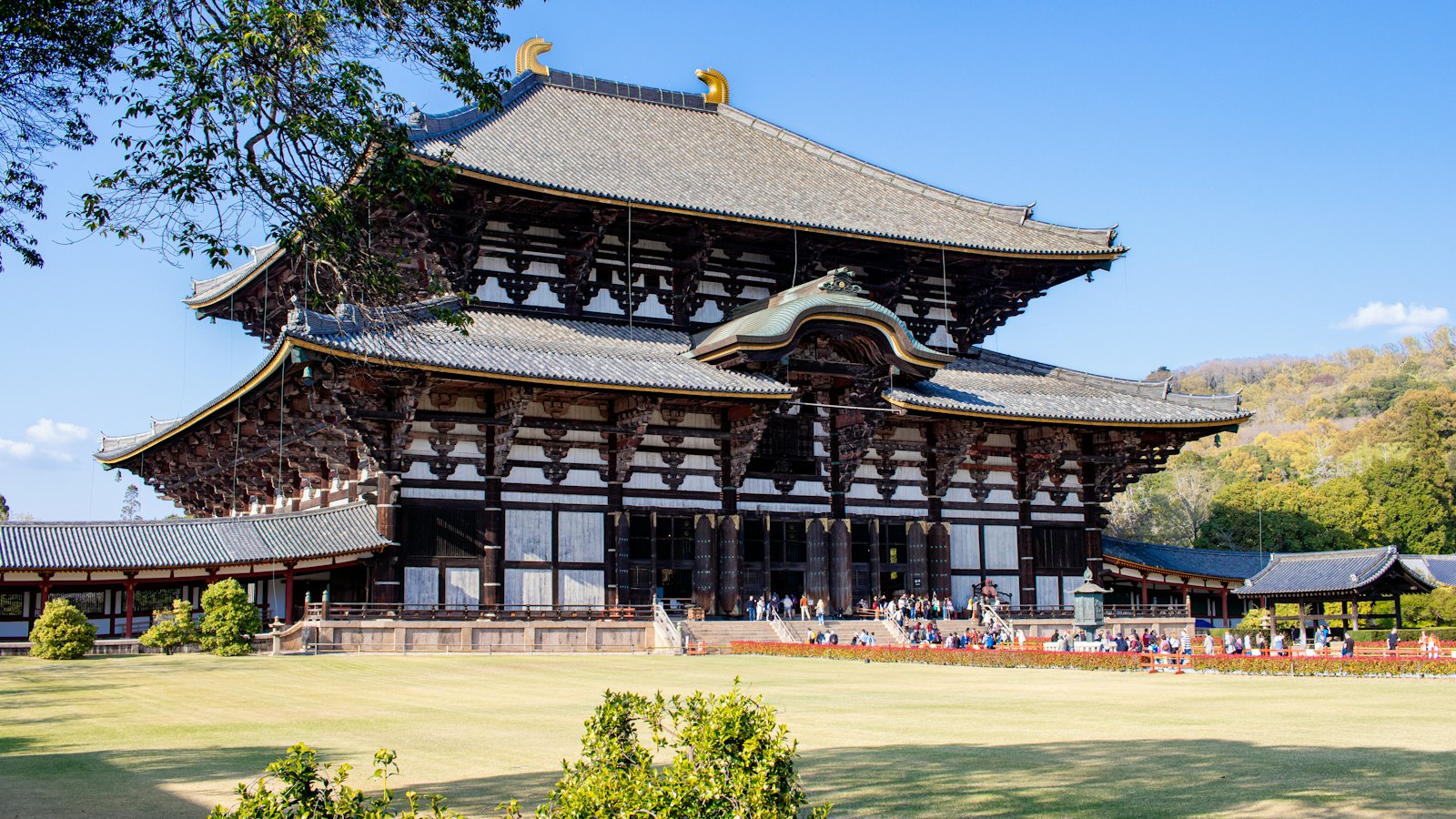
- Enter Todai-ji: The enormous timber structure houses the Great Buddha and ranks among the city's essential landmarks. An early arrival usually brings a quieter visit.
- Follow the path to Kasuga Taisha: Woodland and rows of stone lanterns frame the approach, while bronze lanterns decorate the shrine precinct itself.
- Begin at Kofuku-ji: Located close to Kintetsu Nara, this historic complex makes a practical opening stop for a central walking circuit.
- Walk up Mount Wakakusa: Its grassy slope provides expansive views across Nara. Entry is sometimes seasonal, so ask locally before planning the climb.
- Explore Naramachi: Preserved townhouses, wooden lattice fronts, workshops and compact museums reveal the former merchant quarter.
- Pause at Isuien Garden: Carefully arranged scenery incorporates distant hills and temple roofs into the view. Neighbouring Yoshikien is also worth considering.
- Continue to Yakushi-ji and Toshodai-ji: These major temples southwest of central Nara attract fewer casual visitors. Reach them using a train, bus or rented bicycle.
Local food worth trying
Nara cooking reflects temple culture, preservation methods and produce grown elsewhere in the prefecture. Its best-known portable speciality is kakinoha-zushi, pressed mackerel or salmon sushi enclosed in a persimmon leaf. The wrapping should be removed before eating. Muslim diners may also want to ask whether the seasoning contains mirin or another alcoholic ingredient.
Nyumen consists of fine somen noodles in warm broth and is especially welcome in colder weather. Miwa, within Nara Prefecture, is renowned for somen, which also appears chilled during summer. Chagayu is a gentle rice porridge prepared with tea. Narazuke vegetables are matured in sake lees and may retain alcohol, making them unsuitable for visitors who avoid it entirely.
Popular sweets include green yomogi mochi filled with sweet red bean paste, along with treats featuring persimmons or locally grown strawberries. The greatest variety of food is found around Kintetsu Nara, Higashimuki and the streets leading into Naramachi. Ask about every ingredient instead of treating vegetable dishes as automatically meat-free. Broths in Japan frequently use fish, even when no seafood is visible.
Halal dining and places to pray
Muslim travellers can visit Nara comfortably with some preparation, although its halal restaurant range is considerably narrower than Osaka's. Labels such as no pork and no lard do not establish that a meal is halal. Soup bases, sauces, mirin, sake, certified meat and equipment shared with other dishes may all require questions.
Restaurants around JR Nara and Kintetsu Nara are the most likely to offer halal-friendly choices or have employees familiar with dietary requests. Listings can change quickly. Review recent information on Halal Gourmet Japan, HappyCow and Google Maps, then contact the business before travelling specifically for it. Grilled seafood, plain fish, tofu, rice and Buddhist vegetarian cuisine are possible alternatives, but bonito broth and alcoholic seasoning still need to be checked.
Packaged fruit, yoghurt and simple rice foods from convenience stores can help between meals. Most ingredient panels are written primarily in Japanese, so a translation app is useful.
The tourist information centre beside JR Nara Station has supported Muslim guests and may make a prayer area available. Ask upon arrival because access can change. Kansai Airport has dedicated prayer rooms. A small prayer mat and a qibla application provide additional flexibility.
Moving around the city
Walking is the most effective way to experience central Nara. The route linking Kintetsu Nara Station, Kofuku-ji, Nara Park and Todai-ji is easy to follow. Nevertheless, a full sightseeing day still involves a considerable amount of walking. Choose comfortable footwear with reliable traction, particularly when paths are wet.
City buses link JR Nara, Kintetsu Nara, the park and temples beyond the central walking zone. A short urban trip generally costs ¥220 to ¥300, approximately RM6 to RM9. A visitor day pass may save money when the itinerary includes several rides. Stored-value cards used across Japan, such as ICOCA and Suica, are accepted on most buses and trains. Physical ICOCA cards can be purchased or reloaded at larger JR stations, while compatible phones may support a mobile version.
Kintetsu and JR operate distinct railway systems. Kintetsu Nara is nearer the park's leading attractions, whereas JR can be more helpful for certain regional connections.
Taxi ranks are available at both main stations. A brief ride within central Nara often falls between ¥1,000 and ¥2,000, or about RM28 to RM60. Grab coverage is unreliable here, so station ranks or an application designed for Japanese taxis are safer choices.
A relaxed three-day itinerary
- Day 1: After arriving from Kansai Airport, store your luggage near JR Nara or Kintetsu Nara. Pass through the shopping arcades to Kofuku-ji, then enter Nara Park and learn how the deer behave. As afternoon visitor numbers fall, continue into Naramachi for historic lanes, crafts and an early evening meal.
- Day 2: Reach Todai-ji shortly after opening time before following the park's wooded paths towards Kasuga Taisha. Add Isuien or Yoshikien, then walk on Mount Wakakusa if the entrance is open and conditions are suitable. Head back before nightfall because park trails become dark and many food businesses finish early.
- Day 3: Use public transport to visit Yakushi-ji and Toshodai-ji southwest of the centre. Together they offer another perspective on the city's Buddhist history. Return for a bowl of nyumen, fresh mochi or final purchases before leaving for Osaka or Kyoto.
The principal central sights can fit into two days, but a third produces a much easier rhythm. Families may prefer fewer temples in a single afternoon. Photographers could instead devote the extra time to another early morning among the park paths.
Money, connectivity and practical advice
The local currency is the Japanese yen. For rough planning, ¥100 equals about RM2.80 to RM3, but consult a current banking or exchange application before travelling. Railway stations, bigger stores and chain restaurants usually accept cards. Cash is still helpful at temple ticket counters, independent eateries and on some buses outside the centre. International withdrawals are available from many convenience-store and post-office ATMs. Malaysia's DuitNow QR system is not a generally accepted payment option in Japan.
An eSIM offers straightforward mobile data if the handset is unlocked. Visitors can also buy physical travel SIMs or rent pocket Wi-Fi at Kansai Airport. Save offline maps and a Japanese translation pack before departure, especially when the schedule includes distant temples.
Electrical outlets provide 100 volts and normally accept Type A plugs with two flat blades. Equipment fitted with Malaysia's three rectangular pins requires a plug adaptor. Check each charger's voltage range as well.
Service tips are neither required nor customary. Nara is considered generally safe, though normal care with belongings is appropriate on busy trains and shopping streets. Deer sometimes pull at clothes, paper or bags when food is visible. Offer only the crackers approved for them and never provoke them. Insurance should include overseas treatment, transport disruption and missed travel connections.
Before you go
- Best time to go
- April, May, October and November are the most appealing months for Nara. Spring offers comfortable temperatures for walking and seasonal blossoms, but the period from late March into early April often brings crowded attractions and more expensive rooms. May is pleasant when it does not coincide with Japan's Golden Week. June through August tends to be humid and hot, with rain and occasional disruptive weather affecting outdoor schedules. Autumn suits long temple walks, and foliage is often especially attractive during November. Winter brings colder conditions and fewer visitors; light snow can transform views across the park. Accommodation and transport should be reserved well ahead when Malaysian school breaks, Golden Week or peak autumn colour coincide with the intended dates.
- Visa for Malaysians
- Most qualifying Malaysian tourists can currently visit Japan without obtaining a visa. As of September 2026, a Malaysian citizen holding an ICAO-compliant biometric ePassport may enter for a temporary visit of up to 90 days. This arrangement permits holidays, family visits and brief business activity, but it does not authorise paid employment. Anyone without the required ePassport should arrange a visa before travelling. The passport must be valid throughout the visit. Fingerprints and a facial photograph are normally collected during arrival procedures. Visit Japan Web is optional and can generate immigration and customs QR codes. JESTA has not entered operation, so there is presently no related approval or fee. Verify the position with Japan's Ministry of Foreign Affairs or the Japanese embassy in Malaysia before purchasing tickets.
- Honest budget guide
- Plan on spending about RM280 to RM550 per person for each day in Nara, before international airfare. Amaboxly's search currently shows a RM650 one-way KUL to KIX option on Vietjet with one connection, while the median result is RM742. Nonstop tickets can carry different prices. Basic accommodation often ranges from RM160 to RM300 per room each night, and a comfortable middle-tier property is commonly RM300 to RM550. Set aside RM70 to RM150 per day for meals, RM20 to RM60 for transport within the city, and additional cash for temple or garden entry. A three-night visit will typically total RM2,200 to RM3,800 for each traveller when return flights, shared lodging and standard activities are included. Blossom season, autumn leaves and Japanese public holidays can push the estimate higher.
Frequently asked questions
Do Malaysians need a visa for Nara, Japan?
As of September 2026, Malaysian nationals with an ICAO-compliant biometric ePassport may make a temporary visit to Japan for as long as 90 days without a visa. Paid employment is excluded. Visit Japan Web remains optional, and JESTA is not operating. Ensure the passport remains valid throughout the trip and reconfirm the requirements with Japanese authorities before departure.
Is there a direct flight from Kuala Lumpur to Nara?
No airport serves Nara directly. Travellers should fly from KLIA to Osaka's Kansai Airport and complete the route overland. In September 2026, nonstop KUL to KIX services are listed from Malaysia Airlines, Batik Air Malaysia, AirAsia and AirAsia X. Reaching Nara after landing generally adds another 90 minutes to two hours.
How do I travel from Kansai Airport to Nara?
Use the direct airport bus when its timetable matches your arrival, or travel by train through Tennoji or Namba. The bus normally needs about 90 minutes and costs ¥2,400 to ¥2,800. Rail journeys take roughly 90 to 120 minutes, with fares between ¥1,800 and ¥3,500 according to the route, train category and seating option.
How many days should I spend in Nara?
Allow two complete days for Nara Park, Todai-ji, Kasuga Taisha, Kofuku-ji and Naramachi without maintaining a frantic pace. With three days, gardens, Mount Wakakusa and the western temple district fit more comfortably. Nara works as an excursion from Kyoto or Osaka, but an overnight stay reveals its quieter streets after most organised groups depart.
Is Nara Muslim-friendly?
Muslim visitors are welcome, although certified halal restaurants are less numerous than in Osaka. Look around the two principal stations and ask about meat certification, pork, lard, sake, mirin, broth and shared preparation equipment. Seafood and vegetarian meals still require ingredient checks. Prayer assistance may be offered near JR Nara, and dedicated prayer rooms are available at Kansai Airport.
What is the best month to visit Nara?
November is excellent for colourful leaves, while April attracts visitors for the blossoms. Both can produce higher prices and busy sights. October and May outside Golden Week often combine mild conditions with less intense demand. Winter is colder but peaceful. July and August are typically humid, hot and uncomfortable for itineraries involving hours of walking.
How much money do I need for three days in Nara?
For three nights, estimate RM2,200 to RM3,800 per traveller. That range includes return airfare from Kuala Lumpur, a shared room, ordinary meals, local journeys and standard admission charges. A very economical visitor might spend less, whereas private vehicles or premium hotels raise the figure. Keep some Japanese cash for smaller restaurants, temples and services that cannot process an overseas card.
Can I use Grab in Nara?
Grab should not be treated as the default transport service it is in Malaysia. Although the application can connect with taxis in selected Japanese areas, Nara availability is inconsistent. Reliable taxis wait outside JR Nara and Kintetsu Nara stations and near major attractions. Walking, public buses and the JR or Kintetsu networks are normally cheaper and more practical.
Jom pergi
Ready to go Nara? Compare available flights and hotels for your dates. Check baggage, cancellation terms and the final total on the booking provider before paying.






