




On this page12 sections
Gyeongju was the capital of Korea's ancient Silla kingdom, and its royal burial mounds, Buddhist monuments and mountain ruins make the city feel like an open-air museum. Malaysian visitors can cover the principal attractions in three days while enjoying a calmer atmosphere than Seoul or Busan. Because Gyeongju has no international airport, the usual journey begins at Busan's Gimhae Airport or continues by KTX from Seoul. This guide covers routes from KLIA, entry requirements, accommodation areas, Muslim-friendly planning, transport, food, costs and an efficient itinerary.
Getting There from Kuala Lumpur
Gyeongju does not have its own international airport. Busan's Gimhae International Airport, identified by the code PUS, is normally the most practical gateway from Kuala Lumpur. From there, travellers can continue by intercity bus or combine city transport with a train. Visitors pairing Gyeongju with Seoul can instead ride the KTX from Seoul Station to Gyeongju Station in approximately two hours.
On 29 September 2026, direct flights between KLIA and Busan are not operating. Malaysia Airlines plans to restore the route on 2 December 2026. Before that date, itineraries generally include one connection and require approximately eight to fourteen hours. Verify the departure terminal shown on your ticket before flying.
Amaboxly's airfare check found a RM 622 one-way option for 24 November 2026 with Vietjet, connecting through either Ho Chi Minh City or Hanoi. The middle fare in the results was RM 698 each way. Routes through Manila, Taipei, Seoul and Hong Kong also appeared. None of these prices includes transport onward from Busan.
Continuing from Busan Airport
Central Gyeongju lies about 80 kilometres from Gimhae Airport. The estimates below use a planning conversion of approximately 330 won for RM 1. Weekend congestion and Korean holiday traffic may extend the quoted travel times.
- Direct airport bus: An intercity service links the airport with Gyeongju's bus terminal. The trip commonly requires 70 to 100 minutes, with tickets around 9,000 to 13,000 won, or RM 27 to RM 40. Departures become limited late in the evening, so inspect the transport board when you land.
- Sasang connection: Ride the Busan-Gimhae Light Rail to Sasang, walk to Busan Seobu Bus Terminal and board a Gyeongju bus. Allow two to three hours and approximately 12,000 to 18,000 won, equal to RM 36 to RM 55.
- Train route: Reach a Busan railway station from the airport, then transfer to a KTX or another suitable train. Multiple changes often make this less convenient than the airport bus.
- Taxi or private car: Budget 90,000 to 140,000 won, or RM 270 to RM 425, for a drive lasting roughly 70 to 100 minutes.
Gyeongju Station, previously named Singyeongju Station, stands outside the historic centre. Finish the journey by local bus or taxi.
Choosing an Area to Stay
The historic centre, Bomun Lake and the mountain attractions occupy different parts of Gyeongju. Selecting accommodation around your priorities can substantially reduce time spent waiting for buses.
- Downtown near the bus terminals: This is the most flexible base for newcomers and travellers watching their spending. Restaurants and markets are nearby, while Daereungwon and sections of Hwangnidan-gil are reachable on foot. Buses serving Bomun and Bulguksa pass through central streets.
- Hwangnidan-gil and Daereungwon: Stay here for hanok surroundings, cafes and evening strolls. Weekend prices may be higher, and traditional rooms sometimes have floor bedding or limited sound insulation.
- Bomun Lake: Resorts, lake scenery and quiet nights make this district appealing to families and drivers. Reaching the old centre on foot is impractical, and late dining may depend on hotel restaurants.
- Bulguksa district: This peaceful base works well for temple visits, hiking and an early start at Bulguksa. It is distant from central nightlife, so examine meal choices and evening bus times before reserving.
If floor sleeping would be uncomfortable, confirm that the room includes a standard raised bed.
Essential Silla Sights
Gyeongju rewards visitors who mix archaeological sites with museums and mountain scenery. Several central landmarks can be combined on foot, while Bulguksa, Seokguram and Namsan require separate transport.
- Daereungwon Tomb Complex: Wander between immense green royal mounds and step inside Cheonmachong to see a reconstructed Silla burial interior.
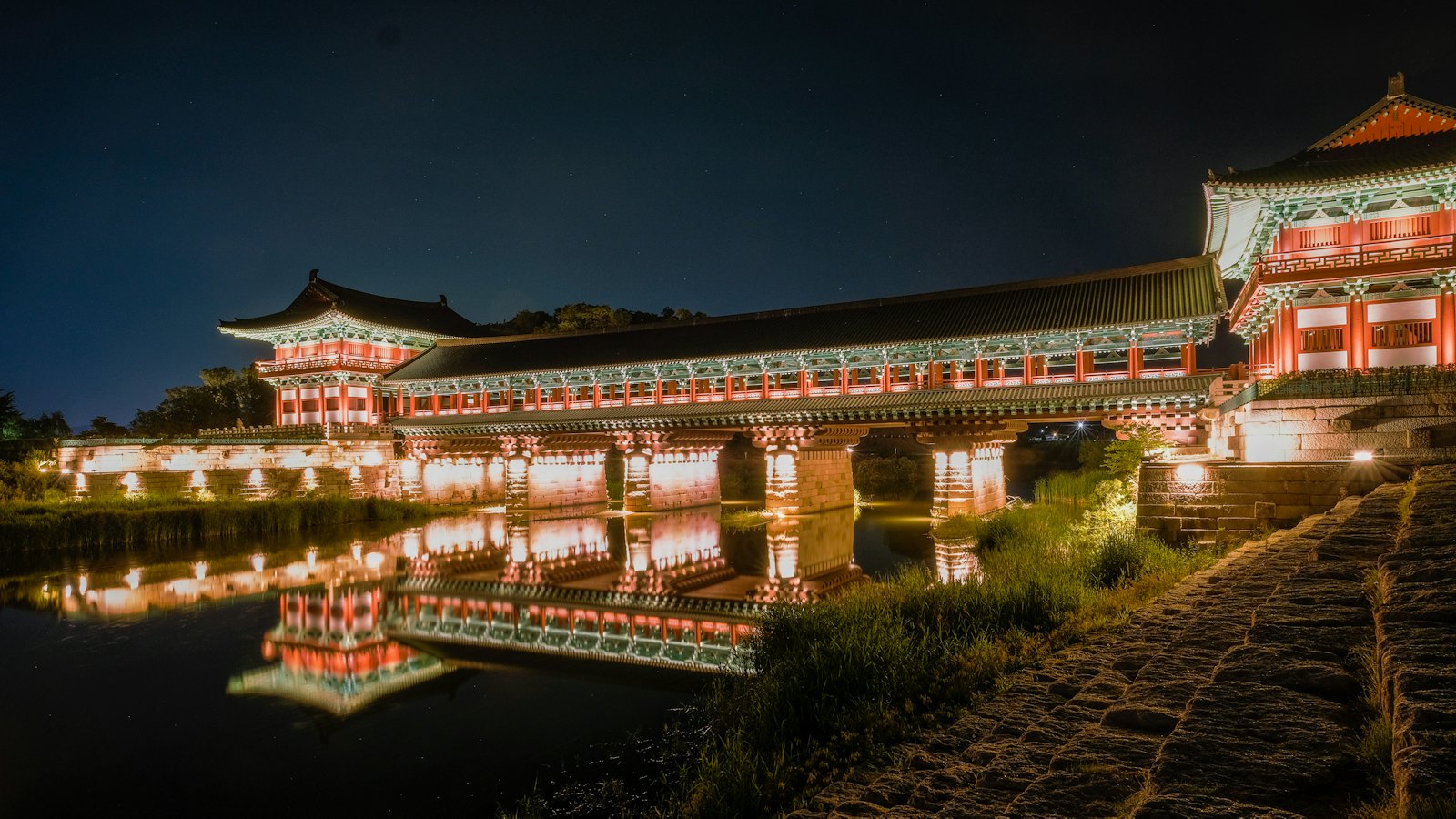
- Donggung Palace and Wolji Pond: Arrive around dusk for illuminated pavilions reflected across the water.
- Bulguksa Temple: Explore tiered courtyards, historic stone pagodas and a wooded mountain setting at this important Korean Buddhist complex.
- Seokguram Grotto: Travel farther uphill to the renowned stone Buddha sanctuary. Wear secure shoes because the approach can become slick after rainfall.
- Cheomseongdae: View the small stone observatory linked with Silla astronomy, then walk through the neighbouring lawns and seasonal flower areas.
- Gyeongju National Museum: Its crowns, jewellery, Buddhist art and household objects provide valuable context for ruins seen elsewhere.
- Woljeonggyo Bridge: Photograph or cross this reconstructed roofed bridge when its evening lights shine over the river.
- Hwangnidan-gil: Explore shops and cafes inside converted hanok buildings, but expect crowded lanes on weekends.
- Namsan: Choose a daylight hiking route past rock carvings, pagodas and former temple sites according to your ability.
Local Food to Try
Ssambap is one of Gyeongju's characteristic meals. Rice, vegetables, numerous side dishes and meat or fish are wrapped in leafy greens. Muslim customers should ask whether the kitchen uses pork, rice wine, meat broth or shared cooking surfaces. Even vegetable banchan may contain fish sauce or fermented seafood.
The city's best-known sweet is Hwangnam-ppang, a red-bean pastry named for the Hwangnam neighbourhood. It travels well as a souvenir, but check whether the shortening, emulsifiers or flavourings meet your dietary needs. Chalbori-ppang offers another local treat, combining soft barley pancakes with sweet bean filling. Beopju is a traditional Gyeongju rice liquor and is unsuitable for Muslim travellers.
Simpler options can include grilled fish, meat-free bibimbap, tofu preparations, vegetable kimbap and baked goods with understandable ingredient lists. Affordable Korean restaurants cluster near markets and the bus terminals. Hwangnidan-gil has a wider selection of stylish cafes and desserts. Keep a translation app ready to ask specifically about pork-based stock, alcohol and equipment shared with non-halal food.
Halal Dining and Prayer
Muslim visitors can travel comfortably in Gyeongju with advance preparation, although the city has far fewer certified halal restaurants than Seoul or parts of Busan. Descriptions such as vegetarian, seafood-only and no pork do not establish that a kitchen excludes alcohol, animal broth or shared utensils. Ask precise questions and choose according to your required level of assurance.
Consult recent listings from the Korea Muslim Federation and check services such as Halal Navi, Zabihah and Google Maps. Restaurant ownership, menus and operating hours can change, so contact a venue before making a long trip. Bring packaged meals or snacks when visiting Bulguksa, Seokguram and Namsan, where appropriate food is harder to locate. Convenience stores sell fruit, rice, boiled eggs, salads and packaged snacks, but translated ingredient checks are still advisable.
There is no prominent central mosque in Gyeongju. A hotel or visitor information desk may help identify a private, quiet room for prayers. Carrying a small prayer mat and qibla app is useful. Gimhae Airport provides space for prayer or quiet reflection in its international terminal; ask the airport desk for the current location. Busan has a larger Muslim community and established mosque facilities.
Transport Within Gyeongju
Walking works well in the central heritage district. Daereungwon, Cheomseongdae, Hwangnidan-gil, Woljeonggyo Bridge and the national museum can be linked without a vehicle if the weather is comfortable. Reaching the temple and mountain districts calls for a bus, taxi or rental car.
A T-money card purchased in Busan or elsewhere in South Korea is accepted on Gyeongju buses. Touch the reader when entering and again when exiting. A normal local ride is approximately 1,500 to 2,000 won, which is about RM 4.50 to RM 6. Buses serving Bulguksa, Bomun Lake and Gyeongju Station may fill at busy times, and evening intervals are wider. Naver Map and KakaoMap usually provide better Korean public transport guidance than Google Maps.
South Korea does not offer the familiar Malaysian Grab service. Kakao T is the principal taxi-booking app, but overseas phone numbers and payment cards may cause registration or payment difficulties. Metered taxis wait near major sights and transport terminals. A short city journey often runs from 8,000 to 15,000 won, or RM 24 to RM 45. Trips to remote temples cost more. Bicycles suit the flat archaeological area, provided riders keep to designated routes and avoid packed pedestrian lanes.
Three-Day Gyeongju Itinerary
- Day 1: Continue from Busan to your Gyeongju accommodation, preferably near downtown. Walk through Daereungwon and past Cheomseongdae, then head towards Woljeonggyo Bridge. Visit Donggung Palace and Wolji Pond once the lights come on. This sequence introduces the Silla landscape without requiring repeated transport changes.
- Day 2: Leave early for Bulguksa Temple and proceed uphill to Seokguram Grotto. If connections are convenient, pause around Bomun Lake on the return journey. Otherwise, travel back to the centre and explore Gyeongju National Museum. Spend the evening eating and browsing around Hwangnidan-gil.
- Day 3: Hike on Namsan for half a day to encounter Buddhist carvings, pagodas and temple remnants. For a less strenuous alternative, revisit the central tomb district and explore quieter residential lanes. Retrieve your bags before leaving by intercity bus for Gimhae Airport or by train from Gyeongju Station.
A fourth day provides room for an extended Namsan walk, unhurried temple visits or the coastal heritage sites of eastern Gyeongju. Do not schedule an international departure immediately after a narrow bus connection. Road delays can make an otherwise workable transfer risky.
Money, Connectivity and Useful Details
South Korea's currency is the won. For simple estimates, treat 1,000 won as roughly RM 3, or RM 1 as approximately 330 won. Actual card rates fluctuate. Hotels, museums, convenience stores and most cafes accept cards, but cash remains helpful at markets, small restaurants and machines that decline overseas cards. DuitNow QR is not broadly usable in South Korea.
Many Malaysian travellers will find an eSIM purchased before departure the easiest way to obtain mobile data. Tourist SIM cards and portable Wi-Fi units are also sold at major airports. A stable connection helps with live bus information, Korean translation and route finding. Electrical outlets supply 220V and accept two round pins, so bring an adapter for Malaysian three-pin plugs.
Tipping is generally unnecessary. Gyeongju is usually straightforward for independent visitors, with ordinary precautions sufficient for valuables, roads and cycling. Frequent avoidable problems include paying inflated charges to unofficial K-ETA websites, entering a taxi without checking that the meter is active and misjudging the time needed to reach the airport. Protect passport information, book through legitimate channels and leave ample time between separate tickets.
Before you go
- Best time to go
- The most pleasant periods are April through May and October through early November. Spring usually brings gentle temperatures and blossoms, while autumn offers crisp hiking weather and colourful leaves around temples and hills. Cherry trees do not bloom on identical dates every year. Hotel rates often climb during peak blossom weeks, Korean public holidays and large local events. June, July and August are humid, hot and rainy, although evenings beside the historic landmarks can remain enjoyable. From December through February, conditions are cold and comparatively dry, and occasional snowfall may leave walking paths slippery. Flights from Kuala Lumpur can become more expensive during Malaysian school breaks, particularly in late November, December and the spring holiday period, so early reservations are sensible.
- Visa for Malaysians
- As of September 2026, Malaysian passport holders can generally visit South Korea for up to 90 days without obtaining a tourist visa. Anyone aged 18 to 64 needs K-ETA authorisation before boarding. Apply at k-eta.go.kr, where the official fee is 10,000 won. Processing usually takes no more than three days, and acceptance lasts three years unless a new passport is issued. The Korean Embassy in Malaysia advises applying one month ahead. Travellers who are 17 or younger, or at least 65, are exempt from K-ETA but must lodge an arrival card. Its free electronic form becomes available three days before entry. K-ETA holders skip the arrival card. Visa-free tourism gives no right to work, and border officers may ask for proof of onward travel. Korean rules require a passport valid throughout the stay; the embassy advises having over six months left. Check the official portal again before flying.
- Honest budget guide
- Plan on spending approximately RM 250 to RM 500 per traveller for each day in Gyeongju, before international airfare. A basic room often ranges from RM 100 to RM 180 nightly, while comfortable mid-range lodging is commonly RM 200 to RM 350. Daily food may require RM 60 to RM 120. Reserve another RM 20 to RM 50 for buses and short local journeys, plus RM 30 to RM 80 for admission charges and miscellaneous expenses. In Amaboxly's current Kuala Lumpur to Busan search, the lowest one-way result was RM 622 on Vietjet through Ho Chi Minh City or Hanoi, and the median result was RM 698. Public travel between Busan and Gyeongju adds about RM 30 to RM 55 in each direction. For four days, a realistic overall estimate is RM 2,200 to RM 3,800 per person. That range includes indicative return airfare, shared lodging, meals, local travel and sightseeing, but exchange rates and baggage fees can alter the final amount.
Frequently asked questions
Do Malaysians need a visa for Gyeongju?
As of September 2026, Malaysian passport holders can enter South Korea without a visa and remain for up to 90 days. People aged 18 to 64 must obtain K-ETA authorisation before travelling. Those aged 17 or below and those who are at least 65 do not need K-ETA, but they must complete an arrival card. Recheck the rules at k-eta.go.kr.
Is there a direct flight from Kuala Lumpur to Gyeongju?
No international flights land in Gyeongju because the city lacks an international airport. The usual choices are Gimhae Airport in Busan or Seoul followed by ground transport. On 29 September 2026, Kuala Lumpur has no operating nonstop flight to Busan. Malaysia Airlines intends to restart that service on 2 December 2026.
How do I travel from Busan Airport to Gyeongju?
An intercity airport bus is normally the easiest choice. It reaches Gyeongju in around 70 to 100 minutes, and a ticket is approximately 9,000 to 13,000 won. Travellers can also use the light rail to Sasang and change to a bus, connect through a Busan railway station, or arrange a taxi or private vehicle.
How many days are enough for Gyeongju?
Three days suit a first visit. Use one for the central tombs and illuminated evening landmarks, another for Bulguksa and Seokguram, and the third for Namsan or the national museum. Stay a fourth day if you want a longer hike, more relaxed temple visits or time along Gyeongju's eastern coast.
Is Gyeongju Muslim-friendly?
Muslims can visit Gyeongju successfully, but certified halal restaurants and purpose-built prayer facilities are scarce. Check current restaurant information, question staff about ingredients and shared equipment, and pack food for remote attractions. A portable prayer mat is helpful because there is no major mosque in the city centre. Busan has a larger range of Muslim facilities.
What is the best month to visit Gyeongju?
October is an excellent option for cool walking temperatures and developing autumn colour near mountains and temples. April attracts visitors for blossoms, although crowds and room prices can rise sharply. May and the opening part of November also offer mild conditions and may be calmer than the principal seasonal peaks.
How much money should I budget for four days in Gyeongju?
Allow approximately RM 2,200 to RM 3,800 per person for four days. This estimate combines indicative return travel through Busan, a shared room, meals, attractions and transport within the region. Weekend hanok accommodation, checked luggage, frequent taxis and private airport transfers can push the cost higher. Currency movements will also affect the total.
Can I use Grab in Gyeongju?
Grab's standard Malaysian ride-hailing service is unavailable in South Korea. Kakao T is the main local booking platform, though an overseas phone number or payment card may not always work smoothly. Metered taxis can also be taken from Gyeongju Station, either bus terminal and the principal visitor areas.
Jom pergi
Ready to go Gyeongju? Compare available flights and hotels for your dates. Check baggage, cancellation terms and the final total on the booking provider before paying.






