




On this page13 sections
- Overview
- Getting there from KL: direct flights and terminals
- Gaoqi Airport to the city, and the move to Xiang'an
- Where to stay in Xiamen
- Things to do in Xiamen
- What to eat: Hokkien flavours you half know
- Halal food and prayer spaces
- Getting around Xiamen
- Sample itinerary: four days in Xiamen
- Money, SIM and practical tips
- Day trip to Quanzhou: old mosques and Hokkien roots
- Before you go
- FAQ
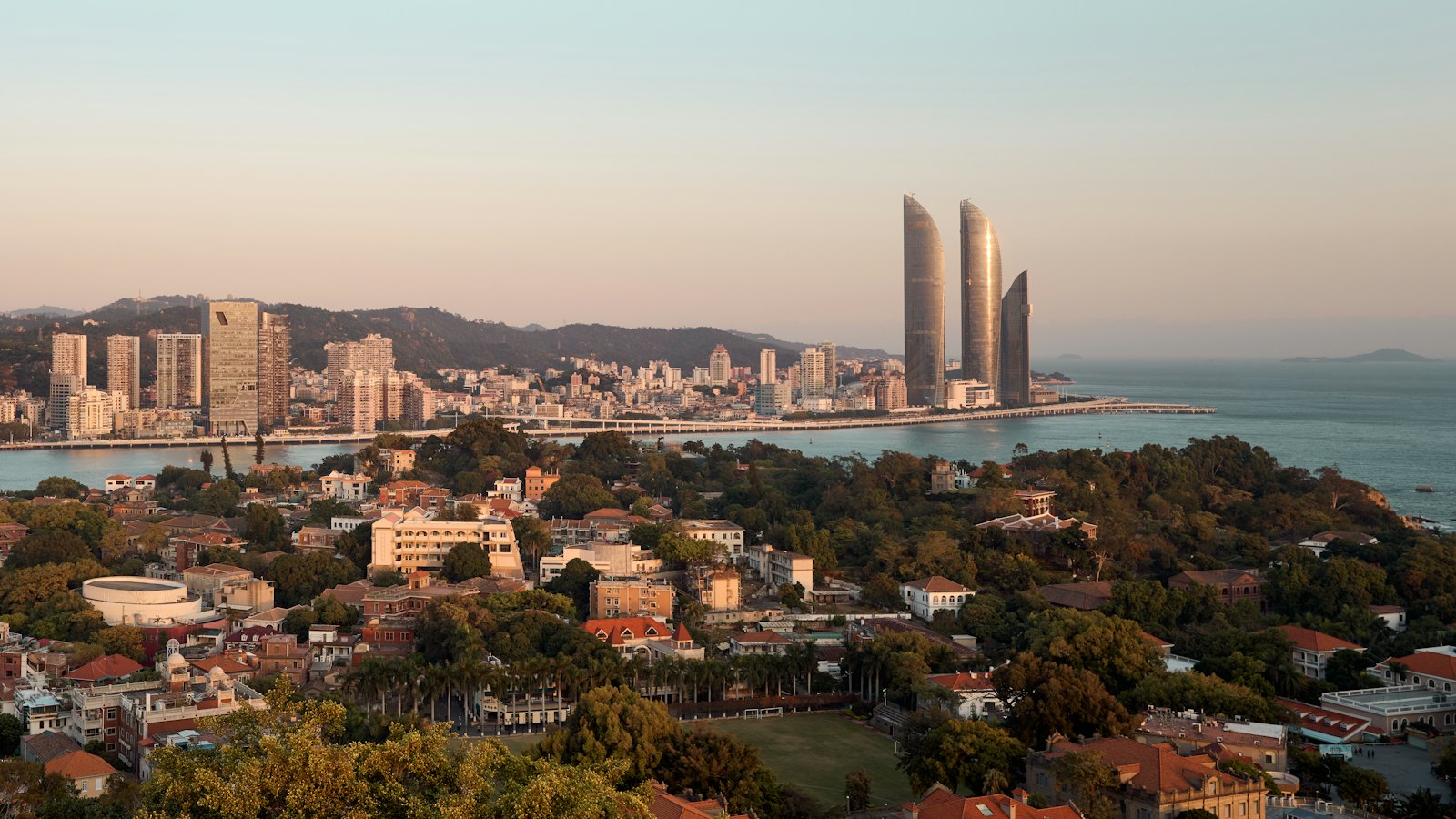
Xiamen, the treaty port once called Amoy, lies in southern Fujian, the Hokkien heartland so many Malaysian Chinese families come from. The connection shows fast: Hokkien in the markets, popiah and oyster omelette on menus, and a noodle soup named after satay. The city spreads over an island with a seaside cycle road, a car-free heritage islet called Gulangyu, and Xiamen University, founded by Singapore-based rubber magnate Tan Kah Kee and now running a branch campus in Sepang. Below: KLIA flights, the 30-day visa waiver, the airport switch due in late 2026, halal food and costs in ringgit.
Getting there from KL: direct flights and terminals
At the time of writing (late September 2026), two airlines connect KLIA and Xiamen non-stop, and both use KLIA Terminal 1. AirAsia, based at Terminal 2 (klia2), has no Xiamen route. Xiamen Airlines, the city's home carrier, operates at least one flight daily, and Batik Air Malaysia adds non-stop flights on some days of the week. Malaysia Airlines flew its last Xiamen service in mid-June 2026 and plans to return with four flights a week from 1 November 2026 at the earliest, so check before you count on it. Expect roughly four and a half hours in the air, and keep your watch as it is: Xiamen shares Malaysian time.
Amaboxly's KL fare scan, updated on 21 September 2026, turned up a lowest one-way price of about RM 559 on a Batik Air non-stop, and a median near RM 760. One-stop fares started near RM 570 via Jinan (a big detour north), RM 620 via Haikou and RM 640 via Guangzhou. Prices shift daily.
Xiamen Airlines also flies from Penang. For travel from late December 2026, check the arrival airport on your ticket (see the next section).
Gaoqi Airport to the city, and the move to Xiang'an
Gaoqi International Airport (XMN) sits on the northern side of Xiamen Island, about 10 km from downtown, and international flights use Terminal 3. Prices are indicative (1 yuan is about RM 0.61).
- Taxi: best with luggage. Queue at the official rank outside T3 arrivals; downtown takes 20 to 30 minutes and roughly 30 to 40 yuan (RM 18 to RM 25). DiDi is an option too.
- Airport express buses: buy tickets at the counter in T3 arrivals. The Wucun line runs hourly to Wucun bus station by the old island railway station (10 yuan or about RM 6, roughly 25 minutes), the ferry line reaches the old Lundu pier in about 35 minutes for 10 yuan, and another line serves Xiamen North station (about 15 yuan).
- City buses: routes such as 27 (from the old harbour) and 37 (from the railway station area) stop 200 to 250 metres from T3 and cost 1 to 2 yuan (about RM 1).
- Metro: no station at the terminals, but a shuttle bus (about 10 yuan) runs every 25 minutes to Gaoqi station on Line 1.
A bigger change is close: Xiamen Xiang'an International Airport, on Dadeng Island in the city's far east and about 25 km from the centre, is set to replace Gaoqi at the end of 2026, reportedly in late December. Transfers into town will then take longer; Metro Lines 3 and 4 are planned to reach it, but no opening date for those links is confirmed. Travelling in the December school holidays or later? Check which airport your booking names.
Where to stay in Xiamen
On Xiamen Island, most sights are within half an hour by taxi.
- Zhongshan Road and the old harbour (Siming): best for a first visit, with arcaded shophouse streets, snack lanes, the waterfront opposite Gulangyu and Zhongshan Park station on Metro Line 1. Xiamen Mosque is roughly 300 metres from that station.
- Xiamen University, Zengcuo'an and the south-east coast: quieter and greener, close to Nanputuo Temple, cafe lanes and the seaside cycle path. Good for couples and families, though taxis become essential.
- Gulangyu: guesthouses in restored villas, peaceful once the day crowds leave. Lovely for one night, but there are no cars, the lanes are steep for suitcases, ferries set your schedule and halal food is almost absent.
- Huli and Wuyuan Bay: newer hotels and malls in the north-east, near Gaoqi Airport. Sensible for late arrivals or short stays.
For Quanzhou or tulou trips, high-speed trains leave from Xiamen North (on the mainland, reached by Metro Line 1) and Xiamen Railway Station, so a room near Line 1 helps. Rates climb sharply on Gulangyu and along the coast during Chinese holiday weeks.
Things to do in Xiamen
- Gulangyu: the car-free islet facing downtown, UNESCO-listed in 2017, with colonial-era villas, Shuzhuang Garden, a piano museum and Sunlight Rock. Tourist ferries sail from the Dongdu International Cruise Terminal, a short taxi ride north of the old town, and the regular return ticket is 35 yuan (about RM 21). Book up to 15 days ahead with your passport in the official Yujian Xiamen mini program on WeChat or Alipay, as popular sailings sell out.
- Nanputuo Temple: a Buddhist temple dating from the Tang dynasty below Wulao Peak, free to enter and crowded on the 1st and 15th of each lunar month.
- Xiamen University: the seaside campus beside the temple, founded by Tan Kah Kee in 1921. Weekday visits run in fixed time slots with a passport; weekends and holidays are easier.
- Ring Island Road: a shoreline route with a wooden boardwalk and cycle lanes, best on a hired bike.
- Zengcuo'an: a former fishing village turned into lanes of snack stalls and cafes.
- Hulishan Fortress: a Qing battery from the 1890s holding a 50-tonne German gun made in 1886. Entry is about 25 yuan.
- Jimei School Village: the schools Tan Kah Kee founded in his home village, plus Aoyuan, the seafront garden with his tomb. Free, on Metro Line 1, closed Mondays except holidays.
- Fujian tulou: circular earthen clan houses in Nanjing County and Yongding, UNESCO-listed in 2008. It is a long day by road, so join a tour or hire a driver.
What to eat: Hokkien flavours you half know
Much Malaysian Chinese home cooking began in southern Fujian, so many plates here taste like cousins of Penang or Klang favourites. Pork and lard feature in several of them, so Muslim readers should jump to the halal section.
- Shacha noodles: oil noodles in a rich, peanutty broth. Shacha is simply the Hokkien way of saying satay, a flavour carried home by Fujianese who had lived in Southeast Asia. Toppings often include pork liver, tofu or seafood.
- Oyster omelette: what Malaysians call or chien, small oysters fried with egg and a starchy batter.
- Popiah: soft crepe rolls filled with shredded vegetables, eaten at Qingming and family gatherings, much like the popiah parties Malaysians hold at home.
- Sea worm jelly (tusundong): marine worms set in clear jelly and eaten cold with soy sauce and chilli. One for the adventurous.
- Peanut soup and fish balls: cheap comforts.
Graze the lanes around Zhongshan Road or the stalls of Zengcuo'an. Seafood restaurants sell from tanks by weight, normally priced per jin (500 g), so settle the price before any cooking starts. A bowl of noodles runs roughly 15 to 30 yuan (RM 9 to RM 18).
Halal food and prayer spaces
Xiamen is harder for Muslim travellers than Xi'an, but manageable.
- Qingzhen restaurants: the characters 清真 (qingzhen) mark Muslim-run kitchens, often Hui or Uyghur families cooking beef noodle soup, hand-pulled noodles, lamb skewers and Xinjiang or Ningxia dishes. You will find them in Siming, Huli and Jimei. The sign reflects local Hui Muslim practice and is not JAKIM certification, so use your own judgement.
- Arabic food: at least one Arabic and Middle Eastern restaurant operates in the city.
- Seafood: ordinary kitchens may use lard, rice wine or shared woks, so it is not a safe default.
Halal choices on Gulangyu are very limited, and rural tulou villages are unlikely to have any, so eat beforehand or carry food.
Xiamen Mosque, a working mosque on Gongyuan South Road in Siming District, stands about 300 metres from Zhongshan Park station on Metro Line 1. Ask there about Friday prayer times. No dedicated prayer room at Gaoqi Airport could be confirmed at the time of writing, so time your prayers around your flights. Quanzhou's ancient mosque appears in the last section.
For apps, Muslim Pro handles prayer times and qibla, and searching 清真 in Amap or Dianping shows the nearest Muslim-run restaurants.
Getting around Xiamen
Transport is cheap and phone-friendly.
- Metro: Lines 1, 2 and 3 link Zhongshan Park, Xiamen Railway Station, Xiamen North and Jimei, with newer lines in trial running. Tickets start at 2 yuan (about RM 1.20); pay with the transit QR code in Alipay or WeChat, an eKatong card, or a token from the station machines.
- BRT: rapid buses on elevated roadways between the island and the mainland districts, a few yuan per trip.
- City buses: 1 to 2 yuan, with stop names mostly in Chinese.
- Taxis: metered and plentiful, with a flagfall of around 10 yuan. Most daytime trips on the island stay under about 40 yuan (roughly RM 24). Save your hotel's Chinese address.
- Ride-hailing: Grab has no service in China. Use DiDi, which offers an English interface and built-in translation for messaging drivers.
- Bicycles: coastal rental stalls charge from about 10 yuan an hour, perfect for the Ring Island Road.
- Ferries: Gulangyu boats depart from the Dongdu International Cruise Terminal; reserve ahead.
Install Amap (Gaode) or Baidu Maps in advance, since Google Maps does not load on Chinese networks and its local data is weak.
Sample itinerary: four days in Xiamen
- Day 1: Arrive at Gaoqi, check in near Zhongshan Road, and spend the evening on shacha noodles or lamb skewers while the lights come on across the channel on Gulangyu.
- Day 2: Morning ferry to Gulangyu for Shuzhuang Garden, the piano museum and Sunlight Rock, then back by late afternoon for dinner in the old harbour.
- Day 3: Nanputuo Temple early, Xiamen University if the visitor slot fits, lunch in Zengcuo'an, then cycle the Ring Island Road towards Hulishan Fortress.
- Day 4: High-speed train to Quanzhou for the Qingjing Mosque and Kaiyuan Temple, or a tulou tour, or Jimei School Village before an evening flight.
Only three days? Drop Day 4. Five days? Do Quanzhou and the tulou separately. Xiamen Mosque sits about 300 metres from Zhongshan Park station, close to the old town, so a prayer stop fits easily into Day 1 or Day 2. Reserve the ferry before leaving Malaysia and carry your passport daily, as ferries, the university and trains all check it.
Money, SIM and practical tips
- Currency: the Chinese yuan (renminbi, CNY). At the time of writing, 1 yuan is about RM 0.61, so RM 100 buys around 165 yuan.
- Paying: nearly everything runs on QR codes. Before flying, link a Malaysian Visa or Mastercard to Alipay or WeChat Pay and test it on a small purchase. Touch 'n Go eWallet works at many shops via Alipay+, while the DuitNow cross-border QR scheme does not include China. T3 has bank ATMs and a money changer for backup cash.
- Internet: Chinese networks block Google, WhatsApp, Instagram and Facebook. Malaysian roaming, or an eSIM that sends traffic overseas, normally keeps them reachable; a Chinese SIM does not.
- Plugs: types A, C and I at 220V, so pack an adapter for three-pin plugs.
- Tipping: not expected.
- Language: Mandarin, plus Minnan Hokkien among older locals; many Malaysian Hokkien speakers find they can follow along.
- Scams: use official taxi ranks and ferry channels, and decline strangers' invitations to tea tastings, a trick reported in many Chinese tourist spots that ends in an inflated bill.
- Registration: hotels register you with the police; staying with relatives means reporting to a police station within 24 hours.
Xiamen is generally safe, even for evening waterfront walks.
Day trip to Quanzhou: old mosques and Hokkien roots
Quanzhou, just up the coast, speaks to Malaysian Muslims and Chinese families alike. High-speed trains from Xiamen take well under an hour, and UNESCO inscribed its heritage sites in 2021 as "Quanzhou: Emporium of the World in Song-Yuan China", for its era as a Maritime Silk Road port where Arab and Persian traders settled.
Muslim visitors come for the Qingjing Mosque on Tumen Street, founded around 1009 and one of China's oldest surviving mosques, its stone gateway blending Islamic and Chinese design. It is still an active place of worship, though much of the old stone structure is preserved as a monument, so check visiting and prayer times when you arrive. The Lingshan Islamic Cemetery nearby holds two tombs that Chinese Muslim tradition links to early missionaries from the Prophet's time who travelled here to teach.
For Chinese Malaysians, Quanzhou is a familiar name from family altars: about six million overseas Chinese, mostly in Southeast Asia including Malaysia, trace their roots to Quanzhou and neighbouring Tong'an. Kaiyuan Temple, in the same old quarter, keeps two 13th-century stone pagodas. Pack halal food for lunch and take an evening train back.
Before you go
- Best time to go
- October, November, March and April suit Xiamen best, with warm, fairly dry days away from the typhoon peak. January is mild (average daytime highs around 17°C), though sea winds call for a light jacket. May and June bring the plum rains, and July to September is hot, sticky and typhoon-prone, with August the wettest month. Steer clear of China's early-October Golden Week, the May Day holiday and Chinese New Year (6 February 2027), when Gulangyu ferries sell out and hotels raise rates. Malaysia's year-end school holidays take up most of December 2026, around the time Xiamen plans to switch to its new airport. Mid-Autumn brings bo bing, a local dice game played for mooncakes, and early January brings the Xiamen Marathon.
- Visa for Malaysians
- As of September 2026, Malaysians on ordinary passports may enter China, Xiamen included, without a visa and remain up to 30 days each trip. The reciprocal deal behind it, effective 17 July 2025, allows sightseeing, seeing relatives, business, exchanges and medical visits. Employment, studies, journalism or anything past 30 days still need a visa, and visa-free time is capped at 90 days within any 180-day period. The Chinese Embassy in Malaysia wants six months or more of passport validity and suggests carrying onward tickets and hotel details. An arrival card is compulsory: submit it online beforehand through the NIA website, the NIA 12367 app or WeChat and Alipay mini programs, or fill one in at the airport. Confirm the current rules on the embassy's official site, my.china-embassy.gov.cn, before booking.
- Honest budget guide
- Allow roughly RM 220 to RM 450 per person per day in Xiamen, excluding flights, if you share a room. At the time of writing, Amaboxly's fare scan (21 September 2026) shows one-way fares starting near RM 559 (a Batik Air non-stop), with the median around RM 760, so budget RM 1,100 to RM 1,600 for a return. Expect about RM 100 to RM 180 a night for a budget room and RM 200 to RM 400 mid-range, more on Gulangyu and in holiday weeks. Meals cost around RM 50 to RM 100 daily and transport RM 10 to RM 30, plus RM 21 for the Gulangyu ferry. A four-day trip totals roughly RM 2,000 to RM 3,400 per person with flights. All figures are indicative.
Frequently asked questions
Do Malaysians need a visa for Xiamen?
Not for short trips. Since 17 July 2025, Malaysians on ordinary passports can spend up to 30 days per visit in mainland China without one, and that still applies as of September 2026. File the arrival card, keep six months of passport validity, and check the Chinese Embassy in Malaysia's site before booking.
Is there a direct flight from KL to Xiamen?
Yes. At the time of writing, Xiamen Airlines flies non-stop from KLIA Terminal 1 every day and Batik Air Malaysia flies non-stop from the same terminal on some days of the week. Malaysia Airlines plans to return from 1 November 2026 at the earliest. At the time of writing, our fare scan showed one-way fares from about RM 559.
Is Xiamen Muslim-friendly?
Reasonably, with planning. There is a working mosque on Gongyuan South Road near Zhongshan Park station, and Muslim-run qingzhen noodle and lamb restaurants operate across the city, though their signs are not JAKIM certification. Halal choices on Gulangyu are very limited, so bring food for island days.
How many days in Xiamen is enough?
Three days covers Gulangyu, Nanputuo Temple, Xiamen University and the Ring Island Road without rushing. A fourth day allows a high-speed train trip to Quanzhou and its ancient mosque, and a fifth fits a tulou tour. Add more for ancestral villages elsewhere in Fujian.
What is the best month to visit Xiamen?
October and November are ideal, warm and fairly dry after the typhoon peak, but skip Golden Week in early October. March and April come a close second. July to September is hot, humid and stormy, while winter is cool and breezy yet mild.
What does a 5-day Xiamen trip cost from KL?
Around RM 2,200 to RM 3,800 per person, covering a return flight of roughly RM 1,100 to RM 1,600 plus RM 220 to RM 450 a day on the ground when sharing a room. Gulangyu stays and seafood feasts push it up. Figures are indicative.
Can I use Grab in Xiamen?
No, Grab has no service anywhere in China. Book rides on DiDi, whose app has an English interface and message translation, or flag a metered taxi from about 10 yuan. Metro and buses accept Alipay or WeChat Pay once a Malaysian card is linked.
Which airport will I land at in Xiamen?
For now, Gaoqi International Airport on Xiamen Island, 20 to 30 minutes by taxi from downtown. The new Xiang'an International Airport in the far east of the city is scheduled to replace it around the end of 2026, with late December reported. From December 2026, check your ticket and allow a longer transfer.
Jom pergi
Ready to go Xiamen? Compare available flights and hotels for your dates. Check baggage, cancellation terms and the final total on the booking provider before paying.






