




On this page13 sections
- Overview
- Getting there from KL: direct flights to Beijing
- Daxing and Capital airports to the city
- Where to stay in Beijing
- Things to do in Beijing
- What to eat in Beijing
- Halal food and prayer spaces
- Getting around Beijing
- Sample itinerary: 4 days in Beijing
- Money, SIM and practical tips
- Great Wall day trip: Mutianyu or Badaling
- Before you go
- FAQ
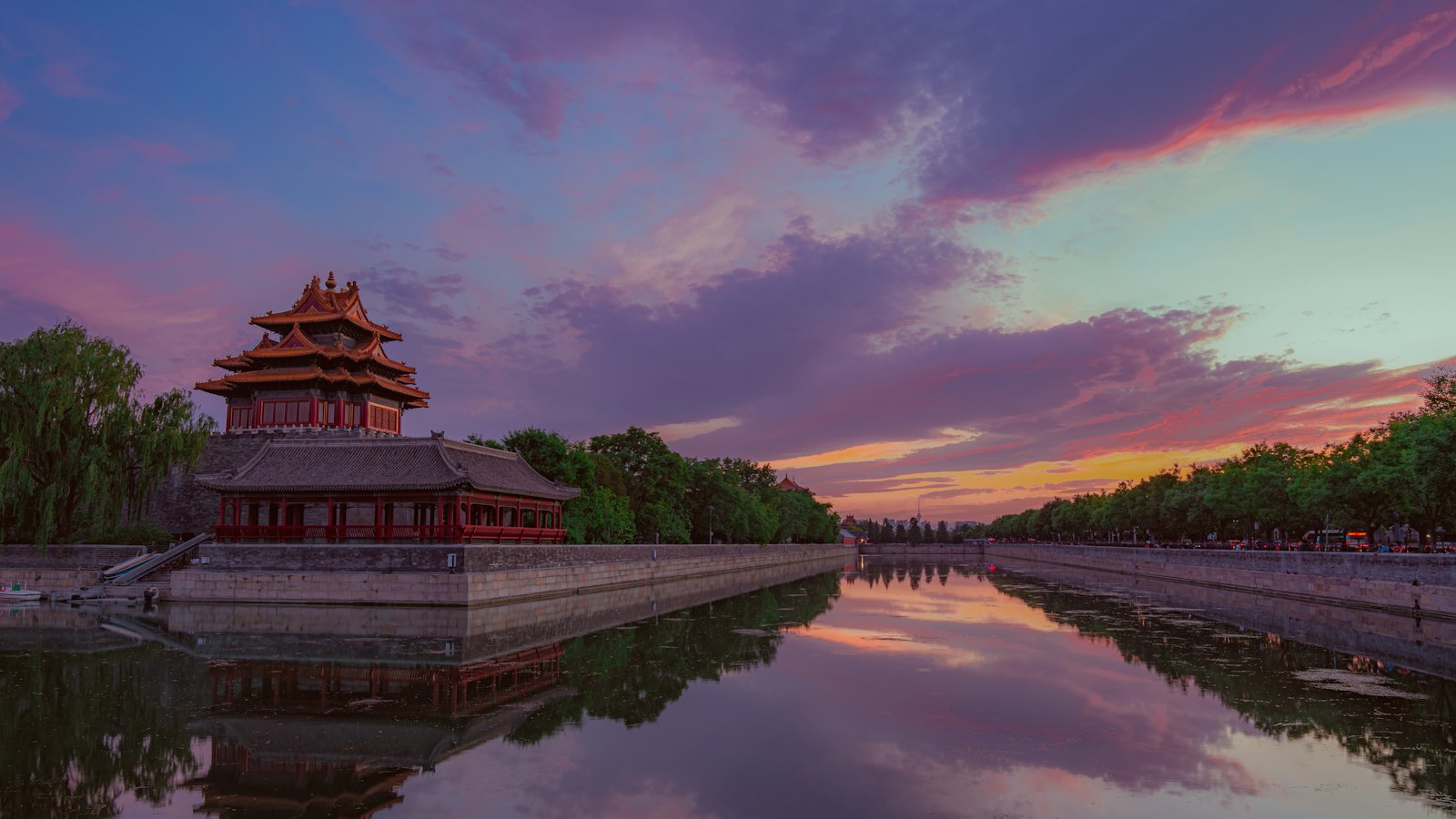
Beijing holds China's grandest sights: the Forbidden City, the Great Wall on the mountains to the north and gardens built for emperors. It has also become easier for Malaysians to visit. A mutual visa exemption allows stays of up to 30 days with no application, non-stop flights from KLIA take about six and a half hours, and there is no time difference. Muslim travellers will find one of China's oldest Hui communities in Niujie, with halal lamb hotpot, noodle shops and butchers. Below: flights and fares in ringgit, both airports, where to stay, halal food and prayer, getting around without Google, and a four-day plan.
Getting there from KL: direct flights to Beijing
Four airlines fly non-stop from KLIA to Beijing at the time of writing (late September 2026), three to Daxing (PKX) in the south and one to Capital (PEK) in the northeast:
- Malaysia Airlines: KLIA Terminal 1 to Daxing, a late-night departure landing around dawn.
- AirAsia X: KLIA Terminal 2 to Daxing, leaving in the early evening and arriving after midnight.
- China Eastern: KLIA Terminal 1 to Daxing, departing in the small hours.
- Air China: KLIA Terminal 1 to Capital Airport Terminal 3, overnight.
Scheduled flying time is roughly 6 hours 15 minutes to 6 hours 30 minutes, and Beijing keeps Malaysian time (UTC+8). Check the airport code on your booking, because PKX and PEK are on opposite sides of Beijing.
At the time of writing, our KL fare scan (refreshed on 28 September 2026) found only one-stop routings into Beijing: one-way fares from about RM 760 with Hainan Airlines via Chongqing, about RM 805 via Haikou, a middle-of-the-range RM 1,060 with THAI via Bangkok, and near RM 1,350 with Cathay Pacific via Hong Kong. No non-stop fares showed up in the scan, so check the direct airlines' own prices too.
Daxing and Capital airports to the city
Indicative prices, at roughly RM 0.61 per yuan.
From Daxing (PKX), about 46 km south of Tian'anmen:
- Daxing Airport Express: around 20 minutes to Caoqiao for 35 yuan (RM 21), or 50 yuan (RM 30) in business class, with trains at least every 10 minutes by day. At Caoqiao switch to Line 10 or Line 19; Niujie, the Muslim quarter, is two stops up Line 19.
- Intercity train: about half an hour to Beijing West, around 17 to 30 yuan in second class.
- Airport buses: nine lines into town at 25 to 60 yuan, 1 to 1.5 hours, plus night lines.
- Taxi: about 180 to 200 yuan (RM 110 to RM 120) to the Forbidden City, around an hour.
From Capital (PEK), about 25 km northeast of the centre:
- Capital Airport Express: a flat 25 yuan (RM 15) from Terminals 3 and 2 via Sanyuanqiao and Dongzhimen to Beixinqiao, about 40 to 50 minutes end to end, roughly every 10 minutes.
- Airport buses: nine lines into town; the ride to the Qianmen area is about 30 yuan (RM 18) and roughly 1.5 hours.
- Taxi: about 150 to 250 yuan (RM 90 to RM 150) to the Forbidden City area, 70 to 90 minutes in traffic. Didi is often cheaper, at around 100 to 160 yuan.
Landing after midnight on AirAsia X? The trains will have stopped, so use a night bus, the taxi rank or Didi.
Where to stay in Beijing
Beijing sprawls, so choose a base on a subway line you will use every day.
- Wangfujing and Dongsi (Dongcheng): close to the Forbidden City, with department stores, mid-range and upmarket hotels, and the Dongsi Mosque a short walk south of Dongsi Station. The easiest base for first-timers and families.
- Qianmen and Dashilan: restored shopping streets and old lanes just south of Tian'anmen Square, with courtyard guesthouses and budget chains. Good value, and a Donglaishun hotpot branch is on Qianmen Street.
- Niujie (Xicheng): the Hui Muslim neighbourhood around the Niujie Mosque, with halal restaurants, butchers and a halal supermarket on your doorstep. The practical pick for Muslim families, on Line 19, which meets the Daxing Airport Express at Caoqiao.
- Sanlitun and Dongzhimen (Chaoyang): cafes, malls and nightlife near the embassy district. Dongzhimen is on the Capital Airport Express, which suits Air China passengers.
Hutong courtyard hotels are charming but often small; with big suitcases, check that a car can reach the door.
Things to do in Beijing
Book headline sights ahead with your passport number.
- Forbidden City: tickets are sold online and need your passport number; they are released seven days ahead at 8 pm Beijing time. Entry is 60 yuan from April to October and 40 yuan from November to March; closed on Mondays except public holidays.
- Jingshan Park: climb the hill behind the palace for the classic view over its golden roofs.
- Temple of Heaven: come early to watch locals doing tai chi and dancing under old cypress trees.
- Summer Palace: an imperial lakeside garden in the northwest, best explored on foot or by boat on Kunming Lake.
- Shichahai hutongs: walk or cycle the lanes around Houhai lake and Nanluoguxiang in the evening.
- Lama Temple (Yonghegong): the city's best-known Tibetan Buddhist temple, beside Yonghegong Station.
- Olympic Park: the Bird's Nest stadium and the Water Cube, most photogenic lit up at night.
- Universal Beijing Resort: a full theme park day in the east of the city, worth it with children.
- Fragrant Hills: red autumn leaves in the western hills, usually October into early November.
The Great Wall has its own section below.
What to eat in Beijing
Northern cooking is built on wheat, lamb and dark soy-based sauces rather than rice and santan. Mainstream Beijing restaurants use pork and lard freely, so Muslim readers should read the halal section next.
- Peking duck: crisp roast duck carved at the table and wrapped in thin pancakes with scallion and sweet bean sauce. Some halal restaurants serve it too.
- Instant-boiled mutton (shuan yangrou): paper-thin lamb dipped in a copper hotpot, a Beijing Muslim classic and the dish that made Donglaishun, a halal name founded in 1903, famous.
- Lamb skewers (chuanr): cumin-dusted kebabs from Xinjiang-style grills, best at night.
- Hand-pulled noodles (lamian): a Chinese Muslim staple, often served as clear beef noodle soup at Lanzhou-style shops.
- Jianbing: a breakfast crepe with egg, sauce and a crunchy cracker, made at street carts.
- Zhajiangmian: thick noodles with fermented soybean sauce, normally cooked with pork.
- Tanghulu: candied hawthorn on a stick, a winter snack.
A bowl of noodles is often 20 to 40 yuan (RM 12 to RM 25); a proper duck dinner costs several times that. Guijie, the restaurant strip on Dongzhimen Inner Street, is known for late-night dining, though most of it is not halal.
Halal food and prayer spaces
Beijing's centuries-old Hui community makes it one of the easier Chinese cities for Muslim travellers. Look for the characters 清真 (qingzhen), used on Muslim restaurants, butchers, supermarkets and even mosque names. A qingzhen sign marks a pork-free Chinese Muslim kitchen, usually Hui-run, but it is a local label rather than a certificate JAKIM recognises and alcohol rules vary, so judge each place and ask if unsure.
- Niujie: the heart of Muslim Beijing. The Niujie Mosque, first built in 996, is the city's oldest and largest, with a prayer hall for over 1,000 people. The surrounding streets are full of halal restaurants, butchers and grocers, near Niujie Station on Line 19.
- Dongsi Mosque: records date it to 1346; a short walk south of Dongsi Station, handy for Wangfujing hotels.
- Donglaishun: Beijing's best-known halal hotpot name, with branches including Qianmen Street.
- Lanzhou noodle and Xinjiang restaurants: all over the city.
Prayer spaces: we could not confirm a prayer room at Daxing or Capital airport at the time of writing, so pray at the KLIA surau before boarding. In the city the mosques are your best option, including for Friday prayers.
Apps: set up Muslim Pro for prayer times and qibla before leaving, and search 清真 in Apple Maps or Amap to find halal food nearby.
Getting around Beijing
The subway is the quickest way across this sprawling city, with around 30 lines including the airport links. Fares go by distance: 3 yuan for the first 6 km (under RM 2), rising to 6 yuan for 22 to 32 km (under RM 4).
- Paying: every station has gates that take contactless Visa and Mastercard, so you can tap your own card. You can also use a transport QR code in Alipay or WeChat, or buy a rechargeable Yikatong card at any station.
- Ride-hailing: Grab does not operate in China. Didi is the local equivalent: it has an English version and takes foreign Visa and Mastercard.
- Taxis: metered, 13 yuan for the first 3 km then 2.3 yuan per km, more from 11 pm to 5 am. Carry your hotel address in Chinese.
- Maps: Google Maps is blocked; use Apple Maps or Amap.
- Trains: high-speed tickets, for the Great Wall or Tianjin, are issued in your passport name on China Railway's 12306 website or app, or at the station.
Sample itinerary: 4 days in Beijing
Four full days covers the essentials without rushing; the Forbidden City shuts on Mondays.
- Day 1: Land at Daxing, take the Airport Express to Caoqiao and Line 19 to Niujie. Drop your bags, visit the Niujie Mosque, snack on halal lamb dishes along the street, then wander Qianmen and Dashilan as the lights come on.
- Day 2: Tian'anmen Square and the Forbidden City with your pre-booked ticket, then Jingshan Park for the view back over the palace. Dinner is mutton hotpot at Donglaishun.
- Day 3: A full day on the Great Wall at Mutianyu, back in time for lamb skewers.
- Day 4: The Temple of Heaven at opening time, the Summer Palace after lunch and the Shichahai hutongs at dusk. Fly home the next day; direct flights back to KLIA leave Beijing at various times, from around 2 am to early evening.
A fifth day fits Universal Beijing Resort, the Olympic Park at night or a train day trip to Tianjin.
Money, SIM and practical tips
- Currency: Chinese yuan (renminbi). On 28 September 2026, 1 yuan was worth about RM 0.61, so 100 yuan is roughly RM 61.
- Mobile payment: China runs on phone payments. Before flying, load a Visa or Mastercard issued in Malaysia into Alipay or WeChat Pay. Touch 'n Go eWallet also pays at Alipay+ merchants in mainland China and is on the central bank's list of accepted foreign e-wallets.
- DuitNow QR: no China link yet; PayNet's cross-border QR works in just four countries: Singapore, Indonesia, Thailand and Cambodia.
- Cash: a few hundred yuan in your wallet covers market stalls; ATMs at both airports accept international cards.
- Internet: Google, WhatsApp, Instagram and Facebook do not load on Chinese networks. Data on a Malaysian roaming plan, or a travel eSIM routed outside China, generally gets round this but can fail, so save offline maps and bookings first.
- Power: 220V, with American-style flat-pin (Type A) and angled-pin (Type I) sockets; bring an adapter for your three-pin Malaysian plugs.
- Tips: tipping is not customary in Beijing.
- Passport: carry it daily; museums, trains and hotels all ask for it.
- Scams: decline friendly strangers in tourist areas such as Tian'anmen and Wangfujing who suggest a tea house or art gallery; the bill can be huge.
Great Wall day trip: Mutianyu or Badaling
Two sections of the Wall make easy day trips from the city.
- Mutianyu: about 70 km northeast of the centre in Huairou District, one of the best-preserved stretches, with restored watchtowers on forested ridges. A cable car does the climbing and a toboggan run brings you down. The better choice for families, photographers and anyone avoiding crowds. A direct tourist bus leaves Qianmen in the morning (roughly 7 am to 10 am) and returns in the afternoon; otherwise hire a Didi or join a small-group tour, and allow a full day.
- Badaling: about 80 km northwest, the most visited section and the first opened to tourists, in 1957. It is simplest by public transport: high-speed trains from Beijing North stop at the underground Badaling Great Wall station, and suburban Line S2 runs from Huangtudian. Weekends and holidays get very crowded.
Go on a weekday, avoid the first week of October and start early. Wear shoes with grip, since the steps are steep and uneven. Pack water and halal snacks from Niujie, because Muslim-friendly food near the Wall is scarce. In winter the stones get icy and the wind bites, so dress in layers.
Before you go
- Best time to go
- September and October are the best months for Beijing, with mild, dry, clear days, and April and May come a close second. Spring brings blossoms but also wind and dust. July and August are hot, sometimes 35°C to 40°C, wet, and crowded with Chinese school holidays. Winter, November to March, is dry and freezing, with January nights averaging around minus 7°C, but it is the cheapest season and an occasional snowfall can dust the palace roofs. Avoid Golden Week (1 to 7 October) and the early-May Labour Day break, when crowds peak and airfares and hotel rates climb steeply. Chinese New Year falls on 6 February 2027. Families travelling in Malaysia's December school break (from 4 or 5 December 2026, depending on your state) should book early.
- Visa for Malaysians
- Malaysians can visit mainland China without a visa for up to 30 days at a time, as of September 2026, under a bilateral agreement that took effect on 17 July 2025. The deal applies to holidays, visiting relatives, business meetings and other short stays, and limits you to 90 visa-free days within any 180. Anyone planning to work, study, report as a journalist or stay past day 30 needs a proper visa from the Chinese Visa Application Service Center in Kuala Lumpur. Entry is free, but an arrival card is compulsory: since 20 November 2025 you may fill it in online ahead of the trip via the National Immigration Administration (NIA) website or NIA 12367 app, or at the border. The visa centre cautions that passports with under six months' validity may be refused. Before booking, check the latest rules with the Chinese Embassy in Malaysia or the NIA.
- Honest budget guide
- Expect roughly RM 240 to RM 520 per person a day in Beijing, excluding flights and sharing a room. Flights: one-way fares into Capital Airport start near RM 760 in our KL fare scan (Hainan Airlines, one stop) at the time of writing, with about RM 1,060 more typical, so a return runs roughly RM 1,500 to RM 2,200; check direct fares as well. A budget chain hotel is about 300 to 450 yuan (RM 180 to RM 275) a night and a good mid-range hotel 500 to 900 yuan (RM 300 to RM 550). Food is RM 60 to RM 150 a day and subway rides RM 2 to RM 4 each, plus entry tickets and a Great Wall day. Five days in mid-range comfort works out around RM 3,200 to RM 4,200 each, flights included. Treat every number here as indicative.
Frequently asked questions
Do Malaysians need a visa to visit Beijing?
No visa is needed. Under the bilateral agreement in effect since July 2025, Malaysians holding ordinary passports may spend up to 30 days per visit in mainland China, capped at 90 days in any 180. You still owe an arrival card, which the NIA lets you file online before the flight. Your passport should have at least half a year left on it.
Is there a direct flight from KL to Beijing?
Yes. At the time of writing, Malaysia Airlines and China Eastern (KLIA Terminal 1) and AirAsia X (Terminal 2) fly to Beijing Daxing, and Air China (Terminal 1) flies to Beijing Capital, in about six and a half hours. Our fare scan found one-stop fares from about RM 760 one-way.
Is Beijing Muslim-friendly?
Yes, by Chinese standards. Niujie, the Hui quarter, has the city's oldest mosque, founded in 996, and streets of qingzhen (Chinese Muslim, pork-free) restaurants, butchers and grocers. Dongsi Mosque serves the Wangfujing side, and Lanzhou noodle shops are everywhere. Qingzhen is not JAKIM certification, so judge each place, and plan prayers around the mosques.
Can I use Grab in Beijing?
No. Grab has no service in China, so Beijing runs on Didi: the app has an English version and accepts foreign Visa and Mastercard. Metered taxis start at 13 yuan for the first 3 km. Across town the subway is usually faster, and you can tap your own contactless card at the gates.
How many days in Beijing is enough?
Four days makes a good first visit: one for the Forbidden City and Jingshan Park, one for the Great Wall, one for the Temple of Heaven and Summer Palace, and time for Niujie and the hutongs. Add a fifth or sixth day for Universal Beijing Resort or a day trip to Tianjin.
What is the best month to visit Beijing?
September and October offer the most comfortable weather, with clear skies and mild days, but skip 1 to 7 October, China's Golden Week, when sights are packed and prices jump. April and May are pleasant but windy. December to February brings the lowest prices, if you can handle the cold, and occasionally some snow.
What does a 5-day Beijing trip cost?
Around RM 3,200 to RM 4,200 per person including return flights, based on two sharing a mid-range hotel, meals, subway rides, entry tickets and a Great Wall day. On the ground, allow RM 240 to RM 520 a day. Noodle-loving travellers in chain hotels can spend less. These figures are indicative.
Can I use WhatsApp and Google in Beijing?
Chinese networks block Google, WhatsApp, Instagram and Facebook, so hotel Wi-Fi and local SIMs will not reach them. Malaysian roaming data, or a travel eSIM whose traffic exits abroad, normally works but can fail. Before leaving KL, download offline maps, install Apple Maps or Amap, and set up Alipay or WeChat Pay.
Jom pergi
Ready to go Beijing? Compare available flights and hotels for your dates. Check baggage, cancellation terms and the final total on the booking provider before paying.






