




On this page13 sections
- Overview
- Getting there from KL: flights and terminals
- Taoyuan Airport to the city
- Where to stay in Taipei
- Things to do in Taipei
- What to eat in Taipei
- Halal food and prayer spaces
- Getting around Taipei
- Four days in Taipei: a sample itinerary
- Money, SIM and practical tips
- Shopping in Taipei and the tourist tax refund
- Before you go
- FAQ
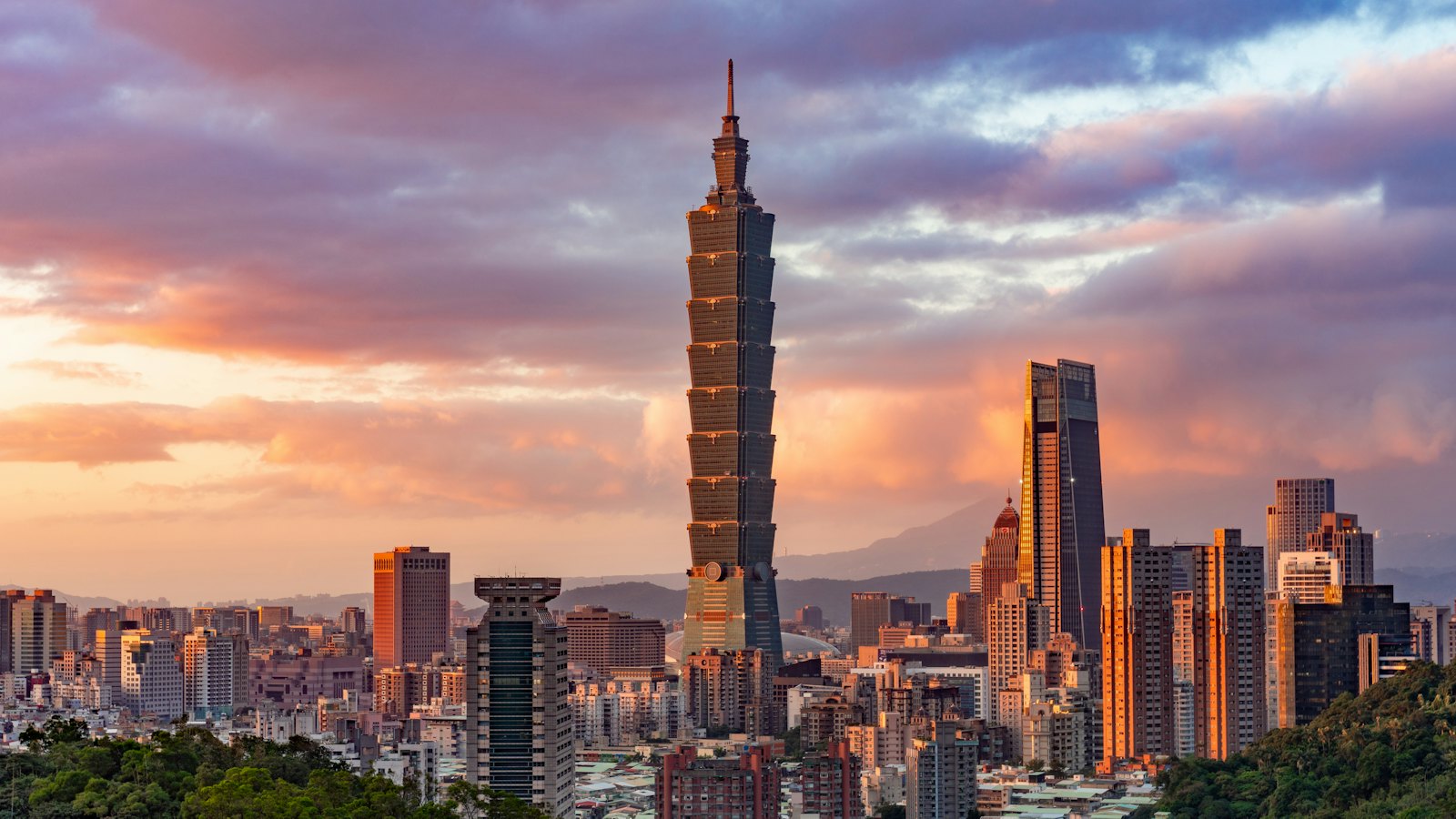
Taipei is one of the simplest big-city trips from KLIA: under five hours non-stop, visa-free for Malaysians, on the same clock and served by a superb metro. The city squeezes a lot into one green basin, from the Taipei 101 observatory and the National Palace Museum to the hot springs of Beitou and the lantern-lit hill town of Jiufen an hour away. Food is the headline, and Muslim visitors will find more halal choices than they expect, plus two mosques downtown. Below: flights and our fare scan, the airport train, where to stay, halal food, ringgit costs and a four-day plan.
Getting there from KL: flights and terminals
Taipei is one of the best-connected routes out of KLIA. At the time of writing, six airlines fly it non-stop: AirAsia X, Batik Air, Malaysia Airlines and three Taiwanese carriers, China Airlines, EVA Air and Starlux. Expect just under five hours in the air and no time difference, since Taiwan keeps the same clock as Malaysia.
Mind the terminal. AirAsia X departs KLIA Terminal 2, as does Scoot if you connect through Singapore. Malaysia Airlines, Batik Air, China Airlines and EVA Air use Terminal 1, and Malaysia Airlines and Batik Air also offer city check-in at KL Sentral. Whichever airline you pick, confirm the terminal on your e-ticket.
At the time of writing, Amaboxly's KL fare scan (updated 28 September 2026) turned up one-way tickets from around RM 391 on AirAsia X's non-stop flights, with a typical fare near RM 464. For one stop, Scoot through Singapore started at about RM 454 and Vietjet through Ho Chi Minh City or Hanoi at about RM 563. December departures, during the Malaysian school holidays, were the dearest in the scan, up to about RM 764 one-way. Low-cost fares exclude bags and meals, so compare carefully. Prices change daily.
Taoyuan Airport to the city
Taoyuan International Airport lies about 40 km west of the city, so allow close to an hour to your hotel. Prices are indicative, at roughly NT$7.8 to RM 1.
- Airport MRT: the purple Express train runs from Terminal 1 (A12) and Terminal 2 (A13) to Taipei Main Station (A1) in 35 to 40 minutes, about every 15 minutes from around 6am to 11pm. The fare is NT$150 to NT$160 (about RM 20) by EasyCard or token. Skip the blue Commuter train, which stops everywhere.
- Airport buses: coaches leave from Terminal 1's basement bus area and Terminal 2's ground floor. Kuo-Kuang's 1819 runs to Taipei Bus Station beside Taipei Main Station in about 55 minutes, and fares on the Taipei routes are roughly NT$120 to NT$150 (RM 15 to RM 20). Handy if you land after the trains stop, but check the last departure at the bus counter.
- Taxi: 24-hour official ranks wait outside both arrival halls. You pay the meter plus highway tolls, which usually comes to roughly NT$1,000 to NT$1,200 (about RM 130 to RM 155) for central Taipei, sometimes more in traffic. Sensible for families with big luggage.
Going home, some airlines let you check in and drop bags at the Airport MRT concourse inside Taipei Main Station hours before departure. Ask whether yours does.
Where to stay in Taipei
The metro is so good that being close to a station matters more than the district itself.
- Taipei Main Station (Zhongzheng): the practical first-timer base. The Airport MRT terminates here, two metro lines cross, and high-speed trains and intercity buses leave from the same hub. Muslim-owned beef noodle shops on Yanping South Road are a walk away.
- Ximending (Wanhua): a pedestrian quarter of street fashion, cinemas and late snacks, loved by young Malaysians and backpackers. Noisy until late.
- Da'an and Zhongxiao: leafy lanes, cafes, Yongkang Street and Daan Forest Park. Both city mosques are in or beside this area, so it suits anyone who wants to pray at a mosque during the trip. Slightly pricier.
- Xinyi: Taipei 101, department stores and the glossiest hotels. Great for shoppers and families, but the most expensive area and the furthest from the old neighbourhoods.
For day trips to the northeast, Taipei Main Station and Zhongxiao Fuxing are the handiest bases: trains to Ruifang start at the former, and buses toward Jiufen leave near the latter.
Things to do in Taipei
- Taipei 101 and Elephant Mountain: take the lift to the observatory, then climb the steep Xiangshan steps near sunset for the classic shot of the tower.
- National Palace Museum: one of the world's largest collections of Chinese imperial treasures. Allow half a day; there is a prayer room.
- Jiufen and Shifen: lantern-hung teahouse lanes on a hillside, paired with Shifen on the Pingxi line, where visitors release wish-covered sky lanterns beside the tracks. Go on a weekday.
- Beitou: ride the MRT to Xinbeitou for the steaming pool of Thermal Valley and the old bathhouse museum. Hotels rent private hot spring rooms by the hour, ideal for families and for Muslim women who prefer privacy.
- Maokong Gondola: cable cars from Taipei Zoo station over tea plantations to hillside teahouses.
- Yangmingshan National Park: sulphur vents at Xiaoyoukeng, volcanic grassland trails and late-winter cherry blossoms.
- Longshan Temple and Dadaocheng: incense and carved roofs in Wanhua, then the old shophouses of Dihua Street and sunset at the riverside wharf.
- Tamsui: a riverfront town at the end of the red line, known for sunsets, old street snacks and the red-walled Fort San Domingo.
What to eat in Taipei
Night markets are where most visitors start, but plenty of Taipei classics use pork, lard or rice wine, so Muslim readers should check the halal section first.
- Beef noodle soup: the city's signature bowl, braised or clear. Muslim-owned shops serve halal versions.
- Xiao long bao: thin-skinned soup dumplings, usually with a pork filling.
- Lu rou fan: braised minced pork on rice, the everyday comfort meal.
- Gua bao: a steamed bun with braised pork belly, pickled greens and peanut powder.
- Scallion pancakes and dan bing (egg crepes): cheap street breakfasts.
- Bubble tea: Taiwan made pearl milk tea famous; pick your own sugar and ice level.
- Mango shaved ice: fresh mango piled on ice with condensed milk, best in summer around Yongkang Street.
- Pineapple cakes: the souvenir every relative will ask about.
Raohe in Songshan is compact and easy to walk, Ningxia near Zhongshan is a local favourite, and Shilin is the largest and most touristy. An evening of snacks costs roughly NT$300 to NT$600 (RM 40 to RM 75). Buddhist vegetarian restaurants are a handy fallback, though some cook with rice wine, so ask.
Halal food and prayer spaces
Taipei is not a halal city, but it is one of East Asia's easier stops for Muslim travellers. Taiwan placed third among non-OIC destinations in the 2023 Global Muslim Travel Index, and the tourism authority says its international airports, Taipei Main Station and many scenic areas have prayer rooms.
Learn the labels. The Chinese Muslim Association separates Muslim-owned restaurants from Muslim-friendly ones, which are non-Muslim kitchens certified to cook halal dishes. The Taiwan Halal Integrity Development Association (THIDA), based at the Taipei Cultural Mosque, certifies halal products and belongs to a cross-border halal certification programme overseen by authorities in Malaysia, Indonesia and Singapore. A "no pork" sign alone proves nothing.
- Taipei Grand Mosque: Taiwan's oldest and largest mosque, on Xinsheng South Road in Da'an, a short walk south of Daan Park MRT station.
- Taipei Cultural Mosque: on Xinhai Road in Zhongzheng, a few minutes on foot from Taipower Building station.
- Eating: two certified Muslim beef noodle shops sit side by side on Yanping South Road, a short walk from Ximending, and Muslim-run Indian, Pakistani, Arab and Persian restaurants dot Da'an, Xinyi, Zhongshan and Songshan.
- Prayer rooms: Taoyuan Airport (including one airside in Terminal 2), Taipei Main Station (basement level) and the National Palace Museum.
- Planning: Muslim Pro for prayer times and qibla, plus the Taiwan Tourism Administration's online Muslim dining list, which marks each place MR (Muslim restaurant) or MFR (Muslim-friendly restaurant).
Getting around Taipei
The Taipei Metro (MRT) covers nearly every sight, with English signs and trains from about 6am to midnight. Single rides cost roughly NT$20 to NT$65 (RM 3 to RM 8).
- Paying: an EasyCard (NT$100 for the card, then top up) works on the metro, buses, YouBike and in convenience stores. It saves queueing for tokens rather than money: the metro's cashback only starts after 11 rides in a month. Contactless Visa and Mastercard, Apple Pay and Google Pay also work at the gates. Metro passes for 24, 48 or 72 hours only pay off on packed sightseeing days.
- Buses: cheap and labelled in English; tap your card on boarding and again when leaving.
- Ride-hailing: Grab does not operate in Taiwan. Uber does, with licensed drivers at close to taxi prices, and spares you the language barrier.
- Taxis: yellow, metered and plentiful, with honest drivers by reputation. Few speak English, so show your destination in Chinese characters. A short hop in the centre is typically NT$150 to NT$300 (RM 20 to RM 40).
- YouBike: docked public bikes across the city, with flat riverside paths.
- Out of town: trains from Taipei Main Station reach Ruifang, gateway to Jiufen and the Pingxi line, in about an hour, and the high-speed rail makes Taichung an easy day trip.
Four days in Taipei: a sample itinerary
- Day 1: Land, ride the Airport MRT Express to Taipei Main Station and drop your bags. Visit Chiang Kai-shek Memorial Hall, then spend the evening in Ximending with dinner at the Muslim-owned beef noodle shops on Yanping South Road.
- Day 2: National Palace Museum in the morning (prayer room on site), then the MRT to Xinbeitou for Thermal Valley and a private hot spring soak. End at Shilin Night Market with a bubble tea.
- Day 3: Train to Ruifang, the Pingxi line to Shifen for sky lanterns and the waterfall, then a bus up to Jiufen for tea as the lanterns come on.
- Day 4: On a Friday, pray at the Taipei Grand Mosque, then walk through Daan Forest Park to Yongkang Street for mango ice. Afternoon at Taipei 101 and the Xinyi malls, then Elephant Mountain for the night view.
A fifth day fits the Maokong Gondola and a teahouse, or Yangmingshan in blossom season. On departure day, leave the city at least three hours before your flight, more if you are claiming a tax refund at the airport.
Money, SIM and practical tips
- Currency: the New Taiwan dollar (NT$). In late September 2026, RM 1 fetched about NT$7.8, so NT$1,000 is roughly RM 128. Many Malaysian money changers stock NT$.
- Cash or card: malls, hotels, chain restaurants and the metro accept Visa and Mastercard, but night-market stalls, small eateries and temples want cash.
- SIM and eSIM: buy an eSIM before flying or a tourist SIM at the airport. Taiwan shut its 3G network in 2024, so an old phone without 4G calling (VoLTE) may not even reach emergency numbers.
- Plugs: Taiwan runs on 110 volts with two flat pins, meaning Malaysian square three-pin plugs need an adaptor, and hair tools must handle the lower voltage.
- Tipping: not expected; hotels and many sit-down restaurants add a 10% service charge.
- Safety: Taipei feels very safe, even late at night; the real risks are typhoons and earthquakes, so heed the phone alerts.
- Customs: Taiwan is strict about meat products because of African swine fever, and travellers caught with them face heavy fines. Leave bak kwa, meat floss and any snack containing meat at home.
- Scams: rare, but use the official taxi rank or Uber rather than drivers who approach you in arrivals.
- Emergencies: 110 for police, 119 for fire or ambulance, and 112 from a mobile with weak reception.
Shopping in Taipei and the tourist tax refund
Few Malaysians fly home from Taipei with light bags.
- Xinyi: the Taipei 101 mall and neighbouring department stores hold the big luxury and designer names.
- Ximending: street fashion, sneakers, character goods and cosmetics.
- Zhongshan: independent boutiques and lifestyle shops along the quiet lanes around Chifeng Street.
- Dihua Street: tea, dried fruit, herbs and fabric in restored shophouses.
- Guanghua Digital Plaza: floor after floor of gadgets.
For a VAT refund, spend at least NT$2,000 in one day at one shop displaying the Taiwan Tax Refund label, keep the paperwork, and claim at the airport before checking in your luggage; once the goods leave Taiwan, the refund is lost. Some labelled shops refund small amounts on the spot. Pineapple cakes, Maokong tea and dried mango travel well, but check labels for animal fat or gelatine if you eat halal. Designer prices do not always beat KL after the exchange rate, so compare first.
Before you go
- Best time to go
- The best time to visit Taipei is October to early December, when the summer heat eases and the typhoon season winds down, with March and April a close second. July highs average near 35°C with afternoon storms, and typhoons can strike from June to October, so get insurance that covers delays. January and February average about 16°C, often grey and drizzly, which suits the hot springs, and Yangmingshan's cherry blossoms open in late winter. Chinese New Year and the Lantern Festival are colourful but crowded, and small shops close for a few days. The 2026 Malaysian year-end school holidays run from early December to 31 December, and our fare scan shows December fares well above October's.
- Visa for Malaysians
- Malaysians holding an ordinary passport can enter Taiwan without a visa for up to 30 days as of September 2026, and the stay cannot be extended. Taiwan's Bureau of Consular Affairs requires a passport valid for at least six months from the date of entry, a confirmed return or onward ticket with a booked seat, and clearance by the immigration officer. Before flying, complete the free online Taiwan Arrival Card (TWAC) on the National Immigration Agency website; it is not a visa, every traveller needs one for each entry, and it can be filed within the seven days before arrival, counting the arrival day. A normal holiday needs no fee or e-visa, while study or work requires a visa from the Taipei Economic and Cultural Office in Malaysia. Rules can change, so confirm the latest on boca.gov.tw before booking.
- Honest budget guide
- Expect to spend around RM 250 to RM 550 per person per day in Taipei, excluding flights, depending mostly on the hotel. At the time of writing, our KL fare scan lists AirAsia X non-stop from about RM 391 one-way, so a return is typically RM 800 to RM 1,100 outside December. A hostel bed or basic room costs about NT$800 to NT$2,500 (RM 100 to RM 320) a night, and a comfortable mid-range double NT$3,000 to NT$5,000 (RM 385 to RM 640). Allow RM 75 to RM 155 a day for food and RM 20 to RM 40 for metro and buses. A five-day, four-night trip on a mid-range budget, sharing a room, lands at about RM 2,700 to RM 3,400 each including airfare. Treat every number here as indicative.
Frequently asked questions
Do Malaysians need a visa for Taiwan?
Not for a holiday. Malaysian passport holders get up to 30 days visa-free as of September 2026, with no extensions. Bring a passport valid for at least six months from arrival and a confirmed onward or return ticket, and file the free online Taiwan Arrival Card before you land. Check boca.gov.tw for changes before booking.
Is there a direct flight from KL to Taipei?
Yes. At the time of writing six airlines fly KLIA to Taipei Taoyuan non-stop: AirAsia X, Malaysia Airlines, Batik Air, China Airlines, EVA Air and Starlux. AirAsia X leaves from Terminal 2, while Malaysia Airlines, Batik Air, China Airlines and EVA Air use Terminal 1; check your e-ticket for Starlux. The trip takes just under five hours, and the cheapest one-way fare in our scan was about RM 391 on AirAsia X.
Is Taipei Muslim-friendly?
Yes, more than most East Asian cities. There are two mosques in the centre, prayer rooms at Taoyuan Airport, Taipei Main Station and the National Palace Museum, and a fair number of Muslim-owned and certified Muslim-friendly restaurants. Most night-market food is not halal, so plan meals with the Tourism Administration's list of certified Muslim restaurants.
How many days in Taipei is enough?
Four days covers the highlights: the centre and Ximending, the National Palace Museum with Beitou, a Jiufen and Shifen day trip, and Taipei 101 with Elephant Mountain. Five or six days leaves room for the Maokong Gondola, Yangmingshan or a high-speed rail hop to Taichung.
What is the best month to visit Taipei?
November is hard to beat: the heat is gone, typhoon season has ended and night-market evenings are comfortable. October and early December also work, though December fares rise with the Malaysian school holidays. March and April are a mild alternative, while July and August bring highs near 35°C and possible typhoons.
How much should I budget for five days in Taipei?
Around RM 2,700 to RM 3,400 per person for five days and four nights covers return flights, a shared mid-range room, food, transport and a few paid sights. Hostel stays and night-market meals with a cheap AirAsia X fare bring it down to about RM 1,800 to RM 2,300. These figures are indicative.
Can I use Grab in Taipei?
No, Grab does not operate in Taiwan. Uber works in Taipei with licensed drivers at roughly taxi prices, and it saves explaining addresses in Mandarin. The metro, buses and YouBike handle most sightseeing for far less.
How do I get from Taoyuan Airport to Taipei city?
Take the Airport MRT Express: 35 to 40 minutes from either terminal to Taipei Main Station for about NT$150 to NT$160 (around RM 20), with trains about every 15 minutes. Airport buses are slightly cheaper but slower, and a taxi usually costs roughly NT$1,000 to NT$1,200 (about RM 130 to RM 155).
Jom pergi
Ready to go Taipei? Compare available flights and hotels for your dates. Check baggage, cancellation terms and the final total on the booking provider before paying.






