




On this page13 sections
- Overview
- Getting there from KL: airlines, terminals and fares
- Hong Kong airport to the city
- Where to stay in Hong Kong
- Things to do in Hong Kong
- What to eat in Hong Kong and where
- Halal food and prayer spaces
- Getting around: MTR, Octopus, trams and taxis
- A 4-day Hong Kong itinerary
- Money, SIM and practical tips
- Shopping for bags, sneakers and gadgets
- Before you go
- FAQ
Hong Kong is the big-city break Malaysians keep going back to. The flight from KLIA takes about four hours, the clocks do not change, Malaysian passports need no visa, and your phone charger fits the sockets without an adapter. In a single day you can eat dim sum for breakfast, ride the tram up to Victoria Peak, pray at the mosque on Nathan Road and shop until the malls close. Below: flights and fares, the airport transfer, where to stay, halal food and prayer rooms, getting around, and what it all costs in ringgit.
Getting there from KL: airlines, terminals and fares
Four airlines run regular non-stop flights between Kuala Lumpur International Airport and Hong Kong at the time of writing. Malaysia Airlines, Cathay Pacific and Batik Air leave from KLIA Terminal 1, while AirAsia normally uses Terminal 2 (the old klia2). The terminals are neighbouring stops on the KLIA Ekspres, so check which one your booking shows. If Subang is closer to you than Sepang, HK Express also flies to Hong Kong from Sultan Abdul Aziz Shah Airport.
Flying time is about four hours, and Hong Kong keeps the same clock as Malaysia, so there is no jet lag.
At the time of writing, Amaboxly's KL fare scan (run on 28 September 2026) priced the lowest one-way ticket at roughly RM 504, a non-stop AirAsia flight on a late February 2027 date. The median across the dates scanned was near RM 560 and the dearest near RM 874. One-stop routings were no cheaper, from about RM 504 via Singapore and RM 624 via Manila, so the non-stop flights make most sense. Prices move daily and rise over Chinese New Year and the December holidays.
Hong Kong airport to the city
Hong Kong International Airport sits on Chek Lap Kok, off Lantau. Prices are indicative, from the airport's own leaflet, at roughly HK$1 to RM 0.52.
- Airport Express: the fastest choice, about 24 minutes to Hong Kong Station in Central, with Kowloon Station the stop before it and a train every 10 minutes from 5.54am to 12.48am. A single to Hong Kong Station costs HK$130 (about RM 68) with a ticket or HK$120 (about RM 62) by Octopus; Kowloon costs HK$115 or HK$105.
- Airport buses: the cheap option, paid by Octopus, e-payment or exact cash. A21 runs to Mong Kok, Tsim Sha Tsui and Hung Hom for HK$34.6 (about RM 18), and A11 goes through Central, Wan Chai and Causeway Bay to North Point for HK$41.9 (about RM 22). Both are much slower than the train, especially in rush-hour traffic.
- Taxi: take a red urban taxi from the rank. The airport lists about HK$290 to Tsim Sha Tsui, HK$285 to Mong Kok and HK$370 to HK$375 to Wan Chai, Causeway Bay or Central (roughly RM 150 to RM 195), tolls included, plus HK$6 for each larger bag. Uber also picks up at the airport.
For four adults with luggage, a taxi to Kowloon costs less than four Airport Express tickets.
Where to stay in Hong Kong
Rooms are small and rarely cheap, so pick your area for convenience.
- Tsim Sha Tsui: the easiest base for a first trip. Harbour views, Nathan Road shopping, the Kowloon Mosque and a cluster of halal-certified restaurants are all walkable, and capsule hotels and guesthouses here are among the cheapest beds in town.
- Mong Kok, Yau Ma Tei and Jordan: noisier, more local and usually cheaper. Street markets, snack stalls and the Ibrahim Mosque are close by, and the Tsuen Wan line runs straight to Tsim Sha Tsui and Central.
- Wan Chai and Causeway Bay: good for shoppers who prefer the Island side, with trams along the main road and a halal restaurant inside the Wan Chai mosque.
- Central and Sheung Wan: the smart, pricier choice for couples and business trips, close to the Peak Tram, the Mid-Levels escalator and the Jamia Mosque.
Spending two days at Disneyland or on Lantau? A night near Tung Chung saves a lot of travelling.
Things to do in Hong Kong
Hong Kong fits a lot into a small space, and most sights are a short MTR ride apart.
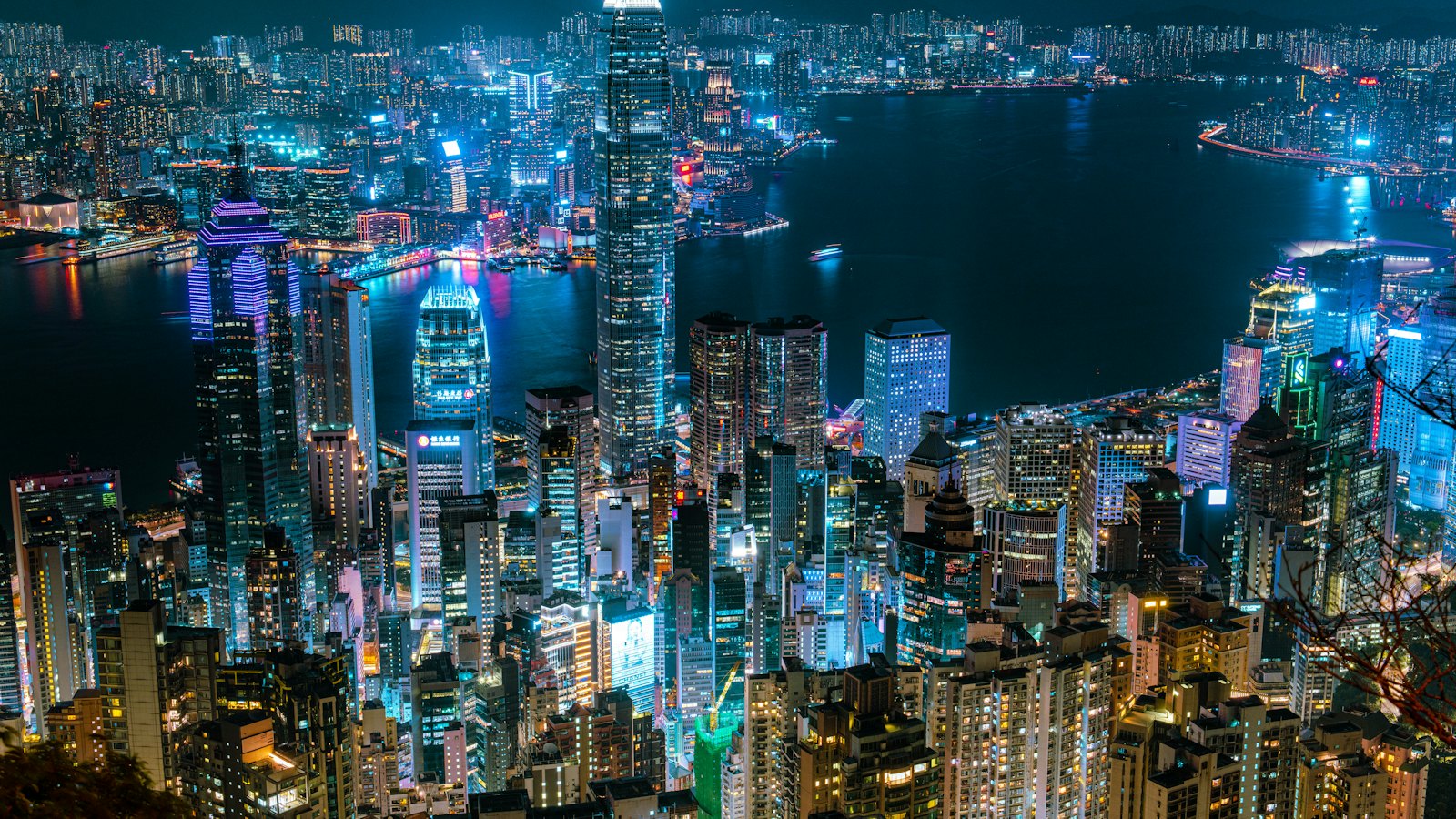
- Victoria Peak: ride the Peak Tram up for the classic skyline view. Arrive before sunset and stay for the lights; weekends bring queues.
- Star Ferry: the short, cheap crossing between Tsim Sha Tsui and Central is still a top harbour view.
- Tsim Sha Tsui promenade: stroll the Avenue of Stars and catch the nightly harbour light show.
- Ngong Ping and the Big Buddha: the Ngong Ping 360 cable car climbs from Tung Chung to Ngong Ping, home of the Tian Tan Buddha and Po Lin Monastery. Add the stilt houses of Tai O the same day.
- Hong Kong Disneyland or Ocean Park: a full day each. Disneyland has halal-certified restaurants inside the park.
- West Kowloon: M+ for design and pop culture, and the Hong Kong Palace Museum for imperial treasures lent from Beijing, both beside a harbourfront park.
- Markets: Temple Street after dark, plus the Ladies' Market, Flower Market and Goldfish Market in Mong Kok.
- Dragon's Back: a ridge walk with sea views ending at Big Wave Bay beach, best in the cooler months.
- Macau: an easy day trip by ferry or bridge bus, with its own immigration check, so bring your passport.
What to eat in Hong Kong and where
Hong Kong cooking is Cantonese at heart, so much of it will feel familiar to Chinese Malaysians, with a different accent.
- Dim sum: har gow, siu mai and char siu bao at yum cha, a weekend ritual for local families.
- Roast meats: goose, char siu and crispy pork over rice, from shops with the roasts hanging in the window.
- Wonton noodles: thin, springy egg noodles and shrimp wontons in a clear broth, quite unlike the dry, char siu-topped wonton mee back home.
- Cha chaan teng classics: silky milk tea strained through a cloth filter, pineapple buns with butter, macaroni soup and thick French toast in old-style diners.
- Snacks: egg tarts, egg waffles, curry fish balls and stuffed peppers from bakeries and street stalls around Mong Kok and Sham Shui Po.
- Seafood: choose from the tanks in Sai Kung or Lei Yue Mun and have a nearby restaurant cook it.
Sham Shui Po and Mong Kok have the cheapest good meals. Muslim travellers: most dishes above use pork or come from non-halal kitchens, so see the next section.
Halal food and prayer spaces
Halal dining in Hong Kong has grown fast, and Malaysians eat well with a little planning. The city counted 142 halal-certified restaurants in January 2025, and the main certifier is the Incorporated Trustees of the Islamic Community Fund of Hong Kong. Some places are Muslim-owned but uncertified, and some only promise no pork, so look for the certificate on the wall.
- Tsim Sha Tsui: the biggest cluster, with certified Indian, Middle Eastern, Western and bakery options around Mody Road, Prat Avenue and Kimberley Road. The Kowloon Mosque, the city's largest, is on Nathan Road near exit A1 of Tsim Sha Tsui station, with a women's hall upstairs.
- Wan Chai: the Ammar Mosque and Osman Ramju Sadick Islamic Centre on Oi Kwan Road houses a halal Chinese restaurant known for dim sum.
- Central and Mong Kok: the Jamia Mosque on Shelley Street, by the Mid-Levels escalator, is the oldest; the Ibrahim Mosque is on Ferry Street, Mong Kok.
Prayer spaces: the airport has multi-faith prayer rooms near arrival Gate 35, near departure Gate 42, and at the end of check-in Aisle A in Terminal 1 (Aisle V in Terminal 2). At Hong Kong Disneyland, all meat at Wayfinders' Table and Karibuni Grill is halal-certified by the Islamic Community Fund. For a place to pray at Disneyland, Ocean Park or Ngong Ping, ask guest services when you arrive.
Getting around: MTR, Octopus, trams and taxis
The MTR is clean, quick, signposted in English and reaches almost everywhere a visitor goes.
- Octopus: the stored-value card for nearly all public transport, convenience stores and many eateries. A standard adult card costs HK$200, including HK$150 of value and a HK$50 refundable deposit. iPhone users can instead set up a digital Octopus in Apple Wallet through the Octopus for Tourists app.
- Bank cards: since August 2024 the light-blue gates at MTR stations accept contactless Visa and Mastercard credit or debit cards and UnionPay credit cards, a handy backup (watch for overseas fees). For the Airport Express, stick to Octopus or a ticket.
- Trams and ferries: the Island's double-deck trams are the cheapest ride in town, and ferries take Octopus.
- Taxis: red taxis serve the urban area, with a flag fall of about HK$29 covering the first two kilometres at the time of writing. Since April 2026 every licensed taxi must accept at least two electronic payment methods, but carry some cash anyway.
- Ride-hailing: Grab does not operate in Hong Kong. Uber works and can book ordinary taxis as well as private cars. Save your hotel's address in Chinese characters for drivers.
A 4-day Hong Kong itinerary
Short hops, with prayer stops and halal meals built in.
- Day 1: Land, take the Airport Express to Kowloon and check in around Tsim Sha Tsui. Walk the Avenue of Stars at sunset, pray at the Kowloon Mosque, then eat on Mody Road and watch the harbour light show.
- Day 2: Cross to Central on the Star Ferry, ride the Peak Tram up to Victoria Peak, then back in Central take the Mid-Levels escalator up to the Jamia Mosque. Lunch on halal dim sum in Wan Chai, then tram to Causeway Bay.
- Day 3: Go to Tung Chung for the Ngong Ping 360 cable car, the Big Buddha and Tai O. Families can swap this day for Disneyland, which is also on Lantau.
- Day 4: Morning at M+ or the Hong Kong Palace Museum in West Kowloon, then Mong Kok's markets and Sham Shui Po before an evening flight. If your airline offers in-town check-in, drop your bags at Kowloon Station first.
With a fifth day, add Ocean Park, the Dragon's Back walk or Macau.
Money, SIM and practical tips
- Currency: the Hong Kong dollar (HKD), pegged to the US dollar. At the time of writing HK$1 is about RM 0.52, so RM 100 buys roughly HK$190.
- Cash and cards: cards work in malls, chains and most restaurants; keep cash for market stalls, older eateries and minibuses. DuitNow QR does not work here; PayNet's cross-border QR covers Singapore, Indonesia, Thailand and Cambodia, not Hong Kong.
- SIM and eSIM: buy a travel eSIM before you fly or a tourist SIM at the airport. Google Maps, WhatsApp and Instagram work normally, as Hong Kong sits outside mainland China's internet blocks.
- Plugs: Hong Kong mostly uses the Type G three-pin socket found in Malaysian homes, on 220V, so your chargers work without an adapter.
- Tipping: many restaurants add a 10% service charge, so nothing more is expected.
- Safety: very safe, even late at night, but mind your bag in crowded markets.
- Scams: ignore people dressed as monks who ask for donations, and in tourist-area electronics shops confirm the model, warranty and final price before paying.
- Leaving: Malaysian e-passport holders aged 7 and above (at least 1.1 m tall) can use the Smart Departure e-gates without registering.
Shopping for bags, sneakers and gadgets
Hong Kong charges no sales tax, so the price on the tag is what you pay.
- Designer bags and luxury: Canton Road and Harbour City in Tsim Sha Tsui, the malls around Causeway Bay, and IFC and the Landmark in Central carry the big European houses. Compare with Malaysian prices first, as not everything is cheaper.
- Sneakers: Fa Yuen Street in Mong Kok, known as Sneakers Street, is lined with shoe shops from end to end.
- Gadgets: Sham Shui Po is the place for cables, camera gear, parts and cheap accessories. For phones and laptops, buy from brand stores or large chains and confirm the warranty is valid in Malaysia.
- Souvenirs and cheap fashion: the Ladies' Market and Temple Street, where bargaining is part of the fun.
Keep receipts: Malaysian customs duty-free allowances apply back at KLIA and big purchases may need declaring, so check the Royal Malaysian Customs rules first.
Before you go
- Best time to go
- Late October to early December is the best time to visit Hong Kong, with dry air, sunshine and comfortable temperatures for walking and hiking. The Hong Kong Observatory notes that many people regard November and December as the best months of the year. January and February are cooler, sometimes below 10°C, so pack a jacket. March and April are humid and foggy. May to September is hot and sticky, with about 80% of the year's rain, and typhoons can arrive from May to November, most often July to September. Malaysia's year-end school break, which starts on 4 December in some states and 5 December in others and runs until the end of 2026, lifts fares and hotel rates, as do Christmas and Chinese New Year on 6 February 2027. Ramadan 2027 is expected to begin around 8 February.
- Visa for Malaysians
- Malaysians get 90 days visa-free in Hong Kong as of September 2026, with no e-visa, online travel authorisation or entry fee to arrange. The Immigration Department expects visitors to have enough money for their stay and an onward or return ticket, and visitors may not work or study. Instead of a passport stamp you receive a small landing slip showing your permitted stay, so keep it with your passport. Your passport should be valid for at least one month beyond your stay, and six months left avoids any trouble at airline check-in. Adults who have entered through Hong Kong's airport at least twice in the past 24 months can now enrol for the e-Channel gates before arrival using the Go Hong Kong app, launched on 16 September 2026. Macau and mainland China have separate entry rules. Confirm the latest details on immd.gov.hk before you travel.
- Honest budget guide
- Plan on roughly RM 230 to RM 650 per person per day in Hong Kong, excluding flights, with your room the biggest variable. Flights: our fare scan currently lists one-way tickets from around RM 504 (AirAsia), with a median near RM 560, so a return built from two one-way tickets runs about RM 1,000 to RM 1,150. Rooms: capsule hotels and guesthouse rooms start around RM 110 to RM 250 a night, while a mid-range hotel in the centre is more like RM 400 to RM 750. Food: RM 70 to RM 180 a day. Transport: about RM 20 to RM 40 a day, plus the Airport Express. Four days and three nights at mid-range level, two to a room, comes to about RM 2,700 to RM 3,500 each with airfare; all numbers are indicative.
Frequently asked questions
Do Malaysians need a visa for Hong Kong?
No. Malaysians can stay up to 90 days without a visa at the time of writing, with no online authorisation or fee. Carry a return ticket and enough money for your stay, and keep the landing slip you receive on arrival. Check immd.gov.hk before flying.
Is there a direct flight from KL to Hong Kong?
Yes. Malaysia Airlines, Cathay Pacific and Batik Air go non-stop from KLIA Terminal 1, and AirAsia usually flies non-stop from Terminal 2. HK Express also flies to Hong Kong from Subang. The flight takes about four hours, and our fare scan currently lists one-way tickets from around RM 504.
Is Hong Kong Muslim-friendly?
More than many expect. There are several mosques, including the large Kowloon Mosque in Tsim Sha Tsui and the Ammar Mosque in Wan Chai, well over a hundred halal-certified restaurants (142 in January 2025), multi-faith prayer rooms at the airport, and halal-certified restaurants even inside Hong Kong Disneyland. Most everyday Cantonese food is not halal, so plan meals around certified outlets.
How many days in Hong Kong is enough?
Four days covers the essentials: the harbour, Victoria Peak and Central, the Big Buddha on Lantau, and a day of markets and museums. Add a fifth day for Disneyland, Ocean Park or Macau. A three-day long weekend also works if you stay central and skip Lantau.
What is the best month to visit Hong Kong?
November and December are the most comfortable months, with dry, sunny weather that suits walking and hiking. Late October is also good, although typhoons are still possible. Avoid July to September if you dislike heat, humidity and storm warnings, and expect higher prices during the December school holidays and Chinese New Year.
What does a 5-day Hong Kong trip cost from Malaysia?
Roughly RM 2,000 for a lean trip up to about RM 4,000 for a comfortable mid-range one, per person, including flights and sharing a room. That assumes two one-way tickets close to the RM 504 to RM 560 our fare scan lists right now. Treat these totals as indicative.
Can I use Grab in Hong Kong?
No, Grab does not operate in Hong Kong. Uber does, and it can book both private cars and regular taxis. Red taxis are plentiful and metered, and since April 2026 they must accept electronic payment. At rush hour the MTR is usually quicker.
Do I need an Octopus card in Hong Kong?
It helps but is no longer essential. The MTR now accepts contactless Visa, Mastercard and UnionPay cards at its light-blue gates, yet Octopus also covers buses, trams, ferries and convenience stores, and it gets you a cheaper Airport Express fare. A standard card costs HK$200 including a HK$50 refundable deposit, or iPhone users can use the Octopus for Tourists app.
Jom pergi
Ready to go Hong Kong? Compare available flights and hotels for your dates. Check baggage, cancellation terms and the final total on the booking provider before paying.






