




On this page13 sections
- Overview
- Getting there from KL: flights and KLIA terminals
- New Chitose Airport to the city
- Where to stay in Sapporo
- Things to do in Sapporo
- What to eat in Sapporo
- Halal food and prayer spaces
- Getting around Sapporo
- Sample itinerary: 4 days in Sapporo
- Money, SIM and practical tips
- Snow Festival, skiing and dressing for real cold
- Before you go
- FAQ
Sapporo, the capital of Hokkaido, is where many Malaysians see real snow for the first time. Winters are long and white, summers stay cool and dry, and the food runs from crab and sea urchin bowls to soup curry and the miso ramen the city made famous. It is also compact and safe. This guide covers the seasonal AirAsia X non-stop from KLIA Terminal 2, the train from New Chitose, halal food and the mosque, the 2027 Snow Festival dates, costs in ringgit, and what to wear when the thermometer drops below zero.
Getting there from KL: flights and KLIA terminals
Sapporo's airport is New Chitose (CTS), and for Malaysians it is mainly a winter route. Published schedules at the time of writing show AirAsia X bringing back its seasonal non-stop from KLIA Terminal 2 on 25 October 2026, about four times a week until late March 2027. It leaves KL just after midnight and lands around 8.40 am, roughly 7 hours 35 minutes later. The return departs New Chitose just before 10 am and takes about 8 hours 45 minutes. Japan is one hour ahead of Malaysia.
Outside that season you connect once. Thai AirAsia X flies from Bangkok Don Mueang (up to four weekly from 1 October, rising to as many as seven a week from 1 December 2026), Cebu Pacific restarts Manila to Sapporo on 27 October 2026, and Scoot flies in from Singapore. THAI via Bangkok and China Airlines via Taipei are the full-service options and generally check in at KLIA Terminal 1, while AirAsia uses Terminal 2. Confirm the terminal on your booking before you set off.
At the time of writing, Amaboxly's KL fare scan (28 September 2026) found one-way fares from about RM 1,050 (Cebu Pacific via Manila, on a January 2027 date), from around RM 1,150 via Bangkok, and a typical fare near RM 1,440. Check live prices on Amaboxly Travel, as they change daily.
New Chitose Airport to the city
New Chitose has separate international and domestic buildings joined by an indoor walkway. From international arrivals, follow the train signs along the walkway to the JR station on the basement floor (B1F) of the main terminal building. Prices below are indicative, at roughly 38 yen to RM 1.
- JR Rapid Airport train: the simplest choice, with up to six Airport trains an hour in the daytime and roughly 37 minutes to Sapporo Station (33 on the fastest Special Rapid). The fare is 1,150 yen (about RM 30), payable by Suica or Kitaca. A reserved U-Seat adds 840 yen (RM 22), worth it with bulky winter luggage.
- Airport buses: Hokuto Kotsu and Chuo Bus share the city-centre route to Sapporo Station, Odori, Susukino and major hotels for 1,500 yen (about RM 39) at the time of writing. Direct runs take about 65 to 80 minutes, and longer when they stop at hotels or in snow. You pay when you get off, by cash or contactless credit card; Hokuto Kotsu buses do not take IC transit cards.
- Taxi: expect roughly 15,000 to 19,000 yen (RM 390 to RM 495) on the meter plus expressway tolls, for about an hour's ride. Flat-rate private transfers suit families.
Heavy snow can delay trains in midwinter, so leave spare time before your flight home.
Where to stay in Sapporo
Central Sapporo is a grid, and addresses read like coordinates: Kita 14 Jo Nishi 4 means North 14, West 4. Most visitors stay on the short subway spine between Sapporo Station and Susukino.
- Sapporo Station: best for short trips and day trips, since the airport train and JR services to Otaru stop here.
- Odori: the centre of everything, with the Snow Festival site, the TV Tower and all three subway lines. An underground walkway links it to Sapporo Station. Rooms here sell out first in festival week.
- Susukino and Nakajima Park: Susukino is the nightlife and ramen district, busy until late, with the covered Tanukikoji arcade next door. Families wanting quieter streets can look a stop or two south, around Nakajima Park.
- Jozankei Onsen: a hot spring village in the hills roughly an hour or more away by bus, worth one ryokan night in autumn or snow. If communal baths are not for you, book a room with its own private bath.
Things to do in Sapporo
Mix central sights with at least one trip out of town.
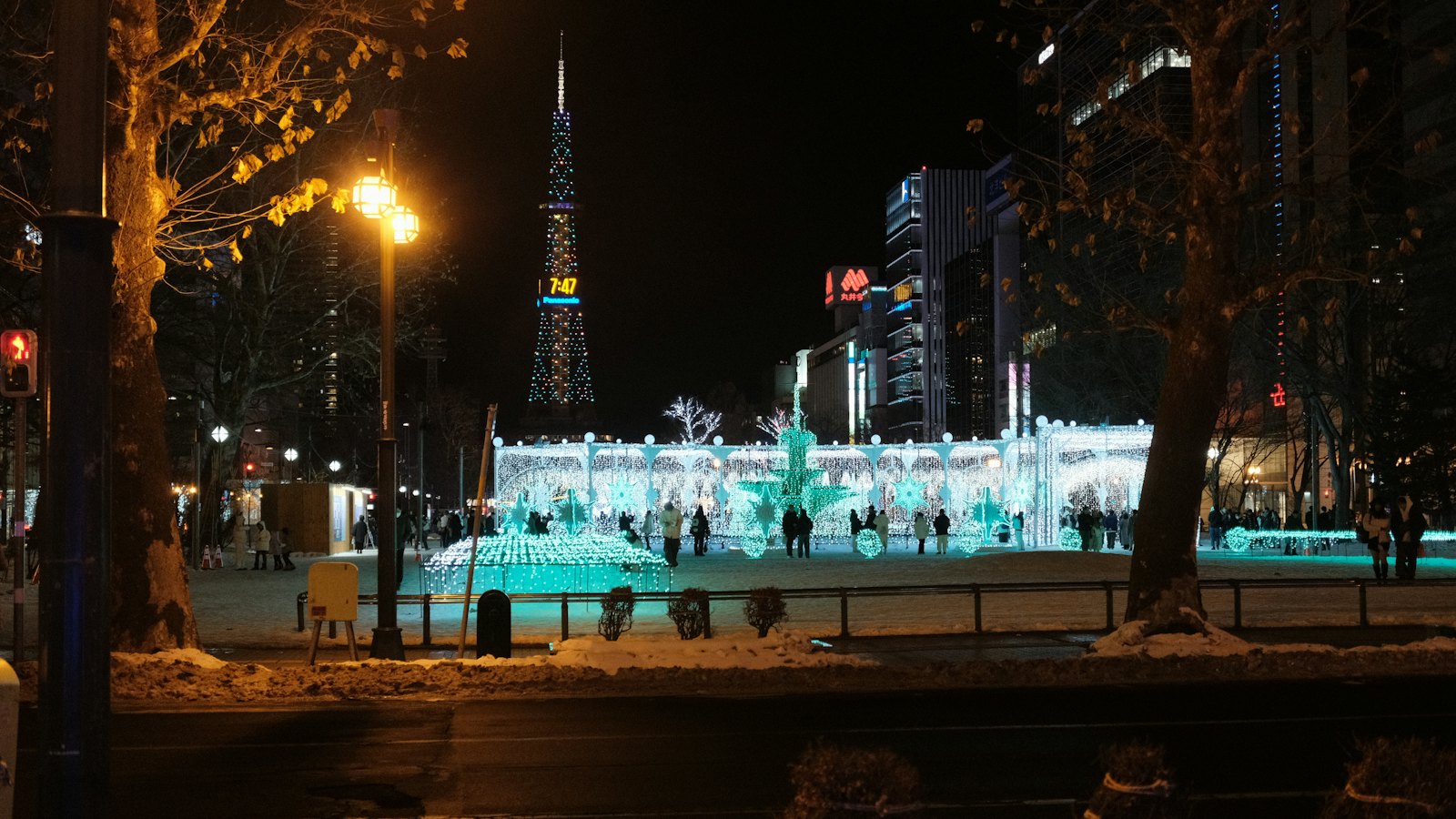
- Odori Park and the TV Tower: the green strip through the centre hosts the Snow Festival and, from 20 November to 25 December 2026, the Munich Christmas Market in Sapporo.
- Mount Moiwa at night: take the streetcar to Ropeway Iriguchi, then the free shuttle bus (or a 10-minute walk), the ropeway and a mini cable car to the summit for the city lights.
- Nijo Market: crab and seafood rice bowls for an early breakfast.
- Shiroi Koibito Park: the factory behind Hokkaido's best-known biscuit, near Miyanosawa Station, with a prayer space inside.
- Otaru: a canal town under an hour away by JR, known for glass workshops, music boxes and dessert cafes.
- Jozankei Onsen: hot springs in a river gorge, with autumn colours peaking in October.
- Hokkaido Shrine and Maruyama Park: cherry blossoms usually arrive around early May.
- Moerenuma Park: a vast park designed by the sculptor Isamu Noguchi, with a glass pyramid and sculpted hills.
- Sapporo Teine: the city's own ski area, used for the 1972 Winter Olympics and a sensible first ski day.
What to eat in Sapporo
Hokkaido supplies much of Japan's seafood and dairy. Several classics use pork, mirin or sake, so Muslim readers should check the next section first.
- Miso ramen: the city's signature bowl, developed at the shop Aji no Sanpei in the mid-1950s, with a rich broth usually started from pork fried in lard. Ganso Ramen Yokocho, a narrow Susukino lane, is lined with tiny ramen counters.
- Soup curry: a Sapporo invention, a thin spiced broth with whole vegetables and chicken leg, and the heat level is often up to you. Anyone raised on Malaysian curry feels at home.
- Jingisukan: lamb and vegetables grilled on a domed pan, the local group dinner.
- Kaisendon and crab: rice bowls piled with salmon roe, sea urchin and scallops, plus hairy, snow and king crab, at Nijo Market and the Curb Market.
- Zangi: Hokkaido's marinated fried chicken.
- Sweets: soft serve, cheese tarts and Shiroi Koibito biscuits fill most suitcases home. Read labels for gelatin, emulsifiers and liqueur.
At the time of writing, a casual lunch runs about 900 to 1,500 yen (RM 23 to RM 39) and a simple dinner 1,200 to 2,500 yen (RM 31 to RM 65); market seafood costs more.
Halal food and prayer spaces
Muslim travellers manage well here with some homework, since certified restaurants are few and the list keeps changing.
- Certified halal: approved by a body such as the NPO Japan Halal Association or the Japan Halal Foundation. Check that the certifier appears on JAKIM's list of recognised foreign bodies.
- Muslim-friendly: some dishes free of pork and alcohol, usually uncertified, from a shared kitchen.
- Pork-free: no pork, but non-halal meat, and mirin or sake may be used.
Ordinary miso ramen broth is not halal even without pork slices, and jingisukan marinades often contain mirin. Seafood is the usual fallback, but sauces can hide alcohol. Sapporo's tourism office points visitors to the Halal Gourmet Japan and Muslim-Guide.jp directories; the Halal Navi and Muslim Pro apps help too.
Sapporo Masjid, run by the Hokkaido Islamic Society, stands at Kita 14 Jo Nishi 4 in Kita Ward, north of Sapporo Station near Hokkaido University. Check the walking route on a map app before you go. At the time of writing the Friday khutbah begins at 12.15 pm, and women have their own entrance and prayer floor.
New Chitose's international terminal has gender-separated prayer rooms with small ablution areas on the second floor, and Sapporo Factory (3-jo Hall, 3F) and Shiroi Koibito Park list prayer spaces too. In December the sun sets around 4 pm, so Asr and Maghrib come early.
Getting around Sapporo
The subway is the visitor's backbone: the Namboku, Tozai and Toho lines all meet at Odori Station. At the time of writing, single rides cost 210 to 380 yen (about RM 5.50 to RM 10), a One-Day Card is 830 yen (RM 22), and the Donichika pass drops to 520 yen on weekends and public holidays. The streetcar loop, handy for Mount Moiwa, is 200 yen a ride.
- Transit cards: Kitaca (JR Hokkaido) and SAPICA (city transport) cost 2,000 yen including a 500 yen deposit. Kitaca or Suica also covers the subway, buses and streetcar, plus JR to the airport and Otaru.
- Ride-hailing: Grab does not run its own ride service in Japan, and its Ride Abroad option for Japan is not documented for Malaysian accounts at the time of writing. Use GO, which covers Hokkaido, dispatches licensed taxis and takes foreign cards; DiDi also covers Hokkaido and makes a useful backup.
- Taxis: flag fall is about 670 yen, and most accept credit cards.
- Underground: in winter, walk below ground from Sapporo Station to Odori through the Chi-Ka-Ho walkway, then on through Pole Town towards Susukino.
- Ice: pavements get slippery from December to March. Take short steps and buy clip-on shoe grips at a convenience store.
Sample itinerary: 4 days in Sapporo
This plan fits the winter non-stop, which lands in the morning and heads home before 10 am, so spend your final night near Sapporo Station. Shuffle days around the weather.
- Day 1: Land around 8.40 am and ride the train in. Leave your bags, walk Odori Park, the TV Tower and the Clock Tower, then have soup curry and ride up Mount Moiwa after dark.
- Day 2: Breakfast at Nijo Market, then JR to Otaru for the canal and Sakaimachi Street's glass and dessert shops. Evening in Tanukikoji and under the Susukino lights.
- Day 3: Snow day. Book a beginner ski lesson at Sapporo Teine, or in February see the Snow Festival at Odori and the slides at Tsudome. On a Friday, attend Jumu'ah at Sapporo Masjid first.
- Day 4: Shiroi Koibito Park in the morning, souvenirs around Sapporo Station in the afternoon, and an early night. On AirAsia X, take an early train next morning and allow time for the tax-free customs check.
A fifth day fits a night at Jozankei Onsen or, in July, a trip to the Furano lavender fields.
Money, SIM and practical tips
- Currency: the yen. The ringgit fetched close to 38.5 yen in the last week of September 2026, making a 1,000 yen note worth about RM 26.
- Cards and cash: Visa and Mastercard work in hotels, malls, taxis and chains. Carry cash for market stalls and ramen ticket machines. Seven Bank ATMs inside 7-Eleven take most overseas Visa, Mastercard, Plus and Cirrus cards, though not every card works.
- E-wallets: DuitNow QR does not work in Japan; PayNet's cross-border partners at the time of writing are Singapore, Thailand, Indonesia and Cambodia. Touch 'n Go eWallet pays at shops showing the Alipay+ sign.
- Tax-free shopping: from 1 November 2026 you pay the full tax-inclusive price, then scan your passport at a customs kiosk at New Chitose before check-in to get the tax back. Keep the goods with you to show if asked.
- Taxes: stays under 20,000 yen per person a night carry 300 yen per person per night in combined Sapporo and Hokkaido accommodation tax, and the 3,000 yen departure tax is normally built into your air fare.
- SIM: set up a Japan eSIM before flying.
- Plugs: type A flat two-pin at 100V. Bring an adapter.
- Tipping: not expected.
- Safety: very safe; the real hazards are ice, snow sliding off roofs and Susukino touts selling cheap drinks.
Snow Festival, skiing and dressing for real cold
For many Malaysians, Sapporo is the first proper snow trip, and the big event is the Snow Festival. The 2027 edition runs from 4 to 11 February across three sites: giant snow sculptures in Odori Park, ice carvings on the main street in Susukino, and snow slides and rafting for children at Tsudome in Higashi Ward. Chinese New Year falls on 6 February 2027, mid-festival, so flights and rooms will be at their dearest. Book months ahead.
Sapporo Teine and the other slopes near the city suit a first lesson with rental gear, while Niseko's famous powder is further west and better as an overnight trip.
What to pack or buy:
- Layers: thermal innerwear, a fleece and a proper down jacket. January and February days often hover near freezing.
- Feet: waterproof boots with deep tread, thick socks and clip-on grips.
- Extras: touchscreen gloves, a beanie, lip balm and heat packs from any convenience store.
Before you go
- Best time to go
- Come from December to February for reliable snow and the Snow Festival (4 to 11 February 2027), or from June to August for cool, dry days in the mid-20s Celsius. Winter is what Malaysians love most, and also the busiest and dearest season, more so this time because Chinese New Year lands in festival week and most states close schools for the year-end break from 5 December 2026. Spring comes late, with cherry blossoms usually around early May during Japan's Golden Week. July brings lavender to Furano, and Hokkaido largely misses the June rainy season that soaks Tokyo. October is quiet and pretty for autumn colours at Jozankei. Keep in mind that the AirAsia X non-stop is scheduled only from late October to late March.
- Visa for Malaysians
- Malaysian e-passport holders need no visa for Japan as of September 2026: tourist stays of up to 90 days are allowed, and nothing has to be filed online in advance. Japan's Ministry of Foreign Affairs (mofa.go.jp) grants this exemption to Malaysians carrying ICAO-standard chip passports, which is what Malaysia issues; travellers on any other document are advised to get a visa beforehand. No fee or electronic authorisation applies yet; Japan plans an online pre-travel check called JESTA for visa-exempt visitors, but it is not in force. Keep your hotel and onward flight details handy, and use Visit Japan Web to complete the arrival and customs forms online. Your passport must cover the whole stay, and six months of validity is the safe rule. Check the MOFA website for any change before you fly.
- Honest budget guide
- Plan on roughly RM 300 to RM 800 per person per day on the ground in Sapporo, room included, with December and Snow Festival week at the top end. Flights: our KL fare scan on 28 September 2026 priced one-way tickets from about RM 1,050 (Cebu Pacific via Manila), typically near RM 1,440, so two one-way tickets come to roughly RM 2,100 to RM 2,900. A business hotel room is about 7,500 to 15,000 yen (RM 195 to RM 390) a night on quiet dates, and a central mid-range double 13,000 to 25,000 yen (RM 340 to RM 650), plus 300 yen accommodation tax per person. Allow RM 80 to RM 130 a day for food and RM 25 to RM 40 for transport. A mid-range 5-day, 4-night trip for two sharing works out at roughly RM 3,600 to RM 5,500 each, flights included. All figures are indicative.
Frequently asked questions
Do Malaysians need a visa for Sapporo?
No. As of September 2026, Malaysians on a chip e-passport can visit Japan for tourism for up to 90 days with no visa, fee or online pre-approval. Keep your hotel booking and return ticket handy for immigration, and confirm the rules on Japan's MOFA website before flying.
Is there a direct flight from KL to Sapporo?
Yes, in winter. Published schedules show AirAsia X flying non-stop from KLIA Terminal 2 to New Chitose from 25 October 2026, about four times a week until late March 2027, in roughly seven and a half hours. Otherwise you change planes once, for example in Bangkok or Manila.
When is the Sapporo Snow Festival 2027?
It runs from 4 to 11 February 2027 at three sites: Odori Park for the giant snow sculptures, Susukino for ice carvings, and Tsudome for snow slides and family play. Chinese New Year falls on 6 February 2027, in the middle of festival week, so book flights and rooms early.
Is Sapporo Muslim-friendly?
Yes, with planning. Sapporo Masjid in Kita Ward holds Friday prayers and has a women's section, and New Chitose Airport has gender-separated prayer rooms. Certified halal restaurants are few and change often, so check Halal Gourmet Japan, Muslim-Guide.jp or the Halal Navi app. Regular miso ramen broth usually contains pork.
How many days in Sapporo is enough?
Four days covers the city, a day in Otaru and a snow or ski day. Add a fifth for a night at Jozankei Onsen, or take a week to see more of Hokkaido, such as Furano in summer or Niseko in winter. On the AirAsia X schedule, your last morning goes to the flight home.
What does a 5-day Sapporo trip cost from KL?
Sharing a room at a mid-range level, set aside roughly RM 3,600 to RM 5,500 per person, including return flights, casual meals, transit and a few paid sights. December and festival week cost more, while hostels and convenience store breakfasts cut the bill. Carry some yen for markets and ramen ticket machines.
Can I use Grab in Sapporo?
Not reliably. Grab does not run its own ride service in Japan, and its Ride Abroad option for Japan is not documented for Malaysian accounts at the time of writing. Install GO, which covers Hokkaido, dispatches licensed taxis and takes foreign cards, with DiDi as a backup. Taxis are easy to flag in the city centre and most accept credit cards, but the subway and streetcar are cheaper for sightseeing.
What is the best month to visit Sapporo?
February wins for snow lovers thanks to the Snow Festival, though it is cold, crowded and pricey. January has deep snow with easier prices after New Year. July suits families escaping the heat, with cool days and Furano lavender, while October is calm and colourful.
Jom pergi
Ready to go Sapporo? Compare available flights and hotels for your dates. Check baggage, cancellation terms and the final total on the booking provider before paying.






