




On this page12 sections
Samarkand brings the Silk Road vividly to life through tiled mausoleums, vast religious schools and neighbourhoods where everyday routines continue beside celebrated monuments. Malaysian visitors will find several practical advantages, including visa-free short stays, plentiful Muslim-friendly meals and comparatively affordable local expenses. This guide explains how to reach the city from KLIA, travel from the airport, select a convenient neighbourhood and move between the principal attractions. It also introduces Samarkand cuisine, worship options, seasonal conditions, approximate costs and a balanced three-day route for experiencing the city without rushing.
Getting there from Kuala Lumpur
As of September 2026, no scheduled nonstop flights operate between Kuala Lumpur International Airport and Samarkand. Reaching the city normally requires one connection, although certain lower-priced combinations use two flights or combine an international flight with an Uzbek train. Possible transfer locations include Tashkent, Istanbul, Gulf airports and other Central Asian hubs. Flying into Tashkent is particularly practical when paired with a modern rail service to Samarkand.
A reasonably timed journey with one transfer generally occupies about 12 to 18 hours. Overnight waits, self-transfers or a separate train booking can extend that considerably. Compare the complete travel time, baggage conditions and transfer arrangements before selecting the cheapest offer. Separate tickets may require immigration clearance, luggage collection and another check-in.
The airline operating your first flight determines which KLIA terminal you need. Most full-service international airlines depart from Terminal 1, whereas selected regional budget carriers use Terminal 2. Rely on the terminal printed in your latest itinerary or boarding pass.
For planning purposes, a one-way trip from Kuala Lumpur commonly falls between RM 1,400 and RM 2,500. Prices tend to rise for Malaysian school-holiday dates and itineraries with shorter, more convenient transfers.
From Samarkand airport into town
Samarkand International Airport stands on the city's northern side, approximately 8 kilometres from Registan Square. Driving to a central hotel usually requires 15 to 25 minutes, subject to traffic and the property's exact location. For simple budgeting, use an approximate conversion of 3,000 Uzbekistani som for RM 1, while remembering that currency values fluctuate.
- Ride-hailing car: An app-booked vehicle is generally the simplest option. Central trips are often priced between 25,000 and 50,000 som, approximately RM 8 to RM 17. Enter the hotel address before exiting arrivals and match the licence plate with the app.
- Regular airport taxi: Cars are available near the arrivals area. A trip may be quoted at 50,000 to 100,000 som, or approximately RM 17 to RM 33, depending on the hour, demand and negotiation. Settle the entire amount before departure when no meter is used.
- Prearranged hotel pickup: This costs more than most app bookings but can be worthwhile after a late flight, with children or when carrying numerous bags. The driver monitors the arrival and has the accommodation details in advance.
- Public bus: Local buses generally charge only several thousand som. They are economical, though changing schedules, limited route guidance and luggage make them less convenient. Airport personnel can identify the current service closest to your lodging.
Choosing an area to stay
Samarkand covers a broader area than photographs of its famous squares might suggest. A carefully chosen base reduces unnecessary travel, especially during hot weather or a brief visit.
- Registan and the historic quarter: Choose this area for easy early access to Registan Square, Siab Bazaar and Bibi-Khanym Mosque. Small guesthouses occupy lived-in lanes behind the monuments, offering a closer view of local life. Some entrances are on narrow streets where vehicles cannot stop directly outside.
- University Boulevard: This district combines leafy surroundings, cafes, restaurants and simple taxi access. It works well for couples or visitors seeking wider pavements and a balance between old Samarkand and the contemporary city.
- Around Gur-e-Amir: Staying near Timur's mausoleum places central avenues and pleasant evening walking routes nearby. Registan can be reached on foot or with a quick car journey, making the location suitable for a short itinerary.
- Railway station district: Consider this zone for a late rail arrival, an early departure or repeated train excursions. Rooms may offer better space for their price, although the headline monuments sit several kilometres away.
Authorised accommodation providers complete the required registration for international guests during check-in. Retain each document or digital record, particularly when sleeping in several Uzbek cities.
Essential sights and experiences
The city's architecture deserves patient observation because its glazed patterns and colours alter as sunlight crosses the facades.
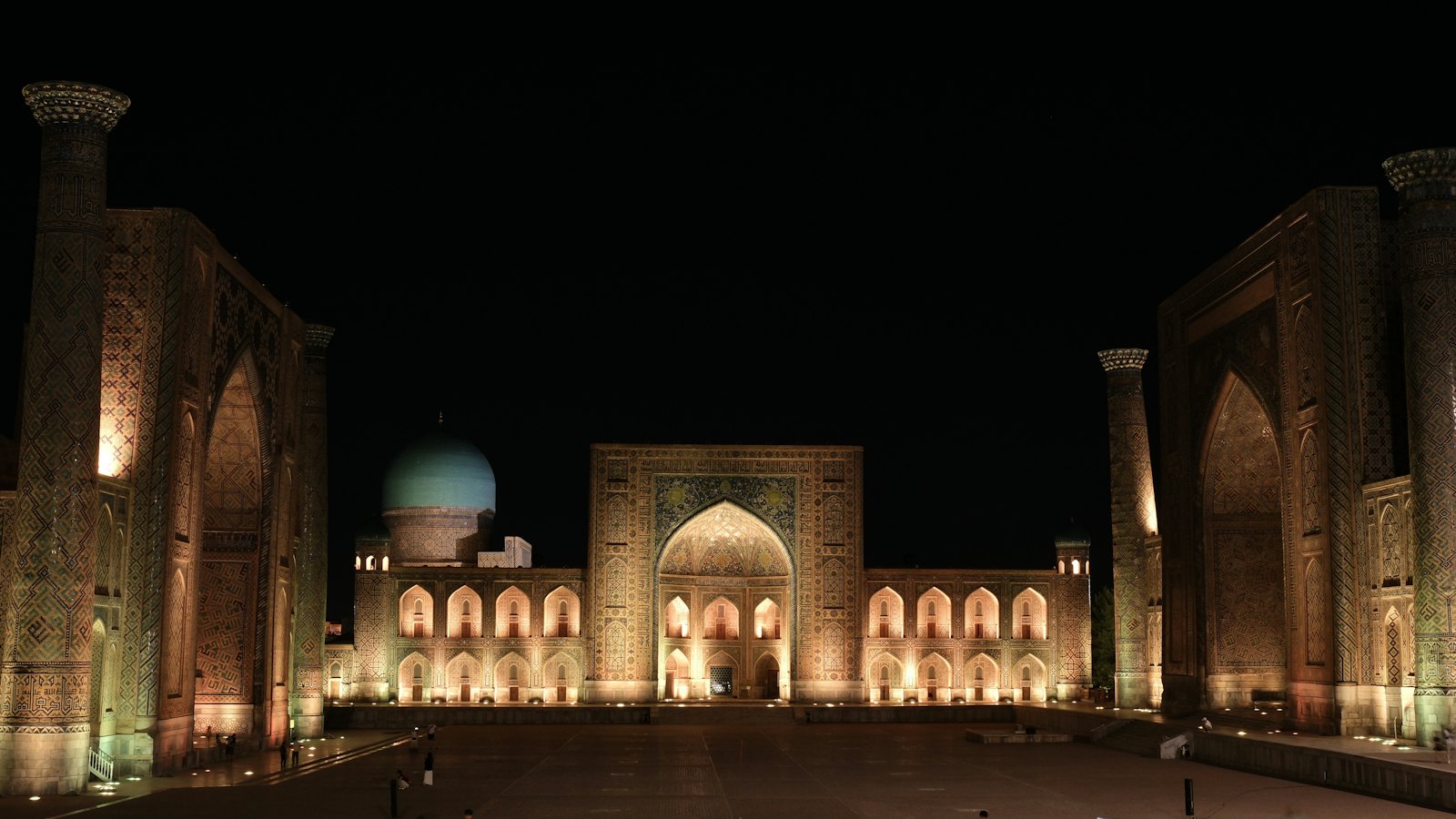
- Registan Square: View the ensemble of three immense madrasas from the plaza, then explore their courtyards, former classrooms, mosaics and ornate painted ceilings.
- Gur-e-Amir: Enter the compact but lavishly embellished mausoleum connected with Timur and members of his ruling family.
- Shah-i-Zinda: Follow the ceremonial passage between brilliant blue and turquoise tombs. It remains a pilgrimage destination, so wear respectful clothing and behave quietly.
- Bibi-Khanym Mosque: Appreciate the huge scale of this restored congregational complex beside the market district.
- Siab Bazaar: Look for spice displays, nuts, dried produce, confectionery and Samarkand's round loaves. Obtain permission before taking close photographs of sellers.
- Afrasiab Museum and archaeological ground: Discover the settlement that preceded the Mongol conquest and examine reproductions and remains of its renowned wall paintings.
- Ulugh Beg Observatory: Inspect the surviving underground portion of the vast astronomical instrument created for the Timurid scholar-ruler.
- Hazrat Khizr Mosque: Stop at the raised setting for a broad outlook over Shah-i-Zinda and older neighbourhoods.
Opening arrangements and admission charges can change, so verify them locally before organising a tightly timed day.
What to eat in Samarkand
Uzbek cooking centres on bread, rice and substantial shared plates. The Samarkand interpretation of plov layers rice, carrot, chickpeas and large portions of meat rather than mixing everything thoroughly. Visit a busy osh restaurant at midday, when batches are newly prepared, because popular kitchens may finish serving plov later in the afternoon.
Other choices include charcoal-grilled lamb, beef or chicken shashlik; lagman noodles in soup or tossed with vegetables and meat; and steamed manti filled mainly with minced meat and onion. Shurpa provides a lighter, clear broth containing vegetables and meat. Clay-oven samsa is an affordable snack, but some versions contain a generous amount of fat.
Dense, circular Samarkand non travels well and is a useful purchase before a rail journey. Siab Bazaar also sells raisins, dried apricots, nuts and regional sweets. Green tea without milk accompanies meals throughout the day.
Businesses near Registan and University Boulevard often provide easier-to-read menus and more conventional seating. At traditional establishments, ask what an order includes. Bread, salad and tea can be billed individually rather than forming part of the main dish.
Halal dining and places to pray
Samarkand is convenient for Muslim travellers because most people in Uzbekistan are Muslim and pork rarely features in customary Uzbek recipes. Familiar foods such as plov, manti, samsa and grilled meat usually use suitable ingredients. Nevertheless, restaurants do not always display recognised certification. Travellers requiring firm assurance should ask whether the meat is halal and whether alcohol enters any sauce, marinade or cooking process. The word halal is readily recognised and often appears on storefronts.
Busy neighbourhood eateries and family-operated Uzbek restaurants are typically more straightforward than international venues with mixed offerings. Fish or meat-free meals can provide alternatives, although separate grills, utensils and frying oil should not be assumed. Recent customer comments on Google Maps may help, while Zabihah can be consulted despite its limited local listings.
Mosques operate across Samarkand. Hazrat Khizr continues to have religious and pilgrimage significance, while Bibi-Khanym is also an important historic Islamic landmark. Check current worship access with residents, cover appropriately and avoid entering disruptive areas during congregational prayer. Tourist attractions and malls may lack dedicated prayer rooms. Plan stops near a mosque or request a private, clean place from your hotel.
Transport within Samarkand
Several central landmarks can be linked on foot. Registan, Bibi-Khanym Mosque and Siab Bazaar form a convenient walking sequence, and reasonably active visitors can continue onward to Shah-i-Zinda. Expect occasional broken paving, lengthy road crossings and little shelter from summer sun. Supportive footwear and drinking water make the route more comfortable.
Grab has no service in Samarkand. Yandex Go is the more practical app for booking a car, particularly because the pickup location and destination can be entered without a long conversation. A brief journey within central districts frequently costs 10,000 to 30,000 som, equivalent to approximately RM 3 to RM 10. Distance, demand and the chosen vehicle category influence the final amount.
Unbooked taxis are easy to find. When a meter is unavailable, establish the price before the car moves. If mobile internet fails, ask hotel staff to write the destination in Russian or Uzbek.
Municipal buses and trams normally charge a flat amount of just a few thousand som. They connect the centre with the station and peripheral districts, but visitor-friendly route information can be sparse. Payment systems may be revised, so carry small-denomination notes and ask whether cash or a transport card is currently required. For three or four passengers, splitting an app fare is often both simple and economical.
Suggested three-day plan
- Day 1: Reach Registan shortly after opening and spend enough time inside all three madrasas before larger groups arrive. Continue through residential streets towards Bibi-Khanym Mosque, followed by Siab Bazaar for local bread, dried fruit and nuts. In the afternoon, visit Hazrat Khizr and proceed to Shah-i-Zinda as the light softens. Return to Registan after dark for the illuminated frontage, and ask locally whether an evening performance is planned.
- Day 2: Start at Gur-e-Amir, then stroll along the tree-lined streets around University Boulevard. After lunch, book a car to Ulugh Beg Observatory and the Afrasiab Museum. Seeing the museum first supplies valuable background for understanding the neighbouring ancient settlement. Conclude with a dinner based around shashlik or Samarkand plov.
- Day 3: Reserve the morning for whichever interest deserves additional time, such as another Registan visit, market purchases, neighbourhood mosques or artisan studios. Architecture enthusiasts may hire a driver for locations outside the compact historic core. Travellers continuing across Uzbekistan can instead depart by afternoon train for Tashkent or Bukhara.
Three complete days give newcomers a rewarding overview without excessive haste. A fourth day is useful for families, deliberate photography or an outing beyond urban Samarkand.
Money and practical travel tips
The national currency is the Uzbekistani som, abbreviated UZS. For approximate calculations, RM 1 can be treated as 3,000 som, but consult a current exchange rate before converting or withdrawing funds. Cash remains important at markets, modest restaurants, on public transport and in privately arranged taxis. Hotels and larger dining establishments increasingly accept cards, though a Malaysian-issued card can occasionally be declined. Bring an alternative card and use reputable bank ATMs for sensible withdrawal amounts. DuitNow QR is not a generally accepted payment method in Uzbekistan.
Purchasing a local SIM requires passport registration. An official carrier shop or airport counter is usually easier than an informal reseller. International eSIM service provides data immediately after landing but may be more expensive. Save maps and translation packs offline before leaving Malaysia.
Electricity is supplied at 220V through Type C and Type F sockets. A Malaysian three-pin plug therefore requires an adaptor. Gratuities are restrained and optional; examine the bill first because service may already be included.
The city is broadly comfortable for tourists, but ordinary precautions still apply in markets and transport areas. Use authorised exchange channels, verify fares and count returned money. Secure your passport and preserve every accommodation registration record. Because tap-water conditions differ by location, choose sealed bottled water or water passed through a reliable filter.
Before you go
- Best time to go
- The most agreeable periods are April through May and September through October. Spring usually offers moderate temperatures and greener scenery, though showers can occur. Early autumn tends to bring dry, warm conditions that suit long walks between monuments. June, July and August may become fiercely hot at midday, making morning visits and late-afternoon outings more comfortable. Winter attracts fewer tourists and can reduce accommodation prices, but freezing nights and occasional snowfall may disrupt travel. Malaysian school breaks can increase airfare even when local visitor numbers remain moderate. Navruz festivities around March add cultural activity while also encouraging domestic journeys. Large events can reduce the supply of central rooms. Reserve popular trains and conveniently located accommodation well ahead for spring or September travel.
- Visa for Malaysians
- Malaysian citizens can enter Uzbekistan without a visa for up to 30 days, as of September 2026. This short-stay arrangement does not require an e-visa, ETA or application fee, irrespective of the purpose of the visit. The passport should remain valid for at least six months from arrival. Departure must occur before the thirtieth day unless an appropriate longer-stay visa was secured beforehand. Overseas visitors also need accommodation registration within three working days after entering the country. Licensed hotels and guesthouses normally process it during check-in. Anyone staying with friends or relatives must ensure the host completes the procedure. Save all registration evidence during a journey involving multiple cities. Before departure, verify requirements through Uzbekistan's Ministry of Foreign Affairs at mfa.uz or the Malaysian embassy in Tashkent at kln.gov.my.
- Honest budget guide
- A comfortable independent visit generally requires RM 180 to RM 350 per traveller for each day on the ground, before international airfare. Use RM 1,400 to RM 2,500 as an approximate one-way amount from Kuala Lumpur, normally involving one or more connections. Basic guesthouse rooms may run from RM 90 to RM 160 a night, while comfortable mid-range lodging is commonly RM 180 to RM 350. Daily food spending of RM 50 to RM 100 and local travel costs of RM 15 to RM 40 are reasonable starting points, with attraction tickets added separately. For three nights, including return flights, shared lodging and moderate sightseeing, an indicative total is RM 2,700 to RM 4,800 per person. Actual expenses depend strongly on travel dates, exchange movements and accommodation quality.
Frequently asked questions
Do Malaysians need a visa for Samarkand?
Malaysian passport holders can visit Uzbekistan without a visa for stays of up to 30 days, as of September 2026. An ETA and e-visa are unnecessary. Use a passport valid for at least another six months, depart within the permitted period and make sure your host or hotel completes registration within three working days. Recheck mfa.uz before travelling.
Is there a direct flight from Kuala Lumpur to Samarkand?
No nonstop service operates between Kuala Lumpur and Samarkand as of September 2026. Travellers usually change aircraft in Tashkent, Istanbul or another hub. Certain economical routes use two air sectors or arrive in Tashkent before continuing by rail. Review baggage transfer conditions carefully, and confirm whether your Kuala Lumpur flight leaves from Terminal 1 or Terminal 2.
Is Samarkand Muslim-friendly?
Yes. Mosques are widespread, Uzbekistan's population is predominantly Muslim and customary cooking seldom includes pork. Many Uzbek meat dishes are suitable for Muslim visitors, although official halal logos are not present at every restaurant. Ask directly about meat sourcing and preparation when assurance is essential. Be aware that alcohol is available in some establishments, and wear modest clothing at functioning religious locations.
How many days are enough for Samarkand?
Allow three complete days for a comfortable introductory visit. That period can include Registan, Gur-e-Amir, Shah-i-Zinda, Siab Bazaar, Bibi-Khanym Mosque, Afrasiab Museum and Ulugh Beg Observatory. A focused highlights schedule can fit into two days. Four days are preferable for children, serious photographers, slower sightseeing or a drive beyond the main urban attractions.
What is the best month to visit Samarkand?
April, May, September and October normally provide the easiest temperatures for exploring outdoors. Rain remains possible during spring, while the beginning of autumn is often warm and relatively dry. July and August bring punishing afternoon heat. Winter is calmer and rooms may cost less, but visitors should prepare for cold evenings, warm clothing requirements and occasional snow-related transport problems.
How much money should I budget for three days?
For expenses in Samarkand itself, estimate RM 540 to RM 1,050 per person across three days, excluding airfare and assuming two people share a room. This range allows for economical or moderate lodging, local food, ordinary entrance tickets and app-booked transport. Once return travel from Kuala Lumpur is included, a representative three-night total becomes approximately RM 2,700 to RM 4,800 for each traveller.
Can I use Grab in Samarkand?
Grab is unavailable in Samarkand. Visitors commonly use Yandex Go instead, which shows the proposed charge and reduces the need to explain an address verbally. Central trips frequently fall within 10,000 to 30,000 som, approximately RM 3 to RM 10. Carry cash in case the selected payment method is unsupported, and compare the vehicle's registration plate with the booking before entering.
Can I travel from Samarkand to Tashkent or Bukhara by train?
Yes. Samarkand occupies a key position on the country's principal railway line, so both Tashkent and Bukhara are convenient additions. Conventional and faster services operate on these corridors, but departure times and ticket availability vary. Desirable trains may fill during holidays or busy seasons. Purchase seats early when possible, take your passport and allow sufficient time at the station for security procedures.
Jom pergi
Ready to go Samarkand? Compare available flights and hotels for your dates. Check baggage, cancellation terms and the final total on the booking provider before paying.






