




On this page13 sections
- Overview
- Getting there from KL: direct flights and fares
- Hamad International Airport to the city
- Where to stay in Doha
- Things to do in Doha
- What to eat in Doha
- Halal food and prayer spaces
- Getting around Doha
- Sample 4-day Doha itinerary
- Money, SIM and practical tips
- Turning a transit into a Doha stopover
- Before you go
- FAQ
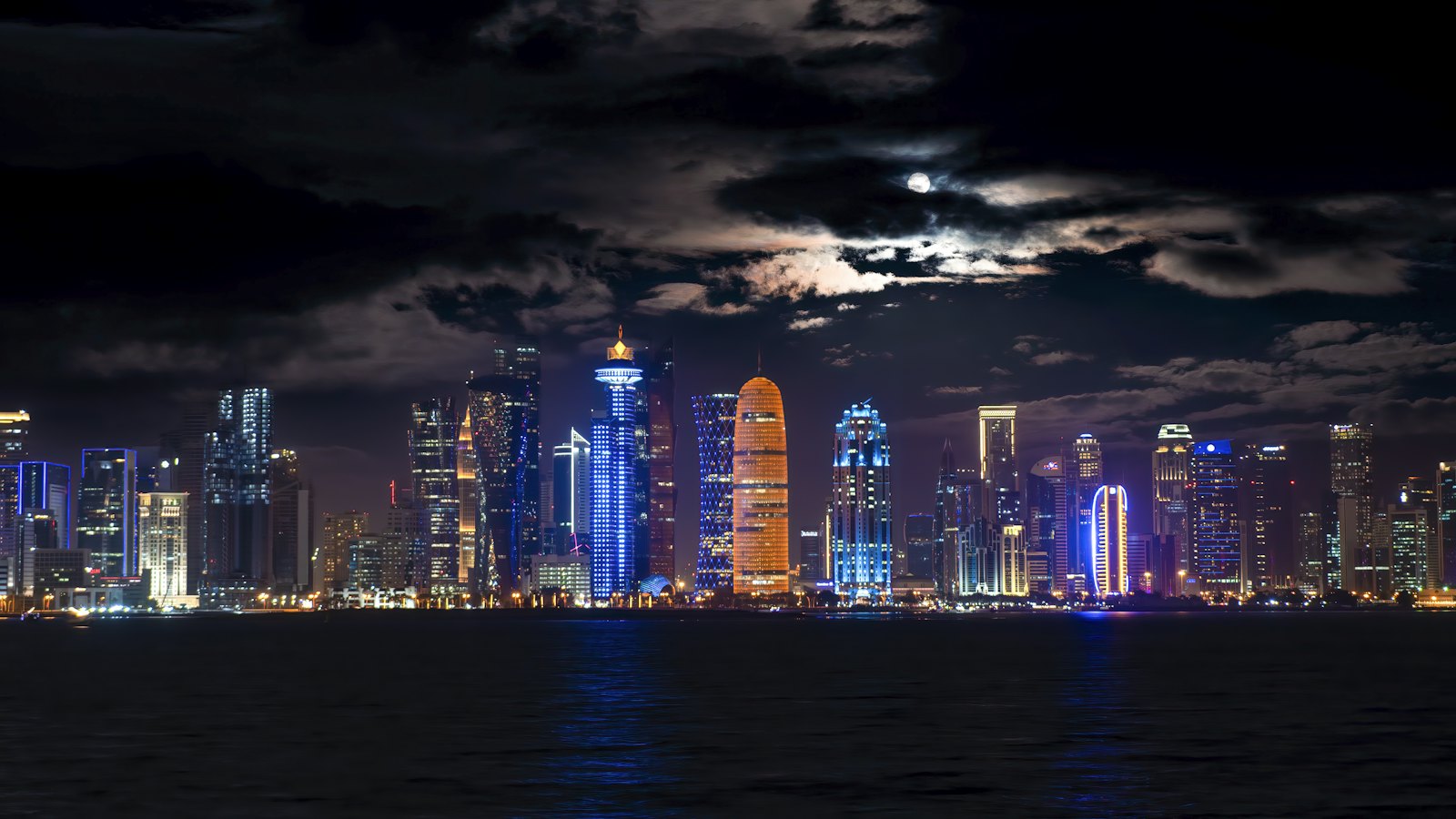
Doha has reinvented itself faster than almost any capital in the region: a pearl-diving port turned city of museums, metro lines and waterfront towers, with desert dunes an hour's drive south. For Malaysians it is an easy trip. Entry is visa-free, food is halal as standard, the plugs match ours and flights from KLIA take about seven and a half hours. Read on for the current flight picture after this year's Gulf disruption, getting in from Hamad International Airport, the best areas to base yourself, halal eating and mosques, and costs in ringgit.
Getting there from KL: direct flights and fares
Two airlines fly non-stop between KLIA and Hamad International Airport (DOH): Qatar Airways and Malaysia Airlines, oneworld partners that both check in at KLIA Terminal 1. The westbound flight takes roughly seven and a half hours, and Doha runs five hours behind KL. No budget airline flies the route non-stop.
This year's Gulf conflict has thinned the timetable. At the time of writing Malaysia Airlines operates one daily flight, MH164, leaving KL at 03:10 and reaching Doha at 05:45 local time; its other two daily Doha rotations (MH160 and MH168) are suspended until 24 October 2026, subject to review. From 25 October, Qatar Airways plans 18 weekly Kuala Lumpur flights on its winter schedule, alongside 14 weekly Malaysia Airlines flights. Treat these as plans and recheck your flight the day before you go.
The Amaboxly KL fare scan (updated 20 September 2026) lists one-way tickets starting near RM 1,016 on Etihad via Abu Dhabi, for a late-October date. Oman Air via Muscat began around RM 1,136, and Air Arabia via Sharjah around RM 1,297, the median. None of the cheapest results were non-stop, so compare them with direct fares on Qatar Airways and Malaysia Airlines, and consider a changeable ticket while the region stays unsettled.
Hamad International Airport to the city
Hamad International Airport lies on Doha's eastern shore, around 10 to 25 minutes by road from most hotels. Prices are indicative, at roughly RM 1.12 per Qatari riyal (QAR).
- Doha Metro Red Line: the airport station is a fair walk from arrivals, across the road beyond the short-term car park. A Standard ride costs QAR 2 (about RM 2.25) on a QAR 10 travel card, or QAR 10 in Gold Club. Msheireb, where all three lines meet, is five stops away. Trains do not run overnight, and Visit Qatar warns of a Friday morning shutdown for prayers, awkward if the early MH flight lands on a Friday.
- Karwa taxi: board only at the Taxi Pavilion at the left end of the Arrivals Hall, home of the authorised Mowasalat taxis. Airport taxis start from a higher flag fall (around QAR 25 at the time of writing), so a daytime ride to Souq Waqif, West Bay or The Pearl works out at roughly QAR 40 to QAR 65 (RM 45 to RM 73), more at night. Treat these as estimates. Cards, Apple Pay and Google Pay work.
- Ride-hailing: Uber, Badrgo and Ryde are authorised for airport pick-ups, from a signed point in the multi-level car park (leave arrivals by Gate 3).
- Karwa bus: buses depart from the Bus Pavilion to the right of arrivals. Cheap, but slower and trickier than the metro.
Travelling with parents and several suitcases? A taxi from the pavilion is the calmest start.
Where to stay in Doha
Doha sprawls and summer heat punishes long walks, so sleep near a metro station or budget for taxis.
- Msheireb and Souq Waqif: the old centre, walkable to the souq, the Corniche and the Museum of Islamic Art. Msheireb station connects all three metro lines, making this the simplest base for a first trip or a short stopover.
- West Bay: the tower skyline north of the Corniche, lined with big international hotels that have pools and sea views. Suits families after resort comforts and business travellers, with three Red Line stations nearby.
- The Pearl-Qatar: a man-made island of marinas, cafes and serviced apartments, good for longer family stays that need a kitchen. There is no metro station, so taxis are part of daily life.
- Lusail: the newer city to the north, home to Lusail Boulevard, Place Vendome mall and the stadium that hosted the 2022 World Cup final. Handy for November race weekends and serious shoppers, on the Red Line and Lusail Tram.
Katara Cultural Village lies between West Bay and The Pearl, an easy evening trip from either.
Things to do in Doha
Doha suits museum lovers and slow seaside evenings. Tour prices are Discover Qatar's listed rates at the time of writing.
- Museum of Islamic Art: I. M. Pei's pale stone landmark stands on its own island at the end of the Corniche, with manuscripts, ceramics and metalwork from across the Muslim world and a park that glows at sunset.
- National Museum of Qatar: Jean Nouvel shaped it on the desert rose crystal, wrapped around the old palace of Sheikh Abdullah bin Jassim Al Thani. Use National Museum station on the Gold Line.
- Souq Waqif: restored lanes of spices, oud, fabrics and falcon shops, liveliest after dark. Haggling is normal.
- The Corniche by dhow: the seven-kilometre promenade faces the West Bay towers, and a sunset dhow cruise costs from about QAR 150 (RM 168).
- Katara Cultural Village: an amphitheatre, galleries, a public beach, the turquoise-tiled Katara Mosque and the gold-clad Golden Mosque.
- Desert and Inland Sea: Khor Al Adaid, about 78 km south on the Saudi border, where dunes run into the sea. Discover Qatar lists its private Desert and Inland Sea tour from about QAR 227 (RM 255) per person when five share the vehicle.
- Msheireb Downtown and Qatar National Library: a walkable quarter with a free tram, then the library's dramatic reading hall on the Green Line.
- Lusail: Lusail Boulevard, Place Vendome and the World Cup final stadium.
What to eat in Doha
Qatari cooking leans on rice, cardamom, saffron and dried lime, which suits Malaysian palates well.
- Machboos: the national dish, spiced rice cooked with chicken, lamb or fish, onion and tomato and the bizar spice blend. Think of a Gulf relative of nasi beriani.
- Harees: wheat and meat slow-cooked into a smooth porridge, big in Ramadan.
- Thareed: thin bread broken into a meat and vegetable broth.
- Balaleet: sweet saffron and cardamom vermicelli under a thin omelette, a breakfast classic.
- Luqaimat: crunchy fried dumplings scented with cardamom and saffron, often finished with date syrup.
- Karak: strong, sweet spiced milk tea from roadside cafeterias, Doha's answer to our teh tarik habit.
Souq Waqif is the natural place for Qatari and Levantine plates on a terrace. Katara and Msheireb have smarter restaurants, and every large mall has a food court. Big South Asian, Filipino and Arab communities keep biryani, shawarma and grills cheap and plentiful, so nobody goes without rice. Residents order delivery through Talabat.
Halal food and prayer spaces
Qatar is a Muslim country, so halal food needs no effort: food in restaurants, malls and supermarkets is overwhelmingly halal, and pork is not part of everyday dining. Alcohol is limited to licensed venues, mostly inside hotels.
Prayer spaces are everywhere. Hamad International Airport has prayer rooms across the terminal, split for men and women and fitted with ablution facilities, and a public mosque with a design inspired by a water droplet stands just outside the terminal, a short walk from Departures. Doha Metro stations have men's and women's ablution rooms beside the restrooms, and big malls such as Mall of Qatar have prayer facilities for men and women.
Mosques worth a visit include the Imam Muhammad ibn Abd al-Wahhab Mosque (the Qatar State Mosque) in Lejbailat, the spiral-minaret Abdulla Bin Zaid Al Mahmoud Islamic Cultural Center near the Corniche, the Katara Mosque and the Education City Mosque. Business stops for Friday prayers, roughly 10am to noon. In Ramadan, visitors should not eat, drink or smoke in public in daylight, though hotels keep some restaurants open out of view.
Getting around Doha
The Doha Metro is clean, cool and cheap, and it reaches most sights.
- Metro: the Red, Green and Gold lines meet at Msheireb. Standard trips cost QAR 2 plus a QAR 10 travel card, and fares stop after three trips a day, so daily spending tops out near QAR 6 (RM 7). Gold Club costs QAR 10 a ride, and family carriages are reserved for families and women. There is no overnight service, and Friday mornings are closed for prayers.
- Trams: the Msheireb and Education City trams are free, and the Lusail Tram accepts metro cards.
- Taxis: hail a turquoise Karwa cab or book one in the Karwa Taxi app. Cards are widely accepted.
- Ride-hailing: Grab does not operate in Qatar. Download Uber before leaving KL; Badrgo and Ryde are also authorised for airport pick-ups.
- Walking: lovely on winter evenings along the Corniche, draining from June to September.
- Driving: traffic keeps to the right, unlike Malaysia, so most short-stay visitors skip car hire.
A good rhythm is metro for the old town, West Bay and Lusail, and taxis for The Pearl, Katara and late nights.
Sample 4-day Doha itinerary
Built for a first visit in the cooler months, with outdoor time kept to mornings and evenings.
- Day 1: Land and rest. In the afternoon see the Museum of Islamic Art and its park, walk the Corniche at sunset or take a dhow cruise, then eat and drink karak at Souq Waqif.
- Day 2: National Museum of Qatar at opening time. After lunch ride the free tram through Msheireb Downtown and take the Green Line to Qatar National Library. Evening at Katara for the mosques and beach, then a late dinner at The Pearl.
- Day 3: Half-day desert tour to the dunes and Inland Sea, ideally an afternoon departure for sunset. Finish at Lusail Boulevard and Place Vendome.
- Day 4: On a Friday, pray at the Qatar State Mosque, then buy dates, oud and spices at Souq Waqif once stalls reopen. Otherwise try the 3-2-1 Qatar Olympic and Sports Museum before your flight.
On a 24-hour stopover, keep Day 1 and swap the Day 2 museums for the desert tour.
Money, SIM and practical tips
- Currency: the Qatari riyal is pegged at QAR 3.64 to the US dollar, roughly RM 1.12 at the time of writing. ATMs are everywhere and cards work almost anywhere, taxis included. Keep some cash for souq stalls and tips. DuitNow QR and Malaysian e-wallets are not a dependable way to pay here.
- Data: set up a travel eSIM before leaving KLIA or buy a local prepaid SIM after landing. Free Wi-Fi is common at the airport and malls.
- Plugs: the same three-pin UK-style sockets and 240V supply as at home, so no adapter.
- Tipping: a service charge is often included, but 10 to 15 percent is appreciated.
- Dress and manners: men and women should cover shoulders and knees in public, and public displays of affection are frowned upon. Smoking in malls, restaurants and other public places risks fines of QAR 1,000 to QAR 3,000.
- Weekend: Friday and Saturday.
- Safety: street crime is rare. The 2026 risk is regional, so flights can change quickly; the Malaysian Embassy in Doha (+974 3374 6733) has told Malaysians to stay alert and follow official instructions. Emergencies: 999.
- Scams: at the airport, use only the Taxi Pavilion or authorised apps. In street taxis insist on the meter, and haggle politely in the souq.
Turning a transit into a Doha stopover
Plenty of Malaysians change planes at Hamad International Airport en route to Europe, Africa or the Middle East, and visa-free entry makes a night or two in Doha simple.
Discover Qatar, Qatar Airways' tour arm, sells stopover packages to Qatar Airways, codeshare and oneworld ticket holders spending 12 to 96 hours in Doha. At the time of writing its standard four-star rooms are advertised from USD 14 (about RM 57) per person per night, twin share, on selected dates and hotels.
Shorter layovers still work: its transit tours need a connection of six hours or more, with a Doha city tour from about QAR 115 (RM 130), while the private desert and Inland Sea tour needs at least eight hours. Leave generous time to clear security again before your onward flight.
Before you go
- Best time to go
- November to March is the best time to visit Doha, with mild, dry days that make the Corniche, souqs and desert comfortable. Visit Qatar puts winter temperatures at about 15°C to 20°C, with January the coolest month, while average daytime highs pass 40°C from June to August and summer lasts into September. The little rain Doha gets falls in winter, and evenings can call for a light jacket. Cool season is also event season: MotoGP at Lusail from 6 to 8 November 2026, Formula 1 from 27 to 29 November and Qatar National Day on 18 December, with hotel rates climbing around each. Malaysia's year-end school break takes up most of December 2026, so families should book early. Ramadan 1448 should begin around 8 February 2027 and end around 8 March, a lovely time for iftar, though daytime eating in public is off-limits.
- Visa for Malaysians
- As of September 2026, Malaysians with an ordinary passport can enter Qatar visa-free, with nothing to apply for and no visa fee. Visit Qatar's official visa checker confirms visa-free entry for Malaysia but does not state the permitted length of stay, so if you plan to stay longer than two weeks or so, check the limit on hayya.qa before you fly. Passports need at least three months of validity from your arrival date, and carrying your return ticket and hotel booking is wise in case immigration asks. Visit Qatar also recommends travel health insurance. If you would rather sort things out before flying, the Hayya portal offers an optional A1 e-visa. The official sources are the visa page on visitqatar.com and the Hayya portal at hayya.qa, so confirm the current rules there shortly before you travel.
- Honest budget guide
- Expect to spend RM 300 to RM 750 a day per person in Doha, not counting airfare, with your hotel and tours driving most of the gap. Flights: Amaboxly's KL fare scan, at the time of writing, puts one-way tickets from about RM 1,016 (Etihad via Abu Dhabi), with a median near RM 1,297, so two one-stop tickets total roughly RM 2,000 to RM 2,600. A plain budget hotel costs around QAR 200 to QAR 350 (RM 225 to RM 390) a night and a mid-range four-star QAR 350 to QAR 650 (RM 390 to RM 730). Food is RM 60 to RM 200 a day, from cafeteria biryani to Souq Waqif dinners. Metro fares cap near RM 7 a day, taxis extra, and desert tours start near RM 255. Four days sharing a mid-range room totals about RM 3,800 to RM 5,500 per person with flights. All figures are indicative.
Frequently asked questions
Do Malaysians need a visa for Qatar?
No visa is needed. As of September 2026, Malaysian passport holders can enter Qatar visa-free, with no application or fee, and an optional Hayya e-visa exists for those who want one. Your passport should have three months of validity left on arrival. The official checker does not state a length of stay, so confirm it for long visits. Check visitqatar.com or the Hayya portal for the latest rules before you fly.
Is there a direct flight from KL to Doha?
Yes. Qatar Airways and Malaysia Airlines both run non-stop services from KLIA Terminal 1, taking about seven and a half hours. At the time of writing Malaysia Airlines runs one daily flight, and Qatar Airways plans 18 weekly flights from 25 October 2026. Recheck schedules close to departure, as Gulf flights can change quickly.
Is it safe to travel to Doha right now?
Street crime in Qatar is very low, but the wider Gulf has been tense throughout 2026, and flights through Doha were badly disrupted for weeks after fighting broke out in late February. At the time of writing flights are operating. The Malaysian Embassy in Doha urges Malaysians to stay alert and check flights, so read Wisma Putra's latest advisory and buy insurance covering disruption.
Is Doha Muslim-friendly?
Very. Food in restaurants and shops is overwhelmingly halal and pork is not part of everyday dining. Hamad International Airport has prayer rooms with ablution facilities and a mosque just outside the terminal, metro stations have ablution rooms, and big malls such as Mall of Qatar have prayer facilities. Business pauses for Friday prayers.
How many days in Doha is enough?
Three to four days covers the big museums, Souq Waqif, Katara, Lusail and a half-day desert trip without rushing. On a stopover, one full day is enough for the Museum of Islamic Art, the Corniche and Souq Waqif. Add a day for serious shopping or a Lusail race weekend.
What is the best month to visit Doha?
December to February has the most comfortable weather, and November is pleasant too, with MotoGP and Formula 1 at Lusail in November 2026. Avoid June to September if you can, when average daytime highs pass 40°C. Families travelling in the December school holidays should book early.
How much does a 4-day Doha trip cost from KL?
Set aside RM 300 to RM 750 for each traveller per day in Doha itself. With one-stop return flights from about RM 2,000 on our fare scan, four days sharing a mid-range room totals around RM 3,800 to RM 5,500 per person. These figures are indicative and rise around big events.
Can I use Grab in Doha?
No, Grab does not operate in Qatar. Uber works in Doha, and local apps Badrgo and Ryde are authorised for airport pick-ups. Karwa taxis can be hailed or booked in the Karwa Taxi app, and the metro reaches most sights for QAR 2 a ride.
Jom pergi
Ready to go Doha? Compare available flights and hotels for your dates. Check baggage, cancellation terms and the final total on the booking provider before paying.






