




On this page12 sections
- Overview
- Flights from Kuala Lumpur to Kuwait City
- Reaching central Kuwait from the airport
- Choosing an area to stay
- Sights and experiences in Kuwait City
- Kuwaiti food to try
- Halal dining and places to pray
- Transport options around the city
- Four days in Kuwait City
- Money, connectivity and practical tips
- Before you go
- FAQ
Kuwait City combines glass towers, traditional trading quarters, museums and a long waterfront beside the Arabian Gulf. Its major attractions suit a short holiday, although the city's spread-out layout makes location and transport planning important. Malaysian visitors will encounter abundant halal dining, accessible prayer facilities and widespread English in hotels, malls and popular attractions. This guide explains flight connections from KLIA, airport transfers, suitable neighbourhoods, Kuwaiti dishes, daily expenses and ways to handle the desert climate. It also outlines the entry choices available to Malaysian passport holders and provides estimated costs in ringgit for planning a realistic visit.
Flights from Kuala Lumpur to Kuwait City
No airline offers a nonstop service between Kuala Lumpur International Airport and Kuwait City as of September 2026. Malaysian travellers should therefore expect one connection at minimum. One-stop options include Air Arabia and Oman Air, with connections seen through cities such as Colombo, Muscat and Sharjah. Search results may also show connections through other airports in South Asia or the Gulf. Faster itineraries usually take approximately 10 to 15 hours, while an extended layover can make the overall journey substantially longer.
Amaboxly's KL search recorded one-way prices beginning at RM1,052 when checked, with the cheapest result appearing on Air Arabia for travel on 24 December 2026. The median one-way price was approximately RM1,460. School breaks in Malaysia, December departures and bookings made close to departure commonly produce higher prices.
These connecting international journeys will generally depart from KLIA Terminal 1, but passengers must verify the terminal stated on every boarding pass. Terminal arrangements can change, particularly when separate tickets are involved. If your itinerary requires collecting and checking in baggage again, choose a long connection and review the transit country's entry conditions.
Reaching central Kuwait from the airport
Kuwait International Airport sits approximately 15 to 20 kilometres south of central Kuwait City. Using an indicative conversion of KWD1 to about RM14, taxis are convenient but buses offer a much lower price.
- Official airport taxi: This is the easiest option when carrying bags. A trip to a central neighbourhood generally costs KWD8 to KWD12, or about RM110 to RM170. Driving time is usually 20 to 35 minutes, although busy weekday roads can extend it.
- App-booked car: Local transport applications operate in Kuwait. Terminal pickup procedures vary, so use the meeting location displayed in the application. Expect roughly KWD5 to KWD10, equivalent to RM70 to RM140, for many central destinations.
- Public bus: Airport services usually charge less than KWD1, or below RM14. The journey may require 45 to 75 minutes once waiting and walking are included. Stops and route details can be difficult for new visitors, especially with large luggage.
- Reserved transfer: A pre-booked vehicle is helpful for families and late-night arrivals. Prices commonly range from KWD10 to KWD20, or RM140 to RM280, according to capacity.
Choose a licensed taxi or verified application driver, then establish whether you will pay by card or cash before the vehicle leaves.
Choosing an area to stay
Kuwait City's districts stretch along the coast and surrounding roads instead of forming a single walkable visitor quarter. Booking accommodation near your main interests can reduce travel time and repeated taxi charges.
- Sharq: Choose this district for convenient access to Kuwait Towers, museums, seafront attractions and contemporary shopping. It feels commercial during working hours but provides a useful position for a first trip.
- Central Kuwait City: This area places visitors near Souq Al-Mubarakiya, the Grand Mosque and older shopping streets. It particularly suits travellers interested in markets, heritage and local city life.
- Salmiya: Families and longer-stay guests often appreciate its restaurants, malls and Gulf-side evening walks. Since it is southeast of the centre, journeys to central landmarks require additional time.
- Hawally: This busy inland district often provides better-value rooms, plentiful shops and inexpensive restaurants. It lacks the coastal scenery of Salmiya but can help control accommodation costs.
Basic rooms often fall between RM180 and RM300 nightly. A comfortable mid-range hotel will more commonly cost RM350 to RM650. Serviced apartments can suit groups, but check the kitchen equipment, parking terms and map position rather than relying only on the district name.
Sights and experiences in Kuwait City
The capital's main attractions introduce Kuwait's seafaring traditions, Islamic heritage, modern design and commercial history. During warmer months, schedule open-air places for early morning or the period around sunset.
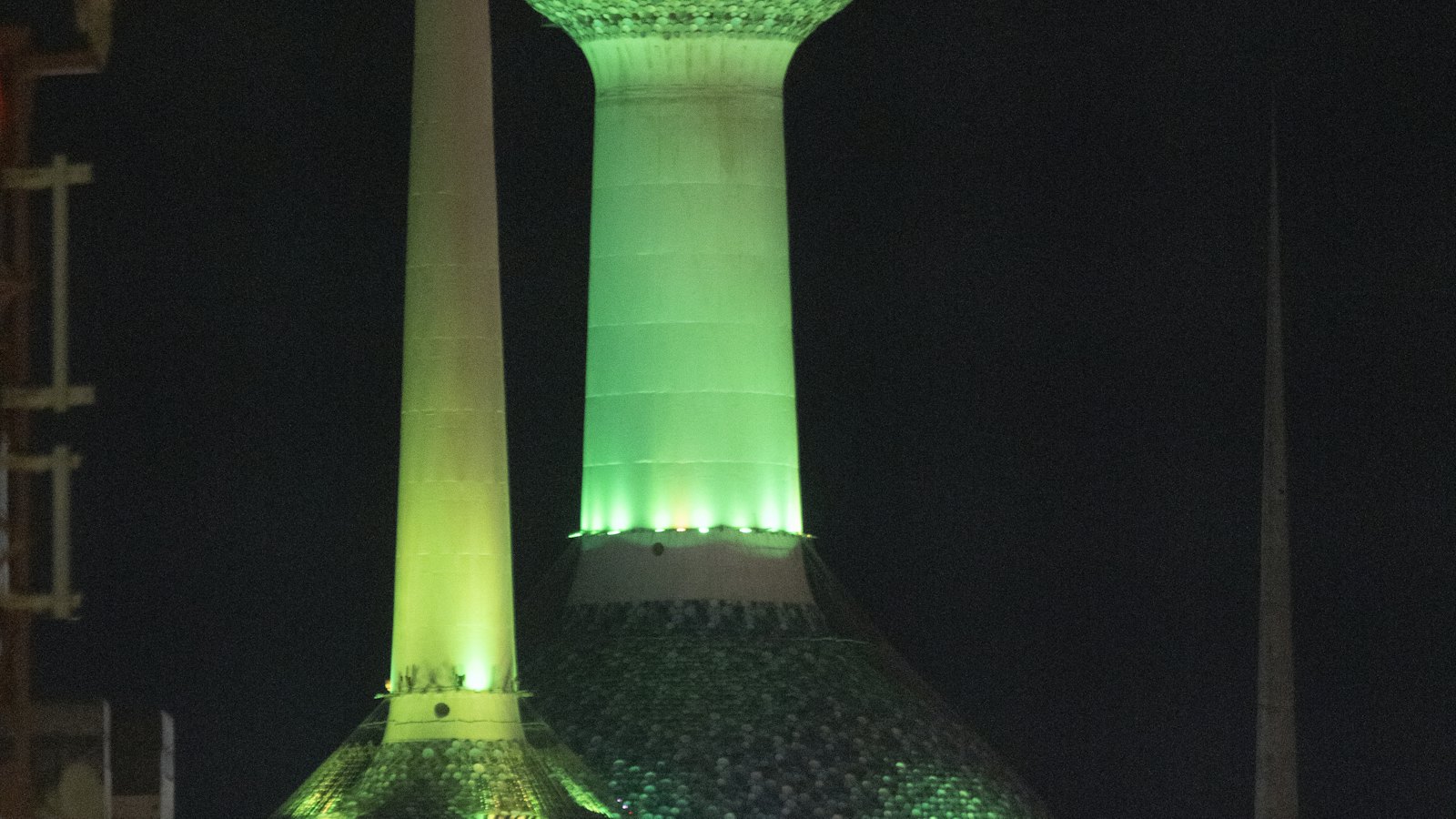
- Kuwait Towers: Visit the capital's signature structure for elevated views over the city and Arabian Gulf.
- Souq Al-Mubarakiya: Explore lanes selling spices, fragrances, dates, clothes and household items in a historic market setting.
- Grand Mosque: View Kuwait's principal mosque while observing its clothing and visitor requirements. Tours for non-Muslims depend on current access arrangements.
- Sheikh Jaber Al-Ahmad Cultural Centre: Examine the architecture and consult the current calendar for concerts, theatre or exhibitions.
- Al Shaheed Park: Enjoy gardens, walking routes and landscaped public areas once the strongest daytime heat has passed.
- Kuwait National Museum: Discover collections concerning archaeology, maritime activity and national heritage when the relevant galleries are open.
- The Scientific Center: Take children to its educational and marine exhibits in Salmiya.
- Kuwait Corniche: Walk beside the water in the evening, when families gather and illuminated buildings define the skyline.
- Sadu House: See how Bedouin weaving traditions use distinctive patterns and geometric forms.
Operating hours may shift for Ramadan, religious observances, official holidays or prayer periods. Confirm access before making a dedicated journey to an attraction.
Kuwaiti food to try
Kuwaiti cuisine features rice, fish, shrimp, lamb and aromatic seasonings influenced by centuries of Gulf and Indian Ocean commerce. Machboos is an excellent introduction: spiced rice served with chicken, meat or fish, often accompanied by a sharp tomato-based sauce. Mutabbaq samak combines seasoned fish and rice, while murabyan brings shrimp and rice together in a filling coastal dish.
Harees offers a softer texture through slowly cooked wheat and meat. Marag is a warming stew normally eaten alongside bread or rice. For dessert, look for gers ogaily, a cake flavoured with saffron and cardamom. Luqaimat, dates, sweet tea and Arabic coffee are also widely available.
Souq Al-Mubarakiya provides a memorable setting for grilled meat, breads, rice dishes and uncomplicated local food. Salmiya and Hawally contain Kuwaiti, Indian, Levantine and other Asian restaurants, giving Malaysian travellers numerous choices with familiar levels of seasoning. An informal meal usually costs KWD2 to KWD5, approximately RM28 to RM70. Dining in a comfortable sit-down restaurant can cost KWD6 to KWD12, or RM84 to RM168, for each person.
Halal dining and places to pray
Suitable food is easy to obtain because Kuwait has a predominantly Muslim population and halal meat is standard. Alcohol and pork are prohibited. Travellers with strict ingredient requirements may still wish to question staff about imported snacks, flavourings or highly processed products. Restaurants serving local food, international chains and mall dining areas normally provide halal choices without the extensive checks that can be necessary in countries where Muslims are a minority.
Mosques appear throughout the urban area, with the Grand Mosque serving as Kuwait City's most prominent place of worship. Large shopping centres commonly contain signed prayer rooms and facilities for ablution. Prayer areas are also provided at Kuwait International Airport, allowing passengers to pray before a flight or while transferring.
Daily schedules are influenced by prayer, and Ramadan alters the city's pace. Many businesses shorten their daytime schedules before reopening into a busier evening. Wear clothing that covers shoulders and knees at a religious building. Women should keep a scarf available for mosque visits. Mapping and Muslim travel applications can identify nearby mosques, prayer schedules and qibla direction, but visitors must follow instructions displayed at each site.
Transport options around the city
Grab is unavailable in Kuwait, and Kuwait City has no functioning passenger metro network as of September 2026. Most short-term visitors rely on taxis or locally available ride-booking applications. Using an application can limit misunderstandings because it displays a quoted or estimated charge. When hailing a taxi on the street, ask the driver to activate the meter or establish an approximate price before starting.
Journeys within a nearby district often cost KWD2 to KWD4, equal to roughly RM28 to RM56. Travelling between distant parts of the city can increase the price to KWD5 to KWD10, approximately RM70 to RM140. Congestion becomes heavy during weekday commuting periods, so leave spare time before airport departures, reservations and scheduled tours.
Bus travel usually costs below KWD1 for each journey, making it useful for visitors watching their spending. However, route maps, stop locations and service information may be challenging on a first trip. Most short-stay tourists do not need a special transport card, while cash can still be helpful for fares.
A rental vehicle provides freedom for desert trips and destinations outside the capital. For a brief urban holiday, however, rapid traffic, navigation demands, parking and deposits may outweigh that benefit. Families can often manage more easily by combining taxis with an organised excursion.
Four days in Kuwait City
- Day 1: Check into accommodation in Sharq or central Kuwait City, then explore the lanes of Souq Al-Mubarakiya. Order machboos or locally caught fish before ending the evening with tea or Arabic coffee.
- Day 2: Schedule Kuwait Towers outside the hottest hours and continue beside the Gulf. Spend part of the afternoon among the gardens of Al Shaheed Park. If visitor entry is offered, include the Grand Mosque before seeing the cultural centre and surrounding district at night.
- Day 3: Travel to Salmiya for marine exhibits at The Scientific Center and an unhurried walk on the Corniche. Try murabyan or another seafood dish, using an air-conditioned mall as a midday escape from high temperatures.
- Day 4: Learn about traditional textiles at Sadu House and visit whichever Kuwait National Museum galleries are operating. Make a final stop at the souq for dates, perfume or woven items before travelling to the airport.
Three complete sightseeing days are sufficient for the headline attractions without rushing. Stay for another full day if you want a guided desert experience, additional museums or more of the coastline. Group places by district because crossing the city several times can consume much of the day in traffic.
Money, connectivity and practical tips
The national currency is the Kuwaiti dinar, written as KWD and divided into 1,000 fils. For preliminary calculations, KWD1 can be treated as approximately RM14, although travellers should consult the prevailing rate before exchanging money. Hotels, shopping centres and established restaurants widely accept payment cards. Keep smaller dinar notes for buses, market purchases and minor expenses. DuitNow QR from Malaysia cannot be assumed to work as a normal local payment option.
Visitors can purchase prepaid Kuwaiti SIM cards or arrange an international travel eSIM. Review activation requirements, coverage and included data before choosing. Offers sold inside the airport may be more expensive than packages available elsewhere in the city. Electrical power is 240V, and Type G sockets use the same three rectangular pins familiar to Malaysians.
Gratuities are voluntary but welcomed. If a restaurant has not added service, leaving roughly five to ten percent is considerate for attentive staff. Taxi passengers may simply round the amount upward.
The city is generally considered safe, but visitors should secure valuables and avoid unlicensed drivers. Heat poses a genuine health concern in summer, so drink water and minimise walking at midday. Conservative dress and courteous public conduct are appropriate. Alcohol, drunken behaviour, insulting gestures and pictures of restricted government or petroleum facilities may lead to severe consequences.
Before you go
- Best time to go
- The coolest travel window runs from November through March. Temperatures during these months are generally comfortable for visiting markets, walking beside the Gulf and spending time in parks. December and January nights may feel surprisingly cool, and occasional rainfall is possible. April and October are hotter transitional months but remain workable when outdoor activities are separated by air-conditioned breaks. May through September brings severe heat, with July and August presenting the greatest challenge for daytime exploration. Airfares and hotel rates may increase during winter weekends, Malaysian school breaks and the year-end season. Ramadan changes attraction and restaurant schedules, producing restrained days followed by energetic evenings. Visitors travelling during the fasting month should avoid eating or drinking publicly where prohibited, behave respectfully and verify each venue's operating hours.
- Visa for Malaysians
- Malaysian citizens require either an e-visa or a visa issued on arrival. As of September 2026, holders of Malaysian passports can use one of these options for a tourist visit of up to three months, since Malaysia is not included in Kuwait's visa-free category. Travellers choosing the e-visa can normally submit their request before departure through the official portal operated by Kuwait's Ministry of Interior. Eligible passengers may alternatively complete the visa process after landing. Reports commonly indicate a charge near KWD3, but the amount and accepted payment method should be regarded as provisional. Bring a passport valid for six months or longer, confirmed accommodation and evidence of onward or return travel. Immigration policies can be revised, so consult the Ministry of Interior's official information shortly before departure.
- Honest budget guide
- A reasonable daily allowance is RM350 to RM650 for each traveller, not counting international airfare. Amaboxly's Kuala Lumpur search showed one-way flights starting at RM1,052 when reviewed, while the median result was close to RM1,460. Simple accommodation typically costs RM180 to RM300 for one night, and a comfortable mid-range property is more likely to fall between RM350 and RM650. Set aside approximately RM80 to RM180 daily for meals. Local travel may add RM50 to RM140 each day, depending on trip length and taxi frequency. Several waterfront spaces and landmarks can be enjoyed without admission charges, although ticketed sites and an organised desert tour will raise spending. For five days and four nights, an indicative overall amount is RM4,000 to RM6,500 per person, including flights, shared lodging, food and city transport. Actual costs depend on dates, room choices and personal habits.
Frequently asked questions
Do Malaysians need a visa for Kuwait?
Yes. As of September 2026, travellers using Malaysian passports obtain an e-visa in advance or complete the visa-on-arrival process after landing. Tourist permission generally allows a stay of up to three months, and the reported fee is about KWD3. Carry accommodation evidence, onward or return travel details and a passport with at least six months remaining. Review the Kuwait Ministry of Interior's latest instructions before departure.
Is there a direct flight from Kuala Lumpur to Kuwait City?
No nonstop airline service is listed between KLIA and Kuwait City as of September 2026. Available journeys require one or more connections, with Colombo, Sharjah and Muscat among the possible transfer points. Quicker schedules often take 10 to 15 hours, although lengthy layovers increase total travel time. Amaboxly's search found one-way tickets from RM1,052 when the guide was prepared.
Is Kuwait City Muslim-friendly?
Yes. Halal meals are standard across Kuwait City, and mosques can be found in every major district. Prayer rooms are commonly provided in large malls and at Kuwait International Airport. Ramadan leads to reduced daytime activity and busier nights. Dress conservatively when entering a mosque, carry a scarf if appropriate and observe the visitor directions posted at the Grand Mosque.
How many days are enough for Kuwait City?
Three complete days allow time for Kuwait Towers, Souq Al-Mubarakiya, Al Shaheed Park, the seafront and several cultural attractions. A fourth day creates space for Salmiya, additional galleries or an organised desert trip. Since the city is not designed as one compact pedestrian zone, high temperatures and road congestion should be considered when deciding how many places to schedule.
What is the best month to visit Kuwait City?
November, February and March are strong choices for pleasant outdoor conditions. December and January are similarly comfortable, but nights can become cool and holiday demand may increase prices. June, July and August are poorly suited to extended walks because of exceptional heat. Travellers should also check the Ramadan calendar, since fasting-month schedules affect attractions, shops and daytime meal service.
How much money is needed for five days in Kuwait?
Allow approximately RM4,000 to RM6,500 per traveller for five days and four nights. This estimate includes an indicative flight from Kuala Lumpur, shared accommodation, meals, entry fees and transport within the city. Choosing buses and a basic hotel can reduce the total. Private tours, regular taxi use, premium rooms and higher-end restaurants will move spending toward or beyond the upper figure.
Can I use Grab in Kuwait City?
No. Grab does not provide service in Kuwait. Instead, visitors can book through locally operating transport applications, take licensed taxis or use public buses. Nearby taxi journeys are often KWD2 to KWD4, while longer trips across the urban area may reach KWD5 to KWD10. Discuss the meter or likely charge before a street-taxi journey and add extra time during commuter traffic.
Is Kuwait City expensive for Malaysian travellers?
Kuwait City generally costs more than many Southeast Asian destinations, especially when a trip involves mid-range hotels and several taxis each day. Savings are possible because informal meals often cost KWD2 to KWD5 and bus fares are usually below KWD1. Booking accommodation near the attractions you most want to see, sharing a room and visiting neighbouring sights together can substantially reduce expenses.
Jom pergi
Ready to go Kuwait City? Compare available flights and hotels for your dates. Check baggage, cancellation terms and the final total on the booking provider before paying.






