




On this page12 sections
Riyadh is a fast-changing capital where mud-brick palaces and traditional souqs sit beside striking towers, new metro lines and ambitious entertainment districts. For Malaysians, it offers an accessible introduction to central Saudi Arabia, with widely available halal food, plentiful prayer facilities and direct flights from KLIA. Days can be spent exploring Diriyah and the National Museum, while cooler evenings suit parks, cafés and open-air dining. This guide explains the flight options from Kuala Lumpur, airport transfers, the best neighbourhoods to stay in, realistic ringgit costs, local transport and the Saudi tourist eVisa Malaysians need before travelling.
Getting there from Kuala Lumpur
Riyadh Air and Saudia fly directly from Kuala Lumpur International Airport to Riyadh. These full-service international flights use KLIA Terminal 1, but check the terminal printed on your booking before leaving home. A nonstop journey generally takes around eight to nine hours, depending on winds and the operating schedule.
One-stop alternatives commonly connect through Abu Dhabi, Muscat, Sharjah, Doha, Dubai or another regional hub. At the time of writing, Amaboxly's KL fare scan found the cheapest one-way fare at RM 1,016 with Etihad via Abu Dhabi for travel on 24 October 2026. The median one-way fare was RM 1,295. Other airlines appearing in the scan included Air Arabia, Gulf Air and Oman Air. These are connecting-fare findings and do not indicate which carriers operate nonstop.
A connection can save money, but compare the total duration, baggage allowance and overnight layover conditions. Direct fares may be worthwhile for families, older travellers and anyone carrying several bags. Arrive at KLIA about three hours before departure, particularly during Malaysian school holidays or the peak Umrah travel periods.
King Khalid Airport to central Riyadh
King Khalid International Airport is roughly 35 km north of central Riyadh. Travel times vary sharply because Riyadh spreads over a wide area and road congestion builds around working hours. For conversion, SAR 1 is roughly RM 1.10 to RM 1.15.
- Riyadh Metro: the Yellow Line links the airport area with King Abdullah Financial District, where passengers can change to other lines. A standard short-period public transport ticket starts at roughly SAR 4 to SAR 6 (about RM 4.50 to RM 7). Reaching a central hotel usually takes 40 to 70 minutes once waiting and transfers are included. Confirm which airport station best serves your terminal.
- Ride-hailing: Uber and Careem are practical choices, with the fare shown before confirmation. Expect roughly SAR 70 to SAR 130 (RM 80 to RM 150) for many central destinations, depending on traffic and demand.
- Airport taxi: official ranks operate outside the terminals. A central trip commonly costs around SAR 80 to SAR 150 (RM 90 to RM 170). Confirm that the meter is running or agree on the displayed fare before departure.
- Hotel transfer: pre-arranged cars usually cost more, but can simplify a late arrival or a trip with children and bulky luggage.
Allow 30 to 50 minutes by car in light traffic and considerably longer during busy periods.
Where to stay in Riyadh
Riyadh is large, so choosing a base near your main interests saves both time and ride-hailing costs. There is no single old-centre location that suits every itinerary.
- Olaya: a convenient first-time base near offices, shopping centres, restaurants and the Kingdom Centre. Metro access and plentiful taxis make it practical for travellers without a car, although rooms can cost more on busy business nights.
- Al Malaz: a more established, everyday neighbourhood near parks, local restaurants and several cultural sights. It suits budget-conscious visitors who prefer a less polished view of the city, but journeys to northern attractions take longer.
- King Abdullah Financial District: best for modern architecture, premium accommodation and easy access to the metro interchange. It feels orderly and contemporary, though dining and lodging generally sit at the upper end of the budget.
- Diplomatic Quarter and western Riyadh: a calmer choice near landscaped paths, Wadi Hanifah and the route towards Diriyah. It suits couples and families planning heritage visits, but many trips still require a car.
Check the exact map location before booking. Two properties described as being in Riyadh can be 30 minutes apart, even without heavy traffic.
Things to do in Riyadh
- At-Turaif in Diriyah: walk through the restored mud-brick heart of the first Saudi state and learn how the modern kingdom developed. Reserve ahead when timed entry is required.
- Bujairi Terrace: enjoy views towards At-Turaif and an evening meal in the landscaped Diriyah district. Prices are generally higher than in ordinary neighbourhood restaurants.
- National Museum: follow the Arabian Peninsula's story through archaeology, early settlements, Islamic history and the formation of Saudi Arabia. Check its current access arrangements before travelling across town.
- Al Masmak Palace: see the fortress associated with the recapture of Riyadh and the beginnings of modern Saudi rule.
- Souq Al Zal: browse carpets, incense, dallah coffee pots, traditional clothing and antiques near the historic centre. Bargain politely where prices are not fixed.
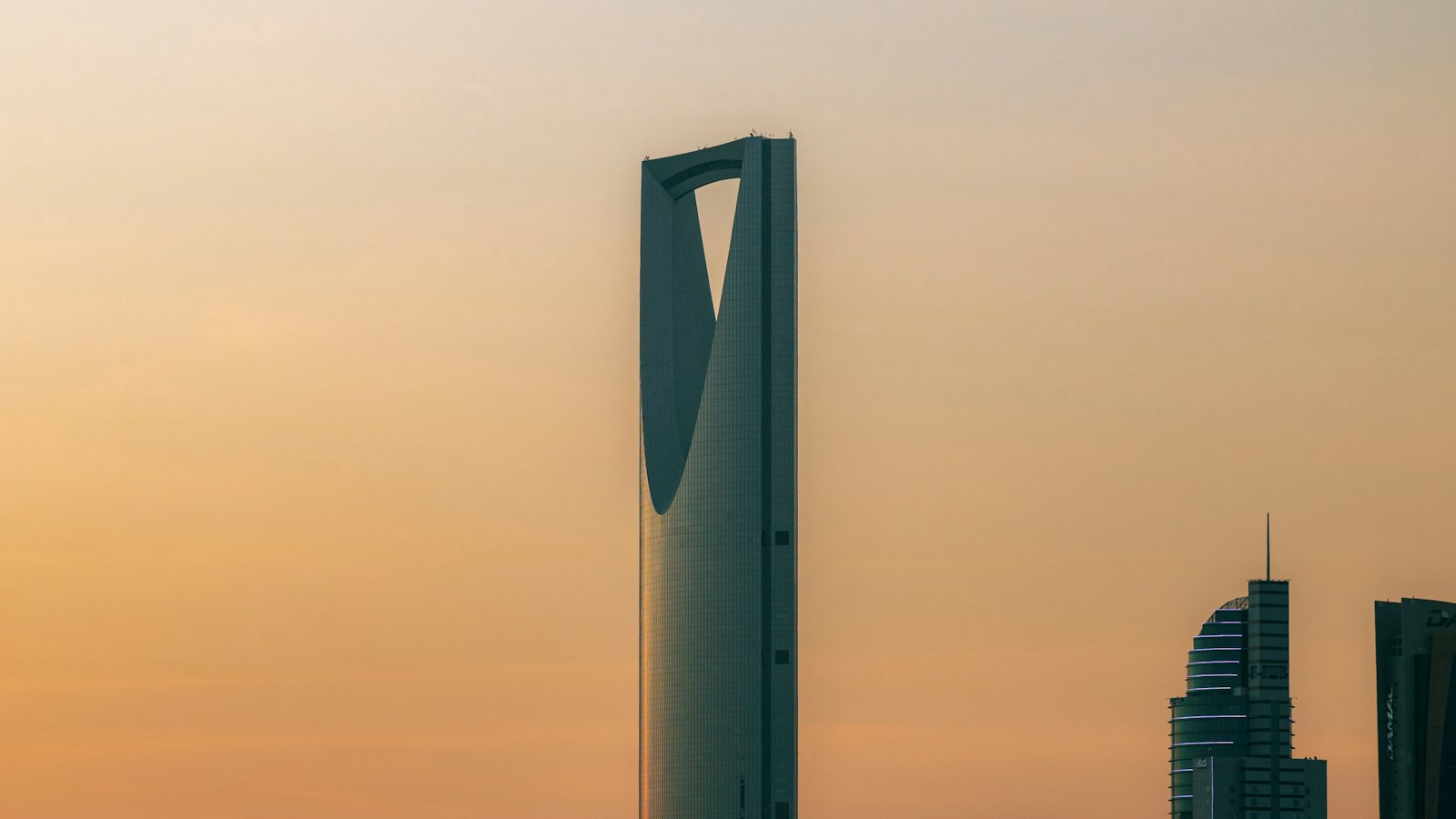
- Kingdom Centre Sky Bridge: take in Riyadh's immense scale from the city's distinctive bottle-opener-shaped tower.
- Wadi Hanifah: visit around sunset for walking areas, picnic spots and a break from the dense city grid.
- King Abdullah Financial District: explore contemporary towers, pedestrian spaces and evening cafés, even without business in the district.
- Edge of the World: join an organised four-wheel-drive excursion to the Tuwaiq escarpment. The remote approach, rough tracks and lack of services make independent travel unsuitable for most visitors.
What to eat in Riyadh
Riyadh is the right place to try Najdi cooking, which leans on rice, wheat, dates, slow-cooked meat and warming spices rather than intense chilli. Kabsa is the familiar starting point: fragrant rice served with chicken or lamb, often on a large shared platter. Jareesh combines crushed wheat with a creamy, savoury base, while qursan layers thin bread with meat and vegetables. Matazeez uses small pieces of dough in a rich stew. Saleeg, a soft rice dish associated more broadly with western Saudi Arabia, is also easy to find.
For a quick meal, look for mutabbaq, shawarma, grilled chicken or freshly baked tamees bread with beans. Finish with dates and Saudi coffee, which is lightly roasted and commonly scented with cardamom. Tea is usually sweet unless requested otherwise.
Traditional Najdi restaurants are scattered through Olaya, Al Malaz and the areas around the historic centre. Modern Saudi dining and international restaurants cluster around Tahlia Street, northern Riyadh, Diriyah and the financial district. A simple meal may cost SAR 15 to SAR 35 (RM 17 to RM 40), while a comfortable sit-down dinner is often SAR 50 to SAR 120 (RM 57 to RM 137) per person.
Halal food and prayer facilities
Riyadh is exceptionally straightforward for Muslim travellers because food served in ordinary restaurants is halal under Saudi regulations. Malaysians do not usually need to search for a separate halal logo, although imported packaged products still deserve a label check if there is any doubt. Alcohol is prohibited, and pork is not part of the local restaurant scene.
Mosques are found throughout the city, and prayer rooms are standard at King Khalid International Airport, major malls, museums and many public attractions. Large shopping centres normally provide separate ablution and prayer facilities for men and women. The Imam Turki bin Abdullah Grand Mosque, near Al Masmak and Souq Al Zal, is a prominent place to pray while exploring historic Riyadh.
Businesses may pause or operate more slowly around prayer times, although practices vary by venue. Carry a lightweight prayer garment if preferred and use a prayer-time or Qibla app already familiar from Malaysia. During Ramadan, daytime restaurant schedules change and evenings become much livelier, so confirm meal and attraction arrangements locally.
Getting around Riyadh
The Riyadh Metro makes travel easier along its six colour-coded lines, particularly between the airport, King Abdullah Financial District and major corridors through the city. Tickets and journey information are available through the local public transport system, and short-period fares begin at roughly SAR 4 to SAR 6 (about RM 4.50 to RM 7). Station entrances can still be some distance from an attraction, so combine the metro with walking or a short car ride.
City buses complement the rail network, but they are less intuitive for a short visitor and journey times depend heavily on traffic. Use the official Riyadh public transport journey planner for current routes and payment options.
Grab does not operate in Riyadh. Uber and Careem are the most useful ride-hailing choices for Malaysians, especially for Diriyah, restaurants and sights away from metro stations. Typical urban trips cost around SAR 15 to SAR 45 (RM 17 to RM 51), with higher prices during peak demand. Ordinary taxis are also available; use an official vehicle and insist on the meter or a clearly displayed app fare.
Walking works inside individual districts, but not as the main way to cross Riyadh. Distances are long, roads are wide and summer heat can be dangerous. Renting a car is useful for experienced drivers, although fast traffic and complicated junctions require confidence.
A four-day Riyadh itinerary
- Day 1: settle into Olaya or the financial district, ride the metro to understand the city's layout, then visit the Kingdom Centre area. End with Saudi coffee and a Najdi dinner, leaving the outdoor walking until temperatures fall.
- Day 2: focus on historic Riyadh. Start with the National Museum area, continue to Al Masmak Palace and browse Souq Al Zal. Pray at the nearby Imam Turki bin Abdullah Grand Mosque, then try kabsa or jareesh at a traditional restaurant.
- Day 3: spend the afternoon and evening in Diriyah. Explore At-Turaif with a reserved entry slot if required, cross to the Bujairi area and stay for dinner as the mud-brick district is illuminated. Book transport back in advance when major events are running.
- Day 4: choose between modern Riyadh and the desert. For an urban day, explore King Abdullah Financial District, a major mall and Wadi Hanifah near sunset. For the landscape option, take a reputable guided four-wheel-drive excursion to the Edge of the World, carrying water, sun protection and closed shoes.
Three days cover the essentials, but four days make the long distances and slower afternoons much more manageable.
Money, SIM cards and practical tips
Saudi Arabia uses the Saudi riyal (SAR), with SAR 1 roughly equal to RM 1.10 to RM 1.15. Cards and contactless payments are widely accepted in Riyadh, including in malls, cafés and ride-hailing apps. Keep some cash for small purchases, traditional souqs or an occasional payment-system failure. Malaysian DuitNow QR is not a normal payment method here.
Local mobile operators sell tourist SIMs at the airport and in shopping centres. An eSIM arranged before departure is convenient if the phone supports it, but compare the data allowance and validity carefully. Airport packages can be more expensive than city offers. Save offline maps because mobile coverage may weaken on desert excursions.
Saudi Arabia uses Type G plugs, the same three rectangular pins as Malaysia, although the supply is 230V and Malaysian chargers normally work without an adaptor. Tipping is appreciated but not compulsory; around 5 to 10 per cent suits good restaurant or driver service when no service charge appears.
Riyadh is generally orderly, but protect valuables in crowded places and reject unofficial airport drivers. Dress modestly, avoid photographing people without permission and never photograph government or security facilities. Heat and dehydration are greater everyday risks than street crime. Carry water and arrange desert trips with an established operator.
Before you go
- Best time to go
- The best time to visit Riyadh is from November to February, when daytime sightseeing is most comfortable. Winter days are generally mild, but nights can feel surprisingly cold, so pack a light jacket. March, April, October and early November can also work if outdoor activities are planned for morning or evening. From May to September, extreme heat makes long walks difficult and pushes much of daily life indoors. Large festivals and entertainment seasons can raise room prices and increase traffic, while Malaysian school holidays bring stronger flight demand. Ramadan offers atmospheric evenings but shorter daytime dining and attraction schedules. For a first visit, January or February provides the easiest balance of weather and activity.
- Visa for Malaysians
- As of September 2026, Malaysian passport holders need a Saudi visa and can obtain a tourist eVisa for stays of up to 90 days. The eVisa is valid for one year with multiple entries and cannot be extended. Apply before departure through the official portal, visa.visitsaudi.com, although visa on arrival is also available. The fee, including compulsory medical insurance and VAT where applicable, is displayed before payment and was commonly quoted at roughly SAR 500 to SAR 600 (about RM 550 to RM 690) at the time of writing; it is non-refundable if refused. Passports need at least six months' validity on arrival, and biometrics are taken at immigration. The eVisa covers tourism, family visits and Umrah, but not Hajj, study or work. Makkah restrictions apply around Hajj. Confirm the latest conditions on visa.visitsaudi.com before you fly.
- Honest budget guide
- Plan on RM 300 to RM 650 per person per day in Riyadh, excluding international flights and major shopping. At the time of writing, Amaboxly's fare scan found one-way flights from Kuala Lumpur from RM 1,016 with Etihad via Abu Dhabi, while the median one-way fare was RM 1,295. A basic private room commonly costs RM 180 to RM 300 a night, with comfortable mid-range accommodation around RM 350 to RM 650. Allow RM 70 to RM 160 daily for food and RM 30 to RM 100 for metro journeys and ride-hailing. A four-day trip for one person sharing accommodation may total roughly RM 3,000 to RM 5,000 including return flights, the eVisa, meals and local transport. These figures are indicative and increase during major events and busy travel periods.
Frequently asked questions
Do Malaysians need a visa for Riyadh?
Yes. As of September 2026, Malaysian passport holders need a Saudi visa. The tourist eVisa allows multiple entries during its one-year validity and up to 90 days in the country. Apply at visa.visitsaudi.com before flying; visa on arrival also exists, but advance approval reduces uncertainty. Your passport needs at least six months' validity on arrival. Confirm the latest rules on the official site.
Is there a direct flight from Kuala Lumpur to Riyadh?
Yes. Riyadh Air and Saudia fly directly from KLIA to Riyadh, with a typical flight time of around eight to nine hours. One-stop alternatives connect through cities such as Abu Dhabi, Muscat, Sharjah, Doha or Dubai. At the time of writing, the lowest scanned one-way fare was RM 1,016 with Etihad via Abu Dhabi.
How many days are enough for Riyadh?
Three days cover central landmarks, the National Museum area, Al Masmak, Souq Al Zal and Diriyah. Four days are better if you want a relaxed pace or a guided Edge of the World excursion. Riyadh's long distances make an overpacked schedule tiring, so group attractions by district and reserve the cooler evenings for outdoor areas.
What is the best month to visit Riyadh?
January and February are among the easiest months for sightseeing, with mild days and cool evenings. November, December and March are also comfortable. Summer temperatures can make outdoor exploration unsafe during the day. Check event dates before booking because major festivals, conferences and Malaysian school holidays can increase flight and accommodation prices.
Is Riyadh Muslim-friendly for Malaysian travellers?
Yes. Restaurant food is halal, alcohol and pork are prohibited, and mosques are widespread. Prayer rooms and ablution facilities are commonly available at the airport, shopping centres and major attractions. Ramadan changes meal times and business schedules, but evenings become especially active. Muslim travellers should still check current permit rules if combining Riyadh with Umrah.
Can I use Grab in Riyadh?
No, Grab does not operate in Riyadh. Uber and Careem are the main practical ride-hailing options, and both show the fare before booking. A typical city journey costs about SAR 15 to SAR 45 (RM 17 to RM 51), depending on distance, traffic and demand. The metro is cheaper for destinations close to its stations.
How much money do I need for four days in Riyadh?
A reasonable four-day budget is about RM 3,000 to RM 5,000 per person when sharing accommodation. This includes indicative return airfare, the Saudi eVisa, a mid-range room, meals and local transport. Premium restaurants, shopping, private transfers and a desert excursion increase the total. Carry a card plus a small amount of Saudi riyal cash.
Do women need to wear an abaya in Riyadh?
Foreign women are not generally required to wear an abaya, but clothing should be loose and modest, covering shoulders and knees. A long dress, trousers with a longer top, or an abaya are all practical choices. A headscarf is not normally required for non-Muslim visitors, although Muslim women may prefer one and mosque visits can have additional dress expectations.
Jom pergi
Ready to go Riyadh? Compare available flights and hotels for your dates. Check baggage, cancellation terms and the final total on the booking provider before paying.






