




On this page12 sections
AlUla brings together monumental Nabataean tombs, date-palm oases and sandstone formations in north-western Saudi Arabia. Its distances and protected archaeological sites require more planning than a conventional city break, but the reward is a landscape unlike anywhere near Malaysia. This guide explains how to reach AlUla from KLIA, transfer from its small airport, choose a convenient base and reserve the key heritage experiences. It also covers Saudi visa requirements, halal food, prayer facilities, desert weather, driving, practical costs and a comfortable four-day itinerary centred on Hegra, AlUla Old Town and the surrounding valleys.
Getting there from Kuala Lumpur
There is no direct flight listed from Kuala Lumpur International Airport to AlUla International Airport (ULH) as of September 2026. Most journeys need at least one stop, commonly through a major Saudi gateway such as Riyadh or Jeddah. Some itineraries require two flights on separate bookings, so check baggage arrangements and leave a generous connection margin. Another practical route is to fly into Madinah and continue overland to AlUla, a journey of roughly four hours by private car.
Total travel time from Kuala Lumpur is commonly 13 to 20 hours, depending on the connection. International services generally use KLIA Terminal 1, but always check the terminal printed on your booking because an airline or domestic positioning flight may use Terminal 2.
Exact one-way fares to ULH vary widely depending on season and connection. As an indicative planning range, allow roughly RM 1,800 to RM 3,200 one-way, or RM 3,000 to RM 5,000 return, depending on season, connection length and baggage. Compare a through-ticket with separate fares to Jeddah, Riyadh or Madinah, but remember that separate tickets offer less protection if the first flight is delayed.
AlUla airport to your accommodation
AlUla International Airport is a small desert airport outside the main settlement. Driving to central AlUla, AlJadidah or the Old Town area usually takes around 30 to 40 minutes. Ashar Valley accommodation can take a similar time or slightly longer, depending on the exact property and road access. For easy mental conversion, SAR 10 is roughly RM 11 to RM 12.
- Pre-arranged hotel transfer: the simplest choice, particularly after an evening arrival. Expect approximately SAR 120 to SAR 250 (RM 135 to RM 285) per vehicle, with luxury properties potentially charging more.
- Taxi or app-based car: availability is thinner than in Riyadh or Jeddah. A ride towards town may cost around SAR 80 to SAR 150 (RM 90 to RM 170), but confirm the price or app estimate before leaving.
- Rental car: useful if you plan several viewpoints and natural sites. Reserve before arrival because the airport fleet can be limited. Daily rates commonly start around SAR 150 to SAR 300 (RM 170 to RM 340), before insurance and fuel.
There is no dependable airport rail link. Public buses are not the practical default for arriving visitors, so arrange the first transfer before flying.
Where to stay in AlUla
AlUla is spread across an oasis corridor rather than built around one compact centre. Choosing the right base can save considerable time and transfer costs.
- AlJadidah and Old Town area: best for first-time visitors who want evening walks, cafes, restaurants and heritage atmosphere close by. It is convenient for organised tour meeting points, although vehicles may need to stop outside pedestrian zones.
- Central AlUla: a practical option for better-value apartments, local shops and everyday restaurants. It suits independent travellers with a rental car, but the surroundings feel more functional than scenic.
- Ashar Valley: ideal for a quiet desert retreat, dramatic rock scenery and higher-end accommodation. Prices are considerably steeper, and spontaneous trips into town can be inconvenient without arranged transport.
- Northern oasis or Hegra side: useful for travellers prioritising archaeological tours and seclusion. Check exactly what meals, transfers and activities are included before booking.
Distances on a map can be deceptive because access roads curve around rock formations and protected zones. Confirm the property's distance from your tour departure point, not merely from the label "AlUla".
Things to do in AlUla
Many protected sites can only be entered on an authorised tour, and popular sessions may sell out during cooler months. Reserve the principal archaeological experiences before finalising each day.
- Hegra: explore Saudi Arabia's first UNESCO World Heritage Site, where monumental Nabataean tombs are carved into isolated sandstone outcrops.
- Dadan: see remains associated with the ancient Dadanite and Lihyanite kingdoms on a guided archaeological visit.
- Jabal Ikmah: examine a rock-lined valley containing inscriptions in several ancient languages and scripts.
- AlUla Old Town: walk among restored mud-brick lanes, historic houses and the former pilgrimage-route settlement.
- AlJadidah Arts District: combine galleries, public art and relaxed evening dining near Old Town.
- Oasis Heritage Trail: follow a shaded route through date palms, farms and old irrigation landscapes.
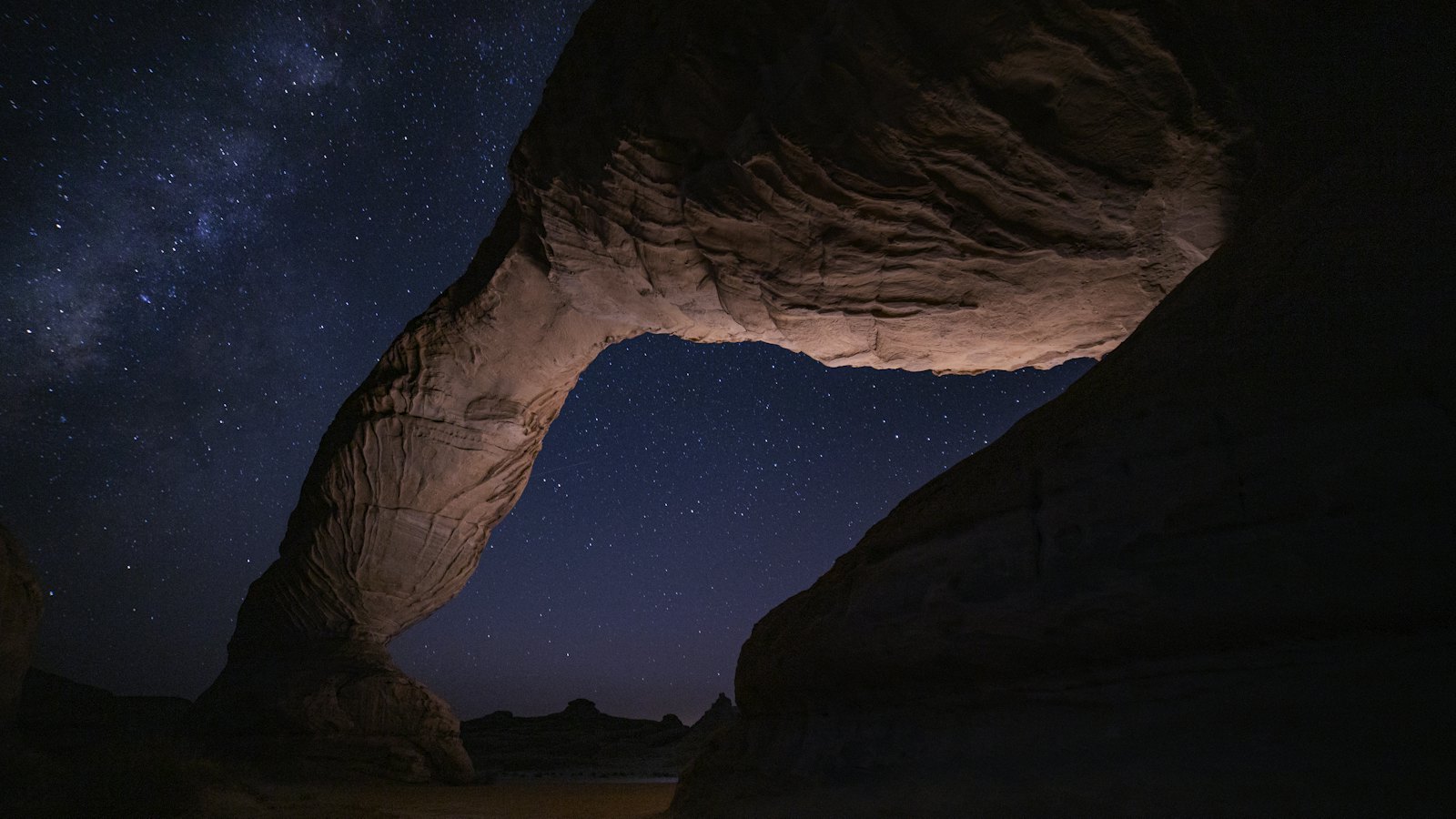
- Elephant Rock: visit the famous natural arch near sunset, when the sandstone takes on warmer colours.
- Harrat viewpoint: look across the oasis and surrounding volcanic plateau, preferably in clear late-afternoon light.
- Maraya: admire the mirrored concert venue from approved public areas, or enter when holding a valid event or experience booking.
- Stargazing: join a desert session away from artificial light, bringing warm layers even after a hot day.
What to eat
AlUla's food reflects the wider cooking of north-western Saudi Arabia, with rice, grilled meat, flatbread, dates and Arabic coffee appearing frequently. Kabsa is the familiar starting point: spiced rice served with chicken or lamb. Mandi has softer, fragrant rice and slow-cooked meat, while saleeg combines creamy rice with roasted chicken. Also look for jareesh, a savoury cracked-wheat dish, and mutabbaq, a folded griddled pastry filled with egg, vegetables or minced meat.
For a lighter makan stop, order hummus, falafel, foul, fresh bread and a chopped salad. AlUla dates make a useful snack and gift, while Saudi coffee is lightly roasted and often flavoured with cardamom. It is traditionally poured in small quantities and may be offered with dates.
The broadest restaurant choice is around central AlUla, AlJadidah and the Old Town visitor areas. Resort restaurants cost substantially more and may require reservations. A simple local meal can be around SAR 20 to SAR 45 (RM 23 to RM 51), while a polished tourist-area dinner may run SAR 80 to SAR 180 (RM 90 to RM 205) per person.
Halal food and prayer spaces
AlUla is exceptionally straightforward for Muslim travellers because food served locally is halal and prayer is built into daily life. You do not need to search for Malaysian-style certification at every restaurant, although anyone with allergies or specific dietary requirements should still ask about ingredients. Alcohol is prohibited, and pork is not part of normal restaurant menus.
Mosques are found throughout the inhabited areas, including near central AlUla and the Old Town district. AlUla International Airport also has prayer facilities. Major visitor centres and organised heritage sites generally provide or direct guests to prayer areas, but a tour may cover long distances, so ask the guide where the next stop will be. Carry a compact prayer mat if you plan remote viewpoints or stargazing.
Tour schedules can overlap with prayer times. Guides and drivers are accustomed to this, but mention your needs at the beginning rather than waiting until the group is leaving a site. During Ramadan, daytime restaurant service may be reduced and operating patterns can shift after iftar. Non-Muslim visitors should avoid eating or drinking conspicuously in public during fasting hours.
Getting around AlUla
AlUla does not have the dense metro or bus network found in a major capital. Attractions are separated by desert roads, and entry to protected archaeological areas may be restricted to official tour vehicles. Build each day around booked experiences instead of trying to improvise every journey.
Grab does not operate in AlUla. Uber and Careem may show vehicles, but availability can be inconsistent, especially early in the morning, late at night and outside the main settlement. Local taxis and hotel drivers are useful, although pre-arranged transfers provide more certainty. Ask for the total fare before entering an unmetered vehicle. A local transfer can roughly cost SAR 40 to SAR 120 (RM 45 to RM 135), with remote or waiting-time journeys costing more.
A rental car gives the most independence for Elephant Rock, viewpoints and accommodation outside town. Malaysians should carry their driving licence and an International Driving Permit, confirm rental requirements in advance and inspect insurance coverage carefully. Driving is on the right. Roads are generally straightforward, but avoid unmarked desert tracks, watch for animals and never assume mobile coverage is continuous. Download an offline map before setting out.
A four-day AlUla itinerary
- Day 1: Arrive, settle into AlJadidah or central AlUla, then walk through the Oasis Heritage Trail towards Old Town. Spend the cooler evening exploring the pedestrian lanes and eating an early Saudi dinner.
- Day 2: Give the morning to a pre-booked Hegra tour. Rest during the hottest part of the afternoon, then travel to Elephant Rock before sunset. Remain after dark only if transport back has already been arranged.
- Day 3: Join a combined heritage experience covering Dadan and Jabal Ikmah. Continue to AlJadidah for galleries and cafes, followed by an evening viewpoint or organised stargazing session if energy allows.
- Day 4: Choose a slower oasis morning, a guided nature activity or an approved visit connected with Maraya. Allow extra time for lunch, collecting luggage and the airport transfer.
Three full days cover the major sites, but four days feel more comfortable because tour times, heat and long transfers limit how much fits into one block. Avoid scheduling Hegra immediately after landing in case the inbound connection is delayed.
Money, SIMs and practical tips
Saudi Arabia uses the Saudi riyal (SAR). A useful rough rate is SAR 1 to RM 1.13, although card issuers and money changers apply their own margins. Cards and contactless payments are widely accepted at accommodation, visitor facilities and established restaurants. Carry some cash for small shops, tips or a driver when a terminal is unavailable. DuitNow QR is not a local payment method.
Saudi mobile networks provide good service in inhabited areas, but signals can weaken between rock formations and at remote desert sites. A travel eSIM is convenient if your phone supports it. Otherwise, buy a local tourist SIM at a major arrival airport or an authorised shop, with your passport ready for registration.
Saudi Arabia mainly uses Type G plugs, the same three rectangular pins used in Malaysia, and electricity is 230V. Tipping is appreciated but not compulsory; around 5 to 10 percent is reasonable for good restaurant or private-guide service when no charge is included.
AlUla is generally calm, but ordinary precautions still apply. Carry water, sun protection and warm evening layers. Do not climb tombs, enter closed areas or photograph people without permission. Flash floods can affect wadis after rain, so follow official closures and local instructions.
Before you go
- Best time to go
- The best time to visit AlUla is from October to March, when cooler weather makes archaeological tours and desert walks more comfortable. December to February can bring chilly mornings and surprisingly cold nights, so pack a jacket as well as sun protection. April and September are warmer shoulder months, while daytime heat from May to August can sharply limit outdoor activity. Winter events and Malaysian year-end school holidays increase demand for flights, tours and scenic accommodation, so book early. Spring and autumn can offer a better balance of weather and price, but always schedule exposed sites in the morning. Rain is infrequent, yet desert downpours can produce sudden flooding and site closures.
- Visa for Malaysians
- As of September 2026, Malaysian passport holders need a Saudi visa and can use the one-year, multiple-entry tourist eVisa for stays totalling up to 90 days. Apply before flying through visa.visitsaudi.com; visa on arrival also exists, but arranging the eVisa online reduces uncertainty. The fee includes compulsory medical insurance and is typically in the range of SAR 500 to 550 (roughly RM 560 to 620), with no refund if refused. Your passport must remain valid for at least six months on arrival, and immigration takes biometrics. The tourist eVisa covers tourism, family visits and Umrah, but not Hajj, work or study, and it cannot be extended. Hajj-season restrictions can affect access to Makkah. Confirm the latest terms, fee and eligibility on visa.visitsaudi.com before you fly.
- Honest budget guide
- Budget around RM 450 to RM 900 per person per day in AlUla, excluding international flights and luxury desert resorts. Exact ULH airfares vary, so use an indicative return-flight range of RM 3,000 to RM 5,000 from Kuala Lumpur. A simple room may cost roughly RM 250 to RM 450 a night, while comfortable mid-range accommodation is often RM 500 to RM 900. Allow RM 100 to RM 220 per person daily for meals and RM 80 to RM 250 for transport, depending on whether costs are shared. Archaeological tours add a separate expense. A four-day trip commonly totals around RM 5,500 to RM 9,000 per person with flights, shared rooms, meals, transfers and principal activities. These figures are indicative and rise during winter events.
Frequently asked questions
Do Malaysians need a visa for AlUla?
Yes. As of September 2026, Malaysians need a visa for Saudi Arabia. The tourist eVisa is valid for one year, permits multiple entries and allows up to 90 days in the country. Your passport needs at least six months' validity on arrival. Apply at visa.visitsaudi.com and confirm the current fee and conditions there before flying.
Is there a direct flight from Kuala Lumpur to AlUla?
No direct service from KLIA to AlUla is listed as of September 2026. Most trips require at least one stop, commonly through Riyadh or Jeddah. Flying to Madinah and arranging the roughly four-hour road journey is another option. Compare the total journey, baggage rules and connection protection rather than choosing on airfare alone.
How many days are enough for AlUla?
Three full days cover Hegra, Dadan, Jabal Ikmah, Old Town and Elephant Rock if tour times align. Four days are better for a relaxed pace, stargazing or an oasis walk. AlUla's sites are spread out, and midday heat can slow the schedule, so it is less practical as a rushed overnight stop.
What is the best month to visit AlUla?
November, February and March usually offer a comfortable balance for outdoor sightseeing. December and January are also popular, but nights can be cold and accommodation demand is higher. Avoid relying on Malaysian ideas of desert heat: winter layers are useful after sunset. Summer visits require early starts and substantial time indoors.
Is AlUla Muslim-friendly?
Yes. Food served locally is halal, mosques are readily available and prayer is part of everyday life. The airport and principal visitor facilities provide or can direct guests to prayer spaces. Tell your guide about prayer needs at the start of a long tour, especially when travelling between remote archaeological sites.
Can I use Grab in AlUla?
No, Grab does not operate in AlUla. Uber and Careem may have cars, but availability is inconsistent outside central areas and at quiet hours. Pre-book airport transfers and important early departures. For a flexible multi-day trip, consider a rental car or arrange a driver, particularly if staying in Ashar Valley.
How much money should I budget for four days in AlUla?
Allow roughly RM 5,500 to RM 9,000 per person including indicative return flights from Kuala Lumpur, shared accommodation, meals, local transport and the main heritage activities. Winter events and high-end desert resorts can push the total much higher. Cards are widely accepted, but keep a modest amount of Saudi riyals for small purchases.
Do I need to book Hegra before arriving?
Advance booking is strongly recommended, especially from October to March and during major events. Hegra is a protected archaeological site, and access normally follows designated tours rather than unrestricted independent exploration. Reserve the preferred session before building your itinerary, then arrange transport around its stated meeting point and start time.
Jom pergi
Ready to go AlUla? Compare available flights and hotels for your dates. Check baggage, cancellation terms and the final total on the booking provider before paying.






