




On this page12 sections
Bukhara is one of the best preserved old cities on the historic Silk Road, with madrasahs, mosques and mausoleums dating back more than a thousand years in a compact, walkable centre. For Malaysian travellers, it is an unusual but increasingly reachable destination. This guide explains entry rules, flight connections, airport transfers, accommodation, major sights, local food, halal considerations, transport and practical planning. It also provides a three day itinerary and advice about money, mobile connections and registration requirements for Malaysians arranging a visit as of September 2026.
Getting There from Kuala Lumpur
There is no direct flight from Kuala Lumpur to Bukhara as of September 2026, so plan for at least one connection. Common itineraries pass through a major regional hub such as Tashkent, Dubai, Doha or Istanbul before continuing to Bukhara by another flight or a domestic connection. Depending on the route and layover, the complete journey commonly takes about 12 to 20 hours.
- Compare several hub combinations because the total journey time and fare can differ substantially
- Allow enough time between flights, particularly when travelling on separate tickets or collecting and checking in your baggage again
- Confirm the terminal shown for every flight, since long haul and low cost services may use different terminals at Kuala Lumpur International Airport
- Keep essential medication, documents and one change of clothes in your cabin bag in case checked baggage is delayed
Reliable fare data for this route was unavailable when this guide was prepared. Prices can change considerably according to travel dates, demand, baggage allowance and routing. Compare several booking services and check the final conditions directly with the airline before paying.
Bukhara Airport to the old city
Bukhara International Airport is a small airport located a short drive from the old city centre. A taxi is the simplest transfer for most visitors, and the journey normally takes well under half an hour when traffic is moving freely. Your hotel or guesthouse may also be able to arrange a driver who knows the property location.
- Agree on the fare before entering a street taxi, or confirm the pickup price with your accommodation in advance
- Save the full address and telephone number of your accommodation on your phone
- Show the address in both Latin script and Cyrillic if your host can provide both versions
- Carry small amounts of local currency because some drivers do not accept cards or may lack change
- Confirm that you are being taken to the correct property when several guesthouses have similar names
Mobile data can make the transfer easier, but keep an offline copy of the address in case your Malaysian connection does not work immediately after landing.
Where to stay in Bukhara
The old city is the most convenient base for a first visit because nearly every major attraction can be reached on foot. Accommodation ranges from simple guesthouses in restored courtyard homes to mid range properties and boutique hotels inside historic buildings. The area around Lyabi Hauz is especially practical for evening walks, meals and access to the main monuments.
- Choose a courtyard guesthouse near Lyabi Hauz for traditional surroundings and easy access to central sights
- Consider a mid range hotel in or beside the old city if you prefer more facilities while remaining within walking distance
- Look at budget guesthouses for a lower nightly rate or a longer stay
- Check whether upper rooms require stairs if accessibility or heavy luggage is a concern
- Ask about airport or railway station transfers before arrival if you want a prearranged pickup
Book a registered property that can assist with the mandatory accommodation registration. Hotels and guesthouses normally complete this process at check in, but you should retain any registration records they provide until you leave Uzbekistan.
Things to do in Bukhara
Bukhara's old city rewards slow exploration, with religious buildings, trading streets and residential quarters close enough to connect on foot. Begin at Lyabi Hauz, a tree shaded pool surrounded by madrasahs and teahouses that becomes a natural gathering place in the evening. Poi Kalyan forms the monumental heart of the old city, with its tall minaret and the spacious Kalon Mosque.
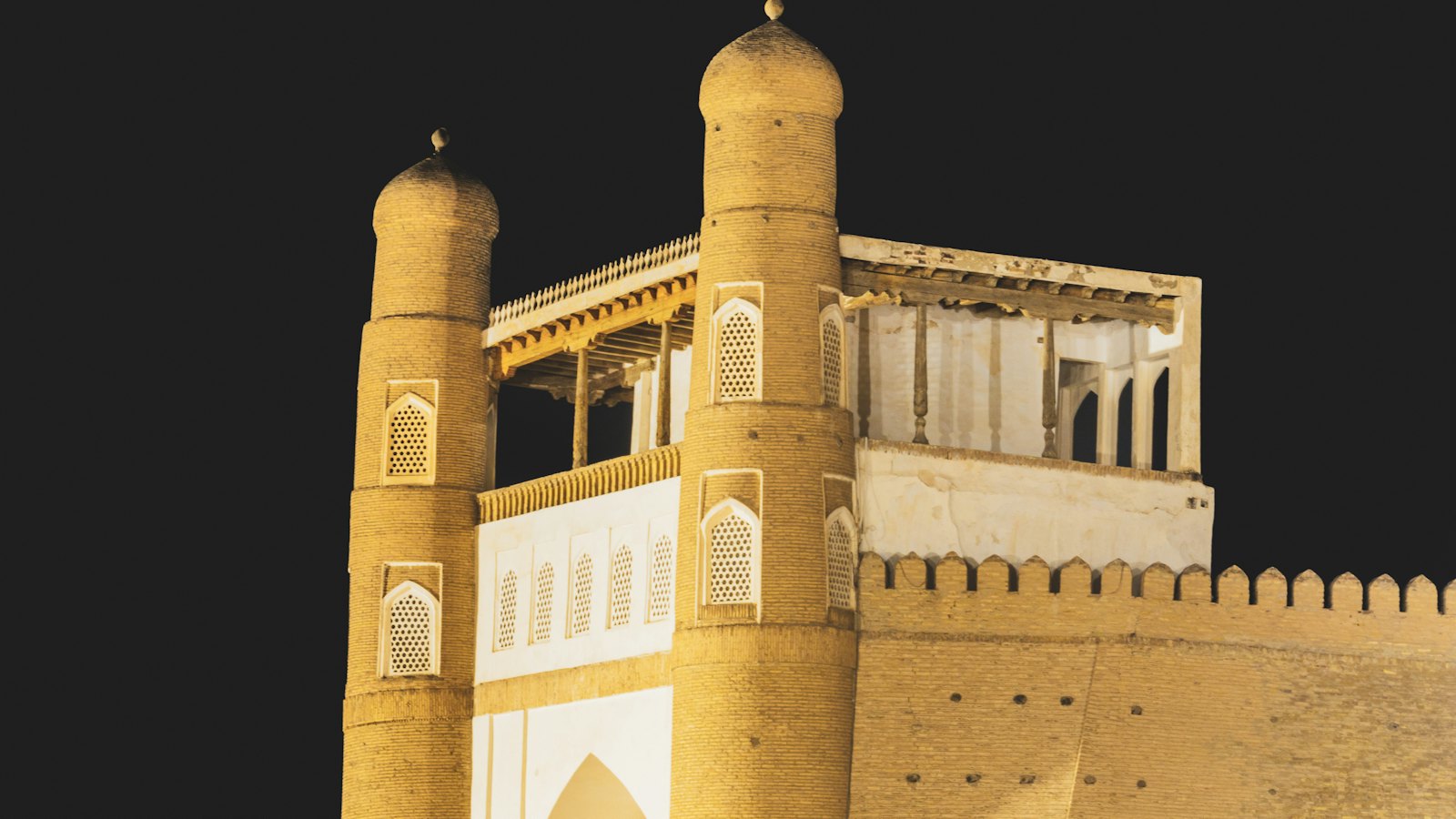
- Visit the Ark, the ancient fortress that once served as the seat of Bukhara's rulers
- See the carved wooden columns at Bolo Hauz Mosque
- Walk to the Samanid Mausoleum, one of the region's oldest surviving monuments
- Continue to Chashma Ayub Mausoleum, associated with local stories about the prophet Job
- Photograph Chor Minor, a compact gatehouse distinguished by four towers
- Compare the decorative facades of the Abdulaziz Khan and Ulugh Beg madrasahs
- Explore the Jewish Quarter and learn about its community history stretching back centuries
- Consider a short journey to Kogon railway station for Russian imperial era architecture
Some buildings remain active religious sites. Dress respectfully, follow posted photography rules and avoid disturbing worshippers, particularly around prayer times.
What to eat and where to find it
Uzbek cooking features filling rice, bread and meat dishes that reflect Bukhara's history as a Silk Road trading city. Traditional restaurants, market stalls and neighbourhood eateries offer different versions of the same staples, so sampling food in several settings can be rewarding. Plov, the national rice dish prepared with meat, carrots and spices, is commonly served at lunch and may sell out later in the day.
- Try shashlik, skewers of meat grilled over charcoal and served at street stalls or sit down restaurants
- Look for samsa, baked pastries filled with meat or seasonal pumpkin
- Eat non, the round local flatbread served with most meals
- Sample fresh produce, nuts and dried fruit at local markets for an inexpensive taste of the region
- Ask what is freshly prepared that day instead of relying only on translated menu descriptions
Portions, recipes and prices differ between establishments. Check prices before ordering when they are not displayed, and treat any amount quoted by another traveller as guidance rather than a guaranteed current rate.
Halal food and prayer spaces
Uzbekistan is a majority Muslim country, and food prepared according to local Islamic dietary practice is widely available. Many everyday meat dishes are regarded locally as halal, but travellers accustomed to Malaysia's formal certification system should understand that restaurants may not display equivalent certification. Alcohol is also offered by some hotels and restaurants serving tourists, so ask questions when strict separation or preparation standards matter to you.
- Ask whether a dish contains alcohol, pork or other ingredients you avoid before placing your order
- Request clarification about meat preparation if a restaurant cannot provide certification
- Remember that shared kitchens may operate differently from certified halal premises in Malaysia
- Use Kalon Mosque or Bolo Hauz Mosque for prayers when access is available and services are not being disrupted
- Look for smaller neighbourhood mosques if you prefer a quieter place for daily prayers
Mosques in the old city are both places of worship and important historic sites. Wear modest clothing, remove shoes where instructed and keep voices low. Access for visitors may be limited during prayers or religious occasions.
Getting around Bukhara
Central Bukhara is compact, and walking is the most practical way to experience its old lanes, monuments and trading areas. Many principal sights stand close together, although uneven paving, summer heat and limited shade can make short distances feel longer. Comfortable shoes and drinking water are useful throughout the year.
- Walk between Lyabi Hauz, Poi Kalyan, the Ark and nearby madrasahs when weather and mobility permit
- Use a taxi for the airport, Kogon railway station, distant sights or travel after a tiring day
- Ask your hotel or guesthouse to arrange a trusted driver when you want a straightforward pickup
- Agree on the price before departure or confirm that the driver will use a meter
- Carry small local notes because drivers may not accept cards or have change for a large bill
- Save your accommodation address offline so that you can show it without mobile service
Allow extra time when crossing busy roads outside the pedestrian old city. If arranging a return journey to a distant location, decide whether the driver will wait or whether you will find another taxi there.
A practical three day itinerary
This three day plan groups nearby attractions and keeps daily walking distances manageable. Adjust the order for weather, opening conditions and your arrival time, and leave room to pause in courtyards or teahouses rather than treating the old city as a checklist.
- Day one: Check into accommodation near the old city, then explore Lyabi Hauz and the surrounding madrasahs. Have an early evening meal and rest after the journey from Kuala Lumpur
- Day two: Visit the Ark and Bolo Hauz Mosque in the morning. Continue towards Poi Kalyan and Kalon Mosque, then finish near the facing Abdulaziz Khan and Ulugh Beg madrasahs
- Day three: Start at the Samanid Mausoleum and Chashma Ayub Mausoleum. Spend the afternoon at Chor Minor and in the Jewish Quarter, then leave time for a final walk and last minute shopping
Opening access can change around worship, maintenance or local events. Confirm important visits with your accommodation and start earlier during hot weather. Travellers continuing by train or plane should keep the final hours free for packing, registration checks and the transfer.
Money, SIMs and practical advice
Plan to use a combination of cash and cards because payment facilities vary outside larger hotels and established restaurants. Local currency is particularly useful for taxis, market purchases, entry charges and smaller eateries. Keep notes in more than one secure place instead of carrying all your cash together.
- Ask about card acceptance before ordering or committing to a purchase
- Use cash for small transactions and keep lower denomination notes available
- Arrange a local SIM card after arrival or purchase a compatible eSIM before departure if your provider offers one
- Download maps, booking confirmations and your accommodation address for offline use
- Keep digital and printed copies of your passport details and accommodation booking separate from the originals
- Retain the accommodation registration information supplied by each hotel or guesthouse
A local connection is usually the most dependable option for maps and communication, but availability and activation requirements can change. Confirm current packages and identification rules with the provider. Protect verification codes and avoid conducting sensitive transactions over unsecured public Wi-Fi.
Before you go
- Best time to go
- Spring and autumn offer the most comfortable conditions for exploring Bukhara on foot. Roughly March to May brings milder temperatures and a more pleasant setting for long walks between monuments. September to November is another practical period, with cooler conditions than the peak summer months. Summer can be extremely hot, particularly during the middle of the day, while winter brings the coldest weather. Whatever the season, check the forecast shortly before departure and plan shaded breaks, suitable layers and enough drinking water.
- Visa for Malaysians
- Malaysians can visit Uzbekistan without a visa for stays of up to 30 days, as of September 2026. No e-visa or electronic travel authorisation is required for this stay, and the visa free arrangement has applied since 10 February 2018. Your passport should have at least six months of validity remaining from the entry date. You must depart before the 30 day period ends. Accommodation registration is required within three working days of arrival, and hotels or guesthouses usually complete it during check in. A private host is responsible for registering a guest staying with them. Requirements can change, so confirm current rules at mfa.uz and through the Malaysian embassy in Tashkent at kln.gov.my before travelling.
- Honest budget guide
- A practical starting allowance is RM150 to RM350 per person per day in Bukhara, excluding international flights. This planning range can cover a combination of accommodation, meals, entrance fees and local transport, but it is not a fixed price and will vary with season and comfort level. Budget guesthouses and simple local meals can keep spending near the lower end, while boutique accommodation, frequent taxis and restaurant dining increase costs. Reliable flight fare data was unavailable when this guide was prepared, so compare several booking services and add a separate flight allowance in RM based on your actual dates, baggage needs and chosen routing.
Frequently asked questions
Do Malaysians need a visa to visit Uzbekistan?
No. Malaysians can visit Uzbekistan without a visa for up to 30 days, as of September 2026. Your passport should have at least six months of validity remaining, and accommodation registration is required within three working days. Hotels and guesthouses normally handle registration at check in. Confirm current requirements at mfa.uz and kln.gov.my before departure.
Is there a direct flight from Kuala Lumpur to Bukhara?
No direct flight from Kuala Lumpur to Bukhara operates as of September 2026. Most travellers make at least one connection through a hub such as Tashkent, Dubai, Doha or Istanbul. The complete journey often takes about 12 to 20 hours, depending on the route and the duration of each layover.
How much should I budget for the trip?
For expenses within Bukhara, consider a planning allowance of about RM150 to RM350 per person per day, excluding international flights. Actual spending depends on your accommodation, meals, entrance fees and taxi use. Flight prices vary substantially by date and routing, so compare current fares separately before finalising the total budget.
Is halal food easy to find in Bukhara?
Food following local Islamic dietary practice is widely available because Uzbekistan is a majority Muslim country. However, local businesses may not display the formal halal certification familiar to Malaysians, and some tourist oriented restaurants serve alcohol. Ask directly about meat, ingredients, preparation methods and shared kitchen practices if you follow strict requirements.
How many days do I need in Bukhara?
Three days gives most visitors enough time to see the old city's principal attractions at a comfortable pace. That schedule can include the Ark, Poi Kalyan, Kalon Mosque, Lyabi Hauz, the Samanid Mausoleum, Chor Minor and several madrasahs, while still allowing time for meals, rest and unhurried evening walks.
What is the easiest way to travel around Bukhara?
Walking is the easiest option within the compact old city because many major attractions are close together. Use taxis for the airport, Kogon railway station or places farther from the centre. Agree on the fare before leaving or confirm use of a meter, and carry small local notes for payment.
Where should first time visitors stay in Bukhara?
The old city, particularly the area around Lyabi Hauz, is the most convenient base for a first visit. It places restaurants, madrasahs and major monuments within walking distance. Choose a registered hotel or guesthouse that will complete the required accommodation registration and provide the relevant record during check in.
When is the best time to visit Bukhara?
Spring, roughly March to May, and autumn, roughly September to November, generally provide the most comfortable weather for exploring on foot. Summer can be extremely hot during the day, while winter has the coldest conditions. Check the forecast before travelling and adjust walking hours, clothing and water supplies accordingly.
Jom pergi
Ready to go Bukhara? Compare available flights and hotels for your dates. Check baggage, cancellation terms and the final total on the booking provider before paying.






