




On this page13 sections
- Overview
- Getting there from KL: flights and KLIA terminals
- Tan Son Nhat Airport to the city centre
- Where to stay in Ho Chi Minh City
- Things to do in Ho Chi Minh City
- What to eat in Ho Chi Minh City
- Halal food and prayer spaces
- Getting around: Metro, Grab and buses
- Sample itinerary: 4 days in Ho Chi Minh City
- Money, SIM and practical tips
- Shopping in Saigon: markets, tailors and coffee
- Before you go
- FAQ
Ho Chi Minh City, which almost everyone still calls Saigon, is the easiest big-city break in Vietnam for Malaysians: about ten non-stop flights leave KLIA every day, the flight takes roughly two hours, and a Malaysian passport gets you in for up to 30 days without a visa. It is a city of motorbike traffic, French colonial buildings, sobering war museums and serious coffee, and the ringgit stretches a long way here. This guide covers the current flight picture and our own KL fare scan, the cheapest ride from Tan Son Nhat airport, where Muslim travellers can find halal food and a mosque, and what four days realistically cost.
Getting there from KL: flights and KLIA terminals
Four airlines fly Kuala Lumpur to Ho Chi Minh City non-stop at the time of writing (late September 2026), with about ten departures a day between them:
- AirAsia: four flights a day from KLIA Terminal 2, spread from early morning to evening.
- Malaysia Airlines: up to three a day from KLIA Terminal 1.
- Vietjet: two early-afternoon flights a day from Terminal 1.
- Vietnam Airlines: one evening flight a day from Terminal 1.
Scheduled times are about two hours gate to gate, and Vietnam is one hour behind Malaysia. All of these land at Tan Son Nhat's international terminal (SGN), roughly 8 km from the centre.
Amaboxly's own KL fare scan, updated 28 September 2026, found one-way fares from about RM 246 on an AirAsia non-stop (for a late-October date), with the typical result near RM 324. Vietjet non-stops also showed up, usually a little dearer. The priciest, around RM 463, fell on Christmas Eve, during the school holidays. Connecting via Singapore saves nothing.
One change to watch: Long Thanh International Airport, about 40 km east of the city, is planned to open to commercial flights in December 2026 and will run alongside Tan Son Nhat, so check whether your ticket says SGN or LTH.
Tan Son Nhat Airport to the city centre
Tan Son Nhat sits inside the city, so District 1 is usually 30 to 60 minutes away depending on traffic. Prices below are indicative, at roughly 6,350 dong to RM 1.
- Bus 109: the yellow airport express to the Ham Nghi bus hub beside Ben Thanh Market and the Saigon bus station near Pham Ngu Lao. About 15,000 to 20,000 dong (RM 2.40 to RM 3.20), roughly 45 to 55 minutes. It runs later into the evening than Bus 152, but if you land after about 10pm, plan on Grab instead.
- Bus 152: the slower green city bus to the same Ham Nghi hub, about 5,000 to 7,000 dong (around RM 1) plus a small luggage charge, running from about 5.15am to 7pm.
- Grab, Be or Xanh SM: book after collecting your bags, then walk to the pick-up area in the car park building. A four-seat car to District 1 is about 120,000 dong (around RM 19) off-peak and more in rush hour or rain; a motorbike is 45,000 to 65,000 dong (RM 7 to RM 10) if you travel light.
- Metered taxis: use the official taxi queue, choose Vinasun or Mai Linh, and make sure the meter is on.
Ignore touts offering an "all-in" price in arrivals: extra fees tend to appear once the doors close. Some pose as app drivers, so match the number plate first.
Where to stay in Ho Chi Minh City
In 2025 the numbered districts were replaced by wards on paper (much of the old District 1 is now Saigon ward), but hotels and drivers still say District 1, so we do too.
- District 1 (Dong Khoi, Nguyen Hue and Ben Thanh Market): best for first-timers. Walk to the palace, museums, riverside and Central Mosque, with the airport bus and Metro Line 1 on hand. Rooms cost more.
- Pham Ngu Lao and Bui Vien: the backpacker quarter, with the cheapest beds and late bars. Fun for young groups, noisy for families.
- District 3: leafier and calmer, with good cafes, and within walking distance of the War Remnants Museum.
- Thao Dien: the riverside expat enclave about 15 minutes by car from District 1, or a few stops on Metro Line 1. Suits couples and repeat visitors who like brunch cafes.
To walk to Friday prayers, stay in District 1 near Dong Du Street, home of the Central Mosque.
Things to do in Ho Chi Minh City
Most big sights sit in Districts 1 and 3; start early to beat the heat.
- Independence Palace: South Vietnam's presidential palace, frozen in the 1960s, with a basement of vintage radios and a replica of the tank that broke through the gate on 30 April 1975.
- War Remnants Museum: three floors on the Vietnam War, including Agent Orange. Harrowing for younger children.
- Central Post Office and Book Street: a French colonial post office with a vaulted hall, and a lane of bookshops beside it. The cathedral next door has been under restoration since 2017, so check whether it has reopened.
- Nguyen Hue and the People's Committee Hall: the pedestrian boulevard fills with families at night, facing the floodlit colonial city hall.
- Ben Thanh and Binh Tay markets: Ben Thanh is central and touristy; Binh Tay in Cholon, the old Chinatown, is the wholesale original.
- Cu Chi Tunnels: the wartime tunnel network about 1.5 hours' drive away, done as a half-day tour.
- Mekong Delta: boat trips through canals and orchards, as a day tour or an overnight in Can Tho.
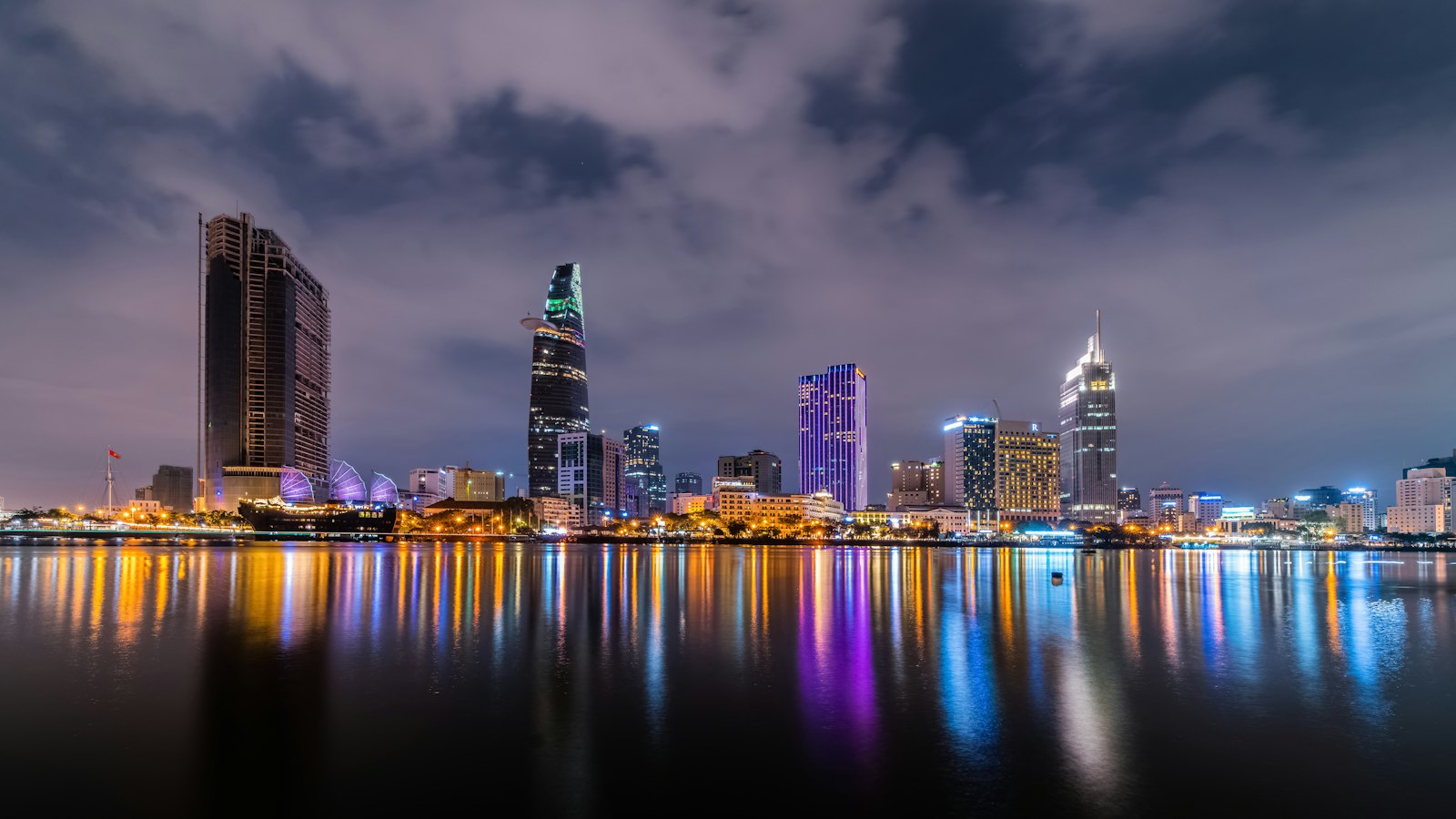
- Landmark 81 SkyView: viewing floors near the top of Vietnam's tallest building, 461 metres high.
- Metro Line 1: after three underground stations from Ben Thanh, the line climbs onto an elevated track with views of the Saigon River and Landmark 81.
What to eat in Ho Chi Minh City
Southern Vietnamese cooking is generous with herbs, lime and chilli, and the best of it is eaten on low plastic stools. Pork and lard are common in local kitchens, so Muslim readers should see the next section first.
- Pho: rice noodles in beef or chicken broth with a plate of herbs.
- Banh mi: a crisp baguette with pate, cold cuts and pickles, usually pork-based.
- Com tam: broken rice with grilled pork chop, the city's everyday lunch.
- Hu tieu Nam Vang: a clear noodle soup that is a Saigon speciality despite its "Phnom Penh" name.
- Banh xeo: crispy turmeric pancakes wrapped in lettuce.
- Goi cuon: fresh rice-paper rolls, usually with prawn and pork.
- Ca phe sua da: strong drip coffee over ice with condensed milk, from the world's second-largest coffee producer.
A bowl of noodles or a banh mi usually costs a few ringgit; a sit-down District 1 meal runs roughly RM 20 to RM 50 a head. For a meat-free makan, look for vegetarian restaurants marked "chay".
Halal food and prayer spaces
Halal-certified restaurants are few here and ordinary eateries rarely show any halal sign, so plan ahead. The city does have an established Muslim community, including Cham Muslims, and around a dozen mosques.
- Saigon Central Mosque: on Dong Du Street in District 1, near the Opera House, built in 1935 for Muslims from southern India. Friday brings the biggest congregation.
- Nguyen An Ninh Street, beside Ben Thanh Market: long known for Malaysian and Indonesian halal eateries that cater to visitors from home. Check recent reviews, as shops change.
- District 8, off Duong Ba Trac Street: Cham families live around the Jamiul Anwar Mosque, and their stalls sell halal versions of Vietnamese street dishes.
- Around the Central Mosque: guidebooks list halal restaurants on Dong Du Street, but check recent reviews.
Elsewhere, a beef pho stall is not automatically halal and "no pork" signs are rare. Certification is patchy, so ask, look for a certificate and read Google Maps reviews. Muslim Pro or a similar app handles prayer times and qibla.
We could not confirm a prayer room at Tan Son Nhat's international terminal, so pray at KLIA before boarding.
Getting around: Metro, Grab and buses
Traffic is the real obstacle, worst in the morning and late-afternoon rush hours.
- Metro Line 1: open since December 2024, running 19.7 km from Ben Thanh via Opera House and Thao Dien to Suoi Tien, from early morning to late evening. Fares are 7,000 to 20,000 dong (RM 1 to RM 3), slightly less by card; tap a Visa or Mastercard at the gate. A one-day pass costs 40,000 dong.
- City buses: 5,000 to 7,000 dong on most routes, and contactless cards work on the validators; Google Maps shows route numbers.
- Grab: works here with your Malaysian app, for cars and motorbikes. Xanh SM (electric VinFast taxis) and Be are worth comparing.
- Metered taxis: stick to Vinasun and Mai Linh, with the meter on.
- On foot: cross slowly and steadily so riders flow around you; never run.
Roughly, a GrabBike hop in the centre is under RM 5 and a car across town RM 10 to RM 25.
Sample itinerary: 4 days in Ho Chi Minh City
Four days covers the city plus one day trip, ideally on a weekday.
- Day 1: Morning flight in, then Ben Thanh Market, the Central Post Office and Book Street. After dark, stroll Nguyen Hue.
- Day 2: Independence Palace at opening, then the War Remnants Museum nearby. Rest at midday (on Friday, Jumaat at the Central Mosque), then Metro Line 1 to Thao Dien for dinner or sunset at Landmark 81.
- Day 3: Cu Chi Tunnels in the morning, Binh Tay Market in Cholon after lunch, then a halal Cham dinner in District 8.
- Day 4: Coffee and last-minute shopping, then leave for Tan Son Nhat three hours before an evening flight.
With a fifth day, add a Mekong Delta boat trip.
Money, SIM and practical tips
- Currency: Vietnamese dong. RM 1 was worth roughly 6,350 dong when we checked in late September 2026, so 100,000 dong is about RM 16. Prices are often written as "100k". The bluish 20,000 and 500,000 notes are easy to mix up, so check before handing one over.
- Cash and cards: Visa and Mastercard work in malls, hotels, chain cafes and on the metro and buses, but markets, street food and small shops want cash. Change ringgit before you fly or use a bank ATM in town.
- DuitNow QR: not supported in Vietnam at the time of writing. PayNet's cross-border QR covers Singapore, Indonesia, Thailand and Cambodia only.
- SIM and eSIM: buy a tourist eSIM before flying, or a Viettel, Vinaphone or MobiFone SIM on arrival. Airport counters charge more.
- Plugs: 220V. Most sockets take two-pin plugs (Types A and C), so pack an adapter for Malaysian three-pin chargers.
- Tipping: not expected, though small tips are appreciated in tourist areas.
- Safety: violent crime is rare, but motorbike thieves snatch phones and bags, so keep both away from the kerb.
- Scams: unlicensed taxis and cyclo riders who change the price at the end. Agree fares first or use an app.
Shopping in Saigon: markets, tailors and coffee
For many Malaysians, shopping is half the point of a Saigon weekend.
- Ben Thanh Market: souvenirs, cashews, coffee and lacquerware. Bargaining is expected, so start low and keep it friendly.
- Binh Tay Market in Cholon: mostly wholesale silk, fabric, spices and dried goods.
- Tailoring: made-to-measure shirts, suits and ao dai are affordable. Bring a photo, allow time for a fitting and check the stitching.
- Coffee: robusta beans and aluminium phin filters make useful gifts.
- Malls: the Vincom Center mall at the foot of Landmark 81 is a cool escape when the heat wins.
Basic AirAsia and Vietjet fares often exclude checked bags, and adding one at the airport costs more, so prebook extra kilos for the flight home if you plan to shop.
Before you go
- Best time to go
- December to April is the best time to visit Ho Chi Minh City, when the dry season brings clear skies and very little rain. December to February is the most comfortable stretch, while March and April stay dry but get very hot, with average highs around 34°C to 35°C. The wet season runs from May to about November, with September and October usually the wettest, but the rain tends to come as heavy afternoon storms that pass, so trips remain very doable. Tet, the Lunar New Year, falls on 6 February 2027: the city goes quiet, many family businesses close for several days and fares climb, especially as it coincides with Chinese New Year at home. Domestic crowds also build around 30 April, 1 May and 2 September. Malaysian year-end school holidays run from 5 to 31 December 2026 (from 4 December in Kedah, Kelantan and Terengganu), and the priciest date in our fare scan was Christmas Eve.
- Visa for Malaysians
- As of September 2026, Malaysian passport holders can visit Vietnam without a visa for up to 30 days per entry. The Embassy of Malaysia in Hanoi states the 30-day limit, and Vietnam's national tourism authority lists Malaysia among its visa-exempt countries. For a longer stay, apply for Vietnam's e-visa, which allows up to 90 days with single or multiple entry (around US$25 single or US$50 multiple at the time of writing). Apply only on the official portal, evisa.gov.vn, because look-alike agent sites charge far more. Travel on a passport with plenty of validity left (six months is the safe rule of thumb) and blank pages, and keep your return ticket and hotel booking handy in case the airline or immigration asks. Rules can change with little notice, so confirm the latest requirements with the Embassy of Vietnam in Kuala Lumpur or on evisa.gov.vn before you fly.
- Honest budget guide
- Expect to spend roughly RM 120 to RM 350 per person per day on the ground in Ho Chi Minh City, excluding flights. Flights: our KL fare scan found one-way fares from about RM 246 (AirAsia non-stop) at the time of writing, with a typical fare near RM 324, so a return ticket usually lands between RM 500 and RM 750 before checked bags. A hostel or simple guesthouse room costs about 400,000 to 800,000 dong (RM 65 to RM 125) a night, and a comfortable mid-range hotel in District 1 about 1 to 2 million dong (RM 160 to RM 310). Food runs RM 40 to RM 100 a day, more if you eat mostly at halal restaurants, and Grab plus the metro RM 10 to RM 40. Four days and three nights, mid-range, sharing a room, comes to around RM 1,200 to RM 2,000 per person including flights. All figures are indicative.
Frequently asked questions
Do Malaysians need a visa for Ho Chi Minh City?
No. As of September 2026, Malaysian passport holders can stay in Vietnam for up to 30 days per visit without a visa. For a longer trip, apply for an e-visa of up to 90 days on the official evisa.gov.vn portal. Carry a passport with plenty of validity left (six months is the safe rule of thumb) and your return ticket, and check the latest rules with the Embassy of Vietnam in Kuala Lumpur before flying.
Is there a direct flight from KL to Ho Chi Minh City?
Yes, about ten a day. AirAsia flies from KLIA Terminal 2, while Malaysia Airlines, Vietjet and Vietnam Airlines use Terminal 1. The flight takes around two hours, and our fare scan found one-way fares from about RM 246 at the time of writing. Once the new Long Thanh airport opens (planned for December 2026), check whether your ticket shows Tan Son Nhat (SGN) or Long Thanh (LTH).
Is Ho Chi Minh City Muslim-friendly?
Yes, with some planning. The city has around a dozen mosques, including the Saigon Central Mosque in District 1, and a Cham Muslim community in District 8 where stalls sell halal Vietnamese street food. Malaysian and Indonesian halal eateries are found on Nguyen An Ninh Street beside Ben Thanh Market. Elsewhere, assume ordinary stalls are not halal, because pork is widely used.
How many days in Ho Chi Minh City is enough?
Three to four days suits most first visits: two days for District 1 sights, markets and food, and one for the Cu Chi Tunnels or a Mekong Delta trip. Add a fifth day for an overnight in the delta or a slower pace with shopping and tailoring. With around ten flights a day from KLIA, a long weekend also works well.
What is the best month to visit Ho Chi Minh City?
December to February brings the most comfortable weather, dry and a little less humid. March and April stay dry but get very hot. Between May and November, expect short, heavy afternoon storms rather than all-day rain. Avoid Tet (6 February 2027) unless you want a quiet city, and book early for the December school holidays, when fares peak.
How much money do I need for 4 days in Ho Chi Minh City?
Allow roughly RM 1,200 to RM 2,000 per person for four days and three nights, including return flights, a shared mid-range room, food, Grab rides and a day tour. Backpackers can manage on less, while five-star hotels and serious shopping push it higher. These figures are indicative, so check live fares and hotel rates before booking.
Can I use Grab in Ho Chi Minh City?
Yes. Grab works in Vietnam with the same app you use in Malaysia, for both cars and motorbikes, and you can pay in cash or, usually, with a card saved in the app. A car from Tan Son Nhat to District 1 costs about 120,000 dong (around RM 19) outside peak hours, more when demand surges. Xanh SM and Be are popular local alternatives worth comparing.
Can I pay with DuitNow QR in Vietnam?
Not at the time of writing. PayNet's DuitNow cross-border QR works in Singapore, Indonesia, Thailand and Cambodia, but Vietnam is not on the list. Carry some dong in cash for street food and markets, and use a Visa or Mastercard in malls, hotels and on the metro. Change money before you fly or withdraw from a bank ATM in town.
Jom pergi
Ready to go Ho Chi Minh City? Compare available flights and hotels for your dates. Check baggage, cancellation terms and the final total on the booking provider before paying.






