




On this page12 sections
- Overview
- Getting there from KL: flights from KLIA and Subang
- Soekarno-Hatta Airport to the city
- Where to stay in Jakarta
- Things to do in Jakarta
- What to eat in Jakarta
- Halal food and prayer spaces in Jakarta
- Getting around Jakarta: MRT, Transjakarta and Grab
- Sample 4-day Jakarta itinerary
- Money, SIM and practical tips
- Before you go
- FAQ
Jakarta is just over two hours from KLIA, yet it feels nothing like KL: a vast capital of toll roads, Dutch-era Batavia, giant malls and carts frying martabak after dark. Malaysians will find it among the easiest trips abroad. No visa is needed, Bahasa Indonesia is close enough to get by, and most food is halal by default. Many come for Tanah Abang and Thamrin City, the big markets for Muslim wear and batik, then stay for Kota Tua, Monas and a bullet train to Bandung. Below: flights from KLIA and Subang, the airport train, areas to stay, halal eating, transport and ringgit costs.
Getting there from KL: flights from KLIA and Subang
Few overseas routes from Malaysia are this well served: Malaysia Airports' figures put Jakarta as KLIA's second-busiest international route in 2023, behind only Singapore. Non-stop flights are scheduled at roughly two to two and a half hours, and Jakarta runs an hour behind Malaysian time.
- KLIA Terminal 1: Malaysia Airlines and Batik Air Malaysia each fly several times a day, alongside Garuda Indonesia, Citilink and TransNusa. KLM also sells the KL to Jakarta leg of its Amsterdam service, a Boeing 787 leaving in the late afternoon on most days.
- KLIA Terminal 2 (klia2): AirAsia and Indonesia AirAsia, several flights daily.
- Subang Airport: Batik Air Malaysia and TransNusa fly direct from Subang, useful for Petaling Jaya and Shah Alam.
On arrival, AirAsia, Indonesia AirAsia and Citilink use Soekarno-Hatta Terminal 2, while Malaysia Airlines, Garuda and KLM use Terminal 3.
Amaboxly's own KL scan, last refreshed 21 September 2026, turned up one-way fares from roughly RM 255 (KLM, non-stop) at the time of writing, a median close to RM 262 and a top fare around RM 311. Carriers in the results included AirAsia, Indonesia AirAsia, Batik Air, Citilink and TransNusa. The cheapest one-stop fare in the scan, via Singapore, started near RM 287, so a stopover rarely saves anything.
Soekarno-Hatta Airport to the city
Soekarno-Hatta International Airport (CGK) is about 20 km northwest of central Jakarta, in Tangerang. Traffic, not distance, sets the journey time. Prices are indicative, at roughly IDR 4,400 to RM 1.
- Airport train: the free Skytrain links Terminals 1, 2 and 3 with the airport station. KAI Commuter's airport line runs about every 30 minutes to BNI City (Sudirman, with MRT and LRT links) in around 49 minutes for about IDR 70,000 (RM 16) at the time of writing, then on to Manggarai for about IDR 80,000 (RM 18). It is cashless: buy a QR ticket at the machines or use a KAI Multi Trip card.
- DAMRI buses: to Gambir, Blok M, Rawamangun, Lebak Bulus, Mangga Dua and more for about IDR 40,000 to 70,000 (RM 9 to RM 16), from roughly 5am to 11:30pm. Tickets are sold at counters outside arrivals.
- Grab and Gojek: both operate, but only from the marked pick-up points, with zone-based airport fares.
- Taxis: use the official ranks and Blue Bird group cars. Downtown runs roughly IDR 150,000 to 200,000 (RM 34 to RM 45) plus tolls. Ignore touts without a company uniform.
By road allow 45 to 90 minutes; in the rush hour a taxi or ride-hail car can cost more than IDR 300,000 (RM 68), which is when the train earns its keep.
Where to stay in Jakarta
Jakarta is enormous and its jams punishing, so choose a base near the MRT or a Transjakarta corridor over the cheapest room.
- Thamrin and Menteng (Central Jakarta): the best first-timer base. The MRT ends at Bundaran HI, the roundabout faced by Grand Indonesia and Plaza Indonesia. Thamrin City and Tanah Abang are close, and Monas and Istiqlal are a short ride away. Jalan Jaksa near Gambir has backpacker rooms.
- Sudirman and Senayan: the business district, with polished malls such as Plaza Senayan and Senayan City, and MRT stations along Jalan Sudirman. Business hotels often drop rates at weekends.
- Blok M and Kemang (South Jakarta): Blok M sits on the MRT with plenty of food, malls and good-value rooms. Kemang is the upscale cafe and nightlife strip favoured by expats.
- Kota, Mangga Dua and Glodok (North and West Jakarta): walkable to the old town and wholesale malls, but older, busier streets far from the MRT. Parts of nearby Mangga Besar are a nightlife district, so check the street before booking.
Expect tax and service of around 21% to be added to many quoted hotel rates.
Things to do in Jakarta
- Kota Tua: the old Dutch Batavia quarter around Fatahillah Square, revamped with wider pavements and bike lanes. The Jakarta History Museum in the former city hall, the Wayang puppet museum and the Bank Indonesia Museum are minutes apart.
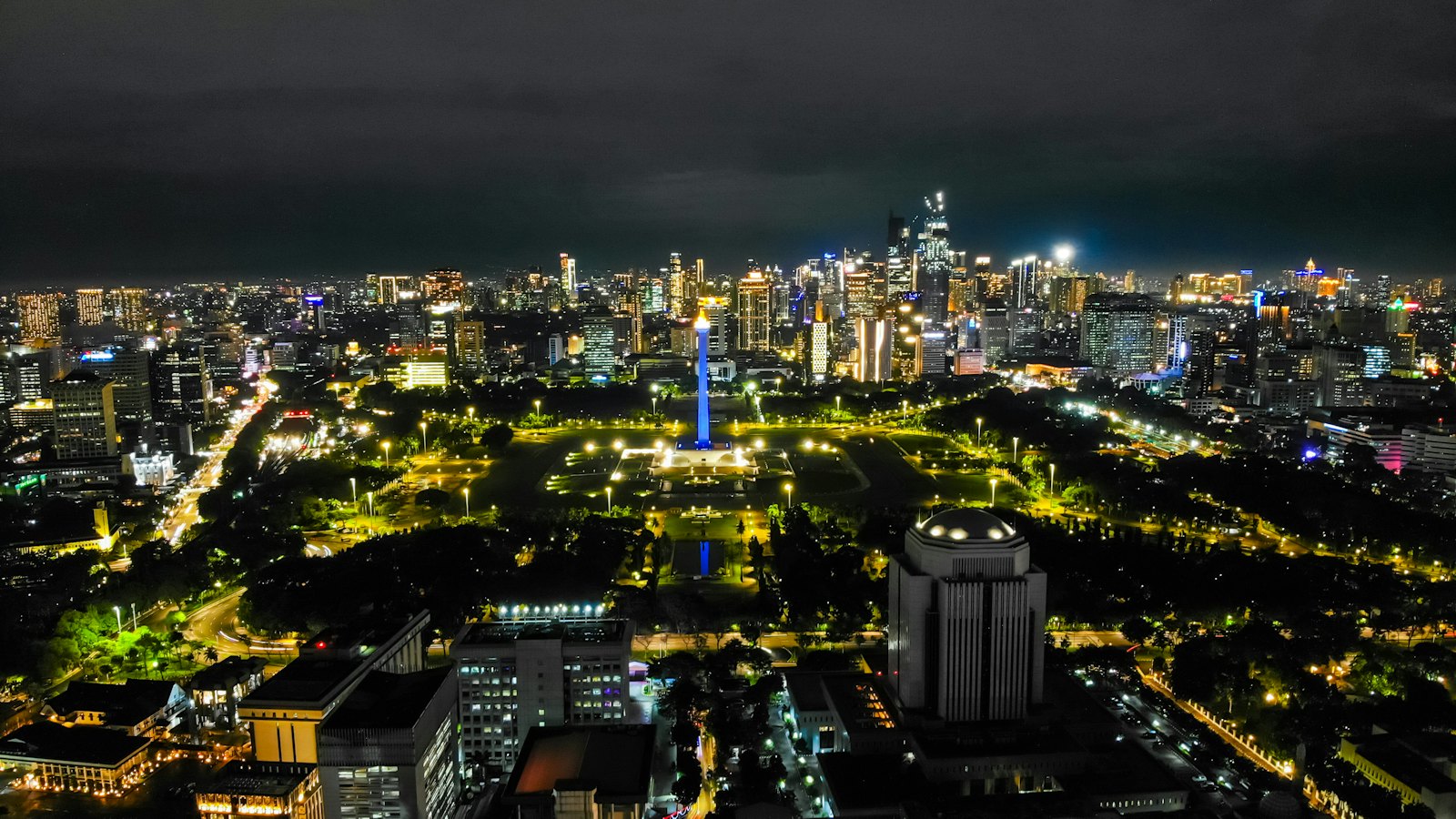
- Monas and Merdeka Square: the 132-metre National Monument, crowned by a gold-leaf flame. A lift rises to a viewing platform 115 metres up, and dioramas in the base retell the independence story.
- Istiqlal Mosque: Southeast Asia's largest mosque, facing Jakarta Cathedral and linked to it by an underground Tunnel of Friendship.
- Glodok: Indonesia's biggest Chinatown, with the lanes of Petak Sembilan and Kim Tek Ie (Dharma Bhakti) Temple, completed in 1650 and Jakarta's oldest Chinese temple.
- Tanah Abang and Thamrin City: Tanah Abang, beside Tanah Abang station and trading since 1735, is Southeast Asia's biggest textile market, with thousands of kiosks of fabric and ready-made clothing. Thamrin City, about 500 metres away and not far from Grand Indonesia, is calmer and strong on batik and Muslim wear.
- Taman Mini Indonesia Indah: provincial pavilions, museums and a cable car over a lake shaped like the archipelago. Good with children.
- Ancol: the Dufan theme park (more than 40 rides), SeaWorld Ancol and a seafront for sunset.
- Thousand Islands: speedboats from Marina Ancol, or slower and cheaper public boats from Muara Angke, reach the island chain north of the city. Pramuka Island has a hawksbill turtle conservation site.
- Bandung by Whoosh: the high-speed train goes from Halim to Padalarang in as little as 30 minutes, then a feeder train reaches central Bandung in about 18. The factory outlets along Jalan Dago and the Pasar Baru Trade Centre, a favourite with Malaysian shoppers, easily fill a day.
What to eat in Jakarta
Jakarta cooks from every corner of the archipelago, plus the dishes of its own Betawi people. Menus are in Bahasa Indonesia, which most Malaysians read easily.
- Soto Betawi: beef in a rich coconut-milk broth, the city's signature soup.
- Kerak telor: a Betawi omelette cooked with glutinous rice, topped with shredded coconut and dried shrimp.
- Nasi uduk: coconut rice close to nasi lemak, with fried chicken, tempeh and sambal.
- Gado-gado and ketoprak: vegetables, tofu and rice cake under peanut sauce.
- Nasi kebuli: spiced Betawi rice with an Arab influence.
- Street staples: bakso, mi ayam, martabak, sate and nasi goreng.
Mall food courts are clean and cool, though pricier than the street. Lenggang Jakarta and other sites for relocated street vendors sell the same dishes in tidier surroundings for roughly IDR 10,000 to 30,000 (RM 2 to RM 7). Nasi padang restaurants such as Sederhana, Garuda and Natrabu are good value, and the Menteng and Sabang areas are good hunting grounds for Indonesian home cooking.
Say "tidak pedas" for no chilli, and note that the red sauce on the table is often chilli, not tomato. Restaurant bills almost always add a 10% tax, and some add a service charge too.
Halal food and prayer spaces in Jakarta
About 87% of Indonesians are Muslim, and in Jakarta halal is the norm: most warungs, Padang restaurants, food courts and local chains serve no pork. A few points still matter.
- Chinese and Batak food: in Glodok and at many Chinese-Indonesian restaurants and noodle shops, pork is common. Menus may write it as B2 (from babi), while B1 means dog meat, served at some Batak eateries.
- Labels: look for the "Halal Indonesia" mark from BPJPH, the national halal agency, on packaged food and at certified restaurants. You may still see the older MUI halal logo on some products.
- Certified or Muslim-run: many small warungs are run by Muslim families without formal certification, which is normal here.
- Prayer spaces: every Soekarno-Hatta terminal has a musholla, and you will usually find one in malls too. Istiqlal Mosque holds the five daily prayers and Friday prayers, and is a moving place to pray Maghrib.
- Checking first: GrabFood and GoFood listings and Google Maps photos show what a place serves.
Getting around Jakarta: MRT, Transjakarta and Grab
Road traffic is the main enemy, so use rail and the busway where possible and save cars for short hops and late nights.
- Transit cards: a bank prepaid card such as Mandiri e-money, BCA Flazz, BNI TapCash or JakCard costs about IDR 40,000 (RM 9), all of it credited as fare balance, from Indomaret, Alfamart or Transjakarta counters. It works on Transjakarta, MRT, LRT, commuter trains and toll roads.
- MRT: the north-south line from Lebak Bulus to Bundaran HI via Blok M, Senayan and the Sudirman business district. Fares start at IDR 3,000 and add IDR 1,000 per station, about IDR 14,000 (RM 3.20) end to end. Since July 2026, contactless Visa and Mastercard cards also work at the MRT gates.
- Transjakarta: bus rapid transit on dedicated lanes, a flat IDR 3,500 (about RM 0.80). The front section of the bus is set aside for women.
- KRL Commuter Line: suburban trains to Bogor, Tangerang and Bekasi, packed at rush hour.
- Grab and Gojek: both cover the city for cars, motorbike taxis, food and parcels. Motorbikes beat the jams but are riskier.
- Taxis: Blue Bird is the trusted metered brand. Check the door logo, "Blue Bird Group" on the windscreen and a uniformed driver, as copycats exist.
Tap in and out on every trip; on the MRT and commuter trains the fare is worked out when you tap out.
Sample 4-day Jakarta itinerary
Four days covers the highlights comfortably. Keep to one area a day, since crossing town at rush hour can swallow two hours.
- Day 1: Take the airport train to BNI City and check in near Thamrin. Late afternoon at Monas and Merdeka Square, Maghrib at Istiqlal, dinner around Sabang.
- Day 2: Reach Kota Tua early, before the heat, for Fatahillah Square and the museums. Walk on to Glodok's temples and lanes (halal eaters should eat before or after, as pork is common there). End with sunset and seafood at Ancol, or Dufan with the kids.
- Day 3: Shopping day. Hit Tanah Abang early while it is cooler and quieter, move to Thamrin City for batik and Muslim wear, and recover in Grand Indonesia's air-conditioning. MRT to Blok M for dinner.
- Day 4: Pick a Whoosh trip to Bandung's factory outlets, a boat to the Thousand Islands, or Taman Mini with the family. On flying day, leave at least two hours to reach the airport.
A fifth day lets you do both Bandung and the islands without rushing.
Money, SIM and practical tips
- Currency: the rupiah (IDR). RM 1 was worth about IDR 4,400 at the time of writing, making IDR 100,000 roughly RM 23. Drop three zeros and divide by about 4.4.
- Cash and cards: Tanah Abang, warungs and small shops prefer cash; malls, hotels and chains take cards. Carry enough cash for market days.
- DuitNow QR: via DuitNow cross-border payments, Malaysian apps including Maybank, CIMB, Public Bank, RHB, Boost, BigPay and Touch 'n Go eWallet can scan Indonesian QRIS codes. You key in the amount in rupiah and pay from your ringgit account; PayNet says it is free for consumers. Check your app lists Indonesia.
- SIM and eSIM: local SIMs must be registered with your passport, simplest at the airport, or install a travel eSIM before flying.
- Plugs: two-round-pin Type C and F sockets at 230V. Pack an adaptor for your three-pin Type G plugs; your chargers need no voltage converter.
- Tipping: not customary, though it is becoming more common in restaurants.
- Safety: pickpockets work crowded markets and buses, so wear bags in front. Keep clear of demonstrations near government offices.
- Scams: fake Blue Birds, unofficial airport drivers and taxis taking the long way. Ride-hailing apps fix the fare upfront.
- Health: skip tap water, and consider a mask outdoors on hazy days, as air quality can be poor in the dry season.
Before you go
- Best time to go
- The best time to visit Jakarta is the dry season from June to September, when rain is rare and the city's June birthday brings fairs and sales. Temperatures hover around 28°C all year, so save afternoons for malls and museums. January and February are the wettest months, and downpours from November to March can flood roads. Jakarta marks its anniversary on 22 June, and the Jakarta Fair (PRJ) at Kemayoran and the Jakarta Great Sale run from about mid-June to mid-July. Over Hari Raya many residents head to their home towns, so the city empties and hotels discount, though transport out of the city is at its busiest just before the holiday. Malaysian school holidays, including the long break through most of December 2026, push up KLIA fares, so book those dates early.
- Visa for Malaysians
- Malaysians do not need a visa for Indonesia as of September 2026: the ASEAN exemption gives up to 30 days, free, with nothing to apply for beforehand. It is for tourism and other short visits, not work, trading or journalism, and the 30 days cannot be extended or converted once you arrive. Carry a passport valid for six months or more and be ready to show a return or onward ticket. Before landing, fill in the All Indonesia arrival card at allindonesia.imigrasi.go.id or in its app; it merges immigration, customs, health and quarantine declarations, can be filled in up to three days before arrival and issues a QR code you show at Soekarno-Hatta. Planning more than 30 days? Get a visa before flying. Confirm the latest rules on imigrasi.go.id, the official Indonesian immigration site, before you travel.
- Honest budget guide
- Jakarta costs roughly RM 150 to RM 400 per person each day on the ground, excluding flights; the hotel decides most of that range. Flights: our fare scan shows one-way tickets from about RM 255 (KLM, non-stop) at the time of writing, median around RM 262, highest about RM 311, so two one-ways total roughly RM 510 to RM 620. Rooms: budget chain hotels run about IDR 300,000 to 500,000 (RM 70 to RM 115) a night, good mid-range hotels IDR 500,000 to 1,000,000 (RM 115 to RM 230), often plus 21% tax and service. Food: RM 40 to RM 100 daily. Local transport: RM 10 to RM 50 daily, mostly Grab. With a shared mid-range room, a four-day, three-night Jakarta trip lands around RM 1,200 to RM 1,900 each including flights, before shopping. All figures are indicative.
Frequently asked questions
Do Malaysians need a visa for Jakarta?
No. As of September 2026 Malaysians enter Indonesia visa-free for up to 30 days at no cost, with a passport valid for at least six months and a return or onward ticket if asked. The stay cannot be extended. Complete the All Indonesia arrival card online within three days before landing, and check imigrasi.go.id for the latest rules.
Is there a direct flight from KL to Jakarta?
Yes, many daily. Malaysia Airlines, Batik Air Malaysia, Garuda Indonesia, Citilink, TransNusa and KLM fly non-stop from KLIA Terminal 1, and AirAsia and Indonesia AirAsia from Terminal 2. Batik Air Malaysia and TransNusa also fly from Subang. Flights take about two hours, and our fare scan listed one-way tickets from roughly RM 255 at the time of writing.
Is Jakarta Muslim-friendly?
Very. Indonesia is the world's most populous Muslim-majority country, most Jakarta eateries are halal by default, and prayer rooms (musholla) are easy to find at the airport, malls and big stations. Istiqlal, Southeast Asia's largest mosque, is in the centre. Take care in Chinatown and at Chinese or Batak restaurants, where pork is common.
How many days in Jakarta is enough?
Three or four days suits most Malaysian visitors: the centre with Monas and Istiqlal, Kota Tua and Glodok, a shopping day at Tanah Abang, then Bandung by Whoosh or the Thousand Islands. Traffic eats time, so stick to one part of the city each day instead of zigzagging.
What is the best month to visit Jakarta?
June to September, the dry season, is best, with August usually the driest. Late June adds the city's 22 June anniversary, the Jakarta Fair at Kemayoran and the Jakarta Great Sale. January and February are the wettest months, when floods can snarl roads. Skip Malaysian school holidays for cheaper KLIA fares.
What budget should I plan for 5 days in Jakarta?
Allow roughly RM 750 to RM 2,000 each on the ground for five days, excluding flights, depending on hotel and shopping. Add about RM 510 to RM 620 for two one-way tickets, going by our fare scan at the time of writing. A comfortable mid-range trip sharing a room usually totals RM 1,500 to RM 2,300 a head with flights. Indicative figures only.
Can I use Grab in Jakarta?
Yes. Grab works across Jakarta, as does the Indonesian app Gojek, for cars, motorbike taxis, food and parcels, and you can pay cash if no card is linked. At Soekarno-Hatta, book from the marked pick-up points, where fares are zone-based. At rush hour the train or MRT is often quicker.
Can I pay with DuitNow QR or Touch 'n Go in Jakarta?
Often, yes. Through DuitNow cross-border QR, Malaysian apps such as Maybank, CIMB, Public Bank, RHB, Boost, BigPay and Touch 'n Go eWallet can pay at merchants displaying Indonesia's QRIS code. You key in the amount in rupiah and it is paid from your ringgit account. Keep cash for markets and small stalls.
Jom pergi
Ready to go Jakarta? Compare available flights and hotels for your dates. Check baggage, cancellation terms and the final total on the booking provider before paying.






