




On this page12 sections
Koh Samui offers broad beaches, coconut-covered hills, night markets and boat excursions within a compact Thai island. It suits Malaysians seeking a nearby resort holiday, although travel from KLIA usually requires a connecting flight. This guide explains practical flight routes, airport transfers, suitable places to stay, halal dining, prayer facilities and expenses that first-time visitors may overlook. It also includes a manageable four-day plan combining temples, beach time, southern villages and Ang Thong Marine Park, without making every day feel hurried.
Getting there from Kuala Lumpur
No airline currently operates a nonstop flight from Kuala Lumpur International Airport to Koh Samui. Travellers should therefore expect at least one connection. Bangkok is normally the simplest transfer point, although suitable schedules may sometimes appear through Singapore or another Thai airport.
Flying from Kuala Lumpur to Bangkok takes approximately two hours, followed by a flight of about one hour to Koh Samui. With the connection included, five to eight hours is a reasonable overall estimate. Journeys booked on separate tickets need extra buffer time because the second airline may not assist if the first flight arrives late. Confirm whether checked luggage will be transferred and whether a Bangkok connection requires changing airports.
Full-service international flights usually operate from KLIA Terminal 1, while many budget airlines use Terminal 2. Always follow the terminal printed on the current booking. Indicative one-way connecting prices are around RM 700 to RM 1,500. Short connections, festive dates and school holidays generally cost more.
From Koh Samui Airport to the beaches
Koh Samui Airport is positioned near Chaweng and Bangrak, so transfers to the northern and eastern beaches are relatively quick. Prices depend on the destination, passenger count and vehicle. Using an approximate conversion of 7 to 8 baht for RM 1, a fare of 400 baht is about RM 50 to RM 57.
- Shared minivan: Expect approximately 130 to 250 baht per passenger, or RM 17 to RM 36. This is economical for solo visitors, but several hotel stops can lengthen the ride.
- Private taxi: Set aside about 400 to 700 baht, or RM 50 to RM 100, for Chaweng, Bophut or Lamai. Agree on the fixed amount before departure.
- Hotel transfer: A convenient option for families, late arrivals and villas on minor roads. Charges often begin near 500 baht and increase with distance or vehicle size.
- Car rental: Practical for confident drivers with the correct licence and insurance. Record all existing damage before accepting the vehicle.
Typical travel times are 10 to 20 minutes for Chaweng or Bangrak, 15 to 25 minutes for Bophut and 25 to 40 minutes for Lamai, depending on traffic.
Choosing where to stay
Koh Samui does not have one central district that suits every visitor. Selecting accommodation near the activities and restaurants you expect to use can prevent repeated, expensive journeys across the island.
- Chaweng: Suitable for a first visit if you want abundant restaurants, shops, nightlife and tour counters. Its central area is energetic, while accommodation near either end of the beach may be quieter. Check recent reviews for traffic or music noise.
- Bophut and Fisherman's Village: Popular with couples and families who enjoy a walkable evening area, seaside meals and a calmer atmosphere. Choices range from modest rooms to upscale beachfront properties.
- Lamai: A complete beach town with restaurants, massage businesses and evening entertainment, but generally less intensity than central Chaweng. It is well placed for southern sightseeing.
- Bangrak and Choeng Mon: Bangrak offers convenient access to the airport and island boats. Choeng Mon has a quieter, resort-oriented character that works well for families and honeymooners.
For any hillside villa, investigate the slope, approach road and distance to food before paying. An impressive view may involve difficult walks and frequent taxi expenses.
Island sights beyond the resort
- Ang Thong Marine Park: Join a boat outing among limestone islands, sheltered water and high viewpoints. Conditions at sea can cancel departures, while certain itineraries include kayaking or steep climbs.
- Chaweng Beach: Enjoy swimming, a shoreline walk or time at a beachfront cafe. The middle portion attracts the largest crowds.
- Fisherman's Village: Arrive in late afternoon to see traditional shopfronts, waterfront restaurants and market stalls on scheduled market evenings.
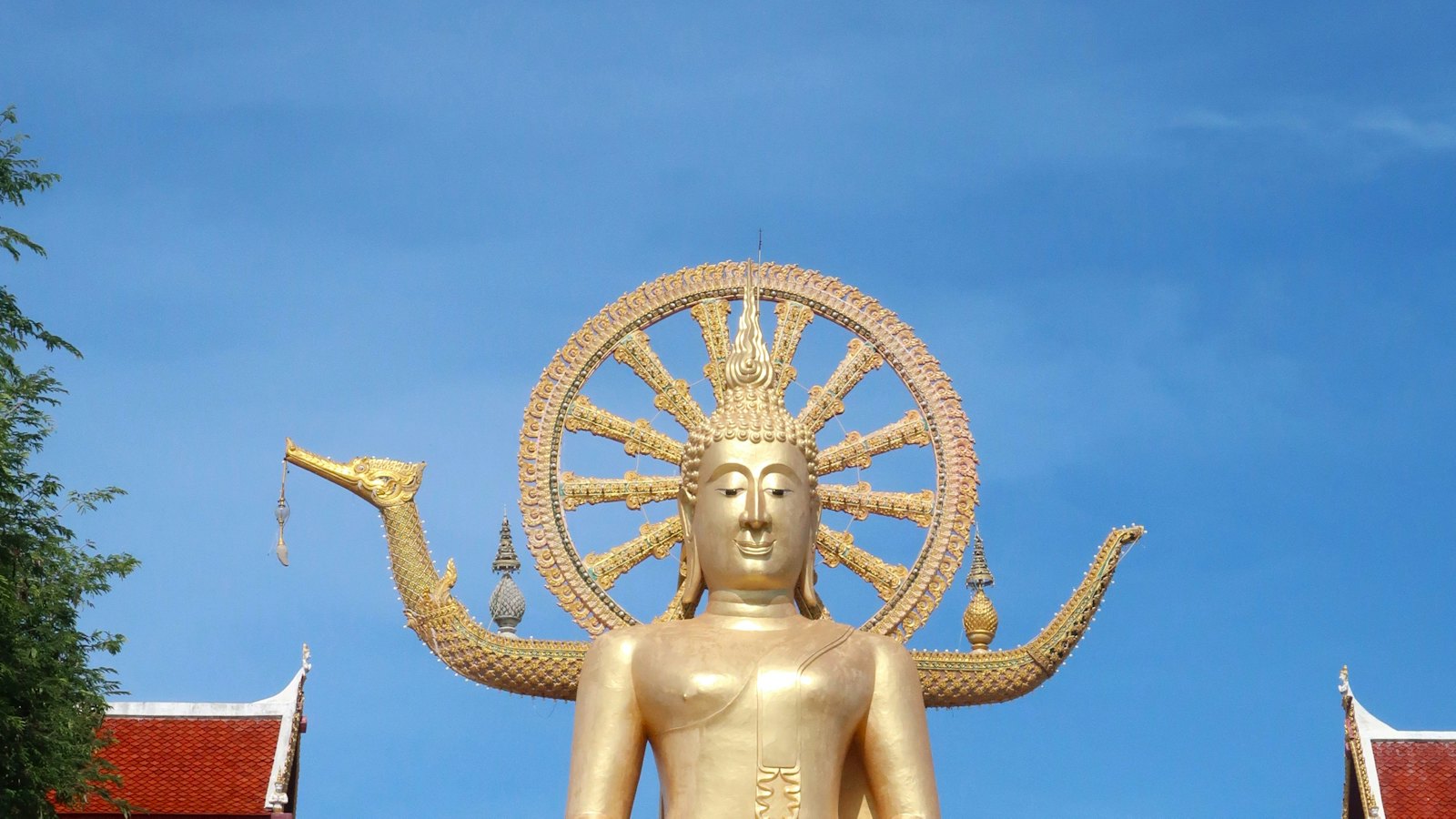
- Wat Phra Yai: Visit the prominent Big Buddha near Bangrak. Cover shoulders and knees, and follow signs about removing footwear.
- Wat Plai Laem: Explore a colourful waterside temple complex located close to the Big Buddha.
- Lamai Beach: Choose this area for a slower beach day with meals and shops close by.
- Hin Ta and Hin Yai: View the distinctive rocks south of Lamai before continuing along the coast.
- Na Muang waterfalls: Water flow is usually strongest following rain. Use footwear with traction and keep away from slick rocks.
- Southern Samui: Travel through coconut-growing areas, small communities and quieter coastal stretches for a different perspective from Chaweng.
Food worth trying
Southern Thai cuisine is frequently hotter, sharper and more pepper-driven than central Thai cooking. Khua kling is a dry curry often prepared with minced meat, while gaeng som is a sour, spicy curry commonly containing fish. Khanom jeen consists of fine rice noodles accompanied by curry, herbs and vegetables, making it suitable for breakfast or lunch. Island restaurants and markets also serve plentiful grilled fish, prawns, squid and blue crab.
Walking streets and night markets provide an inexpensive way to sample mango sticky rice, coconut pancakes, roti, grilled corn and cut fruit. Chaweng, Lamai and Fisherman's Village have the widest restaurant variety. Markets outside the main resort areas are often better value, although opening days and hours should be checked locally.
Muslim diners should confirm the ingredients in stocks, sauces and cooking oils, including when choosing seafood or vegetable dishes. Fish sauce is generally acceptable, but pork broth, shared cookware or sauces containing alcohol may present concerns. Kitchens displaying reliable halal identification or operated by Muslims offer greater reassurance.
Halal dining and places to pray
Muslim visitors can manage a Koh Samui holiday comfortably with some preparation, but halal restaurants are dispersed across the island. Hua Thanon on the southeastern coast contains a longstanding Muslim community and is among the most dependable areas for Muslim-run eateries. Halal-labelled Thai, Indian and Middle Eastern restaurants can also be found around Chaweng, Lamai and Bangrak, although ownership, menus and certification may change.
Seek a recognised halal mark or ask whether Muslims operate the kitchen. Wording such as "no pork" does not establish that the meat was halal-slaughtered or that separate utensils are used. Fruit, seafood and vegetarian meals can be useful alternatives after checking sauces, stock and cooking surfaces.
The Central Mosque of Koh Samui in Hua Thanon is the island's principal established mosque. Dedicated prayer rooms should not be expected at every shopping centre, beach club or airport facility. Carry a small prayer mat and politely request a clean, quiet area when needed. Mapping and halal-discovery apps can provide leads, but verify them through recent reviews and direct questions.
Transport around Koh Samui
There is no railway or island-wide public transport pass on Koh Samui. Visitors commonly travel by songthaew, taxi, ride-hailing vehicle, rental car or scooter.
Songthaews are covered pickup vehicles that follow the main roads. A short daytime journey may be around 50 to 100 baht, approximately RM 6 to RM 14, with greater distances priced higher. State your destination and establish the charge before boarding, particularly at night or when the driver is offering a private trip.
Grab operates on the island, but driver availability and permitted pickup areas differ by location and hour. Compare the application price with quotes from taxis or your hotel. Traditional taxis are easy to find, although drivers do not consistently use meters. Settle the amount beforehand. A journey across the island can cost 500 to 1,000 baht.
Scooter hire commonly runs from 200 to 350 baht daily, but road accidents are a significant risk. Only ride with appropriate licensing, insurance, experience and a helmet. Do not ride after drinking or hand over a passport as a deposit. Photograph the entire scooter at collection. A car or hired driver is usually the safer solution for families.
A relaxed four-day plan
- Day 1: Settle into Chaweng, Bophut or Lamai after the connecting journey. Spend the afternoon at the closest beach, then visit Fisherman's Village near sunset for dinner and an undemanding evening.
- Day 2: See Wat Plai Laem and Wat Phra Yai during the cooler morning hours, wearing clothing appropriate for religious sites. Continue to a northern beach or lookout before a quiet afternoon. Muslim travellers can select a verified halal lunch venue in advance.
- Day 3: Take an Ang Thong Marine Park tour for limestone scenery, swimming and optional kayaking. Before booking, check the marine forecast and ask whether meals, accommodation transfers and park admission are covered by the quoted price. Protect phones and documents from water spray.
- Day 4: Explore Lamai, Hin Ta and Hin Yai, Hua Thanon and rural southern Samui. Add Na Muang waterfalls when conditions are safe. Leave sufficient time to refuel or return a hired vehicle and travel to the airport.
For a three-day stay, remove either the southern circuit or marine park excursion. Attempting both alongside the temple visits leaves little time to enjoy the beaches.
Money, tips, connectivity and common pitfalls
Thailand's currency is the baht. For rough planning, RM 1 equals about 7 to 8 baht, but obtain a current exchange rate before travelling. Keep cash available for markets, songthaews, small restaurants and beach sellers. Resorts and larger dining venues usually take cards, though minimum transactions or added fees may apply. Do not assume Malaysian DuitNow QR payments will be accepted throughout Thailand.
Tourist SIM cards and eSIMs can be purchased before the journey or after arrival. Mobile reception is generally reliable around developed beaches but may weaken in hilly places or offshore. Thai electricity is supplied at 220V, and outlets commonly accommodate Type A, B and C plugs. Bringing a universal adapter avoids uncertainty.
Tips are welcomed but not mandatory. Rounding a taxi charge or giving 20 to 100 baht for attentive service is reasonable. Frequent visitor complaints involve excessive taxi prices, contested scooter scratches and unclear jet-ski damage demands. Choose established providers, obtain tour inclusions in writing and create timestamped photographs of rented equipment. Keep your passport rather than offering it as collateral.
Before you go
- Best time to go
- December through February is usually the simplest season for a Koh Samui beach holiday. Conditions are generally drier and more comfortable, although Christmas, New Year, Lunar New Year and Malaysian school breaks increase demand and room rates. February through April is often sunnier but progressively hotter. May to September brings humidity and intermittent rain, yet many days still contain useful outdoor periods. The heaviest rain commonly arrives in October and November, when rough water can interrupt boat excursions. May, June and September may suit value-conscious visitors willing to accept showers. Since island forecasts change quickly, leave marine activities flexible and confirm local sea conditions.
- Visa for Malaysians
- Malaysian tourists receive up to 30 days of visa-free entry into Thailand as of September 2026. The former 60-day allowance ended when the revised period started on 15 September 2026, making earlier guidance obsolete. Foreign arrivals must file the free Thailand Digital Arrival Card through tdac.immigration.go.th during the three days preceding arrival. The card is separate from a visa, so avoid unofficial services demanding payment. Keep accommodation, onward-travel and financial evidence available, and preferably retain six months of passport validity. Malaysians are not subject to Thailand's annual two-entry ceiling for visa-exempt land crossings. Immigration offices handle extension requests. Recheck official Thai immigration, e-Visa or embassy sources before departure.
- Honest budget guide
- Allow approximately RM 250 to RM 500 per person for each day on Koh Samui, before airfare. Use RM 700 to RM 1,500 as a planning range for each connecting one-way flight from Kuala Lumpur. Basic rooms can be RM 100 to RM 250 nightly, while comfortable mid-range accommodation is often RM 250 to RM 600. Daily food may require RM 50 to RM 120, with local transport adding RM 30 to RM 100 unless you rely on private taxis. Including return flights, lodging and moderate activities, four days may cost RM 2,500 to RM 5,000 per traveller. Holiday periods, premium resorts and boat tours raise the total.
Frequently asked questions
Do Malaysians need a visa for Koh Samui?
Malaysian passport holders visiting for tourism can enter Thailand without a visa for up to 30 days, as of September 2026. File the free Thailand Digital Arrival Card during the three-day window before arrival. Bring onward-travel and accommodation information, then verify the requirements with an official Thai government or embassy source before leaving Malaysia.
Is there a direct flight from Kuala Lumpur to Koh Samui?
No airline currently flies nonstop from Kuala Lumpur to Koh Samui. Available journeys consequently involve one or more connections, most often in Bangkok. Review the baggage arrangement, departure terminal and transfer airport carefully. Some Bangkok combinations require passengers to collect luggage and travel between Suvarnabhumi and Don Mueang.
How many days are enough for Koh Samui?
Four days provides enough time for beaches and temples, an Ang Thong Marine Park outing and a separate tour of southern Samui at a comfortable pace. Three days is workable when the priority is relaxing at a resort. Staying five to seven days gives greater flexibility if rain or rough water affects planned excursions.
Is Koh Samui Muslim-friendly?
The island has mosques and Muslim-operated restaurants, with the strongest concentration around Hua Thanon. Availability is less consistent at some resort beaches, so check nearby options before choosing accommodation. Confirm that a kitchen is genuinely halal instead of relying on a pork-free sign, and pack a prayer mat because purpose-built prayer rooms are not guaranteed.
What is the best month to visit Koh Samui?
February is an appealing overall choice, combining relatively dry conditions, manageable temperatures and favourable beach weather. December and January are similarly popular but may carry higher accommodation prices. October and November typically receive heavier rainfall, and rougher seas during that period can cause marine tours or ferry journeys to be changed or cancelled.
How much money should I budget for four days?
Plan on roughly RM 2,500 to RM 5,000 for each person when connecting return flights, accommodation, meals, island travel and several activities are included. The final amount depends heavily on the resort category, flight dates, boat excursions and use of private vehicles. Bring some Thai baht because songthaew drivers, market sellers and smaller eateries may accept cash only.
Can I use Grab in Koh Samui?
Grab is available on Koh Samui, although waiting times, driver numbers and accessible pickup points vary between beaches. Prices can exceed those typically seen in Bangkok. Compare the displayed amount with a hotel transfer or taxi quote. Prearrange a vehicle for an early flight, a late arrival or accommodation reached by an isolated road.
Should I rent a scooter in Koh Samui?
Consider a scooter only when you hold the required licence, possess valid insurance and are experienced on unfamiliar roads. Always use a helmet, avoid wet-weather or alcohol-impaired riding and document existing marks with photographs. Keep your passport rather than leaving it with the rental operator. Cars, Grab vehicles and hired drivers are safer choices for families and inexperienced riders.
Jom pergi
Ready to go Koh Samui? Compare available flights and hotels for your dates. Check baggage, cancellation terms and the final total on the booking provider before paying.






