




On this page13 sections
- Overview
- Getting There from Kuala Lumpur
- From Komodo Airport to the Harbour
- Where to Stay
- Things to Do in Komodo Park and Labuan Bajo
- Food, Halal Choices and Prayer
- Getting Around Town and the Islands
- Four-Day Suggested Itinerary
- Money, Connectivity and Daily Practicalities
- Selecting a Safe Komodo Boat
- Booking Checks and Common Problems
- Before you go
- FAQ
Labuan Bajo is a compact port on Flores and the main gateway to Komodo National Park. Its surrounding waters lead to wild dragons, steep island viewpoints, coral gardens and possible manta encounters. Malaysian travellers can reach the town directly from Kuala Lumpur, then choose between day cruises, diving trips and overnight boats. The journey still rewards careful preparation: sailing plans depend on weather, boat standards vary and halal arrangements are best confirmed early. The guidance below explains transport, accommodation, food, costs, park activities and the practical checks needed for a safer, smoother Komodo holiday.
Getting There from Kuala Lumpur
AirAsia operates a nonstop Kuala Lumpur to Labuan Bajo service as of September 2026. The journey to Komodo Airport, identified by the code LBJ, takes around four hours. Flights usually leave from KLIA Terminal 2, although passengers should rely on the terminal shown in their current reservation.
If the direct timetable is unsuitable, Bali and Jakarta provide common connecting routes. Travellers pass through Indonesian immigration at the first airport they enter, so the transfer must include enough time for passport control, baggage collection and any required recheck. Booking separate tickets reduces protection when an earlier flight is delayed.
Amaboxly's fare scan currently has no stored LBJ prices. A useful estimate for one direction is RM 300 to RM 800, excluding luggage, food and selected seats. Demand during dry-season months, Malaysian school breaks and public-holiday weekends can raise the total. Compare complete checkout prices, especially when taking dive equipment.
From Komodo Airport to the Harbour
Komodo Airport is near central Labuan Bajo, and a road transfer to town or the harbour usually takes 10 to 20 minutes. Hillside properties, traffic and roadworks may lengthen the ride. For rough calculations, IDR 10,000 equals about RM 2.50 to RM 3, subject to currency movements.
- Airport taxi: A practical option with baggage, normally about IDR 70,000 to IDR 120,000 for the centre. Distant resorts may cost more.
- Prearranged pickup: Hotels and dive businesses often provide shared or private transfers. Confirm the price and meeting location in advance.
- Ride-hailing service: Cars and motorcycles may appear in an app, but airport access and driver supply are unreliable. Short rides can be around IDR 20,000 to IDR 60,000.
- Motorcycle taxi: A lightly packed solo passenger might pay IDR 20,000 to IDR 40,000.
Walking with luggage is uncomfortable because the roads are hot, uneven and frequently steep.
Where to Stay
First-time visitors often benefit from staying in central Labuan Bajo. The harbour, tour counters, dive shops, minimarts and inexpensive restaurants are close together, although street noise and steep lanes are common.
Waterfront and marina accommodation provides convenient boat access, sunset scenery and a wide choice of meals. Ask whether the room faces traffic, bars or evening music before paying extra for a harbour outlook.
Properties on the hills above town tend to be calmer and offer sweeping bay views. They suit travellers who prioritise scenery, but repeated walks uphill can be exhausting. Include taxi, motorcycle or shuttle costs in the budget.
Waecicu and other northern coastal areas are better for quiet resort time, families and travellers who want to remain near the sea. Shops and independent restaurants are less accessible there, so check transfers and dining arrangements. At any property, recent reviews about cooling, water pressure and backup power are more useful than photographs alone.
Things to Do in Komodo Park and Labuan Bajo
- Komodo or Rinca: Observe Komodo dragons during a ranger-guided walk. Stay with the group and obey all distance instructions.
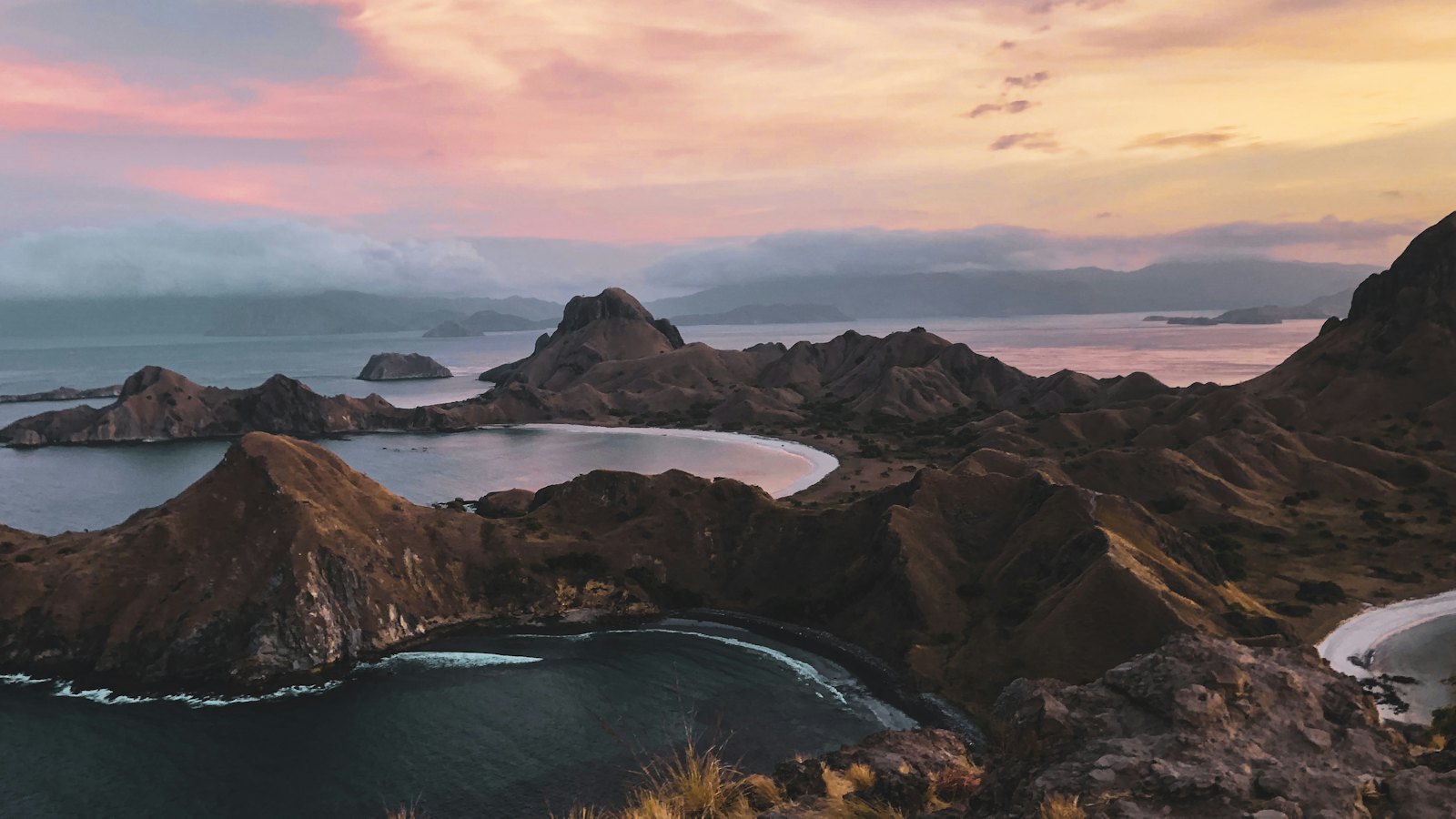
- Padar Island: Climb an exposed, steep path for the celebrated view across several bays. Take water and shoes with reliable grip.
- Pink Beach: See sand coloured by coral particles and snorkel only when local conditions permit.
- Manta sites: Search for rays around cleaning stations such as Manta Point. Encounters are uncertain, and swimmers must never pursue or touch wildlife.
- Taka Makassar: Stop at a pale tidal sandbank whose dimensions change with the water level.
- Diving: Explore reefs, turtles and pelagic habitats with an established operator. Currents can be powerful, so disclose certification and recent experience honestly.
- Rangko Cave: Travel by road and boat, then walk to a limestone pool affected by the angle of daylight.
- Sunset hills: Bukit Sylvia and nearby ridges overlook the harbour and layered islands.
- Overnight sailing: Sleep among the islands after checking the vessel, crew and safety provisions carefully.
Food, Halal Choices and Prayer
Local meals feature fish, squid, prawns and shellfish. At seafood stalls, establish whether the displayed amount covers one serving, 100 grams or the whole item before cooking begins. Grilled fish with rice, vegetables and sambal is an uncomplicated choice.
Regional dishes include sour ikan kuah asam soup, corn-and-bean jagung bose and smoked se'i. Se'i can contain pork or beef. Muslim diners requesting se'i sapi should also ask about utensils and preparation surfaces. Nasi goreng, ayam bakar, soto and tempeh are widely found.
Halal meals are obtainable, although visible certification is not as widespread as in Kuala Lumpur. Choose recognised halal premises or clearly Muslim-run warung, and ask about lard, pork and alcohol-based ingredients. The town has mosques for daily prayers. Carry a compact prayer mat for excursions and save prayer times and qibla information offline. Boat meals should be requested in writing before payment, with a second confirmation at check-in.
Getting Around Town and the Islands
Labuan Bajo has neither an urban railway nor a visitor transport pass. Central streets can be covered on foot, but limited pavements, heat, slopes and quick-moving traffic make longer walks unpleasant.
A short motorcycle-taxi trip often costs IDR 10,000 to IDR 30,000. Cars are preferable for groups, baggage and viewpoint visits, with many short journeys falling between IDR 40,000 and IDR 100,000. Set the fare before departure whenever no meter or app quote is available.
Grab sometimes lists local drivers, though availability and airport collection are less consistent than in major Indonesian cities. Keep rupiah and the hotel's telephone number as alternatives. Scooter hire is approximately IDR 80,000 to IDR 150,000 daily before fuel. Only rent with valid licensing, suitable insurance and confidence on rough, steep roads. Photograph existing damage and inspect the helmet.
Authorised tour vessels provide access to the national park. Evaluate passenger limits, equipment, route and weather procedures alongside the advertised price.
Four-Day Suggested Itinerary
- Day 1: Arrive from Kuala Lumpur, transfer to the hotel and check the precise location and time for tomorrow's cruise. Collect water, enjoy the marina or a hilltop sunset, and have an early dinner.
- Day 2: Join a national park excursion combining Padar, a supervised dragon walk, Pink Beach and snorkelling. The captain may alter the order because of currents, weather or park directions. Carry sun protection and rupiah for excluded charges.
- Day 3: Select diving, manta snorkelling or a gentler private cruise. Travellers avoiding another long sea day can pair Rangko Cave with a sunset viewpoint. Allow time to recover after a fast and bumpy crossing.
- Day 4: Eat breakfast, purchase local crafts and leave for the airport with a comfortable time allowance.
A two-night liveaboard can occupy the second and third days. Make certain its scheduled return leaves ample protection for the flight. Sleeping ashore on the last evening is the safer arrangement when delays are possible.
Money, Connectivity and Daily Practicalities
Indonesia's currency is the rupiah. IDR 100,000 is approximately RM 25 to RM 28 for planning purposes, but travellers should consult the latest exchange rate. Keep cash for warung, small retailers, park expenses and motorcycle taxis. Larger hotels, restaurants and diving businesses usually accept cards, occasionally with an additional fee. DuitNow QR cannot be assumed to work everywhere.
Travel eSIMs and Indonesian prepaid SIM cards are available. Physical cards require correct registration, so purchase one from an authorised outlet or prepare an eSIM before departure. Reception becomes weak or absent around remote islands. Store tickets, maps, addresses and emergency numbers on the device.
Electrical outlets generally accept Type C or Type F plugs and supply 230V. Malaysian three-pin equipment needs an adaptor. Tap water is unsuitable for drinking. Tips are voluntary, but modest recognition for helpful guides and crews is welcomed. Use sun protection, reduce reef damage and keep essential medicine in a waterproof bag.
Selecting a Safe Komodo Boat
Shared speedboats, private craft and wooden liveaboards differ greatly in condition and comfort. Request the vessel's name and recent images before booking. Obtain written details covering capacity, beds, ventilation, toilets, meals, drinking water, transfers, snorkelling gear, ranger services and park charges. Because official fees may change, carry a reserve rather than allocating every rupiah.
Check for correctly sized life jackets, flotation aids, fire extinguishers, communications, navigation equipment and experienced crew. Parents should verify that child-size jackets will be aboard. Insurance must cover the chosen activities, including scuba diving when relevant.
Speedboats reach numerous locations in one day but may produce a tiring ride. Liveaboards offer evenings and early mornings inside the island area, although inexpensive cabins can be cramped, warm and noisy. People susceptible to motion sickness should bring medication they already tolerate and request a central berth. Respect a captain's decision to cancel or change course when conditions become hazardous.
Booking Checks and Common Problems
Before transferring money, obtain the full schedule, operator identity, vessel details and cancellation policy in a saved message or document. The quotation should identify government or park charges, harbour transfers, ranger costs, equipment, towels, meals and drinking water. Ask how the company responds if weather prevents one or more advertised stops.
Wildlife encounters and exact routes cannot be guaranteed. Avoid sellers promising a certain manta sighting, an unusually close dragon encounter or an inflexible itinerary regardless of sea conditions. Responsible crews change plans when currents, wind or park management require it.
Inspect snorkels, masks and life jackets before leaving the harbour. Tell the crew immediately about weak swimming ability, allergies or medical concerns. Keep valuables protected from spray, and take enough prescribed medicine for unexpected delays. Anyone diving should review the operator's credentials, oxygen supply and emergency procedure. Finally, schedule the return to town well before onward travel, since a delayed vessel and a missed flight can become far more expensive than an extra hotel night.
Before you go
- Best time to go
- April through November usually offers the easiest window for cruises. Rainfall is generally lower and sailing conditions have a better chance of remaining settled, although the sea can change in any month. July and August attract the largest crowds and bring expensive rooms, busy boats and hot, exposed trails. April to June or September to November may provide a more comfortable balance of weather and demand. December through March is wetter, increasing the likelihood of rough water or altered routes. Malaysian school breaks and long weekends also fill popular departures. Choose flexible bookings and add a spare day when a particular dive or island visit is essential.
- Visa for Malaysians
- As of September 2026, Malaysians do not need a visa to visit Indonesia and can stay for up to 30 days, with no extension or conversion available. Longer plans require the correct permission arranged through Indonesia's official eVisa service before travel. The passport must remain valid for at least six months from the arrival date, and officers may request an onward or return booking. Submit the free All Indonesia Arrival Card during the three days preceding entry at allindonesia.imigrasi.go.id or in the authorised app, then retain its QR code. Travellers connecting in Jakarta or Bali clear immigration there. Recheck imigrasi.go.id before departure.
- Honest budget guide
- A moderate daily allowance is RM 250 to RM 550 per traveller. This excludes airfare and substantial marine excursions. Since Amaboxly's current scan contains no saved LBJ fares, budget approximately RM 300 to RM 800 for each one-way journey from Kuala Lumpur before optional extras. Basic accommodation can be RM 80 to RM 180 nightly, while comfortable mid-range rooms are often RM 200 to RM 450. Food may require RM 40 to RM 100 a day, with local travel adding RM 20 to RM 70. Shared park cruises commonly contribute RM 300 to RM 700. Diving, private charters and liveaboards cost more. An indicative four-day total is RM 2,000 to RM 4,500 per person, depending on season, fees and boat quality.
Frequently asked questions
Do Malaysian travellers require a visa for Labuan Bajo?
As of September 2026, Malaysians do not need a visa to enter Indonesia for tourism and can stay for up to 30 days. That permission cannot be extended or changed. Bring a passport valid for another six months, evidence of onward travel and the QR code from the All Indonesia Arrival Card. Verify the position with Indonesian immigration shortly before departure.
Can I fly nonstop from Kuala Lumpur to Labuan Bajo?
Yes. AirAsia serves the Kuala Lumpur to Komodo Airport route directly as of September 2026, with a flight time of around four hours. Departure is generally from KLIA Terminal 2, but the booking confirmation is authoritative. Bali or Jakarta connections are alternatives, and immigration takes place wherever the passenger first enters Indonesia.
How long should I spend in Labuan Bajo?
Allow at least four days for arrival, two activity days and departure. Five days gives greater flexibility if rain, currents or vessel changes affect the plan. A two-night liveaboard works within either length, although returning to town for the last night reduces the chance that a late boat will interfere with an outbound flight.
Which months are best for a visit?
May, June, September and October often combine relatively dry conditions with fewer visitors than July and August. No month guarantees calm water, and strong currents remain possible. Rain and route disruption become more likely from December to March. Reserve early for Malaysian school holidays, public-holiday weekends and the busiest dry-season dates.
Is Labuan Bajo suitable for Muslim visitors?
The town has mosques, a Muslim population and places serving halal food, but official labels are not displayed as consistently as in larger cities. Seek recognised certification or Muslim-operated warung and ask about pork, lard, alcohol ingredients and shared cookware. Notify cruise operators of meal requirements before booking, since onboard choices can be limited.
Does Grab operate in Labuan Bajo?
Grab can show cars or motorcycles for certain journeys, but there may be few drivers and airport pickup access is not always dependable. Carry cash for local taxis and motorcycle taxis. When an appointment or flight matters, ask the hotel to organise transport. Confirm the amount in advance if neither a meter nor an app fare applies.
What should I budget for a four-day holiday?
A reasonable estimate is RM 2,000 to RM 4,500 for each person. That range can cover indicative return airfare, lodging, meals, ground transport and a shared Komodo excursion. Premium liveaboards, private charters, diving and peak-season hotels increase the amount. Keep rupiah available for small purchases, changing park charges and unexpected schedule adjustments.
Is a day cruise better than a liveaboard?
A day cruise suits shorter visits, lower budgets and travellers who sleep better ashore. Liveaboards avoid daily harbour transfers and provide more time within the islands, but inexpensive vessels can have basic bathrooms and warm cabins. Whichever format you choose, examine passenger capacity, life-saving equipment, insurance, included charges and bad-weather terms before paying.
Jom pergi
Ready to go Labuan Bajo? Compare available flights and hotels for your dates. Check baggage, cancellation terms and the final total on the booking provider before paying.






