




On this page12 sections
- Overview
- Getting There: Flights from Kuala Lumpur
- Airport Transfers into Chiang Rai
- Where to Stay
- Things to Do: Temples, Art and Highland Trips
- Northern Thai Food to Try
- Halal Meals and Prayer Facilities
- Transport Around the City and Province
- Four-Day Chiang Rai Itinerary
- Money and Practical Tips
- Before you go
- FAQ
Chiang Rai suits travellers seeking mountain scenery, imaginative temples and quieter evenings than Thailand's larger cities offer. Three or four days provide time for Wat Rong Khun, Wat Rong Suea Ten, Baan Dam and an excursion to tea country or the Golden Triangle. Trips from Kuala Lumpur usually involve a connecting flight, often through Bangkok, so check the airport used for each segment. This guide explains the journey, airport transfers, convenient places to stay, halal dining, local transport, major attractions and likely costs in Malaysian ringgit.
Getting There: Flights from Kuala Lumpur
As of September 2026, no airline lists a nonstop flight between Kuala Lumpur International Airport and Chiang Rai. Practical routes usually involve one connection, commonly in Bangkok. A well-timed itinerary can take about five to eight hours, while an extended layover may turn it into a much longer journey.
Check every airport code before paying. Some routes use Suvarnabhumi for one flight and Don Mueang for the next. Changing airports means travelling across Bangkok by road and may also require baggage collection, another check-in and extra time for traffic.
Your Kuala Lumpur departure may use KLIA Terminal 1 or Terminal 2, depending on the airline. A single through-ticket is preferable when its price and schedule are reasonable because baggage may travel onward and the airline can provide assistance after a missed connection. With separate bookings, responsibility for collecting luggage and reaching the next flight rests with the traveller.
Exact fares change by date and airline. Use RM 350 to RM 800 each way as an initial estimate, then include baggage, seat fees and any Bangkok transfer.
Airport Transfers into Chiang Rai
Mae Fah Luang Chiang Rai International Airport lies about 10 kilometres north of the city centre. A typical drive to central accommodation takes 15 to 25 minutes. For approximate conversions, 100 baht is about RM 13, although exchange rates change.
- Official taxis commonly charge 150 to 250 baht, or roughly RM 20 to RM 33, for central destinations. Use the authorised counter and confirm that the stated amount includes all fees.
- Grab displays an estimated price before booking. Central trips are often within the same 150 to 250 baht range, but busy periods can cost more. Follow the application instructions for the pickup location.
- The airport bus has previously connected the terminal with downtown and the main bus stations. Fares have been modest, roughly RM 2 to RM 4, with travel taking 30 to 45 minutes. Ask airport staff whether it is operating on your arrival date.
- Hotels and local operators can arrange private transfers, usually for 250 to 500 baht. This is convenient after a late flight or when staying outside central Chiang Rai.
Where to Stay
Central Chiang Rai is compact, but the right base can reduce spending on evening transport. Most famous attractions still require a vehicle.
- Clock Tower and Night Bazaar: This is the simplest choice for a first visit without a car. Restaurants, markets, tour agencies and the central bus terminal are nearby. Request a quiet room if the hotel faces a lively street.
- Kok River: Riverside properties provide greener surroundings and suit travellers wanting a calmer stay. Hotels are widely spaced, so examine the precise location. Reaching downtown restaurants may require a ride.
- San Khong Noi and southern central areas: These residential streets contain local cafes and provide useful access towards Wat Rong Khun. Some parts become very quiet at night.
- Northern centre and airport road: This area works well for early departures and journeys towards Baan Dam, Mae Chan or Mae Salong, but it is less convenient for walking to the Night Bazaar.
Basic rooms generally cost 500 to 1,000 baht nightly. Mid-range accommodation is commonly 1,200 to 2,500 baht, with higher rates possible during the cool season.
Things to Do: Temples, Art and Highland Trips
Chiang Rai combines contemporary art, Lanna heritage and northern mountain scenery. Grouping attractions by direction limits repeated driving.
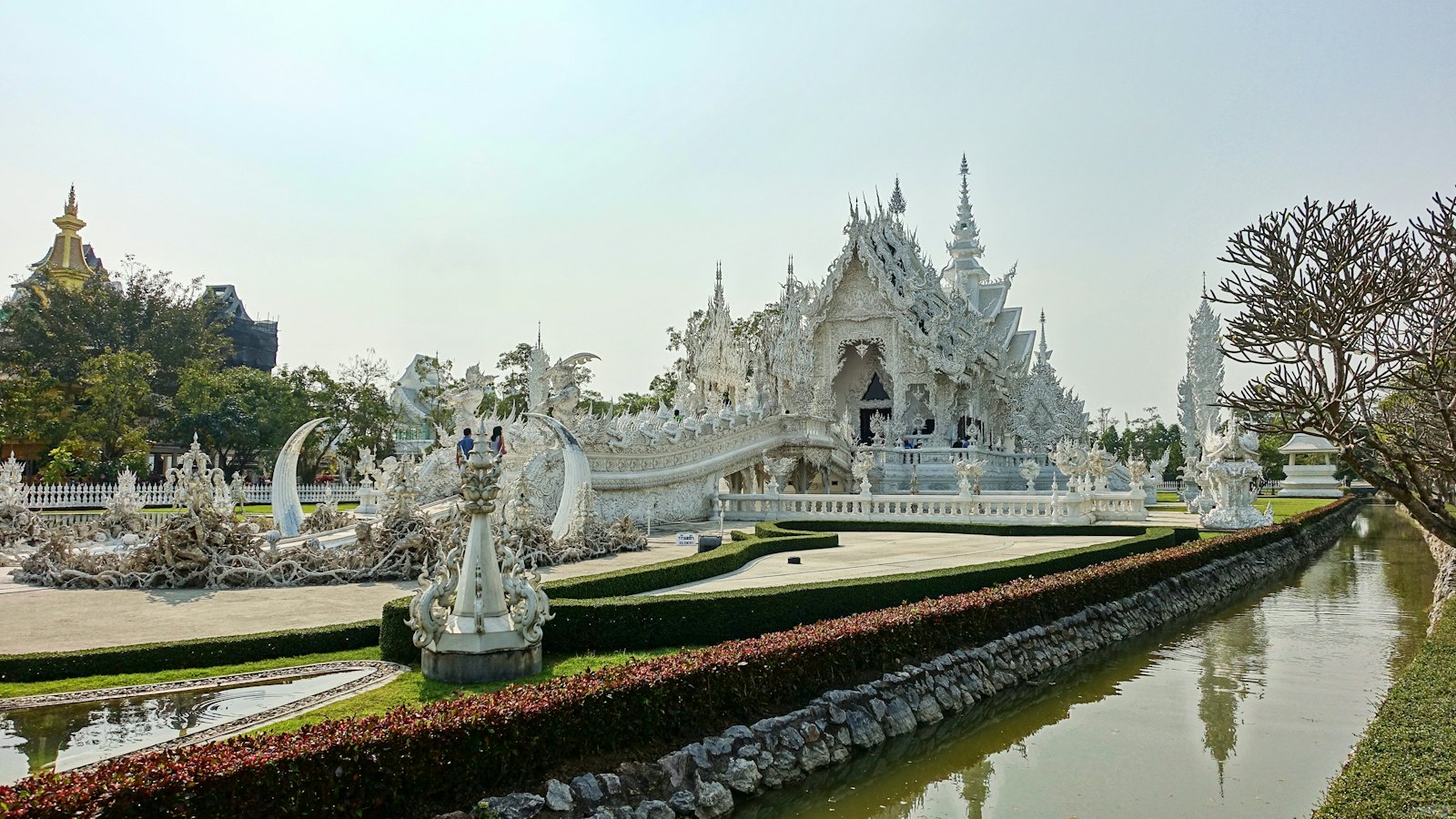
Wat Rong Khun, known as the White Temple, is both a religious site and an elaborate modern artwork. Visit early for a less crowded view of its white surfaces, symbolic decoration and galleries. Wat Rong Suea Ten, or the Blue Temple, features vivid blue interiors, gold detailing and a large white Buddha.
Baan Dam Museum displays dark timber structures, animal imagery and work connected with artist Thawan Duchanee. In the centre, Wat Phra Kaew stands where the Emerald Buddha was discovered before the image eventually reached Bangkok. The Golden Clock Tower is attractive during the day and illuminated at night, though show times should be confirmed locally.
Mae Fah Luang Art and Cultural Park presents Lanna architecture, crafts and regional history. Beyond town, Doi Tung offers gardens and elevated views. Mae Salong and Choui Fong are known for tea plantations, tastings and cooler air. A Golden Triangle day trip reaches Mekong viewpoints near Thailand's borders with Laos and Myanmar.
Northern Thai Food to Try
Northern Thai cooking is often aromatic and herbaceous, with less sweetness than food commonly associated with Bangkok. Pork meat, fat and broth are widespread, so Muslim visitors should ask about preparation even when a dish initially appears suitable.
Khao soi combines egg noodles, coconut curry and a topping of crisp noodles. Order chicken or beef from a Muslim-run kitchen and verify the stock and cooking utensils. Traditional nam ngiao is a tomato-based noodle soup that normally contains pork. Sai ua sausage and gaeng hang lay curry are also usually made with pork.
Adaptable options include grilled whole fish, plain rice, vegetables cooked to order and som tam. Ask for papaya salad without dried shrimp when preferred, and check whether sauces or equipment are shared with unsuitable dishes.
The Night Bazaar is a convenient place to browse cooked food and snacks. Chiang Rai's Saturday walking street, when operating, has a more local atmosphere. Markets also sell seasonal pineapple, lychee, mountain-grown tea and local coffee. Travellers with strict dietary or allergy requirements may find a written Thai explanation useful.
Halal Meals and Prayer Facilities
Muslim travellers can visit Chiang Rai comfortably with some advance research, although halal restaurants are less concentrated than in Bangkok or southern Thailand. Look for Thailand's recognised halal mark, Arabic halal signage or reliable confirmation that Muslim owners operate the kitchen. A restaurant that merely avoids pork may still use unsuitable meat, sauces or shared equipment.
The area around the main mosque in central Chiang Rai is a sensible starting point for food. Muslim-run Thai, Yunnanese and South Asian businesses may serve chicken khao soi, beef noodles, roti and rice dishes. Listings and hours can change, so seek recent advice from the mosque community, hotel staff or current customer reviews.
Vegetarian meals and plainly cooked seafood can serve as alternatives, but broths, sauces and cooking surfaces should still be checked. The main mosque in central Chiang Rai is the principal prayer location. Airport or shopping-centre employees can advise whether a prayer room or private space is available.
Carry a small prayer mat on outings to Mae Salong, Doi Tung or the Golden Triangle because dedicated facilities may be absent. Treat old directory listings as leads rather than guarantees.
Transport Around the City and Province
The Clock Tower, Night Bazaar and central bus station are close enough to explore on foot. Temples, museums and mountain districts are spread across a much wider area, and Chiang Rai has neither an urban railway nor a visitor transport pass.
Grab is convenient for short city journeys. Central rides often cost 60 to 120 baht, or about RM 8 to RM 16. Cars may become scarce late at night or near remote attractions, so organise the return before leaving town.
Tuk-tuks and songthaews gather near markets and terminals. Songthaews are covered pickups that carry shared passengers or operate as private charters. Before boarding, agree on the destination, total charge and whether the price applies per passenger or per vehicle. A short private journey may cost 80 to 150 baht.
A chauffeured half-day temple route generally costs 800 to 1,500 baht, depending on distance and waiting time. Scooters provide flexibility but demand a valid licence, suitable insurance and confident riding ability. Steep roads, rain and mountain mist make a hired car the more practical choice for many families.
Four-Day Chiang Rai Itinerary
Four days give visitors enough time for Chiang Rai's main artistic sights and one mountain excursion without an exhausting pace.
- Day 1: Settle near the Clock Tower, visit Wat Phra Kaew and browse the Night Bazaar. Return to the Clock Tower after sunset. Keeping this day light allows for a delayed connecting flight.
- Day 2: Reach Wat Rong Khun before the largest tour groups, then continue to Baan Dam Museum and Wat Rong Suea Ten. One driver for the circuit is usually more efficient than arranging separate cars. End beside the Kok River or attend a walking street if the date matches its schedule.
- Day 3: Spend the day among Doi Tung's gardens and the tea landscapes surrounding Mae Salong. Reserve transport beforehand and carry water, snacks and prayer supplies.
- Day 4: Explore Mae Fah Luang Art and Cultural Park, then shop for northern coffee or tea. Before a late flight, choose a relaxed cafe rather than another distant attraction.
For three days, remove either the cultural park or mountain excursion. The Golden Triangle can replace Doi Tung and Mae Salong, but combining all three areas creates too much driving.
Money and Practical Tips
Thailand's currency is the baht. For planning, RM 1 can be treated as approximately 8 baht, but check a current rate before exchanging cash or using an ATM. Markets, small restaurants, roadside businesses and songthaew drivers often prefer cash. Larger hotels, established attractions and shopping centres are more likely to accept cards. Malaysian DuitNow QR payments should not be assumed to work, and bank charges can apply to foreign transactions.
Tourist SIM cards and eSIM plans are readily available. Compare data limits, validity and tethering rules. Save offline maps before travelling through highland areas where mobile reception may weaken.
Electricity is supplied at 220V, with Type A, B and C sockets in use. Some Malaysian two-pin plugs fit, but a universal adapter is the safest option.
Tipping is voluntary. Travellers may round up a fare or leave a small amount for notably good service. Use recognised transport providers, watch personal belongings and avoid unsolicited gem or tour offers.
Before renting a scooter, inspect the insurance exclusions, photograph existing marks and do not leave a passport as security. People with respiratory conditions should monitor pollution during the agricultural burning season and carry a properly fitted protective mask.
Before you go
- Best time to go
- November through February usually provides Chiang Rai's most comfortable conditions. Lower humidity and cool mornings favour outdoor sightseeing, while mountain areas can feel cold before sunrise in December and January. Bring a light jacket. Demand increases around Christmas, New Year, Chinese New Year and Malaysian school holidays. March and April are hot, and smoke from seasonal agricultural fires can produce unhealthy air across northern Thailand. From May to October, rain makes the countryside greener and reduces visitor numbers, but heavy showers and slippery highland roads require caution. November often offers pleasant temperatures before the busiest year-end period. Anyone sensitive to smoke should reconsider travel from February through April unless recent air readings are acceptable.
- Visa for Malaysians
- Malaysian tourists can enter Thailand visa-free for stays of up to 30 days, the rule in force as of September 2026 since it took effect on 15 September 2026. This replaced the former 60-day provision, so older travel pages may be inaccurate. The usual limit of two visa-free land entries per calendar year does not apply to Malaysian citizens. Before arrival, each overseas visitor must complete the free Thailand Digital Arrival Card through tdac.immigration.go.th within the permitted three-day submission window. The card is separate from visa permission, and travellers should ignore third-party websites requesting payment. Bring a passport valid for at least six months and supporting details for lodging, departure arrangements and available funds. Immigration can grant an extension of as much as 30 days for the prescribed fee. Verify the latest requirements with Thai immigration authorities or the Thai embassy in Kuala Lumpur before travelling.
- Honest budget guide
- A comfortable independent visit should cost about RM 180 to RM 350 per person per day, before flights. Flight costs vary by season and booking time. Budget RM 350 to RM 800 for each direction on a connecting route. Simple accommodation is approximately RM 65 to RM 130 a night, while a mid-range room generally costs RM 155 to RM 325. Daily meals may require RM 40 to RM 90, and ordinary transport around town about RM 20 to RM 60. Hiring a vehicle for a private half-day outing adds roughly RM 105 to RM 195. For four days, one traveller sharing a mid-range room could spend RM 1,600 to RM 2,900, including return airfare and one countryside excursion. Expect higher prices during school holidays and the popular cool months.
Frequently asked questions
Do Malaysians need a visa for Chiang Rai?
Malaysian tourists can receive visa-exempt admission for up to 30 days, the rule in force as of September 2026 under the arrangement effective 15 September 2026. They must also submit the free Thailand Digital Arrival Card through the official website within the allowed three-day period before arrival. Carry accommodation and onward travel information, and verify the rules again before departure.
Is there a direct flight from Kuala Lumpur to Chiang Rai?
Schedules available in September 2026 do not show a nonstop service from KLIA to Chiang Rai. Most journeys connect through Bangkok or another regional airport. Inspect the codes carefully because an itinerary using both Suvarnabhumi and Don Mueang involves a road transfer, additional time and possibly collecting and rechecking baggage.
How many days are enough for Chiang Rai?
Three full days cover the White Temple, Blue Temple, Baan Dam, important central temples and one trip beyond the city. Four days provide a more relaxed pace and enough room for Doi Tung or Mae Salong. Stay longer if both the tea-growing highlands and Golden Triangle are priorities.
Is Chiang Rai Muslim-friendly?
Chiang Rai has an established Muslim community, a central mosque and several Muslim-operated places to eat. Halal choices are scattered, so plan meals before travelling to remote sights. Seek recognised certification or clear confirmation from the owner because a no-pork menu does not establish that all meat, sauces and utensils are suitable.
What is the best month to visit Chiang Rai?
November is a strong choice for mild conditions, green landscapes and lighter crowds than the late-December peak. December and January are also cool but usually busier and more expensive. Smoke associated with agricultural burning can affect northern Thailand from about February to April, making recent air-quality reports important.
How much money is needed for four days in Chiang Rai?
Allow approximately RM 1,600 to RM 2,900 for one person. This estimate covers projected return flights from Kuala Lumpur, a share of a mid-range room, meals, city transport and one rural excursion. Budget rooms and shared vehicles can reduce the amount, while peak travel dates may increase both airfares and hotel prices.
Can I use Grab in Chiang Rai?
Grab is available and convenient for the airport, central hotels and nearby attractions. A short trip downtown often costs 60 to 120 baht, while an airport journey commonly falls between 150 and 250 baht. Availability can decline at night or outside the city, so arrange rural pickups and return travel beforehand.
Can Chiang Rai be visited without renting a car?
Yes. Accommodation near the Clock Tower or Night Bazaar allows much of central Chiang Rai to be explored on foot, with Grab covering nearby destinations. Book a driver or organised tour for Wat Rong Khun, Baan Dam and the highlands. This is often easier for families and anyone unfamiliar with steep mountain roads.
Jom pergi
Ready to go Chiang Rai? Compare available flights and hotels for your dates. Check baggage, cancellation terms and the final total on the booking provider before paying.






