




On this page12 sections
- Overview
- Getting There: Kuala Lumpur to Malang
- Arriving via Malang Airport or Surabaya
- Where to Stay in Malang or Batu
- Sights, Waterfalls and Highland Excursions
- Local Dishes and Everyday Eating
- Halal Dining and Places to Pray
- Transport Within Malang and Beyond
- Four Days in Malang
- Money and Practical Travel Tips
- Before you go
- FAQ
With cool upland air, historic architecture and colourful riverside neighbourhoods, Malang offers a gentler introduction to East Java. The surrounding region adds apple orchards, dramatic waterfalls and easy access to Mount Bromo. Malaysian visitors will find affordable meals, plentiful halal choices and convenient app-based transport. Reaching the city requires more planning because no airline currently flies nonstop from Kuala Lumpur, so most trips need at least one stop. You can connect through Jakarta and fly onward, or enter through Surabaya before travelling overland. The following guide explains both routes, suitable places to stay, regional excursions, expected expenses and a manageable four-day itinerary.
Getting There: Kuala Lumpur to Malang
No airline currently flies nonstop between Kuala Lumpur and Malang, so most trips need at least one stop. One possible routing goes through Jakarta, followed by an Indonesian domestic flight to Abdul Rachman Saleh Airport, whose code is MLG. Total travel time is commonly around five to nine hours, although an inconvenient connection can make the journey longer.
You can also enter East Java through Surabaya and finish the trip by road or rail. Reaching central Malang from Surabaya generally requires two to four hours by car or shuttle, with congestion causing the widest variation. Trains offer more consistent journey times, but passengers arriving at Juanda Airport must first reach the appropriate Surabaya station.
Confirm the KLIA terminal shown on your ticket. Connecting and full-service airlines often depart from Terminal 1, while certain budget carriers operate from Terminal 2. The carrier and flight number are more reliable than a general rule. Separate tickets require a generous connection because you may need to pass immigration, retrieve baggage and check in again.
Amaboxly's fare scan currently has no stored prices specifically for Malang. For initial planning, allow roughly RM 450 to RM 900 each way for an itinerary with a connection. Late reservations and Malaysian or Indonesian holiday periods can push fares above this range.
Arriving via Malang Airport or Surabaya
Abdul Rachman Saleh Airport sits approximately 15 kilometres east of downtown Malang. Its limited ground transport makes advance planning worthwhile, particularly for an evening arrival or a group carrying several bags.
- Airport taxi: A trip into central Malang normally needs 30 to 50 minutes when roads are flowing. Depending on the vehicle, destination and airport procedure, estimate IDR 120,000 to IDR 200,000, approximately RM 32 to RM 53.
- Grab or Gojek: Both platforms serve the Malang area, but airport collection rules may direct passengers to a particular zone outside the immediate terminal frontage. Use the location displayed in the app.
- Reserved vehicle: This is convenient for families and anyone travelling directly to Batu. A central Malang transfer may be about IDR 180,000 to IDR 300,000, or RM 47 to RM 79. Batu normally costs more because it is farther away.
- Angkot: Local minibuses run in parts of the airport district, though unfamiliar routes and restricted luggage space make them awkward for a first arrival.
From Juanda Airport in Surabaya, most visitors choose a shared shuttle or private transfer. Seats in a shared vehicle are generally IDR 120,000 to IDR 220,000, about RM 32 to RM 58. A whole car may be IDR 500,000 to IDR 900,000, around RM 132 to RM 237, excluding possible toll, parking or night charges.
Where to Stay in Malang or Batu
Select your base according to the activities you value most, since each district offers a different style of visit.
- Klojen: A practical choice for newcomers who want the railway station, central square, Jodipan and older civic streets within easy reach. Ask for a room away from busy roads or the tracks if noise is a concern.
- Ijen Boulevard: Leafy avenues and colonial-era buildings give this neighbourhood a calmer residential character. It suits travellers who enjoy walking, cafes and quieter evenings without being far from downtown.
- Lowokwaru: The university quarter provides inexpensive restaurants, independent coffee shops and a lively local atmosphere. Accommodation can be good value, but most historic attractions require a ride.
- Batu: This separate highland city is ideal for theme parks, gardens, orchards and cooler nights. Driving between Batu and Malang often takes 40 to 75 minutes, depending on congestion.
Basic rooms usually fall near RM 60 to RM 120 nightly. A comfortable mid-range property is more often RM 140 to RM 280. If breakfast matters, ask whether every meat item and shared preparation area meets your halal requirements.
Sights, Waterfalls and Highland Excursions
- Explore Klojen on foot: Start at Alun-Alun Malang and continue through the old administrative quarter towards the broad avenues around Ijen Boulevard.
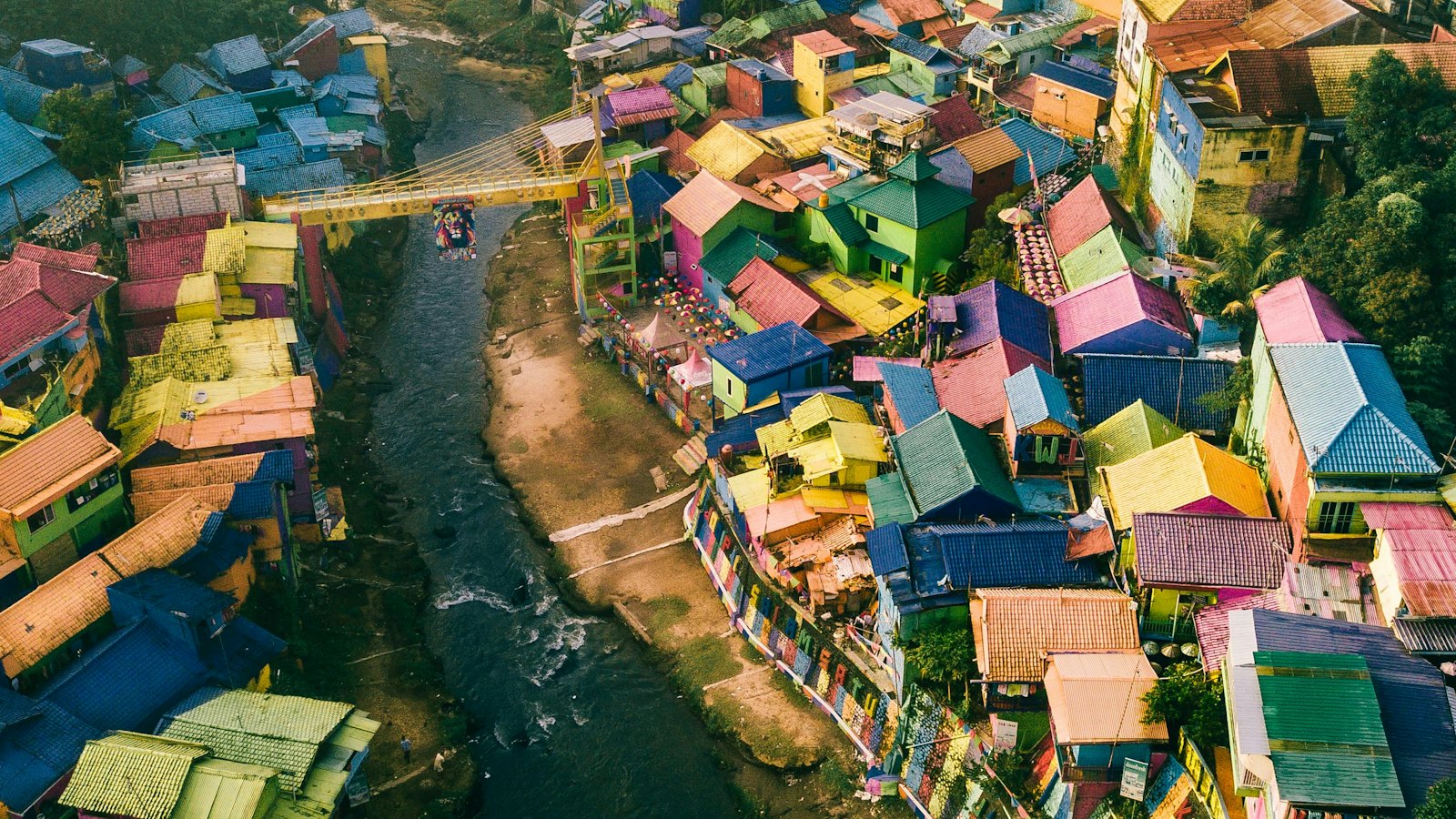
- Visit Jodipan: Kampung Warna-Warni covers a steep riverside settlement with vivid paint, compact lanes and railway views. Behave considerately because local families still live there.
- Continue into Kampung Tridi: The pedestrian bridge over the river makes it simple to combine this mural neighbourhood with Jodipan.
- Browse a traditional market: Central market streets reveal everyday commerce through fruit, snacks, clothes and household goods rather than a curated visitor experience.
- Plan one focused Batu day: Museums, amusement parks, gardens and apple attractions can fill many hours. Picking only one or two prevents the day from becoming rushed.
- See Coban Rondo: This waterfall near Batu lies among cool forested slopes. Rain can leave the walking surfaces slick.
- Join a Bromo excursion: Departures frequently begin close to midnight so visitors can reach the sunrise viewpoints before entering the caldera and Sea of Sand. Take insulated clothing and shoes with dependable grip.
- Reserve a day for Tumpak Sewu: The enormous tiered waterfall south of Malang demands a lengthy outing. Its lookout is easier than the difficult descent, which becomes hazardous during wet weather.
Regional maps can understate driving time. Schedule no more than one substantial mountain or waterfall outing on the same day.
Local Dishes and Everyday Eating
Bakso Malang is the city's defining comfort meal. Vendors serve clear broth with meatballs, tofu, dumplings and crunchy wonton pieces, sometimes letting customers choose each component. Ask about the filling if you do not eat offal. Cwie mie Malang combines fine noodles, seasoned minced meat, vegetables and dumplings. Because some Chinese-influenced recipes use pork or unsuitable cooking fat, Muslim diners should verify the ingredients.
Rawon is an East Javanese beef soup with a deep, dark colour from keluak. Rice, bean sprouts, salted egg and sambal commonly accompany it. Soto ayam, nasi pecel, ayam penyet and rice plates from Muslim-operated stalls are straightforward alternatives.
Popular edible souvenirs include fresh Malang apples, dried apple crisps, tempeh chips and filled pia pastries. Shops and markets in Batu stock many brands, so examine halal markings, ingredient lists and expiry dates instead of choosing solely by package size.
Klojen, Lowokwaru and the commercial parts of Batu provide the greatest variety of places to eat. Street stalls and uncomplicated restaurants often charge IDR 20,000 to IDR 50,000, roughly RM 5 to RM 13, for a meal. Expect about IDR 60,000 to IDR 150,000, or RM 16 to RM 39, per diner at a comfortable cafe or family restaurant.
Halal Dining and Places to Pray
As part of Muslim-majority East Java, Malang has abundant halal food and prayer facilities. Muslim-run warung commonly prepare rawon, soto ayam, nasi pecel and ayam penyet. Small independent businesses do not always display certification, so look for Indonesia's official halal symbol, visible halal wording or confirmation from the owner. A claim that food contains no pork does not establish that every ingredient and utensil is halal.
Exercise additional care at noodle shops, bakeries, international hotels and modern cafes. Chinese-style recipes may include pork, while desserts or sauces can contain alcohol-derived ingredients. If the status is unclear, ask whether the premises and meat are halal. Certified packaged goods, vegetarian meals and seafood can provide alternatives, subject to preparation methods.
Masjid Agung Jami Malang, beside the main square, is an accessible prayer stop during sightseeing in Klojen. Smaller mosques and musolla appear throughout both Malang and Batu. Large shopping centres, transport facilities and major attractions also tend to provide prayer rooms. Carrying a compact prayer garment is helpful where facilities are basic. Mapping services and Muslim Pro can identify nearby options, although recent user reports should be checked before travelling out of your way.
Transport Within Malang and Beyond
For most short trips, Grab and Gojek are the simplest choices. An urban motorbike booking is often IDR 10,000 to IDR 30,000, approximately RM 3 to RM 8. Cars commonly range from IDR 25,000 to IDR 80,000, or about RM 7 to RM 21. Rain, traffic and high demand can increase the quoted amount.
Blue angkot minibuses link many neighbourhoods for approximately IDR 5,000 to IDR 10,000. Their route letters can be confusing without local knowledge, and crowded vehicles are unsuitable for bulky baggage. Malang has no visitor-wide transport pass comparable to those offered by larger Asian cities. Keep small rupiah denominations ready when boarding public transport.
Conventional taxis operate locally, although app bookings are generally easier. Request the meter or settle the fare before leaving. A chauffeured car is more useful for Batu, rural waterfalls or a highland route with several stops. A full day may cost IDR 500,000 to IDR 900,000, equivalent to about RM 132 to RM 237, based on the schedule, distance, vehicle, petrol and parking terms.
Malang railway station connects the city with Surabaya and destinations elsewhere on Java. Weekend, national holiday and Lebaran services can sell out, so reserve desirable departures early.
Four Days in Malang
- Day 1: Check into Klojen or near Ijen Boulevard. See Alun-Alun Malang and Masjid Agung Jami, then walk through Jodipan and Kampung Tridi before having dinner downtown.
- Day 2: Travel to Batu after breakfast. Select a museum, garden or family attraction and leave time to shop for apples and regional snacks. Head back before the evening traffic builds, unless you have chosen accommodation in Batu.
- Day 3: Begin a Bromo tour around midnight or in the first hours of the morning. Typical programmes cover a sunrise lookout, the volcanic basin and the Sea of Sand. Avoid scheduling much for that evening because the outing is exhausting. Visitors who prefer not to travel overnight can substitute Coban Rondo and spend additional time around Batu.
- Day 4: Take an unhurried morning walk beside Ijen Boulevard, purchase packaged gifts and enjoy bakso Malang before leaving. Build ample road time into transfers towards MLG, the railway station or Surabaya.
Tumpak Sewu works better as a dedicated fifth day. Combining it with Bromo means back-to-back early starts, extended drives and little recovery time, so attempt that sequence only if you are prepared for a demanding schedule.
Money and Practical Travel Tips
The Indonesian rupiah is the local currency. A convenient estimate is RM 1 to about IDR 3,800, although the actual exchange rate should be checked shortly before payment. Cash remains useful at markets, small warung, angkot stops, parking areas and countryside attractions. Major hotels, malls and established restaurants usually take cards. Do not assume a Malaysian DuitNow QR application will work simply because a merchant displays QRIS.
Visitors can buy Indonesian tourist SIM cards or arrange an eSIM. Imported handsets using a physical local SIM may be subject to device registration, which makes a pre-purchased eSIM convenient for a brief holiday. Reception is normally reliable in populated areas but may fade around volcanoes and remote waterfalls. Store offline maps on your phone before leaving town.
Electrical sockets accept Type C and Type F plugs with two round pins. Malaysian Type G chargers therefore need an adaptor. Gratuities are voluntary, though drivers and guides appreciate a small tip or rounded bill for good assistance.
Ordinary urban awareness is sufficient in most parts of Malang. Secure valuables in crowded markets, compare the arriving vehicle plate with your booking and reject tour offers with vague inclusions. Rain, landslides or volcanic conditions may force changes to Bromo and waterfall visits. Follow official local notices and the instructions of a reputable operator.
Before you go
- Best time to go
- May through September is usually the easiest season for visiting Malang. Lower rainfall during these months makes outdoor schedules more dependable. The city stays pleasantly warm by day, but Batu and the Bromo viewpoints may be very cold before dawn. From October until April, heavier showers can produce slippery waterfall paths and interrupt mountain outings, though the countryside becomes especially green. July, August, Lebaran, year-end holidays and Malaysian school breaks often mean busier roads and more expensive rooms around Bromo and Batu. Pack rain protection throughout the year. A Bromo sunrise also calls for genuinely warm layers, not merely a light cardigan suitable for an air-conditioned evening in Kuala Lumpur.
- Visa for Malaysians
- Malaysian tourists currently receive up to 30 visa-free days in Indonesia. As of September 2026, this entry costs nothing and cannot be extended or converted to another Indonesian permit. Travellers need a passport valid for at least six months, and officers may request proof of onward or return travel. Within the three days before arrival, submit the free All Indonesia form through allindonesia.imigrasi.go.id or its official application, then retain the generated QR code. This single declaration covers immigration, customs and health information. Passengers connecting through Jakarta or Surabaya complete Indonesian entry formalities there, not after reaching Malang. Anyone intending to remain beyond 30 days should secure a suitable visa in advance through evisa.imigrasi.go.id. Recheck imigrasi.go.id for updates before departure.
- Honest budget guide
- A sensible daily allowance in Malang is RM 180 to RM 350 per traveller before airfares and costly private tours. Because Amaboxly's current scan contains no saved Malang fare, use RM 450 to RM 900 each way as a provisional estimate for connecting flights. Simple accommodation is generally RM 60 to RM 120 nightly, while a more comfortable mid-range room often costs RM 140 to RM 280. Set aside about RM 35 to RM 80 daily for meals and RM 15 to RM 50 for routine transport. For four days, one person sharing accommodation might spend approximately RM 1,700 to RM 3,000 including return flights. A single room, private Bromo package or Tumpak Sewu excursion increases the total. Treat every figure as an estimate rather than a quoted price.
Frequently asked questions
Do Malaysians need a visa for Malang?
Malaysian passport holders do not need a tourist visa for visits of up to 30 days as of September 2026. The free stay is neither extendable nor convertible within Indonesia. Bring a passport with six months of remaining validity and evidence of onward travel. Submit the All Indonesia declaration during the three-day window before arrival, save its QR code and verify the latest rules through Indonesia's immigration website.
Is there a direct flight from Kuala Lumpur to Malang?
No airline currently flies nonstop between Kuala Lumpur and Malang, so most trips need at least one stop. Travellers can connect in Jakarta and continue by domestic air to MLG. Alternatively, fly into Surabaya through a suitable connection, then use a shuttle, hired vehicle or train for the remaining journey. When buying separate tickets, allow enough time to collect and recheck baggage.
How many days should I spend in Malang?
Four days allows a balanced first trip with time for central Malang, Batu, Mount Bromo and a relaxed departure morning. Add another day for Tumpak Sewu because its distance and demanding terrain make it a full-day excursion. Five days may also suit families who want to visit several of Batu's attractions without hurrying.
Is Malang Muslim-friendly?
Yes. Muslim-owned restaurants, mosques and musolla are widespread across Malang and Batu. Since small warung may not show formal certification, ask the operator when uncertain. Check Chinese-style noodle outlets, bakeries, hotel buffets and modern cafes more carefully. Masjid Agung Jami beside Alun-Alun Malang is particularly convenient during a city-centre visit.
What is the best month to visit Malang?
Conditions are generally most favourable between June and September because rain is less frequent. July and August attract more visitors and can bring higher prices, making May or September appealing compromises. Weather in the mountains can still shift rapidly during the drier season, so bring a waterproof layer and adequate cold-weather clothing.
Can I use Grab in Malang?
Grab serves Malang, as does Gojek, with both car and motorbike bookings available. They are useful for short sightseeing journeys and trips to restaurants. Some airports, stations and attractions require passengers to meet drivers in designated zones. For Bromo, Tumpak Sewu or several stops around Batu, arranging a driver for the day is usually easier.
How much money do I need for four days in Malang?
One traveller sharing a room could plan on roughly RM 1,700 to RM 3,000 for four days, including estimated return airfare, lodging, meals and normal local journeys. Private volcano and waterfall packages may add several hundred ringgit. Keep some rupiah for stalls and rural locations, but avoid carrying the entire trip fund as cash.
Should I stay in Malang or Batu?
Choose Malang for historic districts, Jodipan, convenient rail departures and a wider everyday dining scene. Batu is better for amusement parks, orchards, mountain scenery and cooler evenings. Most newcomers can sleep in Malang and visit Batu for the day. Families scheduling several Batu attractions may reduce commuting by staying there for one or two nights.
Jom pergi
Ready to go Malang? Compare available flights and hotels for your dates. Check baggage, cancellation terms and the final total on the booking provider before paying.






