




On this page13 sections
- Overview
- Getting there from KL: direct flights and terminals
- YIA airport to the city: train, bus or car
- Where to stay in Yogyakarta
- Things to do in and around Jogja
- What to eat in Yogyakarta
- Halal food and prayer spaces
- Getting around Yogyakarta: buses, Grab and drivers
- Sample itinerary: 4 days in Jogja
- Money, SIM and practical tips
- Batik, silver and oleh-oleh shopping
- Before you go
- FAQ
Yogyakarta, known to everyone as Jogja, is where Javanese court culture still sets the rhythm of daily life. A sultan lives in the Kraton, batik is everyday wear, and two of Southeast Asia's greatest temples, Borobudur and Prambanan, stand within a short drive of town. For Malaysians it feels familiar yet different: the azan at dawn, food you rarely need to second-guess, a language you can mostly follow, and monuments centuries older than Melaka. Below: direct flights from KLIA, visa-free entry, the airport train, where to stay, halal eating, day trips and costs in ringgit.
Getting there from KL: direct flights and terminals
At the time of writing, Jogja has non-stop service from KL on two airlines. AirAsia operates up to two flights a day from KLIA Terminal 2, one in the morning and one in the afternoon, and Malaysia Airlines adds two weekly Boeing 737 services from KLIA Terminal 1. Batik Air Malaysia does not fly the route. Flights take about 2 hours 40 minutes, and because Jogja's clock is an hour behind KL, AirAsia's morning departure at about 9.40am lands around 11.20am local time.
Every jet from KL lands at Yogyakarta International Airport (YIA) in Kulon Progo, about 45 km west of the centre. The older Adisutjipto airport, which still carries the JOG code, now handles only domestic propeller planes and non-scheduled flights, so check which one a hotel means.
Our KL fare scan has no cached Yogyakarta fares at the time of writing, so treat these figures as indicative. Public fare listings in late September 2026 showed AirAsia one-way seats from a little over RM 400 on quiet October dates, with typical AirAsia returns of roughly RM 630 to RM 1,250. Malaysia Airlines returns usually start above RM 2,000. February has tended to be the cheapest month and August the dearest.
YIA airport to the city: train, bus or car
YIA sits near the south coast, so allow up to 90 minutes to reach central Jogja. Figures are indicative, at about 4,390 rupiah per ringgit.
- Airport train: the station is roughly a ten-minute walk from international arrivals. Trains reach Yogyakarta Station (often called Tugu), at the top of Malioboro, in 35 to 40 minutes, with around 50 trips a day. The cheaper regular train stops at Wates; the Xpress runs straight through. Fares have been up to about IDR 50,000 (roughly RM 11). KAI Commuter took over the service on 17 September 2026, so check how tickets are sold at the station.
- DAMRI bus: buses and minibuses leave for the city and for Magelang, the regency where Borobudur stands. Expect about IDR 25,000 to IDR 40,000 (RM 6 to RM 9) and around 90 minutes to town.
- Taxi or ride-hailing car: easiest with young children or bulky luggage, taking an hour or more. It costs far more than the train and fares vary by car type and drop-off point, so compare the app quote with any counter price first.
The train suits most couples and solo travellers; a family with big suitcases may prefer a car or hotel pickup.
Where to stay in Yogyakarta
Central Jogja is compact, and most visitors base themselves within a short ride of the Kraton.
- Malioboro and Sosrowijayan: right beside Yogyakarta Station, where the airport train arrives, and a walk from Beringharjo market and the palace. Rooms range from cheap guesthouses in the Sosrowijayan lanes to large mid-range hotels. Best for first-timers, shoppers and short trips, though evenings are noisy.
- Prawirotaman: a quieter grid south-east of the palace with small hotels, guesthouses, cafes and galleries. It suits couples and anyone who likes calm evenings, and Jogokariyan Mosque is a short ride away.
- Kotabaru: leafy streets east of the station with Dutch-era houses and a few older hotels. Close to Malioboro without the crowds, and good for families wanting space.
- Jalan Kaliurang and the north: the long road climbing from the Gadjah Mada University area toward Merapi, packed with student food spots and newer hotels. Handy for an early Merapi start or eating cheaply, but you will need Grab to reach the old town.
Things to do in and around Jogja
- Borobudur: the great Buddhist monument about 40 km north-west of the city by road. Foreigners must buy the structure ticket (ground-only entry is for domestic visitors), which includes a guide and upanat sandals and cost about IDR 455,000 (around RM 104) at the time of writing. Climbs are capped per hour, so book ahead on the official site.
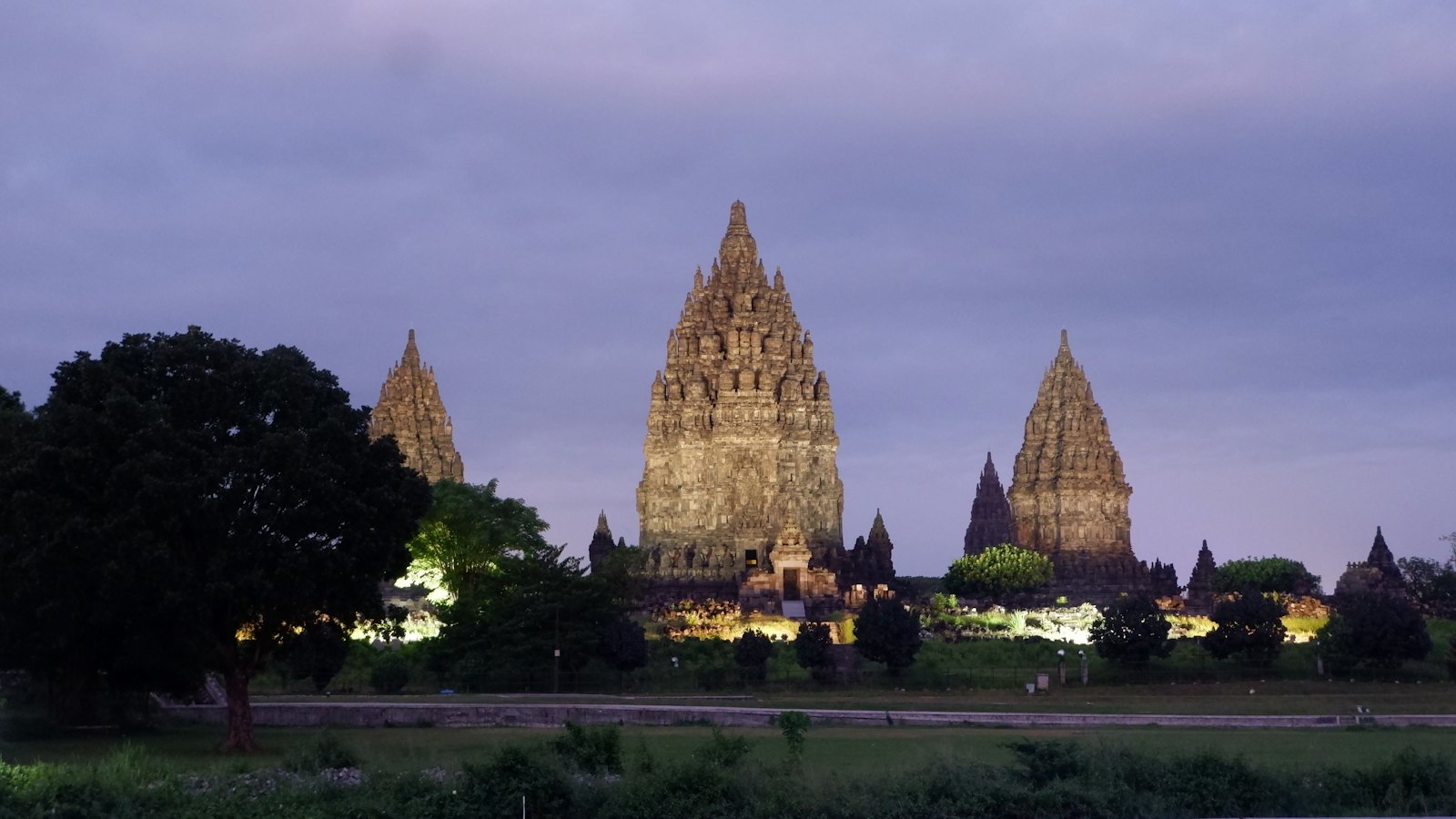
- Prambanan: the soaring Hindu temple complex about 17 km north-east, open from 6.30am. Foreign adult entry was roughly IDR 400,000 (about RM 91) at last report, and Trans Jogja route 1A runs there from Malioboro.
- Ramayana ballet: Tuesday, Thursday and Saturday evenings at Prambanan, outdoors with the temple as backdrop from May to October and indoors in the wet months.
- Kraton and Taman Sari: the Sultan's palace opens mornings only and closes earlier on Fridays; the old royal water castle is a short walk away.
- Malioboro and Beringharjo: the 2 km shopping street and the biggest traditional market.
- Kotagede: the old Mataram capital, known for silver and quiet heritage lanes.
- Merapi jeep tour: 4x4 trips visit slopes devastated by the 2010 eruptions, which killed more than 300 people.
- Alun-alun Kidul: at night, locals try masangin, walking blindfolded between two banyan trees.
- Gunung Kidul: Jomblang Cave, tubing at Goa Pindul and the Timang beach gondola.
What to eat in Yogyakarta
Jogja cooking leans sweet thanks to palm sugar, so ask for extra sambal if you like heat. Many of the best stalls open only at night.
- Gudeg: young jackfruit stewed for hours with palm sugar and coconut milk, served with rice, chicken, egg, tofu or tempeh and krecek, a spicy stew of crisp beef skin. The Wijilan area near the Kraton is famous for it.
- Angkringan and kopi joss: carts near Yogyakarta Station sell nasi kucing (tiny rice parcels) and skewers for about IDR 1,000 to IDR 6,000 each. Kopi joss is strong coffee with a glowing lump of charcoal dropped in.
- Sate klathak: goat satay grilled on iron skewers, seasoned with little more than salt and pepper and served with gulai. It comes from Pleret in Bantul, south of the city.
- Bakmi Jawa: Javanese noodles, fried or in broth; famous stalls draw long queues.
- Oseng mercon: a fiery stir-fry of beef and offal.
- Ayam geprek: fried chicken smashed into sambal, a dish Malaysians will recognise from home.
- Bakpia: sweet mung bean pastries from the Pathuk area, the classic box to carry home.
Halal food and prayer spaces
Jogja is a Muslim-majority city, with about 84 percent of residents Muslim, so eating halal is easy and the azan sets the pace of the day. Most warungs and Javanese restaurants are Muslim-run, though many small stalls hold no formal certificate; bigger restaurants and packaged snacks often carry the national Halal Indonesia logo.
The city also has sizeable Catholic and Protestant communities, and some Chinese-Indonesian and Batak eateries serve pork. On Batak menus, B2 means pork and B1 means dog. If there is no halal logo and you are unsure, just ask.
- Masjid Gedhe Kauman: the royal grand mosque west of the northern alun-alun, built in 1773 and a short walk from Malioboro. During Ramadan the Kauman neighbourhood runs a temporary food market, and eating nearby before buka puasa is considered rude.
- Masjid Jogokariyan: in Mantrijeron, south of the Kraton, known across Indonesia for its community work and for spending its donations every week instead of banking them.
- On the move: YIA has dozens of prayer rooms, and malls and major attractions generally have a musholla.
Local time runs an hour behind KL, so update your prayer-times app.
Getting around Yogyakarta: buses, Grab and drivers
- Trans Jogja: about 20 bus routes run from 5.30am to 8.30pm at a flat fare of around IDR 3,500 to IDR 3,600 (under RM 1). Pay with a bank e-money card, GoPay, LinkAja or QRIS. Route 1A links Malioboro with Prambanan.
- Grab, Gojek and Maxim: all three work in Jogja for cars and motorbike rides. Your Malaysian Grab account works as usual, and app rides are usually cheaper than taxis, with short waits in central areas.
- Taxis: metered; published rates have been a flagfall of about IDR 7,000 and roughly IDR 4,250 per kilometre after that, so treat them as a rough guide.
- Becak and andong: pedal rickshaws and horse-drawn carts for short hops around Malioboro and the palace. Agree the fare before you climb in.
- Car with driver: the sensible way to reach Borobudur, Merapi or Gunung Kidul. Normal-season rates have been quoted around IDR 450,000 to IDR 500,000 (about RM 100 to RM 115) for 12 hours, but prices are negotiable and rise in peak periods, so confirm whether the driver, fuel and parking are included.
For groups, a driver on temple days plus Grab in town beats chaining buses.
Sample itinerary: 4 days in Jogja
This plan suits a first visit on AirAsia's morning flight, with a Tuesday, Thursday or Saturday free for the ballet.
- Day 1: Land at YIA late morning and ride the airport train to Yogyakarta Station. Check in, stroll Malioboro, browse batik at Beringharjo, and end with nasi kucing and kopi joss at the carts by the station.
- Day 2: Leave early by car for your booked Borobudur climb, then swing past Merapi for an afternoon jeep tour on the way back. Gudeg for dinner near Wijilan.
- Day 3: See the Kraton and Taman Sari in the morning (the palace closes early on Fridays), browse the silver shops of Kotagede after lunch, then head east to Prambanan for late afternoon and stay for the Ramayana ballet.
- Day 4: Pray at Masjid Gedhe Kauman, pick up bakpia and last-minute batik, then take the airport train with at least three hours to spare before your flight.
A fifth day fits Gunung Kidul's caves or sate klathak in Bantul.
Money, SIM and practical tips
- Rupiah maths: RM 1 fetched about 4,390 rupiah in late September 2026, so IDR 100,000 is close to RM 23.
- Paying: warungs, becak riders, market stalls and parking attendants want cash; hotels, malls and bigger restaurants take cards. ATMs are easy to find in town.
- DuitNow QR: PayNet lists Indonesia's QRIS among its cross-border partners, and banks such as Maybank, CIMB, Public Bank and RHB plus Touch 'n Go eWallet and Boost take part. Check your app first.
- Staying connected: an eSIM set up at home is the least fuss; a local SIM needs your passport for registration.
- Power: round-pin Type C and F sockets (230V), so pack an adaptor for three-pin chargers; no converter needed.
- Tipping: optional; rounding up for a driver or guide is a kind gesture.
- Water: bottled only.
- Dress: cover shoulders and knees for the Kraton, mosques and temples.
- Scams: politely refuse anyone steering you to a special batik workshop of the Sultan's servants; it ends at an overpriced shop.
- Safety: guard your phone in the Malioboro crowds.
Batik, silver and oleh-oleh shopping
Many Malaysians fly home with an extra bag of batik. An estimated 1.5 million Malaysians have Javanese roots, mostly in Johor, Perak and Selangor, so plenty are shopping for family too.
- Beringharjo market: the largest traditional market in town, beside Malioboro, with floors of batik cloth and ready-made shirts. Compare a few stalls and bargain politely.
- Hamzah Batik: the big family-owned store on Jalan Ahmad Yani opposite Beringharjo, also known as Mirota Batik, with batik and handicrafts from across Indonesia.
- Kotagede: the old silver-making quarter, with workshops and showrooms along its lanes.
Batik tulis is hand-drawn and costs far more, batik cap is stamped, and cheap printed cloth only copies the look. For food gifts, bakpia boxes, canned gudeg and Monggo chocolate travel well in hand luggage.
Before you go
- Best time to go
- The best time to visit Yogyakarta is the dry season from about May to October, when June to September bring the least rain and the clearest temple mornings. November to March brings afternoon downpours, peaking in January, though mornings are often fine. The Ramayana ballet plays outdoors facing Prambanan from May to October. Crowds and prices climb over Hari Raya Aidilfitri (expected around 9 to 11 March 2027) and the Christmas and New Year break, which overlaps the Malaysian school break (4 or 5 December until the end of 2026). The week-long Sekaten fair before Maulidur Rasul ends with the Grebeg procession, when towering gunungan of rice and produce are carried to the Grand Mosque. Fares from KL have usually been lowest in February and highest in August.
- Visa for Malaysians
- As of September 2026, Malaysian citizens get 30 days visa-free in Indonesia, Yogyakarta included, with no fee and no advance application. Your passport should have six months or more left on it, and officers can ask to see an onward or return flight. That stay can be neither extended nor converted once you are in, so anyone who may need longer should get a visa on the official eVisa portal (evisa.imigrasi.go.id) first. Everyone arriving also fills in the All Indonesia arrival card, a single online form that merges the immigration, customs and health declarations. You can submit it on allindonesia.imigrasi.go.id from three days before landing, or at the airport, and show the QR code when you land at YIA. Entry rules can change quickly, so confirm the current position on imigrasi.go.id shortly before your trip.
- Honest budget guide
- Jogja on the ground costs roughly RM 140 to RM 380 per person daily, flights excluded, with hotel choice and temple tickets driving the spread. Flights: our fare scan had no cached Jogja fares at the time of writing, so indicatively allow RM 630 to RM 1,250 return on AirAsia's direct service. A simple guesthouse room costs about IDR 150,000 to IDR 300,000 (RM 35 to RM 70) a night and a good mid-range hotel IDR 400,000 to IDR 900,000 (RM 90 to RM 205). Food runs RM 30 to RM 90 a day, local transport RM 15 to RM 40. Foreigner temple tickets add about RM 104 for Borobudur and roughly RM 90 for Prambanan. A typical 4D3N trip in mid-range hotels, two to a room, totals about RM 1,500 to RM 2,400 each with flights. Treat every figure here as indicative.
Frequently asked questions
Do Malaysians need a visa for Yogyakarta?
No visa is needed for a holiday. Malaysians get 30 days visa-free in Indonesia as of September 2026, free of charge, with six months of passport validity and proof of onward travel. The 30 days cannot be extended, so apply on the official eVisa portal if you may stay longer. Submit the All Indonesia arrival card before landing and check imigrasi.go.id for updates.
Is there a direct flight from KL to Yogyakarta?
Yes. AirAsia offers up to two daily non-stop departures from KLIA Terminal 2, and Malaysia Airlines flies twice weekly from Terminal 1. Flights take about 2 hours 40 minutes and land at Yogyakarta International Airport (YIA), 45 km west of town. Our fare scan had no cached fares for Jogja at the time of writing; public listings showed AirAsia one-way seats from a little over RM 400, which is indicative.
Is Yogyakarta Muslim-friendly?
Very. About 84 percent of residents are Muslim, most warungs and Javanese restaurants are Muslim-run, and there are dozens of prayer rooms at YIA alone. Masjid Gedhe Kauman, the royal grand mosque, is a short walk from Malioboro. The places to watch are some Chinese-Indonesian and Batak eateries that serve pork, where B2 on a menu means pork. If unsure, look for the Halal Indonesia logo or ask.
How many days in Yogyakarta is enough?
Four days suits most first visits: one for Malioboro and the old town, one for Borobudur with a Merapi jeep tour, one for the Kraton, Kotagede and Prambanan with the Ramayana ballet, and a last half day for shopping. Add a fifth day for the caves and beaches of Gunung Kidul.
What is the best month to visit Yogyakarta?
June to September is the driest stretch, giving clearer skies at Borobudur and outdoor Ramayana shows at Prambanan, which run from May to October. Avoid Hari Raya Aidilfitri and late December if you dislike crowds and higher room rates. February has tended to bring the lowest fares from KL, though it falls in the rainy season.
What does a 4-day Yogyakarta trip cost from KL?
Budget about RM 140 to RM 380 per person per day on the ground, plus flights. A mid-range 4D3N trip, two to a room and flying AirAsia direct, usually lands between RM 1,500 and RM 2,400 per person. Foreigner temple tickets are a big slice: about RM 104 for Borobudur and roughly RM 90 for Prambanan. These figures are indicative.
Can I use Grab in Yogyakarta?
Yes. Grab works across Jogja with your existing Malaysian account, for cars and motorbike rides, and Gojek and Maxim are popular too. App rides are usually cheaper than metered taxis, with short waits in central areas. For full-day trips to Borobudur or Gunung Kidul, many travellers hire a car with driver instead.
How do I get from Yogyakarta airport to Malioboro?
Take the airport train from YIA to Yogyakarta Station, which sits at the top of Malioboro. It takes 35 to 40 minutes, runs around 50 times a day and has cost up to about IDR 50,000 (roughly RM 11). DAMRI buses are cheaper but take about 90 minutes, while a taxi or Grab car takes an hour or more and costs far more than the train, so check the app quote first.
Jom pergi
Ready to go Yogyakarta? Compare available flights and hotels for your dates. Check baggage, cancellation terms and the final total on the booking provider before paying.






