




On this page12 sections
Marrakech delivers a vivid introduction to Morocco through ochre ramparts, tiled riads, fragrant cooking and crowded market lanes. Malaysian visitors will find familiar conveniences, including abundant halal meals and mosques woven into daily neighbourhood life. The bigger adjustments are the lengthy journey from Kuala Lumpur, assertive sales tactics, cool desert nights and a medina where vehicles cannot enter many streets. This guide explains practical flight connections, airport transport, suitable districts, expected spending and essential local customs. It also provides a manageable three-day itinerary that balances historic landmarks, souk exploration, gardens and time beyond the busiest parts of the old city.
Flying from Kuala Lumpur to Marrakech
No nonstop Kuala Lumpur to Marrakech route appears in schedules available in September 2026. Travellers should therefore expect one or more connections. The clearest one-stop option found in current results uses Turkish Airlines through Istanbul. Alternatives may combine Etihad with Royal Air Maroc via Abu Dhabi and Casablanca, Qatar Airways with Royal Air Maroc via Doha and Casablanca, or THAI and Austrian through Bangkok and Vienna.
A convenient itinerary with one connection usually requires about 18 to 22 hours from departure to arrival. Journeys involving two stops frequently pass the 24-hour mark. Examine the complete itinerary carefully, especially when different carriers issue separate tickets, because baggage may not be checked through automatically.
Amaboxly checked fares on 22 September 2026 and found a Turkish Airlines one-way ticket for RM 2,024, travelling through Istanbul on 10 November 2026. The median one-way price in that scan was RM 2,099. Prices are snapshots and may move without notice.
Before travelling to KLIA, read the terminal shown on the latest booking record or boarding pass. Terminal allocations depend on the airline and can be revised.
Reaching the medina from Marrakech Airport
Marrakech Menara Airport lies roughly 6 km from Jemaa el-Fna. The distance is short, but congestion and pedestrian-only alleys can lengthen the trip. For approximate budgeting, MAD 10 equals about RM 4.50.
- Airport bus: A dedicated service travels towards Jemaa el-Fna and other central points. Budget MAD 25 to MAD 35, approximately RM 11 to RM 16, and allow 25 to 40 minutes. Passengers staying in a riad may need to finish on foot.
- Local bus: Regular urban buses near the airport charge only a few dirhams. They are economical but awkward with large luggage, and reaching the stop may involve walking or changing services.
- Official taxi: Join the authorised taxi queue and settle the displayed or negotiated total before departure. Journeys to the medina or Gueliz generally cost MAD 100 to MAD 150, around RM 45 to RM 68.
- Booked transfer: A private pickup commonly costs MAD 150 to MAD 250, about RM 68 to RM 113. It is helpful at night because the driver can use the nearest accessible gate.
Request a map pin and written walking instructions from your accommodation before arrival.
Choosing an area to stay
Your ideal base depends on whether you value old-city character, restful nights or simple vehicle access. Confirm the exact location rather than relying only on the neighbourhood name.
- Central medina and Jemaa el-Fna: Choose this zone for immediate access to evening stalls, souks and prominent attractions. The surroundings remain lively late into the night, and locating an unfamiliar riad can be challenging after sunset.
- Northern medina: The streets around museums and historic religious schools have a more residential character while remaining walkable from the markets. Expect a short walk from any taxi drop-off.
- Kasbah: This southern old-city quarter places visitors near the Saadian Tombs and palace area. Approach roads are generally easier for transfers, while evenings often feel calmer than those beside the main square.
- Gueliz or Hivernage: These newer districts provide larger hotels, lifts, restaurants and uncomplicated taxi pickups. They work well for families, business visits and travellers who prefer modern facilities over a traditional courtyard property.
For any medina booking, ask how far the entrance is from the closest road. Also check whether an employee can meet first-time guests at a recognised gate.
Essential Marrakech sights
Plan attractions in geographic clusters because short distances on a map can translate into slow walks through packed or confusing alleys.
- Jemaa el-Fna: Arrive in the late afternoon to watch cooking stands and performers assemble. Establish charges before posing for a picture or joining an activity.
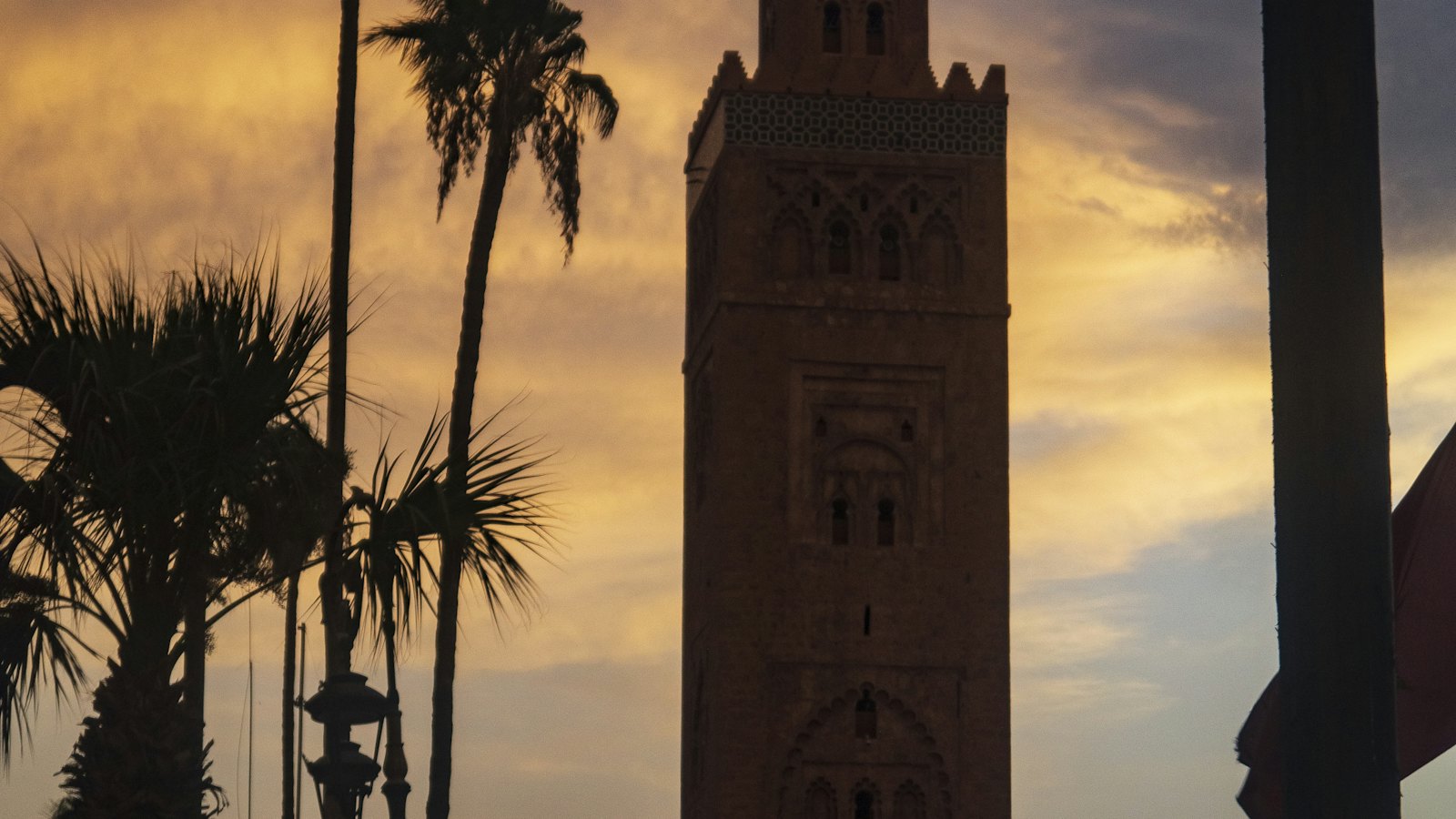
- Koutoubia Mosque: View the landmark minaret and nearby gardens. Access to the prayer hall is ordinarily restricted to Muslims.
- Bahia Palace: Walk through decorated chambers, mosaic courtyards and painted wooden ceilings associated with Morocco's former elite.
- Saadian Tombs: Examine richly ornamented royal graves dating from the dynasty that governed during the 1500s.
- Ben Youssef Madrasa: Notice the detailed plaster carving, cedar features and patterned tilework inside this celebrated medina monument.
- Marrakech souks: Compare vendors selling lamps, leather footwear, spices and textiles before discussing a final price.
- Le Jardin Secret: Pause in restored gardens that offer a quieter setting within the old city.
- Majorelle Garden: Secure a timed reservation when available, as popular periods sell out. The adjacent fashion museum can be added for interested visitors.
- Menara Gardens: Circle the reservoir on a clear day for possible views towards the Atlas Mountains.
What to eat in Marrakech
Food in Marrakech is best enjoyed at an unhurried pace. Family dining rooms, neighbourhood grills and medina counters serve familiar Moroccan dishes, while restaurants directly overlooking major tourist spaces often carry higher prices.
Tagine is an obvious starting point. Common versions combine chicken and preserved lemon, beef and prunes, or vegetables and olives. Couscous is strongly connected with Friday lunch and frequently arrives as a generous shared dish. The city's distinctive speciality is tanjia marrakchia, usually lamb or beef cooked slowly inside a clay jar.
Other worthwhile choices include harira soup, kefta meatballs, charcoal-grilled brochettes and zaalouk prepared from aubergine and tomato. For breakfast, try layered msemen with honey. Mint tea, fresh orange juice and almond pastries are easy to find throughout central Marrakech.
Eating at Jemaa el-Fna is memorable for the setting, but read the menu and verify every price before ordering. Quieter tables can be found deeper in the medina, around the Kasbah and across Gueliz. Select busy food stands where ingredients are cooked thoroughly after ordering. Bottled water or water treated by a reliable filter is preferable to untreated tap water.
Halal meals and places to pray
Finding halal Moroccan food in Marrakech is generally straightforward because Islam shapes ordinary food preparation across the city. Traditional restaurants serving meat are commonly Muslim-owned and use halal ingredients. Unlike Malaysia, however, businesses may not display a formal certification logo when halal practice is already locally assumed.
Ask a direct question if you are unsure, particularly in international hotels, bars or European-style restaurants where alcohol is offered. Pork is uncommon in established Moroccan recipes, although imported products may be available in venues catering heavily to foreign tourists.
Mosques stand in districts across Marrakech, and Koutoubia is the city's best-known religious landmark. Muslim travellers can ask residents or accommodation staff about the appropriate entrance, facilities and congregational schedule. Women's areas in smaller neighbourhood mosques may have limited capacity, making a private room or riad convenient for some prayers. Non-Muslim companions should observe posted restrictions.
At Menara Airport, consult terminal staff about the current prayer-room location because facilities may move. A lightweight prayer mat is helpful during excursions. Prayer applications can estimate qibla and timing, but local mosque calls provide a useful confirmation.
Moving around the city
Most medina exploration happens on foot. Covered passages and closely packed buildings can confuse phone navigation, so download an offline map, save your riad coordinates and photograph a recognisable nearby gate. When a stranger volunteers to lead you somewhere, establish in advance whether a tip is being requested.
Marrakech does not have a metro or tram network. Municipal buses cost only a few dirhams, although stops and route information may be unclear to a short-stay visitor. Keep coins or small notes available and ask your host to identify the correct stop.
Beige petit taxis carry passengers within the urban area. Request that the meter be switched on. If the driver declines, name the destination and settle one complete price before entering. Many short central journeys fall between MAD 15 and MAD 40, approximately RM 7 to RM 18. Night travel, congestion and pickup in a tourist district can raise the amount. Grand taxis are generally used for groups or destinations outside Marrakech, with fares discussed beforehand.
Grab is unavailable in the city. Ordinary taxis and drivers organised by hotels or riads remain the more dependable choices. For the Atlas Mountains, use a reputable operator or licensed driver and ask exactly which transport, meals and entrance charges are included.
Three days in Marrakech
- Day 1: Start beside Koutoubia Mosque and stroll through its gardens. Enter Jemaa el-Fna while the surrounding streets are still relatively open, then continue towards Bahia Palace and the historic Jewish quarter. Stop for tagine before returning to the square around sunset. Secure phones and wallets as the evening crowd thickens.
- Day 2: Reach Ben Youssef Madrasa early, then explore nearby market lanes without feeling pressured to buy immediately. Rest at Le Jardin Secret before crossing towards the Kasbah and Saadian Tombs later in the day. Select a dinner location a few streets away from Jemaa el-Fna's busiest perimeter.
- Day 3: Book a morning admission for Majorelle Garden and follow it with cafes or fixed-price shops in Gueliz. Spend the afternoon at Menara Gardens or arrange a hammam. Before booking, determine whether it is a traditional public bath or a private spa treatment, and ask about required clothing and supplied toiletries.
Travellers with another day can join an Atlas Mountains outing. Mountain roads make driving times unpredictable, and temperatures at elevation are noticeably cooler than those in Marrakech. Carry another layer even when the city forecast is warm.
Money and practical tips
The national currency is the Moroccan dirham, abbreviated MAD or DH. For quick estimates, MAD 10 is approximately RM 4.50, though the live rate should be checked near departure. As the dirham is controlled, Malaysian ringgit may be difficult to exchange directly. Bring a broadly traded foreign currency or obtain dirhams from an ATM after landing.
Hotels and newer shops commonly accept cards, but cash remains important for taxis, traditional markets and modest eateries. Malaysia's DuitNow QR system is not a general payment option in Morocco. Keep smaller denominations because drivers and stallholders may lack change.
Maroc Telecom, Orange Morocco and inwi provide domestic mobile plans. Buying an eSIM before the flight is simple, whereas a physical local SIM may be cheaper for intensive data use. Passport details are normally recorded during SIM registration.
Electrical sockets use Type C and Type E connections at 220V. Bring an adapter for Malaysia's three-pin plug. Modest gratuities are usual for porters, guides and table service, but verify whether a service fee is already included.
Apply ordinary urban awareness. Common problems include pickpocketing, excessive taxi quotations, unofficial guides, priced animal photographs and henna applied before a fee is agreed. Respectful clothing is advisable, especially near religious buildings.
Before you go
- Best time to go
- Marrakech is easiest to explore during spring and autumn. March through May and October through November normally provide warm afternoons, cooler nights and comfortable conditions for extended medina walks. July and August can bring severe dry heat, making midday sightseeing exhausting. Winter afternoons are often gentle, but evenings may be cold inside courtyard riads, and Atlas Mountain excursions can be considerably colder. Bring layers outside the hottest months. Accommodation becomes more expensive around Easter, year-end holidays and popular fair-weather weekends. Airfares may also rise during Malaysian school breaks. Ramadan can alter meal hours and attraction timetables, while evenings become especially active after the fast ends. Consult the Islamic calendar and review current opening hours before confirming the trip.
- Visa for Malaysians
- Malaysians currently receive visa-exempt entry for short Moroccan holidays. Based on the rules available in September 2026, a Malaysian passport permits a tourism stay of no more than 90 days without first obtaining a visa. This exemption does not require an e-visa, an AEVM electronic approval or a digital arrival form. The passport must cover the planned visit, although additional validity is prudent if the flight transits elsewhere. Border officers can request a lodging address, proof of sufficient money and evidence of onward departure. Visitors seeking additional time may apply at a Moroccan police station for an extension of up to another 90 days, but acceptance is discretionary. Recheck official Visit Morocco information and relevant airline requirements shortly before flying.
- Honest budget guide
- A sensible daily allowance is RM 250 to RM 550 for each traveller, before international airfare. Amaboxly's 22 September 2026 search recorded a one-way Kuala Lumpur fare of RM 2,024 on Turkish Airlines through Istanbul, with a median of RM 2,099 across the scan. Basic private rooms and modest riads may run from RM 120 to RM 250 per night. Comfortable mid-range properties often fall between RM 300 and RM 650. Set aside roughly RM 70 to RM 150 daily for meals and RM 20 to RM 80 for urban transport, then add tickets and excursions. Five days may cost approximately RM 5,500 to RM 8,000 per person when return flights, lodging and moderate purchases are included. Season, currency movements, room sharing and travel style will change the final amount.
Frequently asked questions
Do Malaysians need a visa for Marrakech?
A Malaysian passport holder visiting for tourism may stay in Morocco without a visa for a maximum of 90 days under the rules available in September 2026. The exemption does not call for an e-visa, AEVM approval or digital arrival form. Bring proof of lodging and departure, and recheck official Moroccan guidance before travelling.
Is there a direct flight from Kuala Lumpur to Marrakech?
No nonstop KLIA service appears in the September 2026 schedules used for this guide. The most convenient results include Turkish Airlines with a single Istanbul connection. Other choices can involve two carriers and an additional stop. Review transit permissions, ticket arrangements and through-checked baggage before selecting an itinerary.
How long does it take to fly from KL to Marrakech?
Expect approximately 18 to 22 hours for a well-arranged trip involving one connection. Routes with two stops often exceed a full day. Layover length has a major effect on the total, so compare complete journey times rather than prices alone. Separate tickets warrant a longer transfer window in case baggage must be collected.
Is Marrakech Muslim-friendly?
Yes. Islam is central to everyday life, traditional Moroccan meat dishes are generally halal and mosques are spread throughout Marrakech. Certification symbols are less prominent than in Malaysia because halal preparation is commonly assumed. Ask for clarification in international venues serving alcohol, and remember that women's facilities may be limited in smaller mosques.
How many days are enough for Marrakech?
Three complete days provide enough time for key medina monuments, the souks, Majorelle Garden and either Gueliz or a hammam. A fourth day allows an Atlas Mountains excursion or a less hurried shopping session. Two days can cover highlights, but rushing the medina is tiring after a long trip from Kuala Lumpur.
What is the best month to visit Marrakech?
March, April, October and November usually combine pleasant warmth with practical walking conditions. May is another option, although daytime heat begins to strengthen. Travellers uncomfortable with very high temperatures should avoid July and August. December and January have moderate days, but nights and unheated riad rooms can feel unexpectedly chilly.
How much money should I budget for five days in Marrakech?
Allow about RM 5,500 to RM 8,000 per traveller for a five-day holiday that includes return airfare from Kuala Lumpur, lodging, meals, city transport and ordinary admission fees. Sharing an inexpensive room can reduce the figure. Upscale riads, private pickups and mountain tours will raise it. Keep dirham cash for small transactions.
Can I use Grab in Marrakech?
Grab has no service in Marrakech. For urban journeys, take a beige petit taxi and request the meter before leaving. If the driver will not use it, settle the entire fare first. Riads and hotels can organise pickups or longer drives. Within the medina, walking is usually necessary because cars cannot enter many lanes.
Jom pergi
Ready to go Marrakech? Compare available flights and hotels for your dates. Check baggage, cancellation terms and the final total on the booking provider before paying.






