




On this page12 sections
- Overview
- Getting There from Kuala Lumpur
- Airport Transfer from SEZ and Connections Beyond Mahé
- Where to Stay in Seychelles
- Things to Do: Beaches, Forests and Island Experiences
- Creole Food and Affordable Meals
- Halal Dining and Places for Prayer
- Transport on Mahé, Praslin and La Digue
- Four-Day Seychelles Itinerary
- Money and Practical Travel Tips
- Before you go
- FAQ
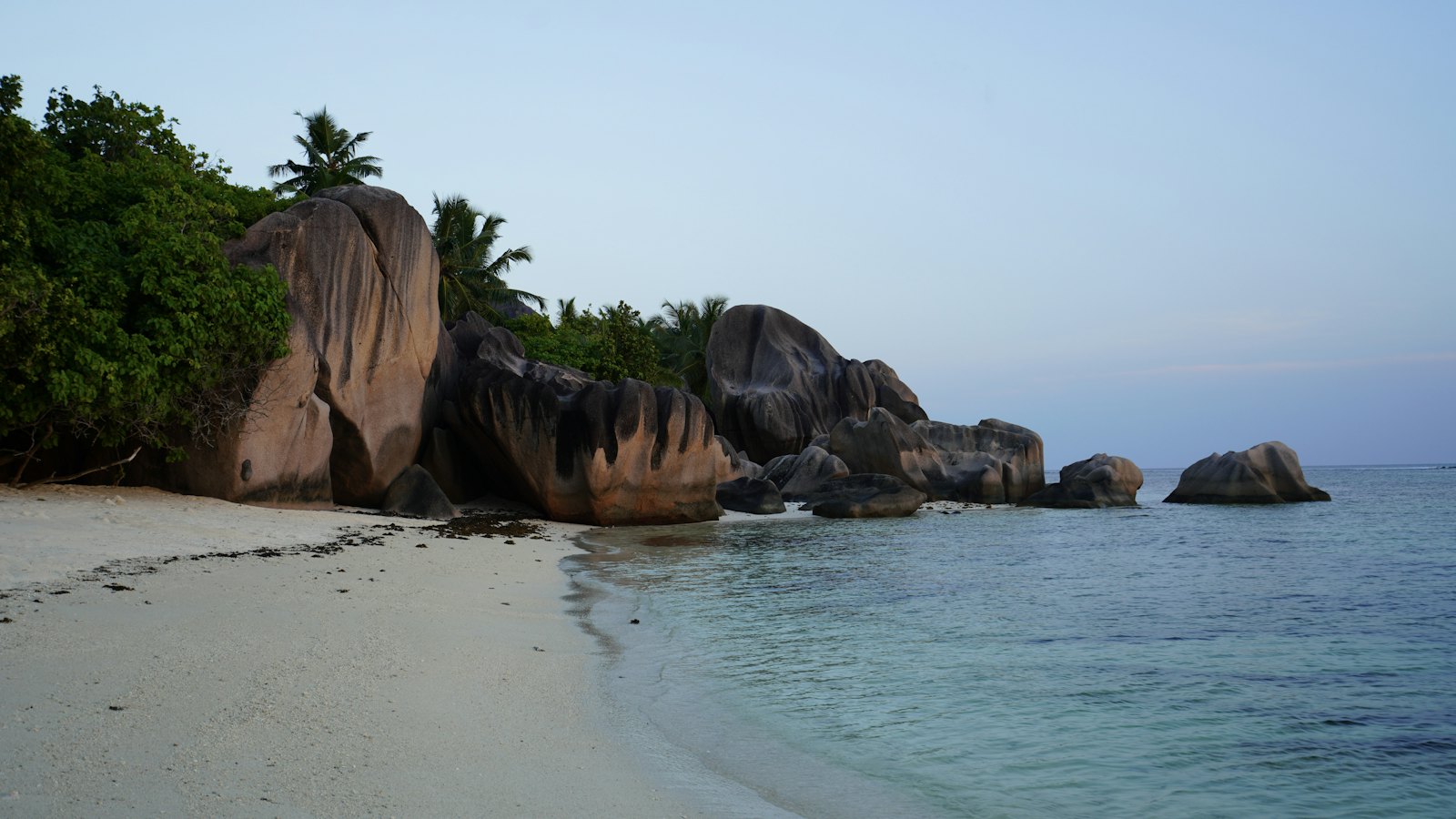
Seychelles rewards travellers who look beyond its postcard beaches. Mahé combines mountain roads, Creole markets and compact Victoria, while Praslin and La Digue offer palm forests, granite coves and a gentler rhythm. Malaysian visitors should prepare for a connecting flight from KLIA, an advance travel authorisation, high island prices and fewer halal choices outside central Mahé. This guide covers airport transfers, inter-island travel, suitable bases, realistic costs in ringgit and an itinerary that balances coastal time with the archipelago's distinctive forests and communities.
Getting There from Kuala Lumpur
Direct service between Kuala Lumpur International Airport and Seychelles International Airport (SEZ) is not available, as of September 2026. Travellers therefore need a connecting itinerary, with possible changes in Abu Dhabi, Doha, Dubai, Colombo or an East African hub. Depending on the routing and layover, the complete journey generally lasts about 13 to 20 hours. Leave a sensible transfer margin because a delayed first flight can affect prepaid accommodation, ferries or domestic connections.
During Amaboxly's fare check, the cheapest observed one-way ticket was RM 1,420 on Etihad through Abu Dhabi for departure on 24 October 2026. The one-way median was RM 3,037. Search results also included Ethiopian services and combinations involving THAI and Kenya Airways. The lowest examples grouped by connection point were RM 1,420 through Abu Dhabi, RM 3,862 through Colombo, RM 3,956 through Doha and RM 4,793 through Dubai. These are snapshots rather than guaranteed prices, and baggage may require an additional payment.
Long-haul departures normally use KLIA Terminal 1. Verify the terminal shown on your ticket, especially when arriving on a separate Terminal 2 booking, and include enough time for the transfer bus or train.
Airport Transfer from SEZ and Connections Beyond Mahé
Seychelles International Airport is on Mahé's eastern shoreline, approximately 10 km from Victoria. The estimates here use a planning conversion of about SCR 3 for RM 1.
- Public bus: Services stopping near the airport charge approximately SCR 12 to SCR 20, or RM 4 to RM 7. Reaching Victoria may take 30 to 45 minutes according to traffic. Drivers may refuse large suitcases, making this option more suitable for light luggage.
- Taxi: Expect roughly SCR 500 to SCR 800, or RM 165 to RM 265, for Victoria. Night travel and distant hotels can attract higher quotations. Discuss the likely amount before the vehicle departs.
- Rental car: Collecting a vehicle at the terminal is convenient for touring Mahé. Traffic keeps left, but steep slopes, tight roads and poor night lighting require care. Small cars often begin around RM 220 to RM 350 daily.
- Praslin: Flying domestically is fastest. The ferry alternative requires ground transport to Victoria's jetty followed by a crossing of about one hour.
- La Digue: Ferries usually involve Praslin. Check the last practical sailing and protect the connection with ample spare time.
Where to Stay in Seychelles
- Beau Vallon: This is a convenient first base on Mahé, offering a long beach, shops, restaurants and more activity after sunset than most island districts. It works particularly well for families and visitors who prefer not to rely entirely on hotel meals.
- Victoria and northeastern Mahé: Staying near the capital gives easier access to its market, mosque, buses and ferry terminal. Streets become quiet after office hours, but the location is useful before an early sailing or when access to prayer facilities matters.
- Southern Mahé: Anse Royale and neighbouring settlements provide attractive beaches, self-catering properties and a less resort-focused atmosphere. A rental car makes this area considerably easier to explore.
- Praslin: Choose Praslin for Vallée de Mai, Anse Lazio, marine outings and a broader accommodation range than La Digue.
- La Digue: This compact island suits travellers who enjoy bicycles, village lanes and an unhurried stay. Sleeping there allows more time than a rushed excursion from Mahé.
Compare the complete price, including taxes, breakfast and transfers. An apparently inexpensive room can lose its advantage when every journey and meal must be purchased separately.
Things to Do: Beaches, Forests and Island Experiences
- Explore Victoria: Visit the clock tower and central market, then wander through the small commercial centre before the strongest midday heat.
- Relax at Beau Vallon: The wide bay, accessible position and nearby food outlets make it an easy introduction to Mahé.
- Follow Mahé's coast: A self-drive circuit provides access to viewpoints and public beaches. Observe notices where a route passes private property.
- Hike in Morne Seychellois National Park: Match the trail to your ability, bring drinking water and reconsider exposed routes during heavy rain.
- Enter Vallée de Mai: Praslin's celebrated palm forest protects the native coco de mer and presents a striking contrast to the shoreline.
- Visit Anse Lazio: Morning arrival usually means gentler light and a quieter experience at this well-known Praslin beach.
- Cycle across La Digue: A bicycle conveniently links the jetty, settlements and several beaches.
- Combine L'Union Estate with Anse Source d'Argent: Set aside time for both the estate and the shallow, granite-lined coast.
- Join a marine trip: Operators offer snorkelling around reefs and smaller islands. Review insurance, equipment and cancellation conditions before paying.
Picturesque water is not automatically safe. Currents may be strong, warnings should be taken seriously and isolated beaches often have no lifeguard.
Creole Food and Affordable Meals
Seychellois cuisine draws from African, French, Indian and island traditions. Fresh fish appears frequently, either grilled or cooked in curry and accompanied by rice. Depending on the day's catch, menus may feature tuna, red snapper, bourgeois or jobfish. Other characteristic flavours include octopus curry, coconut sauces, lentils, breadfruit chips, papaya chutney and ladob prepared with banana or sweet potato. Sample chilli condiments cautiously because their heat can be deceptive.
For better-value lunches, try takeaways near Victoria's market instead of relying on waterfront hotels. Beau Vallon has a relatively broad casual dining selection and, on certain evenings, outdoor food stalls. Village takeaway shops on Praslin and La Digue are usually less costly than resort restaurants. A self-catering room helps reduce breakfast and dinner spending, although imported supermarket products remain expensive.
Rather than expecting every menu item to be available, ask which fish arrived that day. Travellers avoiding alcohol or non-halal meat should enquire about stocks, sauces and desserts. Seafood, eggs and vegetarian dishes are generally the easiest alternatives. Allow about SCR 100 to SCR 220, equivalent to RM 35 to RM 75, for a takeaway meal. Resort dining costs considerably more.
Halal Dining and Places for Prayer
Seafood makes meal planning manageable, but clearly certified halal restaurants remain uncommon in Seychelles. A dish containing chicken or beef should not be treated as halal without confirmation. Ask about the meat supplier, alcohol in marinades or sauces, and whether utensils or cooking surfaces are shared. Victoria offers the best prospect of finding Muslim-run businesses. In Beau Vallon and other visitor centres, Indian, vegetarian and seafood dishes provide practical alternatives. Listings on Zabihah and recent map reviews are useful starting points, but contact the business because suppliers and ownership can change.
Victoria's Sheikh Muhammad bin Khalifa Mosque is the principal mosque in the country and the most dependable choice for communal prayer on Mahé. Visitors should dress appropriately and verify access locally, particularly between prayer periods. Purpose-built prayer rooms are not common at beaches, ferry terminals or small retail areas. Airport arrangements may also change, so ask terminal personnel where prayer is currently permitted.
A small prayer mat and qibla application are useful additions to your bag. When staying outside Victoria, a clean private space at the accommodation may be the simplest solution. Bring familiar snacks on boat tours and transfer days when suitable food cannot be confirmed.
Transport on Mahé, Praslin and La Digue
Buses provide the lowest-cost transport on Mahé and Praslin. Individual rides are normally around SCR 12 to SCR 20, approximately RM 4 to RM 7. Seychelles has no visitor payment card equivalent to Touch 'n Go, so retain small rupee notes and coins. The network is useful when plans are flexible, although services may be crowded or sparse in outlying districts. Bulky baggage can also be refused.
Grab is not operating in Seychelles, as of September 2026. Taxis wait around the airport, ferry ports and major visitor areas, and hotels can arrange pickups. Since fares are high, establish whether the charge is fixed or metered and request an estimate before setting out. Longer journeys across an island can run into several hundred rupees.
Hiring a car offers greater independence on both Mahé and Praslin. Left-hand traffic will feel familiar to Malaysians, but narrow corners, open roadside drains, steep inclines and weak lighting call for slow driving. Examine the car and understand the insurance terms before departure.
Passenger ferries serve Mahé, Praslin and La Digue. Secure seats early for popular times, reach the port ahead of check-in and keep valuables close. Travellers prone to seasickness should consider medication because crossings can become rough. Bicycles dominate local travel on La Digue, while taxis and compact transfer vehicles assist passengers carrying bags.
Four-Day Seychelles Itinerary
- Day 1: Arrive on Mahé and transfer to Victoria or Beau Vallon. Keep commitments minimal, purchase water and snacks, check upcoming transport and take a sunset walk if energy permits. The Victoria mosque can be included when arrival timing is suitable.
- Day 2: Begin at Victoria's market and clock tower, then continue into Mahé's interior or along its western coast. Select a forest trail that matches your fitness or use a rental car for several beach stops. Drivers unfamiliar with mountain roads should return before nightfall.
- Day 3: Leave early for Praslin by ferry or domestic aircraft. Walk through Vallée de Mai before continuing to Anse Lazio. An overnight stay on Praslin removes the pressure of racing back for a same-day connection.
- Day 4: Board the short boat to La Digue, hire a bicycle and explore L'Union Estate and Anse Source d'Argent. Attempt a return to Praslin or Mahé only when the sailing schedule provides a comfortable margin.
This plan introduces all three islands but includes frequent movement. A six-day or seven-day visit feels more relaxed and permits at least two nights on Mahé plus two nights on either Praslin or La Digue.
Money and Practical Travel Tips
Local prices are stated in Seychelles rupees, identified by the code SCR. For rough calculations, SCR 3 to RM 1 is useful, although travellers should consult the current exchange rate before leaving Malaysia. Most established hotels, supermarkets and tour companies accept cards. Cash remains important for buses, produce markets, takeaway counters and independent vendors. DuitNow QR is not a general payment option in the country.
Local operators sell tourist SIM packages, and compatible phones can use an eSIM arranged before departure. Reception is usually more reliable in populated areas of the principal islands than on forest paths or offshore excursions. Store maps, ferry information and hotel addresses on the device for offline access.
Electrical sockets use the British Type G format, which accepts most Malaysian plugs without an adaptor. The supply is generally 240V. Gratuities are welcome but optional, and bills should be checked for an existing service charge.
Apply familiar personal-security habits by securing valuables, watching belongings on beaches and avoiding lonely roads after dark. More frequent hazards include intense sunshine, dehydration, powerful currents and unfamiliar driving conditions. Pack mosquito repellent, use reef-conscious sun protection and avoid standing on or touching coral.
Before you go
- Best time to go
- The most balanced travel windows are April to May and October to November. These transition periods commonly bring warm conditions, gentler winds and calmer water, although showers are possible throughout the year. December through February tends to feel wetter and more humid. From about May until October, southeast trade winds usually deliver drier weather while making certain beaches and ferry routes rougher. Demand can rise during July, August, Malaysian school holidays and the Christmas to New Year period, increasing room and flight prices. Divers and snorkellers often prefer the calmer transition seasons, but underwater visibility still varies by site and daily weather. Reserve ferries and accommodation well ahead for holiday travel.
- Visa for Malaysians
- Malaysians do not require a conventional visa for Seychelles, as of September 2026. An Electronic Travel Authorisation is still compulsory before departure and must be requested through the official Seychelles e-Border website at seychelles.govtas.com or its authorised application. Qualifying arrivals receive a free Visitor's Permit covering an initial period of up to three months. Further three-month extensions are possible, subject to approval, until the total stay reaches twelve months, with each extension costing about SCR 5,000. Entry documents include a passport valid for the entire visit, proof of accommodation, adequate spending funds and a confirmed onward or return journey. Apply early enough to correct a rejected document before airline check-in, and verify current fees and conditions through the official portal.
- Honest budget guide
- A careful independent traveller should plan for RM 450 to RM 800 per person each day before international airfare. Amaboxly's observed one-way Kuala Lumpur prices began near RM 1,420, while the median result was RM 3,037. Shared guesthouses and self-catering rooms often fall between RM 300 and RM 550 nightly. Comfortable mid-range properties may cost RM 650 to RM 1,200. Set aside approximately RM 120 to RM 250 a day for meals and RM 30 to RM 200 for ground transport, with buses at the low end and taxis or car hire at the high end. Ferry tickets, admission charges and organised outings require additional funds. Including return flights and a shared room, five nights may cost roughly RM 5,500 to RM 9,000 per traveller. All amounts are planning estimates rather than fixed quotations.
Frequently asked questions
Do Malaysians need a visa for Seychelles?
A conventional tourist visa is not required for Malaysian passport holders, as of September 2026. Each traveller must nevertheless secure an Electronic Travel Authorisation using the official Seychelles e-Border system before flying. Immigration can grant a free Visitor's Permit for as long as three months after arrival, provided the visitor shows valid accommodation, adequate funds and a confirmed ticket out of the country.
Is there a direct flight from Kuala Lumpur to Seychelles?
A nonstop scheduled route from KLIA to Seychelles is not available, as of September 2026. Available itineraries connect through places such as Abu Dhabi, Doha, Dubai, Colombo or East Africa. Overall travel can take roughly 13 to 20 hours, with the layover making a major difference. For tickets combining airlines, confirm whether checked luggage continues automatically or must be collected and checked in again.
How many days are enough for Seychelles?
A four-day visit can introduce Mahé, Praslin and La Digue, but much of the trip will be shaped by transfers. Six or seven days gives a more comfortable pace and supports at least two island bases. Visitors interested in hiking, swimming and boat outings can fill eight to ten days easily while still leaving room for weather changes and quiet beach time.
What is the best month to visit Seychelles?
April, May, October and November are appealing because trade winds often ease and marine conditions may be calmer. July and August are commonly drier but can be breezier, whereas December through February usually brings greater humidity and rainfall. Conditions differ by island and coastline, so keep some flexibility when scheduling snorkelling excursions, ferry crossings and visits to exposed beaches.
Is Seychelles Muslim-friendly?
Muslim travellers can enjoy Seychelles with some advance preparation, although certified halal establishments are scarce. Victoria contains the Sheikh Muhammad bin Khalifa Mosque and offers the strongest possibility of Muslim-owned dining. On other parts of the islands, seafood and vegetarian meals are useful choices. Ask directly about meat suppliers, alcohol in recipes and shared cookware, and pack a prayer mat for excursions.
Can I use Grab in Seychelles?
Grab is not operating in Seychelles, as of September 2026. Available alternatives include scheduled buses, taxis arranged locally, hired cars, ferries and short domestic flights. Taxi charges can be substantial, so obtain an approximate price and establish whether it is fixed or metered before leaving. On La Digue, a rented bicycle is generally the most convenient option for independent sightseeing.
How much money should I budget for five days?
For five nights, a realistic estimate is RM 5,500 to RM 9,000 per person when return flights, a shared room, meals, ordinary island transport and several admission fees or activities are included. Cooking some meals and travelling by bus can lower the bill. Private transfers, upscale restaurants, domestic aviation and organised boat trips may raise it considerably. Use the range as a planning guide only.
Should I stay on Mahé or visit other islands?
Mahé is sufficient for a brief holiday because it contains the international airport, Victoria, forest trails and numerous beaches. Praslin contributes Vallée de Mai and Anse Lazio, while La Digue is known for cycling routes and granite-framed coves. When the itinerary allows five days or longer, spending two nights beyond Mahé usually justifies the time and expense of changing islands.
Jom pergi
Ready to go Seychelles? Compare available flights and hotels for your dates. Check baggage, cancellation terms and the final total on the booking provider before paying.






