




On this page12 sections
- Overview
- Getting there from Kuala Lumpur
- Arrival transfers from Santorini Airport
- Choosing where to stay
- Sights and experiences worth planning
- Island dishes and places to eat
- Halal meals and prayer arrangements
- Moving around the island
- A balanced four-day itinerary
- Payments, connectivity and practical safety
- Before you go
- FAQ
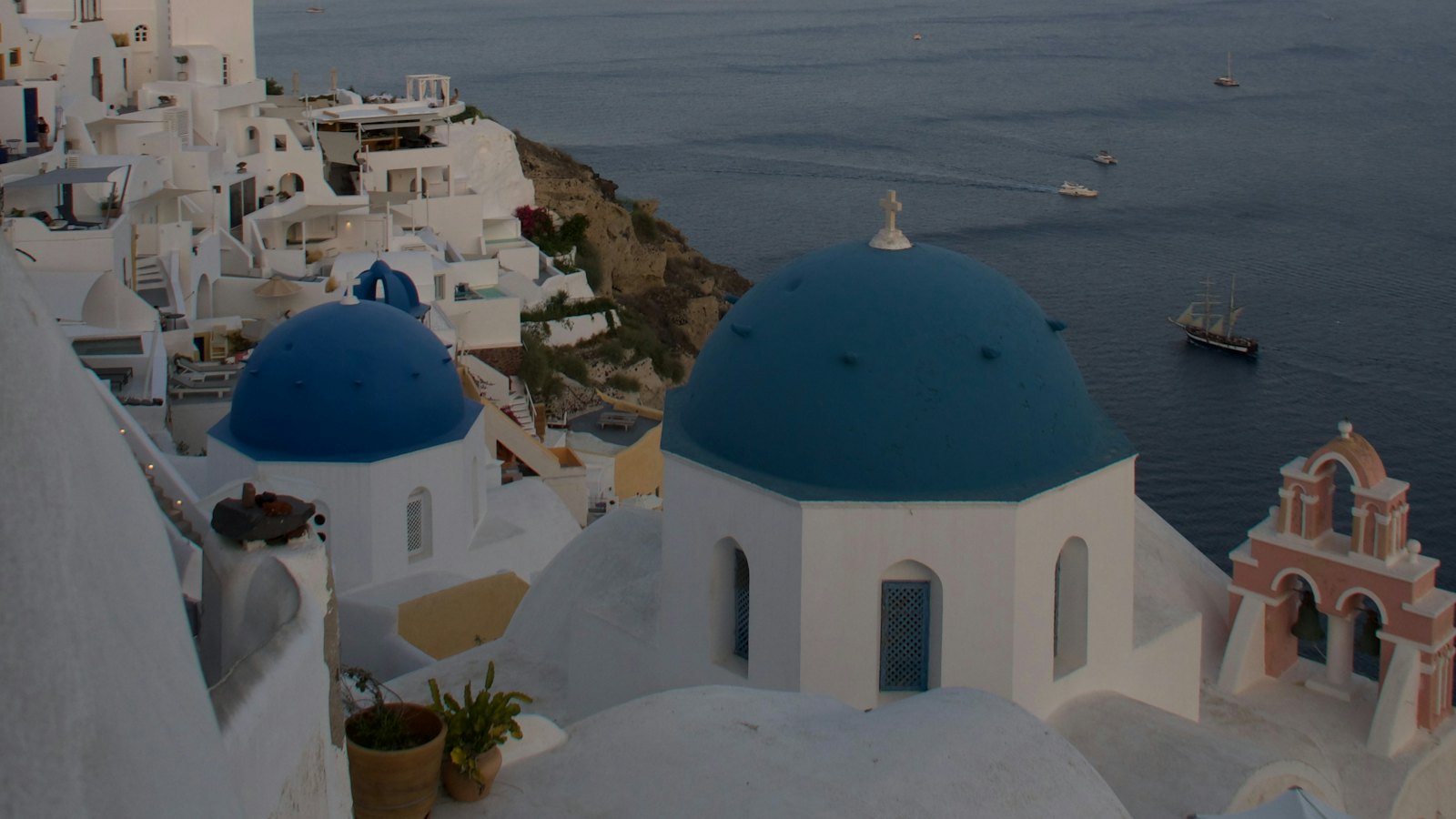
Santorini curves around a flooded volcanic caldera, with whitewashed settlements perched above the deep-blue Aegean. Oia's sunsets and blue-domed churches attract many Malaysian honeymooners, but the island also offers Bronze Age ruins, volcanic beaches, wineries and a memorable cliff walk linking Fira with Oia. Reaching Santorini from KLIA involves at least one connection, and summer demand can make both flights and rooms expensive. This guide covers practical routes from Kuala Lumpur, arrival transfers, suitable places to stay, halal considerations, transport choices and realistic costs in ringgit.
Getting there from Kuala Lumpur
No airline flies nonstop between Kuala Lumpur and Santorini as of September 2026. A typical journey combines a long-haul flight through a Middle Eastern or European hub with a service to Athens or directly to Santorini. Total travel time is commonly 16 to 24 hours, though awkward connections and separately booked tickets can extend it considerably.
Amaboxly's Kuala Lumpur search found a lowest one-way price near RM 1,870 for travel on 24 October 2026. That option combines Qatar Airways with SKY express and requires two stops. The observed midpoint among one-way results was approximately RM 1,971. Other displayed combinations included Emirates and Aegean Airlines. Fares and seasonal Greek schedules may change before departure.
Qatar Airways and Emirates both fly from Kuala Lumpur to their home hubs before onward connections toward Athens or Santorini. Compare baggage allowances across every flight because a Greek domestic sector may permit less cabin luggage than the long-haul carrier. Through-ticketed journeys are simpler when checked bags move automatically. With separate reservations, allow ample time to reclaim luggage, check in again and clear security in Athens. An overnight airport stay is worth considering when a delay could cause you to lose the onward booking.
Arrival transfers from Santorini Airport
Santorini Airport, identified by the code JTR, stands near Kamari and approximately 6 km from Fira. The terminal is small, and queues can build when several aircraft arrive close together during summer. The conversions below use €1 as roughly RM 4.65, but your bank or card issuer may apply another rate.
- Bus: KTEL services run between the airport and Fira, usually completing the trip in 15 to 25 minutes. Expect a fare of about €2 to €3, or RM 9 to RM 14. Payment is normally made in cash aboard the bus or to a conductor. Passengers continuing to Oia, Imerovigli, Perissa or another settlement generally change in Fira.
- Taxi: A journey to Fira commonly costs €20 to €30, equal to about RM 93 to RM 140. Oia can cost €35 to €50, or RM 163 to RM 233. Demand, traffic and baggage may affect the amount, so discuss the likely charge first.
- Reserved transfer: Shared transport often begins around €15 to €25 per passenger. Private vehicles generally cost €35 to €60, depending on the destination.
- Hire car: Driving helps with remote beaches and historic sites, but parking around Fira and Oia is scarce. Record the car's condition and review the insurance terms before departure.
Choosing where to stay
Fira makes the easiest first base for visitors who will not rent a vehicle. The central bus station connects with the airport, Oia and the southern beaches, while nearby streets provide plenty of restaurants and shops. Rooms overlooking the caldera carry a premium, so look several blocks inland when scenery from the bedroom is not essential.
Oia delivers the familiar Santorini setting of cave rooms, white lanes and west-facing terraces. Mornings can feel peaceful, but sunset brings dense crowds. Accommodation is costly, roads do not reach every property and staircases can be demanding. Ask whether staff will help with bags before confirming a reservation.
Imerovigli offers dramatic caldera views with fewer daytime visitors. Couples often appreciate its quieter atmosphere and access to the Fira to Oia trail, although it has fewer dining and bus choices than Fira.
Kamari and Perissa work well for families or travellers prioritising the beach. Their terrain is flatter, black-sand shores are close and lodging often costs less. Reaching the caldera for an impromptu evening is less convenient, particularly when seasonal buses are infrequent.
Sights and experiences worth planning
- Explore Oia shortly after sunrise, when its narrow passages and viewpoints are calmer. Remain outside roped areas and never step onto private roofs for photographs.
- Hike between Fira and Oia along the exposed caldera rim. Most walkers need three to four hours. Bring enough water, choose supportive footwear and avoid the fiercest afternoon heat.
- Tour Akrotiri, where volcanic deposits preserved a Bronze Age settlement. Its southern location makes it easy to combine with nearby coastal stops.
- Visit Ancient Thera above Kamari for archaeological remains and broad sea views. The elevated site may be windy and offers little protection from the sun.
- Book a caldera sailing trip to see volcanic islets, hot springs and the sunset from offshore. Establish whether food, towels and hotel transfers are included.
- Swim at Kamari or Perissa, remembering that dark volcanic sand becomes painfully hot under direct sunlight.
- View Red Beach only from an authorised area. Falling rocks remain a hazard, and posted restrictions should be followed.
- Sample Santorini's mineral Assyrtiko wine at a vineyard where vines are trained into low baskets for protection.
- Consider sunset from Fira, Imerovigli or Akrotiri when Oia feels overcrowded.
Island dishes and places to eat
Santorini's volcanic ground produces ingredients with concentrated flavours. Fava is a silky preparation of local yellow split peas, commonly dressed with olive oil, capers and onion. Tomatokeftedes are fried tomato patties, while chloro is a fresh island cheese sometimes served in salads or small dishes. Local menus may also feature white aubergine, capers and intensely sweet cherry tomatoes.
Tavernas beside the water in Ammoudi Bay, Vlychada, Kamari and Perissa specialise in grilled fish, octopus and calamari. Fish may be sold by weight, so request the kilogram price and an estimate for your chosen portion before it is cooked. Pyrgos and Megalochori provide opportunities to try traditional food away from the most expensive caldera-facing streets.
Useful meat-free choices include stuffed vine leaves, bean soup, grilled vegetables, Greek salad and spinach pie. Pork and wine can appear in sauces, fillings or marinades, making specific questions important for travellers with dietary restrictions. Bakeries provide convenient breakfasts such as sesame bread rings and savoury pies. Yoghurt with honey and baklava are popular desserts, but confirm flavourings if you exclude alcohol.
Halal meals and prayer arrangements
Certified halal facilities are scarce on Santorini. A menu containing seafood or vegetarian food does not establish that its kitchen is halal. Wine, meat stock, shared utensils and common grills may still be used. Explain your requirements clearly, and select uncomplicated seafood or plant-based dishes when staff cannot confirm the preparation method.
Fira provides the broadest restaurant selection. Kamari and Perissa also have many tavernas, though numerous businesses operate only during the tourist season. HalalTrip and Zabihah can help identify recent possibilities, but contact each restaurant because ownership, menus and certification may change. Travellers following stricter standards may prefer accommodation with cooking facilities. Larger supermarkets normally stock eggs, bread, yoghurt, vegetables, canned fish and other simple ingredients.
Tourist districts do not have a prominent public mosque, and dedicated prayer rooms should not be assumed at JTR Airport, attractions or bus terminals. Pack a small prayer mat, determine the qibla with an app and request a private, clean area from your hotel. During Ramadan, verify shop and restaurant schedules in advance because suitable late-night meals may be difficult to obtain.
Moving around the island
KTEL buses provide the least expensive island transport. Routes radiate from Fira, meaning a trip between two outlying villages frequently involves returning to the hub. Individual tickets generally cost €2 to €3, approximately RM 9 to RM 14, according to distance. Cash is commonly collected aboard or by station staff. Santorini has no universal stored-value pass resembling Touch 'n Go. Expect queues on busy summer services, especially after sunset in Oia.
Grab has no network on Santorini. The taxi fleet is small, and securing a car at a popular hour can be difficult. Trips between visitor centres often fall between €20 and €50, equivalent to around RM 93 to RM 233. Ask your hotel to reserve transport for a flight or another fixed appointment.
Hiring a car gives greater freedom for Akrotiri, inland settlements and scattered beaches. Carrying an international driving permit with a Malaysian licence is prudent. Scooters and quad bikes are common rentals, but strong wind, exposed roads, tight corners and unfamiliar traffic increase their danger. Confirm that your licence class and insurance cover the vehicle. Village exploration is possible on foot, although caldera communities contain steep stairs, irregular paving and limited accessible routes.
A balanced four-day itinerary
- Day 1: Settle into Fira or Imerovigli, then explore Fira's lanes and viewpoints. Continue on foot towards Firostefani for as long as energy and daylight allow. Choose dinner away from the immediate cliff front for better value, followed by a nearby sunset.
- Day 2: Catch an early service to Oia before most excursion groups arrive. Explore the village and, if heat and mobility allow, descend towards Ammoudi Bay. Leave before the evening transport rush or secure a return ride ahead of time if staying for sunset.
- Day 3: Begin at the Akrotiri archaeological site, observe Red Beach from a permitted viewpoint and finish with swimming and a meal at Perissa or Kamari. A hired car or organised tour simplifies this route compared with repeated changes in Fira.
- Day 4: Select one major experience according to your interests: the full Fira to Oia walk, a vineyard visit or a caldera cruise. Leave the evening flexible and reconfirm transport to the airport for the following day.
Three complete days can cover Santorini's principal attractions. A fourth provides useful breathing room for wind, altered boat schedules or a relaxed beach visit.
Payments, connectivity and practical safety
The euro is Greece's currency. Using €1 as about RM 4.65 gives a convenient planning figure, although the final conversion depends on your payment provider. Hotels, established restaurants and bigger retailers widely accept cards. Keep some euros for buses, bakeries and small transactions. DuitNow QR is not a general Greek payment method. When a card terminal offers conversion into ringgit, select euros to avoid dynamic currency conversion.
A Greece-specific or Europe-wide eSIM can be arranged before leaving Malaysia. Confirm coverage in Greece and check whether tethering is allowed. Physical prepaid SIM cards are sold by the main Greek networks, with identification required for registration. Electrical sockets are Type C and Type F at 230V, so devices fitted with Malaysian Type G plugs require an adapter.
Restaurant tipping is optional, although rounding the amount or adding about 5 to 10 percent is welcomed for attentive service. Crime risk is generally low, but protect phones and wallets at packed viewpoints. Heat exposure, dehydration, unguarded cliff edges, dark roads and scooter collisions present more immediate concerns. Stay off private rooftops, read boat cancellation conditions and photograph existing damage before accepting any rental vehicle.
Before you go
- Best time to go
- Late spring and early autumn provide Santorini's most comfortable balance. April through early June and late September through October usually bring agreeable sightseeing weather, thinner crowds and prices below the midsummer peak. July and August are hotter, busier and more costly, with little shade on cliff paths or at archaeological sites. Sea temperatures are normally most inviting from summer into early autumn. Winter can be wet and windy, and many seasonal hotels, restaurants and excursions suspend or reduce operations. Malaysian families should book early when school breaks coincide with Europe's busiest months. Choose late April or May for hiking and outdoor sightseeing, or September when swimming is a greater priority.
- Visa for Malaysians
- Malaysians can enter Greece for short visits without obtaining a visa in advance. As of September 2026, a Malaysian passport permits stays totalling no more than 90 days during any rolling 180-day span across all Schengen countries combined. The Entry/Exit System is operational, replacing routine passport stamps with recorded facial and fingerprint data for first-time registration. ETIAS is expected in the final quarter of 2026, will cost €20, approximately RM 93, and should remain valid for three years. Applications are not yet open, and a transition of at least six months is planned. Passports must be less than 10 years old and valid for three months beyond departure from Schengen. Recheck travel-europe.europa.eu before flying.
- Honest budget guide
- A value-conscious but comfortable visit requires careful allowance for Santorini's high prices. Plan on approximately RM 350 to RM 650 per traveller each day before international airfare. Amaboxly's search recorded Kuala Lumpur one-way tickets beginning near RM 1,870, while the middle observed price was close to RM 1,971. Outside the busiest dates, a simple private room may be RM 250 to RM 500 a night; mid-range lodging commonly reaches RM 500 to RM 1,000 or higher. Set aside roughly RM 100 to RM 200 each day for meals, plus RM 40 to RM 120 for buses, transfers or occasional taxis. Cruises add substantially. Four nights with return flights and shared lodging may total about RM 4,500 to RM 7,000 per person. These amounts are estimates.
Frequently asked questions
Do Malaysians need a visa for Santorini?
A visa is not required for an eligible short visit. As of September 2026, Malaysian travellers may spend a combined maximum of 90 days in Schengen during a moving 180-day window. Passport age and remaining-validity conditions still apply. Border officials use EES biometrics, while ETIAS applications have not opened. Verify the position through the official EU travel portal before departure.
Is there a direct flight from Kuala Lumpur to Santorini?
There is no nonstop service on this route as of September 2026. Most options require one or two connections, often including Athens. Amaboxly's search showed a one-way Qatar Airways and SKY express combination from roughly RM 1,870 with two stops. Confirm whether checked luggage continues automatically, particularly when separate reservations or different airlines are involved.
How many days are enough for Santorini?
Three complete days allow time for Fira, Oia, a sunset and either an archaeological visit or beach outing. Four days feels less rushed and creates space for the caldera trail, a sailing trip or additional swimming. Travellers using separately issued flights may also appreciate extra time because wind and delays can disrupt island connections.
Is Santorini Muslim-friendly?
Muslim visitors can enjoy Santorini with preparation, but certified halal kitchens and formal prayer facilities are very limited. Straightforward seafood, vegetarian cooking and self-catering are useful alternatives after checking for alcohol, meat stock and shared equipment. Bring a prayer mat and qibla application because a mosque or public prayer room should not be expected in the main visitor areas.
What is the best month to visit Santorini?
May and late September are strong choices. May favours walking and sightseeing before the harshest heat, while September generally has warmer water for swimming. Both periods are usually calmer and more affordable than July or August. Some tourism businesses operate reduced schedules near the outer edges of the season, so confirm any essential cruise or restaurant in advance.
How much money should I budget for four days in Santorini?
A reasonable estimate is RM 4,500 to RM 7,000 per person for four nights, return travel from Kuala Lumpur and a shared room. Staying away from the caldera, riding public buses and choosing modest tavernas can reduce spending. Premium-view accommodation, private cars, alcoholic drinks and boat excursions raise the figure quickly, especially during July and August.
Does Grab work in Santorini?
Grab is unavailable on the island. KTEL buses are the economical alternative, with Fira acting as the transfer point for most routes. Taxis and reserved vans are helpful for baggage, early flights and late landings, but vehicles can sell out at popular times. Arrange any time-critical airport ride through your lodging or a transfer company beforehand.
Should I stay in Fira or Oia?
Fira suits visitors who want convenient buses, plentiful restaurants and accommodation across several price levels. Oia is better for iconic scenery, quiet early mornings and a romantic atmosphere, but it brings higher rates, many stairs and severe sunset congestion. Imerovigli offers an appealing middle ground, combining impressive caldera views with a more peaceful setting.
Jom pergi
Ready to go Santorini? Compare available flights and hotels for your dates. Check baggage, cancellation terms and the final total on the booking provider before paying.






