




On this page13 sections
- Overview
- Getting there from KL: flights via Manila or Cebu
- Puerto Princesa airport to town and onward
- Where to stay in Palawan
- Things to do in Palawan
- What to eat in Palawan
- Halal food and prayer spaces in Palawan
- Getting around Palawan
- A 4-day Palawan itinerary
- Money, SIM and practical tips
- El Nido or Coron: which one to add?
- Before you go
- FAQ
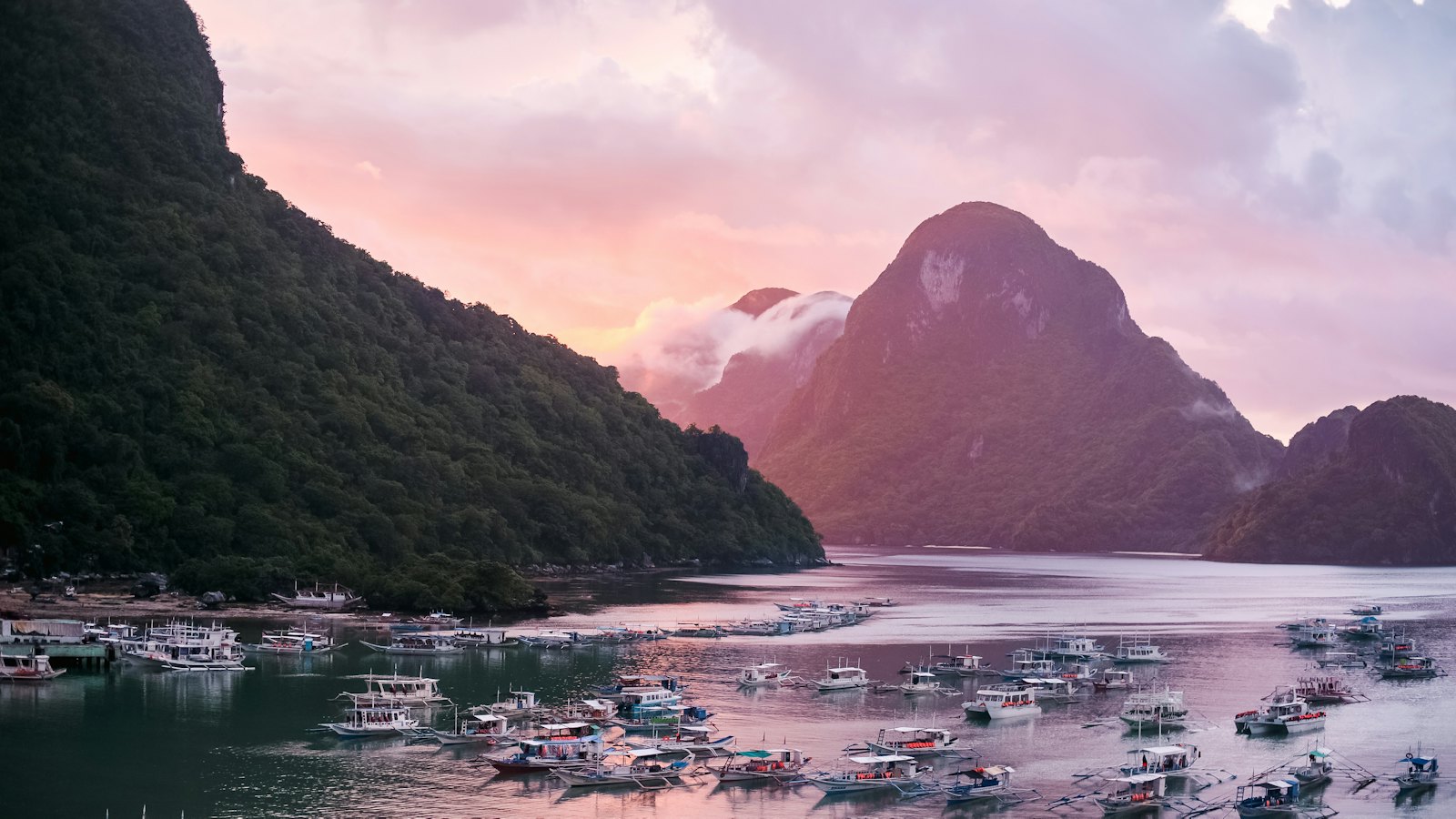
Palawan is the long, narrow island province on the western rim of the Philippines, and its southern tip lies just across the Balabac Strait from Sabah. Most Malaysians go for three things: the Underground River outside Puerto Princesa, the limestone lagoons of El Nido's Bacuit Bay, and the lakes and wartime shipwrecks around Coron. It is slower and more rugged than Bali or Phuket, with long van rides, wooden boats and weak signal outside town. This guide is written for travellers leaving from KLIA: how to connect through Manila, what the eTravel form asks of you, where to find halal food in a mostly Catholic province, and what the whole trip costs in ringgit.
Getting there from KL: flights via Manila or Cebu
Kuala Lumpur and Puerto Princesa (PPS) have no non-stop link at the time of writing, so plan on one connection. Puerto Princesa's scheduled flights are domestic: Cebu Pacific and PAL Express fly in from Manila and Cebu, and Cebu Pacific also from Clark, Davao and Iloilo. The hop from Manila takes about an hour and a half.
From KLIA the flight to Manila takes roughly four hours. Malaysia Airlines and Philippine Airlines use Terminal 1; AirAsia and Cebu Pacific leave from Terminal 2. Cebu Pacific is the tidiest single ticket, because at the time of writing its international and domestic flights both use Terminal 3 at Manila's NAIA. Philippine Airlines and AirAsia arrive at NAIA Terminal 1, while PAL Express to Palawan leaves from Terminal 2, so those connections mean changing terminals: leave a long buffer. NAIA has been reshuffling airlines between terminals, so check yours when you book. AirAsia also flies from KLIA to Cebu, another way in.
At the time of writing, Amaboxly's KL fare scan of 20 September 2026 turned up one-way Palawan fares from about RM 536 on Cebu Pacific through Manila, with a median of RM 622, and Cebu routings from around RM 1,114. Fares change daily.
Puerto Princesa airport to town and onward
Puerto Princesa International Airport sits on the edge of the city, about ten minutes from the Underground River booking office at Mendoza Park. All fares here are indicative, at about PHP 15 to the ringgit.
- Tricycle: the motorbike with a sidecar is the usual ride. Drivers at the terminal door ask more; flagging one down on the national highway has cost about PHP 50 (around RM 3) into town.
- Jeepney: shared jeepneys run along the highway in front of the airport, and city fares are about PHP 13 to PHP 25 (around RM 1 to RM 1.60), though big suitcases are a squeeze.
- Hotel transfer: many hotels arrange pickups; a car to an outlying resort has been quoted at up to PHP 350 (about RM 23).
- Straight to El Nido: shared vans take four to five hours and were last reported at about PHP 600, or PHP 700 with an airport or hotel pickup (RM 40 to RM 46). Air-conditioned buses from the city terminal are slower but cheaper.
- To Sabang: about 1.5 to 2 hours by van.
After an early KLIA start and a Manila connection, it makes sense to sleep the first night in Puerto Princesa.
Where to stay in Palawan
Palawan is big, so pick bases by activity.
- Puerto Princesa city (Rizal Avenue and the Baywalk area): the practical base for first and last nights, near the airport, the river booking office and the city's small mosques. Good for families.
- Sabang: a quiet beach village at the Underground River wharf, about 1.5 to 2 hours from the city, for nature lovers who want an early boat. Staying here does not guarantee a river permit, as the park itself stresses.
- El Nido town: guesthouses line the road behind the beach and boats leave from the shore, so you can walk to your tour. Livelier than the city. Nacpan Beach, roughly 45 minutes north, has a few quieter guesthouses.
- Coron town on Busuanga Island: a working harbour town and the base for the lakes of Coron Island and the wreck dives. Ideal for divers and snorkellers.
El Nido rooms fill fast at Christmas, Chinese New Year and Holy Week.
Things to do in Palawan
- Underground River: a UNESCO World Heritage Site since 1999 and one of the New7Wonders of Nature. A guided paddle-boat tour of about an hour takes you into an 8.2 km river that runs beneath the mountains to the sea, past bats and huge chambers. Numbers are capped, so book first (see the FAQ).
- Ugong Rock: climb a limestone outcrop among rice fields, then zipline down.
- Iwahig firefly watching: a community-run night paddle along riverbanks lit up by fireflies.
- Honda Bay: island hopping and snorkelling around sandy islets, from Sta. Lourdes wharf about 25 minutes from the city.
- El Nido island hopping: boats follow set routes named Tour A to D through Bacuit Bay's lagoons and beaches. Shared tours cost about PHP 1,200 to PHP 1,500 per person, lunch included.
- Nacpan Beach: a long, uncrowded curve of sand north of El Nido town.
- Coron Island: Kayangan Lake's viewpoint, clear Barracuda Lake and the rock walls of Twin Lagoon.
- Coron wrecks: Japanese ships sunk on 24 September 1944 lie in 10 to 40 metres of water, a famous dive for certified divers.
- Tubbataha Reefs: experienced divers can join liveaboards from Puerto Princesa between mid-March and mid-June.
What to eat in Palawan
Palawan cooking is built around the sea. Grilled fish, squid and prawns appear at nearly every meal, and El Nido boat tours include a grilled lunch.
- Kinilaw: raw fish cubes cured in vinegar or calamansi with onion, ginger and chilli, the Filipino cousin of ceviche.
- Tamilok: Palawan's dare-you dish, a shipworm pulled from mangrove wood and served kinilaw-style.
- Chao long: Puerto Princesa's own noodle soup, created by Vietnamese refugees who were housed in the city from 1979. Rice noodles and braised beef come in a sweet, reddish broth with calamansi on the side. Do not assume a beef soup is halal: ask about the broth and the kitchen.
- Cashew nuts: sold widely in souvenir shops, a light gift to carry home.
- Filipino staples: adobo, lechon and sisig, usually made with pork.
In Puerto Princesa, the Baywalk by the bay has food stalls. A simple local meal costs around PHP 275 (about RM 18) and a mid-range dinner for two roughly PHP 2,000 (RM 130), per crowd-sourced data from April 2026.
Halal food and prayer spaces in Palawan
Be realistic: halal food is scarce on the tourist route. Muslims make up roughly a tenth of Palawan's people, but most live in the far south, in towns such as Bataraza and Brooke's Point, a long way from El Nido and Coron. Pork is central to Filipino cooking and certified halal restaurants are rare, so a "no pork" sign is not proof.
Puerto Princesa is the easiest place to eat and pray. Maranao traders live in the city, and OpenStreetMap marks small mosques in the San Miguel area, including one mapped as Masjid Al-Akhdar, a short tricycle ride south of Rizal Avenue. Ask your hotel for the nearest one and Friday prayer times, and look for Muslim-run eateries nearby. We could not find a mosque listed in El Nido or Coron town.
What works: - Stick to seafood and vegetables, and ask about shared grills and lard. - Book a private island-hopping boat and request a seafood-only lunch. - Pack halal snacks and sambal for van days. - Use Muslim Pro or a similar app for prayer times and qibla, and carry a travel mat, since you may not find a prayer room at the airport or the piers. On long road days, many travellers combine and shorten prayers (jamak and qasar).
Getting around Palawan
There is no rail or transit card. You move by tricycle, van and boat, so agree fares before setting off.
- Ride-hailing: Grab's official list of Philippine cities does not include Puerto Princesa, El Nido or Coron at the time of writing. Hotels will call a tricycle or van for you.
- Tricycles: the city tourism office puts short trips at about PHP 10 to PHP 30; private hires and longer runs cost more, so settle the price first.
- Jeepneys and multicabs: shared rides on fixed routes, with jeepney fares of about PHP 13 to PHP 25, cheap but slow.
- Vans: shared or private vans link Puerto Princesa with Sabang, El Nido and other towns; a private van is the comfortable choice for families.
- Boats between El Nido and Coron: a fast ferry takes about three and a half hours (last reported at around PHP 1,760, roughly RM 115), while large outrigger boats take about eight hours and include a meal. Sailings depend on the weather.
- Flights: El Nido's small airport and Busuanga airport near Coron have flights to Cebu and Clark, faster than the road but far pricier.
Pack motion sickness tablets for the winding roads.
A 4-day Palawan itinerary
- Day 1: Fly KLIA to Manila and on to Puerto Princesa; an overnight or early flight gets you in around midday. Confirm your Underground River permit at the booking office, walk to Plaza Cuartel, then eat by the Baywalk and join an evening firefly paddle at Iwahig.
- Day 2: Leave early for Sabang, roughly 1.5 to 2 hours away. Take the one-hour paddle boat tour of the Underground River, then stop at Ugong Rock for the climb and zipline on the drive back.
- Day 3: Take a morning van north to El Nido (about five hours). Settle in, then catch the sunset at Las Cabanas beach, a short tricycle ride from town.
- Day 4: Island hopping in Bacuit Bay. Tours A and C are the most popular; pay El Nido's eco-tourism fee first and pack a dry bag and reef-safe sunscreen.
With two or three more days, take the fast ferry to Coron, or add a second El Nido boat day and Nacpan Beach. Fly home from Puerto Princesa, or from Busuanga if connections suit.
Money, SIM and practical tips
- Currency: the Philippine peso (PHP). The ringgit fetched around PHP 15.3 when we checked, meaning a PHP 1,000 note is worth about RM 65.
- Cash: tricycles, markets and El Nido's eco-tourism fee (a ticket valid for 10 days) are usually paid in cash. El Nido's ATMs often run dry at weekends and on public holidays, so withdraw in Puerto Princesa first.
- Cards: hotels, dive shops and some restaurants take Visa or Mastercard. The Philippines is not on PayNet's list of DuitNow QR countries, so that will not work.
- SIM and data: under Philippine law, local SIM cards must be registered before they work, so a travel eSIM set up before you fly is simpler. Expect no signal on many boat trips.
- Plugs: types A, B and C at 230 V, 60 Hz, so bring an adapter for three-pin chargers.
- Tipping: not compulsory, but a small tip for a good boat crew or guide is a kind gesture.
- Scams: overpriced tricycles at the airport door, drivers steering you to pricier chartered vans for a commission, claims that staying in Sabang guarantees a river permit, and paid look-alike eTravel sites (the real one is free).
- Wildlife: leave food and plastic bags behind at the Underground River, as they attract the monkeys.
El Nido or Coron: which one to add?
Most Malaysians pair Puerto Princesa with one northern town, and the choice depends on what you like doing in the water.
El Nido suits people who want scenery from a boat or kayak: sheer limestone cliffs, lagoons you paddle into and beaches for long lunches. It is reachable by road from Puerto Princesa and has plenty of places to eat and stay.
Coron suits snorkellers and divers. Swimmers come for the lakes on Coron Island, and the sunken Japanese ships give Semporna and Sipadan regulars something new to dive. There are also hot springs at Maquinit.
To see both without backtracking, go Puerto Princesa, then El Nido by van, then Coron by fast ferry, and fly out of Busuanga. Allow a week at the least, and check onward connections from Busuanga before you commit.
Before you go
- Best time to go
- The best time to visit Palawan is the dry season, roughly January to April and often into May, when rain is scarce and the sea is usually calm enough for island hopping. Puerto Princesa gets very little rain from January to April. Rain returns from around May or June and lasts to about November or December, and the north, including El Nido and Coron, can get torrential rain in July and August, when boat tours are sometimes cancelled. Mid-March to mid-June is the Tubbataha dive season, when seas are calmest, though April and May are hot; Puerto Princesa reached 37 degrees C for the first time in April 2025. Prices and crowds peak at Christmas, Chinese New Year and Holy Week. The Malaysian school break at the end of the year (for most states, 5 to 31 December 2026) lands in the Christmas rush, so book El Nido early. Puerto Princesa marks its founding anniversary with the Balayong Festival on 4 March.
- Visa for Malaysians
- As of September 2026, a Malaysian passport holder can holiday in the Philippines visa-free for a stay of up to 30 days. The Bureau of Immigration admits visa-exempt tourists for an initial 30 days, and you can apply at an immigration office to extend (its published fee for a first 29-day extension is PHP 3,030, subject to change). Every arriving traveller must also complete eTravel, the free government registration at etravel.gov.ph. You can register within 72 hours before arrival, and you may be asked for proof of registration before boarding, so screenshot or print the QR code. The site warns against look-alike pages that charge a fee. Your passport should be valid for at least six months beyond your planned stay, and carry a return or onward ticket. Entry rules do change, so check immigration.gov.ph and etravel.gov.ph shortly before departure.
- Honest budget guide
- Budget roughly RM 260 to RM 560 a day for each traveller on the ground in Palawan, flights excluded. Flights: at the time of writing, one-way Palawan fares in our KL scan started near RM 536 through Manila (median RM 622), so a return trip at similar fares comes to roughly RM 1,100 to RM 1,300. Dorm beds and simple pension rooms have been listed from a few hundred pesos up to about PHP 1,800 (around RM 120), while comfortable mid-range rooms start near PHP 3,500 (about RM 230) a night. Food costs RM 50 to RM 130 a day. The van to El Nido is about RM 40 to RM 46 each way, and a shared island-hopping tour RM 80 to RM 100 plus El Nido's eco-tourism fee. A 5-day, 4-night trip with a shared mid-range room totals roughly RM 2,600 to RM 3,500 per person including flights. Treat all figures as indicative.
Frequently asked questions
Do Malaysians need a visa for Palawan?
No visa is needed. A Malaysian passport earns 30 days of visa-free entry to the Philippines as of September 2026, and Palawan has no separate entry rules. Register on eTravel (etravel.gov.ph, free) within 72 hours before you land, make sure your passport is valid for at least six months beyond your stay and carry a return or onward ticket. Check immigration.gov.ph before flying.
Is there a direct flight from KL to Palawan?
Not at the time of writing. Puerto Princesa's scheduled flights are domestic, so Malaysians connect in Manila or Cebu. Cebu Pacific, from KLIA Terminal 2, is the simplest because its international and domestic flights currently share Terminal 3 in Manila. Our fare scan showed one-way fares through Manila from about RM 536 at the time of writing.
Is Palawan Muslim-friendly?
Partly. Palawan welcomes Muslim visitors and has a Muslim minority, mostly in the south, but halal-certified food is rare on the tourist route. Puerto Princesa has small mosques and your best chance of Muslim-run food, while El Nido and Coron have very little. Seafood, vegetables and a private boat tour with a seafood-only lunch make it workable. Bring snacks and a prayer mat.
How many days in Palawan is enough?
Four days covers Puerto Princesa, the Underground River and one island-hopping day in El Nido, but the road time makes it tight. Six to eight days is more comfortable and lets you add Coron by fast ferry. Divers eyeing Tubbataha should plan it separately, since the reef is reached only by liveaboard boats, about ten hours out of Puerto Princesa.
What is the best month to visit Palawan?
January to April is usually the sweet spot: dry weather and calm seas, as long as you avoid Holy Week (late March in 2027), when Filipino holidaymakers fill El Nido. December is busy with Christmas crowds and can still be showery. July and August bring the heaviest rain in the north, when boat tours around El Nido and Coron can be cancelled at short notice.
What does a 5-day Palawan trip cost from KL?
Expect roughly RM 2,600 to RM 3,500 each for five days in Palawan, covering KL flights, a shared mid-range room for four nights, meals, the El Nido van and a couple of boat tours. Backpackers can spend less. Carry plenty of pesos, as El Nido's ATMs can run out.
Can I use Grab in Palawan?
Not really. Grab's own list of Philippine cities does not include Puerto Princesa, El Nido or Coron at the time of writing. Short trips are by tricycle (about PHP 10 to PHP 30 in the city), longer ones by shared or private van. Agree the fare before you get in, and ask your hotel to book vans for early starts.
Do I need to book the Underground River in advance?
Yes. The park limits visitors to 900 a day and enforces a no permit, no entry policy. Get a Visitor Entry Permit early from the Underground River Booking Office at Mendoza Park in Puerto Princesa, or ask your hotel or tour operator to arrange one, and bring your passport, since each visitor registers individually with valid ID. Tours run in daylight, roughly 8am to 4pm, weather permitting.
Jom pergi
Ready to go Palawan? Compare available flights and hotels for your dates. Check baggage, cancellation terms and the final total on the booking provider before paying.






