




On this page13 sections
- Overview
- Getting there from KL: direct flights and fares
- Phuket Airport to your hotel
- Where to stay in Phuket
- Things to do in Phuket
- What to eat: Baba noodles and southern curries
- Halal food, mosques and prayer rooms
- Getting around the island
- Sample itinerary: 4 days in Phuket
- Money, SIM and practical tips
- Island trips: Phi Phi, Similans and Phang Nga Bay
- Before you go
- FAQ
Phuket is the beach break many Malaysians book almost on impulse, and a little planning makes it much better. Thailand's largest island sits on the Andaman Sea about 90 minutes from KLIA, with west coast beaches, limestone bays for boat days and a Peranakan old town that Penang and Melaka folk will find oddly familiar. Around one resident in five is Muslim, so halal seafood is easier to find here than in most Thai resorts. Below: the new 30-day visa-free rule and digital arrival card, direct flights with real fares from our KL scan, airport rides in baht and ringgit, halal eating, and a realistic budget.
Getting there from KL: direct flights and fares
AirAsia, Malaysia Airlines and Batik Air Malaysia all run daily non-stop flights from Kuala Lumpur to Phuket International Airport (HKT) at the time of writing. You are in the air for roughly 1 hour 25 minutes to 1 hour 40 minutes, and Thailand is one hour behind Malaysia, so a 9am departure lands a little after 9.30am local time.
- AirAsia: KLIA Terminal 2 (klia2).
- Malaysia Airlines and Batik Air Malaysia: KLIA Terminal 1.
Fares: we scanned KL departures on 28 September 2026, and the lowest one-way ticket was about RM 216 on AirAsia's direct flight (late October and late November dates). The middle of the range sat near RM 223, while 24 December topped out around RM 389, in the thick of the school holidays. Connections rarely pay off here: via Singapore the cheapest was about RM 274 (Scoot), via Penang about RM 479 (Firefly). Low-cost fares add charges for checked bags and seats.
Up north? AirAsia announced a Penang to Phuket route in December 2025 with four weekly flights, so check it is still on sale for your dates before planning around it.
Phuket Airport to your hotel
The airport is in the far north of the island, about 50 to 60 minutes by car from Patong, Kata or Karon, plus 20 to 30 minutes more in the 4pm to 7pm rush. Prices are indicative, at roughly 8.2 baht to RM 1, and taxi rates in particular vary between sources.
- Grab: the app with an official pickup point, the GrabMeet booth outside Exit 8 of the international terminal (or near Exit 1 at the domestic terminal). Patong costs about 750 to 1,250 baht (RM 92 to RM 153), higher during surges.
- Airport limousine: fixed fares of about 800 to 1,000 baht (RM 97 to RM 122) to Patong, booked at the counters inside arrivals.
- Metered taxi: roughly 700 to 1,000 baht to Patong including the 100 baht airport fee, about RM 85 to RM 122 all in.
- Private van, booked ahead: near 700 baht (RM 85) to Patong for up to four people, good value for families.
- Shared minibus: about 180 to 250 baht (RM 22 to RM 30) each to Patong, Kata or Karon, leaving when full; decline any tour desk stop politely.
- Phuket Smart Bus: 100 baht flat (about RM 12) along the west coast, boarding outside the domestic terminal at Exit 3. Roughly 75 minutes to Patong and longer to Kata and Rawai; pay by cash, Thai QR or contactless card. Buses run from about 8.15am, and the last one leaves at 11.30pm.
- Airport Bus: to Bus Terminal 1 in Phuket Town for 50 to 100 baht, about 90 minutes end to end.
Where to stay in Phuket
Choose the beach first, then the hotel. Phuket has more than 40 beaches, and cross-island drives eat into your day.
- Patong: the biggest resort town, with Jungceylon mall, the Bangla Road nightlife strip and a good spread of halal restaurants, including seafood places at the Kalim end of the beach road. Easy for first-timers; families may find it loud, though the north end of the beach is calmer.
- Kata and Karon: wide, scenic beaches south of Patong with quieter evenings, family hotels and Smart Bus stops. Good for couples and parents with young children.
- Bang Tao, Surin and Kamala: the laid-back northwest, with big resorts, pool villas and spas. Kamala feels more Thai than Patong and has its own mosque.
- Phuket Old Town: no sand, but the island's best local food, heritage shophouses and cheaper guesthouses. Suits food lovers and budget travellers.
Three beach nights plus one in Old Town gives a first-timer both sides of Phuket.
Things to do in Phuket
- Old Phuket Town: Sino-Portuguese shophouses on Thalang, Dibuk and Krabi roads, built by Chinese tin-mining families whose Baba culture has historical ties to the Peranakans of Penang and Melaka. The free Dragon Line bus loops the area every 30 minutes, 7am to 7pm.
- Sunday Walking Street (Lard Yai): Thalang Road turns into a food and craft market each Sunday, roughly 4pm to 9pm.
- Big Buddha: a 45-metre white marble statue on Nakkerd Hill, reopened in March 2026, looking over Kata and Chalong Bay, open 9am to 6pm. Free to enter; no sleeveless tops or shorts above the knee, and sarongs are lent at the gate.
- Phang Nga Bay: limestone towers, sea cave canoeing, James Bond Island (Khao Phing Kan) and the Muslim stilt village of Koh Panyee, as an 8 to 10 hour tour.
- Phi Phi Islands: the classic speedboat day out (see closure dates below).
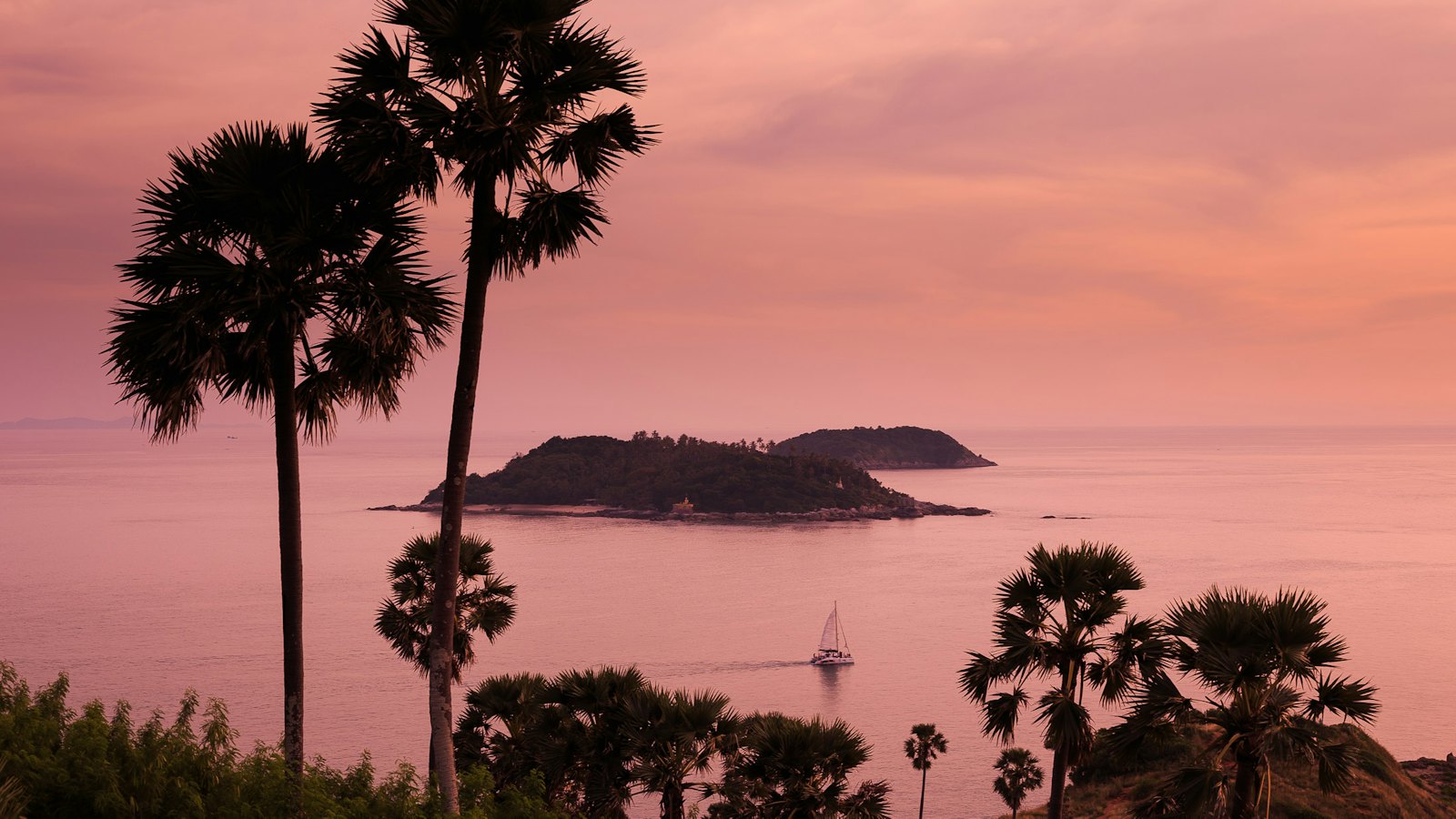
- Promthep Cape: the southern tip and the island's favourite free sunset viewpoint, past Rawai.
- Ethical elephant sanctuaries: choose one where you feed and walk with the elephants, never ride them.
- Kata or Nai Harn beach: swim freely in the dry season, and obey the red flags from May to October.
What to eat: Baba noodles and southern curries
Phuket blends fiery southern Thai cooking with Hokkien Baba dishes, and the island has been a UNESCO Creative City of Gastronomy since 2015. The best cooking is in small Old Town shops, not beachfront restaurants.
- Mee Hokkien: thick yellow noodles, fried or in soup, the Old Town signature; Chinese noodle shops often cook it with pork.
- Dim sum: an early-morning Old Town habit. Halal versions exist too (see the next section).
- O-taw: a street snack of fried taro with small oysters.
- Khanom jeen: soft rice noodles with a spicy curry sauce and fresh vegetables, a local breakfast.
- Southern curries: gaeng som (sour turmeric fish curry), kua kling (dry-fried minced meat curry) and gaeng tai pla (pungent fermented fish curry). Ask for less chilli if your limit is sambal.
- Moo hong: sweet braised pork belly, the classic Baba dish, not halal.
- Seafood by the sea: Rawai, near the southern tip, is where many locals go to eat on the beach.
Street stall and night market dishes cost about 40 to 100 baht (RM 5 to RM 12), and stall pad thai around 50 to 60 baht. Tourist restaurants can charge 250 baht for the same plate.
Halal food, mosques and prayer rooms
Phuket is among the easiest Thai destinations for Muslim travellers. About a fifth of residents are Muslim, many of Malay descent, and there are mosques in the main visitor areas.
- Halal certified: the Thai halal logo comes from the Central Islamic Council of Thailand (CICOT), which JAKIM lists as a recognised foreign certification body as of August 2026.
- Muslim-owned: many seafood, roti and curry shops are family-run by local Muslims. Some are certified, others just display a halal sign, so ask the owner when unsure.
- Pork-free is not halal: tourist restaurants advertising no pork may still use non-halal chicken and serve alcohol. Vegetarian Festival stalls with yellow flags are meat-free, not certified.
Where to eat: the Kalim end of Patong's beach road has halal seafood restaurants, and Patong also has Turkish and Indian halal places. In Old Town, Aroon Po Chana on Thalang Road is a halal stop for roti canai, chicken curry, pad thai and nasi goreng.
Prayer: Masjid Nurul Islam on Phra Barami Road in Patong, Masjid Yameay in Phuket Town and Kamala Mosque are near the main visitor areas. The airport's prayer room is on the 3rd floor of international departures.
Apps: Muslim Pro for prayer times, and Halal Route, a free app from Chulalongkorn University's Halal Science Centre mapping certified restaurants and mosques across Thailand.
Getting around the island
With no train or metro, it is buses, apps or two wheels, and some buses finish early.
- Phuket Smart Bus: Route 1 links the airport and Rawai via Kamala, Patong, Karon and Kata for 100 baht (about RM 12). Route 2 runs between the Phuket Town bus terminals and Patong for 50 baht, and the Old Town Dragon Line is free. The last Rawai to airport bus leaves at 7.30pm; the last Patong to Phuket Town bus at 9pm.
- Blue songthaews: open-sided buses from Phuket Town to the main beaches, around 20 to 50 baht, roughly 7am to 6pm.
- Grab: works island-wide, with upfront prices, paid by card or cash. Bolt also works here, and inDrive too, but neither can collect you at the airport terminal.
- Tuk-tuks: unmetered and costly; Patong to Kata can be 400 to 600 baht (RM 49 to RM 73). Fix the fare first.
- Scooters: from about 300 baht a day, but steep hills, traffic and sudden rain make them risky. Ride only with a valid motorcycle licence, a helmet and insurance that covers you.
- Car and driver: easier than several tuk-tuk rides for a family sightseeing day.
Sample itinerary: 4 days in Phuket
Four days fits one big boat trip, the old town and lazy beach time. Stay in Patong or Kata, and swap Day 2 for Phi Phi when Maya Bay is open.
- Day 1: Morning flight from KLIA, then Grab or the Smart Bus to your hotel. Beach in the afternoon, sunset seafood at a Muslim-run spot at Patong's Kalim end, and an evening stroll.
- Day 2: Full-day Phang Nga Bay tour with sea cave canoeing, James Bond Island and lunch at Koh Panyee, back by early evening.
- Day 3: Old Phuket Town in the morning for the Thalang Road shophouses and the free Dragon Line bus, then a halal lunch. Head to the Big Buddha in the afternoon (last entry 5.30pm) and on to Promthep Cape, further south, for sunset. On a Sunday, stay in Old Town for the Walking Street from 4pm instead.
- Day 4: A final swim at Kata or Karon, cashews, dried seafood and snacks for home, then the airport. Allow at least an hour for the drive, more late in the afternoon.
Money, SIM and practical tips
- Currency: Thai baht. RM 1 was worth about 8.2 baht in late September 2026, so 1,000 baht is around RM 122.
- Cash and cards: cards work in malls, hotels and many restaurants; keep cash for markets, songthaews and small shops. Most Thai ATMs add a fee of around 250 baht per withdrawal on foreign cards, so withdraw less often. Money changers in town usually give better rates than airport counters.
- DuitNow QR: PayNet's cross-border QR covers Thailand, so supported Malaysian bank and e-wallet apps can scan Thai QR codes where the matching logos are shown.
- SIM and eSIM: AIS, dtac and True counters are just past customs, with 7 to 15 day unlimited data from about 300 baht. You can also set up an eSIM before you fly.
- Plugs: 230V; sockets take type A, B, C and O plugs, so pack an adapter for your three-pin chargers.
- Tipping: not a Thai custom, though small change is welcome at tourist restaurants; skip it when a service charge is already added.
- Scams: the jet ski damage scam (renters blame you for old scratches), padded bar bills and timeshare touts. Photograph any rental first.
- Etiquette: dress modestly at temples and remove shoes where others do.
Island trips: Phi Phi, Similans and Phang Nga Bay
The calendar decides which islands you can see.
- Phi Phi and Maya Bay: Maya Bay shuts every year from 1 August to 30 September. When open, the park fee is 400 baht and swimming is limited to knee-deep water.
- Similan Islands: open roughly 15 October to 15 May, with speedboat day trips of about 60 to 90 minutes each way, usually collecting guests in Phuket or Khao Lak.
- Phang Nga Bay: roughly 1,400 to 3,500 baht (RM 170 to RM 430) depending on the boat, typically with lunch, life jackets and the 400 baht park fee. Confirm the fee is included.
In the rainy months most tours still run, the Similans aside, but rough seas can cancel trips at short notice, so leave one flexible day. Book licensed operators, bring motion sickness tablets for speedboats and keep your phone in a dry bag.
Before you go
- Best time to go
- Go between December and April for dry weather and calm, clear seas; May to October is monsoon season, with rougher water but lower prices. January is usually the driest month, April the hottest and September the wettest, with around 360 mm of rain and frequent red flags on west coast beaches. The Similan Islands open from about mid-October to mid-May, and Maya Bay closes every August and September. The Phuket Vegetarian Festival fills Phuket Town with processions and deafening firecrackers from 10 to 18 October 2026, Loy Krathong falls in November and Songkran water fights in mid-April. Malaysian families arrive in force for the end-of-year school holidays (from 4 or 5 December to 31 December 2026, depending on your state), and 24 December was the priciest date in our fare scan. November, as the rain eases, is often the best value.
- Visa for Malaysians
- Malaysians can stay in Thailand for up to 30 days without a visa as of September 2026, after the 60-day allowance ended on 15 September 2026. Everyone, children included, must also file the free Thailand Digital Arrival Card (TDAC) within the three days before arrival, only at tdac.immigration.go.th; paid look-alike sites are not official. Save or print the confirmation it emails you. Make sure your passport has at least six months' validity left, and carry a return or onward ticket and your hotel booking, since officers may ask for these and for proof of funds. You can apply once to extend your stay by up to 30 days at the immigration office in Phuket, for a 1,900 baht fee. Malaysians are exempt from the twice-a-year cap on visa-free land border entries. Entry rules shift, so check the Royal Thai Embassy in Kuala Lumpur site (kualalumpur.thaiembassy.org) before departure.
- Honest budget guide
- Expect to spend roughly RM 180 to RM 450 per person a day in Phuket, before flights, depending mostly on your room and how many boat trips you take. Flights: our KL scan's cheapest one-way ticket was about RM 216 (AirAsia, direct) at the time of writing, so a return on those fares works out at roughly RM 430 to RM 780, dearest in December. A budget hotel is about 1,000 to 2,500 baht (RM 120 to RM 300) a night, and a three-star family room 1,500 to 3,000 baht (RM 183 to RM 366). Food runs RM 40 to RM 120 a day, the Smart Bus is 100 baht a ride and one island tour adds RM 170 to RM 430. Four days and three nights at mid-range, two to a room, with one tour, totals roughly RM 1,100 to RM 2,400 each, flights included. All figures are indicative.
Frequently asked questions
Do Malaysians need a visa for Phuket?
No. As of September 2026, Malaysians get up to 30 days in Thailand without a visa, down from 60 days before 15 September 2026. File the free Thailand Digital Arrival Card at tdac.immigration.go.th within three days before landing, and make sure your passport has at least six months' validity left. Confirm on the Royal Thai Embassy in Kuala Lumpur website before you go.
Is there a direct flight from KL to Phuket?
Yes. AirAsia flies non-stop from KLIA Terminal 2, and Malaysia Airlines and Batik Air Malaysia from Terminal 1, all daily at the time of writing. The trip takes about 1 hour 25 minutes to 1 hour 40 minutes. Our KL scan's lowest one-way ticket was about RM 216 on AirAsia, with late December the costliest.
Is Phuket Muslim-friendly?
Yes, more than most Thai beach areas. About a fifth of residents are Muslim, mosques sit in Patong, Phuket Town and Kamala, and the airport has a prayer room in international departures. Look for the CICOT halal logo, which JAKIM recognises, or ask at Muslim-run shops. A pork-free menu is not automatically halal.
Can I use Grab in Phuket?
Yes. Grab covers the whole island and has an official pickup point at the airport, the GrabMeet booth outside Exit 8 of the international terminal. Airport to Patong usually costs 750 to 1,250 baht (RM 92 to RM 153). Bolt and inDrive also operate, but their drivers cannot pick up at the terminal.
How many days in Phuket is enough?
Four days and three nights covers a beach day, one full-day boat trip to Phang Nga Bay or Phi Phi, and a day for the Big Buddha and Old Phuket Town. Five or six days adds the second big boat trip, the Similans in season or a night in Old Town.
What is the best month to visit Phuket?
January is usually best, with little rain and calm seas, and the whole December to April dry season suits swimming and boat trips. November is better value as the rain eases. September is the wettest month, though hotels are cheaper and most tours still run. Malaysian school holidays make late December the dearest time to fly.
What does a 5-day Phuket trip cost from KL?
Budget roughly RM 1,300 to RM 3,100 per person for five days and four nights at mid-range, two to a room, including return flights. That covers a three-star hotel, meals, local transport and one or two boat tours. Guesthouses and night market meals bring it down further. All figures are indicative.
Can I pay with DuitNow QR in Phuket?
Often, yes. PayNet's cross-border QR service includes Thailand, so supported Malaysian banking and e-wallet apps can scan Thai QR codes at shops showing the matching logos. Not every vendor takes it, so keep some baht for markets, songthaews and tuk-tuks.
Jom pergi
Ready to go Phuket? Compare available flights and hotels for your dates. Check baggage, cancellation terms and the final total on the booking provider before paying.






