




On this page12 sections
Budapest brings together ornate imperial buildings, historic market halls, thermal pools, ruin bars and sweeping Danube scenery. Malaysian travellers will find it relatively affordable by European standards, although cold winters, the Hungarian language and inconsistent halal certification call for advance planning. Flights from KLIA normally require a connection, but reaching central Pest from the airport is simple by bus. This guide explains where to stay, what to eat, how to find Muslim-friendly meals, when to visit and what to budget in ringgit. Three complete days are enough for the principal landmarks, while a fourth allows a gentler bath visit, Margaret Island or an outing towards the Danube Bend.
Flying from Kuala Lumpur to Budapest
No nonstop Kuala Lumpur International Airport to Budapest flight was listed in September 2026. Travellers should therefore expect one or more connections, commonly through hubs such as Doha or Dubai. Qatar Airways and Emirates were included in Amaboxly's latest search results, although operating days and schedules may change before departure. Depending on the transfer, a practical total journey lasts approximately 15 to 20 hours.
Amaboxly's fare snapshot showed a Qatar Airways one-way ticket from RM 1,680 for departure on 24 December 2026, with a single Doha connection. Across the results, the median one-way price was RM 1,732. The search also returned options involving Emirates, Emirates paired with flydubai, and Etihad paired with Condor. These figures represent a dated comparison, not prices that will remain available. The lowest fare categories may exclude checked baggage or seat selection.
Long-distance departures on these routes generally use KLIA Terminal 1 rather than Terminal 2. Verify the terminal shown on your confirmed booking. When flights are issued on separate tickets, choose a generous connection because the second airline may have no obligation to accommodate you after a missed departure.
Budapest Airport to the city
Budapest Ferenc Liszt International Airport lies roughly 20 kilometres southeast of the central districts. For quick estimates, RM 1 equals approximately 80 Hungarian forints, although the actual rate fluctuates.
- Airport Express 100E: The direct service links the terminal with central Pest and calls near Kálvin tér and Deák Ferenc tér. Traffic usually puts the ride between 35 and 50 minutes. Its dedicated ticket is about 2,200 to 2,500 forints, or RM 28 to RM 31, and ordinary Budapest passes do not cover it.
- Bus 200E with Metro M3: Ride to Kőbánya-Kispest and change to the metro for central Budapest. Allow about 50 to 70 minutes. Regular tickets or a valid city travelcard cover this cheaper combination.
- Shared shuttle: A pooled van provides door-to-door transport but may make numerous stops. Travel can take 40 to 90 minutes, with prices commonly near 6,000 to 12,000 forints, or RM 75 to RM 150.
- Taxi: Join the authorised taxi queue outside the terminal. Central fares are commonly 12,000 to 16,000 forints, or RM 150 to RM 200, for a 30 to 45 minute trip. Decline offers from drivers soliciting passengers indoors.
Where to stay in Budapest
The Danube separates elevated Buda in the west from the flatter and more energetic Pest districts in the east. Pest is usually the easiest base for a first visit because restaurants, nightlife and transport connections are concentrated there.
- District V, Belváros-Lipótváros: Choose this area for immediate access to Parliament, riverside walks and several useful transport lines. Its convenience often brings higher hotel and restaurant prices.
- District VI, Terézváros: Accommodation around the Opera, Oktogon and Andrássy Avenue provides a central position without placing you directly amid the busiest nightlife streets.
- District VII, Erzsébetváros: This neighbourhood works well for the Jewish Quarter, ruin bars and food after dark. Families and light sleepers should request accommodation away from its loudest roads.
- Castle District, Buda: Historic lanes, Fisherman's Bastion and Matthias Church are close at hand. The atmosphere is calmer, but hills, stairways and fewer late-night restaurants reduce convenience.
Prioritise a nearby metro or tram stop over a short straight-line distance on a map. Much of the centre suits walking, yet cobbled surfaces and Buda's inclines become awkward when pulling luggage.
Things to do in Budapest
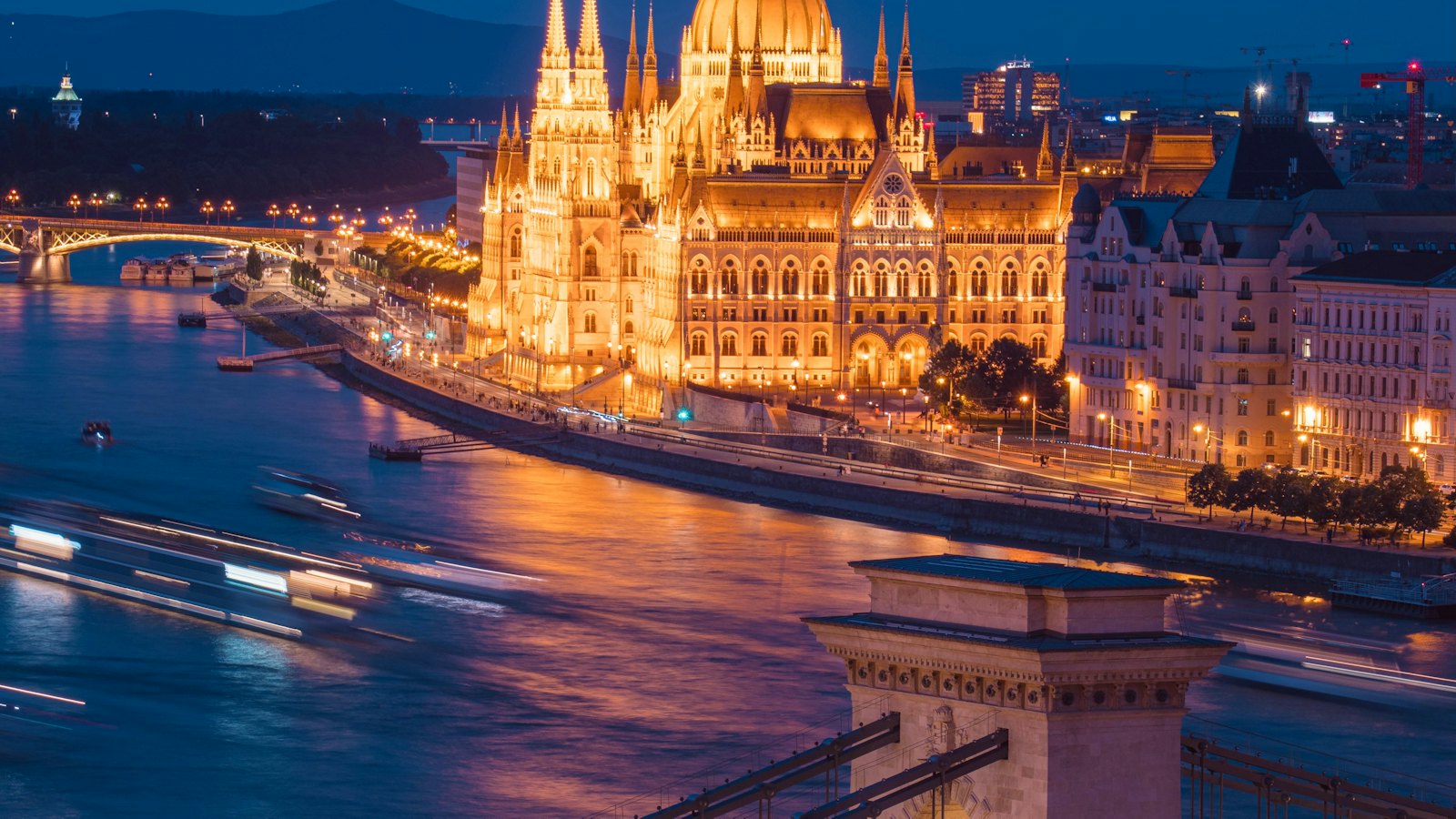
- Hungarian Parliament: View the richly detailed riverside facade from both banks. Entry to the interior is timed, so reserving ahead is wise.
- Buda Castle district: Explore palace courtyards, centuries-old streets and terraces facing the Pest skyline.
- Fisherman's Bastion: Arrive early for calmer photographs across the river towards Parliament.
- Matthias Church: Step inside this historic church and study its colourful tiled roof and architectural layers.
- Széchenyi Thermal Bath: Enjoy indoor pools and open-air bathing at the city's most famous complex. Pack swimwear, a towel and pool slippers to avoid extra rental costs.
- Gellért Hill: Reach its viewpoints on foot or combine the climb with public transport. Confirm path availability because construction can cause closures.
- Great Market Hall: Examine paprika, fresh produce and Hungarian snacks, remembering that souvenir stalls may charge visitor-oriented prices.
- Shoes on the Danube Bank: Treat this Second World War memorial to murdered Jewish people with silence and respect.
- St Stephen's Basilica: Visit the monumental interior and, in suitable weather, its high observation area.
- Margaret Island: Walk or hire a bicycle in this mostly traffic-free green space when you want respite from museums and masonry.
What to eat and where to look
Hungarian food often combines paprika, onion, sour cream and meat cooked slowly for a rich, warming result. Gulyás is traditionally a soup, despite the thick stew many international visitors anticipate. Pörkölt is closer to that expectation and is frequently accompanied by dumplings. Chicken paprikash is another signature dish, but its meat should not be considered halal without confirmation from the restaurant.
Lángos consists of fried dough, usually finished with garlic, cheese and sour cream. Before buying it at a market or stall, ask whether the same oil handles meat. Sweet choices include dobos torte, made from layered sponge, chocolate buttercream and caramel, and the spiral-shaped chimney cake called kürtőskalács. Mushroom preparations, cheese pastries and vegetarian stuffed cabbage can be helpful alternatives. However, cooks may still use lard in pastry, vegetables or dough.
Visit the Great Market Hall to inspect local ingredients and compare informal meals. The Jewish Quarter and surrounding inner-city streets provide the widest mix of international restaurants. Ask specifically about pork, animal fat, cooking stock and alcohol. A meal described only as free from pork or alcohol is not necessarily prepared to halal standards.
Halal food and prayer facilities
Halal meals are available in Budapest, although choices are narrower than in Kuala Lumpur and formal certification cannot be assumed. Turkish, Arabic, Persian, Pakistani and Indian establishments are the most promising, especially across central Pest and parts of Districts VII and VIII. Check for a current certificate or ask whether all meat served by the kitchen comes from halal suppliers. A pork-free menu may still contain non-halal beef or chicken, sauces made with alcohol, or food cooked on shared equipment.
Vegetarian and seafood venues broaden the options, but Hungarian kitchens sometimes add meat stock or lard to apparently suitable dishes. Supermarkets make self-catering practical with fruit, eggs, bread, cheese and plant-based groceries. HalalTrip, Zabihah and recent Google Maps comments can identify possibilities. Confirm the details at the restaurant because management and suppliers can change.
Budapest Mosque on Fehérvári Road is one established place for Muslim worship. Access beyond congregational prayer periods varies, so verify opening arrangements before travelling there. The airport provides a quiet or prayer space within the terminal area; ask airport staff for its current position and access rules. Do not expect central shopping malls to provide a dedicated surau. A small prayer mat and qibla application are useful.
Getting around Budapest
Metro lines, trams, buses and trolleybuses form a dense public transport system throughout Budapest. Most city services share the same ticket products, but Airport Express 100E needs a separate fare. A single journey costs approximately 450 to 600 forints, or RM 6 to RM 8. If your day includes several trips, a 24-hour or 72-hour travelcard may cost less. Review the latest conditions before selecting a product.
BudapestGO provides journey planning, service updates and digital ticket sales. With paper tickets, validation normally happens before entering the metro or just after boarding a surface vehicle. Ticket inspections are frequent enough that forgetting this step can result in a sizeable penalty. Digital products can require a code scan or another activation action inside the application.
For an inexpensive sightseeing ride, Tram 2 follows the Pest side of the river. Metro M1 is convenient for attractions along Andrássy Avenue. The Malaysian version of Grab has no Budapest operation, while Bolt is widely used for booked rides. Licensed taxis are another option and operate under regulated fares, though congestion can make short trips costly. Walk when sensible, avoid standing in marked bicycle lanes and hold firmly inside older trams.
A practical four-day itinerary
- Day 1: After checking in on the Pest side, walk from St Stephen's Basilica to the river. Continue to the Shoes on the Danube Bank and examine Parliament from outside. Before nightfall, cross to Buda for views of the illuminated Pest waterfront.
- Day 2: Reach the Castle District early and visit Fisherman's Bastion, Matthias Church and the courtyards of Buda Castle. Descend towards the Chain Bridge area later in the day. In the evening, choose either an embankment walk or a river cruise. If alcohol is a concern, find a cruise that does not bundle drinks into every ticket.
- Day 3: Reserve the morning for Széchenyi Thermal Bath, followed by City Park and Andrássy Avenue. Continue towards the Jewish Quarter for historical architecture, memorial locations and varied international food. Ruin bars revolve heavily around drinking, but their distinctive courtyards can sometimes be seen during quieter daytime hours.
- Day 4: Begin at the Great Market Hall and explore nearby central streets. Spend the afternoon walking or cycling on Margaret Island, or choose Gellért Hill for panoramic views. Travellers with an additional day can visit riverside settlements in the Danube Bend.
Money, SIM cards and practical tips
Hungary belongs to the European Union but retains the Hungarian forint, shown as HUF or Ft. Using an approximate rate of RM 1 to 80 forints, 1,000 forints comes to about RM 12 to RM 13. Contactless and card payments are common around Budapest. Nevertheless, carry modest cash for toilets, small vendors and machines that reject foreign cards. When a payment screen proposes a ringgit amount, reject that conversion and complete the charge in forints. DuitNow QR is not a standard local payment option.
Visitors can buy local prepaid SIM cards or activate travel eSIM packages. Compare registration rules, coverage and included data before purchase. Save an offline map before departing the airport. Electrical outlets accept Type C and Type F plugs at 230V, which means Malaysian three-pin plugs require an adaptor.
For adequate table service, a tip near 10 percent is customary unless the bill already contains a service fee. The city is generally manageable, but crowded vehicles and major sights can attract pickpockets. Avoid unofficial taxis, currency exchanges displaying poor rates and cash machines promoting expensive conversion. Use a secure locker at thermal baths and do not leave valuables unattended near a pool.
Before you go
- Best time to go
- Late spring and early autumn provide Budapest's most comfortable sightseeing conditions. From April through June and again from September through October, temperatures generally suit long walks, outdoor viewpoints and time beside the Danube. Spring weather can shift quickly, while the beginning of autumn is often mild. July and August bring heat, larger crowds, higher prices and lengthy queues at major baths and attractions. Winter has short days and low temperatures, although festive markets and warm outdoor pools create a memorable setting. Airfares may rise during Malaysian school holidays even when local visitor numbers are lower, particularly near the end of the year. Take adaptable layers in spring and autumn, sun protection during summer, and an insulated coat with shoes that grip well from late autumn into winter.
- Visa for Malaysians
- Short tourist visits to Hungary do not currently require a visa for Malaysian passport holders. As of September 2026, the permitted stay is no more than 90 days when counted across any rolling 180-day window, and days used elsewhere in Schengen count towards the same limit. The EU Entry/Exit System is operating, replacing routine passport stamps with electronic records and requiring a facial image and fingerprints during initial processing. ETIAS is anticipated in the final quarter of 2026 but is not accepting applications yet. Plans indicate a fee of about €15 to €25, approximately RM 70 to RM 115, and validity lasting three years, followed by a transitional introduction. The passport must be less than 10 years old on arrival and remain valid for three months beyond the intended date of leaving Schengen. Recheck official EU Travel Europe information before departure.
- Honest budget guide
- Plan on RM 280 to RM 550 per traveller for each day in Budapest before international airfare. This range supports a trip from economical to comfortable. Amaboxly's dated search showed Kuala Lumpur to Budapest one-way tickets beginning at RM 1,680 and a median result of RM 1,732. Expect roughly RM 100 to RM 250 per night for a hostel bed or basic room. A centrally located mid-range double room often costs RM 300 to RM 550. Daily food spending may reach RM 80 to RM 160, while local travel can add RM 25 to RM 60. Budget separately for museums, thermal baths and cruises. For five days, a typical twin-share total including return airfare is around RM 3,800 to RM 6,500 per person. Season, currency movements and booking lead time can alter every estimate.
Frequently asked questions
Do Malaysians need a visa for Budapest?
Malaysian citizens holding ordinary passports can enter Hungary for short visits without obtaining a visa in advance as of September 2026. The stay limit is calculated jointly across all Schengen destinations, not separately for Hungary. Passport age and post-departure validity conditions still apply. The Entry/Exit System records travellers electronically, while ETIAS is expected later in 2026 but is not yet available. Check the EU Travel Europe portal shortly before flying.
Is there a direct flight from Kuala Lumpur to Budapest?
No nonstop service between KUL and BUD was listed in September 2026. Most itineraries make at least one connection, with Doha and Dubai among the practical transfer hubs. Overall travel commonly lasts around 15 to 20 hours, depending on waiting time between flights. Confirm whether the airline will transfer checked baggage through to Budapest, particularly when different carriers or separately purchased tickets appear on the itinerary.
Is Budapest Muslim-friendly?
Muslim travellers can visit Budapest comfortably with some preparation, though facilities are less extensive than in large Malaysian cities. Central Pest has Turkish, Arabic, Persian, Pakistani and Indian restaurants that may serve halal food. Ask about certification, meat suppliers and shared cooking surfaces. Dedicated prayer spaces are uncommon beyond mosques and the airport, so carrying a travel prayer mat and using a reliable prayer-time application is practical.
How many days are enough for Budapest?
Allow three complete days for Parliament, the Buda Castle area, one thermal bath and the main Danube landmarks without rushing excessively. Four days provide room for Margaret Island, museums, markets or a slower café visit. A fifth is worthwhile for the towns of the Danube Bend. Extra time also helps in winter, when limited daylight and poor weather can reduce the amount of sightseeing possible each day.
What is the best month to visit Budapest?
May, June, September and the beginning of October usually offer a favourable mix of moderate temperatures and adequate daylight. September is particularly convenient for exploring outdoors on foot. July and August are warmer, more crowded and often costlier. December has seasonal markets and an appealing winter atmosphere, but visitors need suitable cold-weather clothing and may encounter higher flight prices around Malaysian year-end holidays.
How much money should I budget for five days in Budapest?
For five days, estimate RM 3,800 to RM 6,500 per person when sharing a double room and including return flights, meals, city transport and several admission charges. Hostel accommodation, supermarket food and fewer paid activities can lower the figure. Central hotels, river cruises and thermal bath visits will raise it. Use the range for initial planning only because airfares, exchange rates and room costs vary by date.
Can I use Grab in Budapest?
Grab does not provide its familiar Malaysian ride service in Budapest. Bolt is a widely used booking alternative, and authorised taxis wait at official ranks. For most journeys within the centre, trams and metro trains cost less and may be faster than driving through traffic. BudapestGO is useful for routes and ticket management. At airports and stations, reject transport offers from people who approach passengers directly.
Can I pay by card or use ringgit in Budapest?
Most Budapest businesses accept cards and contactless transactions, but prices are charged in Hungarian forints rather than Malaysian ringgit or usually euros. Keep a limited amount of local cash for minor expenses. DuitNow QR is not a general payment system there. If an ATM or card terminal offers to convert the charge into ringgit, select forints instead to avoid the operator's potentially unfavourable conversion rate.
Jom pergi
Ready to go Budapest? Compare available flights and hotels for your dates. Check baggage, cancellation terms and the final total on the booking provider before paying.






